SUBSCRIBE TO OUR FREE NEWSLETTER
Daily news & progressive opinion—funded by the people, not the corporations—delivered straight to your inbox.
5
#000000
#FFFFFF
To donate by check, phone, or other method, see our More Ways to Give page.
Last fall, Alex Gibney, a documentary filmmaker who won an Academy Award in 2008 for an expose of torture at a U.S. military base in Afghanistan, completed a film called "Park Avenue: Money, Power and the American Dream." It was scheduled to air on PBS on November 12th. The movie had been produced independently, in part with support from the Gates Foundation. "Park Avenue" is a pointed exploration of the growing economic inequality in America and a meditation on the often self-justifying mind-set of "the one per cent." As a narrative device, Gibney focusses on one of the most expensive apartment buildings in Manhattan--740 Park Avenue--portraying it as an emblem of concentrated wealth and contrasting the lives of its inhabitants with those of poor people living at the other end of Park Avenue, in the Bronx.
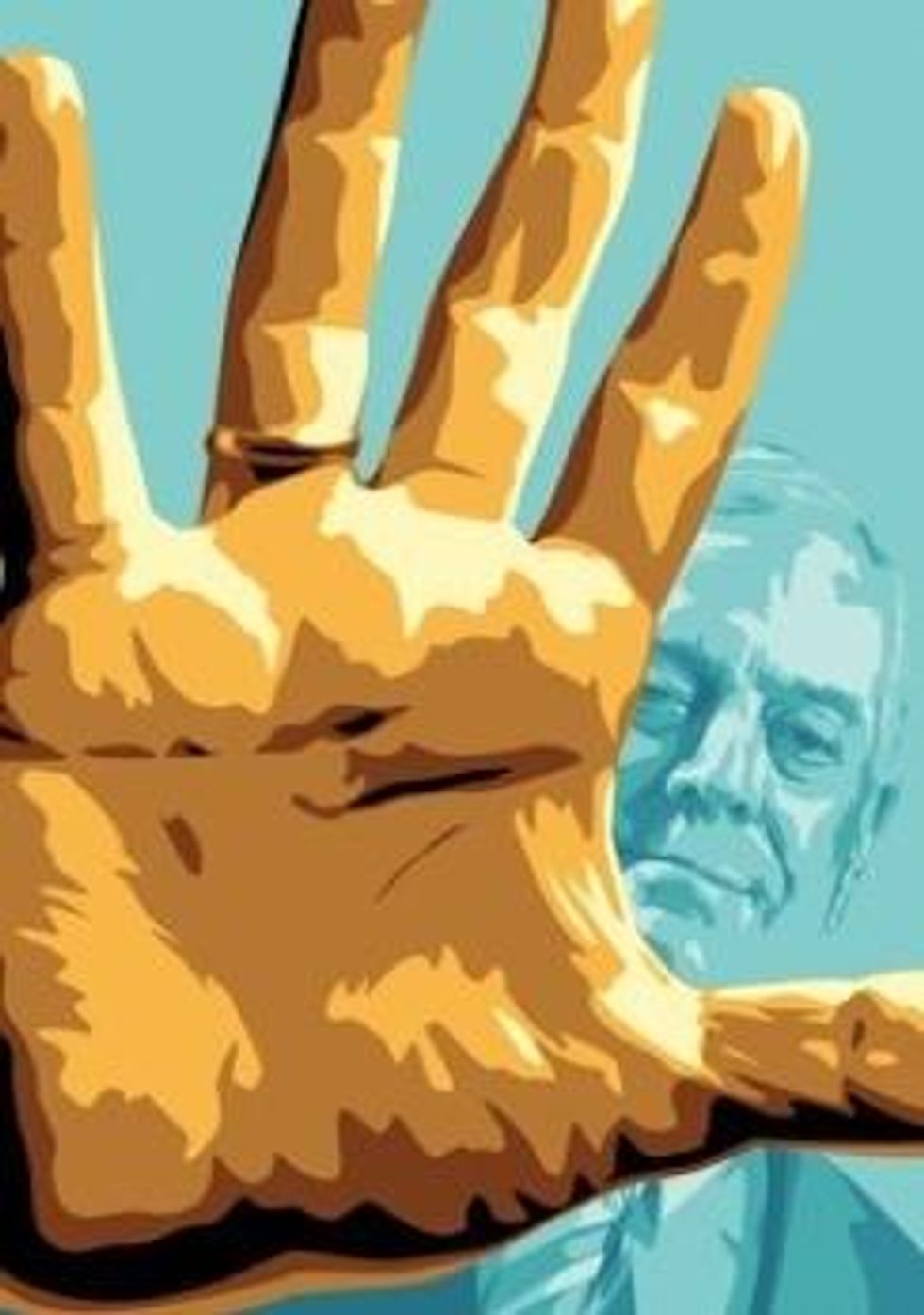
Among the wealthiest residents of 740 Park is David Koch, the billionaire industrialist, who, with his brother Charles, owns Koch Industries, a huge energy-and-chemical conglomerate. The Koch brothers are known for their strongly conservative politics and for their efforts to finance a network of advocacy groups whose goal is to move the country to the right. David Koch is a major philanthropist, contributing to cultural and medical institutions that include Lincoln Center and New York-Presbyterian Hospital. In the nineteen-eighties, he began expanding his charitable contributions to the media, donating twenty-three million dollars to public television over the years. In 1997, he began serving as a trustee of Boston's public-broadcasting operation, WGBH, and in 2006 he joined the board of New York's public-television outlet, WNET. Recent news reports have suggested that the Koch brothers are considering buying eight daily newspapers owned by the Tribune Company, one of the country's largest media empires, raising concerns that its publications--which include the Chicago Tribune and the Los Angeles Times--might slant news coverage to serve the interests of their new owners, either through executive mandates or through self-censorship. Clarence Page, a liberal Tribune columnist, recently said that the Kochs appeared intent on using a media company "as a vehicle for their political voice."
"Park Avenue" includes a multifaceted portrait of the Koch brothers, telling the history of their family company and chronicling their many donations to universities and think tanks. It features comments from allies like Tim Phillips, the president of the Kochs' main advocacy group, Americans for Prosperity, and from activists in the Tea Party, including Representative Michele Bachmann, of Minnesota, who share the Kochs' opposition to high taxes and regulation. (It also contains a few quotes from me; in 2010, I wrote an article about the Kochs for this magazine, noting that they were funding much of the opposition to President Barack Obama by quietly subsidizing an array of advocacy groups.)
A large part of the film, however, subjects the Kochs to tough scrutiny. "Nobody's money talks louder than David Koch's," the narrator, Gibney, says, describing him as a "right-wing oil tycoon" whose company had to pay what was then "the largest civil penalty in the E.P.A.'s history" for its role in more than thirty oil spills in 2000. At one point, a former doorman--his face shrouded in shadow, to preserve his anonymity--says that when he "started at 740" his assumption was that "come around to Christmastime I'm going to get a thousand from each resident. You know, because they are multibillionaires. But it's not that way." He continues, "These guys are businessmen. They know what the going rate is--they're not going to give you anything more than that. The cheapest person over all was David Koch. We would load up his trucks--two vans, usually--every weekend, for the Hamptons . . . multiple guys, in and out, in and out, heavy bags. We would never get a tip from Mr. Koch. We would never get a smile from Mr. Koch. Fifty-dollar check for Christmas, too--yeah, I mean, a check! At least you could give us cash."
For decades, federal funding for public broadcasting has been dwindling, and the government's contribution now makes up only twelve per cent of PBS's funds. Affiliates such as WNET are almost entirely dependent on gifts, some of which are sizable: in 2010, WNET received fifteen million dollars from James Tisch, the C.E.O. of Loews Corporation, and his wife, Merryl. (James Tisch is now the chairman of WNET's board.) In New York City, such benefactors inevitably live in lavish buildings. Indeed, several relatives of WNET board members live at 740 Park.
Read Mayer's full piece at The New Yorker.
Last fall, Alex Gibney, a documentary filmmaker who won an Academy Award in 2008 for an expose of torture at a U.S. military base in Afghanistan, completed a film called "Park Avenue: Money, Power and the American Dream." It was scheduled to air on PBS on November 12th. The movie had been produced independently, in part with support from the Gates Foundation. "Park Avenue" is a pointed exploration of the growing economic inequality in America and a meditation on the often self-justifying mind-set of "the one per cent." As a narrative device, Gibney focusses on one of the most expensive apartment buildings in Manhattan--740 Park Avenue--portraying it as an emblem of concentrated wealth and contrasting the lives of its inhabitants with those of poor people living at the other end of Park Avenue, in the Bronx.
Among the wealthiest residents of 740 Park is David Koch, the billionaire industrialist, who, with his brother Charles, owns Koch Industries, a huge energy-and-chemical conglomerate. The Koch brothers are known for their strongly conservative politics and for their efforts to finance a network of advocacy groups whose goal is to move the country to the right. David Koch is a major philanthropist, contributing to cultural and medical institutions that include Lincoln Center and New York-Presbyterian Hospital. In the nineteen-eighties, he began expanding his charitable contributions to the media, donating twenty-three million dollars to public television over the years. In 1997, he began serving as a trustee of Boston's public-broadcasting operation, WGBH, and in 2006 he joined the board of New York's public-television outlet, WNET. Recent news reports have suggested that the Koch brothers are considering buying eight daily newspapers owned by the Tribune Company, one of the country's largest media empires, raising concerns that its publications--which include the Chicago Tribune and the Los Angeles Times--might slant news coverage to serve the interests of their new owners, either through executive mandates or through self-censorship. Clarence Page, a liberal Tribune columnist, recently said that the Kochs appeared intent on using a media company "as a vehicle for their political voice."
"Park Avenue" includes a multifaceted portrait of the Koch brothers, telling the history of their family company and chronicling their many donations to universities and think tanks. It features comments from allies like Tim Phillips, the president of the Kochs' main advocacy group, Americans for Prosperity, and from activists in the Tea Party, including Representative Michele Bachmann, of Minnesota, who share the Kochs' opposition to high taxes and regulation. (It also contains a few quotes from me; in 2010, I wrote an article about the Kochs for this magazine, noting that they were funding much of the opposition to President Barack Obama by quietly subsidizing an array of advocacy groups.)
A large part of the film, however, subjects the Kochs to tough scrutiny. "Nobody's money talks louder than David Koch's," the narrator, Gibney, says, describing him as a "right-wing oil tycoon" whose company had to pay what was then "the largest civil penalty in the E.P.A.'s history" for its role in more than thirty oil spills in 2000. At one point, a former doorman--his face shrouded in shadow, to preserve his anonymity--says that when he "started at 740" his assumption was that "come around to Christmastime I'm going to get a thousand from each resident. You know, because they are multibillionaires. But it's not that way." He continues, "These guys are businessmen. They know what the going rate is--they're not going to give you anything more than that. The cheapest person over all was David Koch. We would load up his trucks--two vans, usually--every weekend, for the Hamptons . . . multiple guys, in and out, in and out, heavy bags. We would never get a tip from Mr. Koch. We would never get a smile from Mr. Koch. Fifty-dollar check for Christmas, too--yeah, I mean, a check! At least you could give us cash."
For decades, federal funding for public broadcasting has been dwindling, and the government's contribution now makes up only twelve per cent of PBS's funds. Affiliates such as WNET are almost entirely dependent on gifts, some of which are sizable: in 2010, WNET received fifteen million dollars from James Tisch, the C.E.O. of Loews Corporation, and his wife, Merryl. (James Tisch is now the chairman of WNET's board.) In New York City, such benefactors inevitably live in lavish buildings. Indeed, several relatives of WNET board members live at 740 Park.
Read Mayer's full piece at The New Yorker.
Last fall, Alex Gibney, a documentary filmmaker who won an Academy Award in 2008 for an expose of torture at a U.S. military base in Afghanistan, completed a film called "Park Avenue: Money, Power and the American Dream." It was scheduled to air on PBS on November 12th. The movie had been produced independently, in part with support from the Gates Foundation. "Park Avenue" is a pointed exploration of the growing economic inequality in America and a meditation on the often self-justifying mind-set of "the one per cent." As a narrative device, Gibney focusses on one of the most expensive apartment buildings in Manhattan--740 Park Avenue--portraying it as an emblem of concentrated wealth and contrasting the lives of its inhabitants with those of poor people living at the other end of Park Avenue, in the Bronx.
Among the wealthiest residents of 740 Park is David Koch, the billionaire industrialist, who, with his brother Charles, owns Koch Industries, a huge energy-and-chemical conglomerate. The Koch brothers are known for their strongly conservative politics and for their efforts to finance a network of advocacy groups whose goal is to move the country to the right. David Koch is a major philanthropist, contributing to cultural and medical institutions that include Lincoln Center and New York-Presbyterian Hospital. In the nineteen-eighties, he began expanding his charitable contributions to the media, donating twenty-three million dollars to public television over the years. In 1997, he began serving as a trustee of Boston's public-broadcasting operation, WGBH, and in 2006 he joined the board of New York's public-television outlet, WNET. Recent news reports have suggested that the Koch brothers are considering buying eight daily newspapers owned by the Tribune Company, one of the country's largest media empires, raising concerns that its publications--which include the Chicago Tribune and the Los Angeles Times--might slant news coverage to serve the interests of their new owners, either through executive mandates or through self-censorship. Clarence Page, a liberal Tribune columnist, recently said that the Kochs appeared intent on using a media company "as a vehicle for their political voice."
"Park Avenue" includes a multifaceted portrait of the Koch brothers, telling the history of their family company and chronicling their many donations to universities and think tanks. It features comments from allies like Tim Phillips, the president of the Kochs' main advocacy group, Americans for Prosperity, and from activists in the Tea Party, including Representative Michele Bachmann, of Minnesota, who share the Kochs' opposition to high taxes and regulation. (It also contains a few quotes from me; in 2010, I wrote an article about the Kochs for this magazine, noting that they were funding much of the opposition to President Barack Obama by quietly subsidizing an array of advocacy groups.)
A large part of the film, however, subjects the Kochs to tough scrutiny. "Nobody's money talks louder than David Koch's," the narrator, Gibney, says, describing him as a "right-wing oil tycoon" whose company had to pay what was then "the largest civil penalty in the E.P.A.'s history" for its role in more than thirty oil spills in 2000. At one point, a former doorman--his face shrouded in shadow, to preserve his anonymity--says that when he "started at 740" his assumption was that "come around to Christmastime I'm going to get a thousand from each resident. You know, because they are multibillionaires. But it's not that way." He continues, "These guys are businessmen. They know what the going rate is--they're not going to give you anything more than that. The cheapest person over all was David Koch. We would load up his trucks--two vans, usually--every weekend, for the Hamptons . . . multiple guys, in and out, in and out, heavy bags. We would never get a tip from Mr. Koch. We would never get a smile from Mr. Koch. Fifty-dollar check for Christmas, too--yeah, I mean, a check! At least you could give us cash."
For decades, federal funding for public broadcasting has been dwindling, and the government's contribution now makes up only twelve per cent of PBS's funds. Affiliates such as WNET are almost entirely dependent on gifts, some of which are sizable: in 2010, WNET received fifteen million dollars from James Tisch, the C.E.O. of Loews Corporation, and his wife, Merryl. (James Tisch is now the chairman of WNET's board.) In New York City, such benefactors inevitably live in lavish buildings. Indeed, several relatives of WNET board members live at 740 Park.
Read Mayer's full piece at The New Yorker.