SUBSCRIBE TO OUR FREE NEWSLETTER
Daily news & progressive opinion—funded by the people, not the corporations—delivered straight to your inbox.
5
#000000
#FFFFFF
To donate by check, phone, or other method, see our More Ways to Give page.
We've lost a war without being able to surrender -- and thus divest ourselves of the consciousness that got us into it. We are unable to look honestly at what we did and why, and determine not to do it again.
My friend Catherine Menninger sent me a note the other day that began: "The days are long past when the poison of DU (depleted uranium) was our shared preoccupation. Now an even deeper poison, a soul poison, is seeping into the body politic and beyond. It is touching us all."
Ten years later, an enormous question looms: How do we get the poison out of our system? I think that's what atonement means.
In a lengthy report on the Iraq war, David Swanson has placed it "among the world's worst events," a profoundly serious allegation that makes it far more than a "mistake." The invasion and occupation of Iraq caused the violent deaths of perhaps a million Iraqis -- God knows, maybe more -- and displaced more than 4 million; it shattered the country's physical and social infrastructure, unleashing sectarian mayhem in a formerly stable, secular society; and through reckless use of radioactive and toxic weaponry and horrific irresponsibility in the disposal of war waste, it has bequeathed a legacy of cancer, birth defects and much, much more to the nation's present and future.
Oh, and it cost a few trillion dollars -- maybe four trillion, maybe five trillion, depending on how one chooses to measure the cost -- and failed to achieve any of its political objectives, but helped wreck the U.S. economy. It fomented deep, global hatred of the United States, intensifying our insecurity in the world. It cost the lives of about 4,500 U.S. soldiers in battle situations and sent hundreds of thousands of soldiers home with lifelong physical and spiritual injuries; suicides are rampant among soldiers and vets.
And it's not simply that many of the war's promoters are still in positions of power in the government and media, but militarism itself -- the socioeconomic consensus that might not only makes right but is extremely profitable no matter what the outcome -- remains our default religion. This consensus, with the help of its servants, scribes and a few scapegoats, is infinitely adept at freeing itself from the moral filth of past -- lost, forgotten -- wars and reclaiming its position at the center of current power, scrutinizing the horizon for the next enemy it can invent and the next conflict it can maximize with the latest weaponry.
Acknowledging the tenth anniversary of the Iraq invasion seems at once crucial and meaningless. The Iraq war is "over" but in fact it has just moved elsewhere. The concept of war itself maintains a clean, vaguely glorious sheen of abstract necessity, unsullied by the choking stench of dead bodies or the inconsolable wailing of survivors.
"There are not even medical terms to describe some of these conditions because we've never seen them until now," Dr Samira Alani, a pediatric specialist at Fallujah General Hospital, told Dahr Jamail, writing for Al Jazeera. "So when I describe it, all I can do is describe the physical defects, but am unable to provide a medical term."
We eviscerated Fallujah during two invasions in 2004, not simply destroying it but contaminating it with depleted uranium and white phosphorous, along with high levels of other toxic metals. Now miscarriages, birth defects, cancer, neurological diseases and conditions for which there is no medical term plague the city at levels higher than those seen in Hiroshima in the wake of the atom bomb. Is this simply collateral damage? The fact that it wasn't the intended point of the invasion hardly excuses the perpetrators from responsibility.
How do we get the poison out of our system? As long as it's present, we'll go to war again. The shame and remorse that should be borne collectively are scattered among a million isolated souls: the soldiers and vets who bear, alone, the moral consequences of what they did and what they were a part of. Some of them speak out, and many of us hear, but their voices don't reach the centers of political power, where future wars are being plotted.
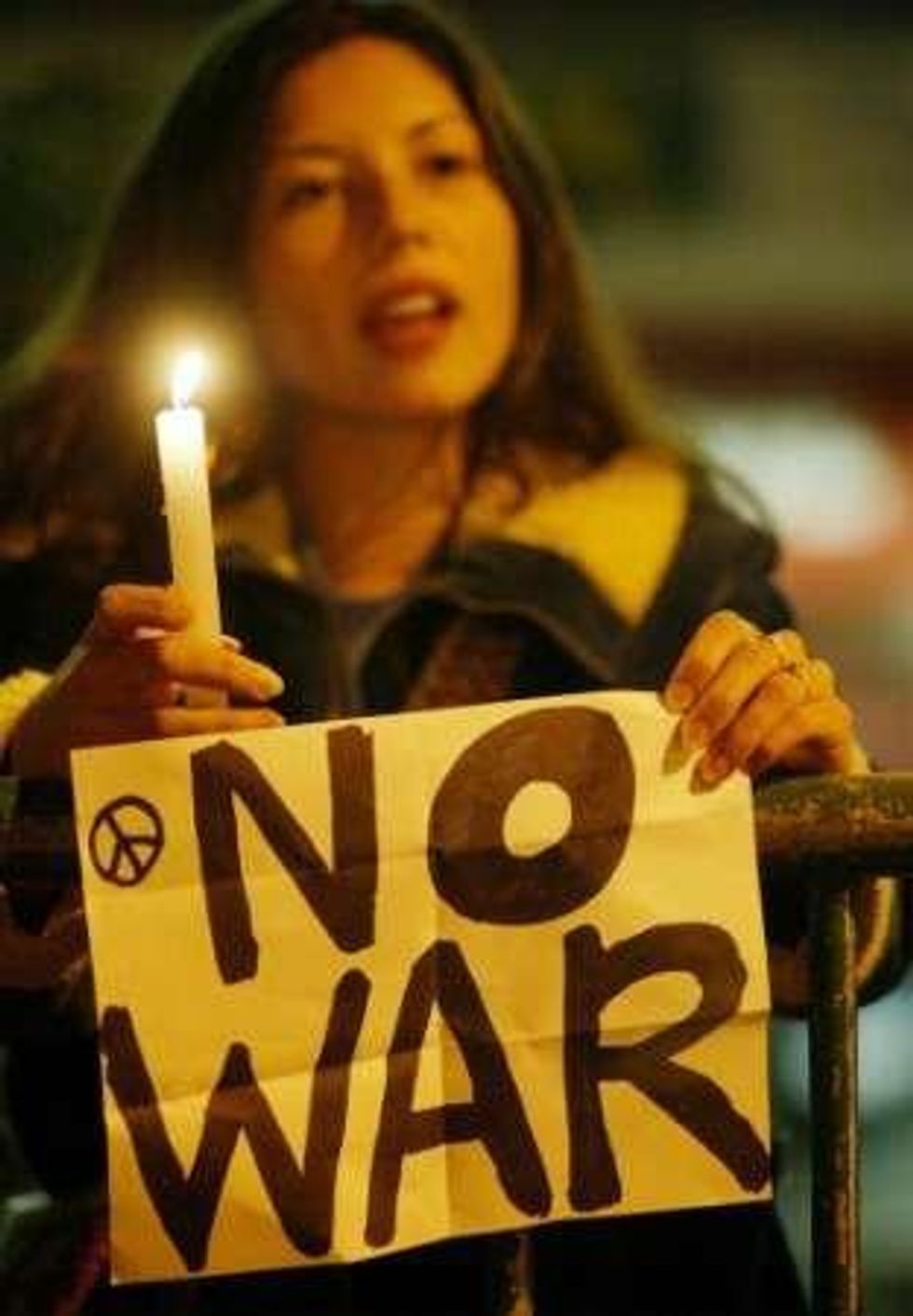
Before the invasion of Iraq began, millions of people around the globe took to the streets to protest it. They, too, seem no closer to the centers of political power than they were in 2002 and 2003. It hardly matters that they were right.
We're stuck in a situation in which the only power that can defeat the hyper-militarized United States is itself. This is my perspective ten years on. We're flailing in a broken economy, shocked and awed by the violence in our society that is nothing more than our own militarism turned inward. As long as we continue along this path, we heighten our own losses at the same time that we inflict unspeakable harm on our designated enemies.
But the perpetrators of this war cannot surrender. The moral force to require atonement and a new direction is MIA, or perhaps too fragile and unsure of itself at this point to make effective demands on the unrepentant giant.
There is a despairing obviousness to this conclusion. What I know with greater certainty, however, is that the millions of us engaged worldwide in the creation of peace cannot give up. Building peace is the same thing as building the future. Even when it seems futile, what choice do we have?
We've lost a war without being able to surrender -- and thus divest ourselves of the consciousness that got us into it. We are unable to look honestly at what we did and why, and determine not to do it again.
My friend Catherine Menninger sent me a note the other day that began: "The days are long past when the poison of DU (depleted uranium) was our shared preoccupation. Now an even deeper poison, a soul poison, is seeping into the body politic and beyond. It is touching us all."
Ten years later, an enormous question looms: How do we get the poison out of our system? I think that's what atonement means.
In a lengthy report on the Iraq war, David Swanson has placed it "among the world's worst events," a profoundly serious allegation that makes it far more than a "mistake." The invasion and occupation of Iraq caused the violent deaths of perhaps a million Iraqis -- God knows, maybe more -- and displaced more than 4 million; it shattered the country's physical and social infrastructure, unleashing sectarian mayhem in a formerly stable, secular society; and through reckless use of radioactive and toxic weaponry and horrific irresponsibility in the disposal of war waste, it has bequeathed a legacy of cancer, birth defects and much, much more to the nation's present and future.
Oh, and it cost a few trillion dollars -- maybe four trillion, maybe five trillion, depending on how one chooses to measure the cost -- and failed to achieve any of its political objectives, but helped wreck the U.S. economy. It fomented deep, global hatred of the United States, intensifying our insecurity in the world. It cost the lives of about 4,500 U.S. soldiers in battle situations and sent hundreds of thousands of soldiers home with lifelong physical and spiritual injuries; suicides are rampant among soldiers and vets.
And it's not simply that many of the war's promoters are still in positions of power in the government and media, but militarism itself -- the socioeconomic consensus that might not only makes right but is extremely profitable no matter what the outcome -- remains our default religion. This consensus, with the help of its servants, scribes and a few scapegoats, is infinitely adept at freeing itself from the moral filth of past -- lost, forgotten -- wars and reclaiming its position at the center of current power, scrutinizing the horizon for the next enemy it can invent and the next conflict it can maximize with the latest weaponry.
Acknowledging the tenth anniversary of the Iraq invasion seems at once crucial and meaningless. The Iraq war is "over" but in fact it has just moved elsewhere. The concept of war itself maintains a clean, vaguely glorious sheen of abstract necessity, unsullied by the choking stench of dead bodies or the inconsolable wailing of survivors.
"There are not even medical terms to describe some of these conditions because we've never seen them until now," Dr Samira Alani, a pediatric specialist at Fallujah General Hospital, told Dahr Jamail, writing for Al Jazeera. "So when I describe it, all I can do is describe the physical defects, but am unable to provide a medical term."
We eviscerated Fallujah during two invasions in 2004, not simply destroying it but contaminating it with depleted uranium and white phosphorous, along with high levels of other toxic metals. Now miscarriages, birth defects, cancer, neurological diseases and conditions for which there is no medical term plague the city at levels higher than those seen in Hiroshima in the wake of the atom bomb. Is this simply collateral damage? The fact that it wasn't the intended point of the invasion hardly excuses the perpetrators from responsibility.
How do we get the poison out of our system? As long as it's present, we'll go to war again. The shame and remorse that should be borne collectively are scattered among a million isolated souls: the soldiers and vets who bear, alone, the moral consequences of what they did and what they were a part of. Some of them speak out, and many of us hear, but their voices don't reach the centers of political power, where future wars are being plotted.
Before the invasion of Iraq began, millions of people around the globe took to the streets to protest it. They, too, seem no closer to the centers of political power than they were in 2002 and 2003. It hardly matters that they were right.
We're stuck in a situation in which the only power that can defeat the hyper-militarized United States is itself. This is my perspective ten years on. We're flailing in a broken economy, shocked and awed by the violence in our society that is nothing more than our own militarism turned inward. As long as we continue along this path, we heighten our own losses at the same time that we inflict unspeakable harm on our designated enemies.
But the perpetrators of this war cannot surrender. The moral force to require atonement and a new direction is MIA, or perhaps too fragile and unsure of itself at this point to make effective demands on the unrepentant giant.
There is a despairing obviousness to this conclusion. What I know with greater certainty, however, is that the millions of us engaged worldwide in the creation of peace cannot give up. Building peace is the same thing as building the future. Even when it seems futile, what choice do we have?
We've lost a war without being able to surrender -- and thus divest ourselves of the consciousness that got us into it. We are unable to look honestly at what we did and why, and determine not to do it again.
My friend Catherine Menninger sent me a note the other day that began: "The days are long past when the poison of DU (depleted uranium) was our shared preoccupation. Now an even deeper poison, a soul poison, is seeping into the body politic and beyond. It is touching us all."
Ten years later, an enormous question looms: How do we get the poison out of our system? I think that's what atonement means.
In a lengthy report on the Iraq war, David Swanson has placed it "among the world's worst events," a profoundly serious allegation that makes it far more than a "mistake." The invasion and occupation of Iraq caused the violent deaths of perhaps a million Iraqis -- God knows, maybe more -- and displaced more than 4 million; it shattered the country's physical and social infrastructure, unleashing sectarian mayhem in a formerly stable, secular society; and through reckless use of radioactive and toxic weaponry and horrific irresponsibility in the disposal of war waste, it has bequeathed a legacy of cancer, birth defects and much, much more to the nation's present and future.
Oh, and it cost a few trillion dollars -- maybe four trillion, maybe five trillion, depending on how one chooses to measure the cost -- and failed to achieve any of its political objectives, but helped wreck the U.S. economy. It fomented deep, global hatred of the United States, intensifying our insecurity in the world. It cost the lives of about 4,500 U.S. soldiers in battle situations and sent hundreds of thousands of soldiers home with lifelong physical and spiritual injuries; suicides are rampant among soldiers and vets.
And it's not simply that many of the war's promoters are still in positions of power in the government and media, but militarism itself -- the socioeconomic consensus that might not only makes right but is extremely profitable no matter what the outcome -- remains our default religion. This consensus, with the help of its servants, scribes and a few scapegoats, is infinitely adept at freeing itself from the moral filth of past -- lost, forgotten -- wars and reclaiming its position at the center of current power, scrutinizing the horizon for the next enemy it can invent and the next conflict it can maximize with the latest weaponry.
Acknowledging the tenth anniversary of the Iraq invasion seems at once crucial and meaningless. The Iraq war is "over" but in fact it has just moved elsewhere. The concept of war itself maintains a clean, vaguely glorious sheen of abstract necessity, unsullied by the choking stench of dead bodies or the inconsolable wailing of survivors.
"There are not even medical terms to describe some of these conditions because we've never seen them until now," Dr Samira Alani, a pediatric specialist at Fallujah General Hospital, told Dahr Jamail, writing for Al Jazeera. "So when I describe it, all I can do is describe the physical defects, but am unable to provide a medical term."
We eviscerated Fallujah during two invasions in 2004, not simply destroying it but contaminating it with depleted uranium and white phosphorous, along with high levels of other toxic metals. Now miscarriages, birth defects, cancer, neurological diseases and conditions for which there is no medical term plague the city at levels higher than those seen in Hiroshima in the wake of the atom bomb. Is this simply collateral damage? The fact that it wasn't the intended point of the invasion hardly excuses the perpetrators from responsibility.
How do we get the poison out of our system? As long as it's present, we'll go to war again. The shame and remorse that should be borne collectively are scattered among a million isolated souls: the soldiers and vets who bear, alone, the moral consequences of what they did and what they were a part of. Some of them speak out, and many of us hear, but their voices don't reach the centers of political power, where future wars are being plotted.
Before the invasion of Iraq began, millions of people around the globe took to the streets to protest it. They, too, seem no closer to the centers of political power than they were in 2002 and 2003. It hardly matters that they were right.
We're stuck in a situation in which the only power that can defeat the hyper-militarized United States is itself. This is my perspective ten years on. We're flailing in a broken economy, shocked and awed by the violence in our society that is nothing more than our own militarism turned inward. As long as we continue along this path, we heighten our own losses at the same time that we inflict unspeakable harm on our designated enemies.
But the perpetrators of this war cannot surrender. The moral force to require atonement and a new direction is MIA, or perhaps too fragile and unsure of itself at this point to make effective demands on the unrepentant giant.
There is a despairing obviousness to this conclusion. What I know with greater certainty, however, is that the millions of us engaged worldwide in the creation of peace cannot give up. Building peace is the same thing as building the future. Even when it seems futile, what choice do we have?