SUBSCRIBE TO OUR FREE NEWSLETTER
Daily news & progressive opinion—funded by the people, not the corporations—delivered straight to your inbox.
5
#000000
#FFFFFF
To donate by check, phone, or other method, see our More Ways to Give page.
Most of the 168 detainees at Guantanamo have been imprisoned by the U.S. Government for close to a decade without charges and with no end in sight to their captivity. Some now die at Guantanamo, thousands of miles away from their homes and families, without ever having had the chance to contest accusations of guilt. During the Bush years, the plight of these detainees was a major source of political controversy, but under Obama, it is now almost entirely forgotten. On those rare occasions when it is raised, Obama defenders invoke a blatant myth to shield the President from blame: he wanted and tried so very hard to end all of this, but Congress would not let him. Especially now that we're in an Election Year, and in light of very recent developments, it's long overdue to document clearly how misleading that excuse is.
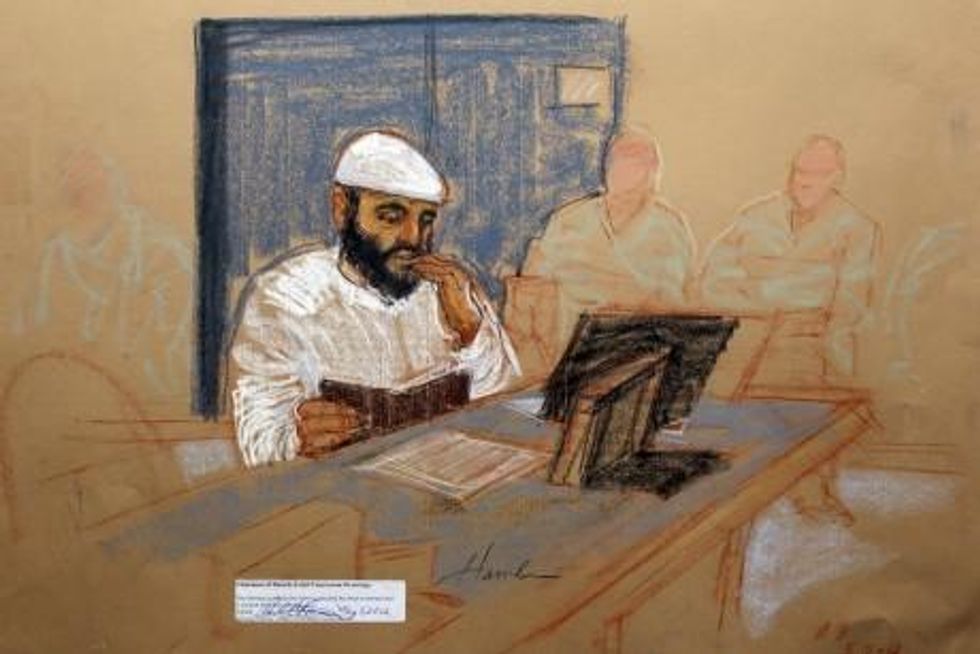
Last week, the Obama administration imposed new arbitrary rules for Guantanamo detainees who have lost their first habeas corpus challenge. Those new rules eliminate the right of lawyers to visit their clients at the detention facility; the old rules establishing that right were in place since 2004, and were bolstered by the Supreme Court's 2008 Boumediene ruling that detainees were entitled to a "meaningful" opportunity to contest the legality of their detention. The DOJ recently informed a lawyer for a Yemeni detainee, Yasein Khasem Mohammad Esmail, that he would be barred from visiting his client unless he agreed to a new regime of restrictive rules, including acknowledging that such visits are within the sole discretion of the camp's military commander. Moreover, as SCOTUSblog's Lyle Denniston explains:
Besides putting control over legal contacts entirely under a military commander's control, the "memorandum of understanding" does not allow attorneys to share with other detainee lawyers what they learn, and does not appear to allow them to use any such information to help prepare their own client for a system of periodic review at Guantanamo of whether continued detention is justified, and may even forbid the use of such information to help prepare a defense to formal terrorism criminal charges against their client.
The New York Times Editorial Page today denounced these new rules as "spiteful," cited it as "the Obama administration's latest overuse of executive authority," and said "the administration looks as if it is imperiously punishing detainees for their temerity in bringing legal challenges to their detention and losing." Detainee lawyers are refusing to submit to these new rules and are asking a federal court to rule that they violate the detainees' right to legal counsel.
But every time the issue of ongoing injustices at Guantanamo is raised, one hears the same apologia from the President's defenders: the President wanted and tried to end all of this, but Congress -- including even liberals such as Russ Feingold and Bernie Sanders -- overwhelming voted to deny him the funds to close Guantanamo. While those claims, standing alone, are true, they omit crucial facts and thus paint a wildly misleading picture about what Obama actually did and did not seek to do.
What made Guantanamo controversial was not its physical location: that it was located in the Caribbean Sea rather than on American soil (that's especially true since the Supreme Court ruled in 2004 that U.S. courts have jurisdiction over the camp). What made Guantanamo such a travesty -- and what still makes it such -- is that it is a system of indefinite detention whereby human beings are put in cages for years and years without ever being charged with a crime. President Obama's so-called "plan to close Guantanamo" -- even if it had been approved in full by Congress -- did not seek to end that core injustice. It sought to do the opposite: Obama's plan would have continued the system of indefinite detention, but simply re-located it from Guantanamo Bay onto American soil.
Long before, and fully independent of, anything Congress did, President Obama made clear that he was going to preserve the indefinite detention system at Guantanamo even once he closed the camp. President Obama fully embraced indefinite detention -- the defining injustice of Guantanamo -- as his own policy.
In February, 2009, the Obama DOJ told an appellate court it was embracing the Bush DOJ's theory that Bagram detainees have no legal rights whatsoever, an announcement that shocked the judges on the panel hearing the case. In May, 2009, President Obama delivered a speech at the National Archives -- in front of the U.S. Constitution -- and, as his plan for closing Guantanamo, proposed a system of preventative "prolonged detention" without trial inside the U.S.; The New York Times - in an article headlined "President's Detention Plan Tests American Legal Tradition" - said Obama's plan "would be a departure from the way this country sees itself, as a place where people in the grip of the government either face criminal charges or walk free." In January, 2010, the Obama administration announced it would continue to imprison several dozen Guantanamo detainees without any charges or trials of any kind, including even a military commission, on the ground that they were "too difficult to prosecute but too dangerous to release." That was all Obama's doing, completely independent of anything Congress did.
When the President finally unveiled his plan for "closing Guantanamo," it became clear that it wasn't a plan to "close" the camp as much as it was a plan simply to re-locate it -- import it -- onto American soil, at a newly purchased federal prison in Thompson, Illinois. William Lynn, Obama's Deputy Defense Secretary, sent a letter to inquiring Senators that expressly stated that the Obama administration intended to continue indefinitely to imprison some of the detainees with no charges of any kind. The plan was classic Obama: a pretty, feel-good, empty symbolic gesture (get rid of the symbolic face of Bush War on Terror excesses) while preserving the core abuses (the powers of indefinite detention ), even strengthening and expanding those abuses by bringing them into the U.S.
Recall that the ACLU immediately condemned what it called the President's plan to create "GITMO North." About the President's so-called "plan to close Guantanamo," Executive Director Anthony Romero said:
The creation of a "Gitmo North" in Illinois is hardly a meaningful step forward. Shutting down Guantanamo will be nothing more than a symbolic gesture if we continue its lawless policies onshore.
Alarmingly, all indications are that the administration plans to continue its predecessor's policy of indefinite detention without charge or trial for some detainees, with only a change of location. Such a policy is completely at odds with our democratic commitment to due process and human rights whether it's occurring in Cuba or in Illinois.
In fact, while the Obama administration inherited the Guantanamo debacle, this current move is its own affirmative adoption of those policies. It is unimaginable that the Obama administration is using the same justification as the Bush administration used to undercut centuries of legal jurisprudence and the principle of innocent until proven guilty and the right to confront one's accusers. . . . .The Obama administration's announcement today contradicts everything the president has said about the need for America to return to leading with its values.
In fact, Obama's "close GITMO" plan -- if it had been adopted by Congress -- would have done something worse than merely continue the camp's defining injustice of indefinite detention. It would likely have expanded those powers by importing them into the U.S. The day after President Obama's speech proposing a system of "prolonged detention" on U.S. soil, the ACLU's Ben Wizner told me in an interview:
It may to serve to enshrine into law the very departures from the law that the Bush administration led us on, and that we all criticized so much. And I'll elaborate on that. But that's really my initial reaction to it; that what President Obama was talking about yesterday is making permanent some of the worst features of the Guantanamo regime. He may be shutting down the prison on that camp, but what's worse is he may be importing some of those legal principles into our own legal system, where they'll do great harm for a long time.
So even if Congress had fully supported and funded Obama's plan to "close Guantanamo," the core injustices that made the camp such a travesty would remain. In fact, they'd not only remain, but would be in full force within the U.S. That's what makes the prime excuse offered for Obama -- he tried to end all of this but couldn't - so misleading. He only wanted to change the locale of these injustices, but sought fully to preserve them.
Read the full article with updates at Salon.com
Most of the 168 detainees at Guantanamo have been imprisoned by the U.S. Government for close to a decade without charges and with no end in sight to their captivity. Some now die at Guantanamo, thousands of miles away from their homes and families, without ever having had the chance to contest accusations of guilt. During the Bush years, the plight of these detainees was a major source of political controversy, but under Obama, it is now almost entirely forgotten. On those rare occasions when it is raised, Obama defenders invoke a blatant myth to shield the President from blame: he wanted and tried so very hard to end all of this, but Congress would not let him. Especially now that we're in an Election Year, and in light of very recent developments, it's long overdue to document clearly how misleading that excuse is.
Last week, the Obama administration imposed new arbitrary rules for Guantanamo detainees who have lost their first habeas corpus challenge. Those new rules eliminate the right of lawyers to visit their clients at the detention facility; the old rules establishing that right were in place since 2004, and were bolstered by the Supreme Court's 2008 Boumediene ruling that detainees were entitled to a "meaningful" opportunity to contest the legality of their detention. The DOJ recently informed a lawyer for a Yemeni detainee, Yasein Khasem Mohammad Esmail, that he would be barred from visiting his client unless he agreed to a new regime of restrictive rules, including acknowledging that such visits are within the sole discretion of the camp's military commander. Moreover, as SCOTUSblog's Lyle Denniston explains:
Besides putting control over legal contacts entirely under a military commander's control, the "memorandum of understanding" does not allow attorneys to share with other detainee lawyers what they learn, and does not appear to allow them to use any such information to help prepare their own client for a system of periodic review at Guantanamo of whether continued detention is justified, and may even forbid the use of such information to help prepare a defense to formal terrorism criminal charges against their client.
The New York Times Editorial Page today denounced these new rules as "spiteful," cited it as "the Obama administration's latest overuse of executive authority," and said "the administration looks as if it is imperiously punishing detainees for their temerity in bringing legal challenges to their detention and losing." Detainee lawyers are refusing to submit to these new rules and are asking a federal court to rule that they violate the detainees' right to legal counsel.
But every time the issue of ongoing injustices at Guantanamo is raised, one hears the same apologia from the President's defenders: the President wanted and tried to end all of this, but Congress -- including even liberals such as Russ Feingold and Bernie Sanders -- overwhelming voted to deny him the funds to close Guantanamo. While those claims, standing alone, are true, they omit crucial facts and thus paint a wildly misleading picture about what Obama actually did and did not seek to do.
What made Guantanamo controversial was not its physical location: that it was located in the Caribbean Sea rather than on American soil (that's especially true since the Supreme Court ruled in 2004 that U.S. courts have jurisdiction over the camp). What made Guantanamo such a travesty -- and what still makes it such -- is that it is a system of indefinite detention whereby human beings are put in cages for years and years without ever being charged with a crime. President Obama's so-called "plan to close Guantanamo" -- even if it had been approved in full by Congress -- did not seek to end that core injustice. It sought to do the opposite: Obama's plan would have continued the system of indefinite detention, but simply re-located it from Guantanamo Bay onto American soil.
Long before, and fully independent of, anything Congress did, President Obama made clear that he was going to preserve the indefinite detention system at Guantanamo even once he closed the camp. President Obama fully embraced indefinite detention -- the defining injustice of Guantanamo -- as his own policy.
In February, 2009, the Obama DOJ told an appellate court it was embracing the Bush DOJ's theory that Bagram detainees have no legal rights whatsoever, an announcement that shocked the judges on the panel hearing the case. In May, 2009, President Obama delivered a speech at the National Archives -- in front of the U.S. Constitution -- and, as his plan for closing Guantanamo, proposed a system of preventative "prolonged detention" without trial inside the U.S.; The New York Times - in an article headlined "President's Detention Plan Tests American Legal Tradition" - said Obama's plan "would be a departure from the way this country sees itself, as a place where people in the grip of the government either face criminal charges or walk free." In January, 2010, the Obama administration announced it would continue to imprison several dozen Guantanamo detainees without any charges or trials of any kind, including even a military commission, on the ground that they were "too difficult to prosecute but too dangerous to release." That was all Obama's doing, completely independent of anything Congress did.
When the President finally unveiled his plan for "closing Guantanamo," it became clear that it wasn't a plan to "close" the camp as much as it was a plan simply to re-locate it -- import it -- onto American soil, at a newly purchased federal prison in Thompson, Illinois. William Lynn, Obama's Deputy Defense Secretary, sent a letter to inquiring Senators that expressly stated that the Obama administration intended to continue indefinitely to imprison some of the detainees with no charges of any kind. The plan was classic Obama: a pretty, feel-good, empty symbolic gesture (get rid of the symbolic face of Bush War on Terror excesses) while preserving the core abuses (the powers of indefinite detention ), even strengthening and expanding those abuses by bringing them into the U.S.
Recall that the ACLU immediately condemned what it called the President's plan to create "GITMO North." About the President's so-called "plan to close Guantanamo," Executive Director Anthony Romero said:
The creation of a "Gitmo North" in Illinois is hardly a meaningful step forward. Shutting down Guantanamo will be nothing more than a symbolic gesture if we continue its lawless policies onshore.
Alarmingly, all indications are that the administration plans to continue its predecessor's policy of indefinite detention without charge or trial for some detainees, with only a change of location. Such a policy is completely at odds with our democratic commitment to due process and human rights whether it's occurring in Cuba or in Illinois.
In fact, while the Obama administration inherited the Guantanamo debacle, this current move is its own affirmative adoption of those policies. It is unimaginable that the Obama administration is using the same justification as the Bush administration used to undercut centuries of legal jurisprudence and the principle of innocent until proven guilty and the right to confront one's accusers. . . . .The Obama administration's announcement today contradicts everything the president has said about the need for America to return to leading with its values.
In fact, Obama's "close GITMO" plan -- if it had been adopted by Congress -- would have done something worse than merely continue the camp's defining injustice of indefinite detention. It would likely have expanded those powers by importing them into the U.S. The day after President Obama's speech proposing a system of "prolonged detention" on U.S. soil, the ACLU's Ben Wizner told me in an interview:
It may to serve to enshrine into law the very departures from the law that the Bush administration led us on, and that we all criticized so much. And I'll elaborate on that. But that's really my initial reaction to it; that what President Obama was talking about yesterday is making permanent some of the worst features of the Guantanamo regime. He may be shutting down the prison on that camp, but what's worse is he may be importing some of those legal principles into our own legal system, where they'll do great harm for a long time.
So even if Congress had fully supported and funded Obama's plan to "close Guantanamo," the core injustices that made the camp such a travesty would remain. In fact, they'd not only remain, but would be in full force within the U.S. That's what makes the prime excuse offered for Obama -- he tried to end all of this but couldn't - so misleading. He only wanted to change the locale of these injustices, but sought fully to preserve them.
Read the full article with updates at Salon.com
Most of the 168 detainees at Guantanamo have been imprisoned by the U.S. Government for close to a decade without charges and with no end in sight to their captivity. Some now die at Guantanamo, thousands of miles away from their homes and families, without ever having had the chance to contest accusations of guilt. During the Bush years, the plight of these detainees was a major source of political controversy, but under Obama, it is now almost entirely forgotten. On those rare occasions when it is raised, Obama defenders invoke a blatant myth to shield the President from blame: he wanted and tried so very hard to end all of this, but Congress would not let him. Especially now that we're in an Election Year, and in light of very recent developments, it's long overdue to document clearly how misleading that excuse is.
Last week, the Obama administration imposed new arbitrary rules for Guantanamo detainees who have lost their first habeas corpus challenge. Those new rules eliminate the right of lawyers to visit their clients at the detention facility; the old rules establishing that right were in place since 2004, and were bolstered by the Supreme Court's 2008 Boumediene ruling that detainees were entitled to a "meaningful" opportunity to contest the legality of their detention. The DOJ recently informed a lawyer for a Yemeni detainee, Yasein Khasem Mohammad Esmail, that he would be barred from visiting his client unless he agreed to a new regime of restrictive rules, including acknowledging that such visits are within the sole discretion of the camp's military commander. Moreover, as SCOTUSblog's Lyle Denniston explains:
Besides putting control over legal contacts entirely under a military commander's control, the "memorandum of understanding" does not allow attorneys to share with other detainee lawyers what they learn, and does not appear to allow them to use any such information to help prepare their own client for a system of periodic review at Guantanamo of whether continued detention is justified, and may even forbid the use of such information to help prepare a defense to formal terrorism criminal charges against their client.
The New York Times Editorial Page today denounced these new rules as "spiteful," cited it as "the Obama administration's latest overuse of executive authority," and said "the administration looks as if it is imperiously punishing detainees for their temerity in bringing legal challenges to their detention and losing." Detainee lawyers are refusing to submit to these new rules and are asking a federal court to rule that they violate the detainees' right to legal counsel.
But every time the issue of ongoing injustices at Guantanamo is raised, one hears the same apologia from the President's defenders: the President wanted and tried to end all of this, but Congress -- including even liberals such as Russ Feingold and Bernie Sanders -- overwhelming voted to deny him the funds to close Guantanamo. While those claims, standing alone, are true, they omit crucial facts and thus paint a wildly misleading picture about what Obama actually did and did not seek to do.
What made Guantanamo controversial was not its physical location: that it was located in the Caribbean Sea rather than on American soil (that's especially true since the Supreme Court ruled in 2004 that U.S. courts have jurisdiction over the camp). What made Guantanamo such a travesty -- and what still makes it such -- is that it is a system of indefinite detention whereby human beings are put in cages for years and years without ever being charged with a crime. President Obama's so-called "plan to close Guantanamo" -- even if it had been approved in full by Congress -- did not seek to end that core injustice. It sought to do the opposite: Obama's plan would have continued the system of indefinite detention, but simply re-located it from Guantanamo Bay onto American soil.
Long before, and fully independent of, anything Congress did, President Obama made clear that he was going to preserve the indefinite detention system at Guantanamo even once he closed the camp. President Obama fully embraced indefinite detention -- the defining injustice of Guantanamo -- as his own policy.
In February, 2009, the Obama DOJ told an appellate court it was embracing the Bush DOJ's theory that Bagram detainees have no legal rights whatsoever, an announcement that shocked the judges on the panel hearing the case. In May, 2009, President Obama delivered a speech at the National Archives -- in front of the U.S. Constitution -- and, as his plan for closing Guantanamo, proposed a system of preventative "prolonged detention" without trial inside the U.S.; The New York Times - in an article headlined "President's Detention Plan Tests American Legal Tradition" - said Obama's plan "would be a departure from the way this country sees itself, as a place where people in the grip of the government either face criminal charges or walk free." In January, 2010, the Obama administration announced it would continue to imprison several dozen Guantanamo detainees without any charges or trials of any kind, including even a military commission, on the ground that they were "too difficult to prosecute but too dangerous to release." That was all Obama's doing, completely independent of anything Congress did.
When the President finally unveiled his plan for "closing Guantanamo," it became clear that it wasn't a plan to "close" the camp as much as it was a plan simply to re-locate it -- import it -- onto American soil, at a newly purchased federal prison in Thompson, Illinois. William Lynn, Obama's Deputy Defense Secretary, sent a letter to inquiring Senators that expressly stated that the Obama administration intended to continue indefinitely to imprison some of the detainees with no charges of any kind. The plan was classic Obama: a pretty, feel-good, empty symbolic gesture (get rid of the symbolic face of Bush War on Terror excesses) while preserving the core abuses (the powers of indefinite detention ), even strengthening and expanding those abuses by bringing them into the U.S.
Recall that the ACLU immediately condemned what it called the President's plan to create "GITMO North." About the President's so-called "plan to close Guantanamo," Executive Director Anthony Romero said:
The creation of a "Gitmo North" in Illinois is hardly a meaningful step forward. Shutting down Guantanamo will be nothing more than a symbolic gesture if we continue its lawless policies onshore.
Alarmingly, all indications are that the administration plans to continue its predecessor's policy of indefinite detention without charge or trial for some detainees, with only a change of location. Such a policy is completely at odds with our democratic commitment to due process and human rights whether it's occurring in Cuba or in Illinois.
In fact, while the Obama administration inherited the Guantanamo debacle, this current move is its own affirmative adoption of those policies. It is unimaginable that the Obama administration is using the same justification as the Bush administration used to undercut centuries of legal jurisprudence and the principle of innocent until proven guilty and the right to confront one's accusers. . . . .The Obama administration's announcement today contradicts everything the president has said about the need for America to return to leading with its values.
In fact, Obama's "close GITMO" plan -- if it had been adopted by Congress -- would have done something worse than merely continue the camp's defining injustice of indefinite detention. It would likely have expanded those powers by importing them into the U.S. The day after President Obama's speech proposing a system of "prolonged detention" on U.S. soil, the ACLU's Ben Wizner told me in an interview:
It may to serve to enshrine into law the very departures from the law that the Bush administration led us on, and that we all criticized so much. And I'll elaborate on that. But that's really my initial reaction to it; that what President Obama was talking about yesterday is making permanent some of the worst features of the Guantanamo regime. He may be shutting down the prison on that camp, but what's worse is he may be importing some of those legal principles into our own legal system, where they'll do great harm for a long time.
So even if Congress had fully supported and funded Obama's plan to "close Guantanamo," the core injustices that made the camp such a travesty would remain. In fact, they'd not only remain, but would be in full force within the U.S. That's what makes the prime excuse offered for Obama -- he tried to end all of this but couldn't - so misleading. He only wanted to change the locale of these injustices, but sought fully to preserve them.
Read the full article with updates at Salon.com