
The Syrian conflict continued to boil - or boil over - when Syrian troops fired across the Turkish border on April 9, apparently killing either fleeing refugees or armed combatants. However, despite continued words of caution from the Pentagon and White House about getting into another messy Middle East war, Secretary of State Hilary Clinton pressed for more intervention. The Syrian Accountability Act of 2003 began the formal U.S. attempt to bring down Assad, but the imperial priness Clinton now demands Syrian President Assad resign in favor of the Syrian National Council (SNC). This hastily formed group composed of exiled Syrian Muslim Brotherhood members, and other groupings, many in exile, would magically transform Syria via fair elections into a good democracy - and sheep will fly.
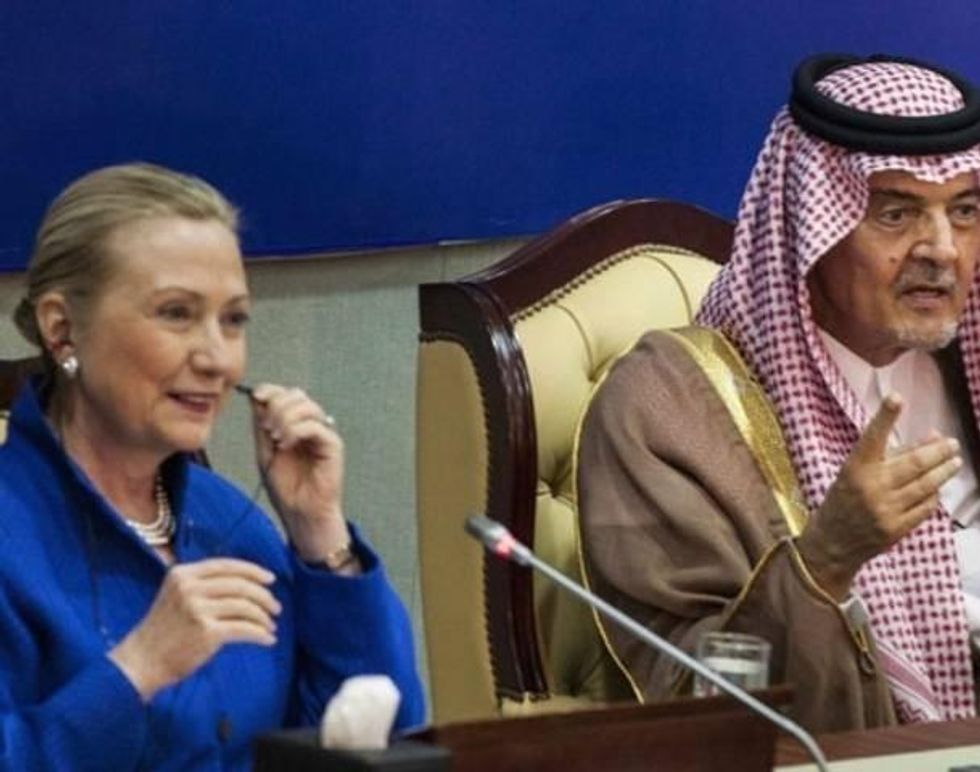
Washington's "humanitarian" assistance fund for Syria escalated into "non-lethal" aid - sophisticated satellite communications equipment, and night-vision goggles so "rebels" could "evade" Syrian government assaults.
U.S. and Western media have underscored Assad's butchery, but offered little of substance on the opposition and its often savage behavior. Just weeks after the first March 2011 protests - Arab Springtime - the media disregarded eyewitness evidence of armed groups shooting at and killing members of Syria's security forces as well as civilians. Reporter Pepe Escobar witnessed "the shooting deaths of nine Syrian soldiers in Banyas" as early as April 10, 2011.
By focusing only on Assad's violence, Western leaders could promote a lopsided view of the conflict. In recent weeks, however, the media could not ignore all "photos and video footage of armed men with heavy weapons proudly declaring their stripes - some of them religious extremists advocating the killing of civilians based on sectarian differences."
Suicide bombings took place in Damascus and Aleppo, and Al Qaeda called its minions "to battle." The U.S. government ignored Al Qaeda's role and refers only to the "good" SNC, the majority who appear to ally themselves with Syria's Muslim Brotherhood.
At a March meeting in Istanbul, sponsored by Turkey and Qatar, however, an unlikely source of dissent emerged. Iraqi Prime Minister Nuri al-Maliki said: "We reject any arming [of Syrian rebels] and the process to overthrow the [Assad] regime, because this will leave a greater crisis in the region."
The question in Washington should be: will adding fuel to the violence make matters worse?
Al-Maliki questioned the motives of Qatar and Saudi Arabia who "are calling for sending arms instead of working on putting out the fire."
Iraq, he continued, opposed "arming" the Free Syrian Army and he feared, "those countries that are interfering in Syria's internal affairs will interfere in the internal affairs of any country."
Maliki, who governs Iraq as a result of the U.S. invasion and devastation of that country, questioned equating a cause backed by Saudi funding with freedom.
"What's wrong with the Free Syrian Army getting funding from Saudi Arabia? Or, when did Saudi Arabia ever support freedom?" he asked.
These remarks were not featured in headlined stories; nor did TV or radio news provide coverage of Maliki's statement. Until recently, we might have depended on Al-Jazeera, whose Iraq war coverage won it praise from journalists. However, the network's Syria reports led some reporters to resign over the network's biased reporting. Hassan Shaaban, the Beirut bureau's managing director, resigned in March, "after leaked emails revealed his frustration over the channel's coverage." Shaaban had filed a story showing armed men fighting with the Syrian army in Wadi Khalid. Al Jazeera dropped the story. Two other Al-Jazeera staff quit for the same reasons.
Al Akhbar calimed Qatar's foreign policy influenced the reporting on Syria. Al Jazeera maintains headquarters in Qatar and the royal family helped establish the network.
The question in Washington should be: will adding fuel to the violence make matters worse? Assad's forces have defeated - with huge civilian casualties - the formal rebel uprisings, but the SNC could sponsor a prolonged terrorist war, which would increase civilian casualties, and not succeed in removing Assad or his Party [the Baath Party] from power.
Logic and reason dictate that Obama should follow the Syrian majority. A February 2012 poll showed "55% of Syrians want Assad to stay," [not] motivated by fondness for his government, but "by fear of civil war." The polls also ascertained "that half the Syrians who accept him staying in power believe he must usher in free elections in the near future." The YouGov Siraj poll on Syria was commissioned by The Doha Debates and funded by the Qatar Foundation, which isconnected to the royal family. The family has taken a hawkish position on Syria.
These facts have not oozed into State Department consciousness, where the rush for U.S. entanglement appears contagious. Good sense should command Secretary Clinton to help save the process former UN Secretary General Kofi Annan set in motion for a negotiated cease fire. The opposition and the Assad side negated the April 10 deadline. This means Syrians will pay a higher human toll. The suffering is already immense.
On April 14, the UN Security Council backed a deployment of the first wave of U.N. military observers to monitor the tentative cease-fire between the Syrian government and opposition combatants. Before the arrangements become final, Washington should weigh in now with Russia, China and the western powers - not Saudi Arabia and Qatar - to pressure both sides to stop shooting and start serious talking.
The Syrian conflict continued to boil - or boil over - when Syrian troops fired across the Turkish border on April 9, apparently killing either fleeing refugees or armed combatants. However, despite continued words of caution from the Pentagon and White House about getting into another messy Middle East war, Secretary of State Hilary Clinton pressed for more intervention. The Syrian Accountability Act of 2003 began the formal U.S. attempt to bring down Assad, but the imperial priness Clinton now demands Syrian President Assad resign in favor of the Syrian National Council (SNC). This hastily formed group composed of exiled Syrian Muslim Brotherhood members, and other groupings, many in exile, would magically transform Syria via fair elections into a good democracy - and sheep will fly.
Washington's "humanitarian" assistance fund for Syria escalated into "non-lethal" aid - sophisticated satellite communications equipment, and night-vision goggles so "rebels" could "evade" Syrian government assaults.
U.S. and Western media have underscored Assad's butchery, but offered little of substance on the opposition and its often savage behavior. Just weeks after the first March 2011 protests - Arab Springtime - the media disregarded eyewitness evidence of armed groups shooting at and killing members of Syria's security forces as well as civilians. Reporter Pepe Escobar witnessed "the shooting deaths of nine Syrian soldiers in Banyas" as early as April 10, 2011.
By focusing only on Assad's violence, Western leaders could promote a lopsided view of the conflict. In recent weeks, however, the media could not ignore all "photos and video footage of armed men with heavy weapons proudly declaring their stripes - some of them religious extremists advocating the killing of civilians based on sectarian differences."
Suicide bombings took place in Damascus and Aleppo, and Al Qaeda called its minions "to battle." The U.S. government ignored Al Qaeda's role and refers only to the "good" SNC, the majority who appear to ally themselves with Syria's Muslim Brotherhood.
At a March meeting in Istanbul, sponsored by Turkey and Qatar, however, an unlikely source of dissent emerged. Iraqi Prime Minister Nuri al-Maliki said: "We reject any arming [of Syrian rebels] and the process to overthrow the [Assad] regime, because this will leave a greater crisis in the region."
The question in Washington should be: will adding fuel to the violence make matters worse?
Al-Maliki questioned the motives of Qatar and Saudi Arabia who "are calling for sending arms instead of working on putting out the fire."
Iraq, he continued, opposed "arming" the Free Syrian Army and he feared, "those countries that are interfering in Syria's internal affairs will interfere in the internal affairs of any country."
Maliki, who governs Iraq as a result of the U.S. invasion and devastation of that country, questioned equating a cause backed by Saudi funding with freedom.
"What's wrong with the Free Syrian Army getting funding from Saudi Arabia? Or, when did Saudi Arabia ever support freedom?" he asked.
These remarks were not featured in headlined stories; nor did TV or radio news provide coverage of Maliki's statement. Until recently, we might have depended on Al-Jazeera, whose Iraq war coverage won it praise from journalists. However, the network's Syria reports led some reporters to resign over the network's biased reporting. Hassan Shaaban, the Beirut bureau's managing director, resigned in March, "after leaked emails revealed his frustration over the channel's coverage." Shaaban had filed a story showing armed men fighting with the Syrian army in Wadi Khalid. Al Jazeera dropped the story. Two other Al-Jazeera staff quit for the same reasons.
Al Akhbar calimed Qatar's foreign policy influenced the reporting on Syria. Al Jazeera maintains headquarters in Qatar and the royal family helped establish the network.
The question in Washington should be: will adding fuel to the violence make matters worse? Assad's forces have defeated - with huge civilian casualties - the formal rebel uprisings, but the SNC could sponsor a prolonged terrorist war, which would increase civilian casualties, and not succeed in removing Assad or his Party [the Baath Party] from power.
Logic and reason dictate that Obama should follow the Syrian majority. A February 2012 poll showed "55% of Syrians want Assad to stay," [not] motivated by fondness for his government, but "by fear of civil war." The polls also ascertained "that half the Syrians who accept him staying in power believe he must usher in free elections in the near future." The YouGov Siraj poll on Syria was commissioned by The Doha Debates and funded by the Qatar Foundation, which isconnected to the royal family. The family has taken a hawkish position on Syria.
These facts have not oozed into State Department consciousness, where the rush for U.S. entanglement appears contagious. Good sense should command Secretary Clinton to help save the process former UN Secretary General Kofi Annan set in motion for a negotiated cease fire. The opposition and the Assad side negated the April 10 deadline. This means Syrians will pay a higher human toll. The suffering is already immense.
On April 14, the UN Security Council backed a deployment of the first wave of U.N. military observers to monitor the tentative cease-fire between the Syrian government and opposition combatants. Before the arrangements become final, Washington should weigh in now with Russia, China and the western powers - not Saudi Arabia and Qatar - to pressure both sides to stop shooting and start serious talking.
The Syrian conflict continued to boil - or boil over - when Syrian troops fired across the Turkish border on April 9, apparently killing either fleeing refugees or armed combatants. However, despite continued words of caution from the Pentagon and White House about getting into another messy Middle East war, Secretary of State Hilary Clinton pressed for more intervention. The Syrian Accountability Act of 2003 began the formal U.S. attempt to bring down Assad, but the imperial priness Clinton now demands Syrian President Assad resign in favor of the Syrian National Council (SNC). This hastily formed group composed of exiled Syrian Muslim Brotherhood members, and other groupings, many in exile, would magically transform Syria via fair elections into a good democracy - and sheep will fly.
Washington's "humanitarian" assistance fund for Syria escalated into "non-lethal" aid - sophisticated satellite communications equipment, and night-vision goggles so "rebels" could "evade" Syrian government assaults.
U.S. and Western media have underscored Assad's butchery, but offered little of substance on the opposition and its often savage behavior. Just weeks after the first March 2011 protests - Arab Springtime - the media disregarded eyewitness evidence of armed groups shooting at and killing members of Syria's security forces as well as civilians. Reporter Pepe Escobar witnessed "the shooting deaths of nine Syrian soldiers in Banyas" as early as April 10, 2011.
By focusing only on Assad's violence, Western leaders could promote a lopsided view of the conflict. In recent weeks, however, the media could not ignore all "photos and video footage of armed men with heavy weapons proudly declaring their stripes - some of them religious extremists advocating the killing of civilians based on sectarian differences."
Suicide bombings took place in Damascus and Aleppo, and Al Qaeda called its minions "to battle." The U.S. government ignored Al Qaeda's role and refers only to the "good" SNC, the majority who appear to ally themselves with Syria's Muslim Brotherhood.
At a March meeting in Istanbul, sponsored by Turkey and Qatar, however, an unlikely source of dissent emerged. Iraqi Prime Minister Nuri al-Maliki said: "We reject any arming [of Syrian rebels] and the process to overthrow the [Assad] regime, because this will leave a greater crisis in the region."
The question in Washington should be: will adding fuel to the violence make matters worse?
Al-Maliki questioned the motives of Qatar and Saudi Arabia who "are calling for sending arms instead of working on putting out the fire."
Iraq, he continued, opposed "arming" the Free Syrian Army and he feared, "those countries that are interfering in Syria's internal affairs will interfere in the internal affairs of any country."
Maliki, who governs Iraq as a result of the U.S. invasion and devastation of that country, questioned equating a cause backed by Saudi funding with freedom.
"What's wrong with the Free Syrian Army getting funding from Saudi Arabia? Or, when did Saudi Arabia ever support freedom?" he asked.
These remarks were not featured in headlined stories; nor did TV or radio news provide coverage of Maliki's statement. Until recently, we might have depended on Al-Jazeera, whose Iraq war coverage won it praise from journalists. However, the network's Syria reports led some reporters to resign over the network's biased reporting. Hassan Shaaban, the Beirut bureau's managing director, resigned in March, "after leaked emails revealed his frustration over the channel's coverage." Shaaban had filed a story showing armed men fighting with the Syrian army in Wadi Khalid. Al Jazeera dropped the story. Two other Al-Jazeera staff quit for the same reasons.
Al Akhbar calimed Qatar's foreign policy influenced the reporting on Syria. Al Jazeera maintains headquarters in Qatar and the royal family helped establish the network.
The question in Washington should be: will adding fuel to the violence make matters worse? Assad's forces have defeated - with huge civilian casualties - the formal rebel uprisings, but the SNC could sponsor a prolonged terrorist war, which would increase civilian casualties, and not succeed in removing Assad or his Party [the Baath Party] from power.
Logic and reason dictate that Obama should follow the Syrian majority. A February 2012 poll showed "55% of Syrians want Assad to stay," [not] motivated by fondness for his government, but "by fear of civil war." The polls also ascertained "that half the Syrians who accept him staying in power believe he must usher in free elections in the near future." The YouGov Siraj poll on Syria was commissioned by The Doha Debates and funded by the Qatar Foundation, which isconnected to the royal family. The family has taken a hawkish position on Syria.
These facts have not oozed into State Department consciousness, where the rush for U.S. entanglement appears contagious. Good sense should command Secretary Clinton to help save the process former UN Secretary General Kofi Annan set in motion for a negotiated cease fire. The opposition and the Assad side negated the April 10 deadline. This means Syrians will pay a higher human toll. The suffering is already immense.
On April 14, the UN Security Council backed a deployment of the first wave of U.N. military observers to monitor the tentative cease-fire between the Syrian government and opposition combatants. Before the arrangements become final, Washington should weigh in now with Russia, China and the western powers - not Saudi Arabia and Qatar - to pressure both sides to stop shooting and start serious talking.