

A lesson in how not to reduce gas prices: the White House is backing TransCanada's bid to build the southern portion of the controversial pipeline Keystone XL pipeline. The section to be built will run from Cushing, Oklahoma to Texas and carry crude oil pumped in the Midwest to refineries in Texas and be completed by late 2013--so it will have virtually no impact on the current high gas prices.
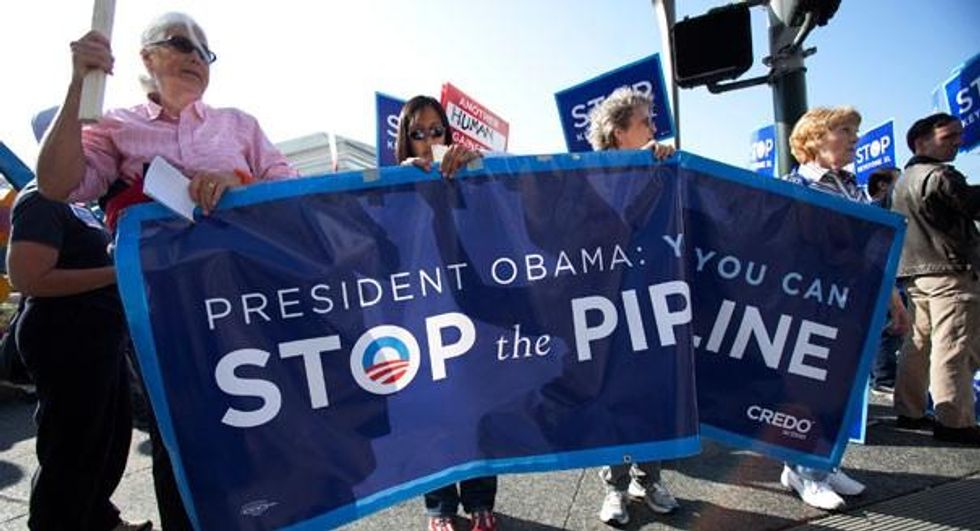
Nor is there any evidence that it will have any impact on future gas prices. As we've highlighted continually, there is no guarantee that any of this refined oil will stay in the U.S. In fact, most likely, Keystone will be an export pipeline that will send oil to whoever pays the most for it, like India or China. Building the southern part of it certainly sets the stage for the full pipeline to be built. TransCanada says it will reapply for the cross-border permit soon and the decision to reapply has been welcomed by the White House.
President Obama's move may be an attempt to fight back against Republican criticism but in doing so, he is sending a signal to environmentalist that despite his rhetoric on clean energy, it really is business as usual and dirty fossil fuels will continue to receive support and preference. On the issue of Keystone, there is no middle ground. The negative environmental and economic consequences outweigh any gains. The construction of the pipeline will not create permanent jobs. The portions already built have spilled tens of thousands of gallons of oil. Tar sands spills on the Kalamazoo River cost over $700 million to clean up, not to mention the impact on residents' health and the local economy.
Cornell's Global Labor Institute has released two excellent reports on the pipeline that further detail the damage the pipeline could bring. The first definitively debunks TransCanada's hyper-inflated jobs number, as well as the claims that the pipeline will be an economic boost to local areas. The most recent report looks at the impact of tar sands spills on local economies. The report highlights the strong evidence that tar sands oil pipelines have more spills that conventional crude oil pipelines. It also points out that agricultural and rangeland comprises nearly 80 percent of the land affected by the pipeline. Pipeline spills would not only cause severe economic damage to the actual land but begin to impact our food chain.
Like I said, there is no middle ground on Keystone. In addition to all the environmental and economic consequences of the actual pipeline, tar sand mining is incredibly water intensive and releases three times the emissions as regular mining. By supporting tar sands, the President has chosen who he sides with and the winner is big oil and gas companies, not a clean energy future.
A lesson in how not to reduce gas prices: the White House is backing TransCanada's bid to build the southern portion of the controversial pipeline Keystone XL pipeline. The section to be built will run from Cushing, Oklahoma to Texas and carry crude oil pumped in the Midwest to refineries in Texas and be completed by late 2013--so it will have virtually no impact on the current high gas prices.
Nor is there any evidence that it will have any impact on future gas prices. As we've highlighted continually, there is no guarantee that any of this refined oil will stay in the U.S. In fact, most likely, Keystone will be an export pipeline that will send oil to whoever pays the most for it, like India or China. Building the southern part of it certainly sets the stage for the full pipeline to be built. TransCanada says it will reapply for the cross-border permit soon and the decision to reapply has been welcomed by the White House.
President Obama's move may be an attempt to fight back against Republican criticism but in doing so, he is sending a signal to environmentalist that despite his rhetoric on clean energy, it really is business as usual and dirty fossil fuels will continue to receive support and preference. On the issue of Keystone, there is no middle ground. The negative environmental and economic consequences outweigh any gains. The construction of the pipeline will not create permanent jobs. The portions already built have spilled tens of thousands of gallons of oil. Tar sands spills on the Kalamazoo River cost over $700 million to clean up, not to mention the impact on residents' health and the local economy.
Cornell's Global Labor Institute has released two excellent reports on the pipeline that further detail the damage the pipeline could bring. The first definitively debunks TransCanada's hyper-inflated jobs number, as well as the claims that the pipeline will be an economic boost to local areas. The most recent report looks at the impact of tar sands spills on local economies. The report highlights the strong evidence that tar sands oil pipelines have more spills that conventional crude oil pipelines. It also points out that agricultural and rangeland comprises nearly 80 percent of the land affected by the pipeline. Pipeline spills would not only cause severe economic damage to the actual land but begin to impact our food chain.
Like I said, there is no middle ground on Keystone. In addition to all the environmental and economic consequences of the actual pipeline, tar sand mining is incredibly water intensive and releases three times the emissions as regular mining. By supporting tar sands, the President has chosen who he sides with and the winner is big oil and gas companies, not a clean energy future.
A lesson in how not to reduce gas prices: the White House is backing TransCanada's bid to build the southern portion of the controversial pipeline Keystone XL pipeline. The section to be built will run from Cushing, Oklahoma to Texas and carry crude oil pumped in the Midwest to refineries in Texas and be completed by late 2013--so it will have virtually no impact on the current high gas prices.
Nor is there any evidence that it will have any impact on future gas prices. As we've highlighted continually, there is no guarantee that any of this refined oil will stay in the U.S. In fact, most likely, Keystone will be an export pipeline that will send oil to whoever pays the most for it, like India or China. Building the southern part of it certainly sets the stage for the full pipeline to be built. TransCanada says it will reapply for the cross-border permit soon and the decision to reapply has been welcomed by the White House.
President Obama's move may be an attempt to fight back against Republican criticism but in doing so, he is sending a signal to environmentalist that despite his rhetoric on clean energy, it really is business as usual and dirty fossil fuels will continue to receive support and preference. On the issue of Keystone, there is no middle ground. The negative environmental and economic consequences outweigh any gains. The construction of the pipeline will not create permanent jobs. The portions already built have spilled tens of thousands of gallons of oil. Tar sands spills on the Kalamazoo River cost over $700 million to clean up, not to mention the impact on residents' health and the local economy.
Cornell's Global Labor Institute has released two excellent reports on the pipeline that further detail the damage the pipeline could bring. The first definitively debunks TransCanada's hyper-inflated jobs number, as well as the claims that the pipeline will be an economic boost to local areas. The most recent report looks at the impact of tar sands spills on local economies. The report highlights the strong evidence that tar sands oil pipelines have more spills that conventional crude oil pipelines. It also points out that agricultural and rangeland comprises nearly 80 percent of the land affected by the pipeline. Pipeline spills would not only cause severe economic damage to the actual land but begin to impact our food chain.
Like I said, there is no middle ground on Keystone. In addition to all the environmental and economic consequences of the actual pipeline, tar sand mining is incredibly water intensive and releases three times the emissions as regular mining. By supporting tar sands, the President has chosen who he sides with and the winner is big oil and gas companies, not a clean energy future.