
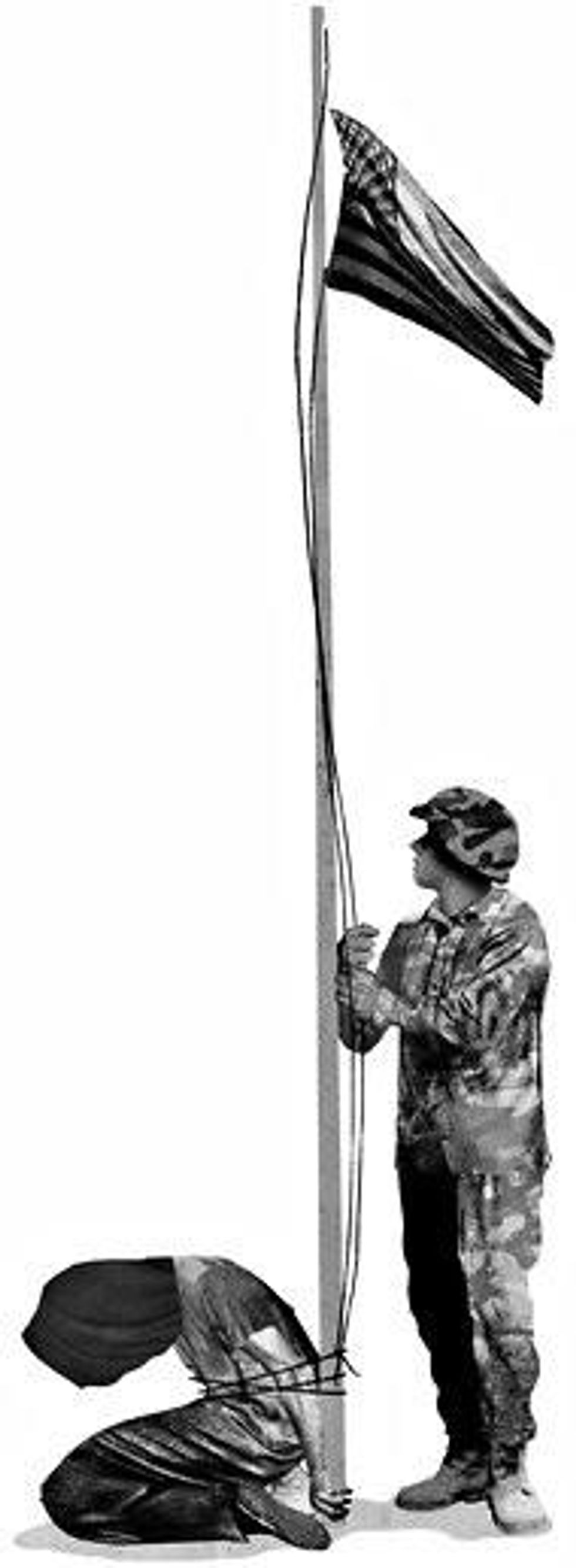
The defense secretary, Leon E. Panetta, recently announced that America hoped to end its combat mission in Afghanistan in 2013 as it did in Iraq last year. Yet at Guantanamo Bay and elsewhere, the United States continues to hold enemy detainees "for the duration of hostilities."
Indeed, the "ending" of combat in Afghanistan and Iraq appears to have no consequences for the ending of detention. Because the end of a war is traditionally thought to be the moment when a president's war powers begin to ebb, bringing combat to a close in Afghanistan and Iraq should lead to a reduction in executive power -- including the legitimate basis for detaining the enemy.
But there is a disconnect today between the wars that are ending and the "war" that is used to justify ongoing detention of prisoners. Originally, the war in Afghanistan was part of the Bush administration's "war on terror." This framing had rhetorical power, but it quickly drew criticism because a war on terror has no boundaries in space or time, and no prospect of ever ending.
When he took office, President Obama abandoned the "war on terror" rhetoric, focusing instead on Iraq and Afghanistan. American war now seemed more manageable and traditional. A confined war in a specific war zone was a war that presumably could end once the enemy was defeated within that territory. But it was not so simple: Qaeda fighters slipped over the Afghan border to Pakistan, extending the zone of conflict.
Ending wars has never been easy, of course. On the Korean Peninsula, fighting came to a halt with an armistice agreement in 1953, but a peace treaty has never been signed, so there has been no formal end to that war. Faced with continuing threats from North Korea, American troops continue to maintain a presence in South Korea. Had today's logic been applied there, Korean prisoners of war might still be serving the rest of their years in detention.
During the Vietnam War, North Vietnamese soldiers also crossed a border, into Cambodia. But once that war came to an end, the basis for ongoing detention of North Vietnamese enemy soldiers ended, even if a cold war against communism continued.
America's recent wars have been hard to end, but our presidents have done their best to argue that our goals have been accomplished. President George W. Bush did this memorably when he declared victory in Iraq in May 2003 on the deck of the aircraft carrier Abraham Lincoln under the banner "Mission Accomplished" -- and yet that conflict was far from over.
President Obama had his own "Mission Accomplished" moment, when he declared the "end of combat in Iraq" in August 2010. Like Mr. Bush's episode, Mr. Obama's was principally a media event, as reporters spoke with excitement about the historic moment, as American combat troops crossed the border into Kuwait. Yet at the time, 50,000 United States troops remained in Iraq, and the Army quickly reassured them that, even though "conflict" had ended, "conflict conditions" persisted, and hence soldiers would still receive additional pay for serving in a hostile zone. That first "ending" of the Iraq war has now been largely forgotten, eclipsed by the December 2011 withdrawal -- a much more extensive drawdown than initially planned.
The "end of combat" in Afghanistan, slated for 2013, could become yet another made-for-media event. But at the very least it should force Americans to confront the contradiction of ending two wars while invoking a nebulous and never-ending third one to justify the continued detention of prisoners.
Administration lawyers have an answer for this: the original post-9/11 Authorization for Use of Military Force gave the president authority to act against Al Qaeda and its supporters.
Mr. Obama brought his definition of war into line with this more expansive view in January 2010 by declaring that the United States is "at war against Al Qaeda." This broadened the scope of Mr. Obama's rhetoric on war by divorcing it from geography. And it provided a way of bringing into the ambit of American war terrorists outside of Iraq and Afghanistan, such as Anwar al-Awlaki, the American-born cleric tied to Al Qaeda in the Arabian Peninsula who was killed by an American drone strike in Yemen last September.
Like the Bush administration's version of the war on terror, this war with Al Qaeda allows us to follow our enemies wherever they may go. It also enables us to continue framing terrorists as warriors, subject to detention without charges as long as threats related to Al Qaeda exist.
Mr. Obama is trying to have it both ways. Ending major conflicts in two countries helps him deliver on campaign promises. But his expansive definition of war leaves in place the executive power to detain without charges, and to exercise war powers in any region where Al Qaeda has a presence.
By asserting, for political purposes, that the nation's two wars are ending while planning behind the scenes for a longer-term war against Al Qaeda terrorists, the man who pledged to bring America's wars to an end has instead laid the basis for an endless battle.
The defense secretary, Leon E. Panetta, recently announced that America hoped to end its combat mission in Afghanistan in 2013 as it did in Iraq last year. Yet at Guantanamo Bay and elsewhere, the United States continues to hold enemy detainees "for the duration of hostilities."
Indeed, the "ending" of combat in Afghanistan and Iraq appears to have no consequences for the ending of detention. Because the end of a war is traditionally thought to be the moment when a president's war powers begin to ebb, bringing combat to a close in Afghanistan and Iraq should lead to a reduction in executive power -- including the legitimate basis for detaining the enemy.
But there is a disconnect today between the wars that are ending and the "war" that is used to justify ongoing detention of prisoners. Originally, the war in Afghanistan was part of the Bush administration's "war on terror." This framing had rhetorical power, but it quickly drew criticism because a war on terror has no boundaries in space or time, and no prospect of ever ending.
When he took office, President Obama abandoned the "war on terror" rhetoric, focusing instead on Iraq and Afghanistan. American war now seemed more manageable and traditional. A confined war in a specific war zone was a war that presumably could end once the enemy was defeated within that territory. But it was not so simple: Qaeda fighters slipped over the Afghan border to Pakistan, extending the zone of conflict.
Ending wars has never been easy, of course. On the Korean Peninsula, fighting came to a halt with an armistice agreement in 1953, but a peace treaty has never been signed, so there has been no formal end to that war. Faced with continuing threats from North Korea, American troops continue to maintain a presence in South Korea. Had today's logic been applied there, Korean prisoners of war might still be serving the rest of their years in detention.
During the Vietnam War, North Vietnamese soldiers also crossed a border, into Cambodia. But once that war came to an end, the basis for ongoing detention of North Vietnamese enemy soldiers ended, even if a cold war against communism continued.
America's recent wars have been hard to end, but our presidents have done their best to argue that our goals have been accomplished. President George W. Bush did this memorably when he declared victory in Iraq in May 2003 on the deck of the aircraft carrier Abraham Lincoln under the banner "Mission Accomplished" -- and yet that conflict was far from over.
President Obama had his own "Mission Accomplished" moment, when he declared the "end of combat in Iraq" in August 2010. Like Mr. Bush's episode, Mr. Obama's was principally a media event, as reporters spoke with excitement about the historic moment, as American combat troops crossed the border into Kuwait. Yet at the time, 50,000 United States troops remained in Iraq, and the Army quickly reassured them that, even though "conflict" had ended, "conflict conditions" persisted, and hence soldiers would still receive additional pay for serving in a hostile zone. That first "ending" of the Iraq war has now been largely forgotten, eclipsed by the December 2011 withdrawal -- a much more extensive drawdown than initially planned.
The "end of combat" in Afghanistan, slated for 2013, could become yet another made-for-media event. But at the very least it should force Americans to confront the contradiction of ending two wars while invoking a nebulous and never-ending third one to justify the continued detention of prisoners.
Administration lawyers have an answer for this: the original post-9/11 Authorization for Use of Military Force gave the president authority to act against Al Qaeda and its supporters.
Mr. Obama brought his definition of war into line with this more expansive view in January 2010 by declaring that the United States is "at war against Al Qaeda." This broadened the scope of Mr. Obama's rhetoric on war by divorcing it from geography. And it provided a way of bringing into the ambit of American war terrorists outside of Iraq and Afghanistan, such as Anwar al-Awlaki, the American-born cleric tied to Al Qaeda in the Arabian Peninsula who was killed by an American drone strike in Yemen last September.
Like the Bush administration's version of the war on terror, this war with Al Qaeda allows us to follow our enemies wherever they may go. It also enables us to continue framing terrorists as warriors, subject to detention without charges as long as threats related to Al Qaeda exist.
Mr. Obama is trying to have it both ways. Ending major conflicts in two countries helps him deliver on campaign promises. But his expansive definition of war leaves in place the executive power to detain without charges, and to exercise war powers in any region where Al Qaeda has a presence.
By asserting, for political purposes, that the nation's two wars are ending while planning behind the scenes for a longer-term war against Al Qaeda terrorists, the man who pledged to bring America's wars to an end has instead laid the basis for an endless battle.
The defense secretary, Leon E. Panetta, recently announced that America hoped to end its combat mission in Afghanistan in 2013 as it did in Iraq last year. Yet at Guantanamo Bay and elsewhere, the United States continues to hold enemy detainees "for the duration of hostilities."
Indeed, the "ending" of combat in Afghanistan and Iraq appears to have no consequences for the ending of detention. Because the end of a war is traditionally thought to be the moment when a president's war powers begin to ebb, bringing combat to a close in Afghanistan and Iraq should lead to a reduction in executive power -- including the legitimate basis for detaining the enemy.
But there is a disconnect today between the wars that are ending and the "war" that is used to justify ongoing detention of prisoners. Originally, the war in Afghanistan was part of the Bush administration's "war on terror." This framing had rhetorical power, but it quickly drew criticism because a war on terror has no boundaries in space or time, and no prospect of ever ending.
When he took office, President Obama abandoned the "war on terror" rhetoric, focusing instead on Iraq and Afghanistan. American war now seemed more manageable and traditional. A confined war in a specific war zone was a war that presumably could end once the enemy was defeated within that territory. But it was not so simple: Qaeda fighters slipped over the Afghan border to Pakistan, extending the zone of conflict.
Ending wars has never been easy, of course. On the Korean Peninsula, fighting came to a halt with an armistice agreement in 1953, but a peace treaty has never been signed, so there has been no formal end to that war. Faced with continuing threats from North Korea, American troops continue to maintain a presence in South Korea. Had today's logic been applied there, Korean prisoners of war might still be serving the rest of their years in detention.
During the Vietnam War, North Vietnamese soldiers also crossed a border, into Cambodia. But once that war came to an end, the basis for ongoing detention of North Vietnamese enemy soldiers ended, even if a cold war against communism continued.
America's recent wars have been hard to end, but our presidents have done their best to argue that our goals have been accomplished. President George W. Bush did this memorably when he declared victory in Iraq in May 2003 on the deck of the aircraft carrier Abraham Lincoln under the banner "Mission Accomplished" -- and yet that conflict was far from over.
President Obama had his own "Mission Accomplished" moment, when he declared the "end of combat in Iraq" in August 2010. Like Mr. Bush's episode, Mr. Obama's was principally a media event, as reporters spoke with excitement about the historic moment, as American combat troops crossed the border into Kuwait. Yet at the time, 50,000 United States troops remained in Iraq, and the Army quickly reassured them that, even though "conflict" had ended, "conflict conditions" persisted, and hence soldiers would still receive additional pay for serving in a hostile zone. That first "ending" of the Iraq war has now been largely forgotten, eclipsed by the December 2011 withdrawal -- a much more extensive drawdown than initially planned.
The "end of combat" in Afghanistan, slated for 2013, could become yet another made-for-media event. But at the very least it should force Americans to confront the contradiction of ending two wars while invoking a nebulous and never-ending third one to justify the continued detention of prisoners.
Administration lawyers have an answer for this: the original post-9/11 Authorization for Use of Military Force gave the president authority to act against Al Qaeda and its supporters.
Mr. Obama brought his definition of war into line with this more expansive view in January 2010 by declaring that the United States is "at war against Al Qaeda." This broadened the scope of Mr. Obama's rhetoric on war by divorcing it from geography. And it provided a way of bringing into the ambit of American war terrorists outside of Iraq and Afghanistan, such as Anwar al-Awlaki, the American-born cleric tied to Al Qaeda in the Arabian Peninsula who was killed by an American drone strike in Yemen last September.
Like the Bush administration's version of the war on terror, this war with Al Qaeda allows us to follow our enemies wherever they may go. It also enables us to continue framing terrorists as warriors, subject to detention without charges as long as threats related to Al Qaeda exist.
Mr. Obama is trying to have it both ways. Ending major conflicts in two countries helps him deliver on campaign promises. But his expansive definition of war leaves in place the executive power to detain without charges, and to exercise war powers in any region where Al Qaeda has a presence.
By asserting, for political purposes, that the nation's two wars are ending while planning behind the scenes for a longer-term war against Al Qaeda terrorists, the man who pledged to bring America's wars to an end has instead laid the basis for an endless battle.