

The World Economic Forum opened in Davos amid choruses of central bankers and economists calling for governments to cut spending.
This message of austerity is like the call of the ancient Sirens, whose music lured sailors to shipwreck.
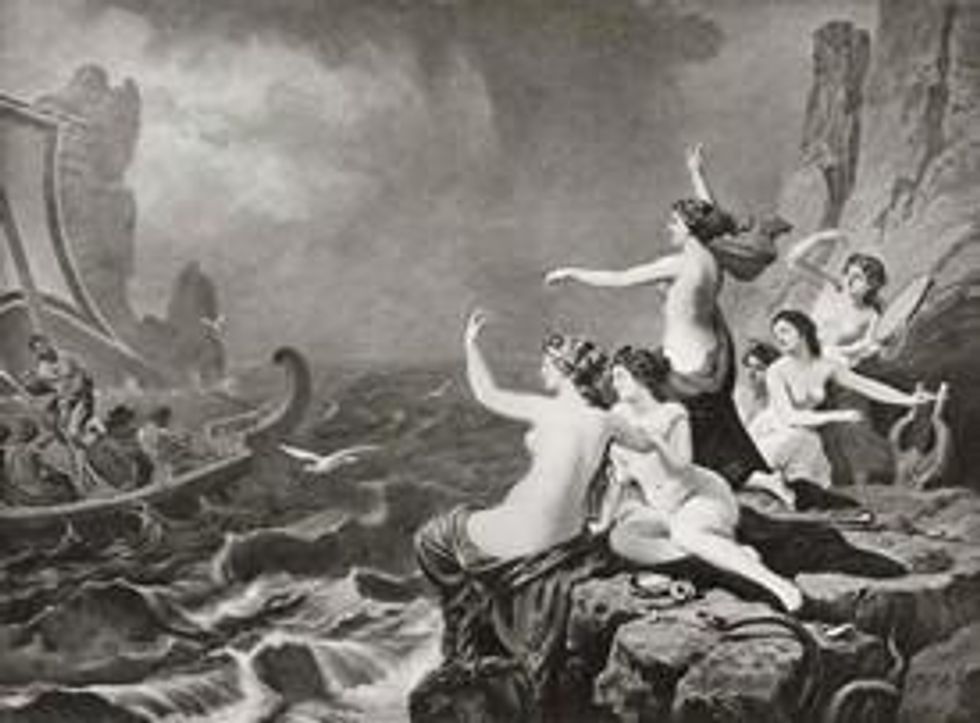
Austerity supporters are selling the idea that governments, like families, must cut back when income shrinks. But economically, governments are not like families.
Firing teachers, cops and government clerks will, for sure, reduce public spending. But budgets, like the song of the Sirens, are only part of the story. Listen only to the alluring lyrics and, like the many voyagers before Odysseus, we will suffer disastrous consequences - in our case falling incomes and worsening economies.
The full economic story begins with this principle taught to every economics student: spending equals income and income equals spending. Cut spending and incomes must fall; cut incomes and spending must fall.
Those who disagree with this say that only private spending can create wealth and that government spending is inefficient. I think the first argument is wrong, but the second is often true, which is why citizens need to pay close attention to their government.
When private spending shrinks, then either government spending must grow to make up for it or the other side of the equation, income, must shrink.
If we increase spending today by borrowing, we create a claim on future income. Families with debt must divert part of their future income to interest and principal to service that debt or go bankrupt. Governments are different, provided they have monopoly control of their currency. By definition, no sovereign government can ever go broke in its own currency.
NO TO AUSTERITY
The United States government, which has a monopoly on its currency, is $15.2 trillion in debt, roughly the same as the entire output of the economy for a year.
That figure has been sung in a refrain about massive debt threatening to bring down the economy and cause inflation. Facts, however, show otherwise.
Austerity budgets, by reducing government spending, will only make incomes fall more. The only way to make incomes rise is to make spending rise, which in the short run means more borrowing by governments to enable more public sector spending.The country was much deeper in debt, relative to the size of the economy, in 1946 than it is today and yet what followed was decades of prosperity. The 1946 debt remains and, after six decades of growth, it is inconsequential.
In Japan, government debt is roughly twice annual economic output and yet the country continues to function because real interest rates are at or below zero.
To be sure, conditions can change and interest rates can rise sharply, though central banks have ways to limit that. But that is not the problem today. The problem today is shrinking incomes due to shrinking spending.
Austerity budgets, by reducing government spending, will only make incomes fall more. The only way to make incomes rise is to make spending rise, which in the short run means more borrowing by governments to enable more public sector spending.
After reading the news from Davos, ask yourself why we should listen to the Siren song of the financial elite. After all, the people who steered our financial ship into dangerous waters in the first place were at the very top of this group. We should listen more to those will suffer from austerity budgets: children who only get one chance at an education, the sick and disabled unable to support themselves and seniors too old to work.
If, like Odysseus, we wish to row past our current economic straits into a new sea of prosperity, the one thing we must not do is be driven to economic madness by the Siren call of austerity budgets.
The World Economic Forum opened in Davos amid choruses of central bankers and economists calling for governments to cut spending.
This message of austerity is like the call of the ancient Sirens, whose music lured sailors to shipwreck.
Austerity supporters are selling the idea that governments, like families, must cut back when income shrinks. But economically, governments are not like families.
Firing teachers, cops and government clerks will, for sure, reduce public spending. But budgets, like the song of the Sirens, are only part of the story. Listen only to the alluring lyrics and, like the many voyagers before Odysseus, we will suffer disastrous consequences - in our case falling incomes and worsening economies.
The full economic story begins with this principle taught to every economics student: spending equals income and income equals spending. Cut spending and incomes must fall; cut incomes and spending must fall.
Those who disagree with this say that only private spending can create wealth and that government spending is inefficient. I think the first argument is wrong, but the second is often true, which is why citizens need to pay close attention to their government.
When private spending shrinks, then either government spending must grow to make up for it or the other side of the equation, income, must shrink.
If we increase spending today by borrowing, we create a claim on future income. Families with debt must divert part of their future income to interest and principal to service that debt or go bankrupt. Governments are different, provided they have monopoly control of their currency. By definition, no sovereign government can ever go broke in its own currency.
NO TO AUSTERITY
The United States government, which has a monopoly on its currency, is $15.2 trillion in debt, roughly the same as the entire output of the economy for a year.
That figure has been sung in a refrain about massive debt threatening to bring down the economy and cause inflation. Facts, however, show otherwise.
Austerity budgets, by reducing government spending, will only make incomes fall more. The only way to make incomes rise is to make spending rise, which in the short run means more borrowing by governments to enable more public sector spending.The country was much deeper in debt, relative to the size of the economy, in 1946 than it is today and yet what followed was decades of prosperity. The 1946 debt remains and, after six decades of growth, it is inconsequential.
In Japan, government debt is roughly twice annual economic output and yet the country continues to function because real interest rates are at or below zero.
To be sure, conditions can change and interest rates can rise sharply, though central banks have ways to limit that. But that is not the problem today. The problem today is shrinking incomes due to shrinking spending.
Austerity budgets, by reducing government spending, will only make incomes fall more. The only way to make incomes rise is to make spending rise, which in the short run means more borrowing by governments to enable more public sector spending.
After reading the news from Davos, ask yourself why we should listen to the Siren song of the financial elite. After all, the people who steered our financial ship into dangerous waters in the first place were at the very top of this group. We should listen more to those will suffer from austerity budgets: children who only get one chance at an education, the sick and disabled unable to support themselves and seniors too old to work.
If, like Odysseus, we wish to row past our current economic straits into a new sea of prosperity, the one thing we must not do is be driven to economic madness by the Siren call of austerity budgets.
The World Economic Forum opened in Davos amid choruses of central bankers and economists calling for governments to cut spending.
This message of austerity is like the call of the ancient Sirens, whose music lured sailors to shipwreck.
Austerity supporters are selling the idea that governments, like families, must cut back when income shrinks. But economically, governments are not like families.
Firing teachers, cops and government clerks will, for sure, reduce public spending. But budgets, like the song of the Sirens, are only part of the story. Listen only to the alluring lyrics and, like the many voyagers before Odysseus, we will suffer disastrous consequences - in our case falling incomes and worsening economies.
The full economic story begins with this principle taught to every economics student: spending equals income and income equals spending. Cut spending and incomes must fall; cut incomes and spending must fall.
Those who disagree with this say that only private spending can create wealth and that government spending is inefficient. I think the first argument is wrong, but the second is often true, which is why citizens need to pay close attention to their government.
When private spending shrinks, then either government spending must grow to make up for it or the other side of the equation, income, must shrink.
If we increase spending today by borrowing, we create a claim on future income. Families with debt must divert part of their future income to interest and principal to service that debt or go bankrupt. Governments are different, provided they have monopoly control of their currency. By definition, no sovereign government can ever go broke in its own currency.
NO TO AUSTERITY
The United States government, which has a monopoly on its currency, is $15.2 trillion in debt, roughly the same as the entire output of the economy for a year.
That figure has been sung in a refrain about massive debt threatening to bring down the economy and cause inflation. Facts, however, show otherwise.
Austerity budgets, by reducing government spending, will only make incomes fall more. The only way to make incomes rise is to make spending rise, which in the short run means more borrowing by governments to enable more public sector spending.The country was much deeper in debt, relative to the size of the economy, in 1946 than it is today and yet what followed was decades of prosperity. The 1946 debt remains and, after six decades of growth, it is inconsequential.
In Japan, government debt is roughly twice annual economic output and yet the country continues to function because real interest rates are at or below zero.
To be sure, conditions can change and interest rates can rise sharply, though central banks have ways to limit that. But that is not the problem today. The problem today is shrinking incomes due to shrinking spending.
Austerity budgets, by reducing government spending, will only make incomes fall more. The only way to make incomes rise is to make spending rise, which in the short run means more borrowing by governments to enable more public sector spending.
After reading the news from Davos, ask yourself why we should listen to the Siren song of the financial elite. After all, the people who steered our financial ship into dangerous waters in the first place were at the very top of this group. We should listen more to those will suffer from austerity budgets: children who only get one chance at an education, the sick and disabled unable to support themselves and seniors too old to work.
If, like Odysseus, we wish to row past our current economic straits into a new sea of prosperity, the one thing we must not do is be driven to economic madness by the Siren call of austerity budgets.