Latin America's Path to Independence
Latin America took another historic step forward this week with the creation of a new regional organisation of 32 Latin American and Caribbean countries. The United States and Canada were excluded.
The increasing independence of Latin America has been one of the most important geopolitical changes over the last decade, affecting not only the region but the rest of the world as well. For example, Brazil has publicly supported Iran's right to enrich uranium and opposed further sanctions against the country. Latin America, once under the control of the United States, is increasingly emerging as a power bloc with its own interests and agenda.
The Obama administration's continuation of former President Bush's policies in the region undoubtedly helped spur the creation of this new organisation, provisionally named the Community of Latin American and Caribbean States. Most importantly, the Obama team's ambivalence toward the military coup that overthrew the democratic government of President Mel Zelaya in Honduras last summer provoked deep resentment and distrust throughout the region.
Although the Obama administration was officially against the coup, numerous actions from day one - including the first White House statement that failed to condemn the coup when it happened - made it clear in the diplomatic world that its real position was something different. The last straw came in November 2009 when the Obama administration brokered a deal for the return of Zelaya, and then joined the dictatorship in reneging on it. Washington then stood against the vast majority of the region in supporting the November elections for a new president under the dictatorship, which had systematically repressed the basic rights and civil liberties necessary to an electoral campaign.
Arturo Valenzuela, the US state department's top official for Latin America, said that the new organisation "should not be an effort that would replace the OAS [Organisation of American States]".
The differences underlying the need for a new organisation were clear in the statements and declarations that took place in the Unity Summit, held in Cancun from 22-23 February. The summit issued a strong statement backing Argentina in its dispute with the UK over the Malvinas (as they are called in Argentina) or Falklands Islands. The dispute, which dates back to the 19th century and led to a war in 1982, has become more prominent lately as the UK has unilaterally decided to explore for oil offshore the islands. President Lula da Silva of Brazil called for the United Nations to take a more active role in resolving the dispute. And the summit condemned the US embargo against Cuba.
These and other measures would be difficult or impossible to pass in the OAS. Furthermore, the OAS has long been manipulated by the United States, as from 2000 when it was used to help build support for the coup that overthrew Haiti's elected president. And most recently, the US and Canada blocked the OAS from taking stronger measures against the Honduran dictatorship last year.
Meanwhile, in Washington foreign policy circles, it is getting increasingly more difficult to maintain the worn-out fiction that the US's differences with the region are a legacy of President Bush's "lack of involvement," or to blame a few leftist trouble-makers like Bolivia, Nicaragua, and of course the dreaded Venezuela. It seems to have gone unnoticed that Brazil has taken the same positions as Venezuela and Bolivia on Iran and other foreign policy issues, and has strongly supported Chavez. Perhaps the leadership of Mexico - a rightwing government that was one of the Bush administration's few allies in the region - in establishing this new organisation will stimulate some rethinking.
There are structural reasons for this process of increasing independence to continue, even if - and this is not on the horizon - a new government in Washington were to someday move away from its cold war redux approach to the region. The US has become increasingly less important as a trading partner for the region, especially since the recent recession as our trade deficit has shrunk. The region also increasingly has other sources of investment capital. The collapse of the IMF's creditors' cartel in the region has also eliminated the most important avenue of Washington's influence.
The new organisation is sorely needed. The Honduran coup was a threat to democracy in the entire region, as it encouraged other rightwing militaries and their allies to think that they might drag Latin America back to the days when the local elite, with Washington's help, could overturn the will of the electorate. An organisation without the US and Canada will be more capable of defending democracy, as well as economic and social progress in the region when it is under attack. It will also have a positive influence in helping to create a more multipolar world internationally.
We are at a crossroads
This country and this world are at a monumental crossroads. In a few short weeks, US voters will have an opportunity to beat back the forces of fascism and confront the billionaires who are rigging the economy, our media system, and our democracy, making it increasingly impossible for ordinary people to get by. We’re not just talking about the election. We’re talking about what must be done once these fascist elements are vanquished from power. We need a bolder set of solutions than what either major party has so far been willing to offer and a working-class movement ready to fight like hell for it. Trump didn't emerge from nowhere. The conditions that fueled MAGA authoritarianism were created by decades of radical neoliberal economic policies and a corrupt political system dominated by corporate interests. They slashed taxes on the super-rich, promising that the benefits would trickle down. They said giveaways to the corporate titans would make life more affordable for the rest of us. It was all bullshit. And when a bitter, betrayed populace searches for someone to blame, right-wing demagogues have little trouble finding scapegoats. People know when they're being lied to, but you won't hear any of this from the corporate media. Only independent journalism—powered and funded by people who believe in building a better world—can deliver truly trustworthy daily news. Our Fall Campaign is underway, and we need your help. To power our newsroom through the rest of the year, we need to raise $125,000 by midnight on October 31. So if you share our vision, please contribute whatever you can to sustain our work. |
Latin America took another historic step forward this week with the creation of a new regional organisation of 32 Latin American and Caribbean countries. The United States and Canada were excluded.
The increasing independence of Latin America has been one of the most important geopolitical changes over the last decade, affecting not only the region but the rest of the world as well. For example, Brazil has publicly supported Iran's right to enrich uranium and opposed further sanctions against the country. Latin America, once under the control of the United States, is increasingly emerging as a power bloc with its own interests and agenda.
The Obama administration's continuation of former President Bush's policies in the region undoubtedly helped spur the creation of this new organisation, provisionally named the Community of Latin American and Caribbean States. Most importantly, the Obama team's ambivalence toward the military coup that overthrew the democratic government of President Mel Zelaya in Honduras last summer provoked deep resentment and distrust throughout the region.
Although the Obama administration was officially against the coup, numerous actions from day one - including the first White House statement that failed to condemn the coup when it happened - made it clear in the diplomatic world that its real position was something different. The last straw came in November 2009 when the Obama administration brokered a deal for the return of Zelaya, and then joined the dictatorship in reneging on it. Washington then stood against the vast majority of the region in supporting the November elections for a new president under the dictatorship, which had systematically repressed the basic rights and civil liberties necessary to an electoral campaign.
Arturo Valenzuela, the US state department's top official for Latin America, said that the new organisation "should not be an effort that would replace the OAS [Organisation of American States]".
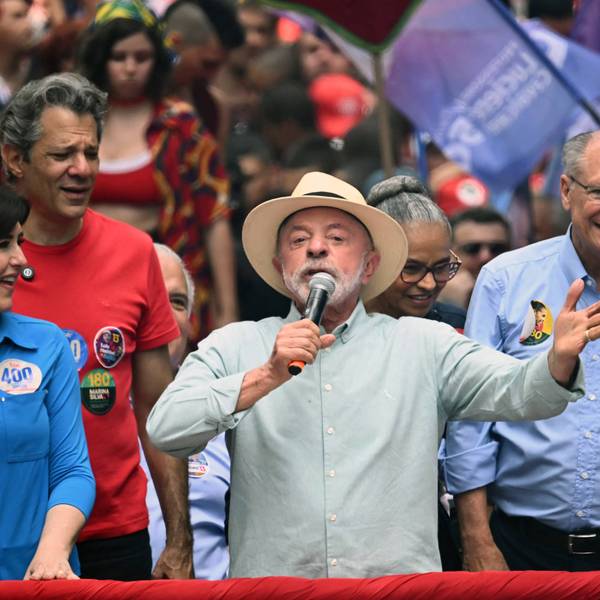
The differences underlying the need for a new organisation were clear in the statements and declarations that took place in the Unity Summit, held in Cancun from 22-23 February. The summit issued a strong statement backing Argentina in its dispute with the UK over the Malvinas (as they are called in Argentina) or Falklands Islands. The dispute, which dates back to the 19th century and led to a war in 1982, has become more prominent lately as the UK has unilaterally decided to explore for oil offshore the islands. President Lula da Silva of Brazil called for the United Nations to take a more active role in resolving the dispute. And the summit condemned the US embargo against Cuba.
These and other measures would be difficult or impossible to pass in the OAS. Furthermore, the OAS has long been manipulated by the United States, as from 2000 when it was used to help build support for the coup that overthrew Haiti's elected president. And most recently, the US and Canada blocked the OAS from taking stronger measures against the Honduran dictatorship last year.
Meanwhile, in Washington foreign policy circles, it is getting increasingly more difficult to maintain the worn-out fiction that the US's differences with the region are a legacy of President Bush's "lack of involvement," or to blame a few leftist trouble-makers like Bolivia, Nicaragua, and of course the dreaded Venezuela. It seems to have gone unnoticed that Brazil has taken the same positions as Venezuela and Bolivia on Iran and other foreign policy issues, and has strongly supported Chavez. Perhaps the leadership of Mexico - a rightwing government that was one of the Bush administration's few allies in the region - in establishing this new organisation will stimulate some rethinking.
There are structural reasons for this process of increasing independence to continue, even if - and this is not on the horizon - a new government in Washington were to someday move away from its cold war redux approach to the region. The US has become increasingly less important as a trading partner for the region, especially since the recent recession as our trade deficit has shrunk. The region also increasingly has other sources of investment capital. The collapse of the IMF's creditors' cartel in the region has also eliminated the most important avenue of Washington's influence.
The new organisation is sorely needed. The Honduran coup was a threat to democracy in the entire region, as it encouraged other rightwing militaries and their allies to think that they might drag Latin America back to the days when the local elite, with Washington's help, could overturn the will of the electorate. An organisation without the US and Canada will be more capable of defending democracy, as well as economic and social progress in the region when it is under attack. It will also have a positive influence in helping to create a more multipolar world internationally.