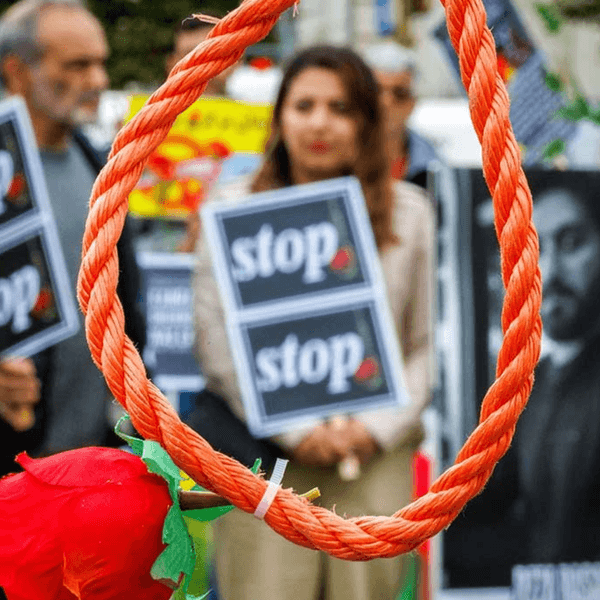

The Death Penalty Club
It's a hard time for those who care about the fate of Georgia death row prisoner Troy Davis.
On April 16, Davis received the most recent blow to his case; the 11th Circuit Court of Appeals rejected Davis's appeal based on innocence heard in court. Davis was convicted for the 1989 murder of off-duty police officer Mark MacPhail in Savannah. A great deal of possibly exonerating evidence has come to light since Davis's original trial, including affidavits by seven of the nine non-police witnesses, recanting or contradicting their trial testimonies, with claims of police coercion and intimidation further tainting the original testimonies. This is particularly significant as there was never any physical evidence linking Davis to the crime and of the two witnesses who did not recant, one is another potential suspect. No court has held a trial or hearing based on the new evidence. Nevertheless, the panel of three 11th Circuit judges rejected Davis's petition on procedural grounds in a 2-1 vote.
"To execute Davis, in the face of a significant amount of proffered evidence that may establish his actual innocence," wrote dissenting Judge Rosemary Barkett "is unconscionable and unconstitutional."
The Court granted Davis a thirty-day stay of his execution, which ends on May 15th.
Davis's case has become a lightening rod for debate, most of it focused on the impending execution of a possibly innocent man whom the system won't permit a second day in court. Even pro-death penalty advocates have spoken out against executing Davis. Former federal judge and FBI Director William Sessions, a supporter of capital punishment, wrote, "I believe that there is no more serious offense than the murder of a police officer. However, crucial unanswered questions surround claims of Davis' responsibility for this terrible crime, and I believe that the execution should not go forward until the courts address them and determine whether he is in fact guilty... To send a man to his death because procedural obstacles prevent the courts from considering the merits of his claim of innocence would, in my view, be a travesty."
There are, as Sessions writes, crucial unanswered questions surrounding claims of Davis's responsibility for the murder of MacPhail. And equally crucial is an examination of the practice of execution itself, in a national and international context too often sorely missing from the discourse.
From 1972-1976, the US Supreme Court suspended the death penalty as the Court examined whether capital punishment constitutes "cruel and unusual punishment" and is, therefore, unconstitutional. New death penalty laws were passed in 1976. The reliability of convictions that end in capital punishment remains highly contested; since the new laws were approved, 131 death row inmates have been exonerated. In fact, a Columbia Law School study in 2000 concluded that death sentences in the United States are "persistently and systematically fraught with error." Yet even with the overwhelming evidence that scores of innocent people end up on death row, some only exonerated posthumously, as well as substantial flaws in the argument that capital punishment is an effective deterrent, the majority of the country still accepts execution as a reasonable form of punishment. Capital punishment is currently legal in 35 states and there are over 3,000 prisoners on death row throughout the country.
Recently, however, there has been some light.
On March 18th, New Mexico became the fifteenth state in the US to abolish capital punishment.
And on April 21, the Colorado State Congress passed a measure to abolish the death penalty by a single vote. The bill now goes to the Colorado State Senate.
Unfortunately, these glimmers offer little comfort to current death-row prisoners, even ones in New Mexico, as the new law signed by Richardson is not retroactive. There is also little hope to grasp when considering the US's record in the international arena as well. The United States tries to portray itself as a global leader concerning human rights, but when stacked up against the rest of the international community, our record on this issue is abysmal.
The majority of the world has been moving towards abolishing the death penalty. Two thirds of all countries have abolished it in law or in practice-the most recent being Burundi . In all of Europe, Belarus is the only country that still practices capital punishment.
Even with the trend towards abolition, capital punishment remains a crucial global human rights issue, mostly due to a handful of egregious offender nations. In 2008, 2,390 prisoners were executed in twenty-five countries. 93% of those executions took place in China, Iran, Saudi Arabia, United States and Pakistan.
There are the only two countries in the world that have not ratified the UN Convention prohibiting the execution of children. They are Somalia and the United States. There are currently over sixty prisoners on death row in the US for crimes they committed as juveniles.
In April 1999, the United Nations Human Rights Commission passed its second Resolution Supporting Worldwide Moratorium on Executions, calling on countries which still practice capital punishment to restrict its use and not apply it to juveniles. Ten countries--including China, Pakistan, Rwanda, Sudan and the US--voted against the Resolution. A similar resolution was adopted by a large majority at the United Nations General Assembly in 2007, and once again this past December. Both times the USA was part of the small minority in dissent.
I don't know if Troy Davis ponders the fact that our global colleagues regarding capital punishment include China, Iran, Saudi Arabia, Pakistan, Rwanda, Sudan and Somalia. But our membership in this infamous club should give all of us much pause.
There will all always be another Troy Davis, more and more possibly innocent prisoners on the chopping block, until the United States follows the lead of two-thirds of the world and fully abolishes the death penalty.
An Urgent Message From Our Co-Founder
Dear Common Dreams reader, It’s been nearly 30 years since I co-founded Common Dreams with my late wife, Lina Newhouser. We had the radical notion that journalism should serve the public good, not corporate profits. It was clear to us from the outset what it would take to build such a project. No paid advertisements. No corporate sponsors. No millionaire publisher telling us what to think or do. Many people said we wouldn't last a year, but we proved those doubters wrong. Together with a tremendous team of journalists and dedicated staff, we built an independent media outlet free from the constraints of profits and corporate control. Our mission has always been simple: To inform. To inspire. To ignite change for the common good. Building Common Dreams was not easy. Our survival was never guaranteed. When you take on the most powerful forces—Wall Street greed, fossil fuel industry destruction, Big Tech lobbyists, and uber-rich oligarchs who have spent billions upon billions rigging the economy and democracy in their favor—the only bulwark you have is supporters who believe in your work. But here’s the urgent message from me today. It's never been this bad out there. And it's never been this hard to keep us going. At the very moment Common Dreams is most needed, the threats we face are intensifying. We need your support now more than ever. We don't accept corporate advertising and never will. We don't have a paywall because we don't think people should be blocked from critical news based on their ability to pay. Everything we do is funded by the donations of readers like you. When everyone does the little they can afford, we are strong. But if that support retreats or dries up, so do we. Will you donate now to make sure Common Dreams not only survives but thrives? —Craig Brown, Co-founder |
It's a hard time for those who care about the fate of Georgia death row prisoner Troy Davis.
On April 16, Davis received the most recent blow to his case; the 11th Circuit Court of Appeals rejected Davis's appeal based on innocence heard in court. Davis was convicted for the 1989 murder of off-duty police officer Mark MacPhail in Savannah. A great deal of possibly exonerating evidence has come to light since Davis's original trial, including affidavits by seven of the nine non-police witnesses, recanting or contradicting their trial testimonies, with claims of police coercion and intimidation further tainting the original testimonies. This is particularly significant as there was never any physical evidence linking Davis to the crime and of the two witnesses who did not recant, one is another potential suspect. No court has held a trial or hearing based on the new evidence. Nevertheless, the panel of three 11th Circuit judges rejected Davis's petition on procedural grounds in a 2-1 vote.
"To execute Davis, in the face of a significant amount of proffered evidence that may establish his actual innocence," wrote dissenting Judge Rosemary Barkett "is unconscionable and unconstitutional."
The Court granted Davis a thirty-day stay of his execution, which ends on May 15th.
Davis's case has become a lightening rod for debate, most of it focused on the impending execution of a possibly innocent man whom the system won't permit a second day in court. Even pro-death penalty advocates have spoken out against executing Davis. Former federal judge and FBI Director William Sessions, a supporter of capital punishment, wrote, "I believe that there is no more serious offense than the murder of a police officer. However, crucial unanswered questions surround claims of Davis' responsibility for this terrible crime, and I believe that the execution should not go forward until the courts address them and determine whether he is in fact guilty... To send a man to his death because procedural obstacles prevent the courts from considering the merits of his claim of innocence would, in my view, be a travesty."
There are, as Sessions writes, crucial unanswered questions surrounding claims of Davis's responsibility for the murder of MacPhail. And equally crucial is an examination of the practice of execution itself, in a national and international context too often sorely missing from the discourse.
From 1972-1976, the US Supreme Court suspended the death penalty as the Court examined whether capital punishment constitutes "cruel and unusual punishment" and is, therefore, unconstitutional. New death penalty laws were passed in 1976. The reliability of convictions that end in capital punishment remains highly contested; since the new laws were approved, 131 death row inmates have been exonerated. In fact, a Columbia Law School study in 2000 concluded that death sentences in the United States are "persistently and systematically fraught with error." Yet even with the overwhelming evidence that scores of innocent people end up on death row, some only exonerated posthumously, as well as substantial flaws in the argument that capital punishment is an effective deterrent, the majority of the country still accepts execution as a reasonable form of punishment. Capital punishment is currently legal in 35 states and there are over 3,000 prisoners on death row throughout the country.
Recently, however, there has been some light.
On March 18th, New Mexico became the fifteenth state in the US to abolish capital punishment.
And on April 21, the Colorado State Congress passed a measure to abolish the death penalty by a single vote. The bill now goes to the Colorado State Senate.
Unfortunately, these glimmers offer little comfort to current death-row prisoners, even ones in New Mexico, as the new law signed by Richardson is not retroactive. There is also little hope to grasp when considering the US's record in the international arena as well. The United States tries to portray itself as a global leader concerning human rights, but when stacked up against the rest of the international community, our record on this issue is abysmal.
The majority of the world has been moving towards abolishing the death penalty. Two thirds of all countries have abolished it in law or in practice-the most recent being Burundi . In all of Europe, Belarus is the only country that still practices capital punishment.
Even with the trend towards abolition, capital punishment remains a crucial global human rights issue, mostly due to a handful of egregious offender nations. In 2008, 2,390 prisoners were executed in twenty-five countries. 93% of those executions took place in China, Iran, Saudi Arabia, United States and Pakistan.
There are the only two countries in the world that have not ratified the UN Convention prohibiting the execution of children. They are Somalia and the United States. There are currently over sixty prisoners on death row in the US for crimes they committed as juveniles.
In April 1999, the United Nations Human Rights Commission passed its second Resolution Supporting Worldwide Moratorium on Executions, calling on countries which still practice capital punishment to restrict its use and not apply it to juveniles. Ten countries--including China, Pakistan, Rwanda, Sudan and the US--voted against the Resolution. A similar resolution was adopted by a large majority at the United Nations General Assembly in 2007, and once again this past December. Both times the USA was part of the small minority in dissent.
I don't know if Troy Davis ponders the fact that our global colleagues regarding capital punishment include China, Iran, Saudi Arabia, Pakistan, Rwanda, Sudan and Somalia. But our membership in this infamous club should give all of us much pause.
There will all always be another Troy Davis, more and more possibly innocent prisoners on the chopping block, until the United States follows the lead of two-thirds of the world and fully abolishes the death penalty.
It's a hard time for those who care about the fate of Georgia death row prisoner Troy Davis.
On April 16, Davis received the most recent blow to his case; the 11th Circuit Court of Appeals rejected Davis's appeal based on innocence heard in court. Davis was convicted for the 1989 murder of off-duty police officer Mark MacPhail in Savannah. A great deal of possibly exonerating evidence has come to light since Davis's original trial, including affidavits by seven of the nine non-police witnesses, recanting or contradicting their trial testimonies, with claims of police coercion and intimidation further tainting the original testimonies. This is particularly significant as there was never any physical evidence linking Davis to the crime and of the two witnesses who did not recant, one is another potential suspect. No court has held a trial or hearing based on the new evidence. Nevertheless, the panel of three 11th Circuit judges rejected Davis's petition on procedural grounds in a 2-1 vote.
"To execute Davis, in the face of a significant amount of proffered evidence that may establish his actual innocence," wrote dissenting Judge Rosemary Barkett "is unconscionable and unconstitutional."
The Court granted Davis a thirty-day stay of his execution, which ends on May 15th.
Davis's case has become a lightening rod for debate, most of it focused on the impending execution of a possibly innocent man whom the system won't permit a second day in court. Even pro-death penalty advocates have spoken out against executing Davis. Former federal judge and FBI Director William Sessions, a supporter of capital punishment, wrote, "I believe that there is no more serious offense than the murder of a police officer. However, crucial unanswered questions surround claims of Davis' responsibility for this terrible crime, and I believe that the execution should not go forward until the courts address them and determine whether he is in fact guilty... To send a man to his death because procedural obstacles prevent the courts from considering the merits of his claim of innocence would, in my view, be a travesty."
There are, as Sessions writes, crucial unanswered questions surrounding claims of Davis's responsibility for the murder of MacPhail. And equally crucial is an examination of the practice of execution itself, in a national and international context too often sorely missing from the discourse.
From 1972-1976, the US Supreme Court suspended the death penalty as the Court examined whether capital punishment constitutes "cruel and unusual punishment" and is, therefore, unconstitutional. New death penalty laws were passed in 1976. The reliability of convictions that end in capital punishment remains highly contested; since the new laws were approved, 131 death row inmates have been exonerated. In fact, a Columbia Law School study in 2000 concluded that death sentences in the United States are "persistently and systematically fraught with error." Yet even with the overwhelming evidence that scores of innocent people end up on death row, some only exonerated posthumously, as well as substantial flaws in the argument that capital punishment is an effective deterrent, the majority of the country still accepts execution as a reasonable form of punishment. Capital punishment is currently legal in 35 states and there are over 3,000 prisoners on death row throughout the country.
Recently, however, there has been some light.
On March 18th, New Mexico became the fifteenth state in the US to abolish capital punishment.
And on April 21, the Colorado State Congress passed a measure to abolish the death penalty by a single vote. The bill now goes to the Colorado State Senate.
Unfortunately, these glimmers offer little comfort to current death-row prisoners, even ones in New Mexico, as the new law signed by Richardson is not retroactive. There is also little hope to grasp when considering the US's record in the international arena as well. The United States tries to portray itself as a global leader concerning human rights, but when stacked up against the rest of the international community, our record on this issue is abysmal.
The majority of the world has been moving towards abolishing the death penalty. Two thirds of all countries have abolished it in law or in practice-the most recent being Burundi . In all of Europe, Belarus is the only country that still practices capital punishment.
Even with the trend towards abolition, capital punishment remains a crucial global human rights issue, mostly due to a handful of egregious offender nations. In 2008, 2,390 prisoners were executed in twenty-five countries. 93% of those executions took place in China, Iran, Saudi Arabia, United States and Pakistan.
There are the only two countries in the world that have not ratified the UN Convention prohibiting the execution of children. They are Somalia and the United States. There are currently over sixty prisoners on death row in the US for crimes they committed as juveniles.
In April 1999, the United Nations Human Rights Commission passed its second Resolution Supporting Worldwide Moratorium on Executions, calling on countries which still practice capital punishment to restrict its use and not apply it to juveniles. Ten countries--including China, Pakistan, Rwanda, Sudan and the US--voted against the Resolution. A similar resolution was adopted by a large majority at the United Nations General Assembly in 2007, and once again this past December. Both times the USA was part of the small minority in dissent.
I don't know if Troy Davis ponders the fact that our global colleagues regarding capital punishment include China, Iran, Saudi Arabia, Pakistan, Rwanda, Sudan and Somalia. But our membership in this infamous club should give all of us much pause.
There will all always be another Troy Davis, more and more possibly innocent prisoners on the chopping block, until the United States follows the lead of two-thirds of the world and fully abolishes the death penalty.