
Media Silence Doesn't Mean All's Well in Gaza
As President-elect Barack Obama focuses on
the meltdown of the U.S. economy, another fire is burning: the
Israeli-Palestinian conflict.
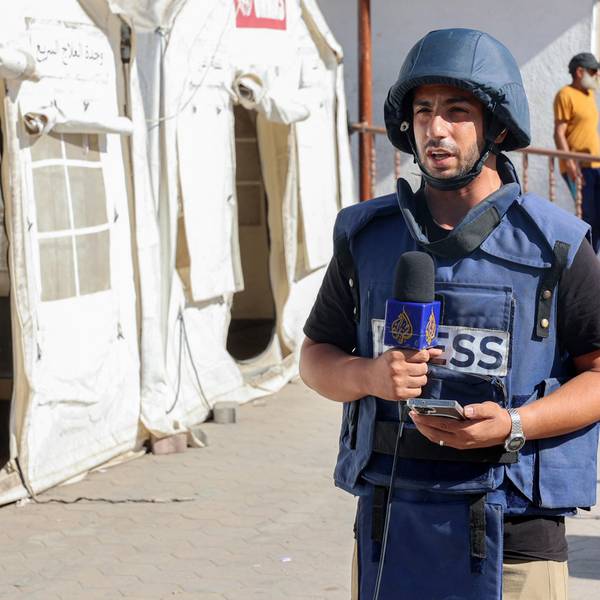
You may not have heard much lately about the
disaster in the Gaza Strip. That silence is intentional: The
Israeli government has barred international journalists from
entering the occupied territory. Last week, executives from the
Associated Press, New York Times, Reuters, CNN, BBC and other news
organizations sent a letter of protest to Israeli Prime Minister
Ehud Olmert criticizing his government's decision to bar
journalists from entering Gaza.
Israel has virtually sealed off the Gaza
Strip and cut off aid and fuel shipments. A spokesman for Israel's
Defense Ministry said Israel was displeased with international
media coverage, which he said inflated Palestinian suffering and
did not make clear that Israel's measures were in response to
Palestinian violence.
A cease-fire between Israel and Hamas, the
group that won Palestinian elections nearly three years ago and
controls Gaza, broke down after an Israeli raid killed six Hamas
militants two weeks ago. More Israeli raids have followed, killing
approximately 17 Hamas members, and Palestinian militants have
fired dozens of rockets into southern Israel, injuring several
people.
U.N. Secretary-General Ban Ki-moon has
criticized Israel over its blockade of the overcrowded Gaza, home
to close to 1.5 million Palestinians. The United Nations Relief and
Works Agency is warning that Gaza faces a humanitarian
"catastrophe" if Israel continues to blockade aid from reaching the
territory.
The sharply divided landscape of Israel and
the occupied territories is familiar ground for South African
Archbishop Desmond Tutu. He won the Nobel Peace Prize for his
opposition to apartheid in South Africa. Tutu was in New York last
week to receive the Global Citizens Circle award. I sat down with
him at the residence of the South African vice consul.
Tutu reflected on the Israeli occupation:
"Coming from South Africa ... and looking at the checkpoints ...
when you humiliate a people to the extent that they are being --
and, yes, one remembers the kind of experience we had when we were
being humiliated -- when you do that, you're not contributing to
your own security."
Tutu said the embargo must be lifted. "The
suffering is unacceptable. It doesn't promote the security of
Israel or any other part of that very volatile region," he said.
"There are very, very many in Israel who are opposed to what is
happening."
Tutu points to the outgoing Israeli prime
minister. In September, Olmert made a stunning declaration to
Yedioth Ahronoth, the largest Israeli newspaper. He said that
Israel should withdraw from nearly all territory captured in the
1967 Middle East war in return for peace with the Palestinians and
Syria: "I am saying what no previous Israeli leader has ever said:
We should withdraw from almost all of the territories, including in
East Jerusalem and in the Golan Heights." Olmert said that
traditional Israeli defense strategists had learned nothing from
past experiences and that they seemed stuck in the considerations
of the 1948 War of Independence. He said: "With them, it is all
about tanks and land and controlling territories and controlled
territories and this hilltop and that hilltop. All these things are
worthless."
Olmert appears to have come closer to his
daughter's point of view. In 2006, Dana Olmert was among 200 people
who gathered outside the home of the Israeli army chief of staff
and chanted "murderer" as they protested Israeli killings of
Palestinians (Archbishop Tutu was blocked from entering Gaza in his
U.N.- backed attempts to investigate those killings). Ehud Olmert
recently resigned over corruption allegations, but remains prime
minister until a new government is approved by parliament.
Palestinian Foreign Minister Riyad al- Maliki
criticized Olmert for waiting until now to call for an end to the
settlements: "We wish we heard this personal opinion when Olmert
was prime minister, not after he resigned. I think it is a very
important commitment, but it came too late. We hope this commitment
will be fulfilled by the new Israeli government."
Israel is a top recipient of U.S. military
aid. Archbishop Tutu says of the Israeli- Palestinian conflict,
"When that is resolved, what we will find (is) that the tensions
between the West and ... a large part of the Muslim world ...
evaporates." He said of Obama, "I pray that this new president will
have the capacity to see we've got to do something here ... for the
sake of our children."
An Urgent Message From Our Co-Founder
Dear Common Dreams reader, It’s been nearly 30 years since I co-founded Common Dreams with my late wife, Lina Newhouser. We had the radical notion that journalism should serve the public good, not corporate profits. It was clear to us from the outset what it would take to build such a project. No paid advertisements. No corporate sponsors. No millionaire publisher telling us what to think or do. Many people said we wouldn't last a year, but we proved those doubters wrong. Together with a tremendous team of journalists and dedicated staff, we built an independent media outlet free from the constraints of profits and corporate control. Our mission has always been simple: To inform. To inspire. To ignite change for the common good. Building Common Dreams was not easy. Our survival was never guaranteed. When you take on the most powerful forces—Wall Street greed, fossil fuel industry destruction, Big Tech lobbyists, and uber-rich oligarchs who have spent billions upon billions rigging the economy and democracy in their favor—the only bulwark you have is supporters who believe in your work. But here’s the urgent message from me today. It's never been this bad out there. And it's never been this hard to keep us going. At the very moment Common Dreams is most needed, the threats we face are intensifying. We need your support now more than ever. We don't accept corporate advertising and never will. We don't have a paywall because we don't think people should be blocked from critical news based on their ability to pay. Everything we do is funded by the donations of readers like you. When everyone does the little they can afford, we are strong. But if that support retreats or dries up, so do we. Will you donate now to make sure Common Dreams not only survives but thrives? —Craig Brown, Co-founder |
As President-elect Barack Obama focuses on
the meltdown of the U.S. economy, another fire is burning: the
Israeli-Palestinian conflict.
You may not have heard much lately about the
disaster in the Gaza Strip. That silence is intentional: The
Israeli government has barred international journalists from
entering the occupied territory. Last week, executives from the
Associated Press, New York Times, Reuters, CNN, BBC and other news
organizations sent a letter of protest to Israeli Prime Minister
Ehud Olmert criticizing his government's decision to bar
journalists from entering Gaza.
Israel has virtually sealed off the Gaza
Strip and cut off aid and fuel shipments. A spokesman for Israel's
Defense Ministry said Israel was displeased with international
media coverage, which he said inflated Palestinian suffering and
did not make clear that Israel's measures were in response to
Palestinian violence.
A cease-fire between Israel and Hamas, the
group that won Palestinian elections nearly three years ago and
controls Gaza, broke down after an Israeli raid killed six Hamas
militants two weeks ago. More Israeli raids have followed, killing
approximately 17 Hamas members, and Palestinian militants have
fired dozens of rockets into southern Israel, injuring several
people.
U.N. Secretary-General Ban Ki-moon has
criticized Israel over its blockade of the overcrowded Gaza, home
to close to 1.5 million Palestinians. The United Nations Relief and
Works Agency is warning that Gaza faces a humanitarian
"catastrophe" if Israel continues to blockade aid from reaching the
territory.
The sharply divided landscape of Israel and
the occupied territories is familiar ground for South African
Archbishop Desmond Tutu. He won the Nobel Peace Prize for his
opposition to apartheid in South Africa. Tutu was in New York last
week to receive the Global Citizens Circle award. I sat down with
him at the residence of the South African vice consul.
Tutu reflected on the Israeli occupation:
"Coming from South Africa ... and looking at the checkpoints ...
when you humiliate a people to the extent that they are being --
and, yes, one remembers the kind of experience we had when we were
being humiliated -- when you do that, you're not contributing to
your own security."
Tutu said the embargo must be lifted. "The
suffering is unacceptable. It doesn't promote the security of
Israel or any other part of that very volatile region," he said.
"There are very, very many in Israel who are opposed to what is
happening."
Tutu points to the outgoing Israeli prime
minister. In September, Olmert made a stunning declaration to
Yedioth Ahronoth, the largest Israeli newspaper. He said that
Israel should withdraw from nearly all territory captured in the
1967 Middle East war in return for peace with the Palestinians and
Syria: "I am saying what no previous Israeli leader has ever said:
We should withdraw from almost all of the territories, including in
East Jerusalem and in the Golan Heights." Olmert said that
traditional Israeli defense strategists had learned nothing from
past experiences and that they seemed stuck in the considerations
of the 1948 War of Independence. He said: "With them, it is all
about tanks and land and controlling territories and controlled
territories and this hilltop and that hilltop. All these things are
worthless."
Olmert appears to have come closer to his
daughter's point of view. In 2006, Dana Olmert was among 200 people
who gathered outside the home of the Israeli army chief of staff
and chanted "murderer" as they protested Israeli killings of
Palestinians (Archbishop Tutu was blocked from entering Gaza in his
U.N.- backed attempts to investigate those killings). Ehud Olmert
recently resigned over corruption allegations, but remains prime
minister until a new government is approved by parliament.
Palestinian Foreign Minister Riyad al- Maliki
criticized Olmert for waiting until now to call for an end to the
settlements: "We wish we heard this personal opinion when Olmert
was prime minister, not after he resigned. I think it is a very
important commitment, but it came too late. We hope this commitment
will be fulfilled by the new Israeli government."
Israel is a top recipient of U.S. military
aid. Archbishop Tutu says of the Israeli- Palestinian conflict,
"When that is resolved, what we will find (is) that the tensions
between the West and ... a large part of the Muslim world ...
evaporates." He said of Obama, "I pray that this new president will
have the capacity to see we've got to do something here ... for the
sake of our children."
As President-elect Barack Obama focuses on
the meltdown of the U.S. economy, another fire is burning: the
Israeli-Palestinian conflict.
You may not have heard much lately about the
disaster in the Gaza Strip. That silence is intentional: The
Israeli government has barred international journalists from
entering the occupied territory. Last week, executives from the
Associated Press, New York Times, Reuters, CNN, BBC and other news
organizations sent a letter of protest to Israeli Prime Minister
Ehud Olmert criticizing his government's decision to bar
journalists from entering Gaza.
Israel has virtually sealed off the Gaza
Strip and cut off aid and fuel shipments. A spokesman for Israel's
Defense Ministry said Israel was displeased with international
media coverage, which he said inflated Palestinian suffering and
did not make clear that Israel's measures were in response to
Palestinian violence.
A cease-fire between Israel and Hamas, the
group that won Palestinian elections nearly three years ago and
controls Gaza, broke down after an Israeli raid killed six Hamas
militants two weeks ago. More Israeli raids have followed, killing
approximately 17 Hamas members, and Palestinian militants have
fired dozens of rockets into southern Israel, injuring several
people.
U.N. Secretary-General Ban Ki-moon has
criticized Israel over its blockade of the overcrowded Gaza, home
to close to 1.5 million Palestinians. The United Nations Relief and
Works Agency is warning that Gaza faces a humanitarian
"catastrophe" if Israel continues to blockade aid from reaching the
territory.
The sharply divided landscape of Israel and
the occupied territories is familiar ground for South African
Archbishop Desmond Tutu. He won the Nobel Peace Prize for his
opposition to apartheid in South Africa. Tutu was in New York last
week to receive the Global Citizens Circle award. I sat down with
him at the residence of the South African vice consul.
Tutu reflected on the Israeli occupation:
"Coming from South Africa ... and looking at the checkpoints ...
when you humiliate a people to the extent that they are being --
and, yes, one remembers the kind of experience we had when we were
being humiliated -- when you do that, you're not contributing to
your own security."
Tutu said the embargo must be lifted. "The
suffering is unacceptable. It doesn't promote the security of
Israel or any other part of that very volatile region," he said.
"There are very, very many in Israel who are opposed to what is
happening."
Tutu points to the outgoing Israeli prime
minister. In September, Olmert made a stunning declaration to
Yedioth Ahronoth, the largest Israeli newspaper. He said that
Israel should withdraw from nearly all territory captured in the
1967 Middle East war in return for peace with the Palestinians and
Syria: "I am saying what no previous Israeli leader has ever said:
We should withdraw from almost all of the territories, including in
East Jerusalem and in the Golan Heights." Olmert said that
traditional Israeli defense strategists had learned nothing from
past experiences and that they seemed stuck in the considerations
of the 1948 War of Independence. He said: "With them, it is all
about tanks and land and controlling territories and controlled
territories and this hilltop and that hilltop. All these things are
worthless."
Olmert appears to have come closer to his
daughter's point of view. In 2006, Dana Olmert was among 200 people
who gathered outside the home of the Israeli army chief of staff
and chanted "murderer" as they protested Israeli killings of
Palestinians (Archbishop Tutu was blocked from entering Gaza in his
U.N.- backed attempts to investigate those killings). Ehud Olmert
recently resigned over corruption allegations, but remains prime
minister until a new government is approved by parliament.
Palestinian Foreign Minister Riyad al- Maliki
criticized Olmert for waiting until now to call for an end to the
settlements: "We wish we heard this personal opinion when Olmert
was prime minister, not after he resigned. I think it is a very
important commitment, but it came too late. We hope this commitment
will be fulfilled by the new Israeli government."
Israel is a top recipient of U.S. military
aid. Archbishop Tutu says of the Israeli- Palestinian conflict,
"When that is resolved, what we will find (is) that the tensions
between the West and ... a large part of the Muslim world ...
evaporates." He said of Obama, "I pray that this new president will
have the capacity to see we've got to do something here ... for the
sake of our children."