

SUBSCRIBE TO OUR FREE NEWSLETTER
Daily news & progressive opinion—funded by the people, not the corporations—delivered straight to your inbox.
5
#000000
#FFFFFF
To donate by check, phone, or other method, see our More Ways to Give page.
Daily news & progressive opinion—funded by the people, not the corporations—delivered straight to your inbox.
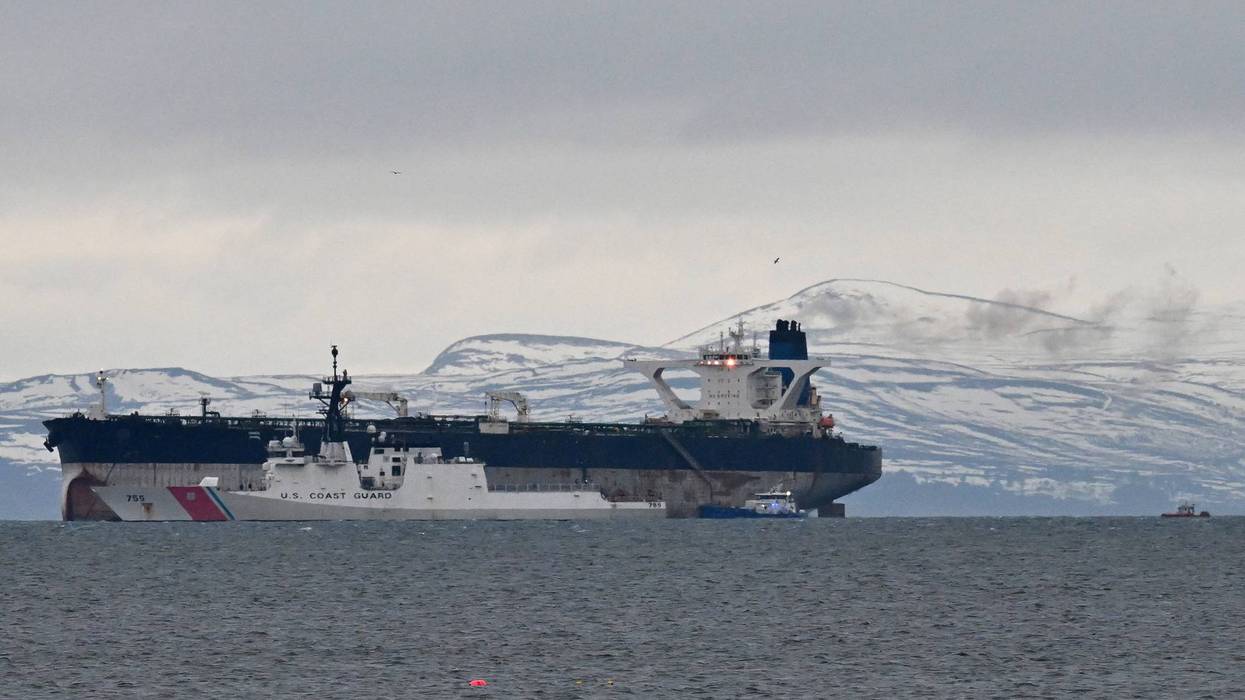
"Our sovereignty has been violated, our courts have been defied, and a foreign military has abducted two people from our territory," said Ross Greer, co-leader of Scotland's Green Party.
A Scottish lawmaker railed against US President Donald Trump on Wednesday over the American military's seizure of an oil tanker and detention of its two top officers earlier this month in waters between Iceland and Scotland.
Ross Greer, a member of the Scottish Parliament and co-leader of Scotland's Green Party, said that two people—tanker captain Avtandil Kalandadze and his unnamed first officer—"have been abducted from Scotland in the middle of the night by the US military, despite our highest court ordering they be kept under our jurisdiction."
As the Scottish newspaper The National reported Thursday, Kalandadze—a Georgian national—and his first officer were taken out of UK territory by the US Coast Guard earlier this week despite a court ruling against their removal from Scotland's jurisdiction.
"He's not our ally. He is a fascist," Greer said of Trump during his remarks in Parliament on Wednesday. "Our sovereignty has been violated, our courts have been defied, and a foreign military has abducted two people from our territory."
Greer called on the Scottish government to immediately evict US troops from Prestwick Airport, which is used by American forces.
"Will the first minister show Trump that his piracy has consequences?" Greer asked.
Two people have been abducted from Scotland in the middle of the night by the US military. Despite an order from our highest court that they be kept here.
The Scottish Government must respond and evict American troops from their base at publicly-owned Prestwick Airport. pic.twitter.com/owBpL9fvT5
— Scottish Greens (@scottishgreens) January 28, 2026
The BBC reported Wednesday that the Trump administration "says it intends to prosecute" Kalandadze and his colleague for alleged involvement in the violation of US sanctions.
Angela Constance, Scotland's justice secretary, has said the Trump administration's handling of the vessel seizure and abduction of its crew has demonstrated a lack of respect for Scottish jurisdiction.
"We have a number of questions, we have a number of concerns, and deep frustrations about how this matter has evolved, because it is a matter of significant public interest and confidence," Constance said earlier this week. "The Scottish government wants to play our part in international justice because that is appropriate and responsible. But that starts with the recognition and respect that must be afforded to Scottish jurisdiction and Scots law."
Aamer Anwar, an attorney representing Kalandadze's wife in a lawsuit over the incident, said earlier this week that the captain was "whisked away under the cover of darkness" by US forces, and "we have no idea what role our own governments played in that."
"A dangerous precedent has been set, as the US should not have the power to arrest people under our control," said Anwar. "These people have been denied their most basic human rights right under our noses, whilst the UK knowingly assisted the US ‘abduction’ of two men from Scotland to avoid the Judicial Review taking place."
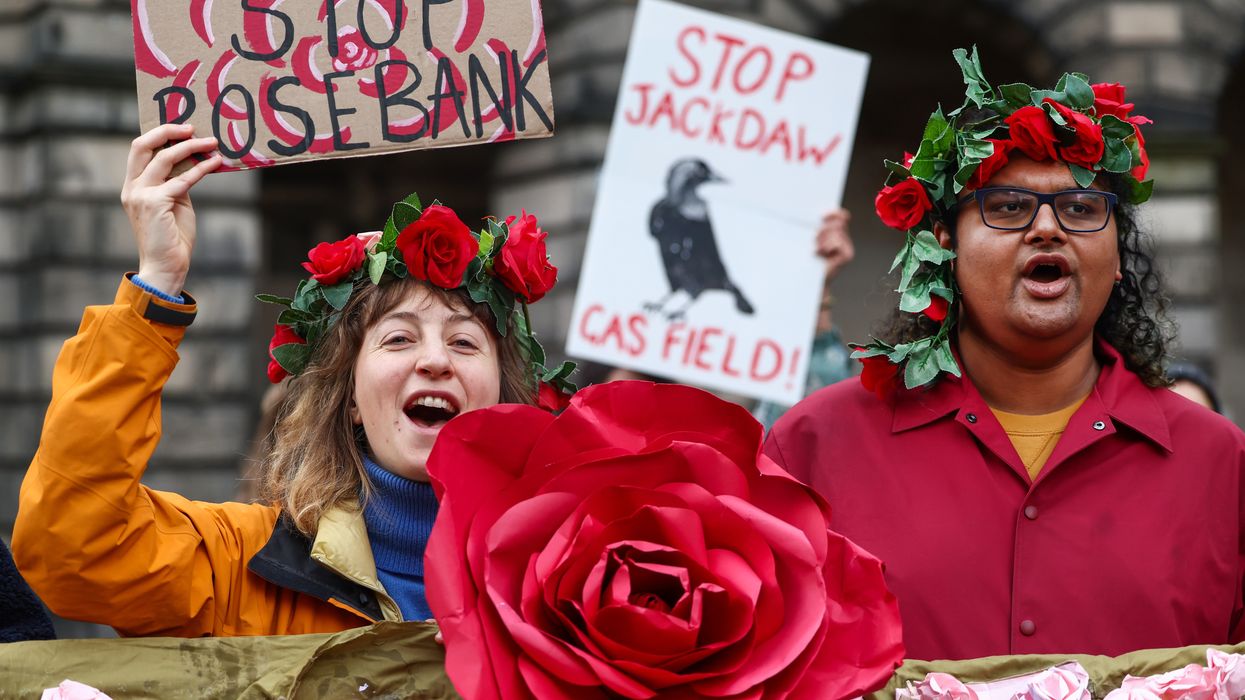
"There can be victories in the world of climate protest," said one organizer. "This is a big one."
After winning a landmark lawsuit to stop oil and gas production at two North Sea fossil fuel projects in the United Kingdom Thursday, the global climate action group Greenpeace called for applause for the campaigners who have spent years demanding no new pollution-causing developments.
"This is game-changing," said Greenpeace U.K. "And it's ONLY been possible thanks to YEARS of fighting by THOUSANDS of climate campaigners! Power to the people."
The comments came after Judge Andrew Stewart of Scotland's Court of Session ruled that Equinor and Shell, the fossil fuel giants behind the Rosebank oil and gas field and the Jackdaw gas project, respectively, cannot move ahead with extraction because the government did not take into account the emissions that would result from the projects.
The companies have poured hundreds of millions of dollars into Rosebank and Jackdaw, with Equinor saying it had lined up $2.7 billion in contracts for the former field, with an estimated 300 million barrels of oil and gas expected to be extracted beginning in 2026 or 2027.
The Stop Rosebank coalition, made up of grassroots campaigners and organizations, said the climate pollution from Rosebank "would be more than the combined annual CO2 emissions of all 28 low-income countries in the world, including Uganda, Ethiopia, and Mozambique."
"In other words, emissions from this one U.K. field would be more than those created by the 700 million people in the world's poorest countries in a year," said the coalition. "These are among the same countries that have contributed the least to the climate crisis but are already experiencing the worst impacts of a warming planet."
Stewart said in his ruling that "the public interest in authorities acting lawfully and the private interest of members of the public in climate change outweigh the private interest of the developers."
The campaign group Fossil Free London promptly organized a rally outside the Norwegian embassy in the U.K. capital to celebrate the verdict and call on Norway-based Equinor not to appeal the ruling.
"There can be victories in the world of climate protest," said one organizer. "This is a big one."
The ruling was in line with a decision handed down by the U.K. Supreme Court last year, which said local authorities must consider the full environmental impact of all new fossil fuel projects before they are approved.
Thursday's ruling is the latest evidence, said Freya Aitchison, oil and gas campaigner at Friends of the Earth Scotland, that "new oil is over."
"This signals the beginning of the end for fossil fuel production in the U.K.," said Aitchison. "Political attention must immediately turn to developing an urgent and fair transition plan for workers."
"This is a momentous victory for climate justice. It shows the power of the hundreds of thousands of people who have fought against the climate-wrecking Rosebank and Jackdaw oil fields for years. The U.K. Government must now end this disastrous project, rule out all new oil fields and fossil fuel developments and focus on delivering a planned, funded transition for oil workers," added Aitchison. "This ruling is a turning point, we can and must choose a better future."
Carla Denyer, a Member of Parliament for the Green Party, called on the U.K. government, now led by the Labour Party, to "refuse consent for the 13 other oil and gas drilling projects licensed by the previous government."
Global Justice Now said the government should also turn its attention to the entire planet and support calls for a Fossil Fuel Non-Proliferation Treaty.
"This is a huge milestone towards a livable planet and away from polluting fossil fuels," said Liz Murray, head of the group's Scottish campaigns. "Now we need global coordination to end new oil and gas not just here but around the world. The U.K. government should back calls from some of the most climate vulnerable countries for a fossil fuel treaty to plan a clean energy future that leaves no worker, community or country behind."
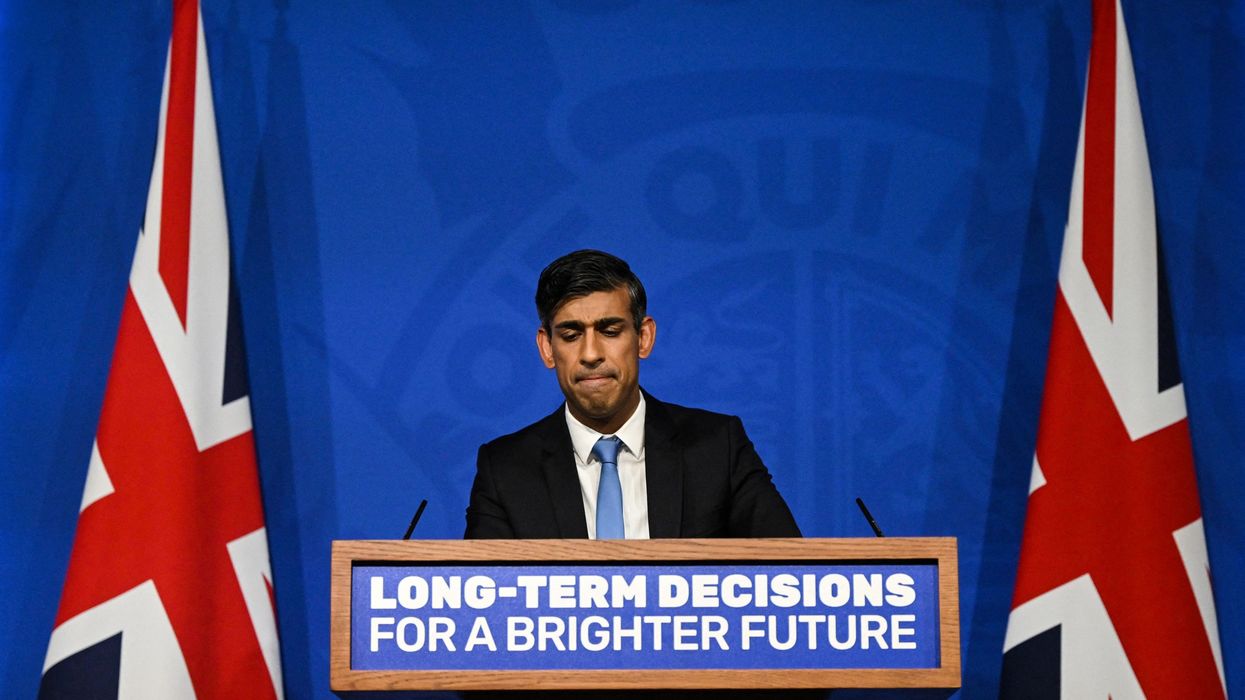
"Sunak's U-turn today will be devastating for the people of the U.K. and for the planet we call home," warned one Scottish Green. "It's nothing short of evil."
Critics across the political spectrum—from Conservative members of Parliament and corporations to Greens and climate campaigners—reacted with anger and resolve Wednesday following the announcement by U.K. Prime Minister Rishi Sunak that his Tory government would retreat from some of its key net-zero commitments.
Speaking Wednesday at the Downing Street Press Briefing Room in London, Sunak said his government is still committed to reaching net-zero by 2050, but in a "more proportionate way" that would bring a "greener planet and a more prosperous future."
The rollback will reportedly include delaying a ban on the sale of petrol- and diesel-powered vehicles from 2030 to 2035, pushing back the phaseout of gas boilers, scrapping energy efficiency targets for some homes, dropping recycling plans, and canceling a planned air travel tax.
"This is a U-turn that will leave the Tories facing in the opposite direction of almost everyone, and finally end their hopes of reelection."
"No one can deny climate change is happening," Sunak said, adding that the county needs "sensible green leadership" instead of false choices that "never go beyond a slogan."
However, Conservative peer Lord Zac Goldsmith—who resigned his ministerial post earlier this summer due to what he called Sunak's climate "apathy"—called the prime minister's reversal "a moment of shame."
"His short stint as PM will be remembered as the moment the U.K. turned its back on the world and on future generations," he added.
Shadow Climate Secretary Ed Miliband led Labour condemnation of the reversal, which he called "a complete farce from a Tory government that literally does not know what they are doing day to day."
Brighton Pavilion Green MP Caroline Lucas slammed what she called Sunak's "coordinated, calculated, and catastrophic rollback."
"What this all reveals is that Sunak really doesn't seem to care about the climate in the slightest—it's little more than an afterthought," Lucas wrote in a Guardian opinion piece published Wednesday.
Sunak must call a general election by January 2025, and his Tories are trailing the opposition Labour Party in opinion polls amid persistently high inflation, slow economic growth, and rising inequality.
"If Sunak mistakenly thinks the climate is merely a political device to draw dividing lines between his party and Labour, he will fail on his own terms," wrote Lucas. "All it will do is draw an ever-greater divide between him and the people he seeks to govern."
Climate campaigners roundly condemned Sunak's decision.
"The government needs to double down now, not U-turn," Kennedy Walker, a U.K. organizer with the climate action group 350.org, said in a statement. "We have the opportunity to show what a transition to a greener economy that works for people and the planet can look like; we need to hold leadership to account to make sure it happens and they follow through on their own promises."
Riffing on the government's "long-term decisions for a brighter future" slogan, Extinction Rebellion U.K. wrote on the social media site X: "Short-term decisions for a shitter future. Remember, this government took £3.5 million in donations from Big Oil and other industries before licensing new gas and oil."
Many companies including automaker Ford and energy giant E.ON joined in criticism of the rollback.
"Our business needs three things from the U.K. government: ambition, commitment, and consistency. A relaxation of 2030 would undermine all three," Ford U.K. chair Lisa Brankin said Wednesday. "We need the policy focus trained on bolstering the EV market in the short term and supporting consumers while headwinds are strong: infrastructure remains immature, tariffs loom, and cost-of-living is high."
Some critics noted that Sunak's announcement came on the same day the leaders of many nations—but not Britain or the world's two top carbon polluters, China and the United States—gathered in New York for the United Nations Climate Ambition Summit.
"We're in a climate emergency. The deadly impacts of climate change are here now and we have to act urgently," Labour London Mayor Sadiq Khan—the only U.K. speaker at the summit—told The Guardian Wednesday. "We have seen record high temperatures in London earlier this month and the hottest ever July. Over the last two years, we have experienced unprecedented wildfires and flash floods, destroying homes and livelihoods."
"This government's response flies in the face of common sense and shows they are climate delayers," Khan added. "It beggars belief that not only are they watering down vital commitments, but they are also passing up the opportunity to create green jobs, wealth, and lower energy bills—as well as failing to give investors the certainty they need to boost the green economy."
Sunak's reversal also infuriated many people in Scotland.
"Rishi Sunak has blood on his hands," National Union of Students Scotland president and Scottish Young Greens co-convener Ellie Gomersall told The National. "His excuse? It's too costly. Well then all the more kudos to the Scottish government who are still moving forward with net-zero policies like low-emission zones, phasing out gas boilers, cheaper public transport, all the while on a budget severely restrained by the confines of devolution."
"And of course when the Scottish government does try to implement simple yet effective measures like a deposit return scheme, Westminster comes along and blocks it," she added. "Sunak's U-turn today will be devastating for the people of the U.K. and for the planet we call home. It's nothing short of evil."
Alistair Heather, a Scottish writer and TV presenter, told The National that he was "almost pleased" by Sunak's announcement.
"This is a U-turn that will leave the Tories facing in the opposite direction of almost everyone, and finally end their hopes of reelection," he explained. "For mainstream voters, who understand that a clear, urgent movement of travel towards a green future is the best chance we have of mitigating the worst effects of the climate collapse, the Tories have made themselves completely unelectable. Good... Fuck the Tories. Mon the independence."
"With the Left AWOL, our species is being quick-marched to extinction."
The outrage was felt far beyond U.K. shores.
"At a time when the U.K. should be providing global leadership in transitioning off fossil fuels, especially in recognition of the impact its historical emissions have had in bringing about the climate crisis, the U.K. government is considering backtracking on already insufficient commitments," 350.org Europe regional director Nicolò Wojewoda said in a statement.
Yanis Varoufakis, a former Greek finance minister who heads the left-wing MeRA25 party, wrote on X that "Sunak's U-turn is a reflection of the total Europe-wide collapse of the market-based, neoliberal consensus on how to tackle the climate crisis. It marks the center‐right's new path."
"And with the Left AWOL," he added, "our species is being quick-marched to extinction."

The former Republican president's repeated promotion of his properties to the media and other world leaders amounted to "diplomatic malpractice," one ethics official said.
Former U.S. President Donald Trump, who is now running for a second term in the 2024 election, made $82.5 million from his businesses in Ireland and Scotland during his presidency as he embroiled himself in what one watchdog group called "extraordinary conflicts of interest" stemming from his frequent trips to his properties in the two countries while he was in office.
As Citizens for Responsibility and Ethics in Washington (CREW) reported on Monday, Trump repeatedly promoted his properties to the media and other officials as well as charging U.S. government employees to stay there.
Trump stayed at his Doonbeg golf property in Ireland and his Turnberry and Aberdeen golf resorts in Scotland numerous times, in some cases taking detours to stay there while claiming he did so out of "convenience."
The president made those trips after making the unprecedented decision not to divest from his real estate empire, the Trump Organization, CREW noted.
That decision led "to four years of egregious conflicts of interest between his business and the government," said CREW in its new report, with some of the worst arising "around his Doonbeg golf course in Ireland, where he made almost $25 million, and his Turnberry and Aberdeen golf properties in Scotland, which helped him make more than $58 million."
While in Europe for a NATO summit and a meeting with Russian President Vladimir Putin in Helsinki, Trump went out of his way to spent two nights at Turnberry, later charging his own Secret Service officers $1,300.
A Freedom of Information Act request showed that during former Vice President Mike Pence's 2019 stay at Doonbeg—which was encouraged by Trump, according to Pence's chief of staff—the resort charged the Secret Service more than $15,000.
The then-president and members of his administration mentioned Turnberry, Doonbeg, and Aberdeen at least 50 times during Trump's four years in office, with Trump referring to Turnberry as "magical" at the NATO summit in 2018 and talking to local officials in Ireland about Doonbeg's impact on the economy in 2019.
He reportedly "boasted" about Turnberry frequently in conversations with former U.K. Prime Minister Theresa May, and pushed the U.S. ambassador to Britain, Robert Wood Johnson IV, to lobby for the British Open golf tournament to be held at the resort.
At the time of the latter incident in 2020, Norman Eisen, former special counsel for ethics for President Barack Obama, called Trump's actions "diplomatic malpractice."
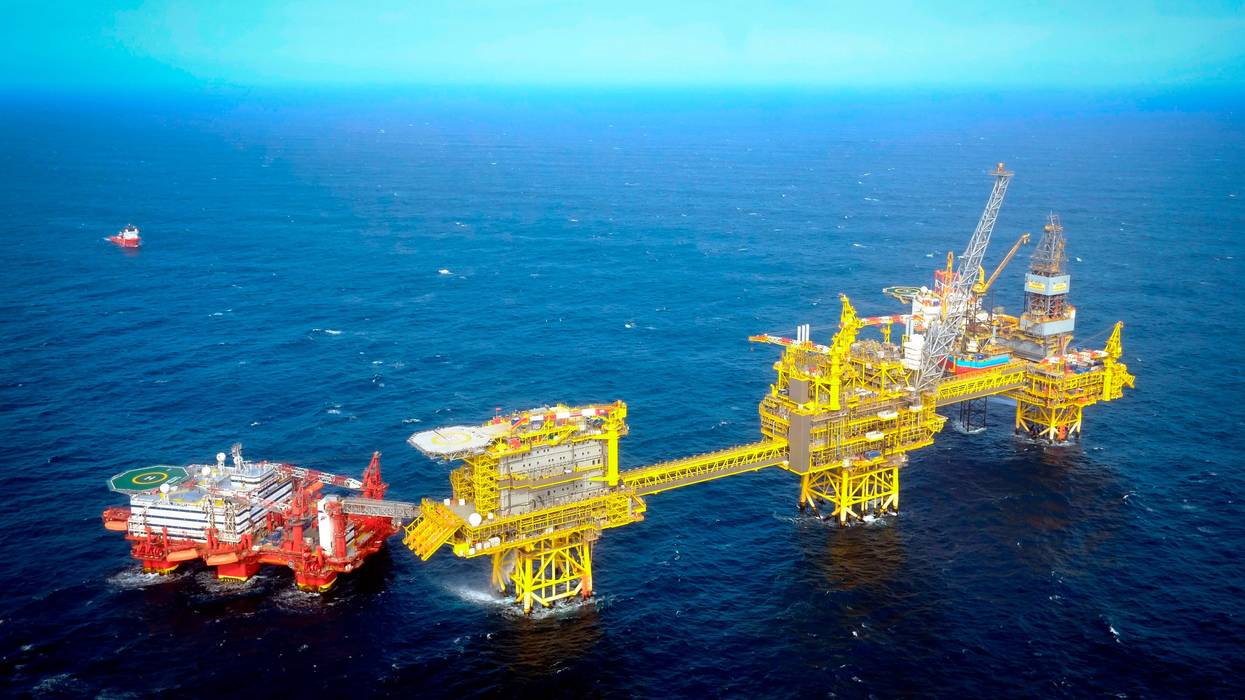
"The commitment from Labour to oppose new fossil fuel developments is a welcome first step, but it needs to come with plans for a just transition to renewable energy," said one advocate.
While welcoming the Labour Party's vow to block new offshore oil and gas drilling if it wins control of the United Kingdom Parliament, climate justice campaigners on Tuesday implored the party to ensure that a shift to clean power is fair to displaced workers.
"The science is clear that to prevent further climate breakdown, we need to leave fossil fuels in the ground," Freya Aitchison, oil and gas campaigner at Friends of the Earth Scotland, said in a statement. "The commitment from Labour to oppose new fossil fuel developments is a welcome first step, but it needs to come with plans for a just transition to renewable energy."
On Sunday, an unnamed Labour Party source told The Times, "We are against the granting of new licenses for oil and gas in the North Sea." Alluding to a 2022 admission from John Gummer, a Conservative Party MP and chair of the U.K.'s independent Committee on Climate Change, the source said that such licenses "will do nothing to cut bills as the Tories have acknowledged."
"They undermine our energy security and would drive a coach and horses through our climate targets," said the source, who added that "Labour would continue to use existing oil and gas wells over the coming decades and manage them sustainably as we transform the U.K. into a clean energy superpower."
Labour Leader Keir Starmer is expected to formally announce the party's promise in Scotland next month when he unveils a net-zero energy policy blueprint. The Guardian reported Sunday that it "will involve not just a ban on new North Sea oil and gas licenses, but a pledge that any borrowing for investment should be limited to green schemes."
"Setting an end date for the extraction of fossil fuels will allow workers and communities to prepare for this transition."
Labour MP Jonathan Ashworth, shadow secretary of state for work and pensions, confirmed the party's plan. Speaking with Trevor Phillips of Sky News on Sunday, Ashworth said that "what we'll be doing in the coming weeks is outlining how we want to invest in the green jobs of the future to bring bills down, to create a more sustainable energy supply."
"We know we've got to move to more renewable sources of energy," said Ashworth. "It's important for our climate change commitments, but it's also the way in which we can bring energy bills down for consumers."
"This isn't about shutting down what's going on at the moment, we will manage those sustainably," the lawmaker continued.
Although Labour doesn't intend to halt already-approved offshore extraction in most cases, two key exceptions are drilling schemes in the Cambo and Rosebank oil fields, both of which the party vowed to block after Tories greenlighted them, The Guardian noted. The North Sea Transition Authority held another licensing round for fossil fuel exploration projects in January, receiving more than 100 bids and granting new licenses for Cambo as well as the Jackdaw gas field.
"If you stop all new exploration, you are going to have to fill the gap from somewhere and it won't all come from wind," said Ashworth. "We know that but the sums have been done."
"We do need to invest in wind. We need to invest in tidal, we need to invest in nuclear," he added. "We need more sustainable sources of energy supply in order to bring bills down for consumers and actually create jobs in this green transition."
According to Ashworth, "There are hundreds of thousands of jobs that will come online from the transition."
In Aitchison's words, "Starmer rightly recognizes that extracting new oil and gas in the U.K. will not bring down our skyrocketing energy bills—rather, it will cost the U.K. public money through huge loopholes in the windfall tax which incentivize companies to drill for more fossil fuels."
Last August, the U.K. Treasury estimated that the nation's energy firms were on track to enjoy up to £170 billion ($211 billion) in excess profits—defined as the gap between money made now and what would have been expected based on price forecasts prior to Russia's invasion of Ukraine—over the next two years.
A 25% windfall tax on oil and gas producers approved last July is expected to raise £5 billion ($6.2 billion) in its first year. However, the existing surtax on excess fossil fuel profits, which lasts through 2025, includes loopholes enabling companies to significantly reduce their tax bill by investing more in oil and gas extraction, something the industry has claimed will increase supply.
But as Aitchison noted, "The majority of oil from U.K. fields is exported and sold to the highest bidder, so increasing our domestic production only benefits the oil companies that are already making record profits."
Aitchison called it "vital" for Labour's announcement to be accompanied by "plans to support workers in the oil and gas industry to transition to jobs in the renewables industry."
In March, Friends of the Earth Scotland and Platform, a London-based social and environmental justice group, published Our Power, a report that provides a roadmap for a just energy transition in the North Sea. The plan, backed by a coalition of offshore oil and gas workers, trade unions, and climate groups, is based on surveys of more than 1,000 workers who developed 10 demands to guide a rapid and equitable shift to renewables.
"Setting an end date for the extraction of fossil fuels will allow workers and communities to prepare for this transition," Aitchison said Tuesday. "It will provide certainty for the sector, making it clear that investing in renewables is the only choice for our energy future, and enabling workforce planning."
"The coming decade," she added, "must see concerted government intervention and investment to ensure a fast and fair phaseout of fossil fuels and a massive upscaling of renewables that protects livelihoods and creates plentiful decent green jobs."
As The Guardian reported:
The proposal is the latest in a series of Labour pledges over a move towards a greener economy, much of it pushed by Ed Miliband, the shadow climate change secretary.
In 2021, the shadow chancellor, Rachel Reeves, announced the party would invest £28 billion [$34.7 billion] a year in climate crisis-related measures, covering not just green energy but also areas such as home insulation, active travel, and flood defenses.
At last year's Labour conference, Starmer said Labour would set up a publicly owned energy company run on clean U.K. power, to be known as Great British Energy.
The next U.K. general election is scheduled to be held no later than January 28, 2025.

Free expression advocates in the United Kingdom are warning that law enforcement agents in the country appear ready to eliminate Britons' right to free speech as several arrests have been reported at events taking place during the 10-day nationwide mourning period following Queen Elizabeth II's death.
"As precious, if not more precious than the monarchy, is the real beautiful web of freedoms and civil liberties that we've built up here over centuries, and we'd be very wrong to begin to sacrifice those in this kind of moment."
Critics of the monarchy have been arrested, detained, forced to leave public areas, and intimidated by police officers in Scotland and London as Queen Elizabeth's coffin has traveled across the U.K., along with members of the royal family including King Charles III.
The first arrest was reportedly made in Oxford, where Symon Hill asked, "Who elected him?" as a proclamation officially naming Charles as his mother's successor was read. Hill reported that police officers placed him in handcuffs and eventually told him he'd been arrested under the "Police, Crime, Sentencing & Courts Act 2022," which has been condemned by rights advocates.
Hill wrote that he was never "given a clear answer as to why I had been arrested," but was told his comments in Oxford could have led to "harassment or distress."
Ruth Smeeth of the Index on Censorship called arrests like Hill's "deeply concerning" and warned that the queen's death may be "used, by accident or design, to erode in any way the freedom of expression that citizens of this country enjoy."
"The fundamental right to freedom of expression, including the right to protest, is something to be protected regardless of circumstance," Smeeth told Bloomberg.
A demonstrator holding a handmade sign reading, "Not My King" was also filmed being led away by police from the Palace of Westminster in London on Monday, and climate campaigner and lawyer Paul Powlesland reported that he attracted negative attention from a police officer when he held up a blank sheet of paper in Parliament Square.
The officer warned Powlesland that if he wrote "Not My King" on the paper, he would be arrested under the Public Order Act "because someone might be offended."
"I believe actually as precious, if not more precious than the monarchy, is the real beautiful web of freedoms and civil liberties that we've built up here over centuries, and we'd be very wrong to begin to sacrifice those in this kind of moment," Powlesland told "Good Morning Britain" on Tuesday, adding that he protested only to make a statement about freedom of speech, but the police response to critics of the monarchy this week has pushed him to adopt an anti-monarchist view.
Member of Parliament and former Labour Party leader Jeremy Corbyn called the arrest of anti-monarchy protesters "wrong, anti-democratic and an abuse of the law," while Zarah Sultana, another Labour MP, expressed shock that Britons' right to speak out against the monarchy is being debated.
In Edinburgh, a 22-year-old student named Mariangela was arrested after holding up a sign that read, "Fuck imperialism. Abolish monarchy" outside St. Giles Cathedral, where the queen's coffin lay before being taken to London.
Mariangela told openDemocracy that she was detained in a cell for nine hours and that the officers who were arrested later expressed "doubts over whether the arrest was lawful." She was nevertheless charged with "behavior likely to cause a reasonable person to suffer fear or alarm" under Scotland's Criminal Justice and Licensing Act 2010 and ordered to appear in court on September 30.
Police Scotland's actions were "clearly a violation of freedom of speech, which is supposed to be enshrined in the laws of the United Kingdom," she told openDemocracy. "If I'm not allowed to express my opinion, I don't see how that law is being observed."
Also in Edinburgh, videos posted on social media appeared to show a protester being removed from a crowd by officers and arrested after shouting, "You're a sick old man" at Prince Andrew. The prince has been accused of raping Virginia Giuffre, a woman who was allegedly sex-trafficked by financier Jeffrey Epstein. He has denied the accusation but paid a settlement to Giuffre earlier this year.
"Protest is not a gift from the state, it is a fundamental right," Jodie Beck, policy and campaigns officer at civil liberties group Liberty, told Bloomberg. "Being able to choose what, how, and when we protest is a vital part of a healthy and functioning democracy."
"Whoever you are, whatever your cause, it is vital you are able to stand up for what you believe in without facing the risk of criminalization," Beck added. "It is very worrying to see the police enforcing their broad powers in such a heavy-handed and punitive way to clamp down on free speech and expression."

Climate campaigners in the United Kingdom applauded Thursday as oil giant Shell signaled it would not drill for oil in the proposed Cambo oil field off the coast of Scotland's Shetland Islands, following a grassroots effort to halt the project.
"Governments and oil and gas companies will--and are--being held accountable by people all over the world who know exactly who is to blame for the climate crisis."
Advocates said Shell's announcement that it had found a weak economic case for the Cambo project should deliver a "deathblow" to the proposal, and demanded the U.K. government end its support for drilling in the oil field, which would lie 78 miles west of the islands in the North Sea.
"With yet another key player turning its back on the scheme the government is cutting an increasingly lonely figure with their continued support for the oil field," Philip Evans, oil campaigner at Greenpeace U.K., told The Guardian.
Climate action group 350.org credited activists who have signed petitions, attended public actions, and pressured policymakers to scrap the project. Last summer, 80,000 people signed a letter that was sent to the U.K. government demanding the Cambo oil field be blocked.
" Protest works!" said 350 Europe.
Shell's decision to pull out of the project comes weeks after its plans to develop the Jackdaw gas field, also in the North Sea, were rejected by regulators due to the project's expected environmental impact.
The U.K. has committed to reaching net-zero fossil fuel emissions by 2050, a goal that advocates say is incompatible with drilling in the North Sea. The oil field contains over 800 million barrels of oil, the extraction of which would have a climate impact equivalent to 10 times Scotland's annual emissions.
Shell Oil would have controlled 30% of the Cambo oil field, with its partner Siccar Point Energy owning 70%. According to Reuters, it was unclear Thursday whether the oil field can be developed without Shell's involvement.
"We have to see the end of North Sea projects as well as all new fossil fuel extraction: There is no future in them," Connor Schwartz of Friends of the Earth told The Guardian. "Carrying on risks more than just balance sheets, it makes the path to 1.5degC even harder."
Tessa Khan, founder and director of climate action group Uplift, called Shell's withdrawal from the project "genuinely huge news" that could spell the end for oil and gas development in the U.K., considering Shell cited economic grounds for its decision.
"Governments and oil and gas companies will--and are--being held accountable by people all over the world who know exactly who is to blame for the climate crisis and the unavoidable implication of all those promises to preserve our climate: We have to keep fossil fuels in the ground," said Khan. "And countries like the U.K.--who are one of the biggest historical emitters of greenhouse gases, who have the resources to shift away from oil and gas, and who owe a huge climate debt to the rest of the world--have to move first."

"Would climate leaders build 399 new coal plants in the U.S.?"
"The fact that dozens of LNG and pipeline projects are being seriously considered for approval by the Biden administration is deeply alarming."
So asks an advertisement placed in Scotland's largest daily newspaper this week by U.S. environmental and climate justice groups during the United Nations Climate Change Conference in Glasgow, part of an effort to persuade the Biden administration to reject all new gas exports and fossil fuel infrastructure.
"The answer is no," the ad says. "Yet right now, 23 liquefied natural gas export terminals and pipelines are sitting on your desks. These projects will unleash greenhouse gas emissions equivalent to doubling all existing U.S. coal-fired power plants."
Last month, Oil Change International--a member of the Build Back Fossil Free coalition behind the ad--published a briefing paper noting President Joe Biden has the executive authority to block two dozen fossil fuel infrastructure projects that, if completed, would produce as much greenhouse gas emissions annually as more than 400 coal-fired power plants.
Since the report's publication, one of its featured liquified natural gas (LNG) export terminals has been canceled, leaving 23 projects that would generate the equivalent yearly emissions of 399 coal plants.
According to the briefing, the combined greenhouse gas emissions of the 24 fossil fuel projects--among them the Line 3, Dakota Access, and Mountain Valley pipelines and 20 liquified gas terminals--"would be larger than all current U.S. coal power plants combined, moving the United States away from Paris agreement commitments."
"At a critical time when we need to rapidly phase out fossil fuel production and wind down our emissions, allowing even one of these fossil fuel infrastructure projects to move forward would undermine our global climate goals," Oil Change International U.S. program manager Collin Rees said in a statement Friday.
"The fact that dozens of LNG and pipeline projects are being seriously considered for approval by the Biden administration is deeply alarming, and this should put the United States on the hot seat in Glasgow during the rest of COP26," Rees added.
The ad was published after the U.S. Environmental Protection Agency on Tuesday announced new rules targeting leaks and emissions of methane--a greenhouse gas found to be up to 87 times more potent than carbon dioxide over a 20-year period--that the advocacy group Earthworks said "do not go far enough to address pollution."
Julia Walsh, director of Frack Action, said Friday that "the new methane regulations put a Band-Aid on the problem."
"Even if we're leaking less methane in the U.S., we're still pulling it out of the ground, transporting it around the country, and then leaking or burning it overseas," Walsh noted. "To limit global warming to 1.5degC, the U.S. must ultimately stop building new export terminals and pipelines that prop up this dangerous fossil fuel worldwide."
Build Back Fossil Free's latest appeal to Biden comes amid numerous climate demonstrations in Glasgow and after the coalition's historic People vs. Fossil Fuels week of action in Washington, D.C.
Related Content

"No world leader could credibly claim to be a climate champion without tackling fossil fuel development head-on," Wenonah Hauter, executive director at coalition member Food & Water Watch, said Friday. "This includes cutting dangerous greenhouse gas emissions off at the source by halting new drilling and fracking, and canceling new oil and gas infrastructure projects."
Hauter added that "President Biden has a stark choice: to lead by acting decisively against fossil fuels, or to continue down the current path to irrevocable climate chaos."

"Many are starting to ask themselves what will it take for the people in power to wake up. But let's be clear: they are already awake. They know exactly what they are doing."

Chanting "shame on you," activists rallied amid a heavy police presence Monday evening outside a swanky reception for world leaders and others attending the United Nations Climate Change Conference in Glasgow, Scotland to protest their inadequate response to the planetary emergency.
Members of Britain's royal family and corporate executives joined heads of state and other leaders at the exclusive dinner event, which was hosted by British Prime Minister Boris Johnson at the Kelvingrove Art Gallery and Museum.
"How dare these world leaders have a fancy dinner on the first night of COP26, as if they have something to be proud of," said Cat Scothorne of the group Glasgow Calls Out Polluters, according to STV News.
"The continued support of the fossil fuel industry by the heads of state, particularly in the Global North, is killing millions of people," Scothorne added. "The consequences of climate change are faced by people not in power, but those mainly in the Global South and people on sites where extraction occurs, yet the perpetrators sit in luxury, insulated from it all."
One protester told Capital Scotland News he was there "to raise awareness of the need for urgent action on the climate and ecological emergency, mostly because with our political processes, we're left with almost no other routes to make a difference."
"We're going down an utterly absurd route of deciding as a species to kill ourselves," he added. "We have to step up and say, 'No, that's completely absurd; let's choose a route that saves ourselves.'"
Another demonstrator told the outlet she was protesting to hold decision-makers accountable.
"We're working towards global justice, climate justice," she said, "not just making decisions that only benefit a few people, but rather to make decisions that benefit everyone."
The demonstration came at the end of the second day of the global summit and amid demands from Indigenous leaders, youth climate campaigners, and others for a little less conversation and a lot more action to address the growing climate crisis.