

SUBSCRIBE TO OUR FREE NEWSLETTER
Daily news & progressive opinion—funded by the people, not the corporations—delivered straight to your inbox.
5
#000000
#FFFFFF
To donate by check, phone, or other method, see our More Ways to Give page.
Daily news & progressive opinion—funded by the people, not the corporations—delivered straight to your inbox.
"Another day, another chilling effect on broadcast speech," said one free speech advocate, who added that "nothing about the FCC’s actions is normal—or legal."
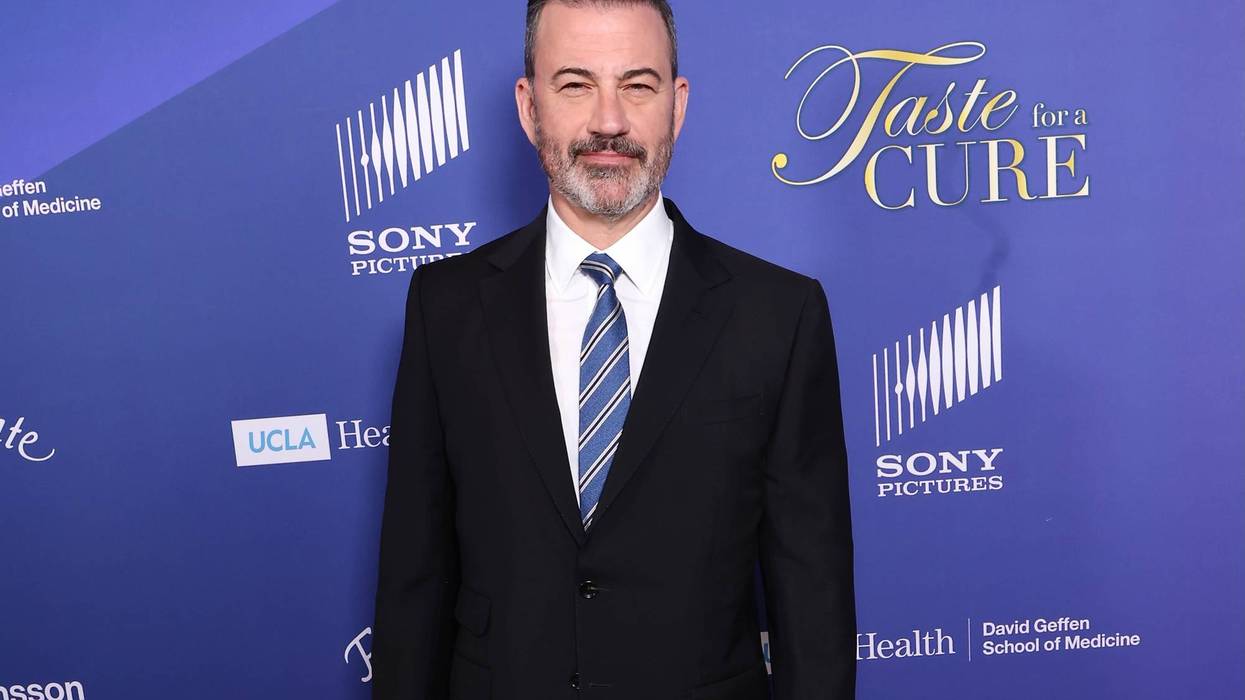
Late-night host Jimmy Kimmel told viewers Wednesday night that his show was pulling an interview with Democratic Texas Senate nominee James Talarico from ABC stations amid threats from President Donald Trump's Federal Communications Commission, which press freedom groups are describing as another effort by the administration to "chill" the speech of the president's critics.
“Out of consideration for our local stations, especially our ABC affiliates in Texas who would have to deal with this nonsense, my interview tomorrow with James Talarico will not air on television,” the host said on Wednesday’s episode of “Jimmy Kimmel Live.”
He added that the interview “will be posted on YouTube instead. It will not be on TV.”
It's the second time a major US network has opted to spike a late-night interview with Talarico following FCC pressure. In February, CBS lawyers preemptively stopped Stephen Colbert from conducting an interview with the candidate over what they said were fears of retaliation from the agency, whose chair, Brendan Carr, has threatened to strip broadcast licenses from networks that give Trump unfavorable coverage.
Carr has confirmed that the FCC had opened an investigation and started an "enforcement proceeding" into ABC over whether Talarico's appearance on "The View" violated the equal-time rule, which requires that broadcast stations that host political candidates must give their opponents an equal opportunity to appear as well.
Late-night shows have long been considered exempt from this rule as “bona fide news interview” programs. But a public notice issued by the FCC Media Bureau in January stated that programs that advance “partisan” goals, including talk shows, would no longer be considered as such. Carr has said programs he considers to be “fake news” may not qualify for an exemption.
Kimmel on Wednesday emphasized the "unusual circumstances" of his network's decision to cancel the interview with Talarico.
"For the whole 20-plus years of our show, I've been interviewing Americans who are running for office with no problem at all... from Hillary Clinton, to Ted Cruz, to Donald Trump himself," he said.
Kimmel noted that when he interviewed Trump during his first presidential run in 2015, he seemed to have no issue with political candidates appearing on his show and eagerly returned for more interviews.
"For some reason, and I can't seem to figure out what that reason is, something has changed," Kimmel joked. "Now that he's president, his FCC has threatened me, threatened our show, threatened our network, ABC, our affiliates, our local stations—based on simple, traditional editorial decisions, guest bookings it would seem they don’t like."
For that reason, he said, if viewers "want to learn about a candidate for the Senate tomorrow, you will have to go to the 'Jimmy Kimmel Live' YouTube channel."
"Thank goodness we have that," Kimmel said. "Because in the America we have right now, that is the best that we can do, until November, of course."
In August, ABC parent company Disney sued the FCC on First Amendment grounds following the agency’s unusual request for its eight ABC stations to submit their broadcast renewal requests several years in advance, which it described as part of a “retaliatory campaign” against the network's negative coverage of Trump.
The complaint notes that ABC has felt compelled to alter its editorial judgment in order to avoid further retaliation, including passing on interviews with several other political candidates it felt would invite Trump's ire and choosing to air a lie-filled Trump address about supposed election fraud, which it noted it "ordinarily would not have done."
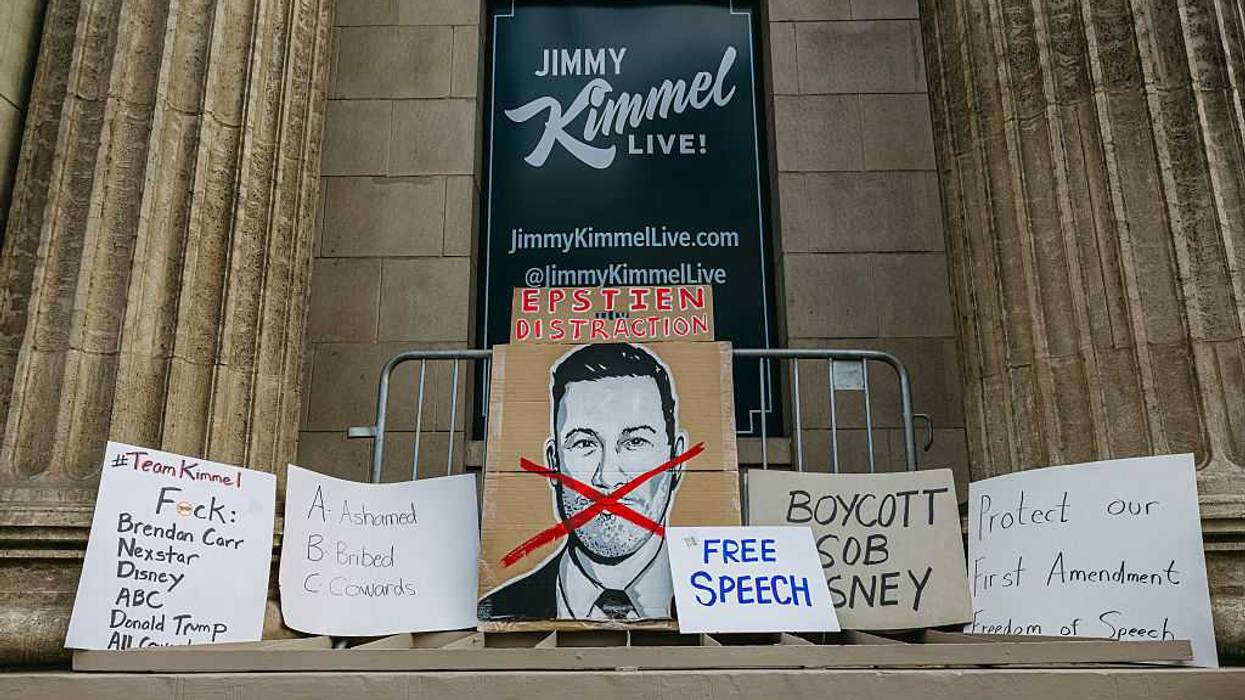
Last September, ABC briefly removed Kimmel from the air following direct threats from Carr to strip ABC stations of their broadcast licenses, which came after a critical monologue from the late-night host about Trump and Republicans in the wake of the assassination of right-wing activist Charlie Kirk.
The complaint notes Carr’s use of explicit coercion to pressure ABC to remove Kimmel, including telling the network that it could proceed “the easy way or the hard way."
Kimmel emphasized what he said was the political nature of the pressure campaign against him and the network, which has continued even after he was reinstated. Republicans, he said, "are very nervous about the midterms and very rightly so," as they are "in serious danger of losing 'bigly.'"
"They are in danger of losing a Senate seat in Texas of all places," he said to cheers from the crowd, "where James Talarico is leading a piece of human silly putty named Ken Paxton there," according to several recent polls.
Press freedom and civil liberties organizations described Carr's threats to networks as part of an effort to chill critical speech on behalf of the president, one that is ratcheting up as the midterms approach.
Timothy Karr, the senior director of strategy and communications for Free Press, told Common Dreams that Carr's "unconstitutional crusade against a free press has a clear bias against individuals and outlets that President Trump doesn't like."
"Combine that with Trump's desperation in the face of electoral polling that shows people ready to change political course come November, and you can see the real reason driving Carr's reckless fixation with silencing opposing views," Karr said.
Karr argued that networks were unnecessarily casting aside their rights to editorial judgment out of fear of retaliation.
"For years, the FCC has been very clear that bona fide news interviews, including on late-night talk shows, are entitled to editorial discretion," Karr said. "Carr's ongoing efforts to take this discretion away are part and parcel of his campaign to transform broadcast media into full-time megaphones for Trumpist propaganda."
He said, "What's doubly worrying is that many of these broadcast networks are too eager to cave to Trump and Carr's demands when the First Amendment is clearly on their side."
Jenna Leventoff, senior policy counsel for the ACLU, concurred, telling Common Dreams that the FCC "abusing its rules to chill speech" is "particularly problematic before an election, when voters need more information, not less."
Bob Corn-Revere, the chief counsel for the Foundation for Individual Rights and Expression (FIRE), told Common Dreams it was “another day, another chilling effect on broadcast speech," adding that ”nothing about the FCC’s actions is normal—or legal.“
Shiva Stella, the legal director at Public Knowledge, emphasized that networks capitulating helps to cement a climate of fear.
"This is a classic chilling effect," Stella told Common Dreams. "Once the FCC threatens stations over editorial decisions, it does not need to repeat the threat every time. Broadcasters begin changing their programming to avoid retaliation."
“The FCC needs to stop using its power to bully news organizations into silencing voices it simply disagrees with,” added Tim Richardson, journalism and disinformation program director at PEN America, in a statement to Common Dreams.
“When broadcasters alter decisions because they fear government retaliation," he said, "that damage extends beyond a single program and threatens the independence of the entire press and the public’s access to information. Which, unfortunately, seems to be the intent in this case.”
"Although the FCC has the authority to ensure broadcasters operate in the public interest, it cannot serve as President Trump’s roving censor."
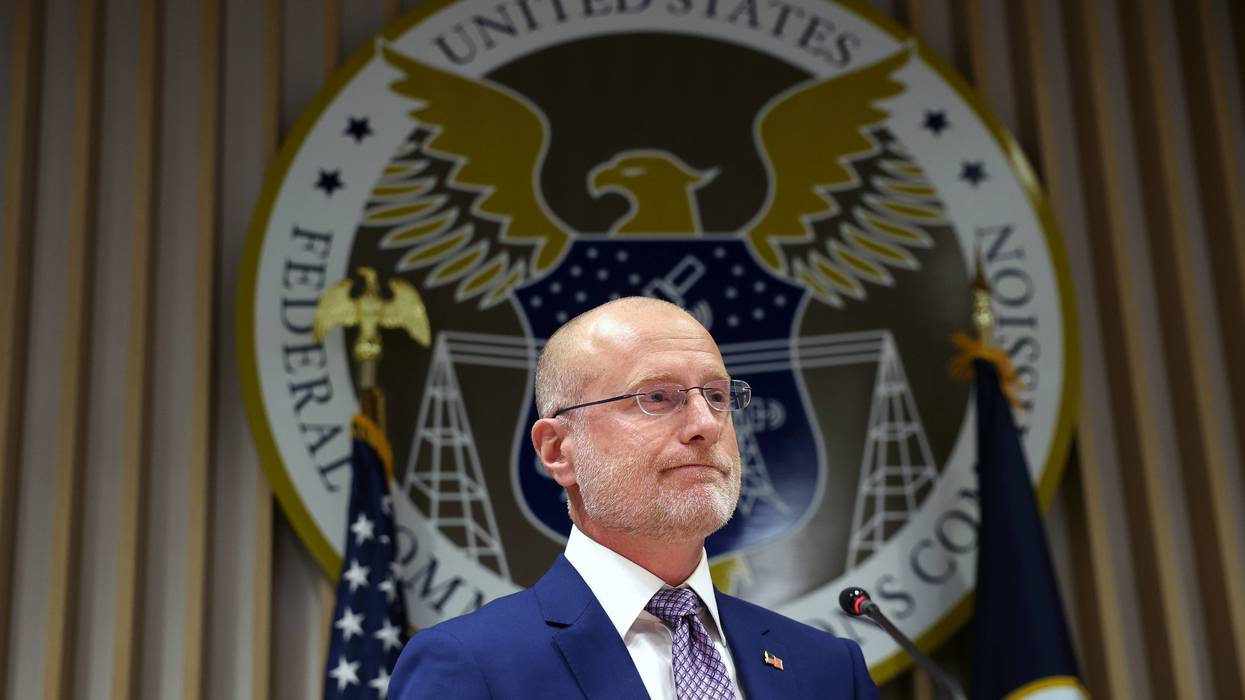
A group of Senate Democrats on Thursday told Federal Communications Chairman Brendan Carr to back off his threats to strip Disney-owned TV network ABC of its broadcast licenses.
In a letter addressed to Carr, the Democrats took Carr to task for ordering Disney to file early license renewals for eight ABC stations shortly after President Donald Trump demanded that the network fire late-night host Jimmy Kimmel.
Kimmel earned Trump's ire when he jokingly likened first lady Melania Trump to an "expectant widow" days before a gunman stormed into the White House Correspondents' Dinner in an alleged attempt to assassinate the president.
The senators called Carr's order an "extraordinary abuse of power" and "the latest and most extreme step in your use of the FCC’s licensing authority as a cudgel against broadcasters whose editorial choices displease the president."
The Democrats charged that the order "appears to penalize Disney for refusing to capitulate to Trump’s demands to fire Kimmel and to send a message to other broadcasters: Modify your speech to favor Trump or face the FCC’s wrath," while noting that the order was the first time in over 50 years that the commission had called on a broadcaster to apply for early renewal.
The day before the order to Disney, the FCC sent a similar order to a small station license holder called Bridge News.
Carr's order to Disney was also part of a broad pattern of Trump administration assaults on the free press, including calls to fire Kimmel last year after the comedian said Trump and his political allies were trying “to score political points" after the assassination of right-wing activist Charlie Kirk.
"Although the FCC has the authority to ensure broadcasters operate in the public interest," they wrote, "it cannot serve as President Trump’s roving censor, threatening to revoke licenses against broadcasters whose editorial content—including a comedian’s jokes—displeases the president."
The Democrats concluded their letter by asking Carr to provide information about the timing and process by which the FCC decided to send Disney its early renewal order, including whether any FCC staff had communicated with the White House about the order before it was issued.
The letter was signed by Sens. Ed Markey (D-Mass.), Chuck Schumer (D-NY), Maria Cantwell (D-NM), Ben Ray Lujan (D-NM), John Hickenlooper (D-Colo.), Mazie Hirono (D-Hawaii), Jacky Rosen (D-Nev.), Bernie Sanders (I-Vt.), Brian Schatz (D-Hawaii), Adam Schiff (D-Calif.), Chris Van Hollen (D-Md.), and Elizabethe Warren (D-Mass.).
"This is a clear attack on the First Amendment and a political stunt designed to intimidate critics, retaliate against a comedian practicing free speech through satire, and send a message to anyone who dares to speak out."
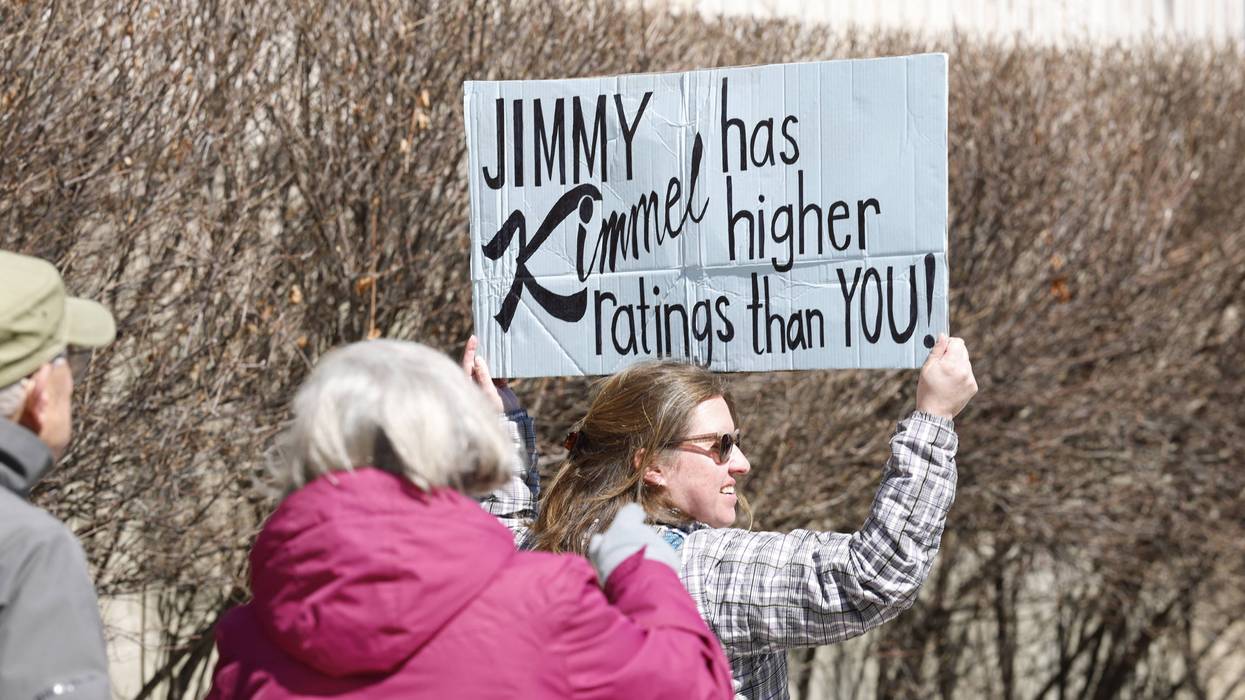
Press freedom advocates on Tuesday forcefully condemned the Republican-dominated Federal Communications Commission—and FCC Chair Brendan Carr in particular—for moving to challenge Disney-owned ABC's broadcast licenses as President Donald Trump again pressures to network to fire late-night television host Jimmy Kimmel.
"The First Amendment and the FCC's mandate do not permit the agency to use broadcast licenses as weapons to punish broadcasters for constitutionally protected content they air," declared Freedom of the Press Foundation chief of advocacy Seth Stern.
"Brendan Carr was once a serious communications lawyer, and has repeatedly and correctly said that the FCC has no role in policing content, whether news reporting or comedians’ late night jokes," Stern pointed out. "Carr's decision to abandon his principles to kiss up to Trump to advance his career does not change the law that Carr knows full well applies."
"The FCC is neither the journalism police nor the humor police," he added. "This is nothing but illegal jawboning intended to intimidate ABC into kissing the ring."
Kimmel—whom ABC briefly suspended last year amid pressure from Carr over comments the comedian made about assassinated right-wing activist Charlie Kirk—joked last Thursday that the first lady, Melania Trump, had "a glow like an expectant widow." Two days later, a gunman attempted to enter the White House Correspondents' Dinner—and on Monday, he was charged with trying to assassinate the president.
Also on Monday, both Donald and Melania Trump separately took to social media, calling for Kimmel to be fired. The comedian, meanwhile, opened his Monday night monologue to crowd chants of "Jimmy" and defended his joke, highlighting the Trumps' age gap.
On Tuesday, Semafor reported the FCC's plans to challenge the ABC licenses, which weren't slated for review until at least 2028. Other outlets began confirming the reporting, citing unnamed sources, and the agency ultimately issued the anticipated order—which says that "the FCC has been investigating Disney's ABC stations for possible violations of the Communications Act of 1934 and the FCC’s rules, including the agency's prohibition on unlawful discrimination."
The order, signed by David J. Brown, chief of the Video Division, directs ABC to "file license renewals for all of their licensed TV stations within 30 days—in other words, by May 28, 2026." Those stations are WABC-TV (New York), KABC-TV (Los Angeles), WLS-TV (Chicago), WPVI-TV (Philadelphia), KTRK-TV (Houston), KGO-TV (San Francisco), WTVD-TV (Raleigh-Durham), and KFSN-TV (Fresno).
As CNN chief media analyst Brian Stelter explained: "The order will not affect the local stations right away. It is just the start of a protracted legal process, and ABC has broad legal protections. Nevertheless, the FCC order is an extraordinary escalation by the Trump administration."
"The FCC had not filed an early renewal order in decades, according to a source familiar with the matter, until Monday, when the agency took action against a small station license holder called Bridge News," Stelter noted. "Both Bridge and Disney will now go through a lengthy hearing process, giving the stations multiple chances to respond."
Disney said in a statement that "we have received the Federal Communications Commission's order initiating an accelerated review of the licenses held by ABC's owned television stations. ABC and its stations have a long record of operating in full compliance with FCC rules and serving their local communities with trusted news, emergency information, and public‑interest programming."
"We are confident that record demonstrates our continued qualifications as licensees under the Communications Act and the First Amendment, and are prepared to show that through the appropriate legal channels," the company continued. "Our focus remains, as always, on serving viewers in the local communities where our stations operate."
Commissioner Anna Gomez—currently the FCC's only Democratic appointee—said that "the effort to challenge the licenses of ABC/Disney-owned stations is the FCC's most egregious attack on the First Amendment to date. But it will fail. This should be a lesson to media companies that no amount of capitulation to this administration will buy them protection."
Jessica J. González, co-CEO of the advocacy group Free Press, was similarly optimistic. She said that "Carr will try to dress up this latest attack like a legitimate FCC procedure, but his motivations are clear. He is using his position of power to silence dissent at the president's beck and call. This extraordinary and unconstitutional attack on the media is nothing more than another favor to the most fragile president in U.S. history."
"The FCC’s ongoing attack on lawful and important diversity, equity, and inclusion programs is immoral," she argued. "The timing of this move suggests unconstitutional retribution for a joke Donald Trump didn't like. Either way, this dangerous attack on free speech won’t stand up to any First Amendment test. We've seen Carr violate his oath to uphold the Constitution again and again. It's time for Congress to impeach him."
González added that "for its part, ABC and Disney leadership need to stand strong on behalf of their First Amendment right to air content without government intrusion and censorship. Buckling in advance to pressure by this administration and its obsequious FCC chairman didn't work for the broadcaster when it suspended Kimmel last year. It would be a grave mistake to buckle in advance again to these kinds of chilling government threats from Trump's censorship czar."
The organization MoveOn has launched a petition in support of Kimmel, which already has over 257,000 signatures.
"The Trump administration's targeting of ABC's broadcast licenses sends a chilling message: Fall in line or face consequences," said MoveOn Civic Action chief communications officer Joel Payne. "This is a clear attack on the First Amendment and a political stunt designed to intimidate critics, retaliate against a comedian practicing free speech through satire, and send a message to anyone who dares to speak out."
"ABC and Disney must not back down to Donald Trump or any bureaucrat in his administration doing his bidding," Payne stressed. "This is bigger than just an attempt to bully Jimmy Kimmel—this is about telling the American people what to think, what to laugh at, what to say, and what to criticize. Our members will fight any efforts to weaponize the government to punish speech and will hold corporations who bow to this pressure accountable."
One critic called the removal—which came immediately after FCC Chair Brendan Carr ignored nearly a century of historical precedent by claiming the agency is not independent—"a chilling authoritarian touch.”
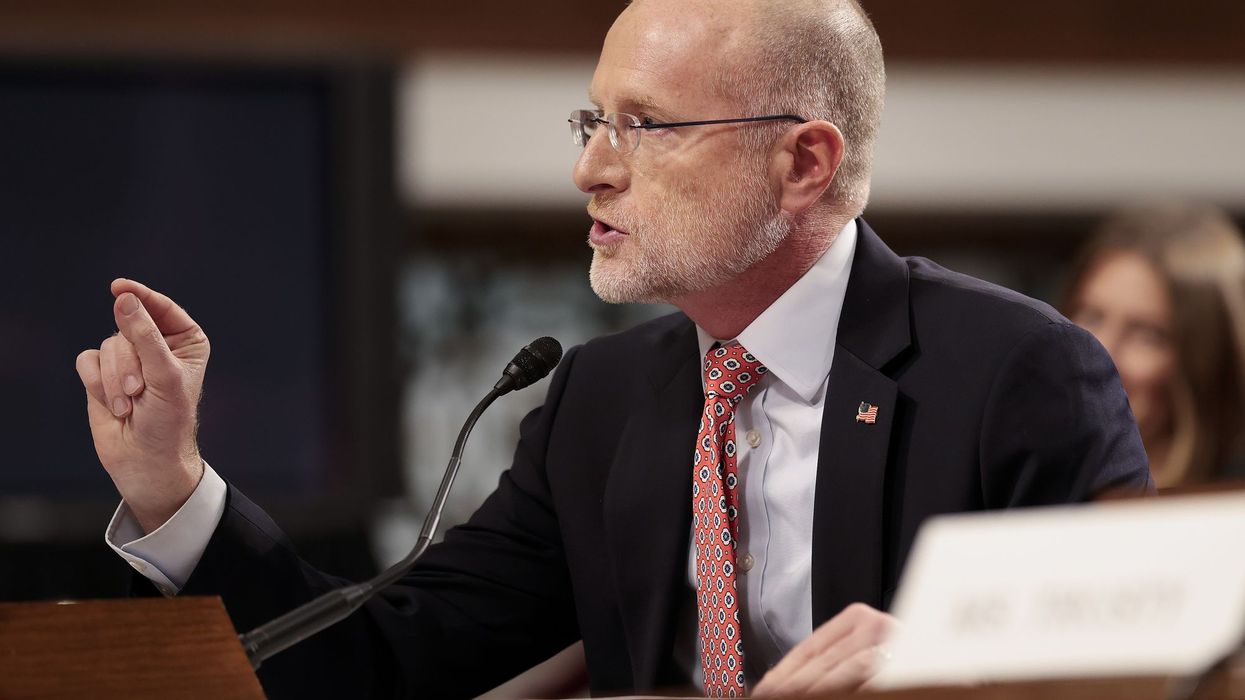
Federal Communications Commission Chair Brendan Carr stunned many observers Wednesday by suggesting that the FCC is subordinate to President Donald Trump—an assertion followed almost immediately by the removal of the word "independent" from the agency's website.
Pressed by Democratic—and some Republican—lawmakers during a contentious Senate Commerce Committee hearing that addressed the FCC's mission of independently implementing and enforcing US communications laws and regulations, Carr said that "formally speaking, the FCC is not independent."
Sen. Ben Ray Luján (D-NM) read aloud from the FCC's website, which at the time proclaimed the agency's independence.
"Is your website lying?" asked Luján.
"Possibly," replied Carr.
Within minutes of Carr's testimony, the mission statement on the FCC's website no longer described the agency as "independent."
Addressing Carr's apparent fealty to Trump, Sen. Andy Kim (D-NJ) asked, "If you don’t think that the FCC is independent, then is President Trump your boss?”
Carr replied: “President Trump has designated me as chairman of the FCC. I think it comes as no surprise that I’m aligned with President Trump on policy.”
A former telecommunications attorney, Carr has been criticized for siding with corporations and against the public interest on nearly ever major issue to come before the FCC. Many of his views are laid out in the chapter on the FCC he authored for Project 2025, the Heritage Foundation-led blueprint for a far-right overhaul of the federal government.
As chair, Carr has been accused by critics including Democratic lawmakers—some of whom have demanded his firing or resignation—of being a Trump sycophant, especially over his role in getting ABC late-night talk show host Jimmy Kimmel suspended for joking about the assassination of far-right firebrand Charlie Kirk.
Asked by Kim if it would be appropriate "for the president or senior administration officials to give you direction to pressure media companies," Carr declined to directly answer the question.
“The easy answer is, ‘No.’ It’s not a hypothetical," the senator said. "Trump is not your boss. The American people are your boss."
Matt Wood, general counsel and vice president of policy at the advocacy group Free Press Action, said that "if Brendan Carr proved anything today, it’s only that he’s willing to shout down senators and contort his supposed free speech principles to protect Trump’s ego and attack Trump’s critics."
Wood lamented that Carr "proudly trashed his own agency’s historical independence."
"Right after senators pointed out the contradiction between the FCC’s online description and Carr’s claim that Donald Trump ultimately called the shots, language noting the agency’s independence disappeared from the FCC.gov website—a chilling authoritarian touch," he added.
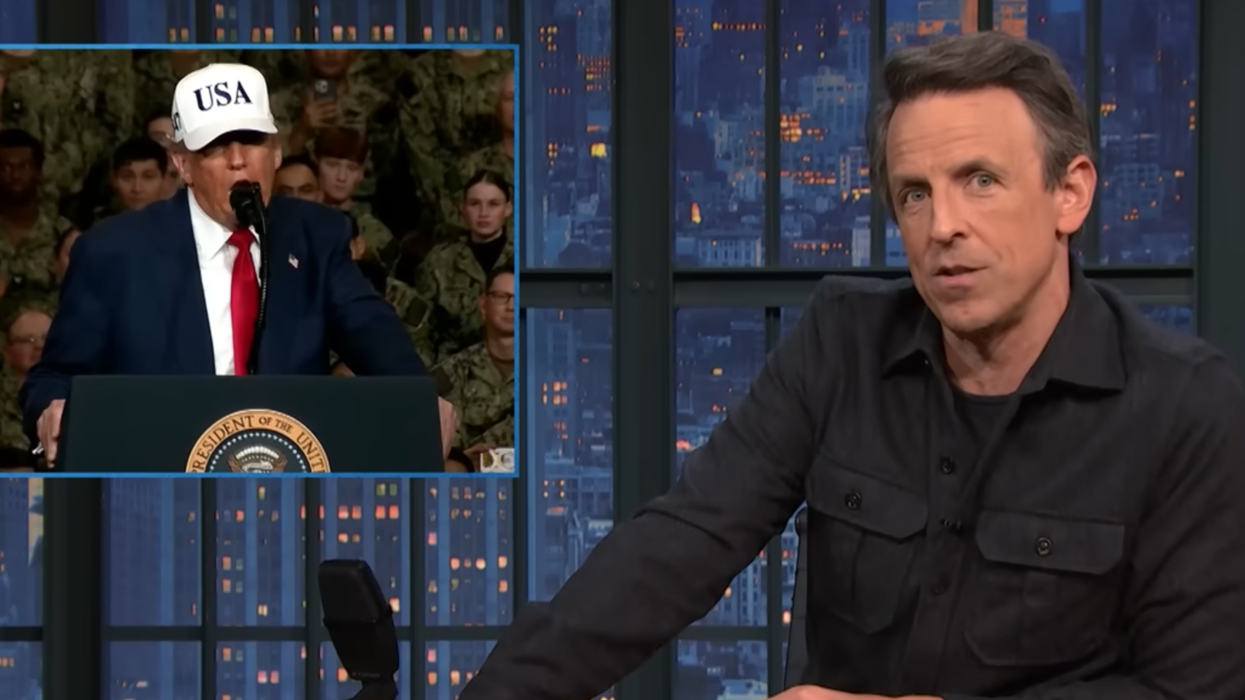
"You need to understand that he actually believes it is illegal to criticize him," wrote Sen. Chris Murphy.
After failing to use the government's might to bully Jimmy Kimmel off the air earlier this fall, President Donald Trump is once again threatening to bring the force of law down on comedians for the egregious crime of making fun of him.
This time, his target was NBC late-night host Seth Meyers, whom the president said, in a Truth Social post Saturday, "may be the least talented person to 'perform' live in the history of television."
On Thursday, the comedian hosted a segment mocking Trump's bizarre distaste for the electromagnetic catapults aboard Navy ships, which the president said he may sign an executive order to replace with older (and less efficient) steam-powered ones.
Trump did not take kindly to Meyers' barbs: "On and on he went, a truly deranged lunatic. Why does NBC waste its time and money on a guy like this??? - NO TALENT, NO RATINGS, 100% ANTI TRUMP, WHICH IS PROBABLY ILLEGAL!!!"
It is, of course, not "illegal" for a late-night comedian, or any other news reporter or commentator, for that matter, to be "anti-Trump." But it's not the first time the president has made such a suggestion. Amid the backlash against Kimmel's firing in September, Trump asserted that networks that give him "bad publicity or press" should have their licenses taken away.
"I read someplace that the networks were 97% against me... I mean, they’re getting a license, I would think maybe their license should be taken away,” Trump said. "All they do is hit Trump. They’re licensed. They’re not allowed to do that.”
His FCC director, Brendan Carr, used a similar logic to justify his pressure campaign to get Kimmel booted by ABC, which he said could be punished for airing what he determined was "distorted” content.
Before Kimmel, Carr suggested in April that Comcast may be violating its broadcast licenses after MSNBC declined to air a White House press briefing in which the administration defended its wrongful deportation of Salvadoran immigrant Kilmar Abrego Garcia.
"You need to understand that he actually believes it is illegal to criticize him," wrote Sen. Chris Murphy (D-Conn.) on social media following Trump's tirade against Meyers. "Why? Because Trump believes he—not the people—decides the law. This is why we are in the middle of, not on the verge of, a totalitarian takeover."
When leaders veer toward authoritarian rhetoric, the satirist goes to work to make sure our public language does not get swallowed by the party line.
When Puerto Rican superstar Bad Bunny hosted the season premiere of “Saturday Night Live,” he used the opportunity to tweak critics who are upset about his upcoming Super Bowl Halftime performance—delivering remarks in Spanish and then telling listeners they have four months to learn what he just said.
Martin Luther King Jr. once described violence as the language of the unheard. Bad Bunny took the opportunity to respond to his detractors in another powerful language of the unheard: satirical humor.
Although humor can seem trivial to some, we should not underestimate its power to shift cultural agendas. Contempt toward elites in the form of satirical mockery can be cathartic and a demonstration of solidarity for those of lower status. Humorists can have a deep impact on the public imagination.
Shifting public imagination is one reason repressive leaders fear comedic critique.
Satirical humor is one of the remaining glimmers of hope we have left in the fight against authoritarian rhetoric.
“Satire is the sharpest instrument of free speech," Russian comedian Viktor Shenderovich said in a recent interview with Politico magazine. “And the first thing all dictators do is crack down on freedom of speech.”
Shenderovich, now living in exile in Poland, was the force behind the satirical puppet show Kukly, which Russian President Vladimir Putin successfully pressured networks to cancel once he became president. The show poked fun at political leaders, like Putin, using unflattering puppets.
President Donald Trump is also known to oppose negative coverage, often trying to suppress it through lawsuits. We witnessed the suspension of Jimmy Kimmel and the cancellation of Stephen Colbert. Trump has also publicly pressured networks to fire Jimmy Fallon and Seth Myers.
The satirist plays an important role in political society. When leaders veer toward authoritarian rhetoric, the satirist must go to work to make sure our public language does not get swallowed by the party line. In short, satire helps preserve the language of critique itself.
The sharpness of satire that Shenderovich alludes to can be effective for cutting through the fog of fear and confusion that accompanies authoritarian rhetoric.
As a humor scholar, it does not surprise me that Trump’s thin-skinned reactions to critique would target comedians. Satirical humor, in particular, has historically functioned like a disinfecting light.
Executive orders and irresponsible speech, such as baseless claims about Haitians eating neighborhood pets, may remain relatively unaffected in the public imagination despite pushback on CNN, "Meet the Press," or "Face the Nation." But the sting of satirical laughter is difficult to ignore. This is probably why people like Kimmel, Fallon, and Colbert get under his skin.
Perhaps even more frustrating to authoritarian figures is the way humor can undermine attempts to break their political enemies’ spirit by providing hope. Consider an example from a particularly dark point in history. Viktor Frankl described humor as a weapon in the fight for self-preservation in his powerful memoir, Man’s Search for Meaning.
He writes, “It is well known that humor, more than anything else in the human make-up, can afford an aloofness and an ability to rise above any situation, even if only for a few seconds.”
The context for Frankl’s statement is the concentration camp. For him, humor was a lifeline that helped people hang onto their humanity in the midst of inhumane treatment by their Nazi captors.
Trump’s rhetoric is, without question, intended to strike fear into the hearts of his political enemies. The vagueness of his language is also a way of widening the scope to include anyone who disagrees with him. Think of his threat to have Attorney General Pam Bondi go after a journalist for hate speech.
Satirical humor at its best is a powerful force for disrupting authoritarian rhetoric. Satire shows no reverence for the kind of linguistic authoritarianism on display in attempts to expunge the nation’s parks and museums of racial memory or define anti-fascism as domestic terrorism. Rather, it disregards the social niceties we associate with social interaction and explores the logic behind our meaning choices.
Admittedly, satire’s irreverence can sometimes be uncomfortable, even offensive. Ignoring social niceties can mean pulling back the veil on hidden embarrassments. However, this may be the only route to a clarifying vision. I echo the words of writer and literary critic Ralph Ellison: “For by allowing us to laugh at that which is normally unlaughable, comedy provides an otherwise unavailable clarification of vision that calms the clammy trembling which ensues whenever we pierce the veil of conventions that guard us from the basic absurdity of the human condition.”
Satirical humor is one of the remaining glimmers of hope we have left in the fight against authoritarian rhetoric. Long live its sting.
What we can do is call attention to the forms of nonviolent resistance that challenge our prevalent culture of rage and alienation.
One strangely hot November afternoon, I waited for my elementary-school-aged kids to arrive at their bus stop. The quiet in our rural area was eerie. It captured the mood in the days after a national election that no one in my little community yet knew exactly how to respond to.
In my rush out the door, I’d grabbed my baseball cap, with the logo for my preferred presidential candidate on it, to shield my eyes from the sun’s glare.
The bus arrived and left. I collected my charges and, just as we were preparing to walk home, a tall young man leapt from the passenger seat of a battered Chevy pickup truck parked at the side of the road. He shook one sunburned finger at my hat and yelled, “Traitor! Traitor!” his face red with rage, or possibly alcohol—who knew? I gripped the pepper spray I carry in my pocket and told my kids to run home. They disappeared into the woods.
Luckily, the man scuttled back into his vehicle and drove off as soon as I looked him in the eye and sized him up. (Maybe word hadn’t yet spread that masks could do more than protect from illness. They could also let a man harass families without the moral weight of the act landing on him. How little we understood, just months ago!)
If a certain prevalent strain of MAGA masculinity feeds on anger and hate—just look at “he who hates his political opponents” (aka our president!) and his speech at Kirk’s funeral—it’s not an easy persona to sustain.
Once his truck disappeared, I walked home, rattled, not sure how to explain what had happened to my kids. But in the foyer, they explained the whole scene for me in their own satirical way.
One child shook a finger and yelled, in a mockingly deep voice, “Traitor!” Another pretended to swoon in response. “Oh no! I am so scared! What a big, brave man!” They collapsed in giggles.
This is the sort of anti-bully cosplay I’ve come to see often in recent months: Kids I know strutting around with their chests puffed out like roosters, imitating a neighborhood bully who insults immigrants. Expressions of fake awe about motorcycle gangs that pass by displaying Confederate flags and other racist symbols of the old South and revving their engines for attention. (“Wow! They are so strong and tough! I want to shake their hands!”)
As private as this mockery tends to be, lest (sadly) someone retaliate with violence, it gives us a way to express our sorrow at what is happening to the American value of peaceful coexistence, while lightening the mood. Such laughter diminishes the bullies among us, at least in our hearts. As leaders like California Gov. Gavin Newsom and comedian Jimmy Kimmel show so well, it can diminish them publicly by holding up a mirror to their bluster and overreach.
The use of parody against authoritarian leaders is nothing new. Among my favorite models is Serbian activist Srdja Popovic’s book Blueprint for Revolution. Recounting his own experiences with the student movement that, in the 1990s, resisted then-dictator Slobodan Milosevic, Popovic explains how jokes about ruling elites can make them look less invincible, while also puncturing widespread fear. And better yet, leaders who try to suppress such humor tend to look ridiculous. For example, Serbian police arrested (so to speak) a barrel with Milosevic’s face painted on it after Popovic and his fellow activists encouraged citizens to line up and hit it with a bat.
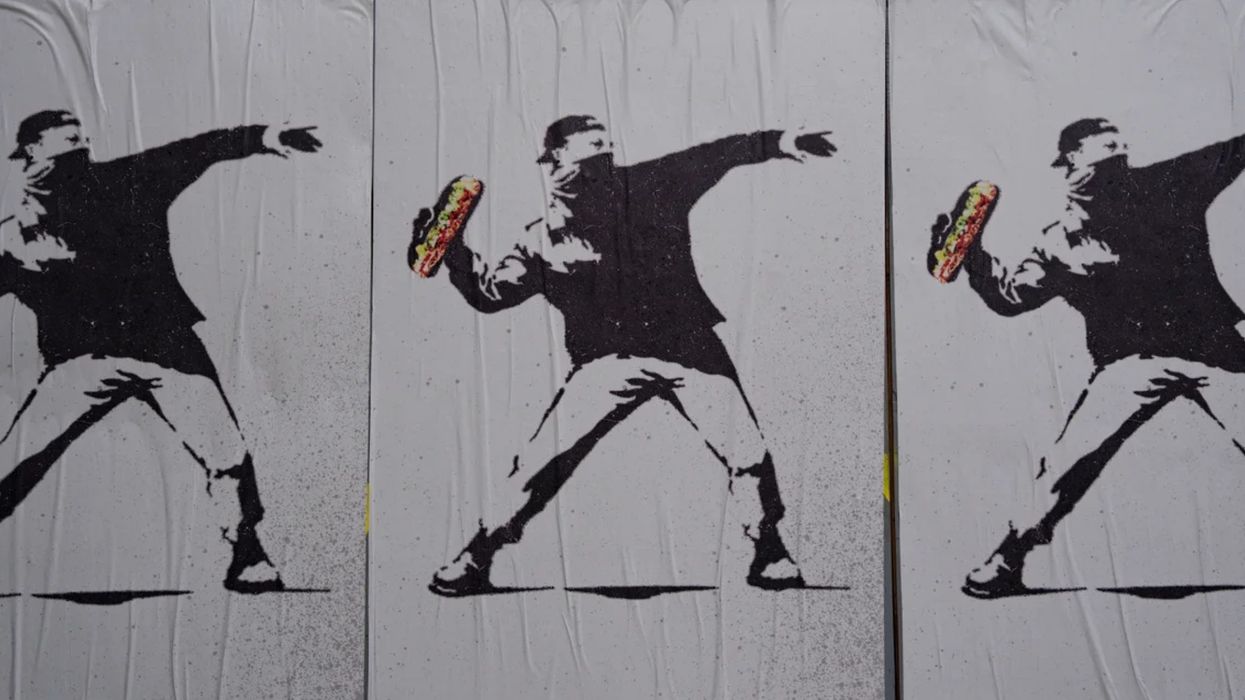
We in the mid-Atlantic region got a taste of how such mundane gestures can goad leaders into buffoonery when then-Justice Department employee Sean Charles Dunn threw his sandwich at one of the Customs and Border Patrol (CBP) officers President Donald Trump recently deployed in Washington, DC. The Department of Justice tried to charge Dunn with assaulting a federal officer, a felony, but a grand jury declined to bring such charges against him. Whether or not Dunn actually meant to be funny, that incident reminds me of how a seemingly small act of resistance can indeed expose executive overreach.
As I walked in a September protest against President Trump’s National Guard occupation of Washington, I watched leaders of the tens of thousands of marchers hoist a banner depicting Dunn with his sandwich and felt strangely encouraged by the raucous cheering that echoed through the capital. He has, in fact, become a potent symbol of the anti-Trump resistance.
I guess there’s nothing new about angry men, either—at least not in my neighborhood. My home sits in a valley, and the nearby rural highway often feels to me like a repository of white male road rage. I moved here in 2020 and, just in that first year, I watched two drivers at two different moments plow, purposefully or not, into the vehicles in front of them. In one case, the driver got out and began hurling racial slurs at the group of Latino farmworkers he had slammed into.
If you’re unlucky enough to be standing by the side of that road, you’d better believe that you could get hurt, even if it’s just by someone speeding. The battered guardrails at the valley’s nadir attest to that. Once, a cop pulled me over when I was walking home along that very road after my car broke down to warn me that I could get hurt by the reckless drivers there. Safe in my white suburban mom identity, while pointing at the dimpled metal of the rails along that stretch of road, I replied, “No kidding. Why don’t you pull more of them over instead of me?” He blushed and actually agreed before letting me go home.
What causes a young man who, unlike Donald Trump, professes to be tired of hate to kill?
And mind you, those guys on my road are anything but aberrations. Many signs these days point to a scourge of anger and despair among American men, who all too often don’t seem to have been raised to express a wide range of emotions. A Pew Research study from early 2025 found that 57% of US adults think children’s caretakers place far too little focus on teaching boys to talk about their feelings when they’re sad or upset. Less than a third said the same about girls. In another survey, at least two-thirds of parents felt that boys were uncomfortable expressing feelings of fear, sadness, loneliness, and insecurity. Nearly half of those parents also felt that boys were uncomfortable expressing feelings of love. By and large, while women and men might feel anger in similar numbers, men are significantly more likely to act out their anger using verbal or physical aggression.
Though laughter offers a wonderful way to respond to stress, it turns out that it, too, is remarkably gendered. Women are more likely to laugh in social settings, while we as a society tend to expect men to make other people laugh through jokes and humor. Right-wing podcaster Joe Rogan is a notably popular exception to such a generalization in his ability to express vulnerability and laugh at himself. An analysis by Industry Leaders Magazine argues that his largely male audience does indeed value his willingness to admit he’s been wrong and his openness to laughing at himself. As one example, in an interview with English comedian Russell Brand, Rogan poked fun at himself as a child, a kid then learning martial arts, calling himself “so weird” and laughing.
When we express ourselves peaceably rather than by being accusatory, threatening, or violent, we connect with others, as Rogan shows so well (regardless of what you or I may think of his politics). And the ability to connect that he has—a trait conservative activist Charlie Kirk arguably had as well—may otherwise be in short supply among today’s male adults, especially on the political right. About a third of Americans report that they are lonely at least some of the time, though women tend to reach out more often to friends or loved ones when they feel that way. It’s probably no accident that men in this country are four times more likely than women to die by suicide.
If a certain prevalent strain of MAGA masculinity feeds on anger and hate—just look at “he who hates his political opponents” (aka our president!) and his speech at Kirk’s funeral—it’s not an easy persona to sustain. Just consider all the mourners who showed up at Kirk’s memorial service in genuine grief. Perhaps what most unnerved the Trump administration, when comedian Jimmy Kimmel flashed that clip of the president redirecting a question about Kirk’s death to the subject of his new White House ballroom, was confronting how alone he was in his indifference.
Given all the hostile rhetoric of Trump and his party toward their political foes, I find it easy to blame him and his followers for the uptick of political violence in this country over the past decade. After all, the vast majority of domestic extremist attacks have been perpetrated by individuals professing right-wing ideologies. Yet, as Jia Lynn Yang of the New York Times points out, this year’s spate of violence against public figures did not map as clearly onto the political spectrum as in earlier eras. Today, the attacker tends to be a “lone individual, lost in a conversation with an online void.” After all, Charlie Kirk’s shooter didn’t even vote in the last election. In a text exchange, he referred to the engravings he had made on his bullets, which included words like “catch, fascist,” as “mostly a big meme.”
While it would be reductionist to blame violence on video games and other nihilistic online spaces, it’s worth considering that the current generation of young people do, of course, spend more time online than any previous generation. If popular war games form part of their immersive environments, we as a society would do well to look more closely not just at the political leanings of shooters, but the contexts within which political violence flourishes in contemporary America.
What makes a gun feel like the solution to any political disagreement for some individuals? And if people like Kirk’s alleged killer Tyler Robinson, don’t see it as a solution, then what does it mean to shoot someone? If political assassination is a crime of despair, what series of events leads a person to such a feeling and such an act? Psychology tells us that anger makes us feel more powerful because of the adrenaline that courses through our bodies prior to acting out. But what causes a young man who, unlike Donald Trump, professes to be tired of hate to kill?
I’m at a loss. And I think many of us may be. But what we can do (and by we here, I mean those of us who write stuff) is call attention to the forms of nonviolent resistance that challenge our prevalent culture of rage and alienation. The people participating in the “We Are All DC” march that I mentioned earlier held homemade signs like “DC crime wave” (with a picture of President Trump waving from the White House), played music, and sang. Though arguably comparable in size to the DC Women’s March of 2017, this demonstration warranted exactly zero articles in the New York Times. Somehow, in the age of Donald Trump, such legacy media outfits tend to prefer to amplify angry male voices rather than those of resistance, which, I think, is a genuine problem, explain it as you will.
If you think that a focus on resistance, humor, and joy is a losing path, as Kamala Harris’ “joy-based campaign” turned out to be, maybe you should remember that being with others in person does materially change the chemistry of our bodies. When we laugh or cry, especially in community, our bodies can release dopamine, serotonin, and other chemicals that support empathy, communication, and a sense of hope for the future.
You might try a little humor or mockery to get through the day.
Perhaps with a greater sense of community, we would also take in more of our disturbing world and not, for instance, forget the two Minnesota lawmakers another extremist shot and killed in June or the young Black student recently found hanging from a tree in Mississippi. They received remarkably less attention than Charlie Kirk.
Unfortunately, our field of vision remains narrow indeed and, like the road I stood on that day last November, it contains a disproportionate number of angry white men. And no less unfortunately, we’re speeding down it quickly with a maniac in the driver’s seat, and it lacks the guardrails of a law-abiding Supreme Court and a constitutionally aware secretary of defense.
Unless we start talking to one another, that road seems to be leading nowhere good. In the meantime, you might try a little humor or mockery to get through the day. If you haven’t yet, I highly recommend it.
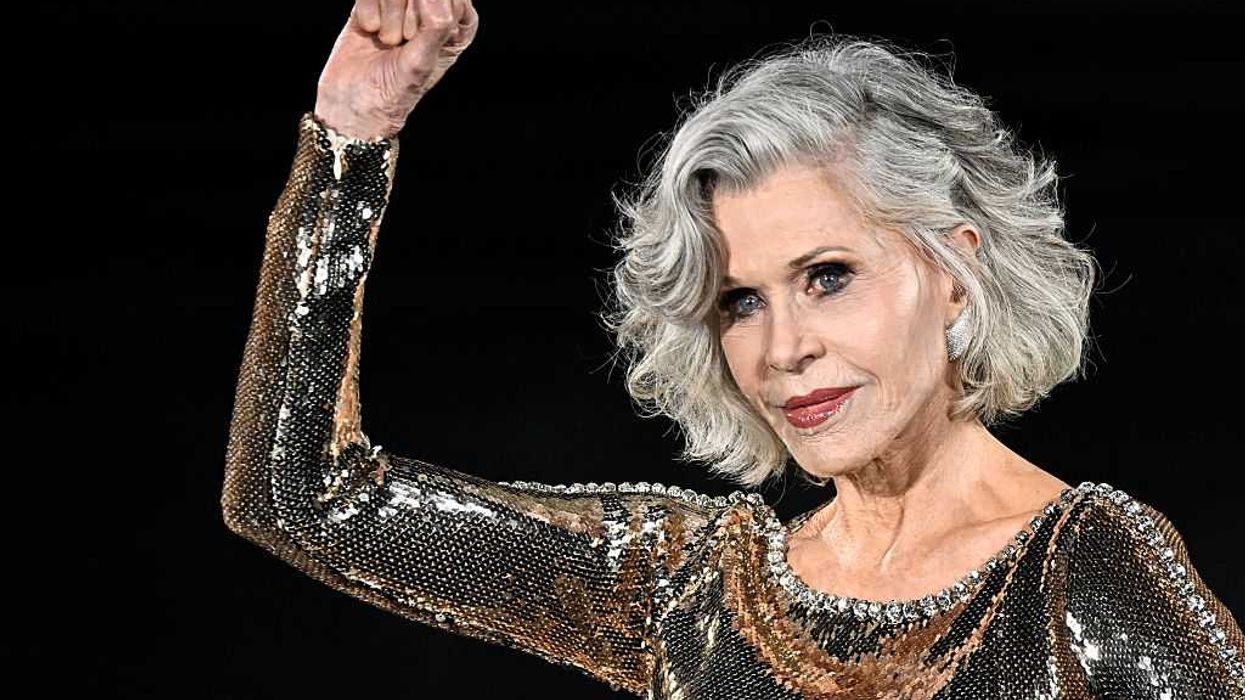
“They’re betting on our fear and our silence,” Fonda said. “But our industry—and artists around the world—have a long history of refusing to be silenced, even in the darkest times.”
As the US descends into authoritarianism under President Donald Trump and Republicans, hundreds of celebrities led by actor and progressive activist Jane Fonda on Wednesday revived a free speech initiative originally launched by Hollywood stars including her father during the right-wing repression of the post-World War II McCarthy era.
Fonda and over 550 celebrities rebooted the Committee for the First Amendment, which was first formed in 1947 by a bevy of actors including Henry Fonda in response to hearings held by the House Un-American Activities Committee (HUAC) and blacklisting of actual and suspected communists throughout US society, including Hollywood.
“The federal government is once again engaged in a coordinated campaign to silence critics in the government, the media, the judiciary, academia, and the entertainment industry,” the renewed committee said in a statement. “We refuse to stand by and let that happen.”
Other members of the newly re-formed committee include filmmakers Spike Lee, Barry Jenkins, J.J. Abrams, Patty Jenkins, Aaron Sorkin, and Judd Apatow; TV show creator Quinta Brunson; musicians Barbra Streisand, John Legend, Janelle Monáe, Gracie Abrams, and Billie Eilish; comedians Tiffany Haddish and Nikki Glaser; as well as actors Mark Ruffalo, Anne Hathaway, Kerry Washington, Pedro Pascal, Natalie Portman, Viola Davis, and Ben Stiller. Another signatory is actor Fran Drescher, who last month ended a term as the president of the SAG-AFTRA union.
"This committee was initially created during the McCarthy era, a dark time when the federal government repressed and persecuted American citizens for their political beliefs," the initiative's founders wrote. "They targeted elected officials, government employees, academics, and artists. They were blacklisted, harassed, silenced, and even imprisoned."
"The McCarthy era ended when Americans from across the political spectrum finally came together and stood up for the principles in the Constitution against the forces of repression," they added. "Those forces have returned. And it is our turn to stand together in defense of our constitutional rights."
Fonda’s committee revival comes after Jimmy Kimmel's late-night talk show was temporarily removed from ABC's airwaves earlier this month following pressure form Brendan Carr, Trump’s Federal Communications Commission (FCC) chief, over a monologue by the comedian about far-right podcaster Charlie Kirk’s accused assassin. Kimmel's show returned amid massive public backlash.
Fonda has more than 60 years of political activism under her belt, starting with the civil rights and anti-Vietnam War movemements and continuing through Fire Drill Fridays, #StopLine3, and the Jane Fonda Climate PAC in more recent years.
"I'm 87 years old. I've seen war, repression, protest, and backlash. I've been celebrated, and I've been branded an enemy of the state," Fonda said in a letter inviting people to join the committee.
"But I can tell you this: This is the most frightening moment of my life," she continued. "When I feel scared, I look to history. I wish there were a secret playbook with all the answers—but there never has been. The only thing that has ever worked—time and time again—is solidarity: binding together, finding bravery in numbers too big to ignore, and standing up for one another."
“They’re betting on our fear and our silence,” Fonda added without identifying anyone by name. “But our industry—and artists around the world—have a long history of refusing to be silenced, even in the darkest times.”
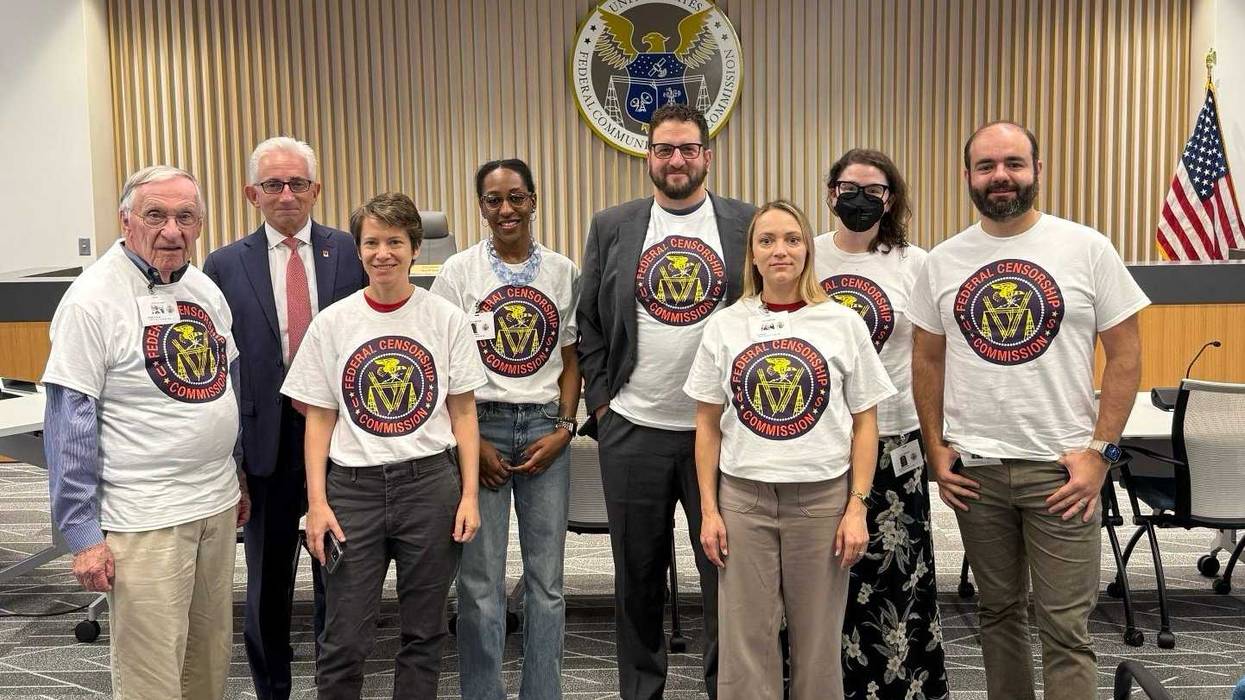
"You know exactly how chilling and unconstitutional your statements have been," the coalition wrote.
Late-night host Jimmy Kimmel is back on air, but a coalition of free speech supporters on Tuesday called for FCC Chair Brendan Carr's resignation over his role in the comedian's temporary suspension earlier this month.
"The chair of the Federal Communications Commission should be the nation's defender of press freedom," said Robert Weissman, co-president of the consumer advocacy group Public Citizen, in a statement. "Instead, FCC Chair Brendan Carr has fashioned himself into a MAGA-waving, free-speech-be-damned bully, ready to abuse his power to take down the president's opponents."
Public Citizen and Free Press led dozens of pro-democracy organizations that released a letter to Carr on Tuesday morning during the FCC's monthly meeting, which also drew protesters demanding that Carr resign over the Kimmel incident.
As the letter details, during a podcast appearance, Carr "made a barely veiled threat" against Disney-owned ABC in response to Kimmel's remarks about President Donald Trump and the assassination of right-wing activist Charlie Kirk. Nexstar and Sinclair, which control over 60 ABC affiliates, swiftly announced they would not air "Jimmy Kimmel Live!" Then, the network suspended Kimmel indefinitely. Carr, the letter notes, "responded gleefully to these developments, sending celebratory GIFs to reporters."
Within days, as free speech advocates urged consumers nationwide to cancel their Disney subscriptions and vacations, Kimmel returned to his show. Nexstar and Sinclair initially pledged to still preempt his show, but they quickly changed course, too. Still, amid the Trump administration's broader assault on First Amendment rights, critics of Carr want accountability.
The coalition behind the letter to Carr includes Accountable. US, Fight for the Future, Freedom of the Press Foundation, Indivisible, MoveOn, Our Revolution, Progressive Democrats of America, Revolving Door Project, RootsAction, Stand Up America, and more.
What's happening at the FCC today?Free Press' Vanessa Maria Graber joins Candace and Julio to chat FCC 101."Direct action gets the goods!" - @newsjawn.bsky.social Join us on YouTube: www.youtube.com/watch?v=fMZ8...
[image or embed]
— Free Press (@freepress.bsky.social) September 30, 2025 at 9:59 AM
"As someone who has repeatedly inveighed against the dangers of government censorship and who has specifically defended the importance of political satire, you know exactly how chilling and unconstitutional your statements have been," the 41 groups wrote.
"Yet since being made chairman of the FCC by Donald Trump and even before his election last year, you have repeatedly threatened newsrooms and interfered with broadcasters and other media outlets, based on meritless complaints about their journalistic practices and the content these companies produce," the coalition continued.
"To mitigate the damage you have caused, we urge you to retract and apologize for your remarks and clarify that FCC regulatory decisions are not impacted by the views expressed by broadcasters or on their programs," the coalition concluded. "But those actions by themselves will not be enough. Your constitutional transgression cannot be adequately remedied simply with an apology. You should resign immediately."
Highlighting the stakes of the Trump appointee remaining in power, Craig Aaron, co-CEO of Free Press, noted that "Kimmel may be back on the air, but Nexstar and Sinclair—the same giant conglomerates who refused to air Kimmel's show—have megadeals still pending before Carr's FCC and long-standing regulations they are trying to eliminate."
"Carr should not be the one making these decisions," Aaron stressed. "He should resign to prevent any further damage to free speech, press freedom, and the rule of law."
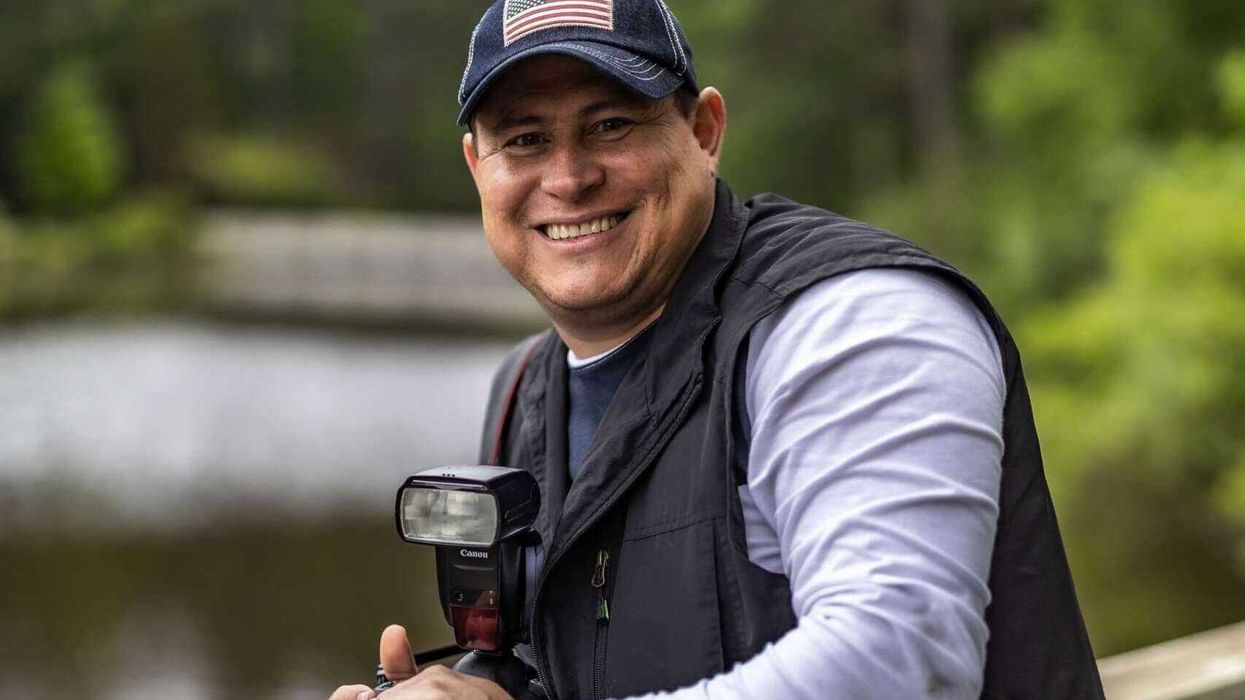
"Our opposition and upset over Jimmy Kimmel being taken off air have led to Kimmel coming back. Let's organize that much noise for reporters like Mario Guevara detained (despite being here legally) for filming police and ICE."
Mario Guevara's legal team this week renewed its request that a federal judge free the Salvadoran journalist, who faces "imminent" deportation from the United States after being arrested while covering a June "No Kings" protest in Georgia and then held in an immigration detention center for over 100 days.
The local charges against Guevara have been dropped, but the Emmy-winning Spanish-language journalist—who has covered immigration in the Atlanta area for two decades—remains at an Immigration and Customs Enforcement (ICE) facility in Folkston, despite having work authorization and a path to a green card through his son.
"Journalists should not have to fear government retaliation for doing their jobs, and showing up to work should not mean getting your family torn apart," said Scarlet Kim, senior staff attorney with the ACLU's Speech, Privacy, and Technology Project, in a Wednesday statement.
Kim was one of several lawyers who sent a letter to Benjamin Cheesbro, a magistrate judge of the US District Court for the Southern District of Georgia, late Tuesday, after the Board of Immigration Appeals (BIA) issued an order of final removal, which authorizes Guevara's deportation.
Guevara's legal team asked Cheesbro for "immediate relief" on the grounds presented in a Monday motion for a temporary restraining order or preliminary injunction. The lawyers challenged the federal government's claims about his asylum case from 13 years ago, offering evidence that he "posted the voluntary departure bond on June 26, 2012," and "ICE issued a notice of cancellation of the bond on April, 21 2015."
"First, because he posted the voluntary departure bond, he should be subject to a voluntary departure order, and his detention is therefore unlawful under the Immigration and Nationality Act," the letter explains. "Second, his detention is intended to gag and punish his speech and therefore continues to violate the First Amendment."
Guevara's team is seeking his release while his federal court case challenging his detention plays out. However, as the jailed journalist wrote in a Monday letter made public by the ACLU, he is prepared "to be deported from this country, a country I have loved and respected for more than two decades."
"If I am deported, I will leave with my head held high, because I am convinced it will be for doing my work as a journalist and not for committing crimes," he wrote. "That said, I will leave with a broken heart and my dignity tarnished, because I have been humiliated by both federal and local authorities, and I don't believe I deserve it. And because my family, the thing I love most in life, will be separated, although all my loved ones know it has all been because of my passion for my work."
The journalist's adult children have publicly advocated for his release this week. His son, 21-year-old Oscar Guevara, who suffered a stroke during a 2021 surgery for a brain tumor, shared that "he drives me to my medical appointments, helps me manage my care and, most importantly, lifts me up when I feel like giving in to the pain."
Katherine Guevara, who is 27, said that "no one should have to face this fear of punishment for their free speech in this country. Still, we are holding on to hope that the government will do the right thing and release him at once. His place is with his family and his community, not behind bars or facing deportation."
Press freedom advocates have also rallied behind the journalist, with some pointing to the case of late-night host Jimmy Kimmel—who returned to his show on Disney-owned ABC on Tuesday after being yanked off the air by the company last week amid pressure from Federal Communication Commission Chair Brendan Carr, who objected to the comedian's comments about President Donald Trump and the assassination of right-wing activist Charlie Kirk.
"If you were concerned about Kimmel, here's another for you," Zeteo's Prem Thakker wrote on social media Wednesday.
Free Press senior counsel Nora Benavidez similarly said on Bluesky Tuesday: "Our opposition and upset over Jimmy Kimmel being taken off air have led to Kimmel coming back. Let's organize that much noise for reporters like Mario Guevara detained (despite being here legally) for filming police and ICE."
On Monday, Free Press and the Committee to Protect Journalists led a coalition in releasing a statement that says in part, "The government's prolonged detention of Guevara sends a chilling message to all journalists, citizens, and residents who record law enforcement, report on government activities, and seek to report the truth."
For over 100 days, journalist Mario Guevara has been detained by U.S. law enforcement for his livestream reporting.He is the only journalist behind bars for his journalism, and he could be deported for doing his job.We demand his immediate release.freedomformario.com
[image or embed]
— Freedom of the Press Foundation (@freedom.press) September 23, 2025 at 1:09 PM
Other signatories include Amnesty International USA, the Freedom of the Press Foundation, PEN America, Reporters Without Borders, the Society of Professional Journalists, and others. The coalition also launched the website freedomformario.com.
The government's effort to deport Guevara comes not only amid the Trump administration's crackdown on dissent but also as masked ICE agents aim to deliver on the president's promise of mass deportations by rounding up immigrants across the country.