

SUBSCRIBE TO OUR FREE NEWSLETTER
Daily news & progressive opinion—funded by the people, not the corporations—delivered straight to your inbox.
5
#000000
#FFFFFF
To donate by check, phone, or other method, see our More Ways to Give page.
Daily news & progressive opinion—funded by the people, not the corporations—delivered straight to your inbox.
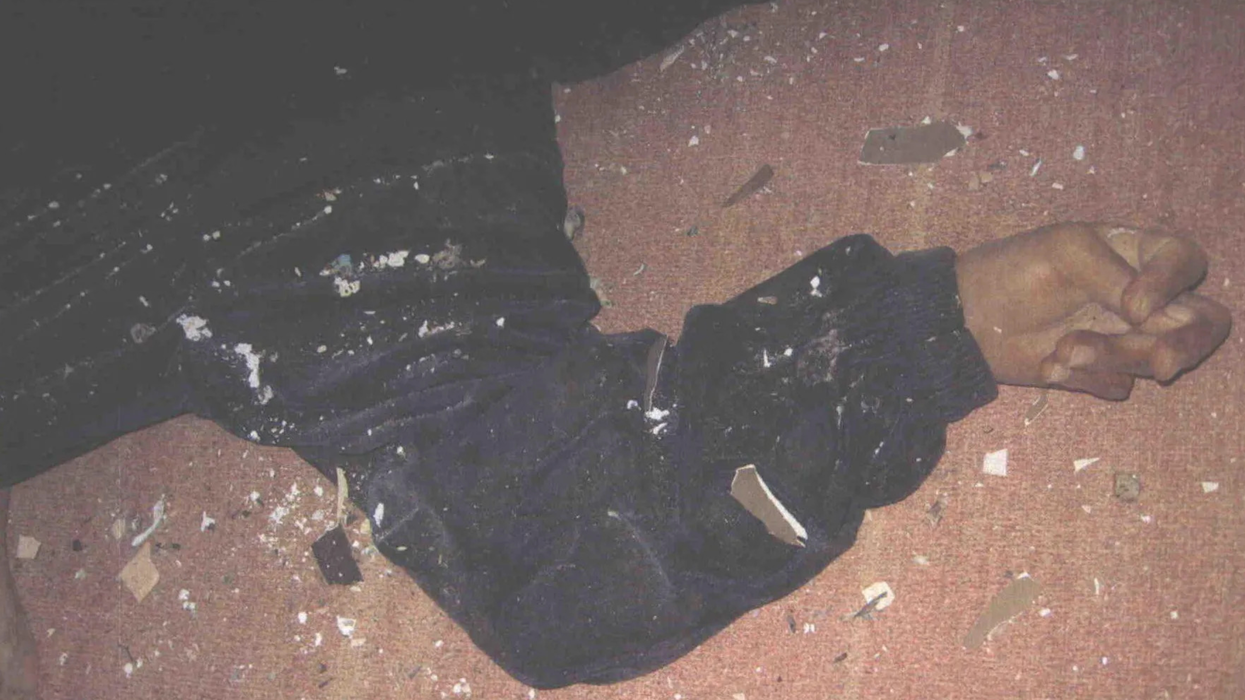
"I watched them shoot my grandfather, first in the chest and then in the head. Then they killed my granny," said one survivor who was just 8 years old during the attack by U.S. Marines.
After years of working with Iraqis whose relatives were killed by U.S. Marines in the 2005 Haditha massacre, American journalists finally obtained and released photos showing the grisly aftermath of the bloody rampage—whose perpetrators never spent a day behind bars.
On Tuesday, The New Yorker published 10 of the massacre photos—part of a collaboration with the "In the Dark" podcast that joined the magazine last year.
The podcast's reporting team had filed its public records request four years ago, then sued the U.S. Navy, Marine Corps, and Central Command over their failure to hand over the images. "In the Dark" host Madeleine Baran also traveled with a colleague to Iraq's remote Anbar Province to meet relatives of some of the 24 Iraqi civilians—who ranged in age from 1 to 76—slaughtered by U.S. troops.
"The impact of an alleged war crime is often directly related to the horror of the images that end up in the hands of the public."
Baran explained that she sought the relatives' help partly because "we anticipated that the government would claim that the release of the photos would harm the surviving family members of the dead," as "military prosecutors had already made this argument after the trial of the final accused Marine."
Khalid Salman Raseef, an attorney who lost 15 members of his family in the massacre, told Baran that "I believe this is our duty to tell the truth."
The graphic photos show dead Iraqi men, women, and children, many of them shot in the head at close range. One 5-year-old girl, Zainab Younis Salim, is shown with the number 11 written on her back in red marker by a U.S. Marine who wanted to differentiate the victims in photos.
On November 19, 2005, a convoy of Humvees carrying Marines of Kilo Company, 3rd Battalion, First Marine Division was traveling through Haditha when a roadside bomb believed to have been placed by Iraqis resisting the U.S. invasion killed Miguel Terrazas, a popular lance corporal, and wounded two other Marines.
In retaliation, Marines forced a nearby taxicab to stop and ordered the driver and his four student passengers out of the vehicle. Sgt. Frank Wuterich then executed the five men in cold blood. Another Marine then desecrated their bodies, including by urinating on them.
Wuterich then ordered his men to "shoot first and ask questions later," and they went house to house killing everyone they saw. They killed seven people in the Walid family home, including a toddler and an elderly couple.
"I watched them shoot my grandfather, first in the chest and then in the head. Then they killed my granny," Iman Walid, a survivor who was 8 years old when her family was slain, told Time in 2006.
Next, the Marines killed eight people in the Salim family home, six of them children. Finally, the troops executed four brothers in a closet in the Ahmad family home.
The Marines subsequently conspired to cover up what a military probe would deem a case of "collateral damage." The military initially claimed that 15 Iraqi civilians were killed by the same explosion that took Terrazas' life. However, a local doctor who examined the victims' bodies said they "were shot in the chest and head from close range."
Eight Marines were eventually charged in connection with the massacre. Six defendants were found not guilty and one had their case dismissed. Initially charged with murder, Wuterich pleaded guilty and was convicted of dereliction of duty. He was punished with a reduction in rank and was later honorably discharged from service.
Marine Corps Gen. James Mattis—who earned his "Mad Dog" moniker during one of the atrocity-laden battles for the Iraqi city of Fallujah in 2004—intervened on behalf of the Haditha defendants and personally dismissed charges against one of them.
Later, while serving as former President Donald Trump's defense secretary, Mattis oversaw an escalation in what he called the U.S. war of "annihilation" against Islamic State in Iraq and Syria. The general warned that "civilian casualties are a fact of life in this sort of situation," and thousands of men, women, and children were subsequently slaughtered as cities including Mosul and Raqqa were leveled.
The Haditha massacre was part of countless U.S. war crimes and atrocities committed during the ongoing so-called War on Terror, which has claimed hundreds of thousands of civilian lives in at least half a dozen countries since 2001. One of the reasons why the Haditha massacre is relatively unknown compared with the torture and killings at the U.S. military prison in Abu Ghraib, Iraq is that photos of the former crime have been kept hidden for decades.
"The impact of an alleged war crime is often directly related to the horror of the images that end up in the hands of the public," Baran wrote in the New Yorker article. She noted that Gen. Michael Hagee, who commanded the Marines at the time of the Haditha massacre, later boasted how "proud" he was about keeping photos of the killings secret.
"This," journalist Murtaza Hussain
reminded the world on Tuesday, "is what the U.S. military was doing in Iraq."
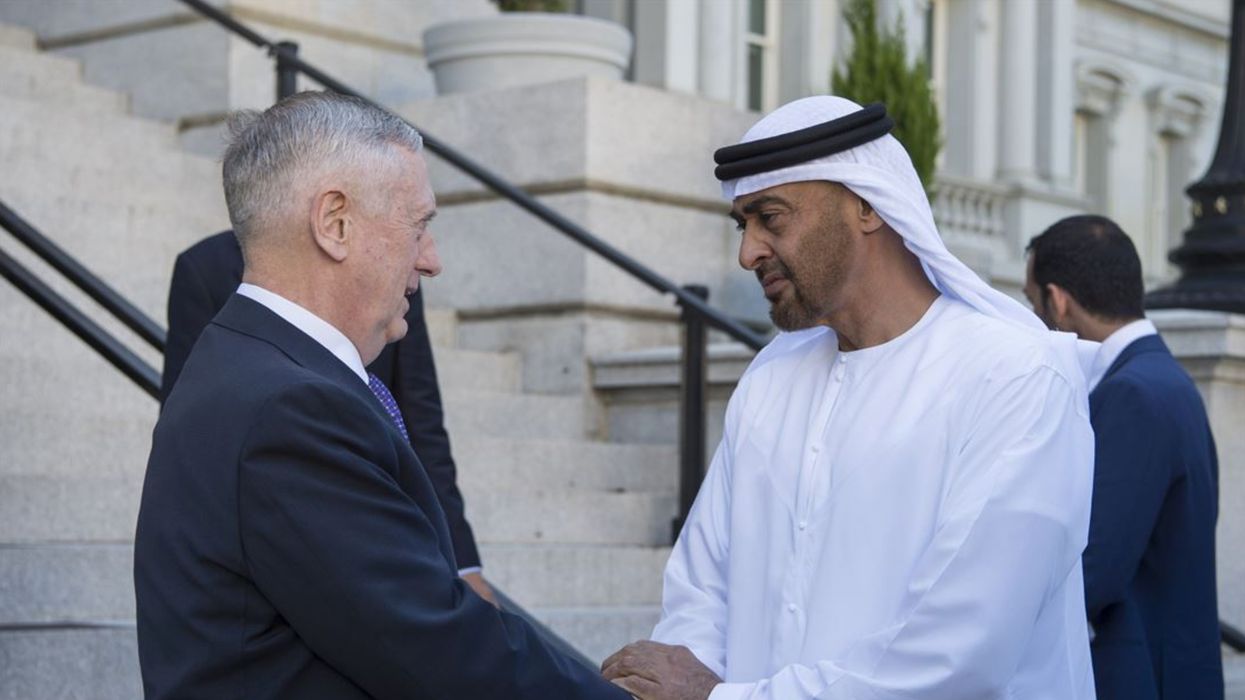
"Guess we now know why former Defense Secretary Mattis has not been publicly critical of Trump," quipped one observer.
Before becoming former President Donald Trump's defense secretary, retired U.S. Marine Corps Gen. James Mattis secretly worked for the de facto ruler of the United Arab Emirates while the United States was supporting the monarchy in the Saudi-led war on Yemen, a Washington Post investigation revealed Tuesday.
Records obtained by the Post show that in June 2015, Mattis—then a recently retired four-star general—applied to work as a personal consultant to Sheikh Mohamed bin Zayed al-Nahyan, who at the time was also the deputy supreme commander of the UAE military.
Mohamed, who became the UAE's president following the 2022 death of his brother Sheikh Khalifa bin Zayed bin Sultan al-Nahyan, sought Mattis' counsel as the Saudi-led coalition intervening in Yemen's civil war was killing a staggering number of civilians while making little progress toward defeating Houthi rebels.
In his application to work as an agent for a foreign government, Mattis—who had earned the moniker "Mad Dog" during one of the 2004 battles for Fallujah, Iraq in which hundreds of civilians were killed or wounded by American forces—wrote that "my duties would include reviewing the UAE's military situation, focused initially on the Yemen campaign, with the purpose of providing military advice."
"The purpose of this position is to bring American military experience in warfighting and campaigning to bear in terms of strengthening UAE's efforts," he explained.
"I will be compensated," Mattis added. However, Robert Tyrer, co-president of the Cohen Group, a Washington consulting firm where Mattis works as a senior counselor, told the Post that the UAE did not pay Mattis for his work, and that the former defense secretary at the time had a "long-standing policy" of not taking payment from foreign officials.
Mattis' request was approved by Marine Corps brass, and then in August 2015 by the State Department Bureau of Political-Military Affairs. While a handful of federal officials knew of his work for Mohamed, "other national security officials said they did not—including diplomats in charge of U.S. policy in the Middle East," according to the Post.
"This whole thing is very curious," Gerald Feierstein, the U.S. deputy assistant secretary for Near East Affairs at the time, told the paper. "I find it kind of hard to believe he would never have mentioned it to any of us. Mattis as you know is a pretty straight shooter, so I would have thought he would have briefed somebody."
Mattis worked for Mohamed at the same time as the United States was participating in the Saudi-led war. Then-President Barack Obama announced in March 2015 that U.S. forces—which had already been conducting drone strikes in Yemen—would provide "logistical and intelligence support" to the coalition. That assistance included refueling the Saudi and Emirati warplanes that were bombing Yemeni targets and killing thousands of civilians.
"This whole thing is very curious. I find it kind of hard to believe he would never have mentioned it to any of us."
The secrecy surrounding Mattis' work for Mohamed continued even after he returned to the Pentagon in January 2017 to serve as Trump's defense secretary. According to the Post: "He omitted it from his public work history and financial disclosure forms that he filed with the Office of Government Ethics. Though he reported it confidentially to the Senate Armed Services Committee, multiple senators said they were not informed."
In August 2018, United Nations human rights officials reported that nearly 17,000 civilians had been killed in Yemen, mostly by Saudi-led airstrikes. In the face of mounting evidence of coalition war crimes, Mattis warned that the Trump administration was considering suspending support for the coalition if it did not reduce civilian casualties.
This, a little over a year after Mattis declared that "civilian casualties are a fact of life" and announced that U.S. forces were adopting a policy of "annihilation" in the battle against Islamic State in Syria and Iraq, where American bombs and bullets were killing thousands of noncombatants.
After resigning as defense secretary over Trump's decision to withdraw U.S. forces from Syria and dramatically reduce the number of troops in Afghanistan, Mattis returned to the private sector and again applied to work for the Emirati government, which paid him $100,000 plus airfare and lodging for a series of May 2019 talks on U.S.-UAE relations.
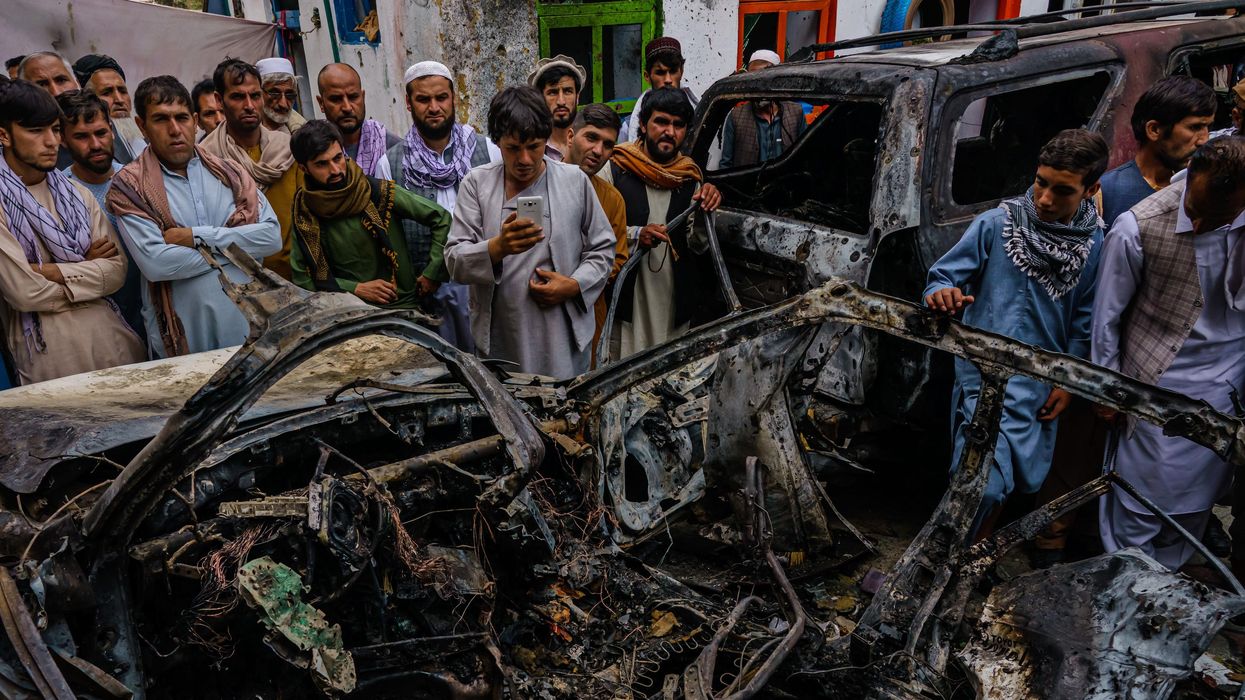
An annual report published Tuesday by the Pentagon claiming that the U.S. military only killed 12 noncombatants last year was met with skepticism by civilian casualty monitors, who perennially accuse the United States of undercounting the people killed by its bombs and bullets.
"They were targeting people. It was intentional."
The U.S. Department of Defense "assesses that there were approximately 12 civilians killed and approximately five civilians injured during 2021 as a result of U.S. military operations," the report--the fifth of its kind--states.
However, the U.K.-based monitor group Airwars counted between 12 and 25 civilians likely killed by U.S. forces, sometimes working with coalition allies, in Syria alone last year, with another two to four people killed in Somalia and one to four killed in Yemen.
"Once again the confirmed civilian casualty count is below what communities on the ground are reporting," Airwars director Emily Tripp told Al Jazeera.
Airwars does not count civilians killed or wounded in Afghanistan, where all of the 2021 casualties acknowledged by the Pentagon occurred. These incidents include an errant August 29 drone strike that killed 10 people--most of them members of one family--including seven children.
No one was ever held accountable for the attack, which Joint Chiefs of Staff Chair Gen. Mark Milley first described as a "righteous strike."
However, nearly 20 witnesses who spoke to CNN after a suicide bomber killed more than 100 Afghans and 13 U.S. troops on August 26 during the rushed American withdrawal from the country said that U.S. and British troops opened fire on the panicking crowd, killing and wounding many civilians.
"They were targeting people. It was intentional," said one survivor. "In front of me, people were getting shot at and falling down."
Although the U.S. military claimed all of the casualties at the airport that day were caused by the bombing, a doctor working at a local hospital said that "there were two kinds of injuries... people burnt from the blast with lots of holes in their bodies. But with the gunshots, you can see just one or two holes--in the mouth, in the head, in the eye, in the chest."
The Italian-run Emergency Surgical Center in Kabul said it received nine bodies with gunshot wounds following the bombing.
Despite all this--and forensic analysts' assertions that so many people could not have been killed by a single bomb--a spokesperson for U.S. Central Command refuted the claim that U.S. troops shot civilians at Kabul's airport, attributing eyewitness accounts, including by people who were shot, to "jumbled memories."
U.S. administrations have long been accused of undercounting civilians killed by American forces. During the administration of former President George W. Bush, top officials dismissed the carnage that critics warned the so-called "War on Terror" would cause, with one top general declaring that "we don't do body counts." The vast majority of the hundreds of thousands of civilians killed in the war died during Bush's two terms.
While civilian casualties declined dramatically during the tenure of former President Barack Obama, his administration was criticized for relying heavily upon unmanned aerial drones--whose strikes killed hundreds of civilians in more nations than were bombed by Bush--and for redefining "militant" to mean all military-aged males in a targeted strike zone in a bid to falsely lower noncombatant casualty figures.
Former President Donald Trump dispensed with pretenses, relaxing rules of engagement meant to protect civilians from harm and vowing to "bomb the shit out of" Islamic State militants and "take out their families." Then-Defense Secretary James Mattis--who earned his "Mad Dog" moniker during the fight for Fallujah in which hundreds of civilians were killed or wounded by American forces--said in 2017 that noncombatant deaths "are a fact of life" as the U.S. transitioned from a policy of "attrition" to one of "annihilation" in the war against Islamic State.
The result was a sharp increase in civilian casualties as U.S. and allied forces laid waste to entire cities like Mosul, Iraq and Raqqa, Syria, killing and wounding thousands of men, women, and children. As Common Dreams reported at the time, Trump's decision to loosen rules of engagement was blamed for a more than 300% spike in civilian casualties in Afghanistan as well.
Related Content

U.S.-caused civilian casualties have declined precipitously with the withdrawal of U.S. troops from Afghanistan, although deadly incidents still occasionally occur. The initial annual Pentagon civilian casualty report, released during the Trump administration's first year, admitted to 499 civilians killed by U.S. forces. The true figure is believed to be much higher.
Last month, human rights groups cautiously welcomed news that the U.S. military--which has killed more civilians in foreign wars than any other armed force on Earth in the post-World War II era--published a plan aimed at reducing noncombatant casualties.
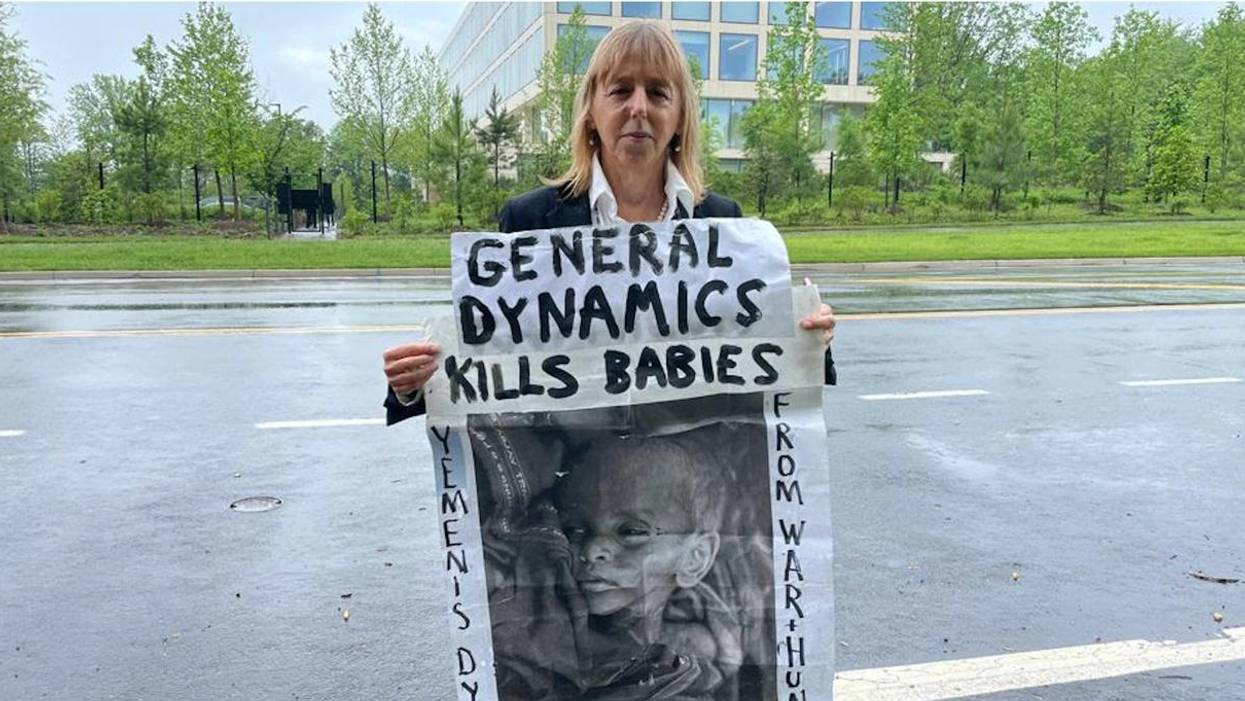
Anti-war activism met corporate gaslighting Wednesday as General Dynamics CEO Phebe Novakovic refused to acknowledge the deadly consequences of her firm's arms sales to Saudi Arabia and other nations after CodePink co-founder Medea Benjamin interrupted a company shareholder meeting.
"If you have a model... where you need wars in order to make money, I think there's something fundamentally wrong with the company and you ought to have some more moral reflection about how you earn your billions of dollars."
--Medea Benjamin, CodePink
Benjamin attended the annual meeting in Reston, Virginia and calmly confronted Novakovic about her company's weapons sales to countries including Saudi Arabia, the United Arab Emirates, Bahrain, and Egypt. She specifically mentioned a March 25, 2016 Saudi-led airstrike that hit a crowded marketplace in the Yemeni village of Mastaba, killing scores of civilians.
"How is it morally responsible to be engaged in a war in Yemen where now as a result of that war, every 75 seconds a child dies from war and hunger?" Benjamin asked. "My heart goes out to the children of Yemen and I was wondering if you think about them as well, because while they are dying, people in this company are making profits off of them."
Novakovic replied by accusing Benjamin of spreading "potentially libelous and incorrect information" that is "born from a lack of knowledge."
"I think that's one of the things we should talk about, because the internet is full of misinformation, including the incident you cited at the marketplace," the CEO said. "I am going to presume that you don't know the facts, and we are perfectly willing to share them with you."
The facts, as determined by Human Rights Watch and reported by the New York Times and others, are that a General Dynamics MK-84 2,000-pound bomb was dropped on the Mastaba market, and that 97 civilians--25 of them children--were identified as victims. Another 10 bodies were burned beyond recognition.
Benjamin pressed Novakovic on General Dynamics' sales to Saudi Arabia: "The Saudi regime is evil, and you provide them with weapons. Is there anything moral about supplying Saudi Arabia with weapons?"
Novakovic retorted that "we can define and we can debate who is evil and who is not but we do support the policy of the U.S. and I happen to believe... the policy of the U.S. is just and fair."
There is virtually universal agreement among rights advocates that Saudi Arabia is ruled by one of the world's most repressive regimes, and that the country's human rights record is among the world's worst.
Benjamin also took aim at what many peace activists call the inherently immoral nature of the military-industrial complex, including the revolving door between the Pentagon and the private sector, as she faced a General Dynamics board whose members include former Defense Secretary James Mattis.
"If you have a model where you need global conflict, where you need wars in order to make money, I think there's something fundamentally wrong with the company and you ought to have some more moral reflection about how you earn your billions of dollars," Benjamin asserted.
Novakovic replied that "our role is to support the U.S. military and U.S. national security policy and the preservation of peace and liberty."
"I believe that and I believe that passionately," she said. "We hope for peace, we pray for peace, we work for peace."
General Dynamics was founded in 1952. The United States has been at war or engaged in military occupation or other foreign interventions nearly every single year (pdf) since then, while selling or giving hundreds of billions of dollars worth of weaponry and other equipment to dozens of countries.
"The worst thing for your company would be if peace breaks out in the Middle East."
--Benjamin
As the United States continues to spend more on its military than the next 10 countries combined--$778 billion in 2020--executives at arms companies continue to enjoy stupendous salaries and bonuses. Benjamin took Novakovic to task for "personally making $21 million a year through a business model that thrives on conflict, death, and destruction."
"The worst thing for your company would be if peace breaks out in the Middle East," Benjamin said, a possible reference to Raytheon Technologies CEO Greg Hayes' recent reassurance to investors that the Biden administration's temporary hold on the sale of nearly half a billion dollars' worth of bombs to Saudi Arabia wouldn't threaten profits.
"Look," said Hayes, "peace is not going to break out in the Middle East anytime soon. I think it remains an area where we'll continue to see solid growth."

The Trump administration's 2017 decision to loosen military rules of engagement meant to protect civilians was followed by a sharp increase in civilian deaths, a report released on Monday revealed.
"Some of this harm could be avoided by tighter rules of engagement, as well as better training. A negotiated ceasefire might also yield results at the bargaining table and at the same time avoid escalating harm to Afghan civilians from airstrikes."
--Neta C. Crawford,
Costs of War Project
The report (pdf), by Neta C. Crawford of the Brown University Watson Institute's Costs of War Project--one of the premier authorities on civilian casualties in the 19-year so-called War on Terror--found a 330% increase in the number of Afghan civilians killed by U.S.-led airstrikes from 2016, the final year of the Obama administration, to 2019.
From 2007 to 2016, U.S.-led and Afghan government forces killed an average of 582 civilians each year, the report found. From 2017 through 2019, those same forces killed an average of 1,134 civilians each year, a nearly 95% increase.
The sharp uptick in civilian deaths followed a decision by President Donald Trump, in consultation with former Defense Secretary James Mattis and other military and civilian officials, to relax rules of engagement in the Afghan war in order to give U.S. commanders more battlefield flexibility and to gain leverage at the bargaining table with the Taliban as both sides sought to end the devastating war whose course has spanned nearly the entire 21st century.
"From 2017 through 2019, civilian deaths due to U.S. and allied forces' airstrikes in Afghanistan dramatically increased," the report states. "In 2019 airstrikes killed 700 civilians--more civilians than in any other year since the beginning of the war in 2001 and 2002. After the U.S. and Taliban reached a peace agreement in late February 2020, U.S. and other international air strikes declined, and so did the harm to civilians caused by those strikes."
According to the United Nations, U.S.-led and Afghan government airstrikes killed more civilians than did Taliban militant attacks during the first half of 2019.
The new report found that as U.S.-led bombings declined following the tenuous peace pact reached with the Taliban in February 2020, Afghan government airstrikes have increased as the Kabul government negotiates its own peace agreement with the insurgents.
"As a consequence, the Afghan Air Force (AAF) is harming more Afghan civilians than at any time in its history," the report states. "In the first six months of this year, the AAF killed 86 Afghan civilians and injured 103 civilians in airstrikes. That rate of harm nearly doubled in the next three months. Between July and the end of September, the Afghan Air Force killed 70 civilians and 90 civilians were injured."
"As with the international airstrikes, some of this harm could be avoided by tighter rules of engagement, as well as better training," the report asserts. "A negotiated ceasefire might also yield results at the bargaining table and at the same time avoid escalating harm to Afghan civilians from airstrikes."
The report also underscores the fact that a reduction or even total withdrawal of U.S. ground combat troops does not mean an end to war or civilian casualties, as most American combat is one-sided and takes place in the air.
Crawford cites U.S. Gen. Lance R. Bunch, who said in June 2018 that "the entire purpose behind our air campaign is to pressure the Taliban into reconciliation and to help them realize that peace talks are their best option"--a policy that has drawn comparisons to the Nixon administration's so-called Christmas bombing campaign against Hanoi and other North Vietnamese cities in December 1972 during the closing weeks of the Paris peace talks.
Consequently, the report states that there were more weapons dropped from the air in 2018 and 2019 than at the height of U.S. presence in Afghanistan in 2011.
Although there are still 43 days left in his presidency, it is possible that Trump will leave office being able to boast that he was the first president since Jimmy Carter to not start a new war. However, during his administration civilian casualties have increased in nearly all of the at least seven countries under U.S. attack in the War on Terror. Much of the increase has been attributed to Trump's loosening of rules of engagement.
While campaigning for president, Trump vowed to "bomb the shit out of" Islamic State militants and to "take out their families," a war crime. The president even suggested that using nuclear weapons in Afghanistan might result in a quick U.S. victory, while conceding the possibility that "tens of millions of people would be killed."
According to the Costs of War Project, more than 43,000 Afghan civilians have been killed during the 18-year U.S.-led war. Taliban militants have killed the most noncombatants, but thousands of men, women, and children have also been killed by U.S., allied, and Afghan government bombs and bullets.
In the wider war against terrorism, estimates of civilian deaths caused by U.S.-led forces range from around half a million (pdf) to as many as two million (pdf).

When, in his farewell address in 1961, President Dwight D. Eisenhower warned of the dangers of the "unwarranted influence" wielded by the "military-industrial complex," he could never have dreamed of an arms-making corporation of the size and political clout of Lockheed Martin. In a good year, it now receives up to $50 billion in government contracts, a sum larger than the operating budget of the State Department. And now it's about to have company.
Raytheon, already one of the top five U.S. defense contractors, is planning to merge with United Technologies. That company is a major contractor in its own right, producing, among other things, the engine for the F-35 combat aircraft, the most expensive Pentagon weapons program ever. The new firm will be second only to Lockheed Martin when it comes to consuming your tax dollars -- and it may end up even more powerful politically, thanks to President Trump's fondness for hiring arms industry executives to run the national security state.
Just as Boeing benefited from its former Senior Vice President Patrick Shanahan's stint as acting secretary of defense, so Raytheon is likely to cash in on the nomination of its former top lobbyist, Mike Esper, as his successor. Esper's elevation comes shortly after another former Raytheon lobbyist, Charles Faulkner, left the State Department amid charges that he had improperly influenced decisions to sell Raytheon-produced guided bombs to Saudi Arabia for its brutal air war in Yemen. John Rood, third-in-charge at the Pentagon, has worked for both Lockheed Martin and Raytheon, while Ryan McCarthy, Mike Esper's replacement as secretary of the Army, worked for Lockheed on the F-35, which the Project on Government Oversight (POGO) has determined may never be ready for combat.
And so it goes. There was a time when Donald Trump was enamored of "his" generals -- Secretary of Defense James Mattis (a former board member of the weapons-maker General Dynamics), National Security Advisor H.R. McMaster, and White House Chief of Staff John Kelly. Now, he seems to have a crush on personnel from the industrial side of the military-industrial complex.
As POGO's research has demonstrated, the infamous "revolving door" that deposits defense executives like Esper in top national security posts swings both ways. The group estimates that, in 2018 alone, 645 senior government officials -- mostly from the Pentagon, the uniformed military, and Capitol Hill -- went to work as executives, consultants, or board members of one of the top 20 defense contractors.
Fifty years ago, Wisconsin Senator William Proxmire identified the problem when he noted that:
"the movement of high ranking military officers into jobs with defense contractors and the reverse movement of top executives in major defense contractors into high Pentagon jobs is solid evidence of the military-industrial complex in operation. It is a real threat to the public interest because it increases the chances of abuse... How hard a bargain will officers involved in procurement planning or specifications drive when they are one or two years away from retirement and have the example to look at of over 2,000 fellow officers doing well on the outside after retirement?"
In other words, that revolving door and the problems that go with it are anything but new. Right now, however, it seems to be spinning faster than ever -- and mergers like the Raytheon-United Technologies one are only likely to feed the phenomenon.
The Last Supper
The merger of Raytheon and United Technologies should bring back memories of the merger boom of the 1990s, when Lockheed combined with Martin Marietta to form Lockheed Martin, Northrop and Grumman formed Northrop Grumman, and Boeing absorbed rival military aircraft manufacturer McDonnell Douglas. And it wasn't just a matter of big firms pairing up either. Lockheed Martin itself was the product of mergers and acquisitions involving nearly two dozen companies -- distinctly a tale of big fish chowing down on little fish. The consolidation of the arms industry in those years was strongly encouraged by Clinton administration Secretary of Defense William Perry, who held a dinner with defense executives that was later dubbed "the last supper." There, he reportedly told the assembled corporate officials that a third of them would be out of business in five years if they didn't merge with one of their cohorts.
The Clinton administration's encouragement of defense industry mergers would prove anything but rhetorical. It would, for instance, provide tens of millions of dollars in merger subsidies to pay for the closing of plants, the moving of equipment, and other necessities. It even picked up part of the tab for the golden parachutes given defense executives and corporate board members ousted in those deals.
The most egregious case was surely that of Norman Augustine. The CEO of Martin Marietta, he would actually take over at the helm of the even more powerful newly created Lockheed Martin. In the process, he received $8.2 million in payments, technically for leaving his post as head of Martin Marietta. U.S. taxpayers would cover more than a third of his windfall. Then, a congressman who has only gained stature in recent years, Representative Bernie Sanders (I-VT), began to fight back against those merger subsidies. He dubbed them "payoffs for layoffs" because executives got government-funded bailouts, while an estimated 19,000 workers were laid off in the Lockheed Martin merger alone with no particular taxpayer support. Sanders was actually able to shepherd through legislation that clawed back some, but not all, of those merger subsidies.
According to one argument in favor of the merger binge then, by closing half-empty factories, the new firms could charge less overhead and taxpayers would benefit. Well, dream on. This never came near happening, because the newly merged industrial behemoths turned out to have even greater bargaining power over the Pentagon and Congress than the unmerged companies that preceded them.
Draw your own conclusions about what's likely to happen in this next round of mergers, since cost overruns and lucrative contracts continue apace. Despite this dismal record, Raytheon CEO Thomas Kennedy claims that the new corporate pairing will -- you guessed it! -- save the taxpayers money. Don't hold your breath.
Influence on Steroids
While Donald Trump briefly expressed reservations about the Raytheon-United Technologies merger and a few members of Congress struck notes of caution, it has been welcomed eagerly on Wall Street. Among the reasons given: the fact that the two companies generally make different products, so their union shouldn't reduce competition in any specific sector of defense production. It has also been claimed that the new combo, to be known as Raytheon Technologies, will have more funds available for research and development on the weapons of the future.
But focusing on such concerns misses the big picture. Raytheon Technologies will have more money to make campaign contributions, more money to hire lobbyists, and more production sites that can be used as leverage over members of Congress loathe to oppose spending on weapons produced in their states or districts. The classic example of this phenomenon: the F-35 program, which Lockheed Martin claims produces 125,000 jobs spread over 46 states.
When I took a careful look at the company's estimates, I found that they were claiming approximately twice as many jobs as that weapons system was actually creating. In fact, more than half of F-35-related employment was in just two states, California and Texas (though many other states did have modest numbers of F-35 jobs). Even if Lockheed Martin's figures are exaggerated, however, there's no question that spreading defense jobs around the country gives weapons manufacturers unparalleled influence over key members of Congress, much to their benefit when Pentagon budget time rolls around. In fact, it's a commonplace for Congress to fund more F-35s, F-18s, and similar weapons systems than the Pentagon even asks for. So much for Congressional oversight.
Theoretically, incoming defense secretary Mike Esper will have to recuse himself from major decisions involving his former company. Among them, whether to continue selling Raytheon-produced precision-guided bombs to Saudi Arabia and the United Arab Emirates (UAE) for their devastating air war in Yemen that has killed remarkable numbers of civilians.
No worries. President Trump himself is the biggest booster in living memory of corporate arms sales and Saudi Arabia is far and away his favorite customer. The Senate recently voted down a package of "emergency" arms sales to the Saudis and the UAE that included thousands of Raytheon Paveway munitions, the weapon of choice in that Yemeni air campaign. A similar vote must now take place in the House, but even if it, too, passes, Congress will need to override a virtually guaranteed Trump veto of the bill.
The Raytheon-United Technologies merger will further implicate the new firm in Yemeni developments because the Pratt and Whitney division of United Technologies makes the engine for Saudi Arabia's key F-15S combat aircraft, a mainstay of the air war there. Not only will Raytheon Technologies profit from such engine sales, but that company's technicians are likely to help maintain the Saudi air force, thereby enabling it to fly yet more bombing missions more often.
When pressed, Raytheon officials argue that, in enabling mass slaughter, they are simply following U.S. government policy. This ignores the fact that Raytheon and other weapons contractors spend tens of millions of dollars a year on lobbyists, political contributions, and other forms of influence peddling trying to shape U.S. policies on arms exports and weapons procurement. They are, in other words, anything but passive recipients of edicts handed down from Washington.
As Raytheon chief financial officer Toby O'Brien put it in a call to investors that came after the murder of Washington Post columnist Jamal Khashoggi, "We continue to be aligned with the administration's policies, and we intend to honor our commitments." Lockheed Martin CEO Marillyn Hewson made a similar point, asserting that "most of these agreements that we have are government-to-government purchases, so anything that we do has to follow strictly the regulations of the U.S. government... Beyond that, we'll just work with the U.S. government as they are continuing their relationship with [the Saudis]."
How Powerful Are the Military-Industrial Combines?
When it comes to lobbying the Pentagon and Congress, size matters. Major firms like Lockheed Martin, Boeing, and Raytheon can point to the jobs they and their subcontractors provide in dozens of states and scores of Congressional districts to keep members of Congress in line who might otherwise question or even oppose the tens of billions of dollars in government funding the companies receive annually.
Raytheon -- its motto: "Customer Success Is Our Mission" -- has primary operations in 16 states: Alabama, Arkansas, Arizona, California, Colorado, Florida, Indiana, Kentucky, Massachusetts, Michigan, Minnesota, New Mexico, Pennsylvania, Rhode Island, Texas, Utah, and Virginia. That translates into a lot of leverage over key members of Congress and it doesn't even count states where the company has major subcontractors. The addition of United Technologies will reinforce the new company's presence in a number of those states, while adding Connecticut, Iowa, New York, and North Carolina (in other words, at least 20 states in all).
Meanwhile, if the merger is approved, the future Raytheon Technologies will be greasing the wheels of its next arms contracts by relying on nearly four dozen former government officials the two separate companies hired as lobbyists, executives, and board members in 2018 alone. Add to that the $6.4 million in campaign contributions and $20 million in lobbying expenses Raytheon clocked during the last two election cycles and the outlines of its growing influence begin to become clearer. Then, add as well the $2.9 million in campaign contributions and $40 million in lobbying expenses racked up by its merger partner United Technologies and you have a lobbying powerhouse rivaled only by Lockheed Martin, the world's largest defense conglomerate.
President Eisenhower's proposed counterweight to the power of the military-industrial complex was to be "an alert and knowledgeable citizenry." And there are signs that significant numbers of individuals and organizations are beginning to pay more attention to the machinations of the arms lobby. My own outfit, the Center for International Policy, has launched a Sustainable Defense Task Force composed of former military officers and Pentagon officials, White House and Congressional budget experts, and research staffers from progressive and good-government groups. It has already crafted a plan that would cut $1.2 trillion from the Pentagon budget over the next decade, while improving U.S. security by avoiding unnecessary wars, eliminating waste, and scaling back a Pentagon nuclear-weapons buildup slated to cost $1.5 trillion or more over the next three decades.
The Poor People's Campaign, backed by research conducted by the National Priorities Project of the Institute for Policy Studies, is calling for a one-year $350 billion cut in Pentagon expenditures. And a new network called "Put People Over the Pentagon" has brought together more than 20 progressive organizations to press presidential candidates to cut $200 billion annually from the Department of Defense's bloated budget. Participants in the network include Public Citizen, Moveon.org, Indivisible, Win Without War, 350.org, Friends of the Earth, and United We Dream, many of them organizations that had not, in past years, made reducing the Pentagon budget a priority.
Raytheon and its arms industry allies won't sit still in the face of such proposals, but at least the days of unquestioned and unchallenged corporate greed in the ever-merging (but also ever-expanding) arms industry may be coming to an end. The United States has paid an exorbitantly high price in blood and treasure (as have countries like Afghanistan and Iraq) for letting the military-industrial complex steer the American ship of state through this century so far. It's long past time for a reckoning.

In a decision LGBTQ rights advocates immediately denounced as an "awful attack" on the rights of transgender Americans, the Supreme Court's conservative majority on Tuesday gave a green light to President Donald Trump's widely condemned ban on transgender people serving in the military.
While one nationwide injunction against the ban remains in effect--meaning Trump's policy cannot yet be implemented--Slate's Mark Joseph Stern noted that the Supreme Court's 5-4 ruling makes it likely that the remaining injunction will "soon be reversed."
"This is heartbreaking and temporary," declared ACLU staff attorney Chase Strangio, expressing hope that Trump's ban will be defeated in the lower courts. "We will all keep fighting to take down this discriminatory ban. In court, at the ballot, and through our transformation of public discourse and understanding."
"Disgusting, shameful, bigoted, cruel. Trans people have the right to exist, to serve, to live with dignity," added LGBTQ rights advocate and writer Lauren Rankin. "This is frightening indication of what's to come from this far-right Supreme Court."
Trump's initial plan, unveiled in 2017, would have completely barred transgender individuals from serving in the military, but several courts ruled that the proposal was unconstitutional.
As the Washington Post notes, the plan the Supreme Court approved on Tuesday--devised by former Defense Secretary James Mattis--would "bar those from the military who identify with a gender different from their birth gender and who are seeking to transition. Mattis's plan makes exceptions, for instance, for about 900 transgender individuals who are already serving openly and for others who would serve in accordance with their birth gender."
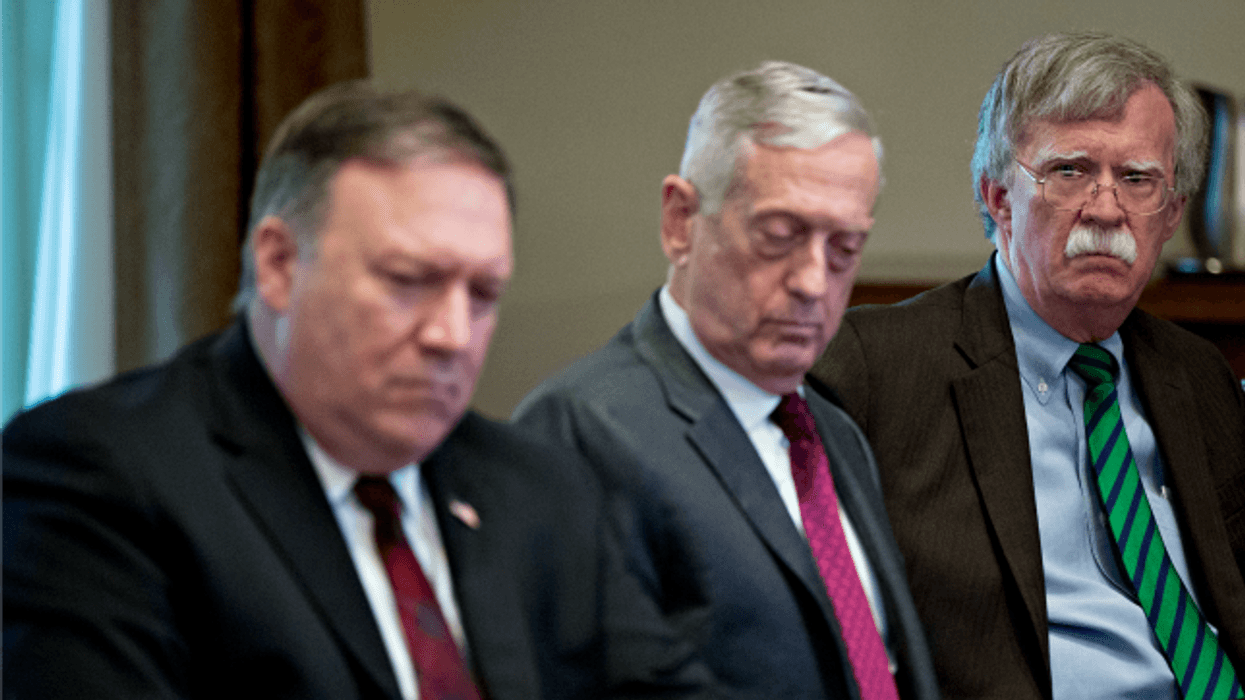
National Security Adviser John Bolton lied his face off when he told Israeli Prime Minister Binyamin Netanyahu on his recent Mideast junket that he was sure Iran's leaders are dedicated to acquiring deliverable nuclear weapons. Nuclear security expert Joe Cirincione shredded Bolton over his false assertion, which is contradicted by UN inspectors and US intelligence.
Bolton made sure to tell Netanyahu this so that Netanyahu could quote Bolton in his own fantasy-filled and inflammatory speeches urging an attack on Iran.
Some 8 years ago Netanyahu tried to attack Iran himself, but was stopped by his own intelligence officials and officer corps, who saw the step as a catastrophe. Former head of Mossad Meir Dagan publicly questioned Netanyahu's competency to govern in light of his looney fixation on attacking Iran, and I think by "competency" he meant 'sanity.'
Axios is reporting that former secretary of defense Jim Mattis was disturbed last September when N Bolton asked the Department of Defense for a contingent plan for an airstrike inside Iran.
The Wall Street Journal had reported that Bolton asked for the plan after a pro-Iran Shiite militia fired mortars into Baghdad's Green Zone, where the US embassy is located. The blast walls around the Green Zone have now been removed, but since the US invasion in 2003, it has been one of the few parts of the capital safe from car bombings. It has occasionally taken mortar fire. The mortars last September did not cause any deaths or destruction.
Mattis reportedly felt it would have been legitimate to strike back against the Iraqi militia inside Iraq, but unwise to initiate a cross-border conflict involving a state.
When Mattis first met Bolton, he joked that he had heard that he was "the Devil."
Ironically, when Mattis first met Bolton, he joked that he had heard that he was "the Devil." He appears to have been making fun of normal people concerned about Bolton's excesses. So then toward the end of his tenure Mattis found out that we weren't wrong about Bolton, and he had been foolish to be so insouciant.
American policy-makers' stalking of Iran is not because the country is powerful but because it is weak. They can't do anything about powerful countries like China or Russia, so they don't tangle with them militarily. Iran is an annoyance but is weak, and so a career might be made in DC as an Iran hawk. The whole policy fixation is bizarre. Iran does not have an air force worth mentioning and its military budget is on the same order as that of Singapore or Norway. It is not a militarily aggressive state, though it has taken advantage of the chaos caused by the US in Iraq and Syria and by Israel in Lebanon to extend its influence in the Fertile Crescent. But Iran's help was invited by Baghdad, Damascus and Beirut, not imposed from Tehran.
Americans are always complaining about Hizbullah, but it is a small self-defense force for Lebanese Shiites from Israeli aggression (the Israelis occupied Shiite territory in south Lebanon for two decades and are not known for giving things back without a fight after occupying them). Lebanon's citizen population is about 4 million and there are probably only 1.3 million Shiites in the country, and I doubt the community can field more that about 25,000 Hizbullah volunteer fighters. Iran does back Hizbullah, but to the extent that it has stopped any further Israeli attempts to annex parts of Lebanon, and has bolstered the beleaguered government of Bashar al-Assad in Damascus, it should be seen as a status quo rather than a radical force. Its major paramilitary engagements since 2013 have been against al-Qaeda affiliates in Syria. (Whether the rotten status quo should have been upheld is a different argument; but overturning it, as Hillary Clinton wanted to, would have been the radical act, not upholding it).
Trump may as well have appointed David Duke his national security adviser.
Trump picked up Bolton for the post of national security adviser from the Gatestone Institute, a known hate group dedicated to spreading disinformation about Muslims and Islam, which he chaired. Trump may as well have appointed David Duke his national security adviser.
Bolton has been agitating for a war on Iran for two decades. He is an attorney who helped George W. Bush steal the Florida election in 2000, and was rewarded by being made undersecretary of state Arms Control and International Security.
He used his office to help lie the US into the $6 trillion boondoggle of an Iraq War that destabilized the Middle East and led to the rise of ISIL.
While he served in that capacity he made up ridiculous stories like a Cuban-Iranian joint biological weapons program (Communists just love them some Anthrax Ayatollahs). He also managed to withdraw the US from having anything to do with the International Criminal Court. Bolton hates the international rule of law the way the devil hates holy water.
Bolton pioneered some of the typical Trump techniques of making stuff up and then trying to push policy on the basis of his dark fantasies.
Bush tried to shoehorn him in as ambassador to the United Nations but Congress would not confirm him because he is a horrible, angry person who viciously mistreated his aides and tries to fume at people around him until he can intimidate them into taking orders from him on the basis of his crackpot theories. He is another example of psychopathocracy.
Bolton has strong ties to and has taken a lot of money from the People's Jihadis or (MEK), an Iranian cult-like organization founded in the 1970s that mixes Marxism with Shiite Muslim fundamentalism. The group has at times been on the US State Department list of terrorist organizations and it certainly has engaged extensively in terrorism, i.e. has killed civilians for political purposes. It more deserves the appellation than does Lebanon's Hizbullah, which mainly had fought in self-defense or against al-Qaeda.
Bolton seems to be a disturbed person who, if he hadn't gotten into Yale, might well have ended up an inwardly seething lower middle class white guy, and who would have been open to the blandishments of white supremacist hate groups such as the Neo-Nazis.
The People's Jihadis are enormously well-funded but it is not clear where the group, which has no support inside Iran and mostly flourishes in the hothouse of expatriate coffeeshop plots in Paris and Los Angeles, gets its funding.
NBC at one point reported that US officials told it that Israeli intelligence, Mossad, funded the MEK.
More recently there have been allegations of Saudi funding for the People's Jihadis.
It is a measure of how putridly corrupt US politics is that politicians such as Rudy Giuliani and John Bolton have more or less been on the MEK payroll and therefore potentially in the back pocket of Israel's Likud Party and Saudi Arabia.
No wonder so few care that Trump might be a Russian mole. Apparently it is par for the course for our political leaders to be foreign moles.
Bolton seems to be a disturbed person who, if he hadn't gotten into Yale, might well have ended up an inwardly seething lower middle class white guy, and who would have been open to the blandishments of white supremacist hate groups such as the Neo-Nazis. As it is, he has the credentials and connections to parade as a normal person despite having actually run a hate group and having mysterious and deep links to a violent Iranian cult.
I'm not sure exactly what the Democratic House can do to forestall Bolton's peculiar Iranomania from plunging us into another generation of war and instability and bankruptcy. But they should do what they can to get the madman out of office.

Circle the wagons!
Apparently what's under assault is war itself, or so the Establishment believes, in the wake of the shocking announcement by the president that he plans to withdraw all 2,000 U.S. troops now deployed in Syria and 7,000, or half, the U.S. troops in Afghanistan.
No, can't do that! Can't do that! This screws everything up. ". . . we must be resolute and unambiguous in our approach to those countries whose strategic interests are increasingly in tension with ours," writes Defense Secretary Jim "Mad Dog" Mattis in his resignation letter to Donald Trump over the issue.
And the New York Times noted that Trump's decision "risks leaving United States' allies in the long-running war weakened while strengthening rivals backed by Iran and Russia.
"American troops entered Syria in 2015 as part of a coalition fighting the Islamic State, which had seized large swaths of territory in Syria and Iraq. In the three years since, the extremist group's self-declared caliphate has crumbled. But the continuing lack of stability in both Syria and Iraq could provide fertile ground for the jihadists to retrench."
War itself -- particularly the wars fomented by, underwritten and armed by the United States over the last two decades -- are the primary cause of global instability and the upsurge of terrorism.
Sounds sensible enough until you factor in the fact that the pursuit of short-term national interests and, indeed, war itself -- particularly the wars fomented by, underwritten and armed by the United States over the last two decades -- are the primary cause of global instability and the upsurge of terrorism. There's never an acknowledgment, by the war establishment, of the consequences of militarism, just an abstract discussion of strategy and "interests."
Since Mad Dog is the face of reasonable opposition to these U.S. troop withdrawals, let me pause for a moment simply to note that, as commanding officer of the two U.S. invasions of Fallujah in the early stages of the Iraq war, in April and November 2004, he's a full-on war criminal.
Dahr Jamail, writing at Truthout, tells us: "While reporting from inside Fallujah during (the April) siege, I personally witnessed women, children, elderly people and ambulances being targeted by U.S. snipers under Mattis' command. Needless to say, all of these are war crimes.
"During the November siege of Fallujah later that same year, which I also covered first-hand, more than 5,000 Iraqi civilians were killed. Most were buried in mass graves in the aftermath of the siege.
"Mosques were deliberately targeted by the U.S. military, hospitals bombed, medical workers detained, ambulances shot at, cease-fires violated, media repressed, and the use of depleted uranium was widespread. All of these are, again, war crimes."
The horror inflicted on Fallujah is, of course, merely the tippy-tip of the military iceberg, but my God, I must ask the New York Times and all the rest of the media that fell in line behind GWB and supported the horrific and pointless invasion of Iraq: Why are the consequences -- and failures -- of our past wars never part of the present discussion? Why is a larger vision, a peace vision, never given serious consideration when it comes to U.S. foreign policy?
"It is common," Richard Falk pointed out in an interview with Daniel Falcone, "for media pundits to question policy choices so long as they do not touch the fundamental guidelines of structure and geopolitical priorities that have shaped the American global role ever since 1945. These fundamentals include . . . the globe-girdling military presence as typified by more than 800 overseas military bases, a sizable naval operation patrolling in every ocean, and a capability to wage hyper war from any point in space."
Beyond the establishment's offense taken, the question remains: What is the value of Trump's decision to start shrinking U.S. involvement in several war-ravaged sectors of the Middle East?
Understandably, peace activists remain wary. He's an America Firster who wants to wall off "USA! USA!" from the global rabble at our southern border. He's a racist and NRA shill who feeds refugee children to his base. He's a corrupt narcissist with fascist inclinations and an ego the size of Mussolini. He's a loose cannon. Has he suddenly become a loose cannon for peace?
Well, maybe.
Trump's plan is a beginning, but only that.
A statement released by the organization World Beyond War, which has been calling for the U.S. withdrawal from Syria since 2015, acknowledges that Trump's plan is a beginning, but only that. In a statement released shortly after Trump's announcement, it notes:
"Removing troops from the ground -- all of them, not just some -- and ceasing base construction, if it happens, will be a start.
"Even more important is ceasing to bomb from above.
"In addition, alternative approaches need to be launched, including unarmed peaceworkers, a weapons ban for the region, a disarmament program, major actual humanitarian aid (and an end to sanctions that harm ordinary people), and diplomacy."
The statement acknowledges that leaving a war is enormously complex and things can get worse before they get better, especially without intelligent preparation and a willingness to invest in social healing. However: "Things have been getting worse for years all over Syria, without that ever being understood as a reason to halt the militarism."
What has to happen next is that building peace becomes the norm. As Falk pointed out in his interview: "Humanity remains trapped in a cage sometimes called 'the war system,' which has the semblance of a permanent lockup."
Without intending to, Trump may have opened the cage door. Now the hard part must begin.

Every time I read the papers
That old feeling comes on;
We're waist deep in the Big Muddy
And the big fool says to push on.
I find myself haunted these days by Pete Seeger's antiwar anthem of 1967, written when it had become evident to Seeger and many others (although not yet to me) that the United States was engaged in an enterprise certain to end in disaster and dishonor. The Big Muddy was Vietnam. The big fool committed to blindly pushing on was President Lyndon Baines Johnson.
Today Seeger's lyrics possess an ironic resonance. The United States once more finds itself stuck in a perplexing military misadventure, this one dating from 2001 and known initially as the Global War on Terrorism. Once more we have a bona fide fool in the White House, one whose antics make LBJ look like a font of acumen and good sense.
Yet note the contradiction. In this instance, it's the big fool who grasps the obvious: Waging war to pacify the Greater Middle East hasn't worked and won't. However unwittingly, President Trump has embraced Pete Seeger's cause as his own.
Yet we have it from the nation's putative "wise men" that the fool is dead wrong. Much as in 1967, members of the foreign policy establishment (today very much including women) say that the United States has no choice but to push on, no matter how dark the night or deep the water.
So when Trump recently announced his intention to withdraw US troops from Syria and cut in half the troop contingent in Afghanistan, reaction from across that establishment was swift, severe, and all but unanimous. Terminating lengthy wars in places of marginal importance to the United States, it turns out, represents the height of irresponsibility.
For Defense Secretary James Mattis, Trump's announced intention to pull out of Syria was the last straw: He resigned (and was then unceremoniously fired). In an instant, Mattis -- widely proclaimed as the last adult in the room -- became the recipient of encomiums usually reserved for icons like George C. Marshall. With Mattis gone, it is said, the way is now clear for Trump to convert America First from provocation into policy.
We thus find ourselves at an interesting, and perhaps pivotal, moment in American history. At issue are the prerogatives of the commander-in-chief. Since World War II, those prerogatives have expanded exponentially, so much so that in practical terms the Congress has all but forfeited its war powers to the executive branch.
For decades now, presidents have used those powers to initiate, expand, and redefine armed conflicts more or less at will, Vietnam being only one example among many. Underlying this practice is an assumption: That the president, drawing on the expert advice of the foreign policy establishment, is uniquely situated to divine and to pursue the nation's true interests. Especially in matters related to war, we the people, not to mention our elected representatives, are expected to respect his decisions.
Acting on that assumption finds the United States today mired in several armed conflicts that members of the establishment accept as more or less perpetual. In Syria, Afghanistan, and elsewhere, their inclination is to press on. Deeply invested in a militarized and interventionist conception of demonstrating global leadership, they will admit to no alternative.
The commander-in-chief begs to differ. Exercising prerogatives enjoyed by his predecessors, he appears determined to wind down conflicts he considers contrary to the nation's interests. The big fool apparently thinks that interminable wars are a bad thing.
Trump's conviction places him directly at odds with and also threatens the foreign policy establishment. After all, the status of that establishment derives from the claim that listening to the likes of James Mattis keeps America safe and strong. If presidents cease to listen, then the entire raison d'etre of that establishment, which is both unelected and unaccountable, collapses.
In that event, a genuine debate over America's role in the world might ensue. Alternatives to the existing militarized and interventionist conception of national security policy just might become possible. This is what the foreign policy establishment fears most.
And that's why it will fight tooth and nail to obstruct Trump's efforts to end armed conflicts that he correctly sees as misguided. In establishment circles, the big fool's opposition to foolish wars will become one more indication that he is unfit to serve.