

SUBSCRIBE TO OUR FREE NEWSLETTER
Daily news & progressive opinion—funded by the people, not the corporations—delivered straight to your inbox.
5
#000000
#FFFFFF
To donate by check, phone, or other method, see our More Ways to Give page.
Daily news & progressive opinion—funded by the people, not the corporations—delivered straight to your inbox.
"Dangerously rushing a system that holds Americans’ lives in its hands is not a good use case for artificial intelligence."
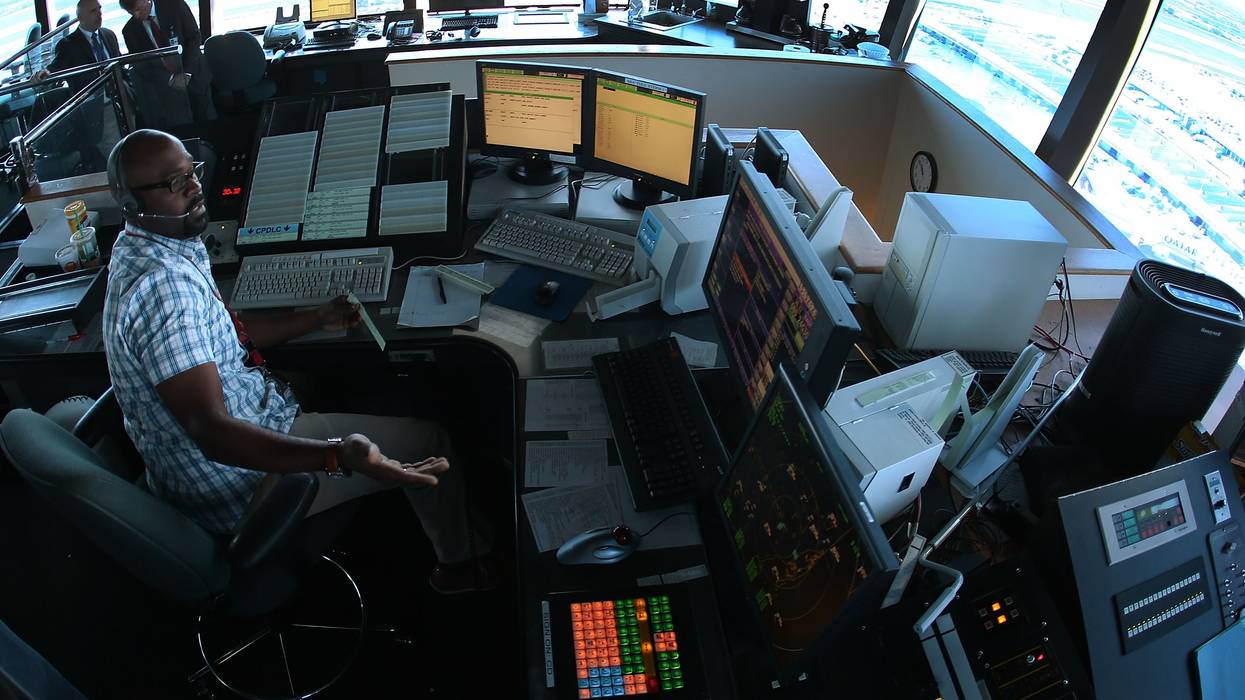
A Democratic US congressman on Monday urged the Federal Aviation Administration to immediately suspend a new artificial intelligence system being used to help manage air traffic around Washington, DC, accusing the agency of using passengers as "guinea pigs" without adequately vetting the new technology.
The Strategic Management of Airspace, Routes, and Trajectories (SMART) system, developed by AI firm Air Space Intelligence under an $875 million contract, began limited operations Monday at Ronald Reagan Washington National Airport, Washington Dulles International Airport, and Baltimore-Washington International Thurgood Marshall Airport.
The Federal Aviation Administration (FAA) says the system uses AI to synthesize roughly 200 data streams—including weather, flight paths, airline schedules, airport capacity, and controller staffing—to anticipate congestion and recommend ways to avert delays and cancellations.
The FAA claims that use of SMART will result in fewer flight delays and cancellations, optimized airspace, more predictable operations, and lower airfare costs for consumers.
"To really improve the flying experience for the American people, we needed to build a 21st century scheduling tool like SMART,” US Transportation Secretary Sean Duffy said in a statement. “By fundamentally reshaping how we manage our airspace and preventing problems before they happen, SMART will slash those frustrating delays, reduce stress on air traffic controllers, and lower travel prices."
“It's always going to be a human that manages the airspace in America,” Duffy promised. “Humans control the airspace, humans make decisions.”
The industry trade group Airlines for America called SMART “exciting and bold," while United Airlines CEO Scott Kirby told The Washington Post that “if it works as we think it can, it will do more to reduce delays and cancellations than anything that’s happened in decades."
However, Congressman Don Beyer (D-Va.)—whose district includes Reagan National Airport—said in a statement that “the FAA should not use my constituents as guinea pigs for an unproven AI air traffic control system."
"The safety of the 24 million people traveling through DCA each year must be the top priority," he added, referring to the International Air Transport Association code for Reagan National Airport.
The FAA should not use my constituents as guinea pigs for an unproven AI air traffic control system that has Americans’ lives in its hands.I’m calling on the FAA to immediately suspend use of this AI system at Washington area airports until its safety has been established.My full statement:
[image or embed]
— Congressman Don Beyer (@beyer.house.gov) September 21, 2026 at 1:25 PM
A National Transportation Safety Board investigation concluded that the January 2025 midair collision between a US Army Blackhawk helicopter and an American Airlines regional jet, operated by PSA Airlines—which killed 67 people—was caused by a chain of human errors.
"Residents of this region are still uncertain about air safety after last year’s fatal accident, and the administration did shockingly little to educate the traveling public about this development before implementing it in one of the most complex airspaces in the world," Beyer said.
The congressman continued:
Unfortunately, I was informed today that air traffic controllers were not consulted on the SMART system’s design and development, and were not trained on using it prior to the system’s adoption at local airports. I was further informed that the air traffic controllers have been told the SMART system can adjust schedules and potentially even routes. Despite outward appearances, the airlines reportedly were privately "panicking" about the hasty implementation of this system. I do not know why the administration felt the need to race it into use, but it is unacceptable to use AI as a substitute for rebuilding the human-directed air traffic controller workforce.
“Dangerously rushing a system that holds Americans’ lives in its hands is not a good use case for artificial intelligence," Beyer asserted. "I call on the FAA to immediately suspend its operation, at the very least until it is clearly established beyond doubt via air traffic controller feedback and independently verified stress testing that the technology is safe."
Duffy responded to Beyer's concerns in an interview with Fox News' Brian Kilmeade, saying: "I like Don [but] this is just complete stupidity. The problem with this analysis is our new software is predictive, so we can predict weather and make better decisions on when we fly and weather."
Beyer isn't the only lawmaker voicing concerns over the use of SMART. Congresswoman Pramila Jayapal (D-Wash.) said Monday that "safety must always be the FAA's number one priority. This is extremely concerning, and we need immediate answers about what this means for travelers."
The National Air Traffic Controllers Association (NATCA) said that it was not involved in the SMART rollout.
“NATCA has not been involved in the design, testing, or implementation of SMART and therefore cannot speak to its effect on the air traffic control workforce at this time,” the union said, adding that any new technology “should complement and not replace the experience, training, and professional judgment of air traffic controllers who are responsible for the safety of the National Airspace System.”
The FAA's launch of SMART comes as the agency continues to suffer from a shortage of certified air traffic controllers. The Washington Post reported that the FAA had about 11,000 certified controllers as of April, more than 1,500 short of its official target of 12,563.
"This would put untold species directly in harm's way," the Center for Biological Diversity warned.
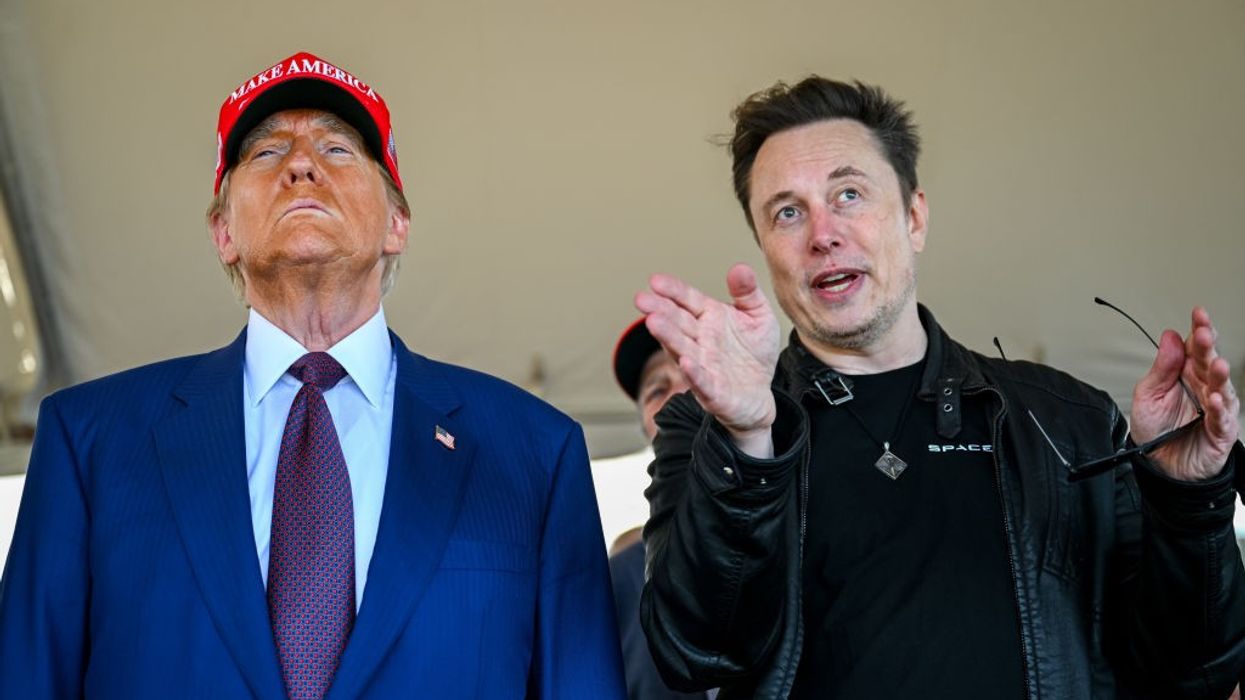
Under pressure from companies owned by billionaires like Elon Musk and Jeff Bezos, the Trump administration announced this week that it will waive what it called "unnecessary environmental laws and regulations" in order to expedite the approval of commercial rocket launches.
The US Department of Transportation's (USDOT) Federal Aviation Administration (FAA) is proposing to waive numerous environmental review requirements and related federal laws that currently apply to commercial space launches, citing legal authority Congress granted to the secretary of transportation.
The proposed changes—on which the public has 30 days to comment—would make it much faster and easier for space profiteers to get permission to launch rockets or operate commercial spaceports in the United States by allowing the FAA to waive part or all of over a dozen laws and rules, including National Environmental Policy Act, the Endangered Species Act, the Clean Water and Clean Air acts, the National Historic Preservation Act, and the Marine Mammal Protection Act.
“America won the first space race, and we can do it again—but only if we get government red tape out of the way,” US Transportation Secretary Sean Duffy said on Tuesday. "That’s why President [Donald] Trump has charged USDOT with unlocking the final frontier and reestablishing the United States’ dominance in space."
Trump’s FAA announced today that it intends to exempt #space launches and spacecraft reentries from complying with environmental laws like the #EndangeredSpeciesAct. This will put untold species directly in harm’s way.You can be sure we’ll fight this obscene giveaway to special interests 🚀🚀
— Center for Biological Diversity (@biologicaldiversity.org) July 28, 2026 at 4:08 PM
The USDOT said that other federal agencies, such as the National Aeronautics and Space Administration (NASA) or the US military, may still be required to conduct environmental reviews under the law for launches on some federal property.
The proposal follows Trump's August 2025 executive order, "Enabling Competition in the Commercial Space Industry," which critics charge was issued to benefit Musk, the world's richest person, and his company SpaceX, which is seeking to dramatically increase launches and landings and has suffered a series of rocket explosions. Trump has boosted other companies—including X and Tesla—led by Musk, who served for a period last year as de facto head of the president's so-called Department of Government Efficiency, or DOGE.
Opponents warn that, if approved, the proposed changes mean that the FAA would generally no longer require environmental studies or consultations before issuing commercial space licenses.
“NASA has conducted space launches for decades in a responsible way, but now Trump wants to gut even the most basic environmental safeguards to enrich some of the world’s wealthiest people,” said Brett Hartl, government affairs director at the Center for Biological Diversity (CBD). “We’ve seen real environmental damage from the exploding rocket toys of the superrich. You can be damn sure we’ll fight this obscene giveaway to special interests.”
In 2024, SpaceX was punished with a paltry $150,000 in fines for violating the Clean Water Act after it discharged tens of thousands of gallons of industrial waste from a launch pad in Boca Chica, Texas.
CBD and other green and Indigenous groups last month sued the US Fish and Wildlife Service in a bid to stop the Trump administration from handing over 715 acres of the Lower Rio Grande Valley National Wildlife Refuge in South Texas to SpaceX in exchange for 683 acres elsewhere.
On Wednesday, CNBC revealed that six US lawmakers from both major parties—including five who sit on committees that regulate SpaceX—had or have family investments in the company, raising concerns over apparent conflicts of interest.
In addition to environmental concerns, Trump has also come under fire for militarizing space in contravention of the Outer Space Treaty—which the US has ratified—by launching the Space Force as an official service branch during his first term.
One journalist said that "this is like the epitome of personalist rule—turning this into an imperial, dictatorial display of self-glorification."
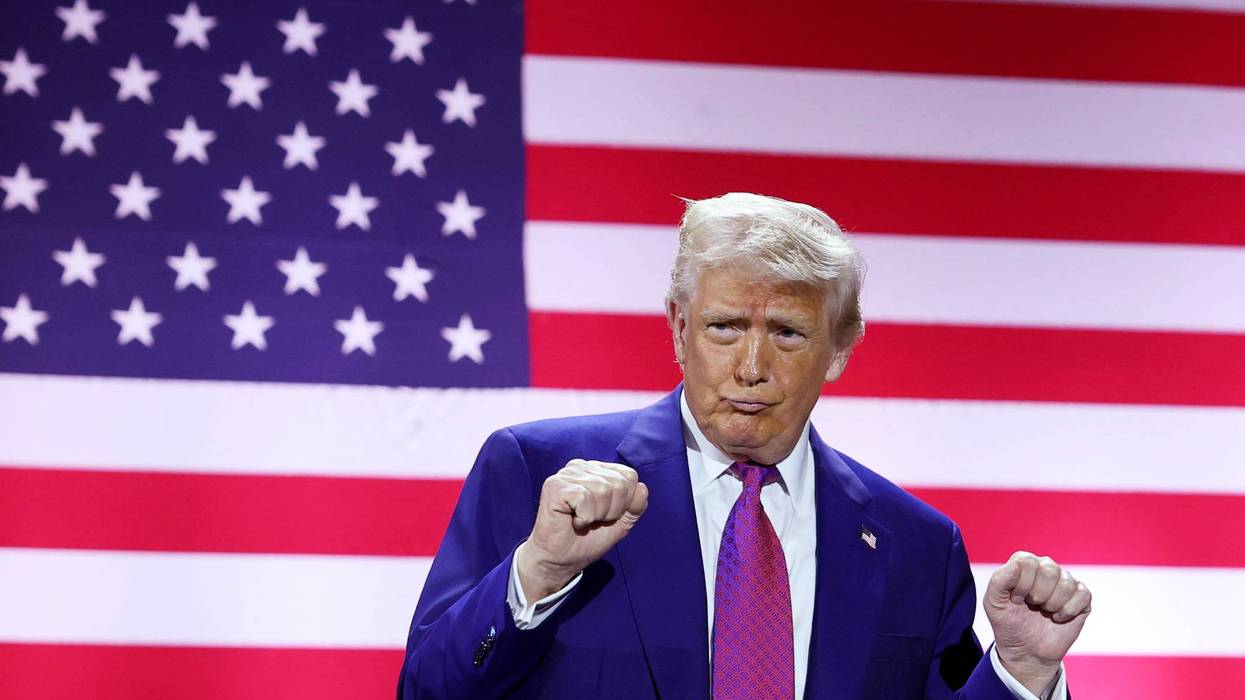
As the desolate debacle of President Donald Trump's "Great American State Fair" continues against a backdrop of an empty National Mall and Shrek-green Lincoln Memorial Reflecting Pool, criticism of the president's plans for his "most spectacular Trump rally" and record-seeking fireworks show mounted this week as new details of his self-aggrandizing extravaganza emerged.
"Our luck has it that America's 250 was when Trump is president, and we know that a big thrust of these 250 commemorations are in a lot of ways a celebration of Trump and Trumpism, and if it's not direct, it's the vision that Trump and the MAGA movement has of America," Center on Conscience & War executive director Mike Prysner told BreakThrough News on Tuesday.
Media Matters for America senior fellow Matt Gertz told Greg Sargent, who hosts The New Republic's The Daily Blast podcast, that "the fact that we are not going to be able to have a real celebration of America’s 250th birthday—one that respects how far we have traveled, how far we have to go... it’s a real shame that this is what we’re going to get instead: a would-be authoritarian ruler trying to make it all about himself."
On Monday, the Federal Aviation Administration made a late announcement that it would be shutting down air traffic at Ronald Reagan Washington National Airport for three hours on July 3 and 12 hours on the Fourth of July "to help ensure the safe and efficient movement of air traffic during celebrations of America's 250th birthday, including the iconic flyovers and fireworks."
During a rally planned for July 4, Trump is expected to speak for at least 45 minutes starting at 9:00 pm. While attendees are advised to arrive very early, they're reportedly not allowed to bring coolers, lawn chairs, bags, or more than one bottle of water on a day when temperatures are forecast to soar to triple-digits.
Trump said earlier this month that a military flyover featuring a 17-aircraft formation will include the $400 million Boeing 747-8 "flying palace" gifted to Trump by the repressive Qatari monarchy.s
US Interior Secretary Doug Burgum told Fox News on Sunday that the Trump administration is then planning the "greatest and biggest celebration of fireworks ever."
The Washington Post reported Tuesday that 850,000 fireworks will be detonated in a 40-minute show scheduled to start unusually late—after 10:30 and possibly even 11:00 pm. That's 50 times as many explosions over twice the length of a typical Fourth of July fireworks show, which even in a typical year can spark severe anxiety in dogs and other pets and post-traumatic stress disorder in veterans.
Trump DC fireworks won't start until at least 10:30 p.m. Heavy TSA-like security, so people will have to get there way early. It's going to be one-billion degrees. No coolers, no metal/thermal water containers. Enjoy your $20 bottles of Trump water and your tearful, exhausted children! Happy Fourth!
— Rex Huppke (@rexhuppke.bsky.social) June 29, 2026 at 10:52 AM
If Trump's so-called "Great American State Fair" is any indication, there should be plenty of lawn space available on the National Mall for the July 4 events.
While the president posted a self-congratulatory message to his Truth Social Network on Monday, praising the "fantastic job" his administration has done during the first week of the event and claiming the National Mall was "packed with happy people," attendees and journalists reported "light crowds, short lines, and plenty of open space."
This, despite a nationwide ad blitz on Fox and other networks and websites viewed by scores of millions of people.
Some called it the "Great American Fail."
Former Republican Congressman Adam Kinzinger of Illinois said in a video posted Monday on Bluesky that "10 years ago I voted to create 'America 250.' But here's the truth: Trump started 'Freedom 250' to replace it, and made it about himself. Trump’s newest stunt? Trying to convince us there’s a big crowd for Freedom 250. But our eyes don't lie."
María José Gutierrez Chavez, trending news writer at the business magazine Fast Company, described "the unbearable emptiness of the Great American State Fair," writing that the purported celebration "looks more like a liminal space."
Gutierrez cited one TikTok user who commented, “I’ve seen graveyards with more people," and another who said that “there were more people in line for the Trader Joe’s summer tote bags."
Meanwhile, the iconic Lincoln Memorial Reflecting Pool, a focal point of the semiquincentennial festivities, remains what Common Dreams columnist Abby Zimet described Tuesday as a "fetid debacle" as cleaning up the algae-choked centerpiece proves more difficult than anticipated.
Instead of blaming the no-bid contracted company owned by a Trump donor for the emerald embarrassment, detractors say the president has humiliated himself even further by attempting to pin the blame for his administration's failure on elusive vandals and former President Barack Obama.
Even some Trump supporters have had enough.
"This sucks," Fox News columnist David Marcus said earlier this month following an event featuring daredevil dirtbike jumps and Ultimate Fighting Championship (UFC) cage matches on the White House lawn that critics said looked like they were inspired by the classic Mike Judge dystopian satire Idiocracy.
"This pisses me off," Marcus said after one of the UFC fighters called former First Lady Michelle Obama a man. "You wanna throw out this nonsense at a rally? Fine. Not at an official Freedom 250 event. Disgraceful."
Some are calling on people to eschew the July 4 event in favor of local celebrations.
"This is like the epitome of personalist rule—turning this into an imperial, dictatorial display of self-glorification," Sargent said. "It’s important that Americans reject this and not show up to this."
Gertz concurred, replying, "I think what we have here is a president who does not respect any sort of separation between himself and the country at large."
"He views the idea of celebrating the nation’s birthday as one and the same with celebrating himself," he added.

The Stop Subsidizing Private Jets Act of 2026 would end loopholes allowing billionaires to deduct private planes as business expenses.
One of the great injustices of our current tax system is that working people often end up subsidizing the luxury consumption of the billionaire class.
One example of this phenomena can be found in the world of private jets, one of the most ecologically indefensible forms of transformation. The private jet lobby has worked for years to secure tax breaks for aircraft purchases and fuel—and shift their costs on to taxpayers and the commercial flying public.
The lobby scored a big win when a 100% bonus depreciation for business assets including private planes was included in the 2017 Trump tax cut. That provision was renewed in 2025’s “One Big Beautiful Bill Act.”
With that provision in place, if a billionaire buys a $170 million luxury jet, they can deduct the entire purchase as a business expense in the year they buy it, greatly reducing their tax bill. Most business expenses are deducted to reflect their depreciation over multiple years. A purchase of a truck or vehicle, for example, is typically depreciated over five years.
Every day commercial flyers are taxed more heavily for their tickets compared to private jet travelers who are only taxed on their jet fuel.
Current tax loopholes give the ultra wealthy—including both private citizens and businesses—millions in tax write-offs for their luxurious travel, including the costs of planes themselves and related expenditures like private pilots and fuel.
The Private Jet Accountability Project (PJAP) at the Institute for Policy Studies has been working with members of Congress to rollback these subsidies. US Reps. Eugene Vindman (D-Va.), Kristen McDonald Rivet (D-Mich.), and Greg Landsman (D-Ohio) recently introduced the Stop Subsidizing Private Jets Act of 2026.
“Right now, the tax code allows those buying private jets worth tens of millions of dollars to receive enormous write-offs, while middle-class families do not get deductions for basics like gas or groceries. That is wrong,” Vindman said in a statement. “My bill is a commonsense fix that ends these unfair giveaways while protecting farmers, small businesses, and emergency responders who depend on aviation for real business and community needs.”
Today, private jets, even those valued at $100 million or more, are not considered a luxury vehicle, which means the full value can be a business expense write-off. Expenses such as fuel, pilots, decor, and in-flight services are also a write-off. It is estimated that the owner of a $100 million jet can get a $21 million tax benefit.
This legislation will end these loopholes while protecting “exemptions for aircraft, primarily used to transport property, as well as planes used for agriculture, firefighting, emergency medical services, flight instruction, sky diving operations, and certain commercial flights available to the public” as described in the bill.
These are funds we cannot afford to lose. An Institute for Policy Studies report found that private air travel is a significant portion of air traffic, with a ratio of 1 private jet per 6 commercial planes. Despite this, private jet travel only contributes 2% of the taxes that go to fund the Federal Aviation Administration. At the same time, people flying commercial pay a 7.5% federal excise tax on tickets to fund the FAA’s Airport and Airway Trust Fund. Every day commercial flyers are taxed more heavily for their tickets compared with private jet travelers who are only taxed on their jet fuel.
“It’s ridiculous and unfair that the ultra wealthy get million-dollar tax breaks for their private jets while working families are seeing their healthcare and food assistance cut,” said Rep. McDonald Rivet. “We need to get rid of this insane loophole, because if you can afford a private jet, you can afford to pay your fair share in taxes.”
“The fact that our tax dollars are still funding tax breaks for someone’s private jet is insane,” Rep. Landsman added. “We have to fix the tax code so the super wealthy stop getting special treatment, and our small businesses and farmers can actually get ahead.”
In the face of the jet fuel crisis, European lawmakers are exploring banning certain kinds of private jet operations. Here in the US, all we are asking is that private jets pay their fair share.
Luxury travel that isn’t taxed appropriately epitomizes the inequality that exists in the tax and travel systems. Why should everyday Americans foot the bill for the ultra-wealthy’s private air travel and the air travel infrastructure we all use?
The passage of the Stop Subsidizing Private Jets Act of 2026 is an important step in correcting the imbalance of wealth and power in our democracy.
Police announced a shelter-in-place order for "all areas north of the airport to the Ohio River."
This is a developing story… Please check back for updates…
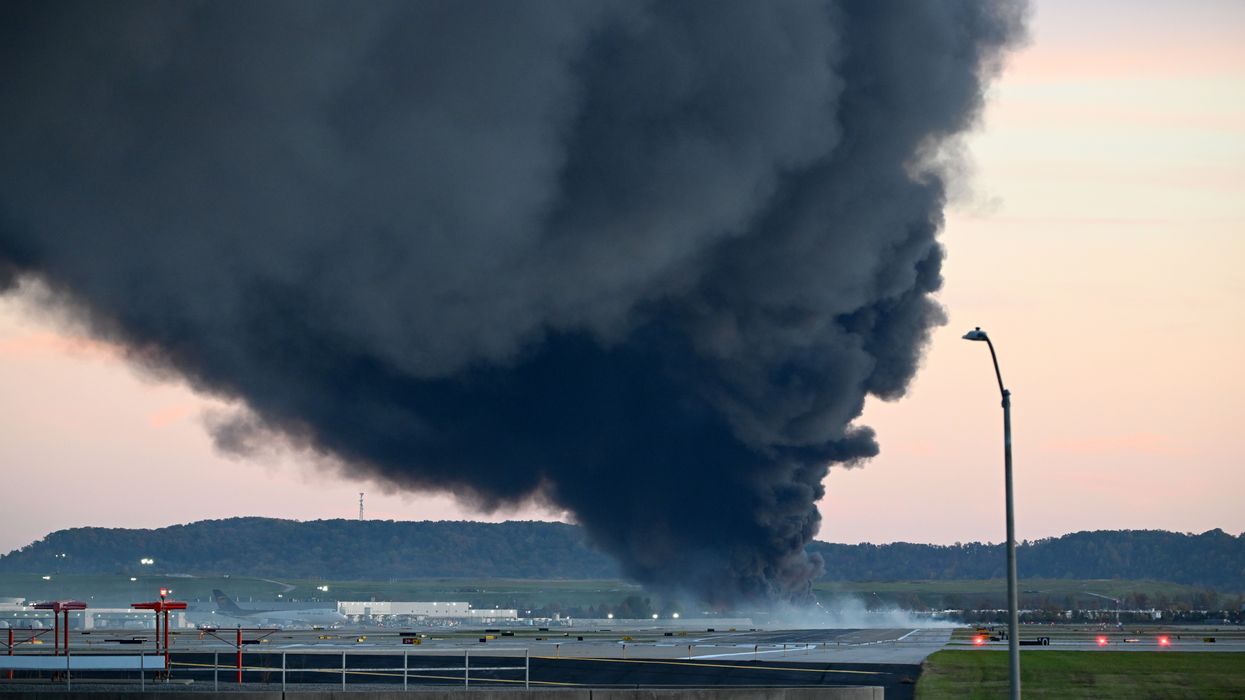
Aerial footage showed plumes of black smoke and flames around the Louisville Muhammad Ali International Airport in Kentucky after a UPS plane crashed during its departure on Tuesday evening.
The Federal Aviation Administration said on social media that UPS Flight 2976—a McDonnell Douglas MD-11 bound for Daniel K. Inouye International Airport in Honolulu, Hawaii—crashed around 5:15 pm local time. The agency added that the FAA and National Transportation Safety Board will investigate, with the NTSB providing all updates.
The Louisville Metro Police Department confirmed that the LMPD and multiple other agencies were responding to the scene, where there are "injuries reported."
LMPD initially announced a shelter-in-place order "for all locations within five miles of the airport," which was then expanded to "all areas north of the airport to the Ohio River."
The airport—which confirmed that "the airfield is closed" after the crash—is the UPS global hub. The shipping giant said in a statement that there were three crewmembers onboard and "at this time, we have not confirmed any injuries/casualties."
"UPS will release more facts as they become available, but the National Transportation Safety Board is in charge of the investigation and will be the primary source of information about the official investigation," the company added.
As CNN reported Tuesday:
The McDonnell Douglas MD-11F is a freight transport aircraft manufactured originally by McDonnell Douglas and later by Boeing. The aircraft is primarily flown by FedEx Express, Lufthansa Cargo, and UPS Airlines for cargo.
The plane also served as a popular wide-bodied passenger airplane after it was first flown in 1990. The aircraft involved in Tuesday's crash was built in 1991.
As fuel costs increased for the three engine jets many of them were converted to freighters. The plane can take off weighing in at a maximum 633,000 pounds and carrying more than 38,000 gallons of fuel, according to Boeing, which bought McDonnell Douglass.
The International Brotherhood of Teamsters said that it "is monitoring this developing tragic event on the ground," and "as this horrific scene is being investigated, prayers on behalf of our entire international union are with those killed, injured, and affected, including their families, co-workers, and loved ones."
Louisville Mayor Craig Greenberg said that he and his wife, Rachel, "are praying for victims of the UPS plane that crashed."
"We have every emergency agency responding to the scene," the Democrat added. "There are multiple injuries and the fire is still burning. There are many road closures in the area—please avoid the scene."
Democratic Kentucky Gov. Andy Beshear, who is headed to Louisville for a briefing with the mayor, said, "Please pray for the pilots, crew, and everyone affected."
Republican President Donald Trump's transportation secretary, Sean Duffy, similarly said, "Please join me in prayer for the Louisville community and flight crew impacted by this horrific crash."
During a press conference earlier on Tuesday, Duffy had warned of "mass chaos" if the ongoing government shutdown continues, saying: "You will see mass flight delays. You'll see mass cancellations, and you may see us close certain parts of the airspace, because we just cannot manage it because we don't have the air traffic controllers."
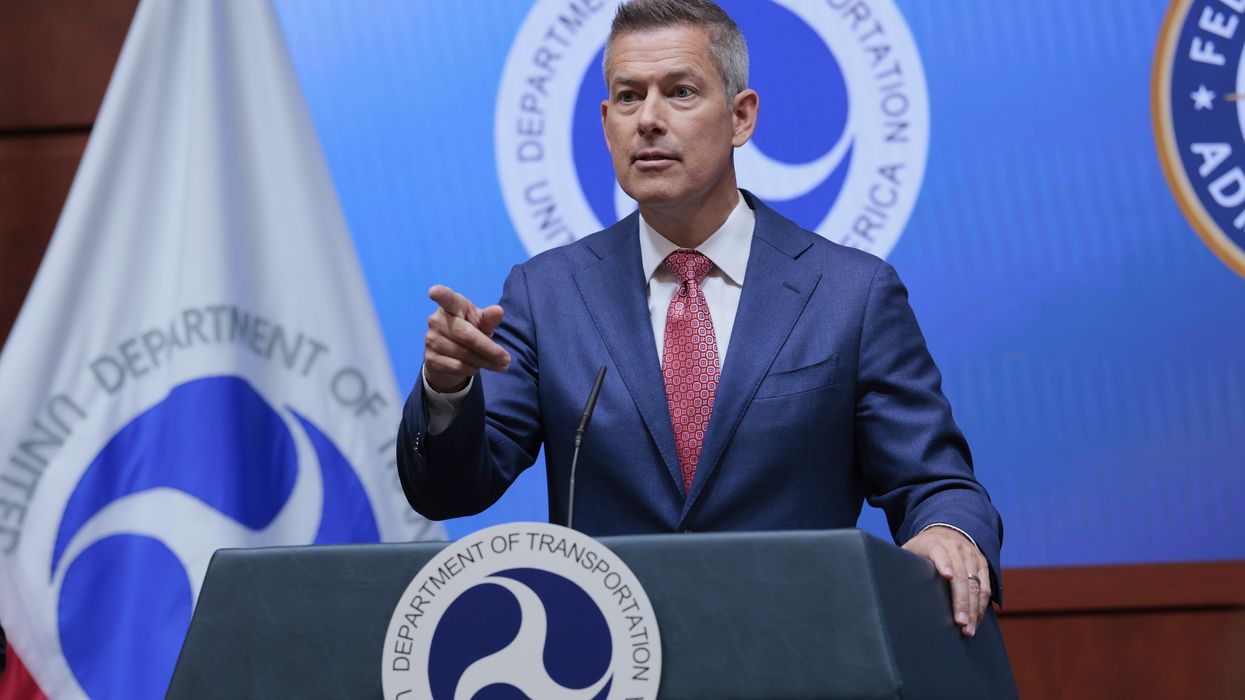
The transportation secretary has called for upgrades to the systems used by air traffic controllers; he voted against such improvements when he was in Congress.
Travelers at Newark Liberty International Airport in New Jersey on Monday were still being impacted by flight delays and cancellations after numerous technical issues in recent days interrupted air traffic control operations—disruptions that U.S. Transportation Secretary Sean Duffy said Sunday are likely to spread to the nation's other airports.
Duffy told NBC's "Meet the Press" on Sunday that he is currently "concerned about the whole airspace," but said traveling by air is still safe.
"The lights are blinking, the sirens are turning," said Duffy. "What you see in Newark is gonna happen in other places across the country."
The Federal Aviation Administration (FAA) said in a statement that Newark's most recent technical disruption on Sunday was the result of a "telecommunications issue" at Philadelphia Terminal Radar Approach Control (TRACON) Area C facility, which guides aircraft in and out of Newark.
Air traffic control systems were also disrupted on Friday, with controllers at the same facility losing radar and radio contact for about 90 seconds.
At least five air traffic controllers at TRACON Area C are currently on 45 days of trauma leave after a similar incident on April 28 during a busy afternoon.
The air traffic control team at the facility lost contact with all planes while they were managing 15-20 flights. One air traffic controller at Newark told NBC News after this incident that the airport is "not a safe situation right now for the flying public."
The disruption led to thousands of flight cancellations and delays—some longer than five hours—in and out of Newark, which serves more than 24 million travelers per year and is the nation's 12th busiest airport.
Duffy denied on Sunday that job cuts affecting about 400 staffers at the FAA—spearheaded by the so-called Department of Government Efficiency, headed by billionaire tech mogul Elon Musk—had anything to do with the problems at Newark.
But representatives of the Professional Aviation Safety Specialists union, which represents about 11,000 employees who support air traffic controllers, warned earlier this year that layoffs would result in critical workers guiding planes in and out of airports with less support from the FAA.
The job cuts affected workers including administrative and logistics technicians, aeronautical information specialists, and maintenance mechanics.
The FAA has blamed many of the issues at Newark, where TRACON Area C has been affected by outages four times since November, on equipment failures and staffing shortages.
Duffy has called for air travel upgrades including investments in digital flight data management, improvements to radio systems, and extending the retirement age for air traffic controllers to 61, up from 56.
On CNN last week, Kaitlan Collins pointed out that Duffy, then a Republican member of the U.S. House, joined his party in voting against upgrades to air traffic control systems.
On Sunday, signs were already emerging that staffing and technical issues could be spreading to other airports with impacts on travel.
An equipment outage at Hartsfield-Jackson Atlanta International Airport—the busiest in the world—led to a ground stop for more than an hour, delaying 1,337 flights. FAA staffing shortages at a control tower in Austin, Texas also led to delays for 145 flights.
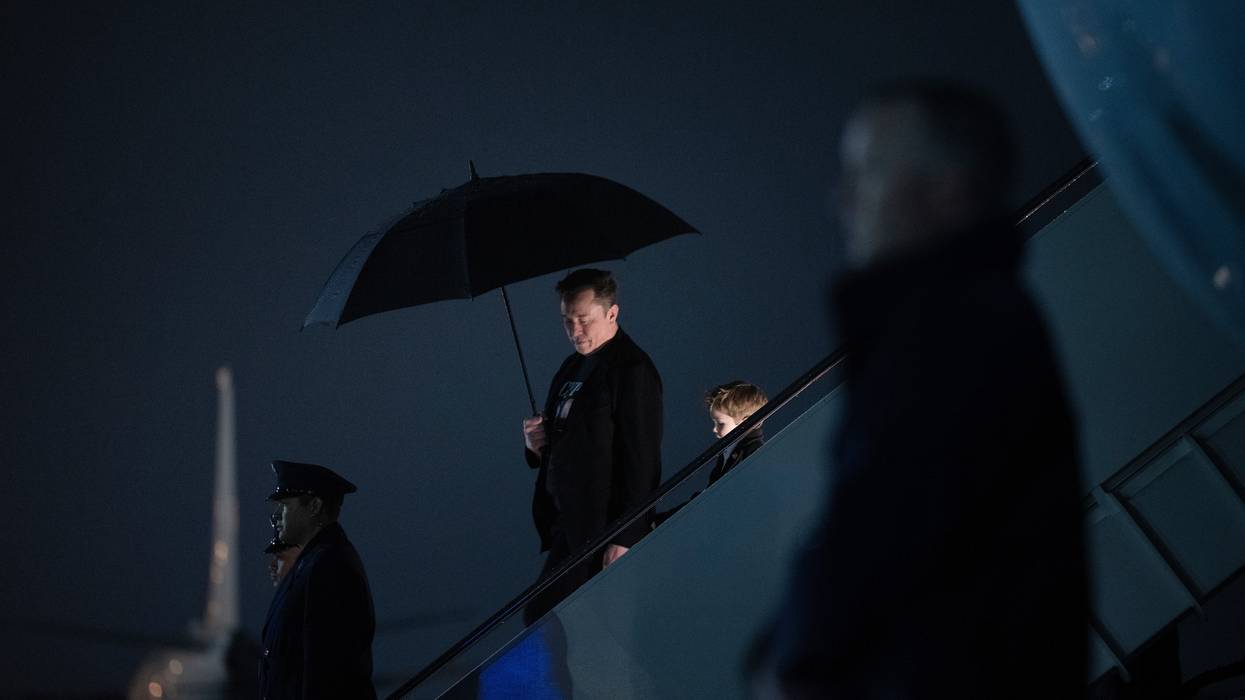
"The public has a right to know that their tax dollars are being spent in the public's best interest and not to benefit a government employee's financial interests," according to a recent ethics complaint filed by the Campaign Legal Center.
The drum beat for a federal probe into whether billionaire and GOP donor Elon Musk violated conflict of interest law through his dealings with the U.S. Federal Aviation Administration is growing louder following reporting that technology from Musk's Starlink, the satellite network developed by its company SpaceX, will be involved in upgrading the FAA air traffic control system.
On Monday, a group of Democratic senators sent a letter to Attorney General Pam Bondi and Acting Inspector General at the Transportation Department, Mitch Behm, demanding an investigation into whether Musk's activities at the FAA have violated the criminal conflict of interest statute. The letter was first reported by The Guardian on Monday.
"We are concerned that Musk... may be using his government role to benefit his own private company," the senators wrote.
The letter, sent by Sens. Chris Van Hollen (D-Md.), Richard Blumenthal (D-Conn.) and Elizabeth Warren (D-Mass.) cites coverage from The Washington Post, which in late February reported that the FAA was considering canceling a $2.4 billion Verizon contract to upgrade the FAA's communication system "that serves as the backbone of the nation's air traffic control system" and award the work to Starlink, citing unnamed sources.
The letter follows an ethics complaint, filed last week by the nonpartisan legal group Campaign Legal Center (CLC) to Behm, also asking for an investigation into whether the FAA's business transactions with Starlink "are improper due to violations of the criminal conflict of interest law."
Both the letter from the Democratic senators and the CLC complaint cite a section of federal statute that prohibits government employees—including special government employees, which is Musk's designation—from "participat[ing] personally and substantially" in any "particular matter[s]" in which the employee, their spouse, their companies, or other business partners have any "financial interest."
"Public reports establish that the FAA began using Starlink services and considering contracts with the company in response to Musk's requests," according to the letter from CLC. "The public has a right to know that their tax dollars are being spent in the public's best interest and not to benefit a government employee's financial interests."
In early February, Musk—who has been deputized by U.S. President Trump to pursue cuts to government spending and personnel—said that his so-called Department of Government Efficiency(DOGE) will "aim to make rapid safety upgrades to the air traffic control system."
According to Bloomberg, a SpaceX engineer arrived at the FAA headquarters in late February to "deliver what he described as a directive from his boss Elon Musk: The agency will immediately start work on a program to deploy thousands of the company's Starlink satellite terminals to support the national airspace system."
"There is no effort or intent for Starlink to 'take over' any existing contract," SpaceX wrote on X in early March. The company said it is working in coordination with another prime contractor for the FAA's telecommunications infrastructure "to test the use of Starlink as one piece of the infrastructure upgrades so badly needed along with fiber, wireless, and other technologies."
Per Bloomberg, the FAA is already testing or actively using multiple Starlink terminals.
The CLC letter argues that reporting provides evidence that "the FAA's business relationship with Starlink is tainted by Musk's influence. Musk is a government official with broad authority who acts with direct support from the president. With this authority and support, he has openly criticized the FAA's contractors while directing the agency to test and use his company's services."
This "establish[es] a possible criminal conflict of interest violation, and an [Office of Inspector General] investigation is needed to determine whether the facts constitute a legal violation," per the CLC letter.
The requests to probe Musk's business connections to the FAA come as the U.S. has dealt with a series of plane crashes and accidents, which in some cases have been deadly, and has invited scrutiny of the country's air traffic control system.
John P. Pelissero, the director of a government ethics program at Santa Clara University, told the Post that it appears that "because of Musk's current position in DOGE and his closeness to Trump he and his company are getting an advantage and getting a contract," speaking of the potential Verizon contract cancellation.
"Who's looking out for the public interest here when you get the person who's cutting budgets and personnel from the FAA, suddenly trying to benefit from still another government contract?" Pelissero said, according to the Post.
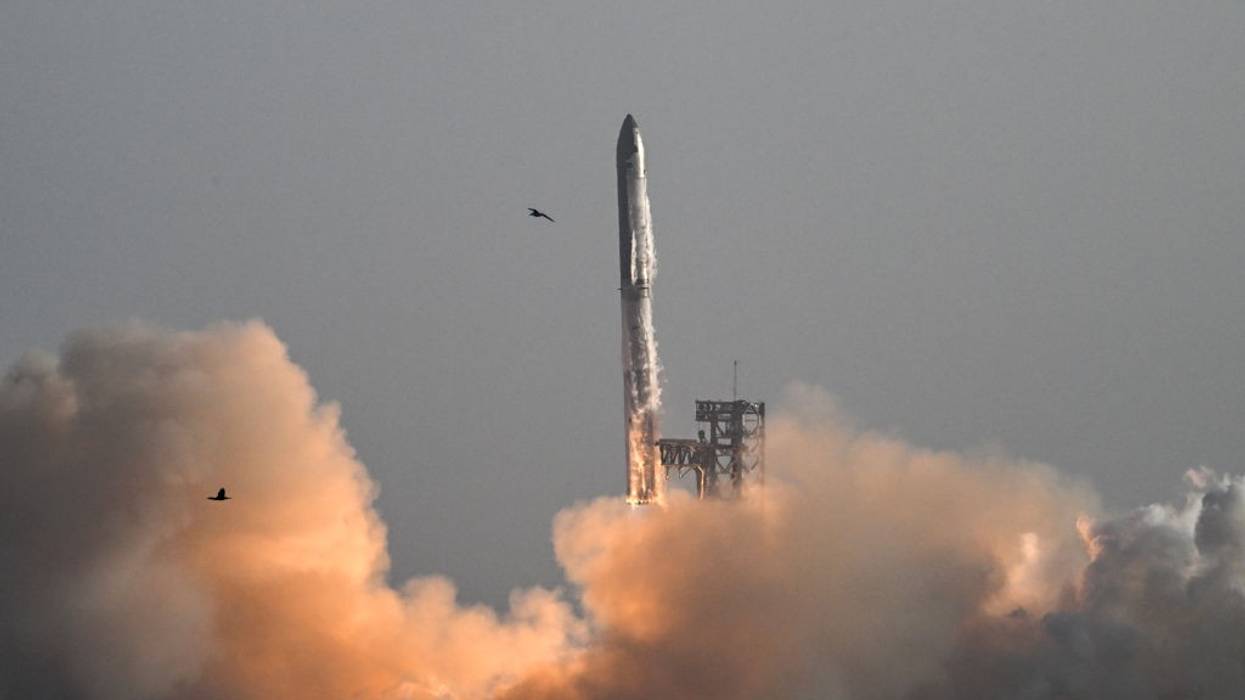
"Really reassuring that the SpaceX guy is taking over the FAA," one observer quipped.
The eighth test launch of SpaceX's Starship, which billionaire CEO Elon Musk claims will be the spacecraft that eventually transports humans to Mars, ended Thursday in much the same way the seventh did: an explosive failure that sent toxic and polluting debris raining down from the sky.
"We are all in the debris field of a SpaceX mishap," remarked journalist Aaron Rupar after the spacecraft exploded just minutes following its lift-off from a launch site in Texas.
Reuters reported that "several videos on social media showed fiery debris streaking through the dusk skies near south Florida and the Bahamas after Starship broke up in space shortly after it began to spin uncontrollably with its engines cut off."
"The back-to-back mishaps occurred in early mission phases that SpaceX has easily surpassed previously, a setback for a program Musk had sought to speed up this year," the news agency added.
Musk, who is leading SpaceX while simultaneously spearheading a lawless effort to eviscerate the federal government and its workforce, wrote on his social media platform following the Starship explosion that "rockets are hard."
Another failed launch by Elon Musks' SpaceX tonight.
Tesla's explodes. Twitter collapses. SpaceX crumbles. Everything Elon Musk touches turns to shit.
Let's call a spade a spade—Musk is a failure.pic.twitter.com/07DscAvPbF
— The Debt Collective 🟥 (@StrikeDebt) March 7, 2025
The explosion forced the Federal Aviation Administration (FAA)—an agency that Musk and his cronies have infiltrated—to suspend air traffic at several Florida airports, citing "space launch debris."
The New York Times reported that falling debris from the Starship explosion impacted flights "as far away as Philadelphia International Airport."
Musk, the world's richest man, has been vocal about wanting SpaceX subsidiary Starlink to take over the FAA's air traffic control system.
Following Thursday's explosion and subsequent flight disruptions, New Yorker staff writer Philip Gourevitch wrote sardonically, "Really reassuring that the SpaceX guy is taking over the FAA."
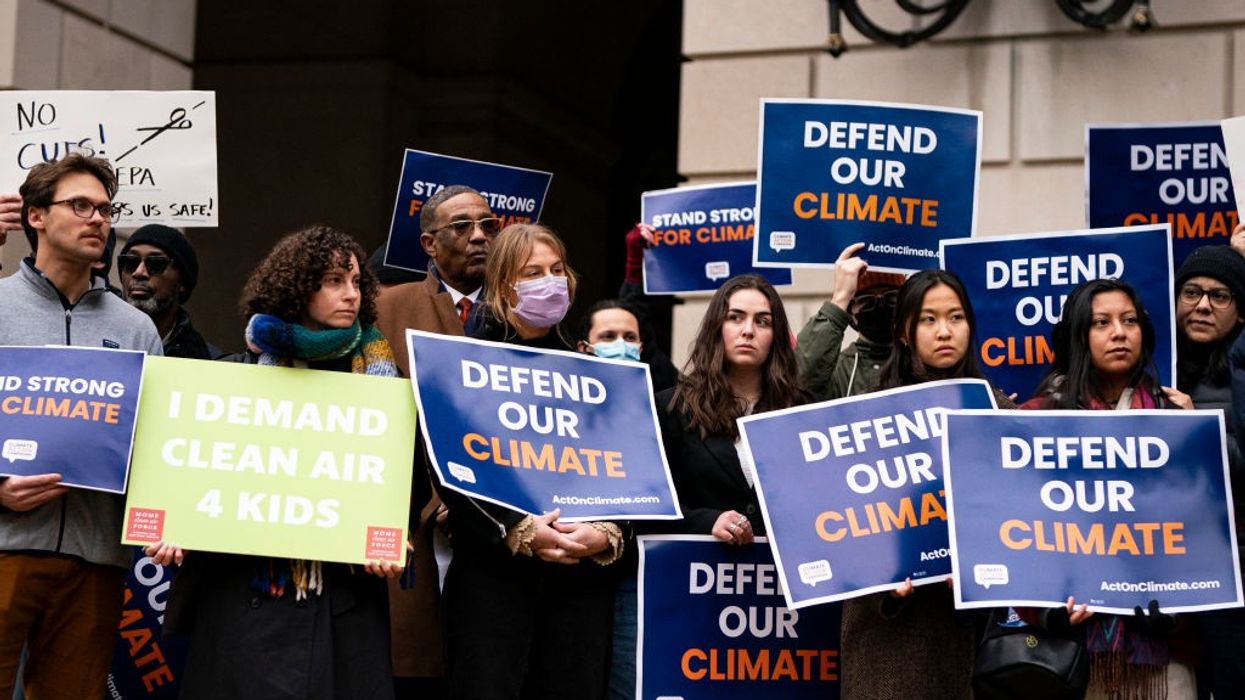
"Musk has shown that he can and will destroy a federal agency in a single weekend," said one advocate. "If his deranged antics are allowed to continue, we might never be able to fix the damage to America's environment."
A leading conservation group filed suit Monday to stop U.S. President Donald Trump and billionaire Elon Musk from "gutting" over a dozen of the federal government's environmental agencies and departments.
This isn't the Center for Biological Diversity's first lawsuit targeting Trump's Musk-led Department of Government Efficiency, but it is the first lawsuit in the country "challenging DOGE's efforts to eviscerate the agencies charged with protecting the environment, natural resources, and wildlife," according to a statement from the group.
The suit names as defendants the Environmental Protection Agency and departments of Agriculture, Commerce, Interior, and Transportation, as well as several entities under them: the Animal and Plant Health Inspection Service, Bureau of Land Management, Bureau of Ocean Energy Management, Federal Aviation Administration, Fish and Wildlife Service, Forest Service, National Oceanic and Atmospheric Administration, and National Park Service.
"The world's richest man has created an alternative power structure inside the federal government for the purpose of controlling spending and pushing out employees."
" Elon Musk and his hacker minions are tearing apart the federal agencies that protect our public lands, keep our air and water clean, and conserve our most cherished wildlife. The public has every right to know why they're waging this cruel war on our environment," said Brett Hartl, the center's government affairs director.
"Musk has shown that he can and will destroy a federal agency in a single weekend," Hartl added. "If his deranged antics are allowed to continue, we might never be able to fix the damage to America's environment."
The suit alleges "a flagrant violation of the Federal Advisory Committee Act (FACA), which requires transparency, open public participation, and balanced representation when the president or executive branch agencies establish or use nonfederal bodies for the purpose of seeking advice or recommendations."
Trump's executive order establishing DOGE directs all agencies to form teams, or what FACA calls advisory committees, controlled by Musk. The complaint argues that "defendants have failed to ensure that the DOGE teams comply with the balance and openness requirements of FACA."
"Mr. Musk and other billionaire and tech executives working with DOGE stand to benefit personally and financially from the DOGE teams' work, including by securing government contracts, slashing environmental rules that apply to their companies, and reducing the government's regulatory capacity and authority, including by targeting specific agencies, statutes, and spending decisions that affect their businesses," the filing warns.
The complaint notes recent reporting that "Musk is using his influence over the DOGE teams to rapidly consolidate control over large swaths of the federal government, sideline career officials, gain access to sensitive databases, and dismantle agencies and regulatory systems."
"Since President Trump assumed office—and without any congressional approval—the world's richest man has created an alternative power structure inside the federal government for the purpose of controlling spending and pushing out employees," the document adds. "Meanwhile, Musk has been named as a special government employee, which subjects him to less stringent rules on ethics and financial disclosures regarding his role overseeing DOGE and the DOGE teams."
The new case calling on the court to require compliance with FACA comes after the center filed another federal suit in Washington, D.C. last Thursday with the aim of using the Freedom of Information Act to unveil details about what Hartl said "should be called the Department of Government Evisceration."
It also follows U.S. Rep. Gerry Connolly (D-Va.), ranking member of the House Committee on Oversight and Government Reform, launching a probe last month into Musk's official title. The congressman demanded answers from the White House by this coming Thursday.
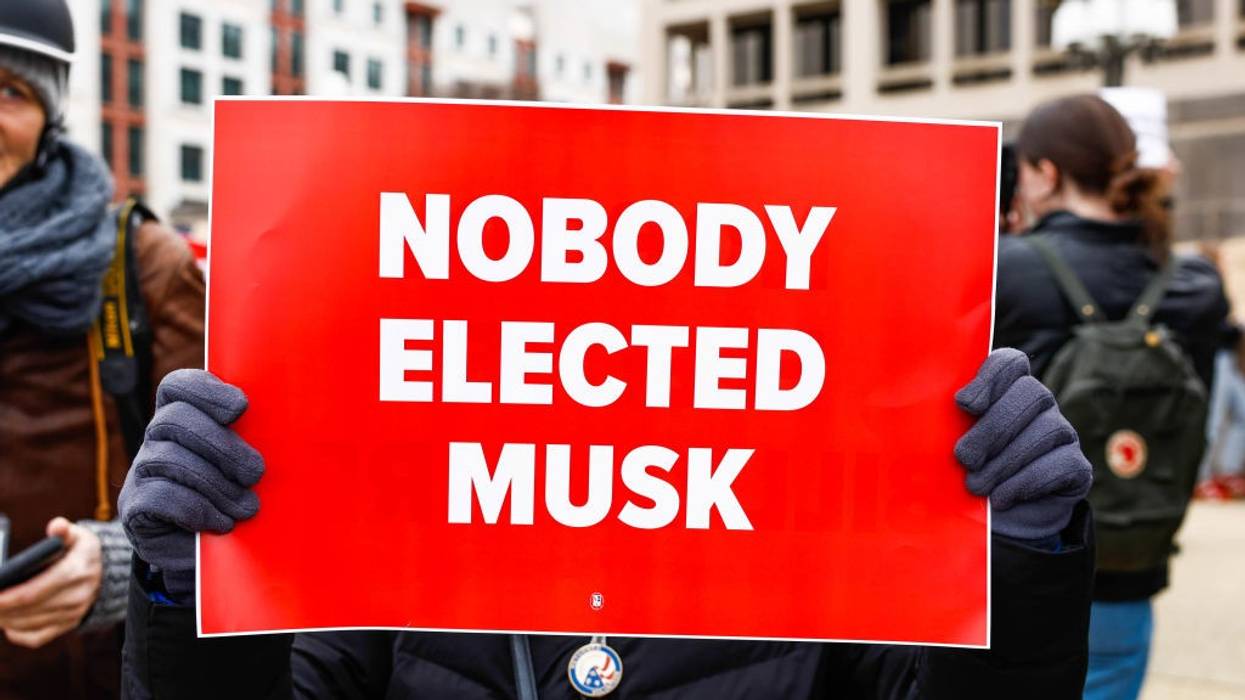
As Elon Musk destroys the federal labor force, a simple question emerges: Who voted for this?
When U.S. President Trump and Elon Musk shut down the United States Agency for International Development, or USAID, they hit MAGA farmers’ pocketbooks. American farmers provide more than 40% of the food aid that USAID and the U.S. Department of Agriculture send throughout the impoverished world—$2.1 billion in 2020.
“USAID plays a critical role in reducing hunger around the world while sourcing markets for the surplus foods America’s farmers and ranchers grow,” according to the senior director of government affairs at the American Farm Bureau Federation.
But Elon Musk declared—without evidence—that USAID is a “criminal organization.” He is proud to have spent a weekend “feeding USAID into the wood chipper,” telling thousands of employees that they no longer had jobs. Farmers learned that a critical market for their product had now disappeared.
As the consequences of the Trump administration’s incompetence ripple through the country, even the most dedicated MAGA supporter will actually feel the impact personally.
North Carolina—a Trump stronghold—was one of the top recipients of USAID dollars.
“I will be very blunt. The freeze has been devastating,” according to the executive director of the North Carolina Global Health Alliance. “Already we are seeing mass furloughs and mass layoffs. Hundreds of people have already lost their jobs…” The impact “will reach people in every corner of our state.”
Michigan is home to a large number of traditionally Democratic Palestinians who sat out the 2024 election, cast ballots for third-party candidate Jill Stein, or voted for Trump. They believed that the Biden administration was too gentle with Israel and too dismissive of their concerns about Gaza’s ongoing destruction. Apparently, they thought that Trump would do better.
It was magical thinking.
A week after Trump was sworn into office, he signed an executive order to “Combat Antisemitism.” Among other provisions, it calls for canceling student visas of foreign students who participated in pro-Palestinian demonstrations.
And now Trump—who views the world in potential real estate development terms—has called for ethnic cleansing. That war crime is the only path to his desired conversion of Gaza into the “Riviera of the Mideast.” Israel’s prime minister, Benjamin Netanyahu—who is on trial, hoping to avoid prison, and trying to save his political skin—is all for Trump’s plan.
After three significant airline crashes in the month since Trump took office, Musk’s response has been to fire hundreds of Federal Aviation Administration (FAA) employees who worked as maintenance mechanics, aeronautical information specialists, environmental protection specialists, aviation safety assistants, and management and program assistants.
Another 1,000 employees, including rocket scientists, are scheduled for termination at the National Aeronautics and Space Administration (NASA).
Musk’s company, Space X, gets its mission approvals from the FAA.
The Trump administration scrambled to undo the termination notices that went to more than 300 employees at the agency responsible for managing America’s nuclear weapons.
According to CNN, “Some of the initially fired employees included NNSA staff who work at facilities where nuclear weapons are built, oversee contractors who build nuclear weapons and who are responsible for inspecting those weapons. Many of the employees affected hold a ‘Q’ security clearance within the Energy Department, meaning they have access to nuclear weapons design and systems. It also included employees at NNSA headquarters who write requirements and guidelines for contractors who build nuclear weapons.”
The Trump administration fired more than 1,000 employees at the Veterans Administration.
The Trump administration fired 3,000 U.S. Forest Service employees.
The Trump administration began the process of dismantling the Consumer Financial Protection Bureau (CFPB)—until a federal court stopped that effort. An unknown number of terminations is planned for the Federal Deposit Insurance Corporation (FDIC), which oversees banks. Apparently, no one in Trump’s circle remembers the bank-related financial crash of 2008.
The Trump administration has slated 7,500 Internal Revenue Service employees for termination.
Hundreds of employees are set for termination at the Department of Homeland Security (DHS) and the Federal Emergency Management Agency (FEMA).
The Trump administration fired more than 1,000 workers at the National Institutes of Health (NIH), as well as an unknown number at the Food and Drug Administration (FDA)—including staff members involved in reviewing Musk’s brain implant company, Neuralink. Another 1,300 CDC employees got the ax—including a group responsible for training public health laboratory staffers and supporting outbreak response efforts.
And all of that is just the tip of an ugly and growing iceberg that already includes thousands of employees: FBI agents, prosecutors, investigators, and other Justice Department personnel; 19 inspectors general—watchdogs who assured agency accountability; the Department of Education; the General Services Administration; and anyone connected to diversity, equity, or inclusion (DEI).
Just wait until Trump’s clown car of cabinet members begins asserting itself:
Robert F. Kennedy Jr., who has spent his adult life opposing vaccines, is now in charge of vaccines;
Tulsi Gabbard, who has consistently spouted Vladimir Putin’s talking points, is in charge of national intelligence;
Pete Hegseth, who is now the ultimate poster child for on-the-job training, is trying to run the 2.2 million-member Defense Department.
And orchestrating the decimation of the federal workforce is Elon Musk, whose conflicts of interest are staggering.
As the consequences of the Trump administration’s incompetence ripple through the country, even the most dedicated MAGA supporter will actually feel the impact personally. And then the answer will finally become clear:
No one voted for this.