
SUBSCRIBE TO OUR FREE NEWSLETTER
Daily news & progressive opinion—funded by the people, not the corporations—delivered straight to your inbox.
5
#000000
#FFFFFF
To donate by check, phone, or other method, see our More Ways to Give page.


Daily news & progressive opinion—funded by the people, not the corporations—delivered straight to your inbox.
"The farmer shouldn't be penalized for this unfortunate and unique situation," said John Stock of the Ohio Ecological Food and Farm Association. "It's going to have an impact on these farms, and it's a reality that impacts all of us."
Just over a month after a Norfolk Southern train derailed in near the Ohio-Pennsylvania border, a trio of U.S. senators on Wednesday wrote to a pair of Biden administration leaders that "we are hearing from farmers and agricultural producers who are concerned about the impacts of the derailment and associated release of hazardous materials on their livelihoods."
After train cars derailed and caught fire in East Palestine, Ohio on February 3, the rail giant conducted a controlled release of vinyl chloride to prevent an explosion. The U.S. Environmental Protection Agency on February 21 ordered Norfolk Southern to identify and clean up contaminated soil and water; facing local pressure, the EPA on Friday told the company to test for dioxins, while maintaining the position that based on agency testing, it is unlikely those toxic chemical compounds were released.
"Dioxins are some of the most potent carcinogens on Earth—there's no 'safe' dose for humans, and pregnant women and young children are especially vulnerable to their effects," Judith Enck, a former EPA regional administrator now on the Bennington College faculty and president of the group Beyond Plastics, noted in a New York Times opinion piece Wednesday. In addition to cancer, dioxins—which persist in the environment for long periods—are tied to developmental, reproductive, and immune system issues.
However, so far, despite fears of various pollutants, neither the EPA nor the U.S. Department of Agriculture (USDA) "or any other federal or state agencies have provided clear guidance to either our agricultural producers in the region or consumers of those products," according to the letter from Sens. Sherrod Brown (D-Ohio), Bob Casey (D-Pa.), and John Fetterman (D-Pa.).
"As these farmers prepare for planting and marketing efforts, they are left wondering what impacts the derailment and chemical release will have on the safety of their products and the viability of their farms."
"The 2023 planting season is quickly approaching, followed by spring harvest of overwintered crops, such as alfalfa and winter wheat, that are typically sold as feed to dairies in the region," they wrote to EPA Administrator Michael Regan and Secretary of Agriculture Tom Vilsack. "As these farmers prepare for planting and marketing efforts, they are left wondering what impacts the derailment and chemical release will have on the safety of their products and the viability of their farms."
"Producers are concerned not only over the lack information about the safety of their crops and livestock but also whether they will be able to market them due to market and consumer concerns about the safety of their products," the senators continued, noting that "farmers in the region are already reporting receiving requests to cancel orders due to these very concerns."
The lawmakers are calling on the EPA and USDA to work with state agricultural departments and academics to provide farmers with relief, including the rapid deployment of resources for "any necessary testing of their soils, plant tissue, and livestock and to interpret the results of those tests as they pertain to the safety and marketability of their crops and products."
Given that some consumers will likely be nervous about buying from the region regardless of test results, the senators are also requesting a review of disaster assistance that can be deployed as well as technical assistance for language to include in the next farm bill to expand aid for "producers who have been impacted by man-made disasters, including chemicals spills."
Alarm about the pontential impact on local farming as well as criticism of how Norfolk Southern and various government figures and agencies have handled the environmental and public health disaster have mounted since the derailment last month.
"I have a part ownership in a farm, so I'm concerned about that," Eloise Harmon, of East Palestine, told WHIO on Friday. "The soil at the farm: Can we plant? Can we not plant? Will anybody buy it, if we do plant?"
"We could, of course... probably go find some grass somewhere else, but why should we have to because of something that was not our fault?"
Rachel Wagoner—whose family's Tall Pines Farms in Darlington, Pennsylvania specializes in grass-fed beef and lamb—told WTEA in late February that "it feels like you don't have a lot of options, so you've just gotta deal with it."
"In farming, you're tied to the land," she said. "We could, of course... probably go find some grass somewhere else, but why should we have to because of something that was not our fault?"
Since the train derailed just a few miles away, the family has not had any issues with their animals. Wagoner said that "it's been fairly normal, which feels sort of weird for how everyone in the community is experiencing things."
However, Wagoner—like so many other farmers and other residents of the region—is worried about pollutants including dioxins. She also expressed frustration with the difficulty in accessing information, including about testing.
If soil testing reveals contaminants, "the door opens to another question," as Lancaster Farming pointed out Friday:
"What happens is these people can no longer make a living from that farm. Will these farms be bought out at a fair price?" asked John Stock, sustainable agriculture educator with the Ohio Ecological Food and Farm Association. "It would be great to have transparency with testing, but a lot of farms don't have a baseline for these contaminants."
If airborne contaminants are found in a soil test, Stock said it's unlikely the finding would jeopardize organic certification standards. The farmer didn't intentionally apply the contaminants, he said, and the occurrence was out of their control.
As for contaminated water used for irrigation, Stock said an affected farmer may have to change water sources or use filtration.
"The farmer shouldn't be penalized for this unfortunate and unique situation," Stock said. "It's going to have an impact on these farms, and it's a reality that impacts all of us."
Another issue is a lack of trust. Slate's Ellin Youse, who grew up not far from the derailment site, explained Tuesday that "so many people affected by this accident feel distrust toward the agencies in charge of dealing with the situation, toward the transportation companies responsible, and toward the national reporters who only seem to come around for close national elections and disasters, that it quickly felt almost impossible to communicate accurately."
After speaking with Jason Blinkiewicz, who owns a trucking company and repair shop just over a mile from where the train derailed, Grist's Eve Andrews wrote last week that "he, like most of his neighbors and employees, doesn't trust Norfolk Southern and assurances from the Environmental Protection Agency that the air and water have been safe to breathe and drink."
According to Andrews:
"It's normalized to some degree because there's already low air quality in the area," Blinkiewicz said. "The cracker plant is putting out volatile organic compounds, or what's the nuclear power plant doing, or how about the coal plant right behind it that they shut down not that long ago? What about the mills in Midland and the steel plant in Koppel?"
But all of those facilities are far enough from Blinkiewicz's home and workplace that he hasn't felt their impacts nearly as acutely as those of the derailment. "I think it's the first time, in my 46 years on this planet, in this area, that it gives you an uneasy feeling about everything," he said.
"And as much as it pains me to say, my trust has to lie in our government. Which is hard to do, right? But we have to rely on those government agencies to protect us. That's what they're there for."
The EPA administrator said Friday that "over the last few weeks, I've sat with East Palestine residents and community leaders in their homes, businesses, churches, and schools. I've heard their fears and concerns directly, and I've pledged that these experiences would inform EPA's ongoing response efforts."
"In response to concerns shared with me by residents, EPA will require Norfolk Southern to sample directly for dioxins under the agency's oversight and direct the company to conduct immediate cleanup if contaminants from the derailment are found at levels that jeopardize people's health," Regan continued. "This action builds on EPA's bipartisan efforts alongside our local, state, and federal partners to earn the trust of this community and ensure all residents have the reassurances they need to feel safe at home once again."
The EPA's statement added that the agency "will also continue sampling for 'indicator chemicals,' which based on test results to date, suggest a low probability for release of dioxin from this incident."
As The Washington Post reported:
Asked why EPA is delegating dioxin testing to Norfolk Southern, as opposed to conducting the sampling itself, agency officials said the railroad is required to submit its plans to the government and that EPA can modify them or step in and complete the work itself...
Railroad officials said in a statement Friday they are aware of EPA's directive on dioxin testing and "are committed to working with the agency to do what is right for the residents of East Palestine."
"We will continue to listen to the concerns of the community as restoration work moves forward," the statement continued.
It was not immediately clear how widely the railroad would be required to test for dioxins. EPA officials said more details would become available once the railroad submits its work plans.
In her piece for the Times, Enck argued that the EPA "should have ordered comprehensive testing the very day of the burn. It should have told residents, especially pregnant women and families with young children, not to return home until it was safe to do so. Instead, it timidly stood back, leaving local authorities, corporate interests, and rumors to fill the void."
Now, the EPA "needs to conduct comprehensive environmental testing for dioxins in and around East Palestine," wrote Enck, who was a regional director during the Obama administration. The agency also "needs to establish federally funded medical monitoring for everyone along the plume. Even those who appear healthy now should be offered baseline testing."
Additionally, she said, "for effective enforcement of our environmental laws, Congress needs to approve more funding for this crucial agency."
"This will have a tremendous impact on our struggle here," said one local activist. "Over the six years we have been fighting this fight we haven't had anything as great as this to happen in terms of getting concrete action on emissions."
The Biden administration on Tuesday sued two corporations behind a petrochemical plant in Louisiana, arguing that the facility poses "unacceptably high cancer risks" to the low-income and predominantly Black residents of nearby communities and demanding significant cuts in toxic pollution.
On behalf of the U.S. Environmental Protection Agency (EPA), the U.S. Department of Justice (DOJ) filed a complaint asserting that carcinogenic chloroprene emissions from Denka Performance Elastomer's neoprene manufacturing activities at the Pontchartrain Works Site in St. John the Baptist Parish "present an imminent and substantial endangerment to public health and welfare."
Under Section 303 of the Clean Air Act, the DOJ asked the U.S. District Court for the Eastern District of Louisiana to compel Denka, a Japanese company that purchased the plant from DuPont Specialty Products in 2015, to "immediately reduce its chloroprene emissions to levels that no longer cause or contribute to unacceptably high cancer risks within the communities surrounding the facility."
The White House's lawsuit stems from an emergency action petition that Earthjustice and the Lawyers' Committee for Civil Rights Under Law submitted on behalf of Concerned Citizens of St. John, a local advocacy group.
Earthjustice attorney Deena Tumeh welcomed the Biden administration's intervention as "a long-awaited answer to the community's repeated calls for immediate action."
"EPA is finally treating this health crisis for what it is—an emergency," said Tumeh. "We hope this complaint will lead to a swift and significant reduction in chloroprene emissions."
"We are grateful that the EPA is finally taking the first steps to protect this community. For too long, St. John has been failed by every layer of government and we are now facing a dire health emergency and the highest cancer risk from air pollution in the nation as a result."
Denka makes neoprene, a synthetic rubber used to produce wetsuits, orthopedic braces, automotive belts, and other common goods, at the plant. Chloroprene, a chemical used to produce neoprene, is emitted into the air at the facility in LaPlace and travels to other towns in the parish, including Reserve and Edgard. Pontchartrain Works Site is the only place in the U.S. where the compound is emitted.
Average chloroprene concentrations in the air near the facility are up to 14 times higher than the levels recommended for a 70-year lifetime of exposure to the chemical, according to monitoring data cited in the complaint. More than 15,000 people live within two-and-a-half miles of the plant. Fifth Ward Elementary School is located a half-mile west and East St. John High School is about a mile-and-a-half north.
"In the aggregate, the thousands of people breathing this air are incurring a significantly higher cancer risk than would be typically allowed, and they are being exposed to a much greater cancer risk from Denka's air pollution than the majority of United States residents face," says the complaint. The risk "is especially grave for infants and children under the age of 16."
Noting that the DOJ's "environmental justice efforts require ensuring that every community, no matter its demographics, can breathe clean air and drink clean water," Associate Attorney General Vanita Gupta said in a statement that "our suit aims to stop Denka's dangerous pollution."
Robert Taylor, director of Concerned Citizens of St. John, said in a statement, "We are grateful that the EPA is finally taking the first steps to protect this community."
"For too long, St. John has been failed by every layer of government and we are now facing a dire health emergency and the highest cancer risk from air pollution in the nation as a result," said Taylor. "EPA must continue to advance environmental justice, as promised."
EPA Administrator Michael Regan reiterated the agency's commitment to doing so, describing Tuesday's move as an escalation in an ongoing fight launched after he spent five days visiting heavily polluted Gulf Coast communities in 2021.
"When I visited Saint John the Baptist Parish during my first Journey to Justice tour, I pledged to the community that EPA would take strong action to protect the health and safety of families from harmful chloroprene pollution from the Denka facility," Regan said in a statement. "This complaint filed against Denka delivers on that promise."
"The company has not moved far enough or fast enough to reduce emissions or ensure the safety of the surrounding community," said Regan. "This action is not the first step we have taken to reduce risks to the people living in St. John the Baptist Parish, and it will not be the last."
As The Associated Press reported: "The complaint is the latest move by the Biden administration that targets pollution in an 85-mile stretch from New Orleans to Baton Rouge officially known as the Mississippi River Chemical Corridor, but more commonly called Cancer Alley. The region contains several hot spots where cancer risks are far above levels deemed acceptable by the EPA. The White House has prioritized environmental enforcement in communities overburdened by long-term pollution."
Last year, EPA concluded that Black residents of St. John the Baptist Parish are disproportionately harmed by toxic air pollution after Concerned Citizens of St. John and the Sierra Club accused the Louisiana Department of Environmental Quality and the Louisiana Department of Health of violating Title VI of the Civil Rights Act of 1964 by failing to equally protect people of color. EPA is currently pursuing an agreement with the two state agencies, which have denied the allegations.
"This is a positive move in the right direction... This brings us hope. It's been a long time coming. We need action now for our children and want this to be put in place immediately."
Denka, which has lobbied the federal government for years in a bid to undermine peer-reviewed research revealing the cancer-causing properties of chloroprene, claimed Tuesday in a statement that it "is in compliance with its air permits and applicable law."
"EPA is taking an unprecedented step—deviating from its permitting and rulemaking authorities—to allege an 'emergency' based on outdated and erroneous science the agency released over 12 years ago," the Japanese petrochemical firm said.
Tuesday's lawsuit also names DuPont, which built the Pontchartrain Works Site in the 1960s and produced neoprene there for more than 50 years. The U.S.-based petrochemical giant still owns the land beneath the facility. As Denka's landlord, DuPont may need to provide "permission or cooperation to comply with the court's orders," says the complaint.
As The Guardian reported, "DuPont sold the plant to Denka in 2015 in a secretive deal, which The Guardian later revealed was motivated by concerns from DuPont that it would face heavier regulation after the EPA's decision to classify chloroprene as a likely human carcinogen."
EPA is expected to propose a new rule for chloroprene emissions on March 31, according to Earthjustice, which said the agency has not updated the rule since it determined in 2010 that the compound is a likely carcinogen capable of causing irreversible damage to people's nervous, cardiovascular, gastrointestinal, and immune systems.
Speaking to The Guardian about Tuesday's lawsuit, Taylor from Concerned Citizens of St. John said: "This will have a tremendous impact on our struggle here. Over the six years we have been fighting this fight we haven't had anything as great as this to happen in terms of getting concrete action on emissions."
"The state government has totally ignored us—marches on the capitol, rallying—they wouldn't even give us an audience," he added. "And for the administration to come in and do this, it just validates our efforts."
The group's president, Mary Hampton, echoed that sentiment.
"This is a positive move in the right direction," Hampton said in a statement. "This brings us hope. It's been a long time coming. We need action now for our children and want this to be put in place immediately."
Calling a planned petrochemical manufacturing complex in Louisiana's "Cancer Alley" a "textbook case of environmental racism," 175 organizations from around the world sent a letter to financial institutions Tuesday urging them not to fund, underwrite, or invest in the project, which could cost up to $12 billion.
"Formosa Plastics will destroy our land, our homes, and the lives of our community. We're saying enough is enough, and we're standing up for a better, cleaner future for ourselves and our children."
--Sharon Lavigne,
RISE St. James
The letter--led by the faith-based grassroots group RISE St. James--says that Taiwan-based Formosa Plastics Group's 2,400-acre Sunshine Project, which is slated to be built in a vulnerable floodplain amid intensifying climate-driven hurricanes and tropical storms,"presents an unnecessary burden for our already-polluted community."
"We are fighting to protect ourselves from Formosa Plastics' disastrous environmental and human-rights record in the United States and around the world," the letter states.
Residents of St. James Parish--nearly half of whom are Black--and environmental advocates strongly oppose the plant, which, if built as planned, will release carcinogenic chemicals and, according to one environmental watchdog, produce 13.6 million tons of planet-heating emissions annually.
Formosa Plastics has also come under fire for failing to follow through on a promise to alter the plant's layout to lessen the exposure of nearby residents and schoolchildren to toxins, and for its failure to notify the community of the discovery of a burial ground for enslaved Black people.
St. James Parish sits in the middle of an 85-mile stretch along the Mississippi River between New Orleans and Baton Rouge known as Cancer Alley or Death Alley due to its nearly 150 oil refineries and plastics and chemical plants.
According to data from the U.S. Environmental Protection Agency (EPA), the cancer risk in predominantly Black areas of St. James Parish is as high as 105 per million, compared with 60 to 75 cases per million in majority white areas. The EPA's Risk-Screening Environmental Indicators database reported an 800% cancer hazard increase due to petrochemical facilities in the parish between 2007 and 2018.
The Sunshine Project has drawn the attention and condemnation of environmental and racial justice groups, United Nations human rights experts, progressive lawmakers, and others. Last month, Democratic U.S. Reps. Raul Grijalva (Ariz.) and Donald McEachin (Va.) urged President Joe Biden to deliver on his campaign promises to reduce pollution in frontline communities by blocking the project.
Signatories of the RISE St. James letter urged banks and asset managers to avoid financing, underwriting, or investing in Formosa Plastics projects, and to divest from the "serial environmental offender."
The letter continues:
In the context of the Covid-19 pandemic, Formosa Plastics' plan to construct a facility that would double or triple the toxic levels of cancer-causing pollutants in communities in St. James Parish represents a stunning, potentially devastating increase in our community's environmental burden. In addition to elevating residents' risk of cancer, asthma, and other serious diseases, this increase in toxic air pollution places residents at a higher risk from respiratory infections including a higher risk of death from Covid-19.
Study after study has demonstrated inextricable links between air pollution exposure and Covid-19 death rates. As of July 2020, three out of Louisiana's five parishes with the highest Covid-19 death rates were located in Cancer Alley, including St. James Parish, with averages up to 3.8 times the state's median. Our community simply cannot afford more air pollution--our survival depends on it.
It notes that Formosa Plastics has been hit with over $650 million in fines and penalties for violations at more than a dozen facilities around the world, including a 2016 spill of cyanide and other deadly chemicals that devastated marine life and livelihoods along a 125-mile stretch of the central Vietnamese coast--the country's worst-ever environmental catastrophe.
"High-profile disasters have caused at least two dozen deaths, dozens more injuries, and tens of thousands of disrupted lives and livelihoods from evacuations, shelter in place orders, and long-lasting damage to ecosystems that communities depend on," Tuesday's letter states.
The letter urges its recipients to follow the examples of financiers and entities like Norway's Sovereign Wealth Fund that have divested from or rejected investment in Formosa Plastics.
"Formosa Plastics is not welcome by the local people of St. James," the letter declares. "We want clean air, water, and soil. It is incumbent on any responsible corporation to listen to our community and cease all business relationships with Formosa Plastics Group and its constituent entities, to avoid any association with the severe and unjust impacts its operations would have on us."
Sharon Lavigne, founder and president of RISE St. James, said in a statement that "Formosa Plastics will destroy our land, our homes, and the lives of our community. We're saying enough is enough, and we're standing up for a better, cleaner future for ourselves and our children."
"Banks shouldn't finance this level of pollution," she added, "and if they want to show that they can be responsible then they need to say no to Formosa."
Shut up and let corporate America--and also, for that matter, corporate Taiwan--get on with its business. We have ethane to crack and plastic to produce. We dare not let America run out of shopping bags!
Environmental racism? Don't be ridiculous.
This is the message the activists of Louisiana's "Cancer Alley"--a heavily industrialized, 85-mile strip of land along the Mississippi River, between New Orleans and Baton Rouge--have gotten from the local powers that be regarding their determination to prevent the construction of a gigantic, highly toxic, 14-plant plastics-production complex in their midst.
The plant would be built by Formosa Plastics, a Taiwanese company, in St. James Parish, one of the Louisiana River Parishes, a low-income, primarily black community that already has far more than its share of industrial pollution. Hence the name: Cancer Alley. The proposed facility, which Formosa calls the Sunshine Project (named after a local bridge), would be one of the largest plastics plants in the world. It has been given both state and local approval--after all, it represents an investment of $9.4 billion--so it's up to the residents to fight back on their own to save their community.
This has been the work of a group of local residents called RISE St. James, which has been pushing back against the project with the help of various environmental organizations, including the Center for Biological Diversity, which filed a federal lawsuit against Formosa Plastics and has managed to put a temporary halt on construction.
According to the Center: "The permit allows Formosa to release thousands of tons of toxic air pollutants every year, more than doubling the air pollution for all industrial facilities in an area already known as 'Cancer Alley' because of health problems related to industrial pollution. Formosa could also emit up to 13 million tons of greenhouse gases annually, the equivalent of three coal-fired power plants."
The project would double the amount of toxic air emissions in St. James Parish and more than triple the levels of cancer-causing chemicals in the region, the Center points out, noting: "Among the pollutants the Formosa Plastics complex would emit are ethylene oxide, benzene and formaldehyde--all known carcinogens."
The plant would be built about a mile from a local elementary school. And, complicating the horror of this proposal, part of the land it would occupy is the site of an old cemetery--for slaves, who labored on a nearby plantation. And the irony doesn't stop there.
As change.org points out, while Formosa Plastics enticingly claims that the new plant will create thousands of jobs, the company plans to build dormitories to house out-of-state workers. Thus: "It is obvious that St. James residents will get the pollution, but not the jobs."
And finally, in the realm of irony: The country of Taiwan has tightened regulations on petrochemical companies, according to Bloomberg News, forcing Formosa Plastics to look elsewhere to satisfy its expansion needs. The company chairman has said his company can save a lot of money "by investing in Texas and Louisiana rather than at home. A ton of ethylene costs $300 to make in the U.S., about a third of the cost in Taiwan. And officials are more amenable in the U.S. . . . 'In Taiwan the government treats petrochemical investment as a polluting industry and stigmatizes us.'"
Local activist Anne Rolfes put it this way: "They are looking at us as a colony."
And all this is just one aspect of the fossil fuel industry's enormous "plastic pivot," as the New York Times put it. The industry, fearing a steep decline in demand for fossil fuels because of the nuisance of climate change, sees the production of plastic, out of its enormous fossil fuel reserve, as its future, even if, in fact, it hastens the destruction of everyone's future.
"Formosa's project is part of the industry's plan to steeply increase U.S. plastic production over the next decade," according to the Center for Biological Diversity. "More than 300 new petrochemical industry projects have been proposed since 2010, most of them in poor communities and communities of color along the Gulf Coast and in Appalachia."
And producing plastic causes environmental hell at both ends of the process: The air and water permit, which the state of Louisiana granted to Formosa, is "a poisoning permit," as RISE St. James founder Sharon Lavigne told me. And on the post-production side of the issue, plastic . . . ahem, NEVER GOES AWAY. Plastic residue--our millions of tons of primarily single-use plastic--along with microplastics, or nurdles, the tiny pellets used to make plastic products, are choking and killing our rivers, lakes and oceans.
For instance: "Formosa's proposal will create more unneeded plastic, which is the most common type of marine pollution. Unless we stop building plants like the proposed Formosa project, plastic is expected to outweigh all the fish in the world's oceans by 2050," as change.org points out.
But those who speak up about this are the ones who get in trouble. Rolfes and her fellow activist, Kate McIntosh, were arrested several months ago after they left a box of nurdles, gathered from the Texas coast, at the home of an oil and gas lobbyist in Baton Rouge. The gathering of the microplastic pellets was part of an awareness-raising event held last December called "Nurdlefest."
And Lavigne was also threatened with arrest when she laid flowers on the slaves' cemetery grounds that Formosa intends to dig up. She vowed she would not be silenced. This is life in Cancer Alley these days.
After examining drinking water contaminants using a more complex method than the U.S. government uses to assess risks, scientists revealed Thursday that they found carcinogenic elements and chemicals in water could cause 100,000 cancer cases over a lifetime.
In a study published in the journal Heliyon, researchers at the Environmental Working Group (EWG) revealed that the cumulative effects of multiple contaminants can render drinking water unsafe even after its contamination levels are below the legal limit.
"The vast majority of community water systems meet legal standards," said Dr. Olga Naidenko, vice president for science investigations at EWG. "Yet the latest research shows that contaminants present in the water at those concentrations--perfectly legal--can still harm human health."
The scientists studied more than 48,000 water systems across the U.S., finding that naturally occurring arsenic, byproducts of chemicals used to disinfect water, and radioactive elements including radium and uranium were the most frequently detected contaminants in water that serves million of Americans.
The study was released a week after President Donald Trump's EPA rolled back an Obama-era regulation on water pollution, in a move the watchdog group Food & Water Watch said was designed to "create a safe haven for agrochemical industrial interests against the wellbeing of public and environmental health."
While the government assesses water quality by examining contaminants individually, EWG determined that in various combinations, a total of 22 carcinogens could be causing thousands of cancer cases over the course of 70 years--the timeframe the U.S. government uses to determine calculated cancer risk over a statistical lifetime.
"In the real world, people are exposed to combinations of chemicals, so it is important that we start to assess health impacts by looking at the combined effects of multiple pollutants," Sydney Evans, lead author of the study, said in a statement.
The cumulative approach to assessing cancer risks from contaminants is already applied to the government's assessment of air pollution, EWG said.
Another recent study by EWG found that California's drinking water could cause more than 15,000 cancer cases in the state.
While the vast majority of cancer cases in the U.S. are not linked to drinking water contamination, carcinogens in water are linked to a high percentage of cancer cases caused by environmental factors, Naidenko told The Guardian.
"We need to prioritize source water protection, to make sure that these contaminants don't get into the drinking water supplies to begin with," Naidenko said in a statement.
EWG offers a database on its website which allows users to see the contamination and risk levels in drinking water in their communities.
More than 100 environmental groups and over 800 concerned citizens sent a letter on Monday urging Pennsylvania Gov. Tom Wolf to investigate the link between fracking and growing cancer diagnoses, citing recent reports of rare forms of childhood cancer emerging in counties located near fossil fuel development projects.
The letter (pdf), which calls on Wolf to suspend drilling permits until a thorough investigation is conducted, comes after the Pittsburgh Post-Gazette documented nearly 70 cases of childhood and young adult cancer diagnoses in rural Pennsylvania counties.
"This is a public health crisis that requires immediate and significant action," reads the letter, which was signed by local and national environmental leaders, including 350.org founder Bill McKibben and Concerned Health Professionals of New York co-founder Dr. Sandra Steingraber.
"Obviously, this high number of cancer cases among children in four counties in southwest Pennsylvania over the last eleven years is not only heartbreaking but extremely unusual," the letter states. "Scientific evidence about the harmful toxic chemicals used in gas drilling and fracking activities strongly suggest a connection. Many of the chemicals used in these activities are known carcinogens."
In its series on the public health effects of fracking in rural Pennsylvania counties, the Post-Gazette found 27 cases of the rare bone cancer Ewing sarcoma since 2008. The newspaper also documented more than a dozen children and young adult deaths from cancer during this period.
Emily Wurth, organizing co-director of Food & Water Watch, said in a statement that the Post-Gazette's reporting confirms that "fracking presents clear threats to our drinking water, our air quality, and to the health and safety of residents in these sacrifice zones."
"But this investigative reporting points to an even more serious and heartbreaking toll on Pennsylvanians," Wurth said. "Governor Wolf must take immediate action to protect the health and safety of his state."
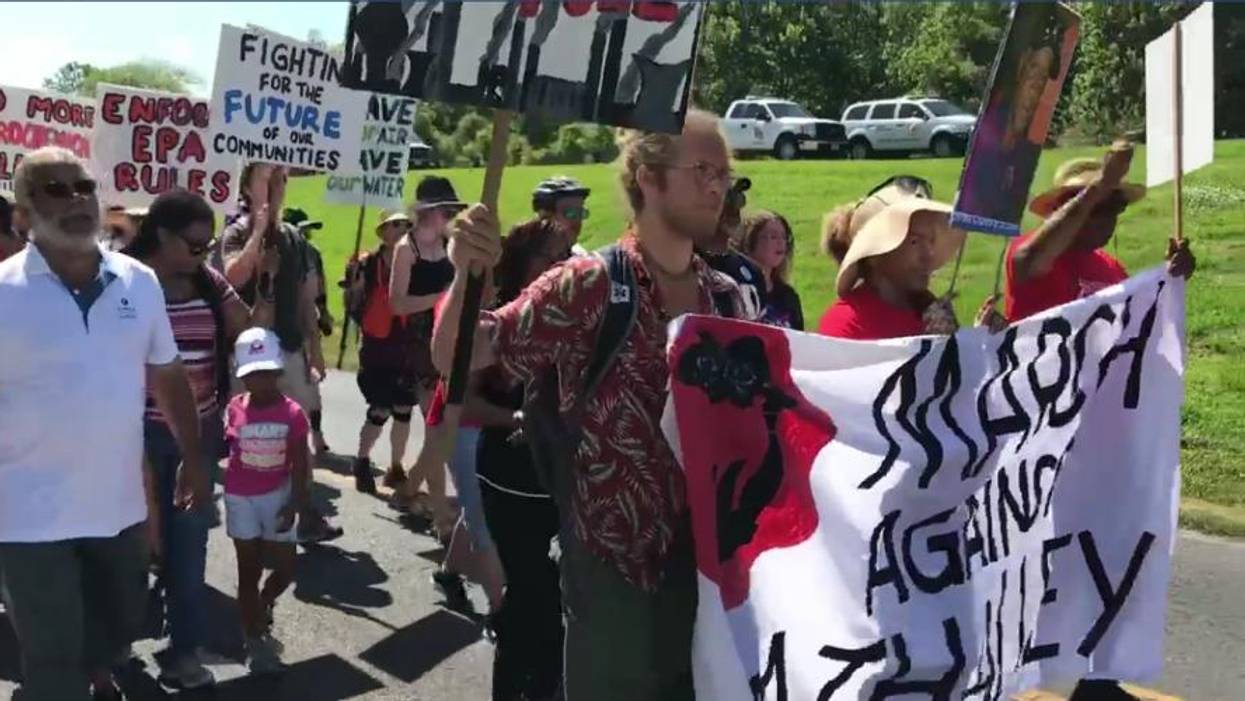
Activists in southern Louisiana kicked off a five-day march on Thursday that aims to bring environmental justice to Cancer Alley--the 85-mile stretch between Baton Rouge and New Orleans that's home to poverty-stricken communities in the shadow of scores of petrochemical facilities.
The march was organized by the Coalition Against Death Alley (CADA), which formed earlier this year and began planning "non-violent protests to pressure industrial giants and governments to stop the ongoing poisoning of majority-black communities" in the region, also known as Louisiana's Petrochemical Corridor, which runs along the Mississippi River.
Marchers began Thursday morning in St. John the Baptist Parish at an elementary school near the Ponchartrain Works facility, which the American chemical giant DuPont sold to the Japanese company Denka in 2015.
A study released by the Environmental Protection Agency that same year determined that the plant--the only one in the United States that manufactures neoprene, synthetic rubber made from chloroprene--put nearby residents at the highest risk for developing cancer from airborne pollution of anywhere in the country.
Denka reached an agreement with the state's environmental agency in 2017 to scale back the facility's high emissions of chloroprene, which the EPA classifies as "likely to be carcinogenic to humans." However, readings from last year show that the company has failed to reach its reduction targets, and activists are demanding bolder action for the sake of public health.
In an interview with The Guardian Thursday outside the elementary school by the facility, local activist Robert Taylor called for the plant to be shuttered.
"We are demanding not only the saving of our children at this school, we are demanding the salvation of this entire area," he said. "Up and down this river they are poisoning our communities with impunity. We have implored [the factory] to get down to at least what the EPA says is a safe level. They have refused to do that and based on that, they need to shut down."
CADA's broader demands, detailed on the coalition's website, are:
The marchers took a detour from their planned route on Friday to attend a court hearing in Baton Rouge for a lawsuit filed earlier this week over state officials' refusal to grant activists permission to march across the Interstate 10 bridge in Baton Rouge and the Sunshine Bridge, which crosses the Mississippi River.
"We see the act of crossing these bridges as symbolic," Rev. Gregory Manning, one of the march's organizers, told The Louisiana Weekly earlier this week. "We want to bring attention to how this is an issue that impacts both sides of the river, and we also want to bring attention to specific plants like Denka Dupont, and the recently approved Formosa plastics plant in St. James."
The newspaper reported that in addition to signs, marchers planned to carry photos of loved ones lost to cancer and other illnesses that they believe were tied to regional pollution from the petrochemical industry.
"What we are seeing illustrated now is intentional genocide, and the Louisiana Department of Environmental Quality and the governor are very conscious of what is happening with the uncontrolled amounts of poison and toxins filling the air in this sacrificial zone, where the ancestors of those enslaved became sharecroppers and worked hard to purchase property, now worth pennies on the dollar," Manning added. "The government is complicit, and this behavior will not be tolerated any longer."
According to the LA Bucket Brigade, the judge was expected to rule on whether the marchers will be allowed to cross the bridges sometime Friday afternoon. Members of the coalition spoke outside the courthouse about the suit as well as the march, which is set to conclude at the steps of the Louisiana State Capitol on Monday.
This October is both Breast Cancer Awareness Month and the 110th anniversary of the Ford Model T. Ford Motor Company tells us they are "dedicated to fueling the spirit of those living with" breast cancer through their Warriors in Pink campaign. But in reality their cars and trucks are fueling the breast cancer epidemic.
A quarter of a million women are diagnosed with invasive breast cancer annually, and more than 40,000 people will die of the disease this year. All of the hope, inspiration, and determination that Ford's Warriors in Pink promises to fuel will not change these grim statistics as long as Ford's cars and trucks continue to produce cancer-causing emissions.
Most conversations about breast cancer prevention focus on genetic testing. But inherited mutations accounts for only an estimated 10 percent of all breast cancers, leaving the majority of people diagnosed with the disease with no known risk factors. And many of the widely-accepted risk factors, such as when a woman starts her period or goes into menopause, are not things that a person can change.
Scientists looking for possible targets to prevent breast cancer have identified environmental toxins as important contributors to breast cancer risk. In 2009 President's Cancer Panel reported that "the true burden of environmentally induced cancer has been grossly underestimated."
Some of the first chemicals researchers have identified as increasing the risk of breast cancer are found in the exhaust from combustion engines: carcinogens and hormone disruptors such as benzene, 1,3-butadiene, and polycyclic aromatic hydrocarbons (PAHs). Benzene is such a potent mammary carcinogen it has been linked to breast cancer in men. Virtually everyone in the U.S. breaths in auto exhaust. Again, the 2009 President's Cancer Panel recommended limiting exposure to auto exhaust noting that cars, trucks, and other passenger vehicles "are responsible for approximately 30 percent of cancer resulting from air pollution."
As one of the Big Three automobile manufacturers in the U.S., Ford is in a position to make a huge difference in reducing cancer rates by making clean vehicles.
If Ford truly wants us to believe they have "been active in the fight against breast cancer since 1993," why would they decide earlier this year to go full-throttle on sales of the highest-emission trucks and SUVs, while virtually eliminating lower emission passenger vehicles from their U.S. fleet? Why have they proudly announced a new diesel version of "America's best-selling" F-150 truck--when diesel is enriched with nitro PAHs, which are particularly potent mammary carcinogens? Why will they stop sales in the U.S. of their only 100 percent electric, zero emission car?
Attempting to brush aside criticism for these recent announcements, Ford is loudly touting plans for future investment in electrification--nearly all of which will be in China, where regulation standards are higher. Yet at a major auto show in the U.S. earlier this year, Ford notably failed to showcase any electric vehicles.
Breast cancer is a public health crisis and a social justice issue. We can't afford to hold our breath and hope Ford's promise of new, cleaner vehicles will come to the U.S. sometime down the road.
Ford Warriors in Pink sells branded clothes and other gear in order to raise money for four breast cancer charities. They provide "tips," "inspirational postcards," "healing music," and spotlight 122 "Models of Courage" in order to fuel "the spirit of those living with the disease." But this is nothing more than an attempt by Ford to distract attention away from their role in driving the breast cancer epidemic.
We can see through the pink-tinted smoke screen of Ford's Warriors in Pink. Truth be told, Ford's Warriors in Pink program is just another example of "pinkwashing." Breast Cancer Action first coined the term in 2002 to reveal the hypocrisy of companies that claim to care about breast cancer, but actually manufacture or sell products that are linked to increasing the risk of the disease.
Rather than cleaning up their cars, Ford tells us we need to "harness that fighting spirit." But the truth is, no matter how hard someone "fights"--how strong or determined or hopeful they are--up to 30 percent of all breast cancers will go on to spread or metastasize.
It's time for Ford to show their commitment to people affected by breast cancer by making the shift to 100 percent zero emission vehicles. Instead of pinkwashing and platitudes, Ford can "go further" by no longer making vehicles that produce exhaust.
One hundred and ten years ago, Ford made its name by bringing the Model-T to the masses. Now it's time Ford to bring an all-electric fleet to the masses. By turning away from cancer-causing combustion engines cars and towards zero-emission cars and trucks, Ford can truly help put the brakes on the breast cancer epidemic. After all, the best way to fight cancer is to prevent it in the first place.
Confirming what a First Nations community surrounded by tar sands development has claimed for decades, new research says the reserve in northern Alberta is suffering from air pollution that is sometimes "at levels above what is recommended for human health."
That's according to Alberta's chief health minister, Karen Grimsrud, as reported by the Canadian Press.
The provincial health ministry, industry regulator (which is industry-funded), and the Fort McKay First Nation all cooperated on a study released Thursday that finally confirmed what those in Fort McKay had long asserted: air pollution from nearby tar sands mining and refining has been sickening members of their community.
The toxins discovered in the air include "hydrogen sulphide and carcinogens like benzene," writes the Canadian Press. "Ozone and sulphur dioxide were 'frequently' above long-term health thresholds."
Allegations of heavily polluted air have gone on since oil industry development began in the area in the 1960s, Fort McKay First Nation chief Jim Boucher told the Canadian Press.
"We are very concerned," Boucher added. "It's been a cause for concern for the people of this community since 1966."
Leo Gabriel Desjarlais, a hunter and trapper in the small reserve of only 600 people, "struggles to describe what it smells like when fumes from the oil sand operations blow into the community," CBC writes.
"Sometimes it smells like horse shit," Desjarlais told the broadcaster. "Sometimes it smells like burnt plastic."
"Whenever the air smells like that he shuts the windows and stays inside," CBC reports.
"I won't go outside because you can feel it in your nostrils," he said. "It's really strong."
CBC notes that "Desjarlais worries about the impact of the fumes on the health of the community's most vulnerable."
Yet as lifelong Fort McKay resident and Dene elder Celina Harpe told Outside Magazine several years ago, "[w]e never heard of asthma [before the tar sands development]. We didn't know there was such thing as cancer. We had no name for it."
Outside wrote that once the tar sands mining industry was well underway by the the 1970s, "[b]efore long it seemed as if everyone in the community was sick or had a family member who was seriously ill." The magazine continued:
"I lost one son first with sickness before I lost my husband," Harpe said. The main room of the community center was ringed with black-and-white portraits of band members. "That's me there," she said. Harpe couldn't remember exactly when the photos were taken, but her portrait looked to be about a decade old.
"Beside me there, that lady, she died," she said, pointing to the next photograph. "My cousin Stella, she's gone. She just died in January." She began moving down the line. "Her, my auntie, there in that corner by the flowers, she's gone. He died last year, that gentleman. That guy is still alive. He died, this other one that's next to Johnny." Many of the people didn't appear old, 50 at most. "That couple there, they're gone. He's still alive. She's still alive. She's gone. She's gone. She's gone. He's gone. She's gone. That lady's gone." I asked at what age people were being diagnosed with cancer. "People are dying at 35, 40," she said. She shook her head.
"Between January 2010 and December 2014, the Alberta Energy Regulator received 172 complaints from Fort McKay residents, of which 165 were related to odors," CBC reports.
"Now we have finally arrived at a process to resolve those concerns," Boucher said.
The report contained 17 recommendations to improve air quality. But the province, industry, and First Nation will have to take concrete action to remedy the situation, ecologist David Schindler said, and in pro-industry Alberta it remains to be seen if that will happen: "The next step is to take some action in a timely manner to get rid of the problem," he told CBC. "You have to see if people will act on the report."
The first inventory of its kind has found that hundreds of cancer-causing chemicals are building up in the bodies of Americans.
The analysis from Environmental Working Group (EWG), based on more than 1,000 biomonitoring studies--which measure the burden of certain chemicals present in the human body--and other research by government agencies and independent scientists, found that up to 420 chemicals known or likely to cause cancer have been detected in blood, urine, hair, and other human samples.
"The presence of a toxic chemical in our bodies does not necessarily mean it will cause harm, but this report details the astounding number of carcinogens we are exposed to in almost every part of life that are building up in our systems," said Curt DellaValle, author of the report and a senior scientist at EWG.
According to the report, Pollution in People, carcinogens detected in biomonitoring studies come from diverse sources, including:
"Many of the carcinogens this study documents in people find their way into our bodies through food, air, water, and consumer products every day," added EWG president Ken Cook. "Dozens of them show up in human umbilical cord blood--which means Americans are exposed to carcinogens before they've left the womb."
EWG, which is known for its health guides and online consumer tools to help people avoid toxic cancer-causing chemicals in their daily lives, said the findings underscored the need for greater public awareness of our everyday exposure as well as urgent action on the part of elected officials.
In a press statement, the nonprofit group noted that the inventory "comes at an auspicious moment for the issue of cancer and chemicals," citing last week's passage of a bill updating the Toxic Substances Control Act (TSCA) as well as President Barack Obama's recent announcement establishing the National Cancer Moonshot Initiative, a $1 billion program led by Vice President Joe Biden, "to eliminate cancer as we know it."
But as EWG's senior vice president for government affairs, Scott Faber, said of the TSCA at the time:
The law that Congress now sends to President Barack Obama's desk will give EPA the direction and resources to review and regulate, at most, a few hundred chemicals over the next decade -- out of thousands used in the market. The new bill will do nothing to require the FDA to review and regulate the chemicals routinely used in food and cosmetics. While pesticide residues on produce have been reviewed, thousands of other pesticides have escaped meaningful government oversight. The net result is that consumers will continue to be exposed to a witches' brew of unregulated chemicals that have been linked to serious health problems, including cancer.
Furthermore, the group points out, "the only concrete agenda related to prevention in the Moonshot Initiative is for screening and vaccination. As demonstrated by the success of anti-smoking efforts, which have cut the rate of lung cancer by more than 25 percent in the last 25 years, to prevent and defeat cancer it is necessary to understand the environmental causes."
EWG is calling for the Moonshot Initiative to include federal funding for investigation of the environmental causes of cancer and the development of prevention initiatives.