SUBSCRIBE TO OUR FREE NEWSLETTER
Daily news & progressive opinion—funded by the people, not the corporations—delivered straight to your inbox.
5
#000000
#FFFFFF
To donate by check, phone, or other method, see our More Ways to Give page.
Daily news & progressive opinion—funded by the people, not the corporations—delivered straight to your inbox.
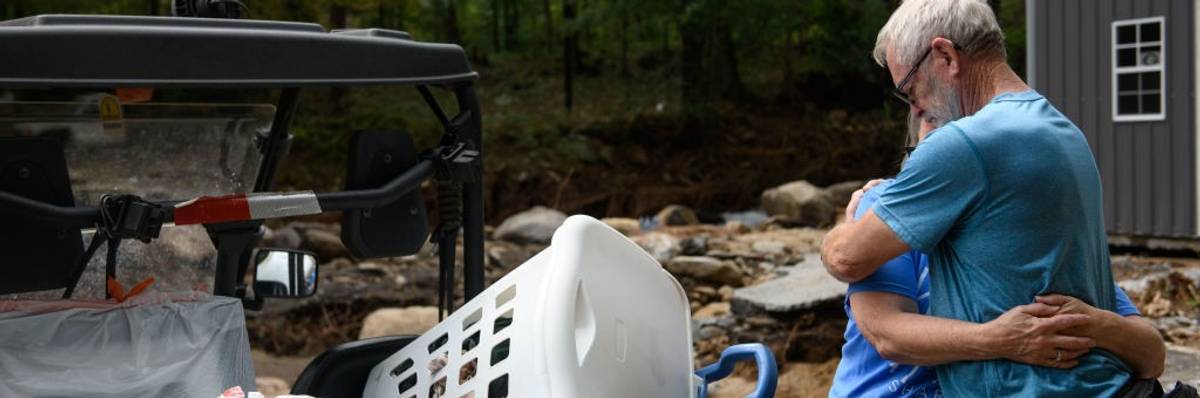
Ron Grindstaff, right, comforts his wife, Marie, as they remove belongings from their home in the aftermath of Hurricane Helene on September 30, 2024 in Old Fort, North Carolina
In a time when we face unprecedented disaster, we need our media institutions to be a source of truth and honesty and to be ready to hold those in power accountable.
Tonight is the vice presidential debate and it’s likely the final debate of the election and the last opportunity for voters to see both tickets side-by-side. The backdrop will be the once-in-a-generation devastation of Hurricane Helene.
When Walz and Vance take the stage, tens of thousands of people won’t know if their loved ones are alive or if they have a home to go back to. Many more will just be beginning a recovery effort that will take years and cost an estimated $90 billion or more. And Helene is just one sign of the catastrophic destruction that climate change could bring.
We deserve some answers from these men who are running to be second in line to the presidency. CBS debate moderator Norah O'Donnell must ask both JD Vance and Tim Walz what their administrations would do to stop disasters like Helene from becoming the new normal. And, in particular, she needs to be ready to hold JD Vance accountable to actually delivering a response.
With the backdrop of Helene, O'Donnell has an opportunity to show a different path tonight. She can ask strong questions and be ready with facts to hold Vance accountable.
The reality is that our politicians are not confronting the climate crisis at the scale and speed that science and justice demand. Our Vice President is boasting about record oil and gas production in a time when scientists have warned we must be decarbonizing as fast as possible. And her opponent, Donald Trump, is a climate denier who has promised oil and gas billionaires to do their bidding in exchange for a billion dollars. When the candidates were asked about climate change in the last debate, Trump entirely dodged the question, instead pivoting to an irrelevant tangent about auto-plants and tariffs, despite the fact that Biden’s landmark Inflation Reduction Act actually created manufacturing jobs. ABC news moderators didn’t follow up or press the question.
In the year 2024 that doesn’t cut it. Scientists say we have just a handful of years left to stop catastrophic climate change. Helene’s apocalyptic nature is only a sign of the years to come. That makes the next four years of American politics an absolutely critical time for bold climate policy. We could be investing in resilient renewable electricity grids, updating our bridges and our roads, and making sure our homes and infrastructure are ready for disaster. We could be restoring wetlands, mangroves, and forests; expanding FEMA; and building a workforce that is ready to respond to disasters. And above all, we need to decarbonize our economy as fast as humanly possible.
But looking at media coverage, you’d hardly know the urgency of the climate crisis. The vast majority of media coverage of disasters like Helene doesn’t identify climate change as a factor. Even when broadcast news does talk about climate change, only 12% of the time do they mention burning fossil fuels as the problem. And in a bizarre attempt at neutrality, climate deniers in the Republican Party are regularly platformed without being fact-checked or held accountable for their lies.
With the backdrop of Helene, O'Donnell has an opportunity to show a different path tonight. She can ask strong questions and be ready with facts to hold Vance accountable. She should have on hand statements from JD Vance outlining his denial of human-caused climate change—a sharp reversal from his status as a green tech investor just a few years ago. She should be ready to cite opposition to the Inflation Reduction Act, a landmark green energy bill that invests $12 billion in Ohio’s green energy economy and has created good, union jobs.
In a time when we face unprecedented disaster, we need our media institutions to be a source of truth and honesty and to be ready to hold those in power accountable. The tens of thousands of people who have lost their homes to Helene, the people who have had to evacuate from wildfires, the elderly and young people who have died from heat waves, the young people who are scared for their future—we are owed answers.
Dear Common Dreams reader, It’s been nearly 30 years since I co-founded Common Dreams with my late wife, Lina Newhouser. We had the radical notion that journalism should serve the public good, not corporate profits. It was clear to us from the outset what it would take to build such a project. No paid advertisements. No corporate sponsors. No millionaire publisher telling us what to think or do. Many people said we wouldn't last a year, but we proved those doubters wrong. Together with a tremendous team of journalists and dedicated staff, we built an independent media outlet free from the constraints of profits and corporate control. Our mission has always been simple: To inform. To inspire. To ignite change for the common good. Building Common Dreams was not easy. Our survival was never guaranteed. When you take on the most powerful forces—Wall Street greed, fossil fuel industry destruction, Big Tech lobbyists, and uber-rich oligarchs who have spent billions upon billions rigging the economy and democracy in their favor—the only bulwark you have is supporters who believe in your work. But here’s the urgent message from me today. It's never been this bad out there. And it's never been this hard to keep us going. At the very moment Common Dreams is most needed, the threats we face are intensifying. We need your support now more than ever. We don't accept corporate advertising and never will. We don't have a paywall because we don't think people should be blocked from critical news based on their ability to pay. Everything we do is funded by the donations of readers like you. When everyone does the little they can afford, we are strong. But if that support retreats or dries up, so do we. Will you donate now to make sure Common Dreams not only survives but thrives? —Craig Brown, Co-founder |
Tonight is the vice presidential debate and it’s likely the final debate of the election and the last opportunity for voters to see both tickets side-by-side. The backdrop will be the once-in-a-generation devastation of Hurricane Helene.
When Walz and Vance take the stage, tens of thousands of people won’t know if their loved ones are alive or if they have a home to go back to. Many more will just be beginning a recovery effort that will take years and cost an estimated $90 billion or more. And Helene is just one sign of the catastrophic destruction that climate change could bring.
We deserve some answers from these men who are running to be second in line to the presidency. CBS debate moderator Norah O'Donnell must ask both JD Vance and Tim Walz what their administrations would do to stop disasters like Helene from becoming the new normal. And, in particular, she needs to be ready to hold JD Vance accountable to actually delivering a response.
With the backdrop of Helene, O'Donnell has an opportunity to show a different path tonight. She can ask strong questions and be ready with facts to hold Vance accountable.
The reality is that our politicians are not confronting the climate crisis at the scale and speed that science and justice demand. Our Vice President is boasting about record oil and gas production in a time when scientists have warned we must be decarbonizing as fast as possible. And her opponent, Donald Trump, is a climate denier who has promised oil and gas billionaires to do their bidding in exchange for a billion dollars. When the candidates were asked about climate change in the last debate, Trump entirely dodged the question, instead pivoting to an irrelevant tangent about auto-plants and tariffs, despite the fact that Biden’s landmark Inflation Reduction Act actually created manufacturing jobs. ABC news moderators didn’t follow up or press the question.
In the year 2024 that doesn’t cut it. Scientists say we have just a handful of years left to stop catastrophic climate change. Helene’s apocalyptic nature is only a sign of the years to come. That makes the next four years of American politics an absolutely critical time for bold climate policy. We could be investing in resilient renewable electricity grids, updating our bridges and our roads, and making sure our homes and infrastructure are ready for disaster. We could be restoring wetlands, mangroves, and forests; expanding FEMA; and building a workforce that is ready to respond to disasters. And above all, we need to decarbonize our economy as fast as humanly possible.
But looking at media coverage, you’d hardly know the urgency of the climate crisis. The vast majority of media coverage of disasters like Helene doesn’t identify climate change as a factor. Even when broadcast news does talk about climate change, only 12% of the time do they mention burning fossil fuels as the problem. And in a bizarre attempt at neutrality, climate deniers in the Republican Party are regularly platformed without being fact-checked or held accountable for their lies.
With the backdrop of Helene, O'Donnell has an opportunity to show a different path tonight. She can ask strong questions and be ready with facts to hold Vance accountable. She should have on hand statements from JD Vance outlining his denial of human-caused climate change—a sharp reversal from his status as a green tech investor just a few years ago. She should be ready to cite opposition to the Inflation Reduction Act, a landmark green energy bill that invests $12 billion in Ohio’s green energy economy and has created good, union jobs.
In a time when we face unprecedented disaster, we need our media institutions to be a source of truth and honesty and to be ready to hold those in power accountable. The tens of thousands of people who have lost their homes to Helene, the people who have had to evacuate from wildfires, the elderly and young people who have died from heat waves, the young people who are scared for their future—we are owed answers.
Tonight is the vice presidential debate and it’s likely the final debate of the election and the last opportunity for voters to see both tickets side-by-side. The backdrop will be the once-in-a-generation devastation of Hurricane Helene.
When Walz and Vance take the stage, tens of thousands of people won’t know if their loved ones are alive or if they have a home to go back to. Many more will just be beginning a recovery effort that will take years and cost an estimated $90 billion or more. And Helene is just one sign of the catastrophic destruction that climate change could bring.
We deserve some answers from these men who are running to be second in line to the presidency. CBS debate moderator Norah O'Donnell must ask both JD Vance and Tim Walz what their administrations would do to stop disasters like Helene from becoming the new normal. And, in particular, she needs to be ready to hold JD Vance accountable to actually delivering a response.
With the backdrop of Helene, O'Donnell has an opportunity to show a different path tonight. She can ask strong questions and be ready with facts to hold Vance accountable.
The reality is that our politicians are not confronting the climate crisis at the scale and speed that science and justice demand. Our Vice President is boasting about record oil and gas production in a time when scientists have warned we must be decarbonizing as fast as possible. And her opponent, Donald Trump, is a climate denier who has promised oil and gas billionaires to do their bidding in exchange for a billion dollars. When the candidates were asked about climate change in the last debate, Trump entirely dodged the question, instead pivoting to an irrelevant tangent about auto-plants and tariffs, despite the fact that Biden’s landmark Inflation Reduction Act actually created manufacturing jobs. ABC news moderators didn’t follow up or press the question.
In the year 2024 that doesn’t cut it. Scientists say we have just a handful of years left to stop catastrophic climate change. Helene’s apocalyptic nature is only a sign of the years to come. That makes the next four years of American politics an absolutely critical time for bold climate policy. We could be investing in resilient renewable electricity grids, updating our bridges and our roads, and making sure our homes and infrastructure are ready for disaster. We could be restoring wetlands, mangroves, and forests; expanding FEMA; and building a workforce that is ready to respond to disasters. And above all, we need to decarbonize our economy as fast as humanly possible.
But looking at media coverage, you’d hardly know the urgency of the climate crisis. The vast majority of media coverage of disasters like Helene doesn’t identify climate change as a factor. Even when broadcast news does talk about climate change, only 12% of the time do they mention burning fossil fuels as the problem. And in a bizarre attempt at neutrality, climate deniers in the Republican Party are regularly platformed without being fact-checked or held accountable for their lies.
With the backdrop of Helene, O'Donnell has an opportunity to show a different path tonight. She can ask strong questions and be ready with facts to hold Vance accountable. She should have on hand statements from JD Vance outlining his denial of human-caused climate change—a sharp reversal from his status as a green tech investor just a few years ago. She should be ready to cite opposition to the Inflation Reduction Act, a landmark green energy bill that invests $12 billion in Ohio’s green energy economy and has created good, union jobs.
In a time when we face unprecedented disaster, we need our media institutions to be a source of truth and honesty and to be ready to hold those in power accountable. The tens of thousands of people who have lost their homes to Helene, the people who have had to evacuate from wildfires, the elderly and young people who have died from heat waves, the young people who are scared for their future—we are owed answers.