
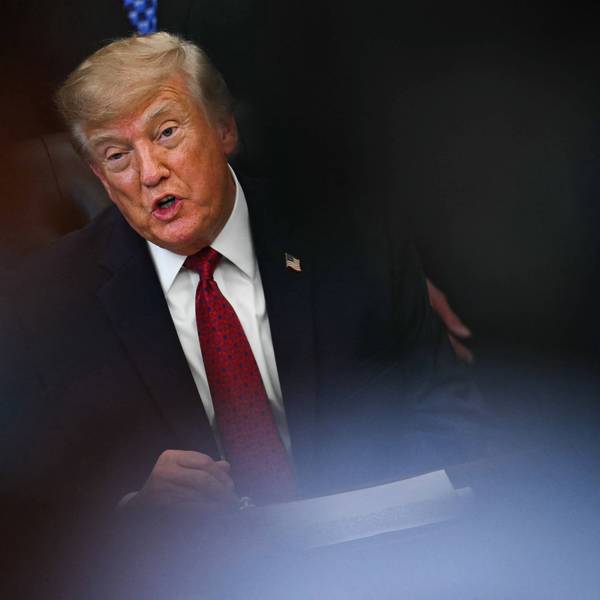

Ed Shepard, waits for customers at his gas station in downtown Welch, a town in McDowell County, West Virginia in 2011.
Could the Left Actually Win Back 'Trump Country' in West Virginia?
I spoke with Troy Miller, executive producer of the Zero Hour, in his capacity as a member of the Executive Committee of the West Virginia Democratic Party. We discussed the party’s recent adoption of an updated version of FDR’s Economic Bill of Rights.
Could it revive their political fortunes? Here’s a clue, from something I wrote several years ago and never published. It concerns McDowell County, WV, the state’s poorest county, which I researched as Bernie Sander’s speechwriter for a speech he gave there in 2016.
Troy N. Miller: WV Democrats Adopt 21st c. Economic Bill of Rights!youtu.be
The Invisibles: McDowell County, WV
Coastal journalists view rural people as an alien species – that is, when they think of them at all. When they cover them they sound like amateur entomologists pondering the consciousness of bugs under glass. Snake-handling features prominently in their coverage, even though it’s only practiced in a tiny handful of mostly informal churches.
According to the media narrative, in 2016 the reptile-loving hillbillies of journalistic imagination embraced another cold-blooded creature: Donald Trump. A typical post-election photo essay on McDowell County was headlined, “This County Gives a Glimpse at the America That Voted Trump Into Office.”[1]
Step right up, city folks! See the strange creatures with whom you share a nation!
The county’s voting results fed the media’s perennial appetite for exoticizing rural people. And yet, despite coverage like “Why the poorest county in West Virginia has faith in Donald Trump,”[2] the picture wasn’t nearly as clear as their coverage would have it. For one thing, McDowell County’s population was 8.2 percent Black, which isn’t all that different from the national average of 12.4 percent. And yet, Black people rarely figured in their condescending, Beverly Hillbillies-themed narrative.
They got the politics wrong, too. Here’s how McDowell County voted in the 2016 primaries:
- Donald Trump: 785
- Hillary Clinton: 817
- Bernie Sanders: 1,488
That’s right: the democratic socialist got more votes than Trump or Clinton by a factor of nearly two to one.
The general election results were as follows:
- Hillary Clinton: 1,438 (less than Sanders received in the primary)
- Donald Trump: 4,629
- Decline to participate: 11,433
That’s a decisive victory -- for political alienation. The non-participation rate was much higher than that of the country as a whole. Only 34.7 percent of eligible voters voted in McDowell’s general election, versus 56.9 percent nationwide.
“Trump country”? Nationally, 27 percent of eligible voters cast their ballots for Donald Trump. In McDowell, that percentage was a slightly lower (if statistically insignificant) 26.45 percent.
Yes, Trump won decisively in McDowell among those who voted. But McDowell County isn’t “Trump country.” It’s “None of the Above” country.
And yet, despite the fact that Donald Trump only won the votes of about one in four voters, the county’s residents soon became the poster children for right-wing “deplorability.”
The media’s challenges didn’t begin in 2016. “Penetrating a closed, isolated society in Appalachia,” read a 2014 inside-the-news headline from the New York Times.[3] But “closed” and “isolated” from whom? Certainly not each other. A story in the Chattanooga (TN) Times Free Press emphasizes a local initiative built on community values:
“McDowell County needed to return to the message its churches preached, locals said. Maybe it was as simple as embracing the Golden Rule: ‘Love your neighbor as yourself.”
The charitable side of McDowell County never seems to make the national press.
Trump screwed them afterwards, of course. Things kept getting worse: drug and alcohol deaths, suicides, rampaging addiction, and a shortage of jobs. The McDowell County Commission sued three drug companies for their role in the opioid epidemic, although few people thought anything would come of it. Nothing did — but at least they tried.
Why the poorest county in West Virginia has faith in Donald Trump | Anywhere but Washingtonyoutu.be
McDowell County, like the country overall, is divided. But the mainstream media prefers to see a one-dimensional caricature of the county and the state. It’s true that they don’t like elitists, which is how a lot of Democrats come across to them. But they apparently like somebody who stands up to powerful interests and doesn’t talk down to them.
Anything seems like Hail Mary for West Virginia’s Democrats right now, but the Economic Bill of Rights it’s clear, easy to explain, and is opposed by the kinds of people who are despised by everyone from left to right: billionaires and corporations.
It’s definitely worth a shot, and the results will be worth watching.
We are at a crossroads
This country and this world are at a monumental crossroads. In a few short weeks, US voters will have an opportunity to beat back the forces of fascism and confront the billionaires who are rigging the economy, our media system, and our democracy, making it increasingly impossible for ordinary people to get by. We’re not just talking about the election. We’re talking about what must be done once these fascist elements are vanquished from power. We need a bolder set of solutions than what either major party has so far been willing to offer and a working-class movement ready to fight like hell for it. Trump didn't emerge from nowhere. The conditions that fueled MAGA authoritarianism were created by decades of radical neoliberal economic policies and a corrupt political system dominated by corporate interests. They slashed taxes on the super-rich, promising that the benefits would trickle down. They said giveaways to the corporate titans would make life more affordable for the rest of us. It was all bullshit. And when a bitter, betrayed populace searches for someone to blame, right-wing demagogues have little trouble finding scapegoats. People know when they're being lied to, but you won't hear any of this from the corporate media. Only independent journalism—powered and funded by people who believe in building a better world—can deliver truly trustworthy daily news. Our Fall Campaign is underway, and we need your help. To power our newsroom through the rest of the year, we need to raise $125,000 by midnight on October 31. So if you share our vision, please contribute whatever you can to sustain our work. |
Richard (RJ) Eskow is a journalist who has written for a number of major publications. His weekly program, The Zero Hour, can be found on cable television, radio, Spotify, and podcast media.
I spoke with Troy Miller, executive producer of the Zero Hour, in his capacity as a member of the Executive Committee of the West Virginia Democratic Party. We discussed the party’s recent adoption of an updated version of FDR’s Economic Bill of Rights.
Could it revive their political fortunes? Here’s a clue, from something I wrote several years ago and never published. It concerns McDowell County, WV, the state’s poorest county, which I researched as Bernie Sander’s speechwriter for a speech he gave there in 2016.
Troy N. Miller: WV Democrats Adopt 21st c. Economic Bill of Rights!youtu.be
The Invisibles: McDowell County, WV
Coastal journalists view rural people as an alien species – that is, when they think of them at all. When they cover them they sound like amateur entomologists pondering the consciousness of bugs under glass. Snake-handling features prominently in their coverage, even though it’s only practiced in a tiny handful of mostly informal churches.
According to the media narrative, in 2016 the reptile-loving hillbillies of journalistic imagination embraced another cold-blooded creature: Donald Trump. A typical post-election photo essay on McDowell County was headlined, “This County Gives a Glimpse at the America That Voted Trump Into Office.”[1]
Step right up, city folks! See the strange creatures with whom you share a nation!
The county’s voting results fed the media’s perennial appetite for exoticizing rural people. And yet, despite coverage like “Why the poorest county in West Virginia has faith in Donald Trump,”[2] the picture wasn’t nearly as clear as their coverage would have it. For one thing, McDowell County’s population was 8.2 percent Black, which isn’t all that different from the national average of 12.4 percent. And yet, Black people rarely figured in their condescending, Beverly Hillbillies-themed narrative.
They got the politics wrong, too. Here’s how McDowell County voted in the 2016 primaries:
- Donald Trump: 785
- Hillary Clinton: 817
- Bernie Sanders: 1,488
That’s right: the democratic socialist got more votes than Trump or Clinton by a factor of nearly two to one.
The general election results were as follows:
- Hillary Clinton: 1,438 (less than Sanders received in the primary)
- Donald Trump: 4,629
- Decline to participate: 11,433
That’s a decisive victory -- for political alienation. The non-participation rate was much higher than that of the country as a whole. Only 34.7 percent of eligible voters voted in McDowell’s general election, versus 56.9 percent nationwide.
“Trump country”? Nationally, 27 percent of eligible voters cast their ballots for Donald Trump. In McDowell, that percentage was a slightly lower (if statistically insignificant) 26.45 percent.
Yes, Trump won decisively in McDowell among those who voted. But McDowell County isn’t “Trump country.” It’s “None of the Above” country.
And yet, despite the fact that Donald Trump only won the votes of about one in four voters, the county’s residents soon became the poster children for right-wing “deplorability.”
The media’s challenges didn’t begin in 2016. “Penetrating a closed, isolated society in Appalachia,” read a 2014 inside-the-news headline from the New York Times.[3] But “closed” and “isolated” from whom? Certainly not each other. A story in the Chattanooga (TN) Times Free Press emphasizes a local initiative built on community values:
“McDowell County needed to return to the message its churches preached, locals said. Maybe it was as simple as embracing the Golden Rule: ‘Love your neighbor as yourself.”
The charitable side of McDowell County never seems to make the national press.
Trump screwed them afterwards, of course. Things kept getting worse: drug and alcohol deaths, suicides, rampaging addiction, and a shortage of jobs. The McDowell County Commission sued three drug companies for their role in the opioid epidemic, although few people thought anything would come of it. Nothing did — but at least they tried.
Why the poorest county in West Virginia has faith in Donald Trump | Anywhere but Washingtonyoutu.be
McDowell County, like the country overall, is divided. But the mainstream media prefers to see a one-dimensional caricature of the county and the state. It’s true that they don’t like elitists, which is how a lot of Democrats come across to them. But they apparently like somebody who stands up to powerful interests and doesn’t talk down to them.
Anything seems like Hail Mary for West Virginia’s Democrats right now, but the Economic Bill of Rights it’s clear, easy to explain, and is opposed by the kinds of people who are despised by everyone from left to right: billionaires and corporations.
It’s definitely worth a shot, and the results will be worth watching.