SUBSCRIBE TO OUR FREE NEWSLETTER
Daily news & progressive opinion—funded by the people, not the corporations—delivered straight to your inbox.
5
#000000
#FFFFFF
To donate by check, phone, or other method, see our More Ways to Give page.
Daily news & progressive opinion—funded by the people, not the corporations—delivered straight to your inbox.
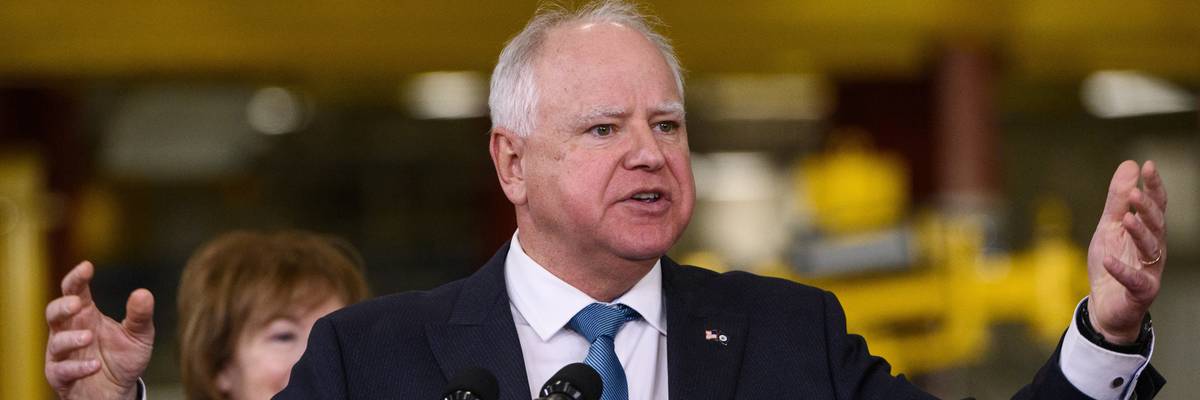
Minnesota Gov. Tim Walz speaks during an event in Fridley, Minnesota on April 3, 2023.
The Harris-Walz ticket presents an opportunity to reposition the Democratic Party not just as defenders of democracy, but as true representatives of the people rather than elites.
In a bold political move, presumptive Democratic presidential nominee Kamala Harris has chosen Minnesota Gov. Tim Walz as her running mate for the 2024 election. This decision marks a significant shift in the Democratic party's strategy, potentially redefining the narrative around progressive policies and their place in mainstream American politics.
Walz, who has rapidly risen to national prominence in recent months, offers a fresh perspective on progressive ideals. His approach represents a type of "pragmatic progressivism” that seeks to position traditionally left-leaning policies as common-sense solutions that align with the values and needs of the majority of Americans. This strategy could prove crucial in bridging the political divides that have increasingly characterized U.S. politics in recent years.
The Minnesota governor first caught the nation's attention with his memorable labeling of former President and current Republican nominee Donald Trump and his VP choice JD Vance as "weird." This quip, while seemingly offhand, opened the door for Walz to articulate his vision of progressive policies as the new "normal" in American politics.
Walz's pragmatic progressivism offers a new direction for the Democratic Party. By positioning progressive policies as common-sense solutions rather than radical changes, he helps to reframe the party's image.
Since then, Walz has leveraged his newfound national exposure to argue passionately for a range of progressive initiatives. His focus on LGBTQ rights, increased welfare for childcare, education, housing, and renewable energy resonates with the Democratic base while also appealing to moderates and independents. Walz's framing of these policies as practical solutions to everyday problems rather than ideological positions has gained traction across the political spectrum.
Walz's background as a teacher and high school football coach informs his political approach in significant ways. He frequently draws on these experiences to connect with voters and explain complex policy issues in relatable terms. His emphasis on education extends beyond the classroom, as he seeks to better inform the public about the benefits of progressive policies to win their support.
This educational approach stands in contrast to the political evolution of his running mate, Kamala Harris. While Harris has moved from her roots as a tough-on-crime prosecutor in California to more left-wing positions during her 2020 presidential run, and now toward the center as the 2024 presumptive nominee, Walz has taken a different tack. He has used his time in Minnesota politics, particularly as governor, to consistently frame progressive positions as "normal," necessary, and aligned with most Americans' values.
Walz's pragmatic progressivism offers a new direction for the Democratic Party. By positioning progressive policies as common-sense solutions rather than radical changes, he helps to reframe the party's image. This approach could be key in countering Republican narratives that paint Democrats as out of touch with mainstream America. One of Walz's most striking characteristics is his vocal insistence that winning elections is not an end in itself, but a means to achieve real, positive change for people. This focus on tangible results over political maneuvering resonates with voters tired of perceived political games and empty promises.
The Harris-Walz ticket presents an opportunity to reposition the Democratic Party not just as defenders of democracy, but as true representatives of the people rather than elites. This shift could be crucial in appealing to voters who have felt increasingly alienated from the political process. Moreover, Walz's approach could open the door for even more ambitious progressive policies. By framing current progressive ideas as "normal," he creates space for discussions around more radical but similarly sensible policies. These could include initiatives like creating free community energy, refunding community services to make them safer, and commons-based housing solutions.
The potential of these policies to demonstrate the practicality and benefits of socialist principles in everyday life is significant. If successful, they could reshape the political landscape, positioning capitalist norms of massive inequalities, everyday exploitation, and systemic discrimination as the truly "weird" outliers. The Harris-Walz ticket represents a potentially game-changing moment in American politics. As the campaign unfolds, it will be crucial to watch how Walz's pragmatic progressivism interacts with Harris' more traditional political evolution. The synthesis of these two approaches could create a powerful new political narrative, one that could reshape the Democratic Party and American politics as a whole.
The implications of this new approach extend far beyond the 2024 election. If successful, it could fundamentally alter the way Americans think about progressive policies, potentially paving the way for more substantial systemic changes in the future. By framing traditionally left-leaning policies as common-sense solutions, this opens the door for local governments to experiment with more ambitious socialist initiatives without fear of immediate backlash. This could lead to a surge of innovative programs at the municipal and state levels, such as community-owned energy projects, worker-owned cooperatives, and universal basic income pilots, all positioned as practical responses to local needs rather than ideological statements.
The Harris-Walz ticket's success or failure will likely hinge on their ability to convince voters that their vision of "normal" aligns with the realities and aspirations of everyday Americans. If they can effectively make this case, they may not only win the election but also set the stage for a progressive new era of American politics.
Dear Common Dreams reader, It’s been nearly 30 years since I co-founded Common Dreams with my late wife, Lina Newhouser. We had the radical notion that journalism should serve the public good, not corporate profits. It was clear to us from the outset what it would take to build such a project. No paid advertisements. No corporate sponsors. No millionaire publisher telling us what to think or do. Many people said we wouldn't last a year, but we proved those doubters wrong. Together with a tremendous team of journalists and dedicated staff, we built an independent media outlet free from the constraints of profits and corporate control. Our mission has always been simple: To inform. To inspire. To ignite change for the common good. Building Common Dreams was not easy. Our survival was never guaranteed. When you take on the most powerful forces—Wall Street greed, fossil fuel industry destruction, Big Tech lobbyists, and uber-rich oligarchs who have spent billions upon billions rigging the economy and democracy in their favor—the only bulwark you have is supporters who believe in your work. But here’s the urgent message from me today. It's never been this bad out there. And it's never been this hard to keep us going. At the very moment Common Dreams is most needed, the threats we face are intensifying. We need your support now more than ever. We don't accept corporate advertising and never will. We don't have a paywall because we don't think people should be blocked from critical news based on their ability to pay. Everything we do is funded by the donations of readers like you. When everyone does the little they can afford, we are strong. But if that support retreats or dries up, so do we. Will you donate now to make sure Common Dreams not only survives but thrives? —Craig Brown, Co-founder |
In a bold political move, presumptive Democratic presidential nominee Kamala Harris has chosen Minnesota Gov. Tim Walz as her running mate for the 2024 election. This decision marks a significant shift in the Democratic party's strategy, potentially redefining the narrative around progressive policies and their place in mainstream American politics.
Walz, who has rapidly risen to national prominence in recent months, offers a fresh perspective on progressive ideals. His approach represents a type of "pragmatic progressivism” that seeks to position traditionally left-leaning policies as common-sense solutions that align with the values and needs of the majority of Americans. This strategy could prove crucial in bridging the political divides that have increasingly characterized U.S. politics in recent years.
The Minnesota governor first caught the nation's attention with his memorable labeling of former President and current Republican nominee Donald Trump and his VP choice JD Vance as "weird." This quip, while seemingly offhand, opened the door for Walz to articulate his vision of progressive policies as the new "normal" in American politics.
Walz's pragmatic progressivism offers a new direction for the Democratic Party. By positioning progressive policies as common-sense solutions rather than radical changes, he helps to reframe the party's image.
Since then, Walz has leveraged his newfound national exposure to argue passionately for a range of progressive initiatives. His focus on LGBTQ rights, increased welfare for childcare, education, housing, and renewable energy resonates with the Democratic base while also appealing to moderates and independents. Walz's framing of these policies as practical solutions to everyday problems rather than ideological positions has gained traction across the political spectrum.
Walz's background as a teacher and high school football coach informs his political approach in significant ways. He frequently draws on these experiences to connect with voters and explain complex policy issues in relatable terms. His emphasis on education extends beyond the classroom, as he seeks to better inform the public about the benefits of progressive policies to win their support.
This educational approach stands in contrast to the political evolution of his running mate, Kamala Harris. While Harris has moved from her roots as a tough-on-crime prosecutor in California to more left-wing positions during her 2020 presidential run, and now toward the center as the 2024 presumptive nominee, Walz has taken a different tack. He has used his time in Minnesota politics, particularly as governor, to consistently frame progressive positions as "normal," necessary, and aligned with most Americans' values.
Walz's pragmatic progressivism offers a new direction for the Democratic Party. By positioning progressive policies as common-sense solutions rather than radical changes, he helps to reframe the party's image. This approach could be key in countering Republican narratives that paint Democrats as out of touch with mainstream America. One of Walz's most striking characteristics is his vocal insistence that winning elections is not an end in itself, but a means to achieve real, positive change for people. This focus on tangible results over political maneuvering resonates with voters tired of perceived political games and empty promises.
The Harris-Walz ticket presents an opportunity to reposition the Democratic Party not just as defenders of democracy, but as true representatives of the people rather than elites. This shift could be crucial in appealing to voters who have felt increasingly alienated from the political process. Moreover, Walz's approach could open the door for even more ambitious progressive policies. By framing current progressive ideas as "normal," he creates space for discussions around more radical but similarly sensible policies. These could include initiatives like creating free community energy, refunding community services to make them safer, and commons-based housing solutions.
The potential of these policies to demonstrate the practicality and benefits of socialist principles in everyday life is significant. If successful, they could reshape the political landscape, positioning capitalist norms of massive inequalities, everyday exploitation, and systemic discrimination as the truly "weird" outliers. The Harris-Walz ticket represents a potentially game-changing moment in American politics. As the campaign unfolds, it will be crucial to watch how Walz's pragmatic progressivism interacts with Harris' more traditional political evolution. The synthesis of these two approaches could create a powerful new political narrative, one that could reshape the Democratic Party and American politics as a whole.
The implications of this new approach extend far beyond the 2024 election. If successful, it could fundamentally alter the way Americans think about progressive policies, potentially paving the way for more substantial systemic changes in the future. By framing traditionally left-leaning policies as common-sense solutions, this opens the door for local governments to experiment with more ambitious socialist initiatives without fear of immediate backlash. This could lead to a surge of innovative programs at the municipal and state levels, such as community-owned energy projects, worker-owned cooperatives, and universal basic income pilots, all positioned as practical responses to local needs rather than ideological statements.
The Harris-Walz ticket's success or failure will likely hinge on their ability to convince voters that their vision of "normal" aligns with the realities and aspirations of everyday Americans. If they can effectively make this case, they may not only win the election but also set the stage for a progressive new era of American politics.
In a bold political move, presumptive Democratic presidential nominee Kamala Harris has chosen Minnesota Gov. Tim Walz as her running mate for the 2024 election. This decision marks a significant shift in the Democratic party's strategy, potentially redefining the narrative around progressive policies and their place in mainstream American politics.
Walz, who has rapidly risen to national prominence in recent months, offers a fresh perspective on progressive ideals. His approach represents a type of "pragmatic progressivism” that seeks to position traditionally left-leaning policies as common-sense solutions that align with the values and needs of the majority of Americans. This strategy could prove crucial in bridging the political divides that have increasingly characterized U.S. politics in recent years.
The Minnesota governor first caught the nation's attention with his memorable labeling of former President and current Republican nominee Donald Trump and his VP choice JD Vance as "weird." This quip, while seemingly offhand, opened the door for Walz to articulate his vision of progressive policies as the new "normal" in American politics.
Walz's pragmatic progressivism offers a new direction for the Democratic Party. By positioning progressive policies as common-sense solutions rather than radical changes, he helps to reframe the party's image.
Since then, Walz has leveraged his newfound national exposure to argue passionately for a range of progressive initiatives. His focus on LGBTQ rights, increased welfare for childcare, education, housing, and renewable energy resonates with the Democratic base while also appealing to moderates and independents. Walz's framing of these policies as practical solutions to everyday problems rather than ideological positions has gained traction across the political spectrum.
Walz's background as a teacher and high school football coach informs his political approach in significant ways. He frequently draws on these experiences to connect with voters and explain complex policy issues in relatable terms. His emphasis on education extends beyond the classroom, as he seeks to better inform the public about the benefits of progressive policies to win their support.
This educational approach stands in contrast to the political evolution of his running mate, Kamala Harris. While Harris has moved from her roots as a tough-on-crime prosecutor in California to more left-wing positions during her 2020 presidential run, and now toward the center as the 2024 presumptive nominee, Walz has taken a different tack. He has used his time in Minnesota politics, particularly as governor, to consistently frame progressive positions as "normal," necessary, and aligned with most Americans' values.
Walz's pragmatic progressivism offers a new direction for the Democratic Party. By positioning progressive policies as common-sense solutions rather than radical changes, he helps to reframe the party's image. This approach could be key in countering Republican narratives that paint Democrats as out of touch with mainstream America. One of Walz's most striking characteristics is his vocal insistence that winning elections is not an end in itself, but a means to achieve real, positive change for people. This focus on tangible results over political maneuvering resonates with voters tired of perceived political games and empty promises.
The Harris-Walz ticket presents an opportunity to reposition the Democratic Party not just as defenders of democracy, but as true representatives of the people rather than elites. This shift could be crucial in appealing to voters who have felt increasingly alienated from the political process. Moreover, Walz's approach could open the door for even more ambitious progressive policies. By framing current progressive ideas as "normal," he creates space for discussions around more radical but similarly sensible policies. These could include initiatives like creating free community energy, refunding community services to make them safer, and commons-based housing solutions.
The potential of these policies to demonstrate the practicality and benefits of socialist principles in everyday life is significant. If successful, they could reshape the political landscape, positioning capitalist norms of massive inequalities, everyday exploitation, and systemic discrimination as the truly "weird" outliers. The Harris-Walz ticket represents a potentially game-changing moment in American politics. As the campaign unfolds, it will be crucial to watch how Walz's pragmatic progressivism interacts with Harris' more traditional political evolution. The synthesis of these two approaches could create a powerful new political narrative, one that could reshape the Democratic Party and American politics as a whole.
The implications of this new approach extend far beyond the 2024 election. If successful, it could fundamentally alter the way Americans think about progressive policies, potentially paving the way for more substantial systemic changes in the future. By framing traditionally left-leaning policies as common-sense solutions, this opens the door for local governments to experiment with more ambitious socialist initiatives without fear of immediate backlash. This could lead to a surge of innovative programs at the municipal and state levels, such as community-owned energy projects, worker-owned cooperatives, and universal basic income pilots, all positioned as practical responses to local needs rather than ideological statements.
The Harris-Walz ticket's success or failure will likely hinge on their ability to convince voters that their vision of "normal" aligns with the realities and aspirations of everyday Americans. If they can effectively make this case, they may not only win the election but also set the stage for a progressive new era of American politics.