SUBSCRIBE TO OUR FREE NEWSLETTER
Daily news & progressive opinion—funded by the people, not the corporations—delivered straight to your inbox.
5
#000000
#FFFFFF
To donate by check, phone, or other method, see our More Ways to Give page.
Daily news & progressive opinion—funded by the people, not the corporations—delivered straight to your inbox.
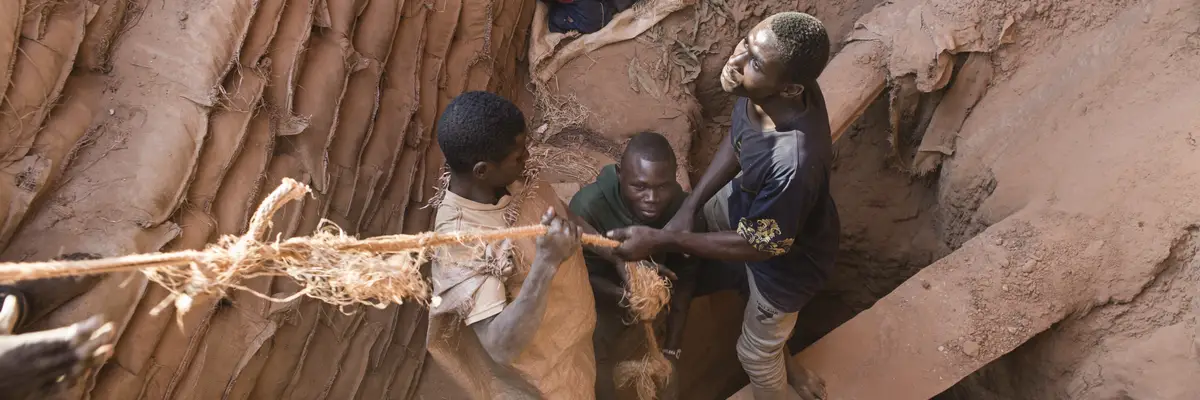
Miners pull up a bag of cobalt their colleague is digging underground inside the CDM (Congo DongFang Mining) Kasulo mine.
This legal challenge in the Congo highlights the stakes for millions of people around the world, including many Indigenous communities, who find their lands targeted by big powers for mineral extraction.
President Donald Trump hailed "historic" the agreement signed in Washington on December 4, 2025, between President Félix Tshisekedi of Congo and Rwanda's President Paul Kagame. Brokered by the US administration, this Washington Accord was supposed to end the devastating conflict in Congo that has taken millions of lives over the past three decades.
Alongside this deal, a Strategic Partnership Agreement was signed between the US and Congo. The agreement gives the US preferential access to Congolese mineral reserves, requires Congo to amend its laws and potentially its Constitution, and gives Washington a level of control over the management of mining resources through the establishment of a joint mechanism involving the two governments.
In October 2025, analyzing the pre-accord signed in June 2025 and a Regional Economic Integration Framework between Rwanda and Congo negotiated in the following months, the Oakland Institute released Shafted: The Scramble for Critical Minerals in the DRC. The report raised serious concerns about US maneuvers to control Congolese critical minerals under the guise of bringing peace to the region.
The Partnership Agreement signed in December makes these concerns legitimate. The Congolese people have been sidelined, with an agreement focused on extraction and exploitation of critical minerals and a peace deal that shockingly overlooks the need for justice and for holding perpetrators accountable. Soon after the signing of the deal, the US mining firms were already striking deals, while promises of peace and security remain wishful thinking with Rwanda and its proxy M23 continuing to occupy large swaths of land in mineral-rich eastern Congo. As a matter of fact, fighting has continued to rage with a fresh offensive launched by Rwanda and M23 in the days that followed the agreement, resulting in thousands of people killed and the capture of the strategic city of Uvira.
The lawyers and human rights defenders who have filed the case are urging the mobilization of Congolese people to preserve the sovereignty of their nation and calling on the international community to support their action and defend international law at a time it is under unprecedented threat.
While the prospect of peace remains uncertain, the government of Congo has not waited to take significant steps in the implementation of the agreement. Mid-January, it provided Washington with a shortlist of state-owned assets—including manganese, copper-cobalt, gold, and lithium projects—available to US investors. A major deal was announced soon after with US government-backed Orion Critical Mineral Consortium acquiring 40% of Glencore’s DRC copper and cobalt.
Congolese may legitimately wonder whether they are being fooled by the deal, seeing their mineral resources offered to the “peacemaker” whereas Rwanda, undeterred, continues its aggression and the extraction of Congolese minerals in Eastern Congo. This has led some to act.
On January 21, 2026, a collective of Congolese lawyers and human rights defenders filed a petition at the Constitutional Court of the Congo to challenge the constitutionality of the agreement. The lawyers argue that the partnership violates the Constitution since amendment of laws or the Constitution requires a democratic review and approval by the Congolese parliament or citizens through referendum. Specifically, it contravenes Article 214 of the Congo's Constitution, which sets out the ratification process for international agreements that involve amending national laws. The petition also contends that the agreement violates Articles 9 and 217, which uphold the principle of Congo’s sovereignty over natural resources, and Article 12, which upholds the principle of equality before the law.
According to Attorney Jean-Marie Kalonji, one of the plaintiffs: "By filing this case with the Constitutional Court, we are assuming our responsibility as Congolese citizens to protect the sovereignty of our country and safeguard our patrimony for future generations." The lawyers and human rights defenders who have filed the case are urging the mobilization of Congolese people to preserve the sovereignty of their nation and calling on the international community to support their action and defend international law at a time it is under unprecedented threat.
This legal challenge has major significance for Congo, a country that has large reserves of several critical minerals, such as copper and cobalt, and a long history of mineral extraction plagued by corruption, embezzlement, and predatory wars. The country’s mineral wealth has hardly benefited its people—still lagging behind most countries in terms of human development indicators such as access to health, education, and other standards of living. It is therefore totally legitimate for citizens to stand up for their basic rights and ensure that mining operations actually benefit the population.
Beyond Congo, this legal action has implications for other mineral-rich countries as global competition for the control of critical minerals intensifies and projections indicate steep increases in demand as well as shortfalls to be expected for some key minerals such as copper and lithium as early as the 2030s. Whereas China dominates both extraction and refinery activites, the US and other industrialized countries have set the supply of critical minerals as a vital priority for so-called green technologies as well as defense.
The 2022 Intergovernmental Panel on Climate Change report warned that mining has “severe environmental impacts” with “often […] few if any redistributive benefits for communities in regions where extraction takes place,” and instead of local development, the extraction of strategic minerals is often linked to violence, human rights abuses, and conflict. This legal challenge in the Congo highlights the stakes for millions of people around the world, including many Indigenous communities, who find their lands targeted by big powers for mineral extraction. It is essential that their rights are recognized and that they have a say in the future of their land—which is intertwined with their own future.
Dear Common Dreams reader, It’s been nearly 30 years since I co-founded Common Dreams with my late wife, Lina Newhouser. We had the radical notion that journalism should serve the public good, not corporate profits. It was clear to us from the outset what it would take to build such a project. No paid advertisements. No corporate sponsors. No millionaire publisher telling us what to think or do. Many people said we wouldn't last a year, but we proved those doubters wrong. Together with a tremendous team of journalists and dedicated staff, we built an independent media outlet free from the constraints of profits and corporate control. Our mission has always been simple: To inform. To inspire. To ignite change for the common good. Building Common Dreams was not easy. Our survival was never guaranteed. When you take on the most powerful forces—Wall Street greed, fossil fuel industry destruction, Big Tech lobbyists, and uber-rich oligarchs who have spent billions upon billions rigging the economy and democracy in their favor—the only bulwark you have is supporters who believe in your work. But here’s the urgent message from me today. It's never been this bad out there. And it's never been this hard to keep us going. At the very moment Common Dreams is most needed, the threats we face are intensifying. We need your support now more than ever. We don't accept corporate advertising and never will. We don't have a paywall because we don't think people should be blocked from critical news based on their ability to pay. Everything we do is funded by the donations of readers like you. When everyone does the little they can afford, we are strong. But if that support retreats or dries up, so do we. Will you donate now to make sure Common Dreams not only survives but thrives? —Craig Brown, Co-founder |
President Donald Trump hailed "historic" the agreement signed in Washington on December 4, 2025, between President Félix Tshisekedi of Congo and Rwanda's President Paul Kagame. Brokered by the US administration, this Washington Accord was supposed to end the devastating conflict in Congo that has taken millions of lives over the past three decades.
Alongside this deal, a Strategic Partnership Agreement was signed between the US and Congo. The agreement gives the US preferential access to Congolese mineral reserves, requires Congo to amend its laws and potentially its Constitution, and gives Washington a level of control over the management of mining resources through the establishment of a joint mechanism involving the two governments.
In October 2025, analyzing the pre-accord signed in June 2025 and a Regional Economic Integration Framework between Rwanda and Congo negotiated in the following months, the Oakland Institute released Shafted: The Scramble for Critical Minerals in the DRC. The report raised serious concerns about US maneuvers to control Congolese critical minerals under the guise of bringing peace to the region.
The Partnership Agreement signed in December makes these concerns legitimate. The Congolese people have been sidelined, with an agreement focused on extraction and exploitation of critical minerals and a peace deal that shockingly overlooks the need for justice and for holding perpetrators accountable. Soon after the signing of the deal, the US mining firms were already striking deals, while promises of peace and security remain wishful thinking with Rwanda and its proxy M23 continuing to occupy large swaths of land in mineral-rich eastern Congo. As a matter of fact, fighting has continued to rage with a fresh offensive launched by Rwanda and M23 in the days that followed the agreement, resulting in thousands of people killed and the capture of the strategic city of Uvira.
The lawyers and human rights defenders who have filed the case are urging the mobilization of Congolese people to preserve the sovereignty of their nation and calling on the international community to support their action and defend international law at a time it is under unprecedented threat.
While the prospect of peace remains uncertain, the government of Congo has not waited to take significant steps in the implementation of the agreement. Mid-January, it provided Washington with a shortlist of state-owned assets—including manganese, copper-cobalt, gold, and lithium projects—available to US investors. A major deal was announced soon after with US government-backed Orion Critical Mineral Consortium acquiring 40% of Glencore’s DRC copper and cobalt.
Congolese may legitimately wonder whether they are being fooled by the deal, seeing their mineral resources offered to the “peacemaker” whereas Rwanda, undeterred, continues its aggression and the extraction of Congolese minerals in Eastern Congo. This has led some to act.
On January 21, 2026, a collective of Congolese lawyers and human rights defenders filed a petition at the Constitutional Court of the Congo to challenge the constitutionality of the agreement. The lawyers argue that the partnership violates the Constitution since amendment of laws or the Constitution requires a democratic review and approval by the Congolese parliament or citizens through referendum. Specifically, it contravenes Article 214 of the Congo's Constitution, which sets out the ratification process for international agreements that involve amending national laws. The petition also contends that the agreement violates Articles 9 and 217, which uphold the principle of Congo’s sovereignty over natural resources, and Article 12, which upholds the principle of equality before the law.
According to Attorney Jean-Marie Kalonji, one of the plaintiffs: "By filing this case with the Constitutional Court, we are assuming our responsibility as Congolese citizens to protect the sovereignty of our country and safeguard our patrimony for future generations." The lawyers and human rights defenders who have filed the case are urging the mobilization of Congolese people to preserve the sovereignty of their nation and calling on the international community to support their action and defend international law at a time it is under unprecedented threat.
This legal challenge has major significance for Congo, a country that has large reserves of several critical minerals, such as copper and cobalt, and a long history of mineral extraction plagued by corruption, embezzlement, and predatory wars. The country’s mineral wealth has hardly benefited its people—still lagging behind most countries in terms of human development indicators such as access to health, education, and other standards of living. It is therefore totally legitimate for citizens to stand up for their basic rights and ensure that mining operations actually benefit the population.
Beyond Congo, this legal action has implications for other mineral-rich countries as global competition for the control of critical minerals intensifies and projections indicate steep increases in demand as well as shortfalls to be expected for some key minerals such as copper and lithium as early as the 2030s. Whereas China dominates both extraction and refinery activites, the US and other industrialized countries have set the supply of critical minerals as a vital priority for so-called green technologies as well as defense.
The 2022 Intergovernmental Panel on Climate Change report warned that mining has “severe environmental impacts” with “often […] few if any redistributive benefits for communities in regions where extraction takes place,” and instead of local development, the extraction of strategic minerals is often linked to violence, human rights abuses, and conflict. This legal challenge in the Congo highlights the stakes for millions of people around the world, including many Indigenous communities, who find their lands targeted by big powers for mineral extraction. It is essential that their rights are recognized and that they have a say in the future of their land—which is intertwined with their own future.
President Donald Trump hailed "historic" the agreement signed in Washington on December 4, 2025, between President Félix Tshisekedi of Congo and Rwanda's President Paul Kagame. Brokered by the US administration, this Washington Accord was supposed to end the devastating conflict in Congo that has taken millions of lives over the past three decades.
Alongside this deal, a Strategic Partnership Agreement was signed between the US and Congo. The agreement gives the US preferential access to Congolese mineral reserves, requires Congo to amend its laws and potentially its Constitution, and gives Washington a level of control over the management of mining resources through the establishment of a joint mechanism involving the two governments.
In October 2025, analyzing the pre-accord signed in June 2025 and a Regional Economic Integration Framework between Rwanda and Congo negotiated in the following months, the Oakland Institute released Shafted: The Scramble for Critical Minerals in the DRC. The report raised serious concerns about US maneuvers to control Congolese critical minerals under the guise of bringing peace to the region.
The Partnership Agreement signed in December makes these concerns legitimate. The Congolese people have been sidelined, with an agreement focused on extraction and exploitation of critical minerals and a peace deal that shockingly overlooks the need for justice and for holding perpetrators accountable. Soon after the signing of the deal, the US mining firms were already striking deals, while promises of peace and security remain wishful thinking with Rwanda and its proxy M23 continuing to occupy large swaths of land in mineral-rich eastern Congo. As a matter of fact, fighting has continued to rage with a fresh offensive launched by Rwanda and M23 in the days that followed the agreement, resulting in thousands of people killed and the capture of the strategic city of Uvira.
The lawyers and human rights defenders who have filed the case are urging the mobilization of Congolese people to preserve the sovereignty of their nation and calling on the international community to support their action and defend international law at a time it is under unprecedented threat.
While the prospect of peace remains uncertain, the government of Congo has not waited to take significant steps in the implementation of the agreement. Mid-January, it provided Washington with a shortlist of state-owned assets—including manganese, copper-cobalt, gold, and lithium projects—available to US investors. A major deal was announced soon after with US government-backed Orion Critical Mineral Consortium acquiring 40% of Glencore’s DRC copper and cobalt.
Congolese may legitimately wonder whether they are being fooled by the deal, seeing their mineral resources offered to the “peacemaker” whereas Rwanda, undeterred, continues its aggression and the extraction of Congolese minerals in Eastern Congo. This has led some to act.
On January 21, 2026, a collective of Congolese lawyers and human rights defenders filed a petition at the Constitutional Court of the Congo to challenge the constitutionality of the agreement. The lawyers argue that the partnership violates the Constitution since amendment of laws or the Constitution requires a democratic review and approval by the Congolese parliament or citizens through referendum. Specifically, it contravenes Article 214 of the Congo's Constitution, which sets out the ratification process for international agreements that involve amending national laws. The petition also contends that the agreement violates Articles 9 and 217, which uphold the principle of Congo’s sovereignty over natural resources, and Article 12, which upholds the principle of equality before the law.
According to Attorney Jean-Marie Kalonji, one of the plaintiffs: "By filing this case with the Constitutional Court, we are assuming our responsibility as Congolese citizens to protect the sovereignty of our country and safeguard our patrimony for future generations." The lawyers and human rights defenders who have filed the case are urging the mobilization of Congolese people to preserve the sovereignty of their nation and calling on the international community to support their action and defend international law at a time it is under unprecedented threat.
This legal challenge has major significance for Congo, a country that has large reserves of several critical minerals, such as copper and cobalt, and a long history of mineral extraction plagued by corruption, embezzlement, and predatory wars. The country’s mineral wealth has hardly benefited its people—still lagging behind most countries in terms of human development indicators such as access to health, education, and other standards of living. It is therefore totally legitimate for citizens to stand up for their basic rights and ensure that mining operations actually benefit the population.
Beyond Congo, this legal action has implications for other mineral-rich countries as global competition for the control of critical minerals intensifies and projections indicate steep increases in demand as well as shortfalls to be expected for some key minerals such as copper and lithium as early as the 2030s. Whereas China dominates both extraction and refinery activites, the US and other industrialized countries have set the supply of critical minerals as a vital priority for so-called green technologies as well as defense.
The 2022 Intergovernmental Panel on Climate Change report warned that mining has “severe environmental impacts” with “often […] few if any redistributive benefits for communities in regions where extraction takes place,” and instead of local development, the extraction of strategic minerals is often linked to violence, human rights abuses, and conflict. This legal challenge in the Congo highlights the stakes for millions of people around the world, including many Indigenous communities, who find their lands targeted by big powers for mineral extraction. It is essential that their rights are recognized and that they have a say in the future of their land—which is intertwined with their own future.