
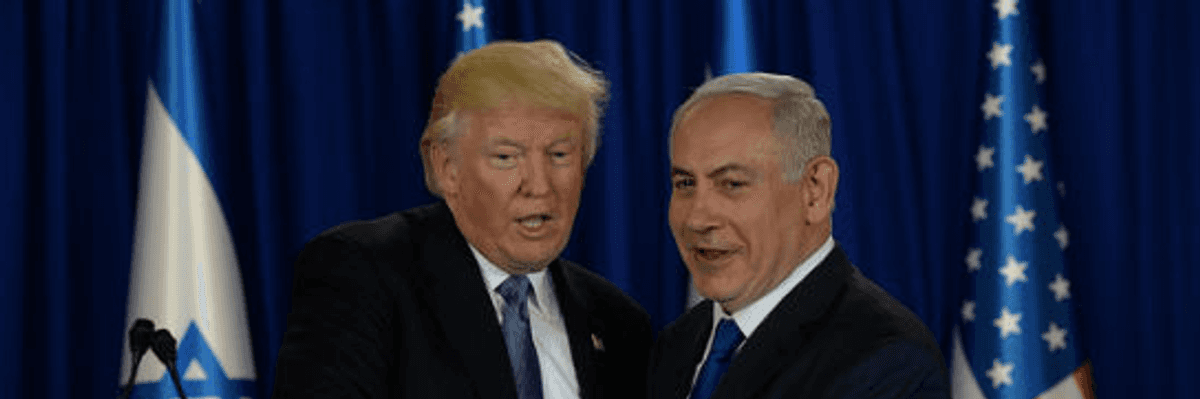
President Donald Trump and Israeli Prime MInister Benjamin Netanyahu.
Trump Proves He’s Still No Friend of Gaza
Trump’s “just clean out” comment epitomizes the culmination of decades of U.S. complicity in Israel’s oppression of Palestinians, shifting from passive support to active facilitation of ethnic cleansing.
U.S. President Donald Trump’s recent “just clean out” comment aboard Air Force One regarding Gaza starkly highlights how U.S. policy has shifted from enabling to actively facilitating Israel’s ethnic cleansing of Palestinians. Alongside his call to expel Palestinians, Trump announced the release of 2,000-pound bombs to Israel, munitions previously held back by the Biden administration, just days after lifting sanctions on Israeli settlers.
Rather than signaling a new direction, Trump’s remarks reveal the culmination of America’s ongoing and escalating support for Israel’s actions. This moment also exposes the cynical manipulation of Palestinian and pro-Palestinian voters by the Trump administration, which previously used hollow overtures to exploit anti-Democratic sentiment.
During his first term in office, Trump adopted a series of measures that emboldened Israel’s expansionist and militaristic agenda. His recognition of Jerusalem as Israel’s capital in 2017 sparked widespread condemnation and global protests. The decision elicited a wide range of reactions. Israeli leaders, including Prime Minister Benjamin Netanyahu, celebrated it as a historic and rightful acknowledgment of their capital. In stark contrast, it provoked widespread outrage among Palestinians and throughout the Arab and Muslim world, sparking protests and condemnations. In response, the Organization of Islamic Cooperation (OIC) declared East Jerusalem the capital of Palestine and warned the U.S. of potential repercussions.
Trump’s cynical attempts to win over pro-Palestinian voters only highlight the depth of his gaslighting and abuse.
The move, which flew in the face of decades of U.S. policy and international consensus, led to violent crackdowns on Palestinian demonstrators. The backlash against Trump’s Jerusalem decision extended beyond Palestinian communities. Protests erupted worldwide, from Istanbul to Jakarta, reflecting a collective outrage against U.S. complicity in Israel’s occupation.
Trump’s presidency also saw recognition of Israeli sovereignty over the Golan Heights, a region internationally recognized as Syrian territory. The Golan Heights, seized by Israel from Syria during the Six-Day War in 1967, was formally annexed by Israel in 1981, a move that remained unrecognized by the international community until President Trump’s proclamation. This unprecedented decision not only broke with decades of international consensus but also heightened tensions and further complicated the already fraught Israeli-Palestinian conflict. This move further cemented Trump’s legacy as an enabler of Israel’s expansionism and drew condemnation from both Arab states and Iran. The recognition emboldened Israel’s settlement expansion in the West Bank, with Trump consistently turning a blind eye to illegal land grabs and settler violence.
In the lead-up to the 2024 presidential election, Trump made calculated overtures to Palestinian and Arab-American voters, particularly in areas like Michigan’s Hamtramck. He attempted to portray himself as sympathetic to Arab and Muslim concerns, even naming Jill Stein as one of his “favorite politicians,” presumably to appeal to disaffected progressives. Yet these gestures were nothing more than political theater. The Council on American-Islamic Relations (CAIR) conducted an exit poll revealing a significant shift in Muslim voter preferences during the 2024 presidential election in Trump’s favor. It’s important to note that while Arab and Muslim Americans have been scapegoated for Trump’s electoral success in certain quarters, their communities have consistently organized against his policies. They are ultimately victims in a U.S. electoral system that offered no positive options.
Trump’s rhetoric and policies have not only emboldened Israel but also placed the U.S. on a path of proactive engagement as opposed to facilitator in the ethnic cleansing of Palestinians. This is only underscored by his cynical response to the potential of rebuilding Gaza where he referenced the “phenomenal location” and “the best weather.” When placed in the context of past remarks by Trump’s son-in-law, Jared Kushner, the comments take on added weight. Kushner previously suggested that Gaza’s waterfront property could hold significant potential if efforts were directed toward building up livelihoods. He described the situation as “a bit of an unfortunate situation” and stated, “from Israel’s perspective, I would try to relocate the people and clean it up.” This rhetoric is not an aberration but a culmination of U.S. policies that have systematically marginalized Palestinians and emboldened Israeli aggression.
Trump’s “just clean out” comment epitomizes the culmination of decades of U.S. complicity in Israel’s oppression of Palestinians, shifting from passive support to active facilitation of ethnic cleansing. His past administration’s policies, from recognizing Jerusalem as Israel’s capital to endorsing sovereignty over the Golan Heights, reflect a blatant disregard for international law and Palestinian rights. These actions, paired with hollow overtures to Arab and Muslim voters, reveal a strategy of gaslighting and manipulation. Trump’s cynical attempts to win over pro-Palestinian voters only highlight the depth of his gaslighting and abuse. As the U.S. continues down an escalating path of proactively engaging in ethnic cleansing and genocide, we must demand accountability and an end to complicity in these atrocities.
We are at a crossroads
This country and this world are at a monumental crossroads. In a few short weeks, US voters will have an opportunity to beat back the forces of fascism and confront the billionaires who are rigging the economy, our media system, and our democracy, making it increasingly impossible for ordinary people to get by. We’re not just talking about the election. We’re talking about what must be done once these fascist elements are vanquished from power. We need a bolder set of solutions than what either major party has so far been willing to offer and a working-class movement ready to fight like hell for it. Trump didn't emerge from nowhere. The conditions that fueled MAGA authoritarianism were created by decades of radical neoliberal economic policies and a corrupt political system dominated by corporate interests. They slashed taxes on the super-rich, promising that the benefits would trickle down. They said giveaways to the corporate titans would make life more affordable for the rest of us. It was all bullshit. And when a bitter, betrayed populace searches for someone to blame, right-wing demagogues have little trouble finding scapegoats. People know when they're being lied to, but you won't hear any of this from the corporate media. Only independent journalism—powered and funded by people who believe in building a better world—can deliver truly trustworthy daily news. Our Fall Campaign is underway, and we need your help. To power our newsroom through the rest of the year, we need to raise $125,000 by midnight on October 31. So if you share our vision, please contribute whatever you can to sustain our work. |
U.S. President Donald Trump’s recent “just clean out” comment aboard Air Force One regarding Gaza starkly highlights how U.S. policy has shifted from enabling to actively facilitating Israel’s ethnic cleansing of Palestinians. Alongside his call to expel Palestinians, Trump announced the release of 2,000-pound bombs to Israel, munitions previously held back by the Biden administration, just days after lifting sanctions on Israeli settlers.
Rather than signaling a new direction, Trump’s remarks reveal the culmination of America’s ongoing and escalating support for Israel’s actions. This moment also exposes the cynical manipulation of Palestinian and pro-Palestinian voters by the Trump administration, which previously used hollow overtures to exploit anti-Democratic sentiment.
During his first term in office, Trump adopted a series of measures that emboldened Israel’s expansionist and militaristic agenda. His recognition of Jerusalem as Israel’s capital in 2017 sparked widespread condemnation and global protests. The decision elicited a wide range of reactions. Israeli leaders, including Prime Minister Benjamin Netanyahu, celebrated it as a historic and rightful acknowledgment of their capital. In stark contrast, it provoked widespread outrage among Palestinians and throughout the Arab and Muslim world, sparking protests and condemnations. In response, the Organization of Islamic Cooperation (OIC) declared East Jerusalem the capital of Palestine and warned the U.S. of potential repercussions.
Trump’s cynical attempts to win over pro-Palestinian voters only highlight the depth of his gaslighting and abuse.
The move, which flew in the face of decades of U.S. policy and international consensus, led to violent crackdowns on Palestinian demonstrators. The backlash against Trump’s Jerusalem decision extended beyond Palestinian communities. Protests erupted worldwide, from Istanbul to Jakarta, reflecting a collective outrage against U.S. complicity in Israel’s occupation.
Trump’s presidency also saw recognition of Israeli sovereignty over the Golan Heights, a region internationally recognized as Syrian territory. The Golan Heights, seized by Israel from Syria during the Six-Day War in 1967, was formally annexed by Israel in 1981, a move that remained unrecognized by the international community until President Trump’s proclamation. This unprecedented decision not only broke with decades of international consensus but also heightened tensions and further complicated the already fraught Israeli-Palestinian conflict. This move further cemented Trump’s legacy as an enabler of Israel’s expansionism and drew condemnation from both Arab states and Iran. The recognition emboldened Israel’s settlement expansion in the West Bank, with Trump consistently turning a blind eye to illegal land grabs and settler violence.
In the lead-up to the 2024 presidential election, Trump made calculated overtures to Palestinian and Arab-American voters, particularly in areas like Michigan’s Hamtramck. He attempted to portray himself as sympathetic to Arab and Muslim concerns, even naming Jill Stein as one of his “favorite politicians,” presumably to appeal to disaffected progressives. Yet these gestures were nothing more than political theater. The Council on American-Islamic Relations (CAIR) conducted an exit poll revealing a significant shift in Muslim voter preferences during the 2024 presidential election in Trump’s favor. It’s important to note that while Arab and Muslim Americans have been scapegoated for Trump’s electoral success in certain quarters, their communities have consistently organized against his policies. They are ultimately victims in a U.S. electoral system that offered no positive options.
Trump’s rhetoric and policies have not only emboldened Israel but also placed the U.S. on a path of proactive engagement as opposed to facilitator in the ethnic cleansing of Palestinians. This is only underscored by his cynical response to the potential of rebuilding Gaza where he referenced the “phenomenal location” and “the best weather.” When placed in the context of past remarks by Trump’s son-in-law, Jared Kushner, the comments take on added weight. Kushner previously suggested that Gaza’s waterfront property could hold significant potential if efforts were directed toward building up livelihoods. He described the situation as “a bit of an unfortunate situation” and stated, “from Israel’s perspective, I would try to relocate the people and clean it up.” This rhetoric is not an aberration but a culmination of U.S. policies that have systematically marginalized Palestinians and emboldened Israeli aggression.
Trump’s “just clean out” comment epitomizes the culmination of decades of U.S. complicity in Israel’s oppression of Palestinians, shifting from passive support to active facilitation of ethnic cleansing. His past administration’s policies, from recognizing Jerusalem as Israel’s capital to endorsing sovereignty over the Golan Heights, reflect a blatant disregard for international law and Palestinian rights. These actions, paired with hollow overtures to Arab and Muslim voters, reveal a strategy of gaslighting and manipulation. Trump’s cynical attempts to win over pro-Palestinian voters only highlight the depth of his gaslighting and abuse. As the U.S. continues down an escalating path of proactively engaging in ethnic cleansing and genocide, we must demand accountability and an end to complicity in these atrocities.
- What Will a Second Trump Term Really Mean for Palestine? ›
- Peace Advocates Fear Trump May Hand Israel 'Full Control of Gaza and the West Bank' ›
- 'This is Ethnic Cleansing': Trump's Idea for Jordan and Egypt to Take Gazans Triggers Outrage ›
- Trump Son-in-Law Jared Kushner Calls for Ethnic Cleansing of Gaza to 'Finish the Job' ›
- Opinion | Shock, Awe, and Ethnic Cleansing: Trump's Policy in Gaza | Common Dreams ›
- Beside Israeli PM, Trump Floats Ethnic Cleansing of Palestinians From Gaza—'All of Them' | Common Dreams ›
- Opinion | Trump’s Ethnic Cleansing of Gaza Is a Brutal Form of Colonial Capitalism | Common Dreams ›
- Opinion | US Opinion Is Shifting on Palestine; Can Political Leaders Shift With It? | Common Dreams ›
U.S. President Donald Trump’s recent “just clean out” comment aboard Air Force One regarding Gaza starkly highlights how U.S. policy has shifted from enabling to actively facilitating Israel’s ethnic cleansing of Palestinians. Alongside his call to expel Palestinians, Trump announced the release of 2,000-pound bombs to Israel, munitions previously held back by the Biden administration, just days after lifting sanctions on Israeli settlers.
Rather than signaling a new direction, Trump’s remarks reveal the culmination of America’s ongoing and escalating support for Israel’s actions. This moment also exposes the cynical manipulation of Palestinian and pro-Palestinian voters by the Trump administration, which previously used hollow overtures to exploit anti-Democratic sentiment.
During his first term in office, Trump adopted a series of measures that emboldened Israel’s expansionist and militaristic agenda. His recognition of Jerusalem as Israel’s capital in 2017 sparked widespread condemnation and global protests. The decision elicited a wide range of reactions. Israeli leaders, including Prime Minister Benjamin Netanyahu, celebrated it as a historic and rightful acknowledgment of their capital. In stark contrast, it provoked widespread outrage among Palestinians and throughout the Arab and Muslim world, sparking protests and condemnations. In response, the Organization of Islamic Cooperation (OIC) declared East Jerusalem the capital of Palestine and warned the U.S. of potential repercussions.
Trump’s cynical attempts to win over pro-Palestinian voters only highlight the depth of his gaslighting and abuse.
The move, which flew in the face of decades of U.S. policy and international consensus, led to violent crackdowns on Palestinian demonstrators. The backlash against Trump’s Jerusalem decision extended beyond Palestinian communities. Protests erupted worldwide, from Istanbul to Jakarta, reflecting a collective outrage against U.S. complicity in Israel’s occupation.
Trump’s presidency also saw recognition of Israeli sovereignty over the Golan Heights, a region internationally recognized as Syrian territory. The Golan Heights, seized by Israel from Syria during the Six-Day War in 1967, was formally annexed by Israel in 1981, a move that remained unrecognized by the international community until President Trump’s proclamation. This unprecedented decision not only broke with decades of international consensus but also heightened tensions and further complicated the already fraught Israeli-Palestinian conflict. This move further cemented Trump’s legacy as an enabler of Israel’s expansionism and drew condemnation from both Arab states and Iran. The recognition emboldened Israel’s settlement expansion in the West Bank, with Trump consistently turning a blind eye to illegal land grabs and settler violence.
In the lead-up to the 2024 presidential election, Trump made calculated overtures to Palestinian and Arab-American voters, particularly in areas like Michigan’s Hamtramck. He attempted to portray himself as sympathetic to Arab and Muslim concerns, even naming Jill Stein as one of his “favorite politicians,” presumably to appeal to disaffected progressives. Yet these gestures were nothing more than political theater. The Council on American-Islamic Relations (CAIR) conducted an exit poll revealing a significant shift in Muslim voter preferences during the 2024 presidential election in Trump’s favor. It’s important to note that while Arab and Muslim Americans have been scapegoated for Trump’s electoral success in certain quarters, their communities have consistently organized against his policies. They are ultimately victims in a U.S. electoral system that offered no positive options.
Trump’s rhetoric and policies have not only emboldened Israel but also placed the U.S. on a path of proactive engagement as opposed to facilitator in the ethnic cleansing of Palestinians. This is only underscored by his cynical response to the potential of rebuilding Gaza where he referenced the “phenomenal location” and “the best weather.” When placed in the context of past remarks by Trump’s son-in-law, Jared Kushner, the comments take on added weight. Kushner previously suggested that Gaza’s waterfront property could hold significant potential if efforts were directed toward building up livelihoods. He described the situation as “a bit of an unfortunate situation” and stated, “from Israel’s perspective, I would try to relocate the people and clean it up.” This rhetoric is not an aberration but a culmination of U.S. policies that have systematically marginalized Palestinians and emboldened Israeli aggression.
Trump’s “just clean out” comment epitomizes the culmination of decades of U.S. complicity in Israel’s oppression of Palestinians, shifting from passive support to active facilitation of ethnic cleansing. His past administration’s policies, from recognizing Jerusalem as Israel’s capital to endorsing sovereignty over the Golan Heights, reflect a blatant disregard for international law and Palestinian rights. These actions, paired with hollow overtures to Arab and Muslim voters, reveal a strategy of gaslighting and manipulation. Trump’s cynical attempts to win over pro-Palestinian voters only highlight the depth of his gaslighting and abuse. As the U.S. continues down an escalating path of proactively engaging in ethnic cleansing and genocide, we must demand accountability and an end to complicity in these atrocities.
- What Will a Second Trump Term Really Mean for Palestine? ›
- Peace Advocates Fear Trump May Hand Israel 'Full Control of Gaza and the West Bank' ›
- 'This is Ethnic Cleansing': Trump's Idea for Jordan and Egypt to Take Gazans Triggers Outrage ›
- Trump Son-in-Law Jared Kushner Calls for Ethnic Cleansing of Gaza to 'Finish the Job' ›
- Opinion | Shock, Awe, and Ethnic Cleansing: Trump's Policy in Gaza | Common Dreams ›
- Beside Israeli PM, Trump Floats Ethnic Cleansing of Palestinians From Gaza—'All of Them' | Common Dreams ›
- Opinion | Trump’s Ethnic Cleansing of Gaza Is a Brutal Form of Colonial Capitalism | Common Dreams ›
- Opinion | US Opinion Is Shifting on Palestine; Can Political Leaders Shift With It? | Common Dreams ›