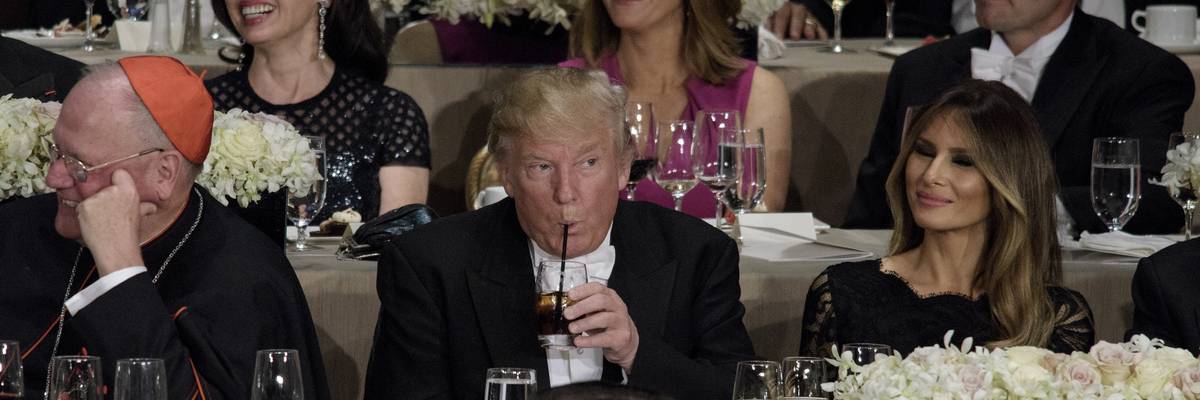
From left Cardinal Timothy Dolan, archbishop of New York; then-Republican presidential nominee Donald Trump; Melania Trump, and others listen as Democratic presidential nominee Hillary Clinton speaks during the Alfred E. Smith Memorial Foundation Dinner at Waldorf Astoria October 20, 2016 in New York, New York.
Trump’s Embrace of Plastic Straws Won’t Make America Healthy Again
The harmful effects of plastics on human health should be a primary concern for any administration that claims to value human life.
U.S. President Donald Trump’s recent executive order, which reverses the push for paper straws in favor of plastic ones—based on the claim that paper straws don’t work (which, by the way, isn’t true)—is about way more than just straws. It is designed to undercut the Biden administration’s 2022 initiative to phase out single-use plastics, including straws, containers, and bottles, from federal buildings by 2032.
While the administration’s EO focus might seem to be shining a light on a seemingly trivial issue, it is a symptom of a much larger, and much more alarming problem: plastic pollution and its impact on all of us. Plastic is a human health crisis in the making and this decision is more than absurd—it’s actually dangerous.
Firstly, while banning plastic straws specifically is not all about saving turtles and trashing the ocean—we are in fact by using them helping to trash the oceans.
This decision to roll back a policy aimed at reducing plastic waste isn’t just a misguided nod to convenience—it’s a big win for Big Oil.
Plastics have become a pervasive pollutant with 8 million tonnes of plastic dumped in our oceans every single year, killing marine life, including whales and seabirds at an alarming rate. One million sea turtles alone die every year from ingesting plastic trash. That represents 10% of the entire global population.
Researchers estimate there are around 199 million tonnes of plastic contaminating our marine environment already, and every year we do not take action and instead back plastic, that number rises.
Much of this largely single-use plastic, like straws, eventually breaks down into microplastics, smaller than a grain of rice. So, when we eat fish, we are consuming all the plastic junk and chemicals they have been ingesting too.
Which might help to explain why scientists have found plastic particles in human brains, lungs, hearts, and even placentas. We are poisoning our own babies with plastics, even before they are born.
These microplastics are harmful in their own right but, they also leach out toxic plastic chemicals, like Bisphenol A and phthalates, both known endocrine disruptors. Exposure to these chemicals in early development can have lifelong effects on a child's health, from developmental delays to ADHD, autism, and increased risks of certain cancers. These chemicals are even linked to miscarriages and infertility.
We already know that babies and infants appear to be ingesting high levels of microplastics because a study by scientists from Trinity College, Dublin in Ireland discovered they had over 10 times higher rates of microplastics in their feces samples than adults.
From the moment we wake up to the time we go to sleep, we are being exposed to microplastics—whether through the food we eat, the water we drink, or the air we breathe.
The harmful effects of plastics on human health should be a primary concern for any administration that claims to value human life. So, the president’s focus on supporting plastic straws is worryingly indicative of a disregard for the growing scientific consensus on the dangers of microplastics and the chemicals used to make plastics in general.
This decision to roll back a policy aimed at reducing plastic waste isn’t just a misguided nod to convenience—it’s a big win for Big Oil. Why? Because plastics are made from petrochemicals, this order therefore supports the fossil fuel industry. An industry already wreaking havoc on our planet by fueling climate change.
If we are serious about safeguarding human health, we must shift away from our throwaway plastic culture that has dominated our society for decades. The impacts of plastic pollution on our health, and our babies’ too, are far-reaching and catastrophic. It's time for our leaders to prioritize the health of people, not the interests of the plastic industry.
As the debate over plastic straws continues, which it will, we need to refocus the conversation on the real, life-threatening dangers posed by plastic pollution. It is time to recognize that this is not a fight over a straw—it is a fight for children’s health.
Which is why EARTHDAY.ORG is running an End Plastic Initiatives—so we can continue to drive public support around making a stand against plastic pollution and in the process protect our planet—and more importantly our health—for generations to come. The fight continues. Plastic is Toxic. DON’T GO BACK TO PLASTICS!
We are at a crossroads
This country and this world are at a monumental crossroads. In a few short weeks, US voters will have an opportunity to beat back the forces of fascism and confront the billionaires who are rigging the economy, our media system, and our democracy, making it increasingly impossible for ordinary people to get by. We’re not just talking about the election. We’re talking about what must be done once these fascist elements are vanquished from power. We need a bolder set of solutions than what either major party has so far been willing to offer and a working-class movement ready to fight like hell for it. Trump didn't emerge from nowhere. The conditions that fueled MAGA authoritarianism were created by decades of radical neoliberal economic policies and a corrupt political system dominated by corporate interests. They slashed taxes on the super-rich, promising that the benefits would trickle down. They said giveaways to the corporate titans would make life more affordable for the rest of us. It was all bullshit. And when a bitter, betrayed populace searches for someone to blame, right-wing demagogues have little trouble finding scapegoats. People know when they're being lied to, but you won't hear any of this from the corporate media. Only independent journalism—powered and funded by people who believe in building a better world—can deliver truly trustworthy daily news. Our Fall Campaign is underway, and we need your help. To power our newsroom through the rest of the year, we need to raise $125,000 by midnight on October 31. So if you share our vision, please contribute whatever you can to sustain our work. |
U.S. President Donald Trump’s recent executive order, which reverses the push for paper straws in favor of plastic ones—based on the claim that paper straws don’t work (which, by the way, isn’t true)—is about way more than just straws. It is designed to undercut the Biden administration’s 2022 initiative to phase out single-use plastics, including straws, containers, and bottles, from federal buildings by 2032.
While the administration’s EO focus might seem to be shining a light on a seemingly trivial issue, it is a symptom of a much larger, and much more alarming problem: plastic pollution and its impact on all of us. Plastic is a human health crisis in the making and this decision is more than absurd—it’s actually dangerous.
Firstly, while banning plastic straws specifically is not all about saving turtles and trashing the ocean—we are in fact by using them helping to trash the oceans.
This decision to roll back a policy aimed at reducing plastic waste isn’t just a misguided nod to convenience—it’s a big win for Big Oil.
Plastics have become a pervasive pollutant with 8 million tonnes of plastic dumped in our oceans every single year, killing marine life, including whales and seabirds at an alarming rate. One million sea turtles alone die every year from ingesting plastic trash. That represents 10% of the entire global population.
Researchers estimate there are around 199 million tonnes of plastic contaminating our marine environment already, and every year we do not take action and instead back plastic, that number rises.
Much of this largely single-use plastic, like straws, eventually breaks down into microplastics, smaller than a grain of rice. So, when we eat fish, we are consuming all the plastic junk and chemicals they have been ingesting too.
Which might help to explain why scientists have found plastic particles in human brains, lungs, hearts, and even placentas. We are poisoning our own babies with plastics, even before they are born.
These microplastics are harmful in their own right but, they also leach out toxic plastic chemicals, like Bisphenol A and phthalates, both known endocrine disruptors. Exposure to these chemicals in early development can have lifelong effects on a child's health, from developmental delays to ADHD, autism, and increased risks of certain cancers. These chemicals are even linked to miscarriages and infertility.
We already know that babies and infants appear to be ingesting high levels of microplastics because a study by scientists from Trinity College, Dublin in Ireland discovered they had over 10 times higher rates of microplastics in their feces samples than adults.
From the moment we wake up to the time we go to sleep, we are being exposed to microplastics—whether through the food we eat, the water we drink, or the air we breathe.
The harmful effects of plastics on human health should be a primary concern for any administration that claims to value human life. So, the president’s focus on supporting plastic straws is worryingly indicative of a disregard for the growing scientific consensus on the dangers of microplastics and the chemicals used to make plastics in general.
This decision to roll back a policy aimed at reducing plastic waste isn’t just a misguided nod to convenience—it’s a big win for Big Oil. Why? Because plastics are made from petrochemicals, this order therefore supports the fossil fuel industry. An industry already wreaking havoc on our planet by fueling climate change.
If we are serious about safeguarding human health, we must shift away from our throwaway plastic culture that has dominated our society for decades. The impacts of plastic pollution on our health, and our babies’ too, are far-reaching and catastrophic. It's time for our leaders to prioritize the health of people, not the interests of the plastic industry.
As the debate over plastic straws continues, which it will, we need to refocus the conversation on the real, life-threatening dangers posed by plastic pollution. It is time to recognize that this is not a fight over a straw—it is a fight for children’s health.
Which is why EARTHDAY.ORG is running an End Plastic Initiatives—so we can continue to drive public support around making a stand against plastic pollution and in the process protect our planet—and more importantly our health—for generations to come. The fight continues. Plastic is Toxic. DON’T GO BACK TO PLASTICS!
- Beware the Toxic Chemicals at Dollar Stores ›
- U.S. Representatives, NGOs Urge Congress to Pass Federal Plastics Regulations ›
- Lancet Study Warns Plastics Could Cost Humanity 83 Million Years of Healthy Life | Common Dreams ›
- Opinion | Don't Call 1 Study a 'Bombshell': Microplastics Science Is Doing Exactly What It Should | Common Dreams ›
U.S. President Donald Trump’s recent executive order, which reverses the push for paper straws in favor of plastic ones—based on the claim that paper straws don’t work (which, by the way, isn’t true)—is about way more than just straws. It is designed to undercut the Biden administration’s 2022 initiative to phase out single-use plastics, including straws, containers, and bottles, from federal buildings by 2032.
While the administration’s EO focus might seem to be shining a light on a seemingly trivial issue, it is a symptom of a much larger, and much more alarming problem: plastic pollution and its impact on all of us. Plastic is a human health crisis in the making and this decision is more than absurd—it’s actually dangerous.
Firstly, while banning plastic straws specifically is not all about saving turtles and trashing the ocean—we are in fact by using them helping to trash the oceans.
This decision to roll back a policy aimed at reducing plastic waste isn’t just a misguided nod to convenience—it’s a big win for Big Oil.
Plastics have become a pervasive pollutant with 8 million tonnes of plastic dumped in our oceans every single year, killing marine life, including whales and seabirds at an alarming rate. One million sea turtles alone die every year from ingesting plastic trash. That represents 10% of the entire global population.
Researchers estimate there are around 199 million tonnes of plastic contaminating our marine environment already, and every year we do not take action and instead back plastic, that number rises.
Much of this largely single-use plastic, like straws, eventually breaks down into microplastics, smaller than a grain of rice. So, when we eat fish, we are consuming all the plastic junk and chemicals they have been ingesting too.
Which might help to explain why scientists have found plastic particles in human brains, lungs, hearts, and even placentas. We are poisoning our own babies with plastics, even before they are born.
These microplastics are harmful in their own right but, they also leach out toxic plastic chemicals, like Bisphenol A and phthalates, both known endocrine disruptors. Exposure to these chemicals in early development can have lifelong effects on a child's health, from developmental delays to ADHD, autism, and increased risks of certain cancers. These chemicals are even linked to miscarriages and infertility.
We already know that babies and infants appear to be ingesting high levels of microplastics because a study by scientists from Trinity College, Dublin in Ireland discovered they had over 10 times higher rates of microplastics in their feces samples than adults.
From the moment we wake up to the time we go to sleep, we are being exposed to microplastics—whether through the food we eat, the water we drink, or the air we breathe.
The harmful effects of plastics on human health should be a primary concern for any administration that claims to value human life. So, the president’s focus on supporting plastic straws is worryingly indicative of a disregard for the growing scientific consensus on the dangers of microplastics and the chemicals used to make plastics in general.
This decision to roll back a policy aimed at reducing plastic waste isn’t just a misguided nod to convenience—it’s a big win for Big Oil. Why? Because plastics are made from petrochemicals, this order therefore supports the fossil fuel industry. An industry already wreaking havoc on our planet by fueling climate change.
If we are serious about safeguarding human health, we must shift away from our throwaway plastic culture that has dominated our society for decades. The impacts of plastic pollution on our health, and our babies’ too, are far-reaching and catastrophic. It's time for our leaders to prioritize the health of people, not the interests of the plastic industry.
As the debate over plastic straws continues, which it will, we need to refocus the conversation on the real, life-threatening dangers posed by plastic pollution. It is time to recognize that this is not a fight over a straw—it is a fight for children’s health.
Which is why EARTHDAY.ORG is running an End Plastic Initiatives—so we can continue to drive public support around making a stand against plastic pollution and in the process protect our planet—and more importantly our health—for generations to come. The fight continues. Plastic is Toxic. DON’T GO BACK TO PLASTICS!
- Beware the Toxic Chemicals at Dollar Stores ›
- U.S. Representatives, NGOs Urge Congress to Pass Federal Plastics Regulations ›
- Lancet Study Warns Plastics Could Cost Humanity 83 Million Years of Healthy Life | Common Dreams ›
- Opinion | Don't Call 1 Study a 'Bombshell': Microplastics Science Is Doing Exactly What It Should | Common Dreams ›