SUBSCRIBE TO OUR FREE NEWSLETTER
Daily news & progressive opinion—funded by the people, not the corporations—delivered straight to your inbox.
5
#000000
#FFFFFF
To donate by check, phone, or other method, see our More Ways to Give page.
Daily news & progressive opinion—funded by the people, not the corporations—delivered straight to your inbox.
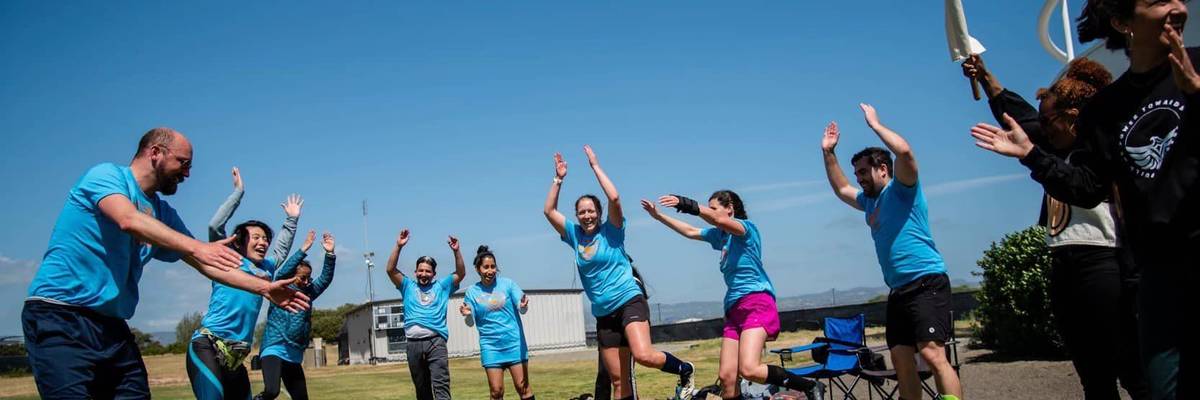
Members of Pangea Legal Services participate in the California Collaborative for Immigrant Justice CCIJustGoals tournament in 2023.
Workers are reorganizing their workplaces, yes—and they’re also building something more. They’re pushing for deeper, systemic changes that go beyond just wages and benefits. They’re pushing for a culture of fairness, transparency, and collective power.
As we look to the future, the path forward is clearer than ever. The world of work is shifting, and with it the way we govern ourselves, care for each other, and build organizations. In this new era, our future is collective. The rise of worker-led organization—those where shared leadership and shared responsibility are the backbone of decision-making—is not a mere trend; it’s a transformation in how we understand power and community. The change has already begun, and the seeds planted in collective governance are sprouting in real time.
But for these models to thrive, they need commitment from all sides. It requires those at the top and those coming down from the top to be vocal in their support, to model the behaviors of shared power, and to make space for others to lead. Workers, too, need to lean in, both to do their jobs and to take responsibility for the whole. It’s uncomfortable at times—asking people to take ownership of something that isn’t just theirs but all of ours, and allowing leaders to step back and let others lead. But in this discomfort, growth happens. The challenges are real, but so are the possibilities. When we create spaces where everyone is invited to participate, to have a say, and to lead in their own way, it opens up a whole new world of possibility. It’s not just about fairness or equality; it’s about creating a better, more supportive way of working together. And we’re seeing this already in places like the nonprofit sector, where workers are pushing back against the “do more with less” mentality that has so often dominated our culture, even in social justice spaces.
Workers are reorganizing their workplaces, yes—and they’re also building something more. They’re pushing for deeper, systemic changes that go beyond just wages and benefits. They’re pushing for a culture of fairness, transparency, and collective power. The rise in worker-led governance models in the non-profit sector (along with a renewed surge in public-sector union organizing) is showing us that people are ready to reclaim power, not only in how much they’re paid or what benefits they receive, but in how decisions are made and how they’re treated. Nonprofits especially are looking at their internal structures and realizing that they need to change. It’s a slow, steady process, but it’s happening. Workers are taking control, demanding fair treatment, and saying, “We deserve better—and we can create it.” But as the great thought leader Audre Lorde reminds us, achieving real liberation takes more than a fight against oppression; it requires a thorough deconstruction and rebuilding of the systems that perpetuate it. The challenge here is not only to fix the problems we see but also to dismantle the structures of power that created them in the first place. This is why shifting from a strictly hierarchical, top-down system to one of participatory, collective governance isn’t just about equity and inclusion—it’s about the profound and necessary act of rebuilding how we work, how we lead, and how we treat one another. It’s about justice. We are not simply asking for better conditions within the old systems. We are evolving into something new.
But let’s be real: it’s not going to happen overnight. It takes time—at least three to five years of sustained effort—for real transformation to occur within an organization. And we can’t expect perfection from the start. Transforming how we work, how we lead, and how we make decisions is a long-term investment. It takes time, patience, and a willingness to be uncomfortable. It takes experimenting, making mistakes, learning from them, and trying again. The kind of collective governance we dream of doesn’t happen in one big leap; it happens through incremental progress. We start with small changes, perhaps by creating a new decision-making process in a team, or introducing a regular meeting for everyone to voice their concerns. It’s in the small, intentional shifts that we begin to build something bigger.
This is our generation’s work: to create organizations that are efficient and serve an immediate need while also being holistic and human-centered—organizations where everyone has a voice and every person feels empowered and accountable.
I’ve seen this up close. When I was part of Pangea Legal Services, we took a step toward formalized co-governance, and it was far from easy. At first, I found myself reluctant to relinquish control and let others take the lead, especially when I thought I knew better. I had to learn to trust others, reconcile my ego, lean back, and allow mistakes to happen. But over time we saw how much stronger we became. When leadership was shared and decisions were made collectively, we found new ways of doing things—sometimes better ways than I could have imagined. And the results were there: The year after I left, my colleagues continued to thrive and raised millions of dollars in new, unrestricted funding—an extraordinary achievement for a twenty-person nonprofit, especially after a founder transition. We continually proved to ourselves that this model works, and it was because we made the decision to embrace collective leadership, even when it was hard.
When we look to history for guidance, we can see how seemingly small and thoughtful actions have led to enormous change. In the 1960s, the Black Panther Party launched its Free Breakfast for Children program, not as a temporary fix but as a way to meet basic needs and challenge systemic inequalities. What began as free school breakfasts in local communities eventually inspired state-wide programs and national policies. Meaningful change often starts small—one organization, one community, one movement at a time. If we want to transform the future, we have to start where we are and build from there. We have to live the change we want to see now. We have the power to create the future we envision; the key is to begin practicing it every day in our workplaces, our homes, and our communities.
This is our generation’s work: to create organizations that are efficient and serve an immediate need while also being holistic and human-centered—organizations where everyone has a voice and every person feels empowered and accountable. We will create spaces where workers can lead and decision-making is shared, and we will build systems that reflect our deepest values of care, respect, and justice. This vision is not a distant dream. It’s happening now, and each of us has a role to play.
So where do we begin? There are as many starting points as there are individuals and organizations, but one thing is clear: We begin with values and points of unity. We ground ourselves in shared values, we build relationships, and we create what we can with what we have. We don’t wait for the perfect conditions. And in this practice, in this steady, deliberate work of transforming our workplaces from the inside out, we create a future that reflects our highest aspirations.
Change starts with the choices we make and the values we commit to embodying. Each time we prioritize collaboration over competition, equity over expediency, and care over control, we lay the groundwork for something transformative. As these principles take root in our actions and relationships, the change deepens and expands, offering not just a new way of working but a new way of being together. We may not have all the answers yet, but we have the capacity to shape the future. And that future is collective.
From The Future Is Collective by Niloufar Khonsari, published by North Atlantic Books, copyright © 2025 by Niloufar Khonsari. Reprinted by permission of North Atlantic Books.
Dear Common Dreams reader, It’s been nearly 30 years since I co-founded Common Dreams with my late wife, Lina Newhouser. We had the radical notion that journalism should serve the public good, not corporate profits. It was clear to us from the outset what it would take to build such a project. No paid advertisements. No corporate sponsors. No millionaire publisher telling us what to think or do. Many people said we wouldn't last a year, but we proved those doubters wrong. Together with a tremendous team of journalists and dedicated staff, we built an independent media outlet free from the constraints of profits and corporate control. Our mission has always been simple: To inform. To inspire. To ignite change for the common good. Building Common Dreams was not easy. Our survival was never guaranteed. When you take on the most powerful forces—Wall Street greed, fossil fuel industry destruction, Big Tech lobbyists, and uber-rich oligarchs who have spent billions upon billions rigging the economy and democracy in their favor—the only bulwark you have is supporters who believe in your work. But here’s the urgent message from me today. It's never been this bad out there. And it's never been this hard to keep us going. At the very moment Common Dreams is most needed, the threats we face are intensifying. We need your support now more than ever. We don't accept corporate advertising and never will. We don't have a paywall because we don't think people should be blocked from critical news based on their ability to pay. Everything we do is funded by the donations of readers like you. When everyone does the little they can afford, we are strong. But if that support retreats or dries up, so do we. Will you donate now to make sure Common Dreams not only survives but thrives? —Craig Brown, Co-founder |
As we look to the future, the path forward is clearer than ever. The world of work is shifting, and with it the way we govern ourselves, care for each other, and build organizations. In this new era, our future is collective. The rise of worker-led organization—those where shared leadership and shared responsibility are the backbone of decision-making—is not a mere trend; it’s a transformation in how we understand power and community. The change has already begun, and the seeds planted in collective governance are sprouting in real time.
But for these models to thrive, they need commitment from all sides. It requires those at the top and those coming down from the top to be vocal in their support, to model the behaviors of shared power, and to make space for others to lead. Workers, too, need to lean in, both to do their jobs and to take responsibility for the whole. It’s uncomfortable at times—asking people to take ownership of something that isn’t just theirs but all of ours, and allowing leaders to step back and let others lead. But in this discomfort, growth happens. The challenges are real, but so are the possibilities. When we create spaces where everyone is invited to participate, to have a say, and to lead in their own way, it opens up a whole new world of possibility. It’s not just about fairness or equality; it’s about creating a better, more supportive way of working together. And we’re seeing this already in places like the nonprofit sector, where workers are pushing back against the “do more with less” mentality that has so often dominated our culture, even in social justice spaces.
Workers are reorganizing their workplaces, yes—and they’re also building something more. They’re pushing for deeper, systemic changes that go beyond just wages and benefits. They’re pushing for a culture of fairness, transparency, and collective power. The rise in worker-led governance models in the non-profit sector (along with a renewed surge in public-sector union organizing) is showing us that people are ready to reclaim power, not only in how much they’re paid or what benefits they receive, but in how decisions are made and how they’re treated. Nonprofits especially are looking at their internal structures and realizing that they need to change. It’s a slow, steady process, but it’s happening. Workers are taking control, demanding fair treatment, and saying, “We deserve better—and we can create it.” But as the great thought leader Audre Lorde reminds us, achieving real liberation takes more than a fight against oppression; it requires a thorough deconstruction and rebuilding of the systems that perpetuate it. The challenge here is not only to fix the problems we see but also to dismantle the structures of power that created them in the first place. This is why shifting from a strictly hierarchical, top-down system to one of participatory, collective governance isn’t just about equity and inclusion—it’s about the profound and necessary act of rebuilding how we work, how we lead, and how we treat one another. It’s about justice. We are not simply asking for better conditions within the old systems. We are evolving into something new.
But let’s be real: it’s not going to happen overnight. It takes time—at least three to five years of sustained effort—for real transformation to occur within an organization. And we can’t expect perfection from the start. Transforming how we work, how we lead, and how we make decisions is a long-term investment. It takes time, patience, and a willingness to be uncomfortable. It takes experimenting, making mistakes, learning from them, and trying again. The kind of collective governance we dream of doesn’t happen in one big leap; it happens through incremental progress. We start with small changes, perhaps by creating a new decision-making process in a team, or introducing a regular meeting for everyone to voice their concerns. It’s in the small, intentional shifts that we begin to build something bigger.
This is our generation’s work: to create organizations that are efficient and serve an immediate need while also being holistic and human-centered—organizations where everyone has a voice and every person feels empowered and accountable.
I’ve seen this up close. When I was part of Pangea Legal Services, we took a step toward formalized co-governance, and it was far from easy. At first, I found myself reluctant to relinquish control and let others take the lead, especially when I thought I knew better. I had to learn to trust others, reconcile my ego, lean back, and allow mistakes to happen. But over time we saw how much stronger we became. When leadership was shared and decisions were made collectively, we found new ways of doing things—sometimes better ways than I could have imagined. And the results were there: The year after I left, my colleagues continued to thrive and raised millions of dollars in new, unrestricted funding—an extraordinary achievement for a twenty-person nonprofit, especially after a founder transition. We continually proved to ourselves that this model works, and it was because we made the decision to embrace collective leadership, even when it was hard.
When we look to history for guidance, we can see how seemingly small and thoughtful actions have led to enormous change. In the 1960s, the Black Panther Party launched its Free Breakfast for Children program, not as a temporary fix but as a way to meet basic needs and challenge systemic inequalities. What began as free school breakfasts in local communities eventually inspired state-wide programs and national policies. Meaningful change often starts small—one organization, one community, one movement at a time. If we want to transform the future, we have to start where we are and build from there. We have to live the change we want to see now. We have the power to create the future we envision; the key is to begin practicing it every day in our workplaces, our homes, and our communities.
This is our generation’s work: to create organizations that are efficient and serve an immediate need while also being holistic and human-centered—organizations where everyone has a voice and every person feels empowered and accountable. We will create spaces where workers can lead and decision-making is shared, and we will build systems that reflect our deepest values of care, respect, and justice. This vision is not a distant dream. It’s happening now, and each of us has a role to play.
So where do we begin? There are as many starting points as there are individuals and organizations, but one thing is clear: We begin with values and points of unity. We ground ourselves in shared values, we build relationships, and we create what we can with what we have. We don’t wait for the perfect conditions. And in this practice, in this steady, deliberate work of transforming our workplaces from the inside out, we create a future that reflects our highest aspirations.
Change starts with the choices we make and the values we commit to embodying. Each time we prioritize collaboration over competition, equity over expediency, and care over control, we lay the groundwork for something transformative. As these principles take root in our actions and relationships, the change deepens and expands, offering not just a new way of working but a new way of being together. We may not have all the answers yet, but we have the capacity to shape the future. And that future is collective.
From The Future Is Collective by Niloufar Khonsari, published by North Atlantic Books, copyright © 2025 by Niloufar Khonsari. Reprinted by permission of North Atlantic Books.
As we look to the future, the path forward is clearer than ever. The world of work is shifting, and with it the way we govern ourselves, care for each other, and build organizations. In this new era, our future is collective. The rise of worker-led organization—those where shared leadership and shared responsibility are the backbone of decision-making—is not a mere trend; it’s a transformation in how we understand power and community. The change has already begun, and the seeds planted in collective governance are sprouting in real time.
But for these models to thrive, they need commitment from all sides. It requires those at the top and those coming down from the top to be vocal in their support, to model the behaviors of shared power, and to make space for others to lead. Workers, too, need to lean in, both to do their jobs and to take responsibility for the whole. It’s uncomfortable at times—asking people to take ownership of something that isn’t just theirs but all of ours, and allowing leaders to step back and let others lead. But in this discomfort, growth happens. The challenges are real, but so are the possibilities. When we create spaces where everyone is invited to participate, to have a say, and to lead in their own way, it opens up a whole new world of possibility. It’s not just about fairness or equality; it’s about creating a better, more supportive way of working together. And we’re seeing this already in places like the nonprofit sector, where workers are pushing back against the “do more with less” mentality that has so often dominated our culture, even in social justice spaces.
Workers are reorganizing their workplaces, yes—and they’re also building something more. They’re pushing for deeper, systemic changes that go beyond just wages and benefits. They’re pushing for a culture of fairness, transparency, and collective power. The rise in worker-led governance models in the non-profit sector (along with a renewed surge in public-sector union organizing) is showing us that people are ready to reclaim power, not only in how much they’re paid or what benefits they receive, but in how decisions are made and how they’re treated. Nonprofits especially are looking at their internal structures and realizing that they need to change. It’s a slow, steady process, but it’s happening. Workers are taking control, demanding fair treatment, and saying, “We deserve better—and we can create it.” But as the great thought leader Audre Lorde reminds us, achieving real liberation takes more than a fight against oppression; it requires a thorough deconstruction and rebuilding of the systems that perpetuate it. The challenge here is not only to fix the problems we see but also to dismantle the structures of power that created them in the first place. This is why shifting from a strictly hierarchical, top-down system to one of participatory, collective governance isn’t just about equity and inclusion—it’s about the profound and necessary act of rebuilding how we work, how we lead, and how we treat one another. It’s about justice. We are not simply asking for better conditions within the old systems. We are evolving into something new.
But let’s be real: it’s not going to happen overnight. It takes time—at least three to five years of sustained effort—for real transformation to occur within an organization. And we can’t expect perfection from the start. Transforming how we work, how we lead, and how we make decisions is a long-term investment. It takes time, patience, and a willingness to be uncomfortable. It takes experimenting, making mistakes, learning from them, and trying again. The kind of collective governance we dream of doesn’t happen in one big leap; it happens through incremental progress. We start with small changes, perhaps by creating a new decision-making process in a team, or introducing a regular meeting for everyone to voice their concerns. It’s in the small, intentional shifts that we begin to build something bigger.
This is our generation’s work: to create organizations that are efficient and serve an immediate need while also being holistic and human-centered—organizations where everyone has a voice and every person feels empowered and accountable.
I’ve seen this up close. When I was part of Pangea Legal Services, we took a step toward formalized co-governance, and it was far from easy. At first, I found myself reluctant to relinquish control and let others take the lead, especially when I thought I knew better. I had to learn to trust others, reconcile my ego, lean back, and allow mistakes to happen. But over time we saw how much stronger we became. When leadership was shared and decisions were made collectively, we found new ways of doing things—sometimes better ways than I could have imagined. And the results were there: The year after I left, my colleagues continued to thrive and raised millions of dollars in new, unrestricted funding—an extraordinary achievement for a twenty-person nonprofit, especially after a founder transition. We continually proved to ourselves that this model works, and it was because we made the decision to embrace collective leadership, even when it was hard.
When we look to history for guidance, we can see how seemingly small and thoughtful actions have led to enormous change. In the 1960s, the Black Panther Party launched its Free Breakfast for Children program, not as a temporary fix but as a way to meet basic needs and challenge systemic inequalities. What began as free school breakfasts in local communities eventually inspired state-wide programs and national policies. Meaningful change often starts small—one organization, one community, one movement at a time. If we want to transform the future, we have to start where we are and build from there. We have to live the change we want to see now. We have the power to create the future we envision; the key is to begin practicing it every day in our workplaces, our homes, and our communities.
This is our generation’s work: to create organizations that are efficient and serve an immediate need while also being holistic and human-centered—organizations where everyone has a voice and every person feels empowered and accountable. We will create spaces where workers can lead and decision-making is shared, and we will build systems that reflect our deepest values of care, respect, and justice. This vision is not a distant dream. It’s happening now, and each of us has a role to play.
So where do we begin? There are as many starting points as there are individuals and organizations, but one thing is clear: We begin with values and points of unity. We ground ourselves in shared values, we build relationships, and we create what we can with what we have. We don’t wait for the perfect conditions. And in this practice, in this steady, deliberate work of transforming our workplaces from the inside out, we create a future that reflects our highest aspirations.
Change starts with the choices we make and the values we commit to embodying. Each time we prioritize collaboration over competition, equity over expediency, and care over control, we lay the groundwork for something transformative. As these principles take root in our actions and relationships, the change deepens and expands, offering not just a new way of working but a new way of being together. We may not have all the answers yet, but we have the capacity to shape the future. And that future is collective.
From The Future Is Collective by Niloufar Khonsari, published by North Atlantic Books, copyright © 2025 by Niloufar Khonsari. Reprinted by permission of North Atlantic Books.