

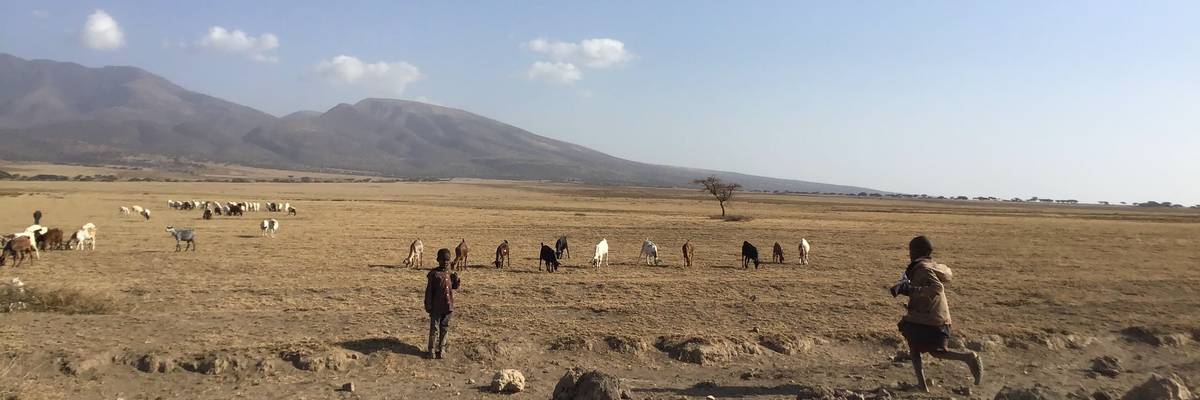
Maasai herders watch their cattle in Tanzania.
Instead of a Climate Villain, Livestock Can Be a Solution With Legs
For places where livestock is deeply embedded in livelihoods and culture, it is critical to see these farm animals from our perspective and help channel climate and biodiversity finance into their potential as a force for good.
Livestock are a vital component of both the African food system and rural livelihoods. The continent has around 400 million cattle alone, and the livestock sector accounts for a significant 30-40% of the total agricultural gross domestic product across the continent.
Small amounts of meat, milk and eggs can have life-changing benefits in tackling malnutrition, and these animals also provide a reliable income source when alternatives simply do not readily exist.
Yet, from an environmental perspective, livestock are often perceived only as a problem, contributing to habitat loss, greenhouse gas emissions, and land degradation. This narrow view can hold back much-needed finance into the sector, yet it misses a much more nuanced reality.
International climate finance should prioritise support for sustainable livestock systems, recognizing their unique role in tackling broad environmental challenges while providing food, livelihoods, and economic growth.
As the United Nations prepares for three major environmental meetings over the next few months—on biodiversity conservation, climate change, and land management, respectively—it is important for the world to rethink how it perceives livestock in the context of development progress, and to begin to see such animals as cows, goats, camels, and pigs as “solutions with legs” in combating these intensifying climate and environmental crises at scale.
For countries like Kenya, where livestock is deeply embedded in livelihoods and culture, it is critical for U.N. meetings to see these farm animals from our perspective and help channel climate and biodiversity finance into their potential as a force for good.
Firstly, contrary to popular belief, livestock can be powerful agents of biodiversity conservation when managed correctly. Well-managed grazing systems help maintain ecosystems, control invasive species, and foster the regeneration of diverse native plant life in degraded areas. Pastoralist communities in Kenya, from the Maasai to the Samburu, have long understood this, using livestock grazing as a tool to balance ecosystems and promote biodiversity while providing essential sources of income and producing almost 20% of Kenya’s milk.
And in many conservancies, livestock are intentionally integrated into wildlife conservation strategies. Cattle are grazed rotationally, mimicking natural patterns seen in wild herbivores like zebras and gazelles. This approach helps prevent overgrazing, maintains healthy grasslands, and supports both livestock and wildlife populations.
Secondly, in terms of climate action, the role of livestock is often framed solely around their methane emissions, particularly in the case of ruminant animals like cattle. However, the potential for livestock to contribute to climate solutions is much broader, particularly in places like Africa.
In terms of mitigation, improved rangeland management and the adoption of climate-smart feeding practices can significantly reduce livestock-related emissions. For instance, integrating climate-resilient forages into grazing systems improves both productivity and environmental outcomes.
Moreover, sustainable grazing practices can play a crucial role in lowering the emissions intensity of meat and dairy production through carbon sequestration. Rangelands, often considered wastelands, are actually some of the planet’s largest carbon sinks. When managed properly, they store significant amounts of carbon in their soils, and proper management can contribute as much as 20.92 gigatons of climate mitigation by 2050.
On the adaptation front, livestock are a critical lifeline for communities facing increasing climate variability, including in Kenya’s arid and semi-arid lands. By moving their livestock across landscapes in response to rainfall variability, pastoralists effectively manage scarce resources while avoiding overgrazing.
This adaptive mobility, coupled with the use of Indigenous livestock breeds adapted to harsh climates, provides a critical buffer against droughts and other climate stresses—even more so when index-based livestock insurance is available. The East African Zebu cattle, for example, are better equipped to survive on limited, poor-quality forage in dry conditions, making them crucial to climate resilience in Kenya.
Lastly, as the global land degradation crisis worsens, it is becoming increasingly clear that sustainable livestock management can be a tool for land restoration and rehabilitation. Somewhere between 25% and 35% of rangelands globally suffer from some form of degradation. If left unattended, they become unproductive, reducing food security and driving people to abandon rural areas. Livestock systems can actually help reverse this trend by promoting soil health and regenerating landscapes.
Sustainable grazing practices, including rotational grazing and controlled stocking densities, allow grasslands to recover and restore soil fertility. By moving livestock strategically across the land, these practices prevent overgrazing and promote the growth of deep-rooted plants, which stabilise the soil and improve water retention. Furthermore, healthy rangelands support a wide variety of plant species, protect watersheds, and improve overall ecosystem resilience.
Which begs the question, if livestock are so critical to all these environmental issues, why does the sector receive so little funding? International climate finance should prioritise support for sustainable livestock systems, recognizing their unique role in tackling broad environmental challenges while providing food, livelihoods, and economic growth.
Livestock are not the enemy in this fight. Rather, they are an integral part of the solution, especially in places like Africa where pastoralist and livestock-keeping communities depend on them for survival.
We are at a crossroads
This country and this world are at a monumental crossroads. In a few short weeks, US voters will have an opportunity to beat back the forces of fascism and confront the billionaires who are rigging the economy, our media system, and our democracy, making it increasingly impossible for ordinary people to get by. We’re not just talking about the election. We’re talking about what must be done once these fascist elements are vanquished from power. We need a bolder set of solutions than what either major party has so far been willing to offer and a working-class movement ready to fight like hell for it. Trump didn't emerge from nowhere. The conditions that fueled MAGA authoritarianism were created by decades of radical neoliberal economic policies and a corrupt political system dominated by corporate interests. They slashed taxes on the super-rich, promising that the benefits would trickle down. They said giveaways to the corporate titans would make life more affordable for the rest of us. It was all bullshit. And when a bitter, betrayed populace searches for someone to blame, right-wing demagogues have little trouble finding scapegoats. People know when they're being lied to, but you won't hear any of this from the corporate media. Only independent journalism—powered and funded by people who believe in building a better world—can deliver truly trustworthy daily news. Our Fall Campaign is underway, and we need your help. To power our newsroom through the rest of the year, we need to raise $125,000 by midnight on October 31. So if you share our vision, please contribute whatever you can to sustain our work. |
Livestock are a vital component of both the African food system and rural livelihoods. The continent has around 400 million cattle alone, and the livestock sector accounts for a significant 30-40% of the total agricultural gross domestic product across the continent.
Small amounts of meat, milk and eggs can have life-changing benefits in tackling malnutrition, and these animals also provide a reliable income source when alternatives simply do not readily exist.
Yet, from an environmental perspective, livestock are often perceived only as a problem, contributing to habitat loss, greenhouse gas emissions, and land degradation. This narrow view can hold back much-needed finance into the sector, yet it misses a much more nuanced reality.
International climate finance should prioritise support for sustainable livestock systems, recognizing their unique role in tackling broad environmental challenges while providing food, livelihoods, and economic growth.
As the United Nations prepares for three major environmental meetings over the next few months—on biodiversity conservation, climate change, and land management, respectively—it is important for the world to rethink how it perceives livestock in the context of development progress, and to begin to see such animals as cows, goats, camels, and pigs as “solutions with legs” in combating these intensifying climate and environmental crises at scale.
For countries like Kenya, where livestock is deeply embedded in livelihoods and culture, it is critical for U.N. meetings to see these farm animals from our perspective and help channel climate and biodiversity finance into their potential as a force for good.
Firstly, contrary to popular belief, livestock can be powerful agents of biodiversity conservation when managed correctly. Well-managed grazing systems help maintain ecosystems, control invasive species, and foster the regeneration of diverse native plant life in degraded areas. Pastoralist communities in Kenya, from the Maasai to the Samburu, have long understood this, using livestock grazing as a tool to balance ecosystems and promote biodiversity while providing essential sources of income and producing almost 20% of Kenya’s milk.
And in many conservancies, livestock are intentionally integrated into wildlife conservation strategies. Cattle are grazed rotationally, mimicking natural patterns seen in wild herbivores like zebras and gazelles. This approach helps prevent overgrazing, maintains healthy grasslands, and supports both livestock and wildlife populations.
Secondly, in terms of climate action, the role of livestock is often framed solely around their methane emissions, particularly in the case of ruminant animals like cattle. However, the potential for livestock to contribute to climate solutions is much broader, particularly in places like Africa.
In terms of mitigation, improved rangeland management and the adoption of climate-smart feeding practices can significantly reduce livestock-related emissions. For instance, integrating climate-resilient forages into grazing systems improves both productivity and environmental outcomes.
Moreover, sustainable grazing practices can play a crucial role in lowering the emissions intensity of meat and dairy production through carbon sequestration. Rangelands, often considered wastelands, are actually some of the planet’s largest carbon sinks. When managed properly, they store significant amounts of carbon in their soils, and proper management can contribute as much as 20.92 gigatons of climate mitigation by 2050.
On the adaptation front, livestock are a critical lifeline for communities facing increasing climate variability, including in Kenya’s arid and semi-arid lands. By moving their livestock across landscapes in response to rainfall variability, pastoralists effectively manage scarce resources while avoiding overgrazing.
This adaptive mobility, coupled with the use of Indigenous livestock breeds adapted to harsh climates, provides a critical buffer against droughts and other climate stresses—even more so when index-based livestock insurance is available. The East African Zebu cattle, for example, are better equipped to survive on limited, poor-quality forage in dry conditions, making them crucial to climate resilience in Kenya.
Lastly, as the global land degradation crisis worsens, it is becoming increasingly clear that sustainable livestock management can be a tool for land restoration and rehabilitation. Somewhere between 25% and 35% of rangelands globally suffer from some form of degradation. If left unattended, they become unproductive, reducing food security and driving people to abandon rural areas. Livestock systems can actually help reverse this trend by promoting soil health and regenerating landscapes.
Sustainable grazing practices, including rotational grazing and controlled stocking densities, allow grasslands to recover and restore soil fertility. By moving livestock strategically across the land, these practices prevent overgrazing and promote the growth of deep-rooted plants, which stabilise the soil and improve water retention. Furthermore, healthy rangelands support a wide variety of plant species, protect watersheds, and improve overall ecosystem resilience.
Which begs the question, if livestock are so critical to all these environmental issues, why does the sector receive so little funding? International climate finance should prioritise support for sustainable livestock systems, recognizing their unique role in tackling broad environmental challenges while providing food, livelihoods, and economic growth.
Livestock are not the enemy in this fight. Rather, they are an integral part of the solution, especially in places like Africa where pastoralist and livestock-keeping communities depend on them for survival.
- Coalition Calls on IPCC to Reject Meat Industry Meddling in UN Climate Process ›
- New White Paper Shows Shift to Regenerative Ag Could Sequester 100 Percent of Annual Carbon Emissions ›
- Banks Worldwide Must End Funding of Factory Farms to Halt Climate Damage ›
- The UN’S Green Climate Fund Must Stop Financing False Solutions ›
Livestock are a vital component of both the African food system and rural livelihoods. The continent has around 400 million cattle alone, and the livestock sector accounts for a significant 30-40% of the total agricultural gross domestic product across the continent.
Small amounts of meat, milk and eggs can have life-changing benefits in tackling malnutrition, and these animals also provide a reliable income source when alternatives simply do not readily exist.
Yet, from an environmental perspective, livestock are often perceived only as a problem, contributing to habitat loss, greenhouse gas emissions, and land degradation. This narrow view can hold back much-needed finance into the sector, yet it misses a much more nuanced reality.
International climate finance should prioritise support for sustainable livestock systems, recognizing their unique role in tackling broad environmental challenges while providing food, livelihoods, and economic growth.
As the United Nations prepares for three major environmental meetings over the next few months—on biodiversity conservation, climate change, and land management, respectively—it is important for the world to rethink how it perceives livestock in the context of development progress, and to begin to see such animals as cows, goats, camels, and pigs as “solutions with legs” in combating these intensifying climate and environmental crises at scale.
For countries like Kenya, where livestock is deeply embedded in livelihoods and culture, it is critical for U.N. meetings to see these farm animals from our perspective and help channel climate and biodiversity finance into their potential as a force for good.
Firstly, contrary to popular belief, livestock can be powerful agents of biodiversity conservation when managed correctly. Well-managed grazing systems help maintain ecosystems, control invasive species, and foster the regeneration of diverse native plant life in degraded areas. Pastoralist communities in Kenya, from the Maasai to the Samburu, have long understood this, using livestock grazing as a tool to balance ecosystems and promote biodiversity while providing essential sources of income and producing almost 20% of Kenya’s milk.
And in many conservancies, livestock are intentionally integrated into wildlife conservation strategies. Cattle are grazed rotationally, mimicking natural patterns seen in wild herbivores like zebras and gazelles. This approach helps prevent overgrazing, maintains healthy grasslands, and supports both livestock and wildlife populations.
Secondly, in terms of climate action, the role of livestock is often framed solely around their methane emissions, particularly in the case of ruminant animals like cattle. However, the potential for livestock to contribute to climate solutions is much broader, particularly in places like Africa.
In terms of mitigation, improved rangeland management and the adoption of climate-smart feeding practices can significantly reduce livestock-related emissions. For instance, integrating climate-resilient forages into grazing systems improves both productivity and environmental outcomes.
Moreover, sustainable grazing practices can play a crucial role in lowering the emissions intensity of meat and dairy production through carbon sequestration. Rangelands, often considered wastelands, are actually some of the planet’s largest carbon sinks. When managed properly, they store significant amounts of carbon in their soils, and proper management can contribute as much as 20.92 gigatons of climate mitigation by 2050.
On the adaptation front, livestock are a critical lifeline for communities facing increasing climate variability, including in Kenya’s arid and semi-arid lands. By moving their livestock across landscapes in response to rainfall variability, pastoralists effectively manage scarce resources while avoiding overgrazing.
This adaptive mobility, coupled with the use of Indigenous livestock breeds adapted to harsh climates, provides a critical buffer against droughts and other climate stresses—even more so when index-based livestock insurance is available. The East African Zebu cattle, for example, are better equipped to survive on limited, poor-quality forage in dry conditions, making them crucial to climate resilience in Kenya.
Lastly, as the global land degradation crisis worsens, it is becoming increasingly clear that sustainable livestock management can be a tool for land restoration and rehabilitation. Somewhere between 25% and 35% of rangelands globally suffer from some form of degradation. If left unattended, they become unproductive, reducing food security and driving people to abandon rural areas. Livestock systems can actually help reverse this trend by promoting soil health and regenerating landscapes.
Sustainable grazing practices, including rotational grazing and controlled stocking densities, allow grasslands to recover and restore soil fertility. By moving livestock strategically across the land, these practices prevent overgrazing and promote the growth of deep-rooted plants, which stabilise the soil and improve water retention. Furthermore, healthy rangelands support a wide variety of plant species, protect watersheds, and improve overall ecosystem resilience.
Which begs the question, if livestock are so critical to all these environmental issues, why does the sector receive so little funding? International climate finance should prioritise support for sustainable livestock systems, recognizing their unique role in tackling broad environmental challenges while providing food, livelihoods, and economic growth.
Livestock are not the enemy in this fight. Rather, they are an integral part of the solution, especially in places like Africa where pastoralist and livestock-keeping communities depend on them for survival.
- Coalition Calls on IPCC to Reject Meat Industry Meddling in UN Climate Process ›
- New White Paper Shows Shift to Regenerative Ag Could Sequester 100 Percent of Annual Carbon Emissions ›
- Banks Worldwide Must End Funding of Factory Farms to Halt Climate Damage ›
- The UN’S Green Climate Fund Must Stop Financing False Solutions ›