SUBSCRIBE TO OUR FREE NEWSLETTER
Daily news & progressive opinion—funded by the people, not the corporations—delivered straight to your inbox.
5
#000000
#FFFFFF
To donate by check, phone, or other method, see our More Ways to Give page.
Daily news & progressive opinion—funded by the people, not the corporations—delivered straight to your inbox.
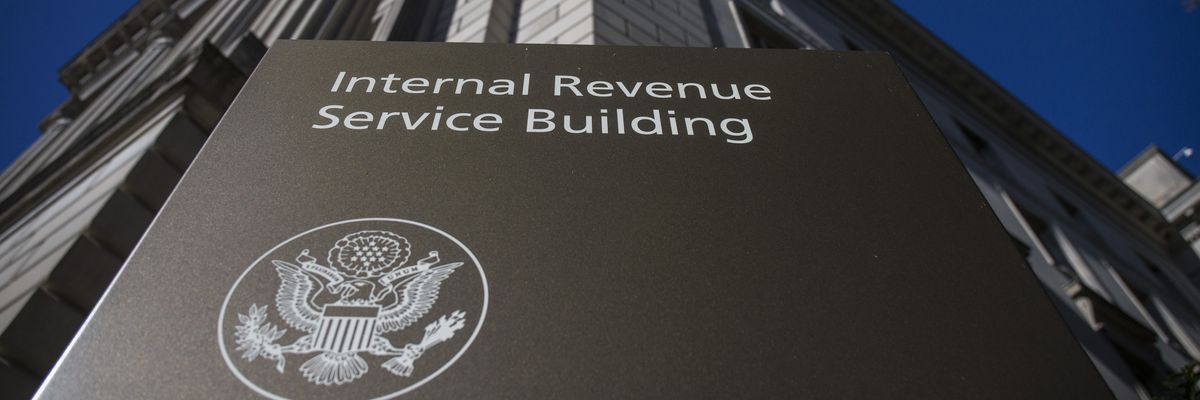
Because the IRS brings in the revenue that funds the rest of the government, Musk’s gang is striking at the heart of the federal government’s ability to fund the needs of the American people.
Today is Tax Day, and the brazen attack of Elon Musk’s Department of Government Efficiency against the federal government looms large over the Internal Revenue Service. The recent announcement that reductions in force are commencing at the IRS spells danger for taxpayer services, essential government workers, and the heart of our voluntary tax system.
As the president of the union representing IRS employees and the executive director of the largest tax fairness coalition, we each bring a different perspective to this unfolding catastrophe. But we share the same strong objection to DOGE’s drastic, ill-conceived and likely illegal attack on the nation’s tax collection agency.
The immediate victims of the DOGE attacks on the agency are the laid-off employees and those threatened with firing. Though Musk and President Donald Trump present their haphazard crusade as one waged against elites in the nation’s capital, the reality is that about 85% of federal employees work outside the Washington, D.C., area. As a result, neighbors across the country will lose their jobs, and communities everywhere will feel the economic impact of lost IRS positions and facilities.
If Musk tries to cut $10 billion from IRS enforcement spending, he will be risking $50-90 billion in lost revenue each year. That’s a strange strategy for someone who claims he wants to make the government more cost-efficient.
IRS employees are disproportionately female and members of racial or ethnic minorities, groups that have historically faced discrimination in hiring and advancement. Nearly 10% of IRS workers are military veterans. The National Treasury Employees Union is currently in court fighting these improper layoffs.
Next, taxpayers filing their annual returns and expecting prompt refunds will feel the impact. The reduction in IRS employees means fewer answered calls, longer wait times for help, and delayed refunds. The administration’s plan to shut over 100 taxpayer assistance centers across the country will leave most Americans unable to get in-person help with their tax issues.
As damaging as the cuts are to every federal agency, cuts to the IRS are different in one important respect: They could cost us a fortune in lost revenue.
Roughly 70% of the personnel cuts thus far have been in enforcement, which will make it easier to avoid detection for the millionaire and billionaire tax cheats who evade an estimated $150 billion in taxes every year. It is estimated that every dollar cut from enforcement costs $5 to $9 in revenue. So if Musk tries to cut $10 billion from IRS enforcement spending, he will be risking $50-90 billion in lost revenue each year. That’s a strange strategy for someone who claims he wants to make the government more cost-efficient.
However, it’s really not surprising that Musk, the richest individual in the world, is focusing on diminishing the agency’s ability to enforce the law. That’s what his allies in Congress have been trying to do ever since the agency received restored funding in 2022’s Inflation Reduction Act. That increased enforcement has focused exclusively on wealthy households and big corporations. Musk has a vested interest in hobbling IRS efforts to ensure the rich and big corporations pay what they owe.
The Inflation Reduction Act’s restored funding for the IRS yielded successes. As of last summer, the agency had collected over $1 billion just from 1,600 millionaires who owed but had failed to pay at least $250,000 each. It also informed Microsoft that it owed $29 billion in back taxes and had plans to increase audits on big companies (those worth more than $250 million), large partnerships (those with over $10 million in assets), and individuals with income over $10 million.
The Musk axe might also fall on the IRS Direct File program, the new system allowing taxpayers in about half the country to file for free directly with the government, bypassing expensive tax preparation firms. (The program is still in the pilot stage and will eventually be available to all taxpayers.) Musk announced recently he “deleted” the technical support department that helped create Direct File, but as of now the service itself is still operational. We don’t know how long that will last with Musk’s operatives roaming the halls of the IRS.
The restored funding for the IRS also helped it improve customer service. The average wait time on calls to the agency had dropped from 30 minutes to 3; over 50 in-person taxpayer assistance centers had been opened before the mass closures, and backlogs of unprocessed returns dropped.
All of this is at risk, of course, as DOGE prepares a “hackathon” that would allow our national tax data to be easily accessible to third parties. Compromising the tax data of millions of Americans in conjunction with efforts to stall attempts to modernize our tax system portend nothing less than disaster for the services we depend on.
Because the IRS brings in the revenue that funds the rest of the government, Musk’s gang is striking at the heart of the federal government’s ability to fund healthcare for seniors, nutrition for children, and other needs of the American people. The DOGE attack on the IRS is also an attack on economic justice and equality. Taxes on ultra-high income and extreme wealth help to narrow the nation’s destabilizing economic gaps. It’s hard not to conclude that those very injuries—not “waste, fraud and abuse”—are the real aim of DOGE’s wayward campaign.
Dear Common Dreams reader, It’s been nearly 30 years since I co-founded Common Dreams with my late wife, Lina Newhouser. We had the radical notion that journalism should serve the public good, not corporate profits. It was clear to us from the outset what it would take to build such a project. No paid advertisements. No corporate sponsors. No millionaire publisher telling us what to think or do. Many people said we wouldn't last a year, but we proved those doubters wrong. Together with a tremendous team of journalists and dedicated staff, we built an independent media outlet free from the constraints of profits and corporate control. Our mission has always been simple: To inform. To inspire. To ignite change for the common good. Building Common Dreams was not easy. Our survival was never guaranteed. When you take on the most powerful forces—Wall Street greed, fossil fuel industry destruction, Big Tech lobbyists, and uber-rich oligarchs who have spent billions upon billions rigging the economy and democracy in their favor—the only bulwark you have is supporters who believe in your work. But here’s the urgent message from me today. It's never been this bad out there. And it's never been this hard to keep us going. At the very moment Common Dreams is most needed, the threats we face are intensifying. We need your support now more than ever. We don't accept corporate advertising and never will. We don't have a paywall because we don't think people should be blocked from critical news based on their ability to pay. Everything we do is funded by the donations of readers like you. When everyone does the little they can afford, we are strong. But if that support retreats or dries up, so do we. Will you donate now to make sure Common Dreams not only survives but thrives? —Craig Brown, Co-founder |
Today is Tax Day, and the brazen attack of Elon Musk’s Department of Government Efficiency against the federal government looms large over the Internal Revenue Service. The recent announcement that reductions in force are commencing at the IRS spells danger for taxpayer services, essential government workers, and the heart of our voluntary tax system.
As the president of the union representing IRS employees and the executive director of the largest tax fairness coalition, we each bring a different perspective to this unfolding catastrophe. But we share the same strong objection to DOGE’s drastic, ill-conceived and likely illegal attack on the nation’s tax collection agency.
The immediate victims of the DOGE attacks on the agency are the laid-off employees and those threatened with firing. Though Musk and President Donald Trump present their haphazard crusade as one waged against elites in the nation’s capital, the reality is that about 85% of federal employees work outside the Washington, D.C., area. As a result, neighbors across the country will lose their jobs, and communities everywhere will feel the economic impact of lost IRS positions and facilities.
If Musk tries to cut $10 billion from IRS enforcement spending, he will be risking $50-90 billion in lost revenue each year. That’s a strange strategy for someone who claims he wants to make the government more cost-efficient.
IRS employees are disproportionately female and members of racial or ethnic minorities, groups that have historically faced discrimination in hiring and advancement. Nearly 10% of IRS workers are military veterans. The National Treasury Employees Union is currently in court fighting these improper layoffs.
Next, taxpayers filing their annual returns and expecting prompt refunds will feel the impact. The reduction in IRS employees means fewer answered calls, longer wait times for help, and delayed refunds. The administration’s plan to shut over 100 taxpayer assistance centers across the country will leave most Americans unable to get in-person help with their tax issues.
As damaging as the cuts are to every federal agency, cuts to the IRS are different in one important respect: They could cost us a fortune in lost revenue.
Roughly 70% of the personnel cuts thus far have been in enforcement, which will make it easier to avoid detection for the millionaire and billionaire tax cheats who evade an estimated $150 billion in taxes every year. It is estimated that every dollar cut from enforcement costs $5 to $9 in revenue. So if Musk tries to cut $10 billion from IRS enforcement spending, he will be risking $50-90 billion in lost revenue each year. That’s a strange strategy for someone who claims he wants to make the government more cost-efficient.
However, it’s really not surprising that Musk, the richest individual in the world, is focusing on diminishing the agency’s ability to enforce the law. That’s what his allies in Congress have been trying to do ever since the agency received restored funding in 2022’s Inflation Reduction Act. That increased enforcement has focused exclusively on wealthy households and big corporations. Musk has a vested interest in hobbling IRS efforts to ensure the rich and big corporations pay what they owe.
The Inflation Reduction Act’s restored funding for the IRS yielded successes. As of last summer, the agency had collected over $1 billion just from 1,600 millionaires who owed but had failed to pay at least $250,000 each. It also informed Microsoft that it owed $29 billion in back taxes and had plans to increase audits on big companies (those worth more than $250 million), large partnerships (those with over $10 million in assets), and individuals with income over $10 million.
The Musk axe might also fall on the IRS Direct File program, the new system allowing taxpayers in about half the country to file for free directly with the government, bypassing expensive tax preparation firms. (The program is still in the pilot stage and will eventually be available to all taxpayers.) Musk announced recently he “deleted” the technical support department that helped create Direct File, but as of now the service itself is still operational. We don’t know how long that will last with Musk’s operatives roaming the halls of the IRS.
The restored funding for the IRS also helped it improve customer service. The average wait time on calls to the agency had dropped from 30 minutes to 3; over 50 in-person taxpayer assistance centers had been opened before the mass closures, and backlogs of unprocessed returns dropped.
All of this is at risk, of course, as DOGE prepares a “hackathon” that would allow our national tax data to be easily accessible to third parties. Compromising the tax data of millions of Americans in conjunction with efforts to stall attempts to modernize our tax system portend nothing less than disaster for the services we depend on.
Because the IRS brings in the revenue that funds the rest of the government, Musk’s gang is striking at the heart of the federal government’s ability to fund healthcare for seniors, nutrition for children, and other needs of the American people. The DOGE attack on the IRS is also an attack on economic justice and equality. Taxes on ultra-high income and extreme wealth help to narrow the nation’s destabilizing economic gaps. It’s hard not to conclude that those very injuries—not “waste, fraud and abuse”—are the real aim of DOGE’s wayward campaign.
Today is Tax Day, and the brazen attack of Elon Musk’s Department of Government Efficiency against the federal government looms large over the Internal Revenue Service. The recent announcement that reductions in force are commencing at the IRS spells danger for taxpayer services, essential government workers, and the heart of our voluntary tax system.
As the president of the union representing IRS employees and the executive director of the largest tax fairness coalition, we each bring a different perspective to this unfolding catastrophe. But we share the same strong objection to DOGE’s drastic, ill-conceived and likely illegal attack on the nation’s tax collection agency.
The immediate victims of the DOGE attacks on the agency are the laid-off employees and those threatened with firing. Though Musk and President Donald Trump present their haphazard crusade as one waged against elites in the nation’s capital, the reality is that about 85% of federal employees work outside the Washington, D.C., area. As a result, neighbors across the country will lose their jobs, and communities everywhere will feel the economic impact of lost IRS positions and facilities.
If Musk tries to cut $10 billion from IRS enforcement spending, he will be risking $50-90 billion in lost revenue each year. That’s a strange strategy for someone who claims he wants to make the government more cost-efficient.
IRS employees are disproportionately female and members of racial or ethnic minorities, groups that have historically faced discrimination in hiring and advancement. Nearly 10% of IRS workers are military veterans. The National Treasury Employees Union is currently in court fighting these improper layoffs.
Next, taxpayers filing their annual returns and expecting prompt refunds will feel the impact. The reduction in IRS employees means fewer answered calls, longer wait times for help, and delayed refunds. The administration’s plan to shut over 100 taxpayer assistance centers across the country will leave most Americans unable to get in-person help with their tax issues.
As damaging as the cuts are to every federal agency, cuts to the IRS are different in one important respect: They could cost us a fortune in lost revenue.
Roughly 70% of the personnel cuts thus far have been in enforcement, which will make it easier to avoid detection for the millionaire and billionaire tax cheats who evade an estimated $150 billion in taxes every year. It is estimated that every dollar cut from enforcement costs $5 to $9 in revenue. So if Musk tries to cut $10 billion from IRS enforcement spending, he will be risking $50-90 billion in lost revenue each year. That’s a strange strategy for someone who claims he wants to make the government more cost-efficient.
However, it’s really not surprising that Musk, the richest individual in the world, is focusing on diminishing the agency’s ability to enforce the law. That’s what his allies in Congress have been trying to do ever since the agency received restored funding in 2022’s Inflation Reduction Act. That increased enforcement has focused exclusively on wealthy households and big corporations. Musk has a vested interest in hobbling IRS efforts to ensure the rich and big corporations pay what they owe.
The Inflation Reduction Act’s restored funding for the IRS yielded successes. As of last summer, the agency had collected over $1 billion just from 1,600 millionaires who owed but had failed to pay at least $250,000 each. It also informed Microsoft that it owed $29 billion in back taxes and had plans to increase audits on big companies (those worth more than $250 million), large partnerships (those with over $10 million in assets), and individuals with income over $10 million.
The Musk axe might also fall on the IRS Direct File program, the new system allowing taxpayers in about half the country to file for free directly with the government, bypassing expensive tax preparation firms. (The program is still in the pilot stage and will eventually be available to all taxpayers.) Musk announced recently he “deleted” the technical support department that helped create Direct File, but as of now the service itself is still operational. We don’t know how long that will last with Musk’s operatives roaming the halls of the IRS.
The restored funding for the IRS also helped it improve customer service. The average wait time on calls to the agency had dropped from 30 minutes to 3; over 50 in-person taxpayer assistance centers had been opened before the mass closures, and backlogs of unprocessed returns dropped.
All of this is at risk, of course, as DOGE prepares a “hackathon” that would allow our national tax data to be easily accessible to third parties. Compromising the tax data of millions of Americans in conjunction with efforts to stall attempts to modernize our tax system portend nothing less than disaster for the services we depend on.
Because the IRS brings in the revenue that funds the rest of the government, Musk’s gang is striking at the heart of the federal government’s ability to fund healthcare for seniors, nutrition for children, and other needs of the American people. The DOGE attack on the IRS is also an attack on economic justice and equality. Taxes on ultra-high income and extreme wealth help to narrow the nation’s destabilizing economic gaps. It’s hard not to conclude that those very injuries—not “waste, fraud and abuse”—are the real aim of DOGE’s wayward campaign.