SUBSCRIBE TO OUR FREE NEWSLETTER
Daily news & progressive opinion—funded by the people, not the corporations—delivered straight to your inbox.
5
#000000
#FFFFFF
To donate by check, phone, or other method, see our More Ways to Give page.
Daily news & progressive opinion—funded by the people, not the corporations—delivered straight to your inbox.

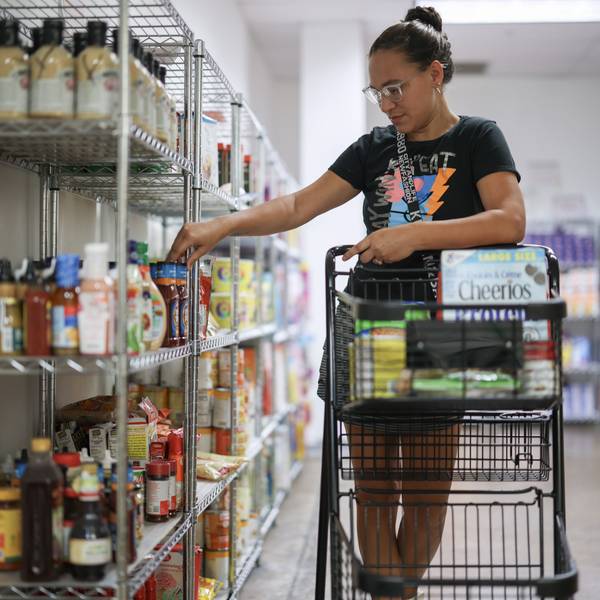
A Valley of Enchantment resident walks away with food and supplies from a volunteer food pantry in the San Bernardino Mountain community on Tuesday, March 7, 2023 in Valley of Enchantment, CA.
The proposed SNAP amendments, which would take away food assistance that helps people with low incomes get enough to eat, would hurt many people and put them at risk of going hungry.
As part of the Agriculture appropriations bill for fiscal year 2024 that the House is considering this week, the House Rules Committee has allowed three amendments to be offered that would take Supplemental Nutrition Assistance Program (SNAP) benefits away from more than 1.3 million individuals with low incomes, based on Congressional Budget Office (CBO) estimates. Those whose food assistance would be taken away include veterans, individuals experiencing homelessness, young adults who were in foster care as children, and people who live in areas with relatively high unemployment. Policymakers should reject these harmful amendments if they come up for a vote.
The Rules Committee also added a provision to the bill that would cut virtually every program under the bill by more than 14 percent. These changes would take food away from older adults and families by cutting funding for:
While the Rules Committee excluded WIC from the across-the-board cut, the underlying bill would nonetheless significantly shortchange and make harmful changes to the program, as we have explained.
The proposed SNAP amendments, which would take away food assistance that helps people with low incomes get enough to eat, would hurt many people and put them at risk of going hungry.
These amendments would further expand the number of people subject to SNAP’s long-standing harmful — and failed — work-reporting requirement. That policy takes away food assistance from non-disabled adults aged 18-49 without children in their home after just three months if they cannot document they are working or participating in a job training program for 20 hours per week or that they qualify for an exemption.
Numerous studies have shown that this requirement causes harm by taking food assistance away from people who need it, and that it doesn’t increase employment.
After being temporarily suspended during the pandemic, the work-reporting requirement returned in most areas of the country this summer. As a result, at least 500,000 of the nation’s lowest-income adults will be cut off SNAP beginning next week, after they reach the three-month limit.
Numerous studies have shown that this requirement causes harm by taking food assistance away from people who need it, and that it doesn’t increase employment.
Under the current policy, people who are between jobs, who have health conditions or caregiving responsibilities that impede work at least temporarily, whose work hours fluctuate, or who face challenges navigating the red tape of states’ reporting and exemption systems often lose the food assistance they need to buy groceries. Expanding this policy would worsen already wide racial disparities in hunger by punishing people who already face structural barriers due to racism. It would similarly punish people who face other forms of discrimination, such as women and people with disabilities.
One amendment from Rep. Garret Graves would renege on the agreement made on SNAP in the June bipartisan debt ceiling agreement. That law temporarily expanded SNAP’s work-reporting requirement to adults up to age 55, putting an estimated 750,000 adults aged 50-54 at risk of losing food assistance, but it also provided new temporary exemptions from the work requirement for veterans, people experiencing homelessness, and former foster youth up to age 24. These new exemptions recognize the challenges people in these groups face in meeting work-reporting requirements and the impact that having their food assistance taken away can have.
That amendment from Graves would eliminate the new temporary exemptions, which protect SNAP benefits for about 300,000 people, based on CBO’s estimates of the debt ceiling agreement, while leaving in place the expansion of the work-reporting requirement to older adults.
The other two amendments (a second amendment from Graves and another from Rep. Eric Burlison) would take away flexibility that every state has used at some point. Under SNAP’s current rules, states can request a waiver to temporarily suspend the work-reporting requirement in areas with a documented lack of jobs under a limited set of standards that have been the same for 25 years. The second Graves amendment would limit area waivers from the work-reporting requirement to counties with unemployment rates over 10 percent. Only nine counties that currently receive waivers would continue to qualify. The Burlison amendment would eliminate all such waivers for areas with high unemployment.
Similar changes to the existing work requirement waivers proposed by Rep. Dusty Johnson in a separate bill (H.R. 1581) would cut SNAP by $30 to $40 billion over ten years, CBO has estimated. That translates to more than 1 million people being cut from SNAP in a typical month under the similar Graves and Burlison amendments. Among the harsh impacts of these proposed changes, states would no longer be able to waive the work-reporting requirement on tribal lands where there are a lack of jobs.
Moreover, these amendments would eliminate a waiver criterion that is tied to extended unemployment benefits, which are triggered when states experience a sharp increase in unemployment, usually at the start of a recession. This would curtail SNAP’s role as an automatic stabilizer during downturns and would exacerbate the harm of a recession because individuals losing their source of income would qualify for temporary food assistance for just three months if they couldn’t find work, while periods of joblessness during recessions often last much longer.
Policymakers should reject these three amendments that could lead to over 1 million low-income households losing SNAP and facing greater hunger and the steep cuts the bill would make to WIC.
Dear Common Dreams reader, It’s been nearly 30 years since I co-founded Common Dreams with my late wife, Lina Newhouser. We had the radical notion that journalism should serve the public good, not corporate profits. It was clear to us from the outset what it would take to build such a project. No paid advertisements. No corporate sponsors. No millionaire publisher telling us what to think or do. Many people said we wouldn't last a year, but we proved those doubters wrong. Together with a tremendous team of journalists and dedicated staff, we built an independent media outlet free from the constraints of profits and corporate control. Our mission has always been simple: To inform. To inspire. To ignite change for the common good. Building Common Dreams was not easy. Our survival was never guaranteed. When you take on the most powerful forces—Wall Street greed, fossil fuel industry destruction, Big Tech lobbyists, and uber-rich oligarchs who have spent billions upon billions rigging the economy and democracy in their favor—the only bulwark you have is supporters who believe in your work. But here’s the urgent message from me today. It's never been this bad out there. And it's never been this hard to keep us going. At the very moment Common Dreams is most needed, the threats we face are intensifying. We need your support now more than ever. We don't accept corporate advertising and never will. We don't have a paywall because we don't think people should be blocked from critical news based on their ability to pay. Everything we do is funded by the donations of readers like you. When everyone does the little they can afford, we are strong. But if that support retreats or dries up, so do we. Will you donate now to make sure Common Dreams not only survives but thrives? —Craig Brown, Co-founder |
As part of the Agriculture appropriations bill for fiscal year 2024 that the House is considering this week, the House Rules Committee has allowed three amendments to be offered that would take Supplemental Nutrition Assistance Program (SNAP) benefits away from more than 1.3 million individuals with low incomes, based on Congressional Budget Office (CBO) estimates. Those whose food assistance would be taken away include veterans, individuals experiencing homelessness, young adults who were in foster care as children, and people who live in areas with relatively high unemployment. Policymakers should reject these harmful amendments if they come up for a vote.
The Rules Committee also added a provision to the bill that would cut virtually every program under the bill by more than 14 percent. These changes would take food away from older adults and families by cutting funding for:
While the Rules Committee excluded WIC from the across-the-board cut, the underlying bill would nonetheless significantly shortchange and make harmful changes to the program, as we have explained.
The proposed SNAP amendments, which would take away food assistance that helps people with low incomes get enough to eat, would hurt many people and put them at risk of going hungry.
These amendments would further expand the number of people subject to SNAP’s long-standing harmful — and failed — work-reporting requirement. That policy takes away food assistance from non-disabled adults aged 18-49 without children in their home after just three months if they cannot document they are working or participating in a job training program for 20 hours per week or that they qualify for an exemption.
Numerous studies have shown that this requirement causes harm by taking food assistance away from people who need it, and that it doesn’t increase employment.
After being temporarily suspended during the pandemic, the work-reporting requirement returned in most areas of the country this summer. As a result, at least 500,000 of the nation’s lowest-income adults will be cut off SNAP beginning next week, after they reach the three-month limit.
Numerous studies have shown that this requirement causes harm by taking food assistance away from people who need it, and that it doesn’t increase employment.
Under the current policy, people who are between jobs, who have health conditions or caregiving responsibilities that impede work at least temporarily, whose work hours fluctuate, or who face challenges navigating the red tape of states’ reporting and exemption systems often lose the food assistance they need to buy groceries. Expanding this policy would worsen already wide racial disparities in hunger by punishing people who already face structural barriers due to racism. It would similarly punish people who face other forms of discrimination, such as women and people with disabilities.
One amendment from Rep. Garret Graves would renege on the agreement made on SNAP in the June bipartisan debt ceiling agreement. That law temporarily expanded SNAP’s work-reporting requirement to adults up to age 55, putting an estimated 750,000 adults aged 50-54 at risk of losing food assistance, but it also provided new temporary exemptions from the work requirement for veterans, people experiencing homelessness, and former foster youth up to age 24. These new exemptions recognize the challenges people in these groups face in meeting work-reporting requirements and the impact that having their food assistance taken away can have.
That amendment from Graves would eliminate the new temporary exemptions, which protect SNAP benefits for about 300,000 people, based on CBO’s estimates of the debt ceiling agreement, while leaving in place the expansion of the work-reporting requirement to older adults.
The other two amendments (a second amendment from Graves and another from Rep. Eric Burlison) would take away flexibility that every state has used at some point. Under SNAP’s current rules, states can request a waiver to temporarily suspend the work-reporting requirement in areas with a documented lack of jobs under a limited set of standards that have been the same for 25 years. The second Graves amendment would limit area waivers from the work-reporting requirement to counties with unemployment rates over 10 percent. Only nine counties that currently receive waivers would continue to qualify. The Burlison amendment would eliminate all such waivers for areas with high unemployment.
Similar changes to the existing work requirement waivers proposed by Rep. Dusty Johnson in a separate bill (H.R. 1581) would cut SNAP by $30 to $40 billion over ten years, CBO has estimated. That translates to more than 1 million people being cut from SNAP in a typical month under the similar Graves and Burlison amendments. Among the harsh impacts of these proposed changes, states would no longer be able to waive the work-reporting requirement on tribal lands where there are a lack of jobs.
Moreover, these amendments would eliminate a waiver criterion that is tied to extended unemployment benefits, which are triggered when states experience a sharp increase in unemployment, usually at the start of a recession. This would curtail SNAP’s role as an automatic stabilizer during downturns and would exacerbate the harm of a recession because individuals losing their source of income would qualify for temporary food assistance for just three months if they couldn’t find work, while periods of joblessness during recessions often last much longer.
Policymakers should reject these three amendments that could lead to over 1 million low-income households losing SNAP and facing greater hunger and the steep cuts the bill would make to WIC.
As part of the Agriculture appropriations bill for fiscal year 2024 that the House is considering this week, the House Rules Committee has allowed three amendments to be offered that would take Supplemental Nutrition Assistance Program (SNAP) benefits away from more than 1.3 million individuals with low incomes, based on Congressional Budget Office (CBO) estimates. Those whose food assistance would be taken away include veterans, individuals experiencing homelessness, young adults who were in foster care as children, and people who live in areas with relatively high unemployment. Policymakers should reject these harmful amendments if they come up for a vote.
The Rules Committee also added a provision to the bill that would cut virtually every program under the bill by more than 14 percent. These changes would take food away from older adults and families by cutting funding for:
While the Rules Committee excluded WIC from the across-the-board cut, the underlying bill would nonetheless significantly shortchange and make harmful changes to the program, as we have explained.
The proposed SNAP amendments, which would take away food assistance that helps people with low incomes get enough to eat, would hurt many people and put them at risk of going hungry.
These amendments would further expand the number of people subject to SNAP’s long-standing harmful — and failed — work-reporting requirement. That policy takes away food assistance from non-disabled adults aged 18-49 without children in their home after just three months if they cannot document they are working or participating in a job training program for 20 hours per week or that they qualify for an exemption.
Numerous studies have shown that this requirement causes harm by taking food assistance away from people who need it, and that it doesn’t increase employment.
After being temporarily suspended during the pandemic, the work-reporting requirement returned in most areas of the country this summer. As a result, at least 500,000 of the nation’s lowest-income adults will be cut off SNAP beginning next week, after they reach the three-month limit.
Numerous studies have shown that this requirement causes harm by taking food assistance away from people who need it, and that it doesn’t increase employment.
Under the current policy, people who are between jobs, who have health conditions or caregiving responsibilities that impede work at least temporarily, whose work hours fluctuate, or who face challenges navigating the red tape of states’ reporting and exemption systems often lose the food assistance they need to buy groceries. Expanding this policy would worsen already wide racial disparities in hunger by punishing people who already face structural barriers due to racism. It would similarly punish people who face other forms of discrimination, such as women and people with disabilities.
One amendment from Rep. Garret Graves would renege on the agreement made on SNAP in the June bipartisan debt ceiling agreement. That law temporarily expanded SNAP’s work-reporting requirement to adults up to age 55, putting an estimated 750,000 adults aged 50-54 at risk of losing food assistance, but it also provided new temporary exemptions from the work requirement for veterans, people experiencing homelessness, and former foster youth up to age 24. These new exemptions recognize the challenges people in these groups face in meeting work-reporting requirements and the impact that having their food assistance taken away can have.
That amendment from Graves would eliminate the new temporary exemptions, which protect SNAP benefits for about 300,000 people, based on CBO’s estimates of the debt ceiling agreement, while leaving in place the expansion of the work-reporting requirement to older adults.
The other two amendments (a second amendment from Graves and another from Rep. Eric Burlison) would take away flexibility that every state has used at some point. Under SNAP’s current rules, states can request a waiver to temporarily suspend the work-reporting requirement in areas with a documented lack of jobs under a limited set of standards that have been the same for 25 years. The second Graves amendment would limit area waivers from the work-reporting requirement to counties with unemployment rates over 10 percent. Only nine counties that currently receive waivers would continue to qualify. The Burlison amendment would eliminate all such waivers for areas with high unemployment.
Similar changes to the existing work requirement waivers proposed by Rep. Dusty Johnson in a separate bill (H.R. 1581) would cut SNAP by $30 to $40 billion over ten years, CBO has estimated. That translates to more than 1 million people being cut from SNAP in a typical month under the similar Graves and Burlison amendments. Among the harsh impacts of these proposed changes, states would no longer be able to waive the work-reporting requirement on tribal lands where there are a lack of jobs.
Moreover, these amendments would eliminate a waiver criterion that is tied to extended unemployment benefits, which are triggered when states experience a sharp increase in unemployment, usually at the start of a recession. This would curtail SNAP’s role as an automatic stabilizer during downturns and would exacerbate the harm of a recession because individuals losing their source of income would qualify for temporary food assistance for just three months if they couldn’t find work, while periods of joblessness during recessions often last much longer.
Policymakers should reject these three amendments that could lead to over 1 million low-income households losing SNAP and facing greater hunger and the steep cuts the bill would make to WIC.