SUBSCRIBE TO OUR FREE NEWSLETTER
Daily news & progressive opinion—funded by the people, not the corporations—delivered straight to your inbox.
5
#000000
#FFFFFF
To donate by check, phone, or other method, see our More Ways to Give page.
Daily news & progressive opinion—funded by the people, not the corporations—delivered straight to your inbox.
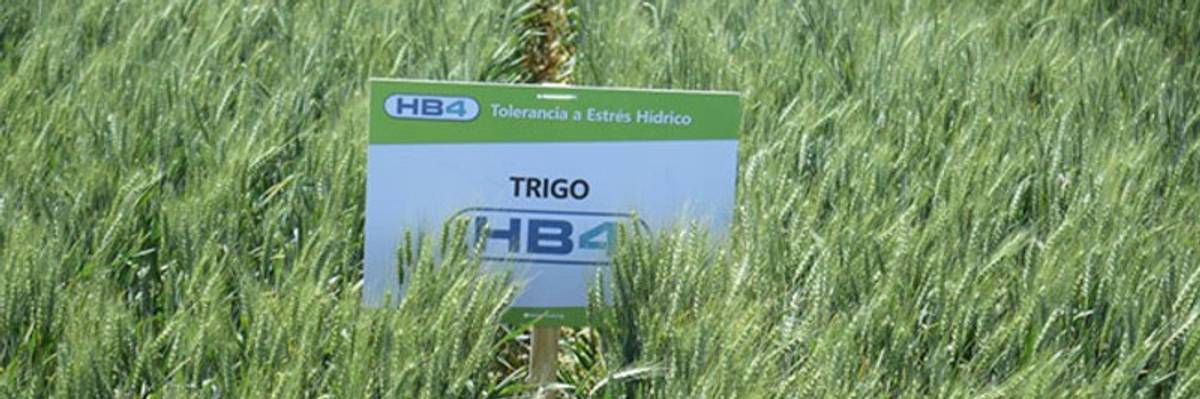
Genetically modified HB4 wheat grows in a field.
if we really want safety—for farmers’ finances and the environment—we ought to work more on promoting regional and local seed varieties instead of looking to multinational corporations for guidance.
The precautionary principle—the ethical equivalent of the common sense notion that it’s “better to be safe than sorry”—means that when some economic or policy change may endanger the public, business and government leaders ought to thoroughly conduct research so as to avoid exposing anyone to unnecessary risks.
Unfortunately, with our food system, our government continues to ignore ethics and common sense, recently approving as “safe for breeding and growing” a new genetically modified (GM) variety of wheat—HB4. Copying and combining certain genes from sunflowers to create this new variety, HB4 is not only pitched to farmers as a tool they could use to battle our ever increasingly dire climate crisis, but also to increase yields.
The truth is another, as this latest proposed tech solution to address our climate crisis stands to improve the financial situation of agribusiness corporations more than farmers, while also likely harming our environment instead of helping it. Not only should the U.S. Department of Agriculture (USDA) rethink their decision, but our officials ought to instead support publicly financing regional and local varieties of seed. Strengthening key provisions of the Farm Bill that is currently in Congress could make such proposals a reality.
We need to develop diverse kinds of seeds that suit different ecosystems instead of global “one size fits all” varieties like we find with GM options.
The overarching problem with HB4—particularly for U.S. farmers—is economic.
According to USDA data from the past 25 years, operating costs for wheat farmers have more than tripled in terms of dollars spent per acre—increasing from just over $57 in 1998, to more than $187 in 2023. Also during this time, while the input cost of seed has more than doubled, going from $7 to $16, chemicals have tripled, climbing from $7 to $22. Fertilizer expenses have risen the most—going from $18 to over $78—representing nearly half of what farmers spend per acre.
Wheat is more than a crop, or ingredient that ends up in bread, but an industry, with chemical, fertilizer, and seed companies each clawing for a share.
Meanwhile, wheat prices in our global marketplace have been volatile. The 28% price jump that farmers experienced in the first months of Russia’s invasion of Ukraine in 2022 quickly stabilized thanks to the Black Sea Grain Initiative—the plan that allowed grain to leave the region for a time until Russia left the agreement in 2023—and different countries easing their export restrictions. Prices then fell, as Ukraine, regularly one of the world’s top wheat exporters, saw its production rebound to pre-invasion levels. Russia’s 2023-2024 exports also exceeded expectations, increasing by 7% over the prior year, making this country the world’s leader in export sales by far.
Meanwhile, the U.S.’ share of wheat exports has steadily fallen for decades, from about 45% in 1980 to just over 15% in 2014. With worldwide production increasing, U.S. wheat farmers may take a loss in 2024.
Maintaining open export markets for wheat can spell the difference between financial life or death for U.S. farmers. On this point, there is no indication that world markets are currently willing to accept HB4, as major international buyers of U.S. wheat have not approved it. With contamination of non-GM wheat a problem that we have been aware of for years, we need to be careful as U.S. farmers can only sell what importers will accept.
The other issue with HB4 wheat is that the seed not only resists drought, but also glufosinate herbicides. Farmers who purchase the seed will have to buy this chemical, in addition to fertilizer. And despite what the USDA claims about safety, studies show that this class of herbicides is toxic to wildlife and humans.
Overall, in addition to potential environmental harm, we have a case of the “price-cost” squeeze that farmers suffer too often, with the inputs that they need taking a significant chunk of their earnings, while the prices that they receive for their labor either shrinking or fluctuating in ways that are largely out of their control.
Accordingly, if we really want safety—for farmers’ finances and the environment—we ought to work more on promoting regional and local seed varieties instead of looking to multinational corporations for guidance.
Both versions of our beleaguered Farm Bill contain such provisions, with the House and Senate versions of the legislation dedicating grant funding to the development of regional seed varieties (referred to as “cultivars” in the legislation).
The operative word here is “regional,” as grant funding may lead to the creation of new seed varieties that would be suited to particular areas and climates. Droughts in general entail a lack of water; but soil conditions and weather patterns vary significantly by region. As a result, we need to develop diverse kinds of seeds that suit different ecosystems instead of global “one size fits all” varieties like we find with GM options.
When the USDA decided that HB4 was “safe,” they must have left out considerations for farmer financial well-being and the environment. But our legislators can make up for this mistake with the Farm Bill—whether it emerges in a lame duck session this year following the elections in November or awaits our next Congress—taking heed of the risks that GM crops pose, and supporting more local and regional food system development.
Dear Common Dreams reader, It’s been nearly 30 years since I co-founded Common Dreams with my late wife, Lina Newhouser. We had the radical notion that journalism should serve the public good, not corporate profits. It was clear to us from the outset what it would take to build such a project. No paid advertisements. No corporate sponsors. No millionaire publisher telling us what to think or do. Many people said we wouldn't last a year, but we proved those doubters wrong. Together with a tremendous team of journalists and dedicated staff, we built an independent media outlet free from the constraints of profits and corporate control. Our mission has always been simple: To inform. To inspire. To ignite change for the common good. Building Common Dreams was not easy. Our survival was never guaranteed. When you take on the most powerful forces—Wall Street greed, fossil fuel industry destruction, Big Tech lobbyists, and uber-rich oligarchs who have spent billions upon billions rigging the economy and democracy in their favor—the only bulwark you have is supporters who believe in your work. But here’s the urgent message from me today. It's never been this bad out there. And it's never been this hard to keep us going. At the very moment Common Dreams is most needed, the threats we face are intensifying. We need your support now more than ever. We don't accept corporate advertising and never will. We don't have a paywall because we don't think people should be blocked from critical news based on their ability to pay. Everything we do is funded by the donations of readers like you. When everyone does the little they can afford, we are strong. But if that support retreats or dries up, so do we. Will you donate now to make sure Common Dreams not only survives but thrives? —Craig Brown, Co-founder |
The precautionary principle—the ethical equivalent of the common sense notion that it’s “better to be safe than sorry”—means that when some economic or policy change may endanger the public, business and government leaders ought to thoroughly conduct research so as to avoid exposing anyone to unnecessary risks.
Unfortunately, with our food system, our government continues to ignore ethics and common sense, recently approving as “safe for breeding and growing” a new genetically modified (GM) variety of wheat—HB4. Copying and combining certain genes from sunflowers to create this new variety, HB4 is not only pitched to farmers as a tool they could use to battle our ever increasingly dire climate crisis, but also to increase yields.
The truth is another, as this latest proposed tech solution to address our climate crisis stands to improve the financial situation of agribusiness corporations more than farmers, while also likely harming our environment instead of helping it. Not only should the U.S. Department of Agriculture (USDA) rethink their decision, but our officials ought to instead support publicly financing regional and local varieties of seed. Strengthening key provisions of the Farm Bill that is currently in Congress could make such proposals a reality.
We need to develop diverse kinds of seeds that suit different ecosystems instead of global “one size fits all” varieties like we find with GM options.
The overarching problem with HB4—particularly for U.S. farmers—is economic.
According to USDA data from the past 25 years, operating costs for wheat farmers have more than tripled in terms of dollars spent per acre—increasing from just over $57 in 1998, to more than $187 in 2023. Also during this time, while the input cost of seed has more than doubled, going from $7 to $16, chemicals have tripled, climbing from $7 to $22. Fertilizer expenses have risen the most—going from $18 to over $78—representing nearly half of what farmers spend per acre.
Wheat is more than a crop, or ingredient that ends up in bread, but an industry, with chemical, fertilizer, and seed companies each clawing for a share.
Meanwhile, wheat prices in our global marketplace have been volatile. The 28% price jump that farmers experienced in the first months of Russia’s invasion of Ukraine in 2022 quickly stabilized thanks to the Black Sea Grain Initiative—the plan that allowed grain to leave the region for a time until Russia left the agreement in 2023—and different countries easing their export restrictions. Prices then fell, as Ukraine, regularly one of the world’s top wheat exporters, saw its production rebound to pre-invasion levels. Russia’s 2023-2024 exports also exceeded expectations, increasing by 7% over the prior year, making this country the world’s leader in export sales by far.
Meanwhile, the U.S.’ share of wheat exports has steadily fallen for decades, from about 45% in 1980 to just over 15% in 2014. With worldwide production increasing, U.S. wheat farmers may take a loss in 2024.
Maintaining open export markets for wheat can spell the difference between financial life or death for U.S. farmers. On this point, there is no indication that world markets are currently willing to accept HB4, as major international buyers of U.S. wheat have not approved it. With contamination of non-GM wheat a problem that we have been aware of for years, we need to be careful as U.S. farmers can only sell what importers will accept.
The other issue with HB4 wheat is that the seed not only resists drought, but also glufosinate herbicides. Farmers who purchase the seed will have to buy this chemical, in addition to fertilizer. And despite what the USDA claims about safety, studies show that this class of herbicides is toxic to wildlife and humans.
Overall, in addition to potential environmental harm, we have a case of the “price-cost” squeeze that farmers suffer too often, with the inputs that they need taking a significant chunk of their earnings, while the prices that they receive for their labor either shrinking or fluctuating in ways that are largely out of their control.
Accordingly, if we really want safety—for farmers’ finances and the environment—we ought to work more on promoting regional and local seed varieties instead of looking to multinational corporations for guidance.
Both versions of our beleaguered Farm Bill contain such provisions, with the House and Senate versions of the legislation dedicating grant funding to the development of regional seed varieties (referred to as “cultivars” in the legislation).
The operative word here is “regional,” as grant funding may lead to the creation of new seed varieties that would be suited to particular areas and climates. Droughts in general entail a lack of water; but soil conditions and weather patterns vary significantly by region. As a result, we need to develop diverse kinds of seeds that suit different ecosystems instead of global “one size fits all” varieties like we find with GM options.
When the USDA decided that HB4 was “safe,” they must have left out considerations for farmer financial well-being and the environment. But our legislators can make up for this mistake with the Farm Bill—whether it emerges in a lame duck session this year following the elections in November or awaits our next Congress—taking heed of the risks that GM crops pose, and supporting more local and regional food system development.
The precautionary principle—the ethical equivalent of the common sense notion that it’s “better to be safe than sorry”—means that when some economic or policy change may endanger the public, business and government leaders ought to thoroughly conduct research so as to avoid exposing anyone to unnecessary risks.
Unfortunately, with our food system, our government continues to ignore ethics and common sense, recently approving as “safe for breeding and growing” a new genetically modified (GM) variety of wheat—HB4. Copying and combining certain genes from sunflowers to create this new variety, HB4 is not only pitched to farmers as a tool they could use to battle our ever increasingly dire climate crisis, but also to increase yields.
The truth is another, as this latest proposed tech solution to address our climate crisis stands to improve the financial situation of agribusiness corporations more than farmers, while also likely harming our environment instead of helping it. Not only should the U.S. Department of Agriculture (USDA) rethink their decision, but our officials ought to instead support publicly financing regional and local varieties of seed. Strengthening key provisions of the Farm Bill that is currently in Congress could make such proposals a reality.
We need to develop diverse kinds of seeds that suit different ecosystems instead of global “one size fits all” varieties like we find with GM options.
The overarching problem with HB4—particularly for U.S. farmers—is economic.
According to USDA data from the past 25 years, operating costs for wheat farmers have more than tripled in terms of dollars spent per acre—increasing from just over $57 in 1998, to more than $187 in 2023. Also during this time, while the input cost of seed has more than doubled, going from $7 to $16, chemicals have tripled, climbing from $7 to $22. Fertilizer expenses have risen the most—going from $18 to over $78—representing nearly half of what farmers spend per acre.
Wheat is more than a crop, or ingredient that ends up in bread, but an industry, with chemical, fertilizer, and seed companies each clawing for a share.
Meanwhile, wheat prices in our global marketplace have been volatile. The 28% price jump that farmers experienced in the first months of Russia’s invasion of Ukraine in 2022 quickly stabilized thanks to the Black Sea Grain Initiative—the plan that allowed grain to leave the region for a time until Russia left the agreement in 2023—and different countries easing their export restrictions. Prices then fell, as Ukraine, regularly one of the world’s top wheat exporters, saw its production rebound to pre-invasion levels. Russia’s 2023-2024 exports also exceeded expectations, increasing by 7% over the prior year, making this country the world’s leader in export sales by far.
Meanwhile, the U.S.’ share of wheat exports has steadily fallen for decades, from about 45% in 1980 to just over 15% in 2014. With worldwide production increasing, U.S. wheat farmers may take a loss in 2024.
Maintaining open export markets for wheat can spell the difference between financial life or death for U.S. farmers. On this point, there is no indication that world markets are currently willing to accept HB4, as major international buyers of U.S. wheat have not approved it. With contamination of non-GM wheat a problem that we have been aware of for years, we need to be careful as U.S. farmers can only sell what importers will accept.
The other issue with HB4 wheat is that the seed not only resists drought, but also glufosinate herbicides. Farmers who purchase the seed will have to buy this chemical, in addition to fertilizer. And despite what the USDA claims about safety, studies show that this class of herbicides is toxic to wildlife and humans.
Overall, in addition to potential environmental harm, we have a case of the “price-cost” squeeze that farmers suffer too often, with the inputs that they need taking a significant chunk of their earnings, while the prices that they receive for their labor either shrinking or fluctuating in ways that are largely out of their control.
Accordingly, if we really want safety—for farmers’ finances and the environment—we ought to work more on promoting regional and local seed varieties instead of looking to multinational corporations for guidance.
Both versions of our beleaguered Farm Bill contain such provisions, with the House and Senate versions of the legislation dedicating grant funding to the development of regional seed varieties (referred to as “cultivars” in the legislation).
The operative word here is “regional,” as grant funding may lead to the creation of new seed varieties that would be suited to particular areas and climates. Droughts in general entail a lack of water; but soil conditions and weather patterns vary significantly by region. As a result, we need to develop diverse kinds of seeds that suit different ecosystems instead of global “one size fits all” varieties like we find with GM options.
When the USDA decided that HB4 was “safe,” they must have left out considerations for farmer financial well-being and the environment. But our legislators can make up for this mistake with the Farm Bill—whether it emerges in a lame duck session this year following the elections in November or awaits our next Congress—taking heed of the risks that GM crops pose, and supporting more local and regional food system development.