
More Tech, Less Play: The Hidden Costs of AI Toys
Children lose the wide-ranging benefits of imaginative play when algorithms decide what toys can say.
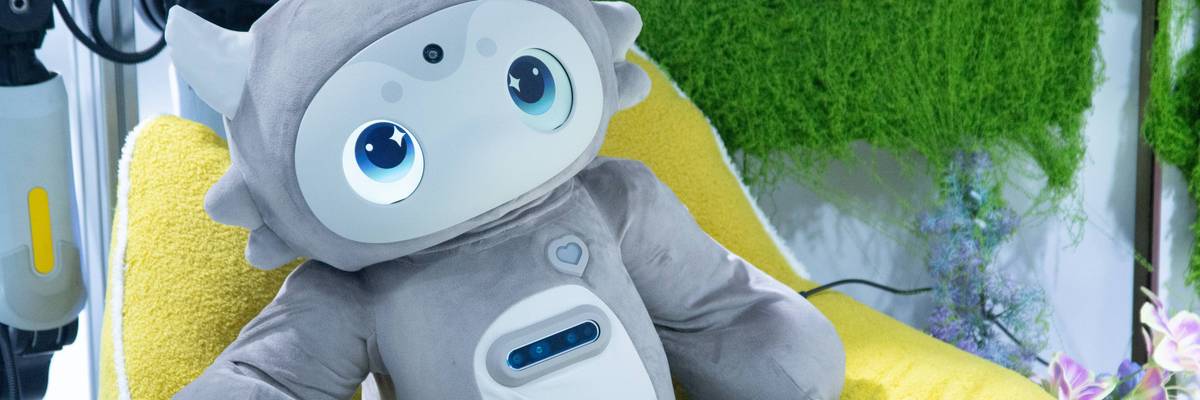
Remember wishing your toys could really talk? Well, now they can—and it’s not pretty. A slew of AI-driven toys are on the market today, designed to hold conversations with very young children. Dolls, plushies, and action figures—toys that traditionally encouraged creative play—now come as embodied chatbots marketed as safe and trustworthy companions for young children. Yet they are anything but.
AI toys intentionally attract and prolong children’s attention in order to collect intimate biometric data, either to hone a particular toy’s interactions or to sell to marketers, or both. They can also put children’s privacy at risk. Researchers recently found that audio recordings of tens of thousands of children’s conversations with the AI toy Miko were easily accessible to absolutely anyone.
It’s worrisome that AI toys marketed to young children use the same chatbot technology and persuasive design elements known to have harmed teens by encouraging dangerous behaviors, including self-harm and suicide. Young children are especially vulnerable to this type of manipulation. Toddlers and preschoolers are naturally more trusting than adolescents, and their capacity for judgment is less developed. In addition, they have a harder time distinguishing between reality and fantasy. Finally, because AI toys carry on conversations and simulate empathy, they encourage children to develop deep attachments to them. In doing so, they can undermine young children’s real-life relationships with caring adults, displace play with peers, and deprive children of the benefits of creative play.
The problems associated with encouraging children to rely on AI toys for companionship become increasingly evident as studies emerge that document how kids actually interact with them. Researchers at Cambridge University observed children ages 3-5 using Gabbo, a popular AI toy from Curio Interactive, Inc. When Joshua, age 3, repeatedly asks Gabbo, “Are you sad?” Gabbo eventually replies, “I’m feeling great. What’s on your mind?” When Joshua answers, “I’m sad.” Gabbo says, “Don’t worry! I’m a happy little bot. Let’s keep the fun going. What shall we talk about next?”
When, as kids, we wished our toys could talk, we were wishing for them to say what we imagined, not what toy companies programmed them to say.
It’s troubling that, despite Joshua’s repeated efforts to talk about sadness, first by attributing the feelings to the toy, then by expressing his own feelings, Gabbo shuts him down. In doing so, Gabbo deprives him of an opportunity to verbalize and explore his feelings and sends the message that feelings like sadness should not be discussed. In contrast, interactions with caring adults can offer nuanced validation and encouragement to talk about what children are feeling.
As their technology becomes more refined and sophisticated, AI toys will likely get better in simulating understanding and empathy. This is, however, likely to make them simultaneously more compelling and, therefore, more harmful. A more empathic AI toy is not the solution. As the toys become more adept at replicating human conversation, their potential to displace actual human interactions—both with adults and other children—will increase.
Ensuring that children have time and space to play with other children is also essential to healthy development. Play with AI toys doesn’t have the same benefits as play with peers. One problem is that, like most chatbots, these toys are designed to avoid and smooth over conflict and offer unconditional support to their users. Yet encountering and resolving conflict is a necessary component of how young children learn how to live in relationship with other people. The process of resolving a disagreement over a ball, for instance, helps kids develop life skills such as self-regulation, turn taking, sharing, and negotiation.
Not only do AI toys fail as companions, they also fail as playthings. Given the chance, children naturally use play to give voice to their deepest hopes, fears, and dreams, and to make sense of their life experiences. The true value of play with dolls, stuffed animals, and any inanimate creature is that their silence invites children to bring them to life; imbue them with distinct personalities; and transform them as needed into friends, adversaries, champions, and more. They encourage the kind of creative play that is crucial to healthy development.
When algorithms instead of children give voice to toys, kids lose the wide-ranging benefits of imaginative play. By controlling half of any conversation, AI toys deprive children of opportunities for the kind of play that nurtures creativity, enables self-expression, and encourages kids to act rather than merely react, all of which help kids learn to cope successfully with the inevitable challenges of being human.
Despite these potential harms, the manufacture and marketing of AI toys for young children continues to proliferate unregulated. According to Market Research Future, the global AI toy market—currently valued at almost $35 billion—is projected to reach $270 billion by 2035, especially as toy giants such as Mattel and Hasbro build out their product lines. Already, almost half of parents of children ages 0-8 have purchased, or are thinking about purchasing, AI toys.
When, as kids, we wished our toys could talk, we were wishing for them to say what we imagined, not what toy companies programmed them to say. Despite tech industry marketing, the reality is that children don’t need talking toys. What kids really need is for us to hold AI companies accountable. Children need pediatricians, early childhood educators, and anyone who cares about young children to take a strong stand for child-driven play and against AI toys for infants, toddlers, and preschoolers. They need legislators to pass laws that regulate how and to whom AI products are marketed.
Working toward those kinds of systemic changes is essential, but making them happen takes time. There is, however, something we can do right now to send AI companies an important message while protecting children’s privacy, preserving their human relationships, and encouraging their creative play. Let’s just say no to AI toys for young children.
We are at a crossroads
This country and this world are at a monumental crossroads. In a few short weeks, US voters will have an opportunity to beat back the forces of fascism and confront the billionaires who are rigging the economy, our media system, and our democracy, making it increasingly impossible for ordinary people to get by. We’re not just talking about the election. We’re talking about what must be done once these fascist elements are vanquished from power. We need a bolder set of solutions than what either major party has so far been willing to offer and a working-class movement ready to fight like hell for it. Trump didn't emerge from nowhere. The conditions that fueled MAGA authoritarianism were created by decades of radical neoliberal economic policies and a corrupt political system dominated by corporate interests. They slashed taxes on the super-rich, promising that the benefits would trickle down. They said giveaways to the corporate titans would make life more affordable for the rest of us. It was all bullshit. And when a bitter, betrayed populace searches for someone to blame, right-wing demagogues have little trouble finding scapegoats. People know when they're being lied to, but you won't hear any of this from the corporate media. Only independent journalism—powered and funded by people who believe in building a better world—can deliver truly trustworthy daily news. Our Fall Campaign is underway, and we need your help. To power our newsroom through the rest of the year, we need to raise $125,000 by midnight on October 31. So if you share our vision, please contribute whatever you can to sustain our work. |
Remember wishing your toys could really talk? Well, now they can—and it’s not pretty. A slew of AI-driven toys are on the market today, designed to hold conversations with very young children. Dolls, plushies, and action figures—toys that traditionally encouraged creative play—now come as embodied chatbots marketed as safe and trustworthy companions for young children. Yet they are anything but.
AI toys intentionally attract and prolong children’s attention in order to collect intimate biometric data, either to hone a particular toy’s interactions or to sell to marketers, or both. They can also put children’s privacy at risk. Researchers recently found that audio recordings of tens of thousands of children’s conversations with the AI toy Miko were easily accessible to absolutely anyone.
It’s worrisome that AI toys marketed to young children use the same chatbot technology and persuasive design elements known to have harmed teens by encouraging dangerous behaviors, including self-harm and suicide. Young children are especially vulnerable to this type of manipulation. Toddlers and preschoolers are naturally more trusting than adolescents, and their capacity for judgment is less developed. In addition, they have a harder time distinguishing between reality and fantasy. Finally, because AI toys carry on conversations and simulate empathy, they encourage children to develop deep attachments to them. In doing so, they can undermine young children’s real-life relationships with caring adults, displace play with peers, and deprive children of the benefits of creative play.
The problems associated with encouraging children to rely on AI toys for companionship become increasingly evident as studies emerge that document how kids actually interact with them. Researchers at Cambridge University observed children ages 3-5 using Gabbo, a popular AI toy from Curio Interactive, Inc. When Joshua, age 3, repeatedly asks Gabbo, “Are you sad?” Gabbo eventually replies, “I’m feeling great. What’s on your mind?” When Joshua answers, “I’m sad.” Gabbo says, “Don’t worry! I’m a happy little bot. Let’s keep the fun going. What shall we talk about next?”
When, as kids, we wished our toys could talk, we were wishing for them to say what we imagined, not what toy companies programmed them to say.
It’s troubling that, despite Joshua’s repeated efforts to talk about sadness, first by attributing the feelings to the toy, then by expressing his own feelings, Gabbo shuts him down. In doing so, Gabbo deprives him of an opportunity to verbalize and explore his feelings and sends the message that feelings like sadness should not be discussed. In contrast, interactions with caring adults can offer nuanced validation and encouragement to talk about what children are feeling.
As their technology becomes more refined and sophisticated, AI toys will likely get better in simulating understanding and empathy. This is, however, likely to make them simultaneously more compelling and, therefore, more harmful. A more empathic AI toy is not the solution. As the toys become more adept at replicating human conversation, their potential to displace actual human interactions—both with adults and other children—will increase.
Ensuring that children have time and space to play with other children is also essential to healthy development. Play with AI toys doesn’t have the same benefits as play with peers. One problem is that, like most chatbots, these toys are designed to avoid and smooth over conflict and offer unconditional support to their users. Yet encountering and resolving conflict is a necessary component of how young children learn how to live in relationship with other people. The process of resolving a disagreement over a ball, for instance, helps kids develop life skills such as self-regulation, turn taking, sharing, and negotiation.
Not only do AI toys fail as companions, they also fail as playthings. Given the chance, children naturally use play to give voice to their deepest hopes, fears, and dreams, and to make sense of their life experiences. The true value of play with dolls, stuffed animals, and any inanimate creature is that their silence invites children to bring them to life; imbue them with distinct personalities; and transform them as needed into friends, adversaries, champions, and more. They encourage the kind of creative play that is crucial to healthy development.
When algorithms instead of children give voice to toys, kids lose the wide-ranging benefits of imaginative play. By controlling half of any conversation, AI toys deprive children of opportunities for the kind of play that nurtures creativity, enables self-expression, and encourages kids to act rather than merely react, all of which help kids learn to cope successfully with the inevitable challenges of being human.
Despite these potential harms, the manufacture and marketing of AI toys for young children continues to proliferate unregulated. According to Market Research Future, the global AI toy market—currently valued at almost $35 billion—is projected to reach $270 billion by 2035, especially as toy giants such as Mattel and Hasbro build out their product lines. Already, almost half of parents of children ages 0-8 have purchased, or are thinking about purchasing, AI toys.
When, as kids, we wished our toys could talk, we were wishing for them to say what we imagined, not what toy companies programmed them to say. Despite tech industry marketing, the reality is that children don’t need talking toys. What kids really need is for us to hold AI companies accountable. Children need pediatricians, early childhood educators, and anyone who cares about young children to take a strong stand for child-driven play and against AI toys for infants, toddlers, and preschoolers. They need legislators to pass laws that regulate how and to whom AI products are marketed.
Working toward those kinds of systemic changes is essential, but making them happen takes time. There is, however, something we can do right now to send AI companies an important message while protecting children’s privacy, preserving their human relationships, and encouraging their creative play. Let’s just say no to AI toys for young children.
- With AI, Big Tech Is Ruining the Planet to Push a Product Most People Don’t Want ›
- The AI Industry Must Take Responsibility for the Communities It’s Destroying ›
- Tech Experts Warn Humanity Must Act Now to Avoid 'Societal-Scale' Damage by AI ›
- Big Tech’s Reckless Release of AI Companion Products Sacrifices Safety for Profit ›
- 'Make This Delay Permanent,' Say Child Advocates After Mattel Halts Release of First AI-Powered Toy ›
Remember wishing your toys could really talk? Well, now they can—and it’s not pretty. A slew of AI-driven toys are on the market today, designed to hold conversations with very young children. Dolls, plushies, and action figures—toys that traditionally encouraged creative play—now come as embodied chatbots marketed as safe and trustworthy companions for young children. Yet they are anything but.
AI toys intentionally attract and prolong children’s attention in order to collect intimate biometric data, either to hone a particular toy’s interactions or to sell to marketers, or both. They can also put children’s privacy at risk. Researchers recently found that audio recordings of tens of thousands of children’s conversations with the AI toy Miko were easily accessible to absolutely anyone.
It’s worrisome that AI toys marketed to young children use the same chatbot technology and persuasive design elements known to have harmed teens by encouraging dangerous behaviors, including self-harm and suicide. Young children are especially vulnerable to this type of manipulation. Toddlers and preschoolers are naturally more trusting than adolescents, and their capacity for judgment is less developed. In addition, they have a harder time distinguishing between reality and fantasy. Finally, because AI toys carry on conversations and simulate empathy, they encourage children to develop deep attachments to them. In doing so, they can undermine young children’s real-life relationships with caring adults, displace play with peers, and deprive children of the benefits of creative play.
The problems associated with encouraging children to rely on AI toys for companionship become increasingly evident as studies emerge that document how kids actually interact with them. Researchers at Cambridge University observed children ages 3-5 using Gabbo, a popular AI toy from Curio Interactive, Inc. When Joshua, age 3, repeatedly asks Gabbo, “Are you sad?” Gabbo eventually replies, “I’m feeling great. What’s on your mind?” When Joshua answers, “I’m sad.” Gabbo says, “Don’t worry! I’m a happy little bot. Let’s keep the fun going. What shall we talk about next?”
When, as kids, we wished our toys could talk, we were wishing for them to say what we imagined, not what toy companies programmed them to say.
It’s troubling that, despite Joshua’s repeated efforts to talk about sadness, first by attributing the feelings to the toy, then by expressing his own feelings, Gabbo shuts him down. In doing so, Gabbo deprives him of an opportunity to verbalize and explore his feelings and sends the message that feelings like sadness should not be discussed. In contrast, interactions with caring adults can offer nuanced validation and encouragement to talk about what children are feeling.
As their technology becomes more refined and sophisticated, AI toys will likely get better in simulating understanding and empathy. This is, however, likely to make them simultaneously more compelling and, therefore, more harmful. A more empathic AI toy is not the solution. As the toys become more adept at replicating human conversation, their potential to displace actual human interactions—both with adults and other children—will increase.
Ensuring that children have time and space to play with other children is also essential to healthy development. Play with AI toys doesn’t have the same benefits as play with peers. One problem is that, like most chatbots, these toys are designed to avoid and smooth over conflict and offer unconditional support to their users. Yet encountering and resolving conflict is a necessary component of how young children learn how to live in relationship with other people. The process of resolving a disagreement over a ball, for instance, helps kids develop life skills such as self-regulation, turn taking, sharing, and negotiation.
Not only do AI toys fail as companions, they also fail as playthings. Given the chance, children naturally use play to give voice to their deepest hopes, fears, and dreams, and to make sense of their life experiences. The true value of play with dolls, stuffed animals, and any inanimate creature is that their silence invites children to bring them to life; imbue them with distinct personalities; and transform them as needed into friends, adversaries, champions, and more. They encourage the kind of creative play that is crucial to healthy development.
When algorithms instead of children give voice to toys, kids lose the wide-ranging benefits of imaginative play. By controlling half of any conversation, AI toys deprive children of opportunities for the kind of play that nurtures creativity, enables self-expression, and encourages kids to act rather than merely react, all of which help kids learn to cope successfully with the inevitable challenges of being human.
Despite these potential harms, the manufacture and marketing of AI toys for young children continues to proliferate unregulated. According to Market Research Future, the global AI toy market—currently valued at almost $35 billion—is projected to reach $270 billion by 2035, especially as toy giants such as Mattel and Hasbro build out their product lines. Already, almost half of parents of children ages 0-8 have purchased, or are thinking about purchasing, AI toys.
When, as kids, we wished our toys could talk, we were wishing for them to say what we imagined, not what toy companies programmed them to say. Despite tech industry marketing, the reality is that children don’t need talking toys. What kids really need is for us to hold AI companies accountable. Children need pediatricians, early childhood educators, and anyone who cares about young children to take a strong stand for child-driven play and against AI toys for infants, toddlers, and preschoolers. They need legislators to pass laws that regulate how and to whom AI products are marketed.
Working toward those kinds of systemic changes is essential, but making them happen takes time. There is, however, something we can do right now to send AI companies an important message while protecting children’s privacy, preserving their human relationships, and encouraging their creative play. Let’s just say no to AI toys for young children.
- With AI, Big Tech Is Ruining the Planet to Push a Product Most People Don’t Want ›
- The AI Industry Must Take Responsibility for the Communities It’s Destroying ›
- Tech Experts Warn Humanity Must Act Now to Avoid 'Societal-Scale' Damage by AI ›
- Big Tech’s Reckless Release of AI Companion Products Sacrifices Safety for Profit ›
- 'Make This Delay Permanent,' Say Child Advocates After Mattel Halts Release of First AI-Powered Toy ›