5
#000000
#FFFFFF
To donate by check, phone, or other method, see our More Ways to Give page.
Daily news & progressive opinion—funded by the people, not the corporations—delivered straight to your inbox.
When a company gains too much control over essential critical goods and services, the government has a responsibility to step in and restore competition.
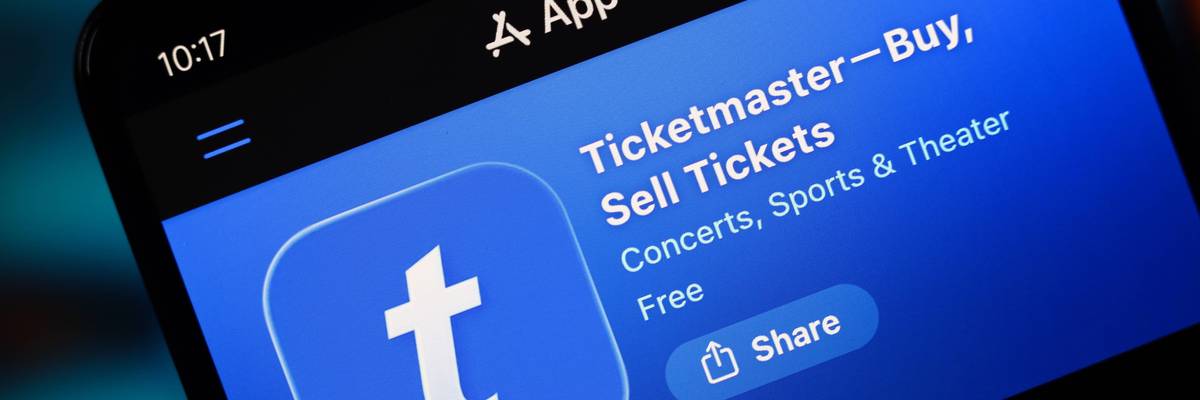
If you’ve ever been to a concert or sporting event, you’ve probably dealt with Ticketmaster.
And if you have, you’ve probably overpaid.
Ticketmaster is the closest thing the live events industry has to a monopoly. It controls the ticketing market at most major American venues and has used that power to squeeze fans with higher prices and limit competition, ultimately making live entertainment more expensive for everyone.
That is why recent legal action against Ticketmaster and its parent company, Live Nation, was so encouraging. A jury ruled in April that it is an operating illegal monopoly. Remedies will follow; the question is when.
Fans should not have to skip seeing their favorite band, team, or performer because a monopolistic corporation has found another way to extract money from them.
For millions of Americans who have watched ticket prices climb due to hidden fees, service charges, and processing costs, this ruling felt like long-overdue accountability.
But one court case alone will not fix a broken marketplace.
The larger problem is not just one company’s conduct in one courtroom. It is a business model built around control. Live Nation and Ticketmaster dominate ticketing, promotion, venues, and resale in ways that make it harder for competitors to enter the market and harder for consumers to find alternatives.
Fans see the results every day. A ticket advertised at one price suddenly costs far more at checkout. Consumers are pushed into one platform with few other options. Artists and venues face enormous pressure to work within the same closed system. The result is a marketplace where one corporation can act as gatekeeper for much of American live entertainment.
That is not how a competitive market is supposed to work.
Of course, Ticketmaster and Live Nation are fighting to protect their monopolistic practices. Company executives have already made clear that they oppose a breakup and intend to challenge court efforts to unwind their power. In all likelihood, the monopoly’s legal challenges will lead to a lengthy appeals process that could lead to consumers not seeing remedies for years.
A breakup of Live Nation and Ticketmaster may ultimately be necessary, because one big player will ultimately squeeze out any competitors in the marketplace.
America has taken similar action before when monopolies became too powerful and too harmful to consumers. Two perfect examples are Standard Oil and the Bell Systems, and the lessons from each are clear: When a company gains too much control over an essential critical goods (like oil) and services (communications), the government has a responsibility to step in and restore competition.
But even before the courts finish their work, Congress can take action right now.
The most important step is to attack the exclusivity arrangements that keep Ticketmaster in control.
Today, venues and artists are locked into deals that leave fans with limited options. If you want to see a major concert or sporting event, Ticketmaster is frequently the only choice—even before the sale begins.
That gatekeeping power is the foundation of Ticketmaster’s monopoly.
Congress should require an open ticket marketplace. Fans should be able to buy tickets through the platform of their choice, not be forced into one company’s ecosystem.
Of course, much of the modern economy already functions this way. Consumers can compare flights, hotels, rental cars across competing platforms, just to name a few. The ticketing industry should work the same way.
Open distribution will give consumers more choice, put downward pressure on fees, and create room for competitors to challenge Ticketmaster’s dominance. It would not be a full breakup, but it would deliver the same benefits while courts continue to consider broader remedies.
Congress should also keep its promise to pass the bipartisan TICKET Act, which would require ticket sellers to display the full price upfront and guarantee refunds for canceled events. Consumers deserve transparency before they buy, not surprise charges after they have already committed.
Fans should not have to skip seeing their favorite band, team, or performer because a monopolistic corporation has found another way to extract money from them.
However, this issue is about more than Ticketmaster. Congress is willing to stand up to concentrated corporate power when it harms consumers.
The live events marketplace should reward competition, transparency, and choice. Right now, it rewards control.
Congress has an opportunity to change that and put fans first. It should take it.
Dear Common Dreams reader, It’s been nearly 30 years since I co-founded Common Dreams with my late wife, Lina Newhouser. We had the radical notion that journalism should serve the public good, not corporate profits. It was clear to us from the outset what it would take to build such a project. No paid advertisements. No corporate sponsors. No millionaire publisher telling us what to think or do. Many people said we wouldn't last a year, but we proved those doubters wrong. Together with a tremendous team of journalists and dedicated staff, we built an independent media outlet free from the constraints of profits and corporate control. Our mission has always been simple: To inform. To inspire. To ignite change for the common good. Building Common Dreams was not easy. Our survival was never guaranteed. When you take on the most powerful forces—Wall Street greed, fossil fuel industry destruction, Big Tech lobbyists, and uber-rich oligarchs who have spent billions upon billions rigging the economy and democracy in their favor—the only bulwark you have is supporters who believe in your work. But here’s the urgent message from me today. It's never been this bad out there. And it's never been this hard to keep us going. At the very moment Common Dreams is most needed, the threats we face are intensifying. We need your support now more than ever. We don't accept corporate advertising and never will. We don't have a paywall because we don't think people should be blocked from critical news based on their ability to pay. Everything we do is funded by the donations of readers like you. When everyone does the little they can afford, we are strong. But if that support retreats or dries up, so do we. Will you donate now to make sure Common Dreams not only survives but thrives? —Craig Brown, Co-founder |
If you’ve ever been to a concert or sporting event, you’ve probably dealt with Ticketmaster.
And if you have, you’ve probably overpaid.
Ticketmaster is the closest thing the live events industry has to a monopoly. It controls the ticketing market at most major American venues and has used that power to squeeze fans with higher prices and limit competition, ultimately making live entertainment more expensive for everyone.
That is why recent legal action against Ticketmaster and its parent company, Live Nation, was so encouraging. A jury ruled in April that it is an operating illegal monopoly. Remedies will follow; the question is when.
Fans should not have to skip seeing their favorite band, team, or performer because a monopolistic corporation has found another way to extract money from them.
For millions of Americans who have watched ticket prices climb due to hidden fees, service charges, and processing costs, this ruling felt like long-overdue accountability.
But one court case alone will not fix a broken marketplace.
The larger problem is not just one company’s conduct in one courtroom. It is a business model built around control. Live Nation and Ticketmaster dominate ticketing, promotion, venues, and resale in ways that make it harder for competitors to enter the market and harder for consumers to find alternatives.
Fans see the results every day. A ticket advertised at one price suddenly costs far more at checkout. Consumers are pushed into one platform with few other options. Artists and venues face enormous pressure to work within the same closed system. The result is a marketplace where one corporation can act as gatekeeper for much of American live entertainment.
That is not how a competitive market is supposed to work.
Of course, Ticketmaster and Live Nation are fighting to protect their monopolistic practices. Company executives have already made clear that they oppose a breakup and intend to challenge court efforts to unwind their power. In all likelihood, the monopoly’s legal challenges will lead to a lengthy appeals process that could lead to consumers not seeing remedies for years.
A breakup of Live Nation and Ticketmaster may ultimately be necessary, because one big player will ultimately squeeze out any competitors in the marketplace.
America has taken similar action before when monopolies became too powerful and too harmful to consumers. Two perfect examples are Standard Oil and the Bell Systems, and the lessons from each are clear: When a company gains too much control over an essential critical goods (like oil) and services (communications), the government has a responsibility to step in and restore competition.
But even before the courts finish their work, Congress can take action right now.
The most important step is to attack the exclusivity arrangements that keep Ticketmaster in control.
Today, venues and artists are locked into deals that leave fans with limited options. If you want to see a major concert or sporting event, Ticketmaster is frequently the only choice—even before the sale begins.
That gatekeeping power is the foundation of Ticketmaster’s monopoly.
Congress should require an open ticket marketplace. Fans should be able to buy tickets through the platform of their choice, not be forced into one company’s ecosystem.
Of course, much of the modern economy already functions this way. Consumers can compare flights, hotels, rental cars across competing platforms, just to name a few. The ticketing industry should work the same way.
Open distribution will give consumers more choice, put downward pressure on fees, and create room for competitors to challenge Ticketmaster’s dominance. It would not be a full breakup, but it would deliver the same benefits while courts continue to consider broader remedies.
Congress should also keep its promise to pass the bipartisan TICKET Act, which would require ticket sellers to display the full price upfront and guarantee refunds for canceled events. Consumers deserve transparency before they buy, not surprise charges after they have already committed.
Fans should not have to skip seeing their favorite band, team, or performer because a monopolistic corporation has found another way to extract money from them.
However, this issue is about more than Ticketmaster. Congress is willing to stand up to concentrated corporate power when it harms consumers.
The live events marketplace should reward competition, transparency, and choice. Right now, it rewards control.
Congress has an opportunity to change that and put fans first. It should take it.
If you’ve ever been to a concert or sporting event, you’ve probably dealt with Ticketmaster.
And if you have, you’ve probably overpaid.
Ticketmaster is the closest thing the live events industry has to a monopoly. It controls the ticketing market at most major American venues and has used that power to squeeze fans with higher prices and limit competition, ultimately making live entertainment more expensive for everyone.
That is why recent legal action against Ticketmaster and its parent company, Live Nation, was so encouraging. A jury ruled in April that it is an operating illegal monopoly. Remedies will follow; the question is when.
Fans should not have to skip seeing their favorite band, team, or performer because a monopolistic corporation has found another way to extract money from them.
For millions of Americans who have watched ticket prices climb due to hidden fees, service charges, and processing costs, this ruling felt like long-overdue accountability.
But one court case alone will not fix a broken marketplace.
The larger problem is not just one company’s conduct in one courtroom. It is a business model built around control. Live Nation and Ticketmaster dominate ticketing, promotion, venues, and resale in ways that make it harder for competitors to enter the market and harder for consumers to find alternatives.
Fans see the results every day. A ticket advertised at one price suddenly costs far more at checkout. Consumers are pushed into one platform with few other options. Artists and venues face enormous pressure to work within the same closed system. The result is a marketplace where one corporation can act as gatekeeper for much of American live entertainment.
That is not how a competitive market is supposed to work.
Of course, Ticketmaster and Live Nation are fighting to protect their monopolistic practices. Company executives have already made clear that they oppose a breakup and intend to challenge court efforts to unwind their power. In all likelihood, the monopoly’s legal challenges will lead to a lengthy appeals process that could lead to consumers not seeing remedies for years.
A breakup of Live Nation and Ticketmaster may ultimately be necessary, because one big player will ultimately squeeze out any competitors in the marketplace.
America has taken similar action before when monopolies became too powerful and too harmful to consumers. Two perfect examples are Standard Oil and the Bell Systems, and the lessons from each are clear: When a company gains too much control over an essential critical goods (like oil) and services (communications), the government has a responsibility to step in and restore competition.
But even before the courts finish their work, Congress can take action right now.
The most important step is to attack the exclusivity arrangements that keep Ticketmaster in control.
Today, venues and artists are locked into deals that leave fans with limited options. If you want to see a major concert or sporting event, Ticketmaster is frequently the only choice—even before the sale begins.
That gatekeeping power is the foundation of Ticketmaster’s monopoly.
Congress should require an open ticket marketplace. Fans should be able to buy tickets through the platform of their choice, not be forced into one company’s ecosystem.
Of course, much of the modern economy already functions this way. Consumers can compare flights, hotels, rental cars across competing platforms, just to name a few. The ticketing industry should work the same way.
Open distribution will give consumers more choice, put downward pressure on fees, and create room for competitors to challenge Ticketmaster’s dominance. It would not be a full breakup, but it would deliver the same benefits while courts continue to consider broader remedies.
Congress should also keep its promise to pass the bipartisan TICKET Act, which would require ticket sellers to display the full price upfront and guarantee refunds for canceled events. Consumers deserve transparency before they buy, not surprise charges after they have already committed.
Fans should not have to skip seeing their favorite band, team, or performer because a monopolistic corporation has found another way to extract money from them.
However, this issue is about more than Ticketmaster. Congress is willing to stand up to concentrated corporate power when it harms consumers.
The live events marketplace should reward competition, transparency, and choice. Right now, it rewards control.
Congress has an opportunity to change that and put fans first. It should take it.