SUBSCRIBE TO OUR FREE NEWSLETTER
Daily news & progressive opinion—funded by the people, not the corporations—delivered straight to your inbox.
5
#000000
#FFFFFF
To donate by check, phone, or other method, see our More Ways to Give page.
Daily news & progressive opinion—funded by the people, not the corporations—delivered straight to your inbox.
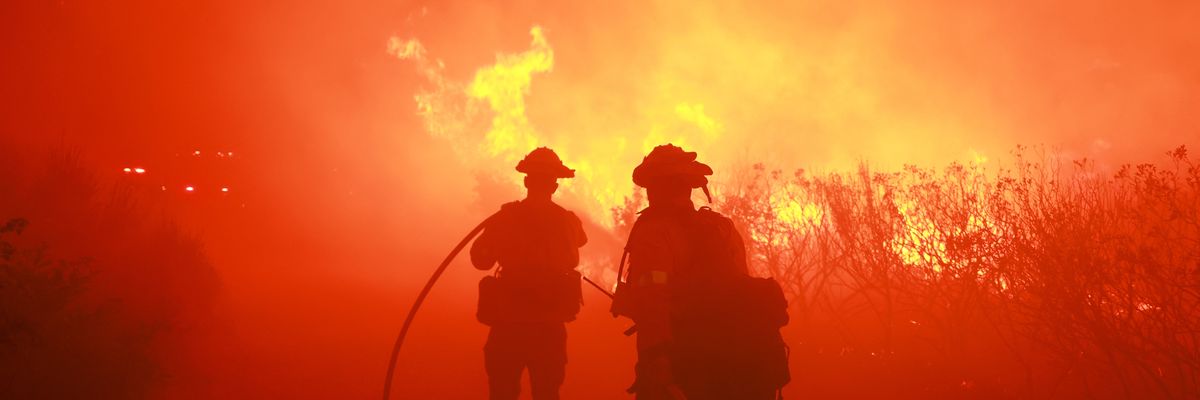
Firefighters from the Los Angeles Fire Department (LAFD) and other firemen respond to the Post Fire as it burns through the Hungry Valley State Vehicular Recreation Area in Lebec, California, on June 16, 2024.
We have to prepare not only for the inevitable climate-related disruptions, but to demand that our elected officials implement climate funding from the Inflation Reduction Act to ensure that we move as quickly as possible to a more livable future.
Whether you’re breathing smoke from the wildfires that recently broke out across California and in New Mexico or sweltering in the early heatwave enveloping most of the rest of the country, you may be thinking about where you can go this summer to get away. Unfortunately, recent history and current projections show that wildfires, excessive heat, and other effects of climate change aren’t something we can escape.
It’s easy to forget, but last summer was the hottest in history, filled with headlines about extreme weather events around the world, from the deadly fire in Maui, to unprecedented Canadian wildfires, to simultaneous heatwaves across three continents. And this summer is again shaping up to be one of the hottest on record. With that comes increased risk of wildfires, deadly heatwaves, hurricanes, and more. The fires in California represent an unusually early start to fire season, with far more acres having already burned than is typical at this time of year.
Last summer’s experience and this summer’s scorching start show that no one can simply beat the heat with a getaway to somewhere cooler because now, more than ever, climate change is following us no matter where we go. This summer, we have to prepare not only for the inevitable climate-related disruptions, but to demand that our elected officials implement climate funding from the Inflation Reduction Act to ensure that we move as quickly as possible to a more livable future.
In addition to the speedy implementation of the Inflation Reduction Act, we must also ensure that climate-focused politicians are elected or reelected in November, so that we can realize the full benefits of this landmark legislation.
Where I live in Northern California, we’ve had more than our share of climate change impacts in the form of drought, heat, and resulting wildfires. So last year I figured that by vacationing in the Northeast, where it rains off and on throughout the summer, we would get away from the effects of climate change for a while. But rather than a carefree getaway to enjoy the pristine outdoors, our trip ended up being bookended by two extreme weather events.
When I arrived with my family in New York’s Adirondack Mountains last June, smoke from massive wildfires—part of the worst fire season in Canadian history—blurred the usually clear view. Although we had come to play outdoors, we were told to stay inside. We could no longer pretend that the climate crisis was a problem for the future—or for somewhere else.
Later we drove to New York City through torrential rains as emergency alerts blaring on our phones warned of flash flooding and the risk of drowning. That evening, I learned that, tragically, these major floods had led to dozens needing to be rescued from cars and homes, and one death. Rising temperatures will only mean more deluges like this. It was a harrowing reminder of what will happen if elected officials fail to entrench and expand upon the Inflation Reduction Act’s climate justice promise.
Returning home, I exchanged stories of summer travels with congregants in the synagogue I serve as a rabbi. I found that what happened to us wasn’t unusual. From the Northeast to the Southwest, climate change is limiting, changing, and canceling vacation plans. No one could get away from it—there are few places tourists tread that were spared. I realized then that there will be no more getaways for me, or anyone.
The climate crisis’ impact on vacations is far from the most important consequence. Many people are already impacted right where they live. But the fact that there’s no longer even an option to get away from climate change by traveling somewhere we thought would be safe from it is a sobering reality check.
As a rabbi, I know that there are things we can change and things we cannot. Climate change is one thing we can do something about. And I have found that taking action is the best antidote to despair. So rather than throwing up our hands in the face of our inability to get away, we can choose to act.
But what can we do? Of course flying and driving for travel are part of the problem. But limiting our personal carbon footprints is not enough. Instead, we need policies that confront the crisis head-on. Fortunately, because of the Inflation Reduction Act passed by Congress two summers ago, there are billions of dollars waiting to be used for climate solutions including clean energy. We need to keep this good momentum going. Thanks to the Inflation Reduction Act, Americans can access $9 billion for energy efficient appliances and retrofits in their homes. The act will also facilitate the creation of 9 million jobs and programs that direct funds toward the frontline communities that are hardest hit by climate change.
State officials must take full advantage of these opportunities. Without them, wildfires, heat, and hurricanes will continue to menace us with ever greater frequency at home, and extreme weather events will follow us wherever we might travel. In addition to the speedy implementation of the Inflation Reduction Act, we must also ensure that climate-focused politicians are elected or reelected in November, so that we can realize the full benefits of this landmark legislation.
It’s almost certain that climate change will reach each of us again this summer. But we don’t have to be helpless about it. Vacations probably won’t give us relief from the climate crisis. But we can use them as reminders of the need to take action, and ensure that we’re investing in the clean energy future we desperately need.
Dear Common Dreams reader, It’s been nearly 30 years since I co-founded Common Dreams with my late wife, Lina Newhouser. We had the radical notion that journalism should serve the public good, not corporate profits. It was clear to us from the outset what it would take to build such a project. No paid advertisements. No corporate sponsors. No millionaire publisher telling us what to think or do. Many people said we wouldn't last a year, but we proved those doubters wrong. Together with a tremendous team of journalists and dedicated staff, we built an independent media outlet free from the constraints of profits and corporate control. Our mission has always been simple: To inform. To inspire. To ignite change for the common good. Building Common Dreams was not easy. Our survival was never guaranteed. When you take on the most powerful forces—Wall Street greed, fossil fuel industry destruction, Big Tech lobbyists, and uber-rich oligarchs who have spent billions upon billions rigging the economy and democracy in their favor—the only bulwark you have is supporters who believe in your work. But here’s the urgent message from me today. It's never been this bad out there. And it's never been this hard to keep us going. At the very moment Common Dreams is most needed, the threats we face are intensifying. We need your support now more than ever. We don't accept corporate advertising and never will. We don't have a paywall because we don't think people should be blocked from critical news based on their ability to pay. Everything we do is funded by the donations of readers like you. When everyone does the little they can afford, we are strong. But if that support retreats or dries up, so do we. Will you donate now to make sure Common Dreams not only survives but thrives? —Craig Brown, Co-founder |
Whether you’re breathing smoke from the wildfires that recently broke out across California and in New Mexico or sweltering in the early heatwave enveloping most of the rest of the country, you may be thinking about where you can go this summer to get away. Unfortunately, recent history and current projections show that wildfires, excessive heat, and other effects of climate change aren’t something we can escape.
It’s easy to forget, but last summer was the hottest in history, filled with headlines about extreme weather events around the world, from the deadly fire in Maui, to unprecedented Canadian wildfires, to simultaneous heatwaves across three continents. And this summer is again shaping up to be one of the hottest on record. With that comes increased risk of wildfires, deadly heatwaves, hurricanes, and more. The fires in California represent an unusually early start to fire season, with far more acres having already burned than is typical at this time of year.
Last summer’s experience and this summer’s scorching start show that no one can simply beat the heat with a getaway to somewhere cooler because now, more than ever, climate change is following us no matter where we go. This summer, we have to prepare not only for the inevitable climate-related disruptions, but to demand that our elected officials implement climate funding from the Inflation Reduction Act to ensure that we move as quickly as possible to a more livable future.
In addition to the speedy implementation of the Inflation Reduction Act, we must also ensure that climate-focused politicians are elected or reelected in November, so that we can realize the full benefits of this landmark legislation.
Where I live in Northern California, we’ve had more than our share of climate change impacts in the form of drought, heat, and resulting wildfires. So last year I figured that by vacationing in the Northeast, where it rains off and on throughout the summer, we would get away from the effects of climate change for a while. But rather than a carefree getaway to enjoy the pristine outdoors, our trip ended up being bookended by two extreme weather events.
When I arrived with my family in New York’s Adirondack Mountains last June, smoke from massive wildfires—part of the worst fire season in Canadian history—blurred the usually clear view. Although we had come to play outdoors, we were told to stay inside. We could no longer pretend that the climate crisis was a problem for the future—or for somewhere else.
Later we drove to New York City through torrential rains as emergency alerts blaring on our phones warned of flash flooding and the risk of drowning. That evening, I learned that, tragically, these major floods had led to dozens needing to be rescued from cars and homes, and one death. Rising temperatures will only mean more deluges like this. It was a harrowing reminder of what will happen if elected officials fail to entrench and expand upon the Inflation Reduction Act’s climate justice promise.
Returning home, I exchanged stories of summer travels with congregants in the synagogue I serve as a rabbi. I found that what happened to us wasn’t unusual. From the Northeast to the Southwest, climate change is limiting, changing, and canceling vacation plans. No one could get away from it—there are few places tourists tread that were spared. I realized then that there will be no more getaways for me, or anyone.
The climate crisis’ impact on vacations is far from the most important consequence. Many people are already impacted right where they live. But the fact that there’s no longer even an option to get away from climate change by traveling somewhere we thought would be safe from it is a sobering reality check.
As a rabbi, I know that there are things we can change and things we cannot. Climate change is one thing we can do something about. And I have found that taking action is the best antidote to despair. So rather than throwing up our hands in the face of our inability to get away, we can choose to act.
But what can we do? Of course flying and driving for travel are part of the problem. But limiting our personal carbon footprints is not enough. Instead, we need policies that confront the crisis head-on. Fortunately, because of the Inflation Reduction Act passed by Congress two summers ago, there are billions of dollars waiting to be used for climate solutions including clean energy. We need to keep this good momentum going. Thanks to the Inflation Reduction Act, Americans can access $9 billion for energy efficient appliances and retrofits in their homes. The act will also facilitate the creation of 9 million jobs and programs that direct funds toward the frontline communities that are hardest hit by climate change.
State officials must take full advantage of these opportunities. Without them, wildfires, heat, and hurricanes will continue to menace us with ever greater frequency at home, and extreme weather events will follow us wherever we might travel. In addition to the speedy implementation of the Inflation Reduction Act, we must also ensure that climate-focused politicians are elected or reelected in November, so that we can realize the full benefits of this landmark legislation.
It’s almost certain that climate change will reach each of us again this summer. But we don’t have to be helpless about it. Vacations probably won’t give us relief from the climate crisis. But we can use them as reminders of the need to take action, and ensure that we’re investing in the clean energy future we desperately need.
Whether you’re breathing smoke from the wildfires that recently broke out across California and in New Mexico or sweltering in the early heatwave enveloping most of the rest of the country, you may be thinking about where you can go this summer to get away. Unfortunately, recent history and current projections show that wildfires, excessive heat, and other effects of climate change aren’t something we can escape.
It’s easy to forget, but last summer was the hottest in history, filled with headlines about extreme weather events around the world, from the deadly fire in Maui, to unprecedented Canadian wildfires, to simultaneous heatwaves across three continents. And this summer is again shaping up to be one of the hottest on record. With that comes increased risk of wildfires, deadly heatwaves, hurricanes, and more. The fires in California represent an unusually early start to fire season, with far more acres having already burned than is typical at this time of year.
Last summer’s experience and this summer’s scorching start show that no one can simply beat the heat with a getaway to somewhere cooler because now, more than ever, climate change is following us no matter where we go. This summer, we have to prepare not only for the inevitable climate-related disruptions, but to demand that our elected officials implement climate funding from the Inflation Reduction Act to ensure that we move as quickly as possible to a more livable future.
In addition to the speedy implementation of the Inflation Reduction Act, we must also ensure that climate-focused politicians are elected or reelected in November, so that we can realize the full benefits of this landmark legislation.
Where I live in Northern California, we’ve had more than our share of climate change impacts in the form of drought, heat, and resulting wildfires. So last year I figured that by vacationing in the Northeast, where it rains off and on throughout the summer, we would get away from the effects of climate change for a while. But rather than a carefree getaway to enjoy the pristine outdoors, our trip ended up being bookended by two extreme weather events.
When I arrived with my family in New York’s Adirondack Mountains last June, smoke from massive wildfires—part of the worst fire season in Canadian history—blurred the usually clear view. Although we had come to play outdoors, we were told to stay inside. We could no longer pretend that the climate crisis was a problem for the future—or for somewhere else.
Later we drove to New York City through torrential rains as emergency alerts blaring on our phones warned of flash flooding and the risk of drowning. That evening, I learned that, tragically, these major floods had led to dozens needing to be rescued from cars and homes, and one death. Rising temperatures will only mean more deluges like this. It was a harrowing reminder of what will happen if elected officials fail to entrench and expand upon the Inflation Reduction Act’s climate justice promise.
Returning home, I exchanged stories of summer travels with congregants in the synagogue I serve as a rabbi. I found that what happened to us wasn’t unusual. From the Northeast to the Southwest, climate change is limiting, changing, and canceling vacation plans. No one could get away from it—there are few places tourists tread that were spared. I realized then that there will be no more getaways for me, or anyone.
The climate crisis’ impact on vacations is far from the most important consequence. Many people are already impacted right where they live. But the fact that there’s no longer even an option to get away from climate change by traveling somewhere we thought would be safe from it is a sobering reality check.
As a rabbi, I know that there are things we can change and things we cannot. Climate change is one thing we can do something about. And I have found that taking action is the best antidote to despair. So rather than throwing up our hands in the face of our inability to get away, we can choose to act.
But what can we do? Of course flying and driving for travel are part of the problem. But limiting our personal carbon footprints is not enough. Instead, we need policies that confront the crisis head-on. Fortunately, because of the Inflation Reduction Act passed by Congress two summers ago, there are billions of dollars waiting to be used for climate solutions including clean energy. We need to keep this good momentum going. Thanks to the Inflation Reduction Act, Americans can access $9 billion for energy efficient appliances and retrofits in their homes. The act will also facilitate the creation of 9 million jobs and programs that direct funds toward the frontline communities that are hardest hit by climate change.
State officials must take full advantage of these opportunities. Without them, wildfires, heat, and hurricanes will continue to menace us with ever greater frequency at home, and extreme weather events will follow us wherever we might travel. In addition to the speedy implementation of the Inflation Reduction Act, we must also ensure that climate-focused politicians are elected or reelected in November, so that we can realize the full benefits of this landmark legislation.
It’s almost certain that climate change will reach each of us again this summer. But we don’t have to be helpless about it. Vacations probably won’t give us relief from the climate crisis. But we can use them as reminders of the need to take action, and ensure that we’re investing in the clean energy future we desperately need.