SUBSCRIBE TO OUR FREE NEWSLETTER
Daily news & progressive opinion—funded by the people, not the corporations—delivered straight to your inbox.
5
#000000
#FFFFFF
To donate by check, phone, or other method, see our More Ways to Give page.
Daily news & progressive opinion—funded by the people, not the corporations—delivered straight to your inbox.
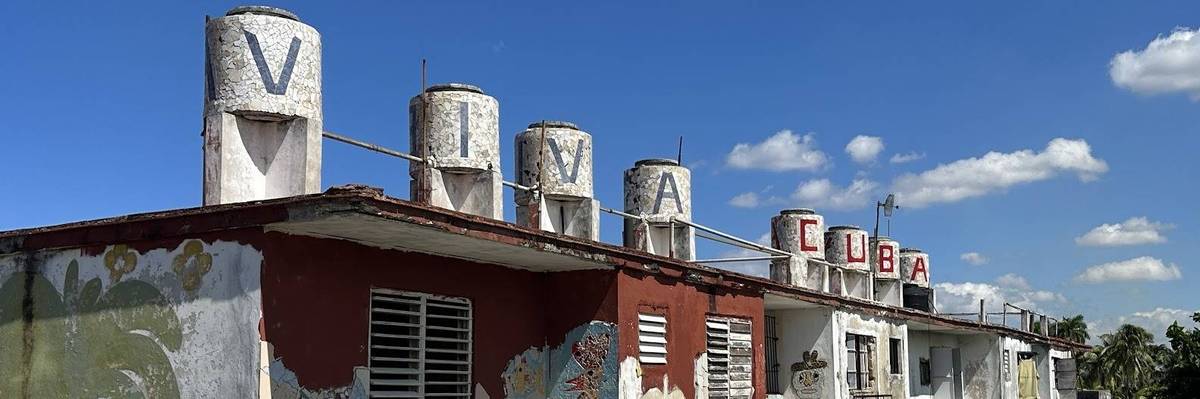
Water towers spell out "Viva Cuba' in Fusterlandia, Havana, Cuba.
Being a good Cuban American means to support the people, and to fight for what's right and just for them, not for the government; American or Cuban.
What does it mean to be a good Cuban American? If you'd have asked me that question six years ago my answer would have been the standardized one, because it was an answer that had been etched into my mind since I was young.
To be a good Cuban-American I had to:
Those were the three basic pillars for being a good Cuban-American, and they were not optional. They still aren't. At least, that's what the loud Cuban-American voices in Miami and South Florida want you and me to believe.
For me, being a good Cuban American means stopping the embargo. Stop suffocating my people.
I was born in Cuba a few years before their “periodo especial,” which lasted from about 1991 to 2000. Essentially, it was an economic crisis that was highlighted by extreme reductions of already rationed foods and severe energy shortages (apagones). For the duration of my childhood and young adult life, I was taught that these burdens that Cuba felt were the sole fault of Fidel Castro and his government. That it was communism's fault, and that Che Guevara was the main architect of Cuba's torture. As a result, I grew up the way most Cubans who live in the USA do, with a severe mistrust of anything socialist or communist, fully believing that the embargo was choking the Cuban government, and having the lowest possible opinion of Castro and Che.
When I started college, I got involved in activism, and worked very closely with right-wing ideological organizations. Although at the time, I didn’t realize their beliefs were right-wing, I just felt that it was the only way to think and act as a Cuban. I was taught a lot by them, and of course, deep within all of those lessons were the continued lessons on hatred of communism and socialism, Castro and co., and supporting the embargo. This went on for many years, and I eventually became president of a local university-aligned organization. One day, I had a conversation with someone who had also been heavily involved with dissident work. We began discussing trips to Cuba; he'd said it would be his fifth trip over to the island, and I mentioned I hadn't been back since I left back in 1994. He questioned why.
I began listing all of the reasons that had been so eloquently placed into my psyche for the past 20 years: traveling to Cuba was dangerous, it only benefited the Cuban government, my money would never reach the people of Cuba, I would be blacklisted here in the USA because I would be seen as a communist sympathizer, and so forth.
He looked me right in the eyes and said all of the reasons I'd mentioned were American propaganda, and served no other purpose than to instill fear into people who would otherwise see a situation for what it truly was—cruel and unusual. A situation that only hurt the people of Cuba. A situation that was orchestrated by the American government under the guise of hurting the Cuban government, but the real objective was to obtain control of the small sovereign nation.
Over the last five years or so, I have done a lot of unlearning, and while I still feel very strongly about the Cuban government and their crimes toward the Cuban people who oppose them, I do not believe the issue of Cuba is as black and white as the loud voices in South Florida want you and me to believe. The one thing, however, that is very black and white is that the embargo does nothing but hurt the people of Cuba. The embargo does nothing else but cut off an already limited supply of items, medicines, and tools that the Cuban people need to survive.
If you ask me now what it means to be a good Cuban American, my answer is simple, yet in true Cuban fashion also very complex. Being a good Cuban American means to support the people, and to fight for what's right and just for them, not for the government; American or Cuban. Being a good Cuban American means to call for an end to the decades-long embargo that has done nothing but strangle an already struggling country. Being a good Cuban American means recognizing that NO government is without flaw, but understanding that at times when you are pushed into a corner, there are only a handful of ways to stay alive.
For me, being a good Cuban American means stopping the embargo. Stop suffocating my people. Stop oppressing my people, and stop using their suffering as the excuse to blame another government. Not in my name.
End the embargo. Help the Cuban people. If this calls to you, please join Cuban Americans for Cuba. We have poured our hearts into an open letter against the current US policies toward Cuba (CubanAmericansForCuba.Org/Letter), which is a call to our fellow Cubans to stand with us and show the world who we truly are and what we truly stand for.
Our movement is a blend of members across the United States who don't all think alike, but who share one unshakable conviction: that the future of Cuba belongs to the Cuban people, and to them alone, free from American interference and manipulation.
Dear Common Dreams reader, It’s been nearly 30 years since I co-founded Common Dreams with my late wife, Lina Newhouser. We had the radical notion that journalism should serve the public good, not corporate profits. It was clear to us from the outset what it would take to build such a project. No paid advertisements. No corporate sponsors. No millionaire publisher telling us what to think or do. Many people said we wouldn't last a year, but we proved those doubters wrong. Together with a tremendous team of journalists and dedicated staff, we built an independent media outlet free from the constraints of profits and corporate control. Our mission has always been simple: To inform. To inspire. To ignite change for the common good. Building Common Dreams was not easy. Our survival was never guaranteed. When you take on the most powerful forces—Wall Street greed, fossil fuel industry destruction, Big Tech lobbyists, and uber-rich oligarchs who have spent billions upon billions rigging the economy and democracy in their favor—the only bulwark you have is supporters who believe in your work. But here’s the urgent message from me today. It's never been this bad out there. And it's never been this hard to keep us going. At the very moment Common Dreams is most needed, the threats we face are intensifying. We need your support now more than ever. We don't accept corporate advertising and never will. We don't have a paywall because we don't think people should be blocked from critical news based on their ability to pay. Everything we do is funded by the donations of readers like you. When everyone does the little they can afford, we are strong. But if that support retreats or dries up, so do we. Will you donate now to make sure Common Dreams not only survives but thrives? —Craig Brown, Co-founder |
What does it mean to be a good Cuban American? If you'd have asked me that question six years ago my answer would have been the standardized one, because it was an answer that had been etched into my mind since I was young.
To be a good Cuban-American I had to:
Those were the three basic pillars for being a good Cuban-American, and they were not optional. They still aren't. At least, that's what the loud Cuban-American voices in Miami and South Florida want you and me to believe.
For me, being a good Cuban American means stopping the embargo. Stop suffocating my people.
I was born in Cuba a few years before their “periodo especial,” which lasted from about 1991 to 2000. Essentially, it was an economic crisis that was highlighted by extreme reductions of already rationed foods and severe energy shortages (apagones). For the duration of my childhood and young adult life, I was taught that these burdens that Cuba felt were the sole fault of Fidel Castro and his government. That it was communism's fault, and that Che Guevara was the main architect of Cuba's torture. As a result, I grew up the way most Cubans who live in the USA do, with a severe mistrust of anything socialist or communist, fully believing that the embargo was choking the Cuban government, and having the lowest possible opinion of Castro and Che.
When I started college, I got involved in activism, and worked very closely with right-wing ideological organizations. Although at the time, I didn’t realize their beliefs were right-wing, I just felt that it was the only way to think and act as a Cuban. I was taught a lot by them, and of course, deep within all of those lessons were the continued lessons on hatred of communism and socialism, Castro and co., and supporting the embargo. This went on for many years, and I eventually became president of a local university-aligned organization. One day, I had a conversation with someone who had also been heavily involved with dissident work. We began discussing trips to Cuba; he'd said it would be his fifth trip over to the island, and I mentioned I hadn't been back since I left back in 1994. He questioned why.
I began listing all of the reasons that had been so eloquently placed into my psyche for the past 20 years: traveling to Cuba was dangerous, it only benefited the Cuban government, my money would never reach the people of Cuba, I would be blacklisted here in the USA because I would be seen as a communist sympathizer, and so forth.
He looked me right in the eyes and said all of the reasons I'd mentioned were American propaganda, and served no other purpose than to instill fear into people who would otherwise see a situation for what it truly was—cruel and unusual. A situation that only hurt the people of Cuba. A situation that was orchestrated by the American government under the guise of hurting the Cuban government, but the real objective was to obtain control of the small sovereign nation.
Over the last five years or so, I have done a lot of unlearning, and while I still feel very strongly about the Cuban government and their crimes toward the Cuban people who oppose them, I do not believe the issue of Cuba is as black and white as the loud voices in South Florida want you and me to believe. The one thing, however, that is very black and white is that the embargo does nothing but hurt the people of Cuba. The embargo does nothing else but cut off an already limited supply of items, medicines, and tools that the Cuban people need to survive.
If you ask me now what it means to be a good Cuban American, my answer is simple, yet in true Cuban fashion also very complex. Being a good Cuban American means to support the people, and to fight for what's right and just for them, not for the government; American or Cuban. Being a good Cuban American means to call for an end to the decades-long embargo that has done nothing but strangle an already struggling country. Being a good Cuban American means recognizing that NO government is without flaw, but understanding that at times when you are pushed into a corner, there are only a handful of ways to stay alive.
For me, being a good Cuban American means stopping the embargo. Stop suffocating my people. Stop oppressing my people, and stop using their suffering as the excuse to blame another government. Not in my name.
End the embargo. Help the Cuban people. If this calls to you, please join Cuban Americans for Cuba. We have poured our hearts into an open letter against the current US policies toward Cuba (CubanAmericansForCuba.Org/Letter), which is a call to our fellow Cubans to stand with us and show the world who we truly are and what we truly stand for.
Our movement is a blend of members across the United States who don't all think alike, but who share one unshakable conviction: that the future of Cuba belongs to the Cuban people, and to them alone, free from American interference and manipulation.
What does it mean to be a good Cuban American? If you'd have asked me that question six years ago my answer would have been the standardized one, because it was an answer that had been etched into my mind since I was young.
To be a good Cuban-American I had to:
Those were the three basic pillars for being a good Cuban-American, and they were not optional. They still aren't. At least, that's what the loud Cuban-American voices in Miami and South Florida want you and me to believe.
For me, being a good Cuban American means stopping the embargo. Stop suffocating my people.
I was born in Cuba a few years before their “periodo especial,” which lasted from about 1991 to 2000. Essentially, it was an economic crisis that was highlighted by extreme reductions of already rationed foods and severe energy shortages (apagones). For the duration of my childhood and young adult life, I was taught that these burdens that Cuba felt were the sole fault of Fidel Castro and his government. That it was communism's fault, and that Che Guevara was the main architect of Cuba's torture. As a result, I grew up the way most Cubans who live in the USA do, with a severe mistrust of anything socialist or communist, fully believing that the embargo was choking the Cuban government, and having the lowest possible opinion of Castro and Che.
When I started college, I got involved in activism, and worked very closely with right-wing ideological organizations. Although at the time, I didn’t realize their beliefs were right-wing, I just felt that it was the only way to think and act as a Cuban. I was taught a lot by them, and of course, deep within all of those lessons were the continued lessons on hatred of communism and socialism, Castro and co., and supporting the embargo. This went on for many years, and I eventually became president of a local university-aligned organization. One day, I had a conversation with someone who had also been heavily involved with dissident work. We began discussing trips to Cuba; he'd said it would be his fifth trip over to the island, and I mentioned I hadn't been back since I left back in 1994. He questioned why.
I began listing all of the reasons that had been so eloquently placed into my psyche for the past 20 years: traveling to Cuba was dangerous, it only benefited the Cuban government, my money would never reach the people of Cuba, I would be blacklisted here in the USA because I would be seen as a communist sympathizer, and so forth.
He looked me right in the eyes and said all of the reasons I'd mentioned were American propaganda, and served no other purpose than to instill fear into people who would otherwise see a situation for what it truly was—cruel and unusual. A situation that only hurt the people of Cuba. A situation that was orchestrated by the American government under the guise of hurting the Cuban government, but the real objective was to obtain control of the small sovereign nation.
Over the last five years or so, I have done a lot of unlearning, and while I still feel very strongly about the Cuban government and their crimes toward the Cuban people who oppose them, I do not believe the issue of Cuba is as black and white as the loud voices in South Florida want you and me to believe. The one thing, however, that is very black and white is that the embargo does nothing but hurt the people of Cuba. The embargo does nothing else but cut off an already limited supply of items, medicines, and tools that the Cuban people need to survive.
If you ask me now what it means to be a good Cuban American, my answer is simple, yet in true Cuban fashion also very complex. Being a good Cuban American means to support the people, and to fight for what's right and just for them, not for the government; American or Cuban. Being a good Cuban American means to call for an end to the decades-long embargo that has done nothing but strangle an already struggling country. Being a good Cuban American means recognizing that NO government is without flaw, but understanding that at times when you are pushed into a corner, there are only a handful of ways to stay alive.
For me, being a good Cuban American means stopping the embargo. Stop suffocating my people. Stop oppressing my people, and stop using their suffering as the excuse to blame another government. Not in my name.
End the embargo. Help the Cuban people. If this calls to you, please join Cuban Americans for Cuba. We have poured our hearts into an open letter against the current US policies toward Cuba (CubanAmericansForCuba.Org/Letter), which is a call to our fellow Cubans to stand with us and show the world who we truly are and what we truly stand for.
Our movement is a blend of members across the United States who don't all think alike, but who share one unshakable conviction: that the future of Cuba belongs to the Cuban people, and to them alone, free from American interference and manipulation.