March, 15 2024, 01:29pm EDT

ACLU Statement on Supreme Court’s Decision Related to Whether Public Officials Can Block Social Media Followers
The Supreme Court on Friday clarified when public officials’ social media posts are subject to the First Amendment in response to two challenges, O’Connor-Ratcliff v. Garnier and Lindke v. Freed.
“We’re gratified by the court’s ruling today, which underscores that the First Amendment restricts how the government can shape speech that takes place on social media,” said Evelyn Danforth-Scott, ACLU staff attorney specializing in Supreme Court litigation. “It gives everyday Americans a way to hold officials constitutionally accountable when they censor social media content, restrict access to it, or improperly elevate certain viewpoints over others. At the same time, it protects public officeholders’ own free speech rights by giving them guidance on how to make clear when they are speaking as private individuals.”
Both cases involved local officials who had blocked or censored critical constituents from Facebook and X (formerly Twitter); the constituents then sued, saying denying them access violated their First Amendment rights. The Supreme Court ruled that social media posts and curation efforts by government officials can be attributed to the state, and, therefore, subject to First Amendment scrutiny, only if the speaker has the authority to speak on the state’s behalf and purports to exercise that authority through their relevant social media presence.
The ruling follows friend-of-the court briefs filed by the American Civil Liberties Union, the ACLU of Michigan, the ACLU Foundation of Northern California, and the ACLU Foundation of Southern California, which acknowledged that the First Amendment guarantees public officials’ right to free speech in their private capacities, but argued that when public officials appear to represent their government offices online, they are acting in their government capacities and so are subject to the First Amendment’s prohibitions on government censorship.
These cases are part of ACLU’s Joan and Irwin Jacobs Supreme Court Docket.
The American Civil Liberties Union was founded in 1920 and is our nation's guardian of liberty. The ACLU works in the courts, legislatures and communities to defend and preserve the individual rights and liberties guaranteed to all people in this country by the Constitution and laws of the United States.
(212) 549-2666LATEST NEWS
US Officials Face Fresh Pressure After Another American 'Brutalized' by Israeli Settlers in West Bank
"We call on members of Congress to demand the US government place sanctions on illegal Israeli settlers and the Israeli military," said the Council on American-Islamic Relations and CAIR-Chicago.
Oct 19, 2026
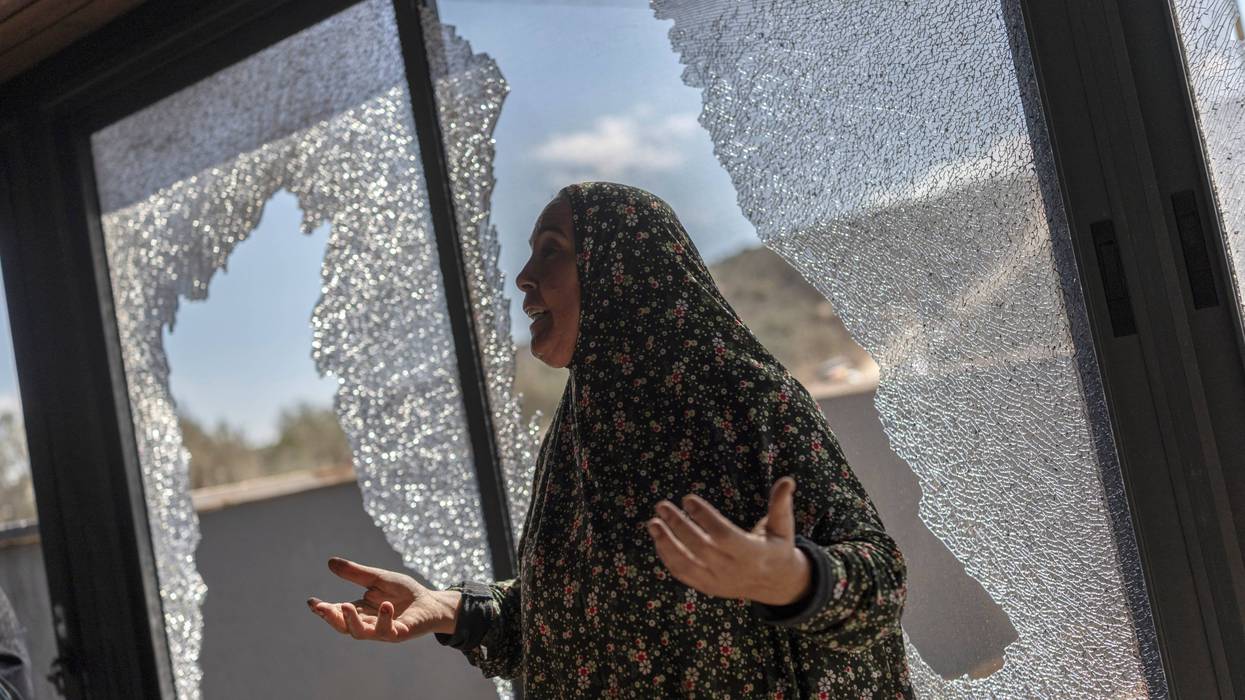
Just days after Israelis assaulted 63-year-old Washington Post photojournalist Heidi Levine in the illegally occupied West Bank, settlers who have invaded the Palestinian territory attacked another American there, spurring calls for action by US officials.
"Over a dozen masked settlers just attacked Turmus 'Ayya. Burned an American home and severely beat an American citizen, Chicagoan Mohammed Sakat," Jasper Nathaniel, an American journalist who covers the Israeli occupation of the West Bank, wrote on the social media platform X, sharing footage of the bloodied man and floor.
"One town over from Abu Falah and was attacked on the same day," he noted. "They're really cracking down here."
The journalist pointed out that six weeks ago, President Donald Trump's ambassador to Israel, Mike Huckabee, "stood in a home in Turmus 'Ayya, telling residents they deserved peace, condemning settler terror, and promising severe consequences."
"Today, settlers burned American homes and assaulted US citizens here," he continued. "No accountability in sight."
"Meanwhile, Huckabee just gave the keynote speech at a settlement conference alongside Eliram Azoulay, one of the key figures in ethnically cleansing Masafer Yatta," Nathaniel added.
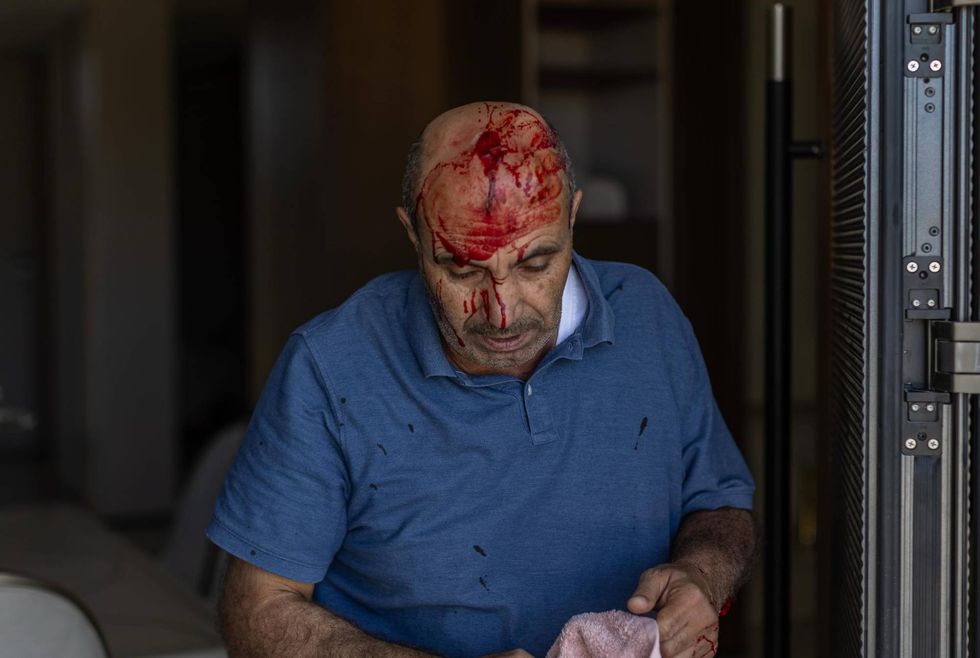 Israeli settlers set fire to a house and attack Palestinians in Turmus 'Ayya, a town in the illegally occupied West Bank, on October 19, 2026. (Photo by Avishay Mohar/Facebook)
Avishay Mohar, who is part of Activestills, "an independent photography collective engaged in decolonial struggles in Palestine/Israel since 2005," described the Monday attack with photographs on his Facebook and Instagram accounts.
"Israelis set fire to a house and attack Palestinian olive harvesters in Turmus 'Ayya as they picked olives in a residential area between the village's houses," he wrote in the caption. "Over the years, Israel has taken nearly all of the village's land. The Israelis, dressed in black and wearing masks, severely beat an elderly farmer with sticks and sharp objects."
"They threw stones at houses, set two cars on fire, and burned a room in one of the homes," according to Mohar. "Later, Israeli army forces arrived along with other Israeli civilians, including one known for building new outposts in the area. They threatened residents with tear gas if they did not leave immediately, and banned them from blocking the road leading from the violent outposts to the village homes."
The United States' largest Muslim civil rights group and its Chicago chapter demanded action from US policymakers—who have increased the billions of dollars in military aid that they give to Israel annually since Israeli forces began a genocidal war on Palestinians in the Gaza Strip in response to the Hamas-led October 7, 2023 attack.
Throughout Israel's assault on Gaza—which has killed over 74,000 people—there has been a surge of violence by Israeli settlers and soldiers in the West Bank, leading to the deaths of more than 1,100 Palestinians and multiple Americans.
"Once again, the extremist thugs supported and enabled by the Israeli government have brutalized an American citizen. Enough is enough. Failing to speak out about this and demand accountability is a betrayal of the American people in favor of a foreign state," said the Council on American-Islamic Relations and CAIR-Chicago in a Monday statement.
"We call on Illinois lawmakers to condemn this vicious attack. We call on members of Congress to demand the US government place sanctions on illegal Israeli settlers and the Israeli military," they continued. "We call on Illinois State Treasurer Michael Frerichs to divest Illinois' public funds from Israel bonds and halt all new purchases and renewals."
They added that "Illinois taxpayers should not be bankrolling a government that enables attacks on American citizens. We also call on the US government to launch an independent investigation into the attacks on Mohammed Sakat, Heidi Levine, and all other Americans targeted by Israeli settlers and troops."
Between the Israeli settler assaults of Levine and Sakat, there were reports that Israel's military ignored repeated distress calls before masked settlers attacked a group of European diplomats in the West Bank over the weekend.
While the Israel Defense Forces attempted to defend itself by saying the diplomats did not coordinate their visit with the military and turned to a hotline not intended for civilian use, the anti-occupation group Breaking the Silence said that "the IDF will always have a bureaucratic excuse, but the real reason is that backing settler terrorists is its policy."
According to The Associated Press, "Israeli police said they arrested 10 people on Monday in connection with a wave of settler violence that included attacks on a foreign journalist and European diplomats in the occupied West Bank over the weekend."
However, as the Palestinian National Authority's news agency WAFA noted in a Monday report about three olive harvesters injured by Israeli settlers near Salfit, "colonists' violence against Palestinians and their property is routine in the West Bank and is rarely prosecuted by Israeli authorities."
Keep ReadingShow Less

'Mississippi Goddam': State AG Calls Police Killing of Toddler Kohen Wiley 'Justified'
"Kohen should be alive," said one civil rights attorney. "He and his family deserve accountability. The fight for justice continues."
Oct 19, 2026
Republican Mississippi Attorney General Lynn Fitch on Monday declared the fatal police shooting of 1-year-old Kohen Wiley “justified,” provoking outrage over a decision that civil rights advocates said underscores the enduring systemic racism in US policing and prosecution.
Wiley, who is Black, was killed on June 14 in a Walmart parking lot in Senatobia, Mississippi as he sat in his mother’s arms inside a car. Police had responded to an allegation that his mother, Vellesiya Wiley, and another woman, Latoya Ferrell—the baby's aunt—had stolen diapers.
Senatobia Police Sgt. Hunter Foster, who is white, opened fire on the car, striking Wiley and Ferrell, who was critically wounded. Neither woman has been charged, and authorities have not publicly released evidence establishing that a theft occurred.
“I watched my baby take his first breath, and I watched my baby take his last breath,” Wiley said after her son's killing.
A TRAVESTY OF JUSTICE. Horror and racism from Mississippi Attorney General Lynn Fitch as she announces that the police shooting of Black baby Kohen Wiley was "justified."
[image or embed]
— Indivisible Chicago Alliance ❌👑 (@indivisiblechicago.bsky.social) October 19, 2026 at 12:01 PM
Cellphone video footage showed a vehicle driving away from officers, but does not appear to capture the moment of the shooting. A photo of the car shows bullet holes in the windshield.
In a brief statement, Fitch's office said it had "completed the review" of the shooting and "found the use of force was justified."
The finding means that Foster will face no criminal charges.
"How can anyone accept that conclusion when Kohen’s family and the public still have not been allowed to see the body camera footage?" national civil rights attorney Ben Crump, who represents the Wiley family, said following Fitch's announcement.
"This is a department whose chief was fired after reports of racial slurs in his text messages, and whose officer faced a complaint alleging a racially offensive remark two days before he shot Kohen," he added. "If the footage supports the state’s decision, release it. We will not stop fighting until this family gets the truth."
Last month, the city of Senatobia fired former Police Chief Harold Vanderford after text messages emerged in which he regularly used racial slurs.
Marquell Bridges, a Mississippi activist who is president of the Building Bridges Coalition, told the Mississippi Free Press Monday that “there is blood" on the hands of "not just Hunter Foster, but everyone that is complicit in the cover-up, including Attorney General Lynn Fitch."
Rev. Cornell William Brooks—a lawyer, civil rights activist, and professor—posted on social media, "BABY EXECUTION BY JUSTIFIABLE HOMICIDE."
"With the video, the public won’t buy this," Brooks added. "A fleeing alleged shoplifter does not justify shooting into a vehicle with a known 'baby on board.' Every alleged perception of danger doesn’t justify every Black death."
Writer and racial justice advocate Tanisha Long voiced her indignation in the words of a famous Civil Rights-era protest song from Jazz icon Nina Simone:
"Mississippi Goddam."
Keep ReadingShow Less
While Waging War and Wrecking Economy, Trump's Focused On... Renaming New Mexico
"New Mexico is New Mexico, and you lost here three times because you're corrupt and don't care about working people," said Deb Haaland.
Oct 19, 2026
As Americans suffer from an affordability crisis exacerbated by President Donald Trump's policies, both foreign and domestic, critics on Monday excoriated him for his inane pursuit of changing the name of yet another geographical place—this time, one of the nation's most culturally distinct states.
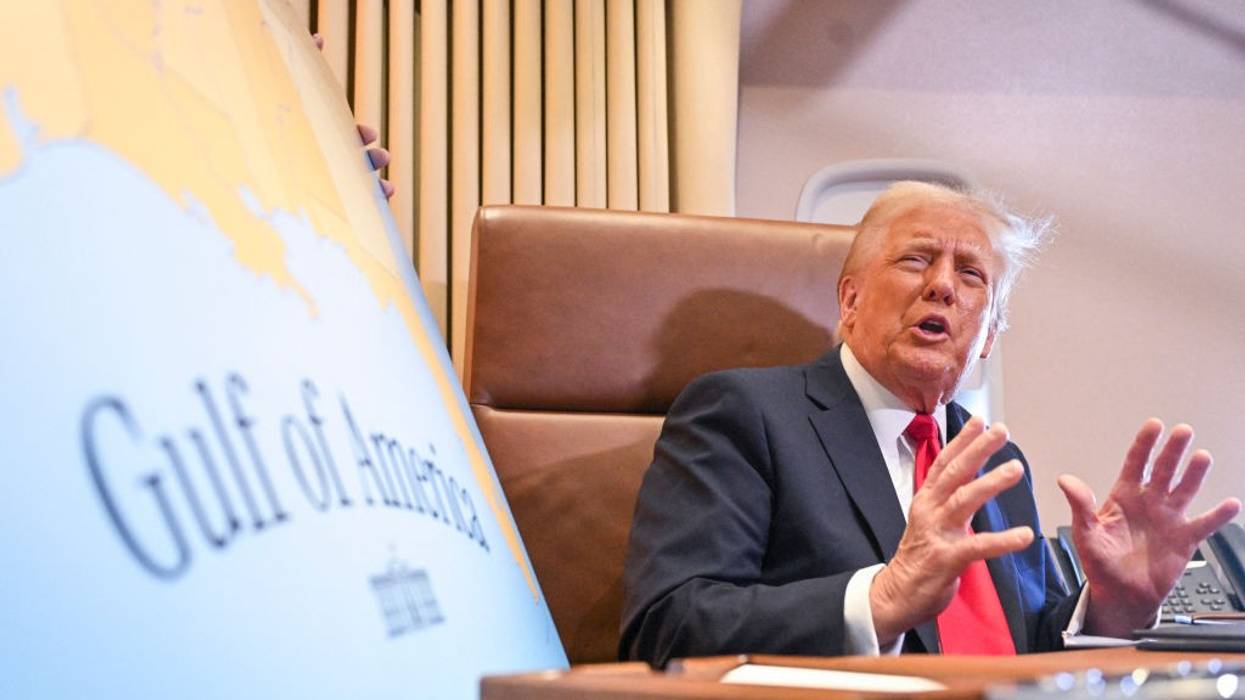
"New Mexico should immediately change its name to New America," Trump wrote on his Truth Social network. "We are not Mexico, we are the United States of America! The name would add great value and prestige to the State!"
"Home Values and Incomes would rise," the president baselessly contended, "and you would be even prouder while saluting our beautiful American Flag! Maybe even the Crooked Elections, that New Mexico is known for, would become honest again!"
Americas: Please do literally anything about affordability. I can't afford groceries. Trump: WE SHOULD RENAME NEW MEXICO TO NEW AMERICA!!
[image or embed]
— Mike Nellis (@mikenellis.bsky.social) October 19, 2026 at 12:57 PM
New Mexico has no such reputation, despite Republican electors signing a certificate purporting to cast the state's electoral votes for Trump in 2020—former President Joe Biden won there by double digits—and GOP commissioners in Otero County refusing to certify the June 2022 primary results over unfounded concerns about voting machines.
Trump's desire to rename New Mexico "New America" is curious, given that both old and New Mexico—as well as everywhere from Greenland to Tierra del Fuego—are part of the Americas.
The president has already renamed the Gulf of Mexico and Lake Ontario—though the new names aren't recognized internationally—and has also floated changing the name of the Strait of Hormuz to the Trump Strait, even as the military under his command has been unable to gain control of the vital waterway amid the increasingly protracted US-Israeli war of choice against Iran.
"It's like we're living in a never-ending 'South Park' episode," Zeteo media columnist Justin Baragona said Monday on Bluesky, referring to the long-running Comedy Central adult animation show, whose upcoming season will be renamed "South America" in a satirical send-up of not only Trump's rechristening spree, but also the complicity of tech titans like Google and Apple that all too readily comply with the president's whims.
Your President of the United States, folks. Laser-focused on the issues that matter to Americans and on the myriad major problems around the globe.
[image or embed]
— Aaron Reichlin-Melnick (@reichlinmelnick.bsky.social) October 19, 2026 at 12:15 PM
US Sen. Ben Ray Luján (D-NM)—who recently led New Mexico's congressional delegation in calling on Apple and Google to keep the state's current name on their maps—said Monday on social media that "New Mexico’s name dates back hundreds of years, long before the United States even existed."
"It carries generations of history, culture, and rich traditions that continue to shape who we are," he added. "We are New Mexicans. We’re proud of our name, proud of our home, and we’re keeping both. Long after Donald Trump is out of office, we’ll still be New Mexico."
Critics of Trump's policies skewered the president's priorities amid a cost-of-living crisis he said he'd fix upon returning to office and a war of choice he promised never to wage.
"People are struggling to afford housing, to pay their electric bills, to fill their tank with gas, and to buy groceries. The Mad King’s solution: Rename New Mexico as New America and your income will magically go up," California state Sen. Scott Wiener, a Democrat running to fill retiring Congresswoman Nancy Pelosi's (D-Calif.) House seat, said on social media.
Former US Interior Secretary Deb Haaland, a Democrat running for governor of New Mexico, said, "New Mexico is New Mexico, and you lost here three times because you're corrupt and don't care about working people."
"You should be focused on ending this war, stopping these tariffs, and making things less expensive," she added, "not renaming our state."
Keep ReadingShow Less
'Blatant Hypocrisy': Trump Signs Executive Order on Women’s Health—While Attacking Women's Health
"This is an attempt to change the headlines, not women’s lives.”
Oct 19, 2026
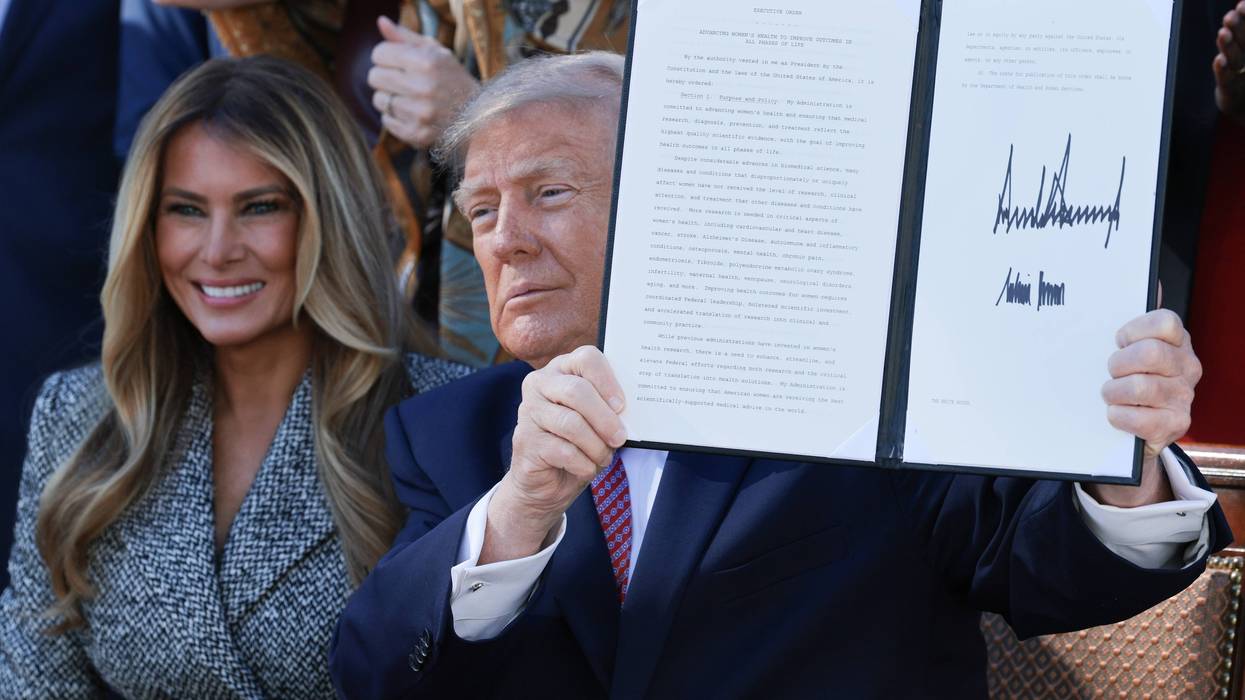
President Donald Trump signed an executive order on Monday to promote women's health. But advocates say it's an example of "blatant hypocrisy" after his administration slashed healthcare access and medical research funding.
The initiative, promoted by First Lady Melania Trump, establishes a new Women's Health Division within the US National Institutes of Health (NIH) and a White House task force to advance research into conditions disproportionately affecting women, like heart disease, Alzheimer's disease, cancer, and endometriosis.
During a speech on Monday, Trump said the task force "will mobilize the entire federal government to coordinate action focused on improving women's health." He added that it would be led by Health and Human Services Secretary Robert F. Kennedy Jr., whom he said "has been fantastic" even though he’s "a little different."
Critics were quick to point out that the order doesn’t provide any new research funding and that the Trump administration has canceled nearly half a billion dollars in NIH research funding, some of which supported research into the very diseases the order mentions.
Following years of growth in women's health research, a Washington Post analysis found that under Kennedy, the number of competitively funded NIH research projects mentioning women fell by 31% in 2025, amid the administration's crusade against so-called diversity, equity, and inclusion programs.
In April, Sen. Susan Collins (R-Maine)—who faces a tough reelection campaign—criticized these cuts, saying that "the administration's emphasis on canceling diversity-related grants has resulted in less research aimed at women's health."
The new order also revokes two Biden-era directives on women's health research, which had helped secure nearly $1 billion in funding. Trump's order provides no additional research funding. It also does not specify what will happen to the existing funds.
"Women’s health has long been ignored as a federal priority, and while we agree that steps must be taken to close disparities in women’s healthcare, it’s hard not to point out the blatant hypocrisy of this unfunded order coming from an administration that is actively decimating healthcare access for women," said Dorianne Mason, senior director of health equity and contraceptive access at the National Women's Law Center (NWLC).
"From the One Big Beautiful Bill Act’s cuts to Medicaid and the defunding of Planned Parenthood, to gutting the federal Office of Minority Health and slashing funding for women’s health research, this administration has made it clear that it doesn’t actually care about women’s healthcare needs, despite what this weak executive order attempts to convey," she added.
Last year, Trump signed a GOP budget law that cut hundreds of billions of dollars from Medicaid—a program that finances maternity care, reproductive healthcare, as well as routine health services for around 39 million low-income women.
Under Kennedy, the Department of Health and Human Services (HHS) has rescinded federal guidance protecting emergency abortion access and launched a medical review that could restrict access to abortion pills.
“With RFK Jr. at the HHS helm, millions of women are paying more for healthcare and have less access to services they need,” said Brad Woodhouse, president of Protect Our Care. “Secretary Kennedy has tried to scrap any research grant or program that dares to fix women’s health disparities—and disproportionately fired women doctors and career scientists en masse. He’s fought tooth and nail to restrict access to abortion medication even when the lives and health of women depend on it, including patients dealing with a horrific ectopic pregnancy."
Polls show that Trump and Republicans are performing dismally among women. According to a Washington Post/ABC News/Ipsos poll released Sunday, just 30% of women said they approved of Trump’s job performance, and 61% wanted Democrats to control Congress.
Noting that the midterm elections were just weeks away, Mason said Trump's announcement of a women's health initiative "is an attempt to change the headlines, not women’s lives.”
Keep ReadingShow Less
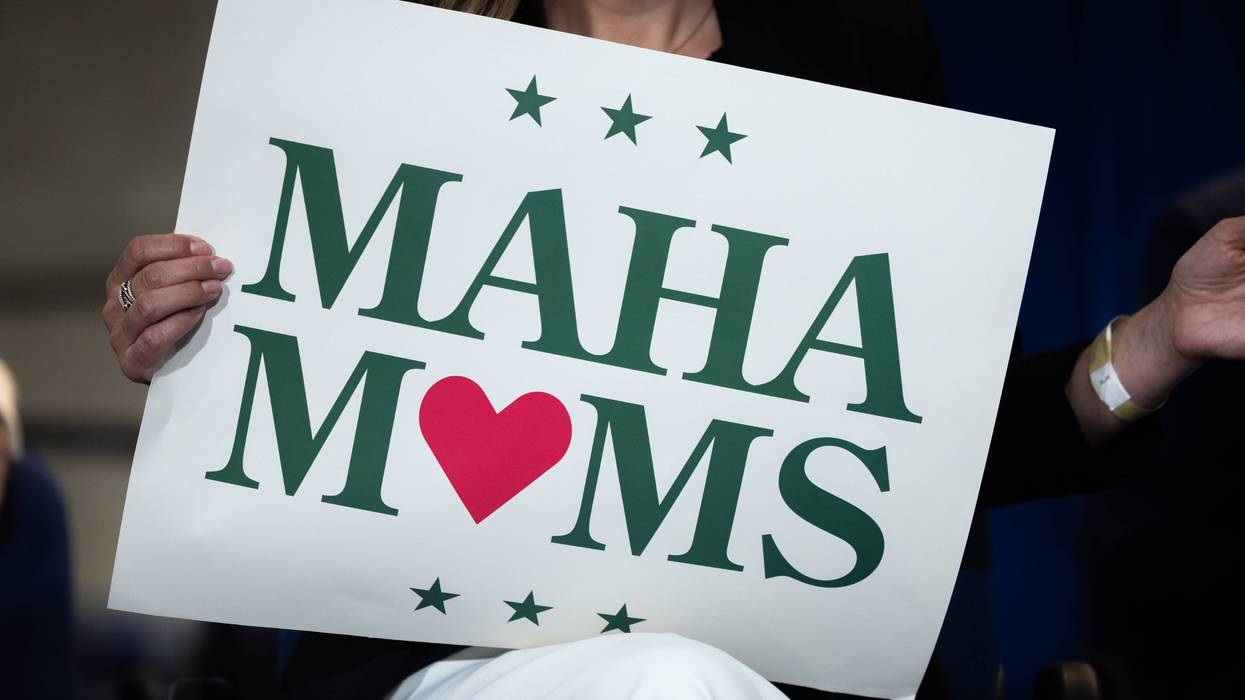
Toxic Betrayal: Report Details How Trump Duped His MAHA Base by Appeasing Corporate Interests
The MAHA movement "reminded the American public of the dangers of toxic chemicals in our air and water... But then the Trump administration either did nothing—or gave industry permission to pollute more.”
Oct 19, 2026
It's been seven months since more than 30 leaders of the "Make America Healthy Again" movement told the Trump administration that they were losing patience, and demanded to see evidence that the US Environmental Protection Agency took seriously millions of Americans' concerns about toxic "forever chemicals" and microplastics.
"MAHA is a mandate, not a marketing campaign," the advocates told EPA Administrator Lee Zeldin, calling for an end to both corporate-friendly loopholes in regulations and the "revolving door" that saw chemical lobbyists hired by the agency tasked with regulating the industry.
But on Monday, the government watchdog Public Citizen revealed that 20 out of 21 environmental chemicals that the White House pledged to address in its May 2025 "MAHA Report" have been subject to less, not more, regulation under the Trump administration.
For nine of the chemicals, including the carcinogenic herbicide atrazine, mercury, and per- and polyfluoroalkyl substances (PFAS)—often called forever chemicals—President Donald Trump and his top officials have loosened public health regulations.
For 10 of them, the administration has taken none of the action promised in the MAHA Report, and in the case of the cancer-causing herbicide glyphosate, Trump issued an executive order not only endorsing the use of the chemical but mandating its production—a year after Bayer, the parent company of the chemical firm that uses glyphosate in popular weedkiller Roundup, donated $1 million to Trump's inaugural campaign.
Public Citizen found just one substance, microplastics, for which the administration has "taken any step toward regulation, and at best it was a baby step"—announcing in April that microplastics may be considered for regulation in the future and that the government would study measuring and removing them from the human body.
The report identifies the lifted limits on forever chemicals, loosened regulations on air pollution, and action on glyphosate as "among the most egregious betrayals" of the MAHA movement that helped elect Trump.
"These examples show how the Trump administration’s retreat on chemicals in the environment is failing to keep Americans healthy," reads the report.
Despite the warning from MAHA leaders earlier this year, Public Citizen research director Peter Whoriskey wrote, the administration's conduct has shown that "MAHA is worse than an empty slogan. It’s a sham."
Nearly two years into Trump's second term in office—despite the fact that MAHA leader Robert F. Kennedy Jr. is the president's secretary of health and human services—key regulatory posts have been filled by former industry lobbyists and officials, such as David Fotouhi, who as the deputy administrator of the EPA is the agency’s second-highest official.
During his legal career, Fotouhi defended the company International Paper when it was sued for contaminating the environment with forever chemicals.
Eight out of 10 top leadership roles at the Office of Chemical Safety and Pollution Prevention and the Office of Air and Radiation are filled by "officials, lawyers, and lobbyists who previously worked for chemical oil, chemical, and agriculture companies," reads the report.
"For years, Kennedy, like other leaders in the MAHA movement, accused federal regulators of being controlled by corporate lobbyists and failing to protect Americans from dangerous industrial and agricultural chemicals. Accordingly, they campaigned to curtail corporate influence at the EPA and other federal agencies," wrote Whoriskey.
But with Kennedy at his side, "the Trump administration has not only accommodated industry demands but appointed industry lobbyists and other officials to senior positions in the EPA."
The report also takes aim at persistent claims by Trump administration officials, including in the MAHA Report, that they will use "gold standard science" to evaluate environmental dangers.
The White House has made that all but impossible by disbanding the Office of Research and Development, which has conducted research on the impact of chemicals on humans, the report says.
The government's top air pollution research facility in Chapel Hill, North Carolina, was also shut down, while all the members of the EPA's Clean Air Scientific Advisory Committee and the Clean Air Act Advisory Committee were ousted.
“The MAHA Report reminded the American public of the dangers of toxic chemicals in our air and water,” said Whoriskey in a statement. “It was described as a ‘call to action.’ But then the Trump administration either did nothing—or gave industry permission to pollute more.”
Keep ReadingShow Less
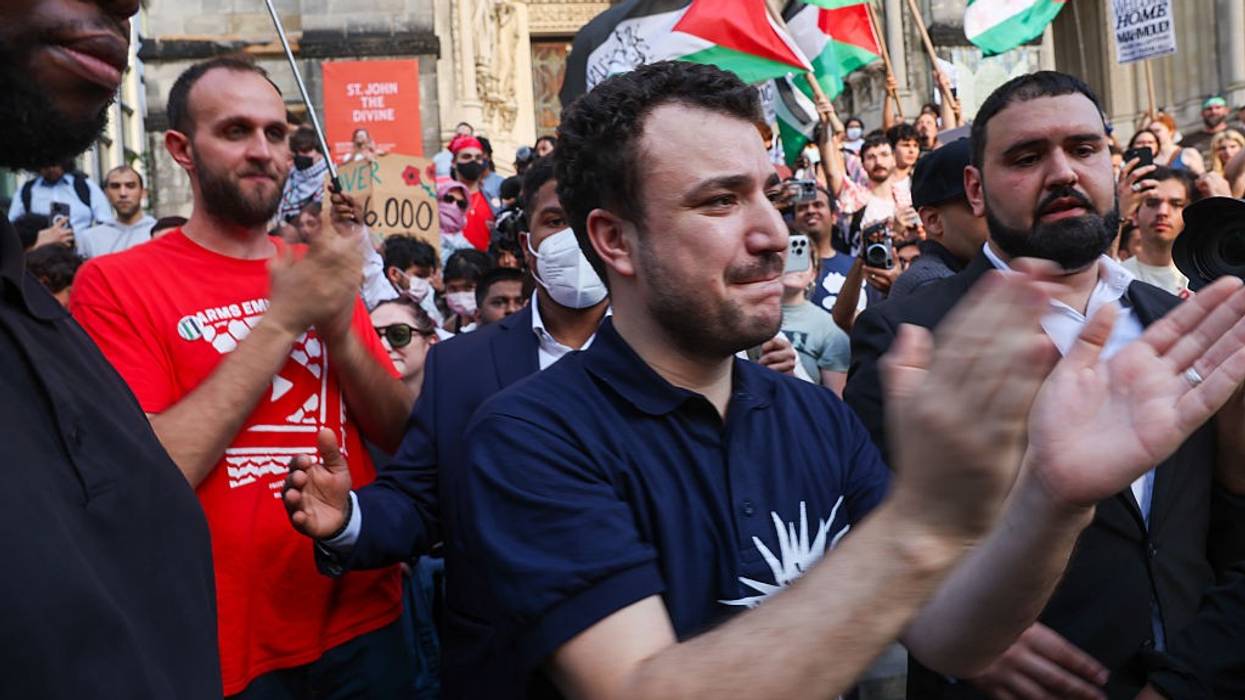
Mahmoud Khalil Asks Supreme Court to Weigh In On Fights Against 'Unlawful Attempts to Detain and Deport People'
"The Supreme Court must uphold the power of habeas courts to free people from retaliatory detention and prevent the weaponization of the immigration system to punish dissent."
Oct 19, 2026
Attorneys representing former Columbia University student organizer Mahmoud Khalil on Monday asked the US Supreme Court to hear a challenge to an appellate ruling that overturned a judge's determination that his 2025 detention by federal immigration officials was unconstitutional.
Khalil, a legal US permanent resident who was born in a Palestinian refugee camp in Syria, was arrested by US Immigration and Customs Enforcement (ICE) agents in March 2025 and detained on claims that his activism was "adverse to the foreign policy interests of the United States."
US District Judge Michael Farbiarz, an appointee of former President Joe Biden, freed Khalil from ICE custody, arguing that his detention was unwarranted since he was neither a flight risk nor a danger to the community.
However, the 3rd Circuit Court of Appeals overruled Farbiarz's decision on the grounds that federal courts did not have jurisdiction to rule on immigration cases.
In making his appeal to the Supreme Court to hear his case, Khalil said the outcome would determine "whether I, and all immigrants in this country, can actually challenge this administration’s unlawful attempts to detain and deport people solely in retaliation for their First Amendment protected speech."
Baher Azmy, legal director of the Center for Constitutional Rights, which represents Khalil, argued that the appeals court's decision was in error because federal courts should always have jurisdiction over cases involving core rights such as habeas corpus petitions.
"Our most fundamental constitutional principles have always prevented the president from sending people into detention on a whim or out of spite," said Azmy. "Access to the critical protections of habeas corpus is an essential check on the kind of arbitrary detention here, which the administration wants free rein to accomplish, by punishing Mr. Khalil for nothing other than constitutionally protected speech."
Alina Das, director of the New York University Immigrant Rights Clinic, which is also representing the former student, said the Trump administration's detention of Khalil violated his core constitutional rights, while also chilling the speech of both US citizens and noncitizens who "fear retaliation against themselves or their loved one."
"The Supreme Court must uphold the power of habeas courts to free people from retaliatory detention," said Das, "and prevent the weaponization of the immigration system to punish dissent."
Keep ReadingShow Less
Senate Democrats Demand Public Release of Pentagon's Secret Data Detailing Costs of Iran War
"Congress and the public need this information to determine the steps necessary to recover from this debacle," the lawmakers wrote.
Oct 19, 2026
Democrats on the US Senate Armed Services Committee called on the Pentagon on Monday to reveal how much President Donald Trump's Iran War is costing American taxpayers, citing "ongoing efforts to hide the true cost."
US Central Command (CENTCOM) told Congress that the war had cost $43.6 billion as of September 3. But in Monday's letter, Democratic lawmakers noted that this figure excluded the cost of damage caused by Iranian attacks on US bases and other facilities in the region. That estimate remains classified, but lawmakers have seen it.
Sen. Elizabeth Warren (D-Mass.) led the letter, which was also signed by Sens. Mazie Hirono (D-Hawaii), Richard Blumenthal (D-Conn.), Tammy Duckworth (D-Ill.), and Gary Peters (D-Mich.). They called on CENTCOM commander Adm. Brad Cooper to release the estimate publicly.
"There is no rationale for classifying that cost estimate," the lawmakers wrote. "Our allies and our adversaries are, unfortunately, keenly aware of the extraordinary toll that this reckless war has taken on military readiness, and Congress and the public need this information to determine the steps necessary to recover from this debacle."
Iranian strikes have damaged or destroyed hundreds of buildings and structures at US bases across eight Middle Eastern countries, according to a report released in September by the Pentagon's inspector general.
“Despite a lack of clarity and candor from [the Department of Defense], press reports of attacks, video footage, satellite images, and photos leaked to the media by active US service members have painted a dire picture of US bases and facilities damaged and destroyed by Iran,” the lawmakers wrote.
US officials and congressional aides have previously said the damage was far more extensive than the administration had publicly acknowledged and was expected to cost billions of dollars to repair.
More than 50,000 US troops have been deployed to support the Iran War. At least 23 US service members have died, and another 865 have been injured since Trump launched the war. The Pentagon has repeatedly failed to disclose casualties from the war, including dozens of troops injured in Iranian strikes, while moving other casualties out of its official Iran War tally.
At least 1,700 Iranian civilians have also been killed, according to the US-based Human Rights Activists News Agency (HRANA). Iran's Health Ministry reported that more than 26,500 people were injured in the war's first 40 days. HRANA has reported more than 2,200 children injured.
Since the war began in late February, independent analysts have argued that the Pentagon has presented an incomplete picture of the war's costs.
The Center for Strategic and International Studies projected that the war had already cost roughly $40 billion by June, including an estimated $4 billion to $9.4 billion to repair and rebuild damaged US bases. At that time, the Pentagon's most recent public tally was just $29 billion, issued the previous month.
In May, Stephen Semler of the Center for International Policy argued that the Pentagon was also overlooking other critical war costs—underestimating the expense of replacing weapons and repairing bases, and ignoring spending outside the Pentagon, including military aid to Israel, which has joined the US in bombing Iran.
Accounting for those expenses, Semler estimated that the war had cost nearly $72 billion in just its first 60 days—about three times the Pentagon's estimate at the time.
Americans are also paying for the war beyond government spending. Last week, Moody's Analytics chief economist Mark Zandi estimated that the war had cost the average US household nearly $2,000—including $1,100 in higher energy prices, $540 in higher interest rates, and $360 in military costs.
Urging the military to respond to the letter, Warren said on Monday that “Americans deserve to know how much of their money is being burned on Trump’s war with Iran.”
Keep ReadingShow Less
'Hands Off Our People!': Fury After ICE Agents Break US-Born Man's Arm in Long Beach
“ICE has no place terrorizing our streets or subjecting our residents to random stops and harassment simply because of the color of their skin," said the city councilwoman representing the district.
Oct 19, 2026
Residents of Long Beach, California and their elected officials are among those condemning a Saturday assault by US Immigration and Customs Enforcement agents that left a US citizen hospitalized with a broken arm and a community demanding an end to ICE terror.
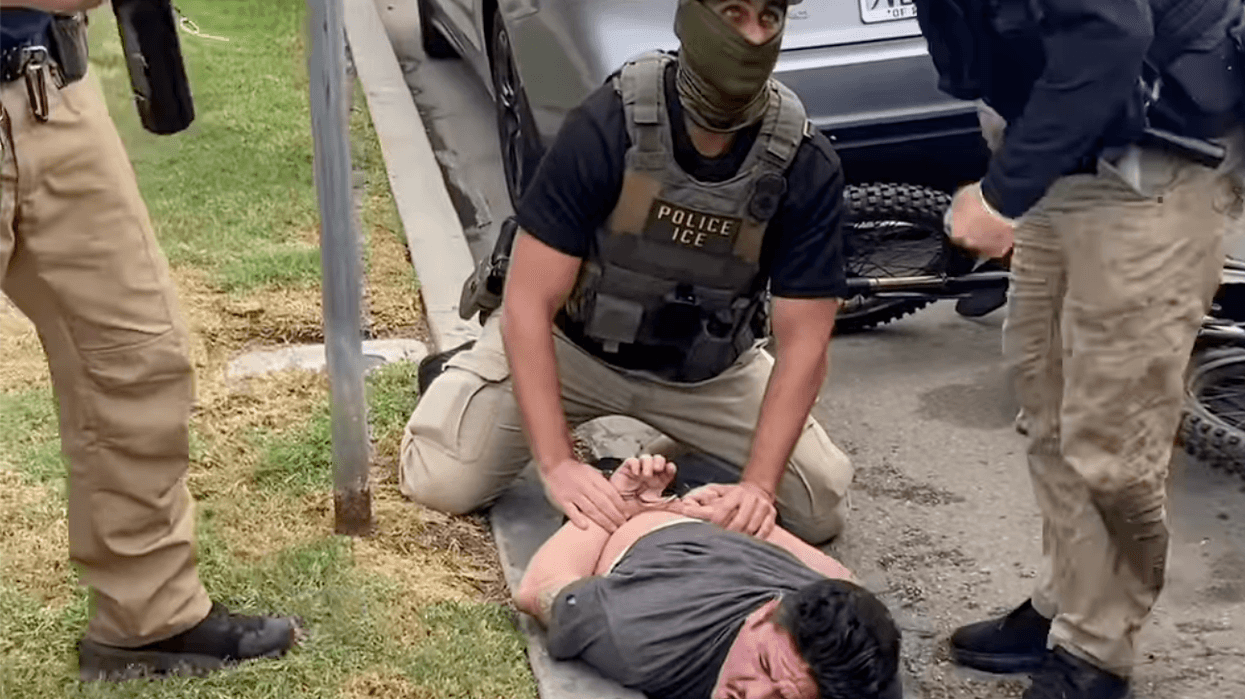
Ricardo Gonzalez, a 40-year-old former Long Beach city employee born in Hanford, California, was riding his electric bicycle near Elm Avenue and 56th Street in North Long Beach on Saturday when federal agents in an unmarked vehicle allegedly struck him, tased him twice, and handcuffed him, his daughter, Leslie Gonzalez, told the Long Beach Watchdog.
In a differing account, a neighbor who witnessed the incident told The Long Beach Post that an agent jumped out of the unmarked vehicle and tackled Gonzalez to the ground.
Video recorded by Sherman Austin, founder of stopice.net, shows ICE agents handcuffing Ricardo, who is lying face-down in the gutter repeatedly screaming that his arm is broken and that he needs medical aid.
As the incident unfolded, community members, including volunteers with anti-ICE rapid response groups, converged on the area to confront the agents and warn residents of their presence. But instead of staying inside, many people came out to intervene as Gonzalez was brutalized.
Residents were reportedly already on edge due to the presence of numerous unmarked law enforcement vehicles in the neighborhood since early Saturday morning.
According to the Post, neighbors demanded to see a warrant for Gonzalez's arrest and placed trash cans and their own bodies in the way of agents' vehicles to stop them from leaving.
“If they try to take one of us, they’re going to have to take all of Long Beach,” resident Patricia Velazquez told the Post.
One neighborhood resident accused agents of making racist remarks to people who gathered to confront them, including saying that they didn't "look legal."
During a roughly hourlong standoff, agents grabbed two women—both US citizens—and forced them into the backs of different vehicles, according to the Post. One bystander told the outlet that community members distracted agents while others freed the detained women by sneaking up and opening the doors of the cars in which they were held.
"I’m proud of the neighbors who documented and stood up for the family being terrorized by ICE," Congressman Robert Garcia (D-Calif.) said Sunday on social media. "[President] Donald Trump and his inhumane and illegal deportation machine must be stopped. Long Beach stands with our community and our immigrant families. ICE is not welcome in Long Beach. Abolish ICE."
ICE is not welcome in Long Beach.
[image or embed]
— Rep. Robert Garcia (@robertgarcia.house.gov) October 18, 2026 at 5:45 PM
Long Beach Mayor Rex Richardson, a Democrat, said in a video posted to Instagram that "ICE doesn’t belong in our city and this activity undermines community safety and public trust."
"No family should have to live in fear in their own neighborhood," Richardson stressed. "Our residents deserve to feel safe."
"To our immigrant communities: You are part of Long Beach. You belong here. And you deserve to feel safe here," the mayor added. "Whatever happens at the federal level, our responsibility remains the same: protect our residents, respond to emergencies, and keep our community informed."
Long Beach City Councilmember Tunua Thrash-Ntuk, a Democrat who represents the district where the incident took place, said Sunday that ICE agents need to keep their “hands off our people!”
“In a free country, no one should be riding their bike in their own neighborhood only to be subjected to an unprovoked assault by a government agent,” she argued. “ICE has no place terrorizing our streets or subjecting our residents to random stops and harassment simply because of the color of their skin. This lawless chaos demands our universal condemnation.”
Local police also faced criticism for their handling of the incident. Videos posted to social media showed Long Beach Police Department (LBPD) vehicles blocking streets and residents asking why officers were assisting in a federal immigration operation in apparent violation of state law.
LBPD subsequently issued a statement saying that ICE "requested emergency assistance" and that the department "does not enforce civil immigration law and does not participate in federal immigration enforcement," but also "cannot legally obstruct or interfere with federal enforcement operations."
It is unclear why ICE agents attacked Gonzalez. A neighbor told the Post that an agent accused Gonzalez of throwing something at their vehicle.
Despite his injuries, Gonzalez put his arm in a sling to go to a local park and watch his son play in a soccer match on Sunday.
“He’s just in pain. He can’t really sit down; it hurts when he gets up,” Leslie Gonzalez, his daughter, told the Watchdog on Sunday. “He’s just trying to get out of the house and move around. He didn’t just want to sit in the house and dwell all day.”
In a GoFundMe page titled "Support Ricardo's Fight for Justice and Recovery," Leslie Gonzalez wrote: "My dad is one of the hardest working men out there. Because of him I have a roof over my head and I have all the opportunities around me. Our family is everything because of him. We ask for your support and prayers during this awful time."
Leslie Gonzalez told the Watchdog: “I wouldn’t have believed in a million years that this would ever happen to my family."
“But that’s just a bad mindset to put yourself in," she added, "because it could happen to anyone.”
A ProPublica investigation published earlier this month documented more than 500 cases of US citizens detained by immigration agents since the start of the second Trump administration, including more than 100 people held after agents questioned their citizenship and at least 70 children and teenagers.
At least four US citizens—Ruben Ray Martinez, Keith Porter Jr., Renee Good, and Alex Pretti—have been killed by Department of Homeland Security agents during Trump's second term. More than 50 immigrants have died in ICE custody since January 2025.
“I've never seen so many US citizen encounters in all my years,” Darius Reeves, who oversaw ICE's Baltimore office before retiring last year, told ProPublica. “It’s an embarrassment.”
Keep ReadingShow Less
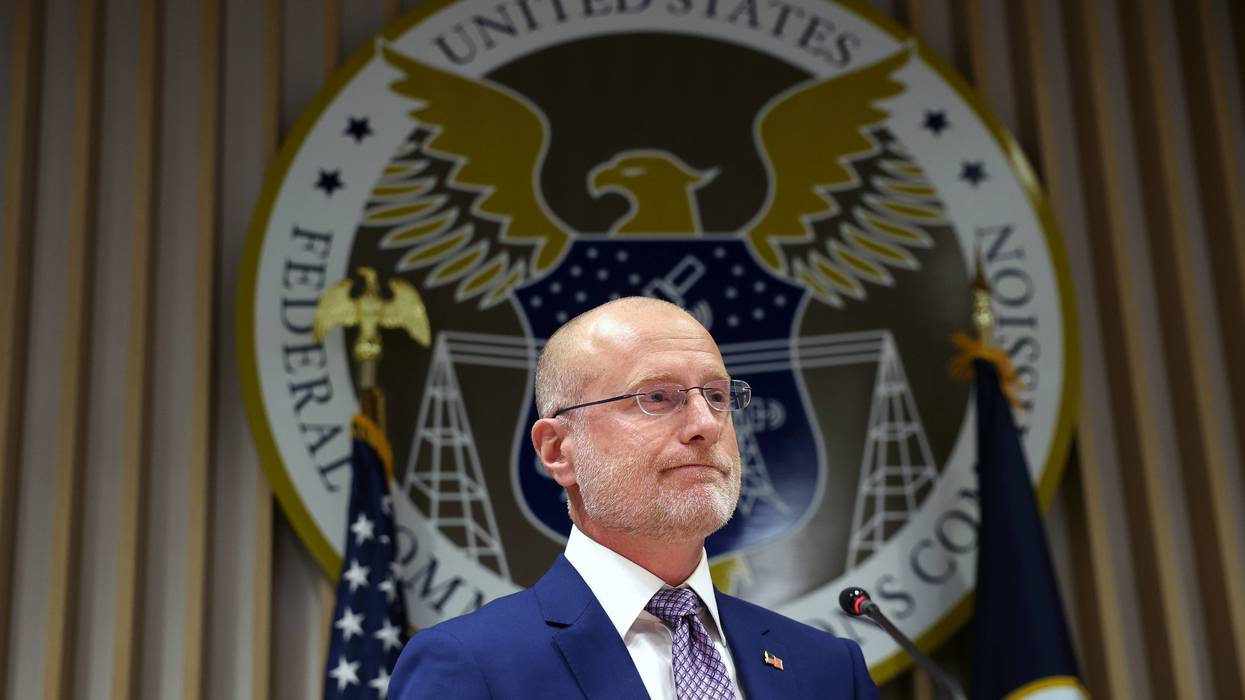
'The Risk Here Is Severe': Schumer Warns Trump FCC Against Approving AI Robocalls Ahead of Midterms
"Putting Americans in a position where they can be fed misinformation through AI-generated deception ahead of a crucial election is yet another attempt by Republicans to mislead voters."
Oct 19, 2026
The leader of the Senate Democratic caucus on Monday urged the Republican-controlled Federal Communications Commission to reject a petition by a right-wing group to allow unsolicited, artificial intelligence-generated robocalls ahead of next month's midterm elections.
Senate Minority Leader Chuck Schumer (D-NY) warned that granting Club for Growth's request would mean "unleashing a Pandora’s box of election mis- and disinformation made more believable with AI." Monday is the final day for public comment on the group's petition.
"The FCC MUST reject the request made by a Republican group that would allow political groups to make robocalls to cellphones without people’s permission," Schumer wrote in a social media post. "Putting Americans in a position where they can be fed misinformation through AI-generated deception ahead of a crucial election is yet another attempt by Republicans to mislead voters."
"The risk here is severe," Schumer added. "The approaching election is a reason to preserve safeguards, not suspend them."
Club for Growth—a conservative nonprofit that pushes for tax cuts, deregulation, and school privatization—petitioned the FCC in August for an exemption from federal rules to permit "political calls that utilize artificial intelligence" without prior express consent. The group argued that existing regulations barring such calls "chill important political speech, creating serious First Amendment problems."
Leading consumer advocacy groups countered in a submission to the FCC earlier this month that "political robocalls are deeply invasive of privacy and removing the prior express consent requirement is wholly inconsistent with the public interest and the objectives of the [Telephone Consumer Protection Act]."
"Political robocalls are widely regarded as an annoyance and cause visceral anger among many, in addition to being a vehicle for spreading AI-generated misinformation and delusions," the groups wrote. "Furthermore, the prohibition on automated calls to cellphones without prior express consent is one of the few protections in the TCPA that applies to small businesses that rely on cell phones to operate. Many small businesses must answer every incoming call to avoid missing a potential customer, and granting the waiver petition will result in more unwanted calls that waste small businesses’ time and money."
Schumer told Reuters on Monday that "there is absolutely no excuse to relax" the TCPA standards and "allow special interests to flood our cellphone lines with deepfakes or dark-money-funded AI voices" just two weeks ahead of the midterm elections.
Anna Gomez, the FCC's lone Democratic commissioner, said in a CNN appearance on Monday that "no consumer wants" robocalls and that they are the top complaint the agency hears from the public.
"This dark money group wants permission from the FCC to flood cellphones with these ads generated using artificial intelligence," said Gomez, adding that the agency's Republican commissioners "should not do this."
Keep ReadingShow Less
As Biodiversity Summit Begins, 'Systems That Sustain Life on Earth Are Under Threat'
Governments can't keep "promising to protect nature while supporting its destruction through harmful subsidies and incoherent policies," said one campaigner. "Any more delay is a threat to our survival on the planet."
Oct 19, 2026
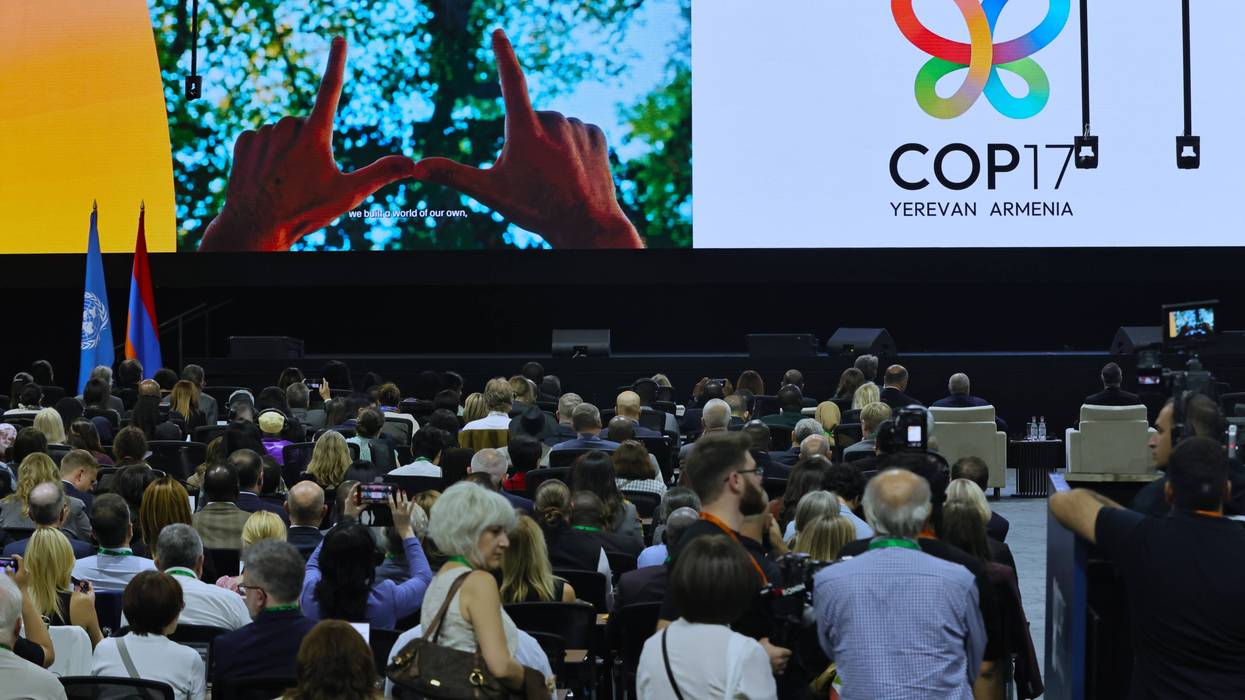
Four years after world leaders agreed to the Kunming-Montreal Global Biodiversity Framework, representatives from nearly 200 nations gathered in the Armenian capital on Monday for a summit to review progress on the agreement and discuss future actions to protect nature.
In the lead-up to the 17th Conference of the Parties to the Convention on Biological Diversity (COP17) in Yerevan, the United Nations Environment Program released a "State of Biodiversity Action" report. UN Secretary-General António Guterres said that the framework "has inspired action across the globe," with nearly 90% of parties establishing national targets, but "progress is uneven, and far too slow."
The framework—sometimes called the "Paris Agreement for Nature"—features 23 targets for 2030 and four for 2050. The world isn't on track to meet any of them, including its key goal to protect 30% of all land and water by the end of this decade. Guterres noted that "even if current national commitments are met, only 26% of terrestrial and 12% of marine ecosystems would be protected" on that timeline.
The Guardian pointed out that "the last biodiversity summit, COP16 in Cali, Colombia, ended in disarray with no clear agreement on key topics after negotiations ran out of time. Another round of talks were needed in Rome to finish the meeting."
Agence France-Presse reported Monday that "only a handful of world leaders, including UN chief Antonio Guterres but mostly heads of state from nearby Central Asian nations, turned up for a high-level session on Friday ahead of the formal negotiations."
Armenian Environment Minister Hambardzum Matevosyan, who is presiding over the summit, told AFP that success "will not be measured simply by the number of participants, high-level statements, or decisions adopted," but whether nations actually take action. He added at the opening session that "over the next two weeks, our task will be to bridge the differences, build consensus, and ensure that COP17... deliver[s] results commensurate with the urgency of the challenges before us."
Those who are participating in the summit and parties to the convention face pressure from conservation leaders, including Jeffrey Parrish, the Nature Conservancy's global managing director for nature protection, who declared that "our planet is in peril. The biodiversity that sustains us is being lost faster than ever, and ecosystems that fuel our health and economies are fraying."
Parrish called on those in Yerevan to turn the review process "into an acceleration agenda" to boost progress on the 2030 goals, "transform our financial systems" to mobilize investment at the necessary scale, "integrate biodiversity into infrastructure and development decision-making," and "strengthen policy frameworks to deliver durable, area-based conservation outcomes."
Nature COP17 starts today, with governments gathering to assess progress towards restoring nature The target to protect 30% of land for nature by 2030 seems within reach, but ‘paper parks’ won’t cut it - eg just 7% of England is *properly* protected for naturewww.theguardian.com/environment/...
[image or embed]
— Guy Shrubsole (@guyshrubsole.bsky.social) October 19, 2026 at 3:34 AM
An Lambrechts, head of advocacy group Greenpeace's delegation to the summit, said in a statement that "we're halfway to 2030 and the evidence is clear: We are far off track to reach the 30×30 targets. The systems that sustain life on Earth are under threat, and decisions made at COP17 must deliver a clear course correction to protect our planet's ecosystems."
"This COP can't become a mere entry in a vast log of destruction," she argued. "Governments need to agree on concrete actions that tackle the drivers of biodiversity loss, increase finance, and redirect money flows to where they are needed. But decisions in Yerevan will only matter if governments follow through at home. They cannot continue promising to protect nature while supporting its destruction through harmful subsidies and incoherent policies. Any more delay is a threat to our survival on the planet."
Nichanan Tanthanawit, global project lead for Greenpeace's Ocean Justice Campaign, stressed that "protecting 30% of the planet by 2030 is not just a numerical target. Our ambition must be centered around justice, equity, and those who protect nature. Indigenous Peoples and local communities have cared for these lands and waters for generations, yet their knowledge, rights, and leadership are still too often overlooked."
Camila Jardim, an international political expert at Greenpeace Brazil, highlighted how biodiversity concerns connect to the fossil fuel-driven climate crisis—which world leaders have also failed to adequately address, despite scientists' warnings.
"The world is moving towards a looming 1.5ºC overshoot and the sixth mass extinction, with the human-caused climate and biodiversity crises already severely impacting people all over the world," Jardim said, referring to the Paris Agreement's temperature rise target for this century. "Those are not separate issues, but pieces of the same puzzle, and action is more urgent than ever."
"Governments can make the most impact with aligned policies to address both crises... together, with clear actions for the short, medium and long term," she continued. "This is especially critical for primary forests, which are essential for both climate stability and biodiversity protection, and the Brazil-led roadmap to halt and reverse deforestation and forest degradation by 2030 offers a real opportunity for strengthening synergies between conventions. Protection means tackling not only deforestation but also degradation, and ensuring that climate and biodiversity commitments reinforce each other rather than pull in different directions."
Europe can’t lead on nature at COP17 while cutting biodiversity cash at home
[image or embed]
— euobserver — EU news that matters (@euobserver.com) October 18, 2026 at 3:08 PM
Also attentive to the talks in Armenia on Monday, the International Union for Conservation of Nature (IUCN) released recommendations and guidance on how to incorporate ecological integrity—or "how closely an ecosystem’s species, structure, functions, and ecological processes remain within their natural range of variation"—into relevant policies and practices.
"The world has made ambitious commitments to halt and reverse biodiversity loss, but success cannot be measured by simply counting the number of conservation areas established, the species protected, or the amount of land and water conserved," said John G. Robinson, a Wildlife Conservation Society scientist who co-chairs the IUCN Task Force on Ecological Integrity.
"The real test is whether natural ecosystems—forests, grasslands, freshwater systems, and oceans—are maintaining or recovering the ecological integrity needed to sustain life," Robinson explained. "Do these places continue to support healthy wildlife populations, functioning ecosystems, and the natural processes that make life possible? By focusing on ecological integrity, we can make conservation more effective, and governments can be more accountable for results."
Keep ReadingShow Less
See More
Most Popular