

SUBSCRIBE TO OUR FREE NEWSLETTER
Daily news & progressive opinion—funded by the people, not the corporations—delivered straight to your inbox.
5
#000000
#FFFFFF
To donate by check, phone, or other method, see our More Ways to Give page.
Daily news & progressive opinion—funded by the people, not the corporations—delivered straight to your inbox.
Joe Karp-Sawey, media manager
Tel: +44 (0)7711 875 345
Email: joe.karpsawey@globaljustice.org.uk
Human rights lawyers have threatened legal action against the German, Norwegian, and Canadian governments today for obstructing global efforts to increase access to COVID-19 vaccines and other healthcare technologies.
The move comes as state delegates from around the world prepare to negotiate the future rules governing the supply of COVID-19 vaccines and other healthcare technologies at next week's Ministerial Conference of the World Trade Organisation (WTO).
A group of human rights advocates--the European Centre for Constitutional and Human Rights (Germany), Professor Andenaes QC at the University of Oslo (Norway), and a coalition of organizations in Canada --today announced the development of prospective domestic lawsuits in each country should their governments fail to support the waiver of intellectual property over COVID healthcare technologies proposed by South Africa and India at the WTO last year in response to the pandemic. Meantime, Global Justice Now and Just Fair have written a letter of concern to the UK government setting out why the failure to support the waiver contravenes international human rights law.
In letters and case materials released today, the organizations decry the immense global disparities in COVID vaccine and therapeutics access and affirm their governments' obligations under international human rights law to take all steps within their power to ensure the human rights to life, health, equality, and benefit from scientific progress.
The advocates say that these legal duties oblige governments to support the proposed waiver of intellectual property rules on COVID-19 vaccines, diagnostics, and treatments. They cite legal duties relating to international cooperation, good faith implementation of treaty obligations, and access to justice. At next week's WTO conference, delegates will discuss a temporary waiver of the Trade-Related Intellectual Property Rights Agreement (TRIPS) in relation to COVID healthcare products.
An urgent letter to Canada's Minister of International Trade (traduction) signed by multiple organizations and human rights experts released today, warned that if Canada fails to support the TRIPS waiver, this decision could be challenged in domestic courts as a failure to implement Canada's human rights obligations in good faith, through international cooperation. It stated that such a decision could also be challenged as a violation of rights to life, security of the person and equality in the Canadian Charter of Rights and Freedoms because of its effect on the life and health of vulnerable groups in Canada, including women, the elderly, persons with disabilities, Indigenous Peoples, Black people, other racialized persons, and persons experiencing poverty.
The letter noted that Canada's Prime Minister, Justin Trudeau and its Chief Public Health Officer have repeatedly stated that an effective global strategy to limit the spread of COVID-19 is necessary to help prevent the emergence of more transmissible or deadly variants, and to protect life and health in all countries.
On the letter of claim filed today in Germany on behalf of Ugandan citizens, Miriam Saage-Maass of the European Centre for Constitutional and Human Rights said:
"It is important that the German government lives up to its extraterritorial human rights obligations and does everything within its power to enable equitable access to the most effective COVID19 vaccines. Germany can no longer defend a position that enforces vaccine apartheid and which unnecessarily prolongs the pandemic situation worldwide."
Germany has been a staunch supporter of the intellectual property monopolies that currently govern the supply of COVID healthcare technology, this despite a current surge in cases nationally in the wake of virus variants cropping up around the globe.
Professor Mads Andenaes QC at the University of Oslo said,
"Court action against the Norwegian government is to commence, challenging the inadequate responses by the government to comply with its obligations under international and European human rights law and the Norwegian constitution."
Norway has so far failed to support the waiver. Norwegian Ambassador Dagfinn Sorli currently chairs the WTO TRIPS Council.
On today's letter in the United Kingdom, Nick Dearden of Global Justice Now said:
"Throughout this pandemic, the UK government has put the interests of big pharmaceutical businesses ahead of the need to save lives around the world and defeat this pandemic. The epitome of this approach is that they have effectively blocked, repeatedly, the one measure the vast majority of the world has demanded - the waiver of intellectual property rules at the WTO. We hope our action today will send a clear message: they need to stop blocking action at the WTO."
The United Kingdom has so far refused to back the TRIPS waiver.
These domestic efforts form part of a broader set of legal strategies being pursued before multiple mechanisms entrusted with the enforcement of human rights.
Since May 2021, a group of human rights networks and their members and allied organizations have been convening to discuss how human rights legal mechanisms may be leveraged to achieve equitable global access to COVID-19 healthcare technologies and realize the right to health and other human rights of all people. These include: the Global Network of Movement Lawyers (at Movement Law Lab), ESCR-Net - International Network for Economic, Social and Cultural Rights, the International Network of Civil Liberties Organizations, members of the People's Vaccine Alliance, including Oxfam International and Amnesty International, and Medecins Sans Frontieres.
Previous actions include petitioning the United Nations Committee on the Elimination of Racial Discrimination, and advocacy also led to 43 letters from United Nations human rights Special Procedures mandate holders to member states, pharmaceutical corporations and the WTO. Dozens of jurists around the world also signed a legal brief on states' human rights obligation to not impede a TRIPS waiver and other actions.
These human rights groups are working collectively to surface the issues posed by states' decision to privilege the intellectual property monopolies of corporations over the human rights to life, health, equality, and benefit from scientific progress of people across the global south and the global north.
Global Justice Now is a democratic social justice organisation working as part of a global movement to challenge the powerful and create a more just and equal world. We mobilise people in the UK for change, and act in solidarity with those fighting injustice, particularly in the global south.
020 7820 4900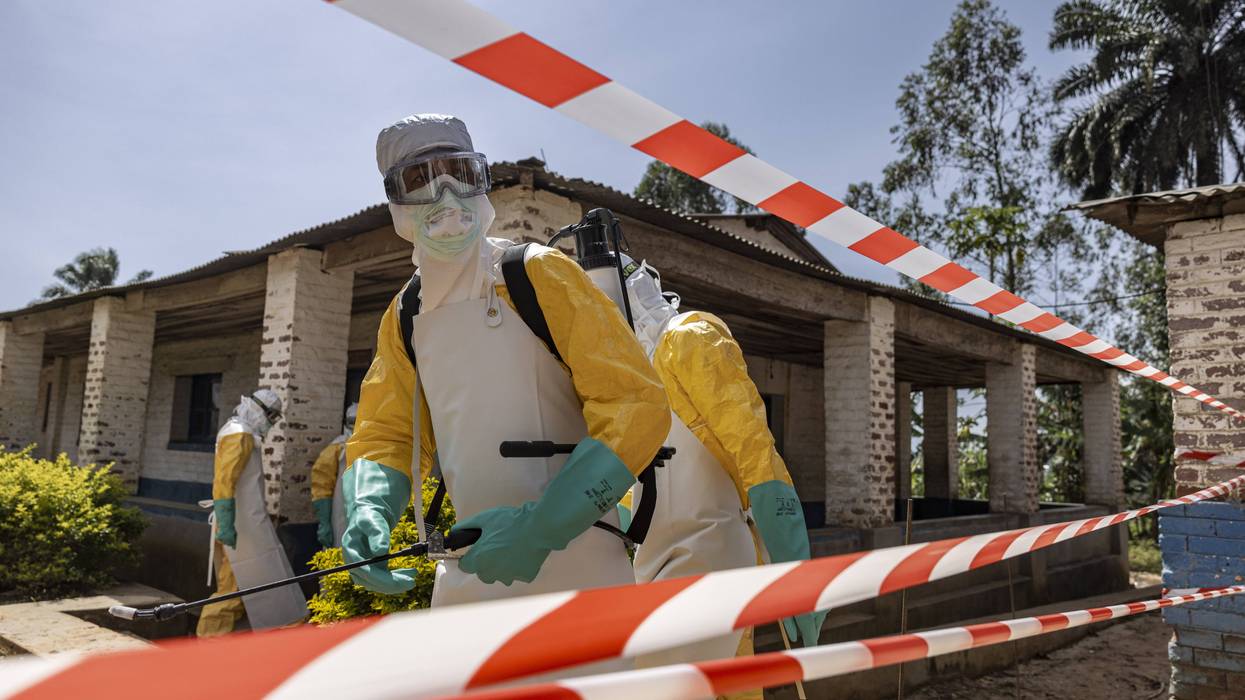
Kenya's largest medical professionals union, which welcomed the ruling, argued that if setting up an Ebola quarantine facility "is too dangerous for America, it is too dangerous for Kenya."
A day after US officials said Kenya had approved a request to open a quarantine center for Americans exposed to a rare strain of the Ebola virus, a court in the East African nation on Friday temporarily blocked the plan amid a growing outbreak in neighboring Uganda and the Democratic Republic of Congo.
The High Court prohibited the Kenyan government from establishing or operating any Ebola exposure, quarantine, isolation, or treatment facility in the country under any agreement with the United States or any other foreign government or agency.
The court also blocked Kenya's government from allowing anyone infected with or exposed to Ebola into the country pending the outcome of the case, which was filed by the Katiba Institute, a civil rights group.
“At its core, the case is about preserving constitutional accountability, protecting public health, and ensuring that no government may place expediency above the lives and safety of the people of Kenya,” Katiba Institute executive director Nora Mbagathi said Thursday.
A 50-bed Ebola quarantine center was set to open Friday at Laikipia Air Base in Nanyuki, located approximately 125 miles north of Nairobi. The facility would have been operated by members of the US Public Health Service, a uniformed branch of the Department of Health and Human Services.
US Secretary of State Marco Rubio said Thursday during a Cabinet meeting that “we cannot and will not allow any cases of Ebola to enter the United States."
However, US public health officials strongly criticized the plan to quarantine Americans in Kenya instead of repatriating them, with one emergency physician accusing the Trump administration of “a dramatic abdication of what we owe our own."
Elected leaders in Laikipia County welcomed the High Court's ruling. They had opposed the US quarantine center, and had asked in a joint statement prior to the decision, "Why Laikipia?"
"What does the US government know about this that they are not accepting their own affected citizens into their soil but are ready to have them elsewhere?"
The Kenya Medical Practitioners, Pharmacists, and Dentists Union (KMPDU), which had strongly opposed the quarantine center and had threatened to strike, also welcomed the High Court ruling.
"We are utterly disgusted by the government’s apparent willingness to trade national biosecurity and the lives of its citizens for foreign aid," KMPDU secretary general Davji Bhimji Attelah said in a statement Thursday, referring to the $13.5 million the Trump administration pledged for Ebola preparedness in Kenya, part of a broader $125 million US commitment toward fighting the disease.
Kenyan healthcare workers are pushing back hard against reported plans for the U.S. to establish Ebola quarantine/treatment facilities in Kenya for exposed American personnel during the ongoing Bundibugyo Ebola outbreak in Central/East Africa.
[image or embed]
— BK. Titanji (@boghuma.bsky.social) May 28, 2026 at 11:31 AM
"We will not sit back and watch Kenya be treated as a containment colony for a lethal pathogen that we did not generate," Attelah added. “We will not tolerate an apartheid healthcare model on Kenyan soil. If it is too dangerous for America, it is too dangerous for Kenya."
Critics say President Donald Trump’s ideologically driven decision to withdraw the US from the World Health Organization (WHO), his administration’s dismantling of the US Agency for International Development, and reduced funding for the US Centers for Disease Control and Prevention’s global public health efforts have adversely affected the response to the current Ebola epidemic, compared with 2014 and 2019 outbreaks.
The WHO said Friday that there were a total of 906 suspected Ebola cases and 223 suspected deaths reported in the Democratic Republic of the Congo as of Wednesday, and 125 confirmed cases in the DRC and 9 in Uganda, with 18 deaths among the confirmed cases in both countries.
Ebola—which typically kills between 25% and 90% of infected people, depending upon the strain of the virus and quality of available medical care—causes widespread and often catastrophic damage to the body’s blood vessels, immune system, and organs. The virus is transmitted to people from wild animals, including fruit bats, porcupines, and non-human primates, and then spreads between humans through direct contact with the blood or bodily fluids of infected people.

The average US household, according to Moody's, has shouldered nearly $450 in extra fuel costs due to the Republican president's unprovoked Middle East war.
Americans have made clear since President Donald Trump joined Israel in beginning an unprovoked war on Iran that they view the conflict-of-choice as damaging to their financial well-being—and that they blame the president for the higher cost of fuel since the war started in February.
On Friday, Moody's Analytics put an exact number on the heightened financial anxiety families across the country have been feeling over the past three months as Iran's closure of the Strait of Hormuz has sent fuel prices soaring: $447.19.
That's how much the average US household has had to additionally spend on fuel-related expenses since Trump and Israeli Prime Minister Benjamin Netanyanu launched their attack on February 28, Moody's told CNBC.
Altogether, Americans have spent a total of nearly $60 billion on gas, airline fares, and other related costs as the strait, a key shipping route for oil, has remained effectively closed.
According to AAA, the average price of a gallon of regular gas stands at $4.39—up close to 50% since early March. Diesel now costs $5.52 per gallon, forcing consumers to pay $20 billion more in additional expenses on groceries and other goods.
"The economy isn’t just soft, it’s struggling," Mark Zandi, Moody's chief economist, said Thursday. "The Iran war needs to end, and the Strait of Hormuz needs to be reopened soon, or recession will become more likely than not."
"Unless the war ends soon, financially pressed consumers will have no option but to turn more cautious in their spending."
As CNBC reported Friday, "higher energy costs can force consumers to raid their savings and lean more on debt to cover expenses."
Trump flatly said earlier this month that he doesn't consider Americans' financial situation "even a little bit" when it comes to the war on Iran, while National Economic Council Director Kevin Hassett posited earlier this week that Americans are "spending more money" not because higher prices are forcing them to but because they're "very, very optimistic about the state of the economy." He also bragged recently that "credit card spending is through the roof"—a sign several observers took not as a positive omen for the economy but as a sign that families are being forced to take on debt to pay for gas and other essentials.
Zandi provided a reality check Friday.
"Unless the war ends soon, financially pressed consumers will have no option but to turn more cautious in their spending, threatening the already soft economy,” he told CNBC, warning that families could end up spending nearly $2,000 extra on fuel-related costs if the war continues reaches the one-year mark.
Republicans emphasized last year that Trump's One Big Beautiful Bill Act would give bigger tax returns to families across the country. Any benefit, said Zandi, has now been canceled out by the president's war.
On Thursday, US Sens. Elizabeth Warren (D-Mass.), Chuck Schumer (D-NY), and Jeff Merkley (D-Ore.) said the White House is in denial about the fact that Americans are struggling with the impact of Trump's foreign policy decisions as the Pentagon vastly underestimates how much the conflict has cost in public statements.
The acting comptroller of the Pentagon told Congress in April that the war had cost $25 billion, increasing the estimate to $29 billion two weeks later.
The senators told the Congressional Budget Office Friday that independent analyses had put the real cost of the war at $40 billion-$50 billion.
“It is essential," said the lawmakers, "that Congress and the American public receive accurate, comprehensive estimates of the costs of the war in Iran."

"We were guinea pigs," said the father of one of the convicted protesters. "They brought the swamp of Washington, DC, into our area to stop American citizens from exercising our rights that are guaranteed."
With the conviction of three anti-ICE protesters in Spokane, Washington on federal "conspiracy" charges Thursday, civil rights advocates and legal experts fear that the Trump administration may have just been handed a powerful tool to criminalize dissent.
Jac Archer, Justice Forral, and Bajun Mavalwalla II, nicknamed the "Spokane 3," were indicted last year for their actions at a protest in June 2025, where they attempted to physically obstruct ICE agents from transporting two Venezuelan immigrants to an ICE processing facility in Tacoma.
Both of the men reportedly entered the US legally under a humanitarian parole program that had been terminated by the Trump administration, leading advocates to protest their detention.
As Spokesman-Review, a Spokane newspaper, described:
Protesters that day eventually began linking arms around vans and in front of agents’ cars. The event grew chaotic. ICE agents entered a crowd of people standing outside the facility’s parking lot gate and began grabbing people by the necks and arms, pushing them to the ground. Protesters also slashed tires of vans meant to transport the detainees.
But where such activity would usually lead to charges against specific protesters for discrete illegal actions like trespassing, property damage, or other public order offenses, the Department of Justice (DOJ)—as part of a nationwide effort to crack down on protests against ICE—charged nine protesters with "conspiracy to impede or injure officers," even though no officers were actually injured during the protest.
Legal experts described it as a novel approach that wrapped many people involved in the protest into a single "conspiracy" regardless of whether they committed specific criminal acts.
“Usually if a protest gets out of hand and people are hurt or property is hurt, you see charges based on that,” Mary Fan, a former federal prosecutor and a University of Washington law professor, told The New York Times earlier this month. “They’re not going after people based on specific harm done. They’re stretching conspiracy charges to target protesters and people who organize protests.”
Facing pressure from the federal government to bring the case following a national memo sent from the DOJ to prioritize and publicize cases against ICE agents, then-acting US Attorney for Eastern Washington Richard Barker resigned last year rather than bring charges against the protesters.
He said at the time he was grateful he “never had to sign an indictment or file a brief that [he] didn’t believe in." His successor, Stephanie Van Marter, however, did sign the order.
Six of the defendants pleaded guilty to the charges to avoid federal prison time. But Archer, Forral, and Mavalwalla chose to fight them, believing the case was part of an unjust attempt to criminalize their right to protest.
After a trial that lasted seven days, a jury found the three defendants guilty of conspiracy. But the defense has argued that the trial was marred by problems that rendered the verdict faulty.
As the Guardian explained:
In February, a federal judge ordered the release of a Venezuelan migrant whose transportation for deportation the protesters sought to block, ruling his arrest violated the constitution.
But the jury, drawn from conservative eastern Washington state, did not hear those facts at trial, thanks to rulings by Judge [Rebecca] Pennell. Pennell, a former federal public defender and appointee of the Democratic president Joe Biden, also ruled the protesters on trial could not use the First Amendment as a defense, though they were allowed to state their reasons for demonstrating.
Instead, the jury watched hours of law enforcement body camera video and heard from a parade of ICE agents... Jeremy Burlingame, an ICE agent who testified, had authored social media posts that called Black politicians “lying ghetto garbage” and transgender people “mentally ill.” He boosted a post showing ICE arresting a pregnant woman at gunpoint that called her a “pregnant invader.”
Federal prosecutors deemed the posts troubling enough to recall Burlingame to impeach him, despite the fact that he was their witness...
But Burlingame’s online posts, the lack of injury to ICE officers, and the absence of evidence showing communication between the three defendants prior to the protest were not enough to sway the jury.
The defendants now face potential sentences of up to six years in prison and a $250,000 fine. However, they are expected to appeal the verdict and have filed a rarely used motion allowing their attorneys to argue that no rational juror could find their clients guilty.
"I question whether justice truly was served by today’s verdict,” Barker told the Spokesman-Review. "This was the first conspiracy prosecution in Eastern Washington history under... a Civil War-era law dusted off to punish members of the Spokane community who stood up for two young men who were unlawfully detained by ICE."
Video by KREM 2 News/Youtube
Looking beyond the details of the trial itself, many observers questioned the very premise of the DOJ's prosecution.
Spokane Mayor Lisa Brown said from the start of the trial she believed it was "politically motivated."
"It was meant to make an example out of people who disagreed with federal immigration policy," she said.
City council member Sarah Dixit, who said she took part in the protest, said: "Based on the evidence that was shown, I personally didn’t see evidence of what they were accused of. Conspiracy is a charge that feels complicated to prove, and I don’t believe that the government made a strong case for that.”
Others expressed fear for the precedent that had been set. La Rond Baker, the legal director of the Washington ACLU, said the Trump administration "has a demonstrable history of using the Department of Justice to silence and punish its critics."
The administration has pursued similar sweeping conspiracy charges against other groups of anti-ICE protesters around the country—including in Los Angeles, Broadview, Illinois, and North Texas.
“The verdict was painfully disappointing,” said Archer’s attorney, Carl Oreskovich. “I think it was an extraordinarily aggressive approach to prosecution of protests. And it certainly is going to chill people who want to utilize their First Amendment right to dissent against government actions that they don’t agree with."
In a comment to The Guardian, Robert Chang, a law professor at the University of California, Irvine School of Law and executive director of its Fred T. Korematsu Center for Law and Equality, said the verdict was "frightening."
“By this logic, any protest could be a conspiracy,” he said. “The goal posts keep moving.”
Bajun Mavalwalla Sr., a retired US Army intelligence officer who served in Afghanistan, said his son—also a veteran of the same war—and the other two defendants were standing for "the freedoms that separate this country from the dictatorships.”
“People in Spokane and people in Eastern Washington need to understand that we were guinea pigs. That they brought the swamp of Washington, DC, into our area to stop American citizens from exercising our rights that are guaranteed,” the elder Mavalwalla said after his son was convicted.
“It was the whole point of the Constitution, the right to protest, the right to dissent, the right to assemble, all of those things are now in question because of this case," he said. "My son has taken the brunt of the entire weight of the United States government onto their shoulders.”