

SUBSCRIBE TO OUR FREE NEWSLETTER
Daily news & progressive opinion—funded by the people, not the corporations—delivered straight to your inbox.
5
#000000
#FFFFFF
To donate by check, phone, or other method, see our More Ways to Give page.
Daily news & progressive opinion—funded by the people, not the corporations—delivered straight to your inbox.

Peter Hart, phart@fwwatch.org, 732-266-4932
Today, Veolia announced an agreement in principle to acquire Suez through a $15 billion deal that would merge the two largest water corporations in the world.
In response, Food & Water Watch Public Water for All Campaign Director Mary Grant issued the following statement:
"Veolia's plan to dominate public water services all across the globe is becoming a terrifying reality. The merger of the world's largest water corporations will erode any semblance of competition for water privatization deals. This lack of competition will worsen our water affordability crisis, eliminate good union jobs, and open the door to cronyism and corruption.
"Water privatization has been a disaster for communities across the United States and around the world. Municipalities struggling with budget crises linked to the COVID pandemic may consider selling off their valuable water systems as a short-term response to plug budget gaps. This would create long-term harm. Communities must revert all privatized water and sewer systems to public control to ensure safety and affordability for all."
Food & Water Watch mobilizes regular people to build political power to move bold and uncompromised solutions to the most pressing food, water, and climate problems of our time. We work to protect people's health, communities, and democracy from the growing destructive power of the most powerful economic interests.
(202) 683-2500
"We need him in the Senate to help pass Medicare for All and guarantee health care as a human right," Markey added.
Sen. Ed Markey on Wednesday joined the growing list of senators backing Dr. Abdul El-Sayed in next week's critical Democratic primary in Michigan.
“Abdul El-Sayed is the bold progressive leader Michiganders need fighting for them in the Senate. As a doctor and public health leader in Detroit, Abdul has seen firsthand how our broken health care system leaves working families behind, and we need him in the Senate to help pass Medicare for All and guarantee health care as a human right,” Markey (D-Mass.) said.
“Abdul refuses to take corporate PAC money and has earned the support of organized labor because working people know he will put their interests ahead of the billionaires, private equity, and corporate interests that have rigged the system against them," added the senator. "I am proud to endorse Abdul El-Sayed.”
Markey, who is gearing up for his own competitive primary in Massachusetts against the centrist Democratic Rep. Seth Moulton, is now the fifth US senator to endorse El-Sayed, who already has the backing of Sens. Bernie Sanders (I-Vt.), Elizabeth Warren (D-Mass.), Chris Van Hollen (D-Md.), and Tina Smith (D-Minn.).
Other stars of the progressive movement have also put their support behind El-Sayed, including potential 2028 presidential candidate Rep. Alexandria Ocasio-Cortez (D-NY), who has campaigned with him in Michigan in recent weeks.
“Ed Markey has dedicated his life to making government work for the people of Massachusetts,” El-Sayed said in response to the endorsement. "He’s led on bringing climate justice to the forefront of our politics while rejecting money from corporations who want to stop him. His leadership in Congress is unparalleled, and I look forward to joining him in the Senate to get money out of politics, put money in people’s pockets, and pass Medicare for All."
The Michigan primary has grown increasingly contentious in recent weeks as affiliates of the American Israel Public Affairs Committee (AIPAC) have spent a record of at least $30 million running ads boosting Stevens and bashing El-Sayed.
Another dark money group with undisclosed donors and ties to a well-known corporate lobbyist, A Stronger Michigan, has reported spending over $17 million so far to back Stevens, according to Federal Election Commission filings.
With less than a week before Michiganders head to the polls, there remains little clarity about who is favored to face former Republican Rep. Mike Rogers for the seat in a general election that could determine control of the Senate and—perhaps even more critically—serve as proof of concept for an insurgent progressive movement’s ability to win competitive elections in purple states.
A survey published on Wednesday by the Democratic polling firm Tavern Research showed El-Sayed leading 48%-37% over Stevens. This is consistent with polls commissioned earlier this month by pro-El-Sayed groups, which showed similar double-digit leads.
A Detroit News/WDIV-TV poll earlier this month by the Glengariff Group showed Stevens leading El-Sayed by seven points, though it coincided with a previous Tavern poll that showed Stevens edging out El-Sayed by a point, suggesting there could have been a shift toward El-Sayed in recent weeks.
The Tavern polls show a decline in net favorability for both candidates among Democratic voters, but the decline is dramatically worse for Stevens.
While the poll released on July 8 showed Stevens with a net favorability of +40 among Democratic voters, that had deteriorated to just +18 by July 29. El-Sayed's favorability also shrank during that time, but by much less—from +45 to +40.

"The last thing we need is a loud, water thieving, light polluting, data center near our town (or any others for that matter)."
Country music legend Willie Nelson on Tuesday spoke out against plans to build an artificial intelligence data center near his hometown of Abbott, Texas.
In a statement posted to social media, the 93-year-old Nelson said that his community, "like many others, needs to fight against data centers invading our land."
"The last thing we need," Nelson continued, "is a loud, water thieving, light polluting data center anywhere near our town (or any others for that matter). The strength of rural America has never come from industrial footprints. It comes from generations of people, open spaces, local businesses, and a connection to the land."
Nelson said that Americans deserve "thoughtful stewardship that doesn't steal farmland... and small family farmers' livelihoods," adding that data centers "only destroy the environment around them."
"Let's now allow our own demise," Nelson concluded, "or give up control over necessary resources in the US, and especially in Abbott."
Nelson's stand against data centers earned praise from Texas state Rep. Gina Hinojosa (D-49), who is running to unseat incumbent Republican Texas Gov. Greg Abbott.
"Now Willie Nelson has spoken: data centers are hurting Texas," wrote Hinojosa. "Greg Abbott has the sole power to fix TODAY what he broke. Abbott must sign an emergency order ending the taxpayer handouts he passed, and call a special session to end this data center madness."
Data centers have become political lightning rods in recent months, as residents across the country object to their massive resource consumption, which is leading to a major spike in utilities bills, as well as noise pollution.
Sen. Bernie Sanders (I-Vt.) and Rep. Alexandria Ocasio-Cortez (D-NY) earlier this year introduced a bill that would impose a nationwide moratorium on AI data center construction “until strong national safeguards are in place to protect workers, consumers, and communities, defend privacy and civil rights, and ensure these technologies do not harm our environment.”

"Without a fundamental shift in US objectives and acceptance of a new regional balance, this conflict could drag on with profound and lasting economic consequences," said one analyst.
US President Donald Trump's illegal war of choice against Iran further spiraled out of control on Wednesday as American forces teamed up with Saudi Arabia to bomb Iraq, strikes that came hours after the US military said it intercepted an Iranian ballistic missile attack on American forces in Jordan.
The US Central Command said its strikes in Iraq targeted "Iran-aligned terrorists that the Islamic Revolutionary Guard Corps (IRGC) directed to attack US forces and Saudi energy infrastructure." The office of Iraqi President Nizar Amidi condemned the US-Saudi airstrikes as "an unacceptable attack and a blatant violation of Iraq's sovereignty." According to Iraq’s Popular Mobilization Forces, at least 20 of its members were killed by the US-Saudi attacks.
The exchange marked the first military escalation since the US and Iran paused strikes over the weekend, briefly hinting at the possibility of a return to diplomatic talks that have thus far not produced a lasting peace agreement.
Trump signaled Wednesday that the US onslaught—which is historically unpopular with the American public—was far from over.
"We're going to beat the fucking shit out of them," Trump told Fox News, according to reporter Trey Yingst. "We'll be hitting them hard."
"We're going to beat the fuc*ing sh*t out of them," President Trump told Fox News after Iran launched a surprise attack against U.S. forces. "We'll be hitting them hard."
The President says U.S. strikes overnight against Iran-backed militias in Iraq were coordinated with the… pic.twitter.com/AeLbEGFCFi
— Trey Yingst (@TreyYingst) July 29, 2026
Iran's Foreign Ministry said in a statement Wednesday that the US-Saudi bombing of Iraq was aimed at expanding "the scope of the war and conflict in the West Asia region."
"The warmongering US regime and its accomplices in the region [are] responsible for the dangerous consequences of these criminal, inhumane, and provocative acts," the foreign ministry added.
Shortly after the flurry of attacks, CNN published a survey showing that 67% of Americans believe that Trump's military actions in Iran have "hurt the US" as oil prices surged once again. Nearly three-quarters of Americans believe Trump does not "have a clear plan for handling the situation in Iran," according to the poll.
"It remains remarkable that Trump won two elections criticizing America’s Middle East wars, attacking the Bush era, and disavowing the regime change business," Sina Toossi, a senior fellow at the Center for International Policy, wrote on social media. "Yet with each passing day, his presidency and legacy are becoming consumed with a Middle East quagmire of his own making."
"Investors should stop assuming this war is nearing its end," Toossi added. "The conditions for a durable settlement do not yet exist. Without a fundamental shift in US objectives and acceptance of a new regional balance, this conflict could drag on with profound and lasting economic consequences."
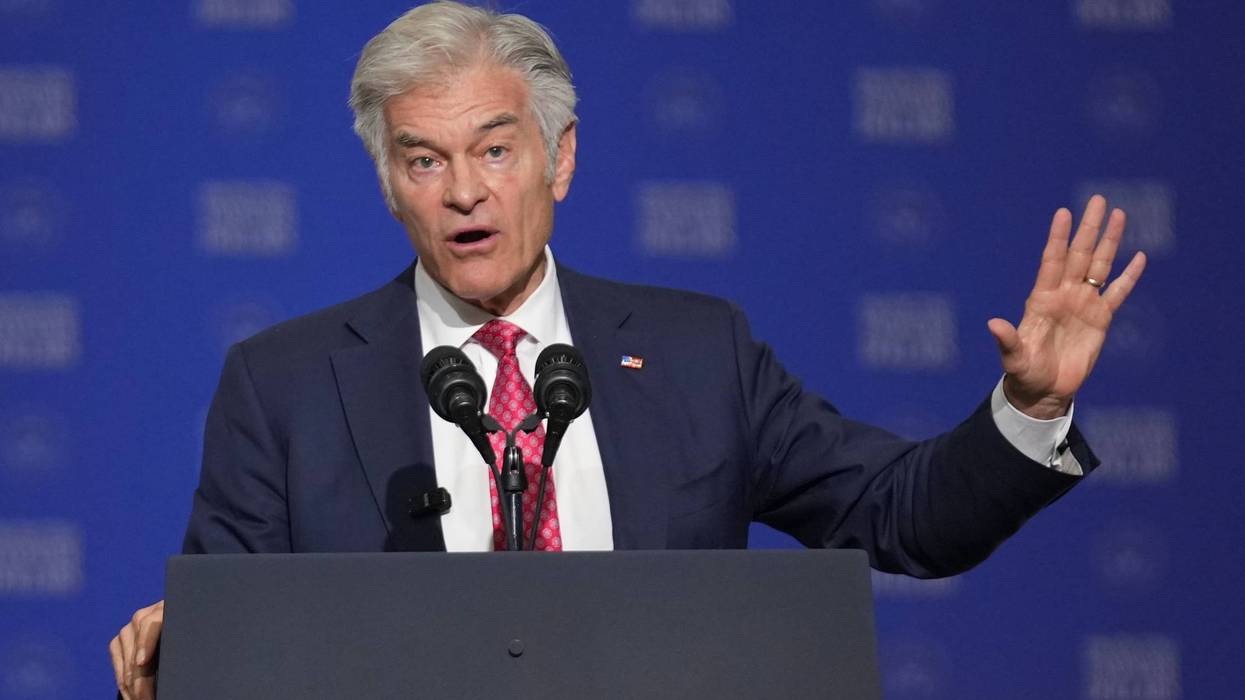
"Donald Trump and Republicans are making healthcare more expensive for seniors at every turn."
The Trump administration on Tuesday said it would end a subsidy program that helped lower premiums for seniors enrolled in Medicare Part D prescription drug plans, a move that's expected to increase monthly costs for millions of Americans amid a broader affordability crisis.
The Centers for Medicare and Medicaid Services (CMS), headed by Mehmet Oz, announced "the conclusion of the Part D Premium Stabilization Demonstration" for the coming year, just months before the start of Medicare open enrollment. Oz characterized the subsidy program as a "bailout" for insurance companies and said that "premiums will go up by less than $10 for most Medicare recipients."
But The Wall Street Journal, which reported the administration's move ahead of the public announcement, noted that nearly half of Medicare Part D plan enrollees would likely see increases "largely in the $11 to $20 range a month." The subsidy program, established in the wake of the Biden-era Inflation Reduction Act, cut the average Part D premium by more than 25% this year.
Leslie Dach, chair of the advocacy group Protect Our Care, said in a statement that President Donald Trump and his Republican allies "continue to force seniors to pay more while handing tax breaks to billionaires and big corporations."
"Trump and Republicans are making healthcare more expensive for seniors at every turn," said Dach. "In the middle of a GOP-induced affordability crisis, they are eliminating a key program that helps seniors afford their medications, meaning countless seniors will soon pay more just to get the lifesaving prescriptions they need. For older Americans living on fixed incomes, even an extra ten or twenty dollars a month can mean choosing between filling their prescription, paying the electric bill, or buying groceries. Seniors deserve lower prescription drug costs and affordable healthcare."
Around 25 million Americans are enrolled in standalone prescription drug plans through Medicare Part D, which is offered by private, Medicare-approved companies. Another 31 million Americans are enrolled in Medicare Part D via privatized Medicare Advantage plans.
Juliette Cubanski, vice president and director of the Program on Medicare Policy at the nonprofit research group KFF, wrote that standalone Medicare Part D prescription drug plans "may soon seem even less affordable" following the Trump administration's change, "leading to further enrollment growth in Medicare Advantage." (Prior to becoming head of CMS, Oz was a prominent booster of Medicare Advantage.)
Each year, millions of people across the US are forced to forgo or ration prescription medications due to high costs.
Kendall Witmer, rapid response director at the Democratic National Committee, said the Trump administration's decision to terminate the Medicare Part D subsidy program shows that the president and his party "are doing everything they can to make healthcare unaffordable for Americans, especially for seniors."
"Trump and Republicans’ massive healthcare cuts have pushed working families to the brink as they grapple with skyrocketing insurance premiums, even bigger medical bills, and rising prescription drug costs," said Witmer. "Americans are taking on record amounts of medical debt just to make ends meet—all while Trump and his family get even richer and his wealthy donors rake in tax cuts."

"Members of Congress are continuing to buy and sell stocks as if they’re on Wall Street," said Rep. Pramila Jayapal. "We need a FULL ban on congressional stock trading."
Congressional lawmakers from both major parties who have purchased stock in Elon Musk's SpaceX—including some serving on committees whose work intersects with the company's business—are facing increasing scrutiny over potential conflicts of interest, CNBC reported Tuesday.
According to CNBC's Luke Fountain and Justin Papp, six lawmakers—Reps. William Timmons (R-SC), John McGuire (R-Va.), Dan Meuser (R-Pa.), Gil Cisneros (D-Calif.), Jared Moskowitz (D-Fla.), and John James (R-Mich.)—or members of their immediate families bought between roughly $83,000 and $245,000 in SpaceX shares combined. All of the purchases occurred within six days of SpaceX's June 12 initial public offering.
Although all of the purchases were legal and there is no evidence of insider trading, Fountain and Papp noted that "five of the lawmakers serve on committees whose work intersects with SpaceX’s defense, satellite, [artificial intelligence], federal contracting, or securities businesses."
Responding to the report, Rep. Pramila Jayapal (D-Wash.) took to social media to call for a full ban on congressional stock trading.
Members of Congress are continuing to buy and sell stocks as if they’re on Wall Street.They’re not doing it for the interest of their constituents — it’s in the interest of their pockets.We need a FULL ban on congressional stock trading.
[image or embed]
— Congresswoman Pramila Jayapal (@jayapal.house.gov) July 28, 2026 at 1:00 PM
Last week, the House of Representatives passed the Stop Insider Trading Act in a bipartisan vote; however, the current legal framework is primarily based on preventing self-dealing and boosting disclosure, not a trading ban.
Last year, Jayapal introduced the bipartisan Restore Trust in Congress Act, and Krishnamoorthi (D-Ill.) revived the ETHICS Act, both of which would "prohibit members of Congress, their spouses, and dependent children from owning or trading individual stocks, securities, commodities, or futures."
Monday's disclosure comes as SpaceX is already facing intense scrutiny over its growing influence in Washington, DC. In 2023, environmental groups sued the Federal Aviation Administration over approvals allowing expanded Starship launches in South Texas, arguing the agency violated federal environmental law by failing to adequately assess impacts on nearby wildlife refuges and endangered species amid a string of failed launches in which rockets exploded.
Earlier this year, tribal and conservation groups filed a lawsuit aiming to stop the US Fish and Wildlife Service from handing over 715 acres of the Lower Rio Grande Valley National Wildlife Refuge in South Texas to SpaceX in exchange for 683 acres elsewhere.
While conservationists contend that SpaceX launches and explosions threaten wildlife and sensitive habitats, astronomers have warned that the company's rapidly expanding Starlink satellite constellation is cluttering near-Earth orbit, degrading dark skies, and interfering with astronomical observations.
Critics have also raised concerns about Musk's relationship with federal regulators, with questions repeatedly raised surrounding the independence of agencies responsible for overseeing SpaceX as the company seeks further launch approvals.
While Musk's short-lived stint as the de facto head of the so-called Department of Government Efficiency ended last year, a mix of former employees from Musk companies SpaceX, Tesla, and xAI were granted access or assigned to at least 15 executive branch agencies during 2025, according to reporting by The Washington Post, The New York Times, NPR, Wired, and other outlets.
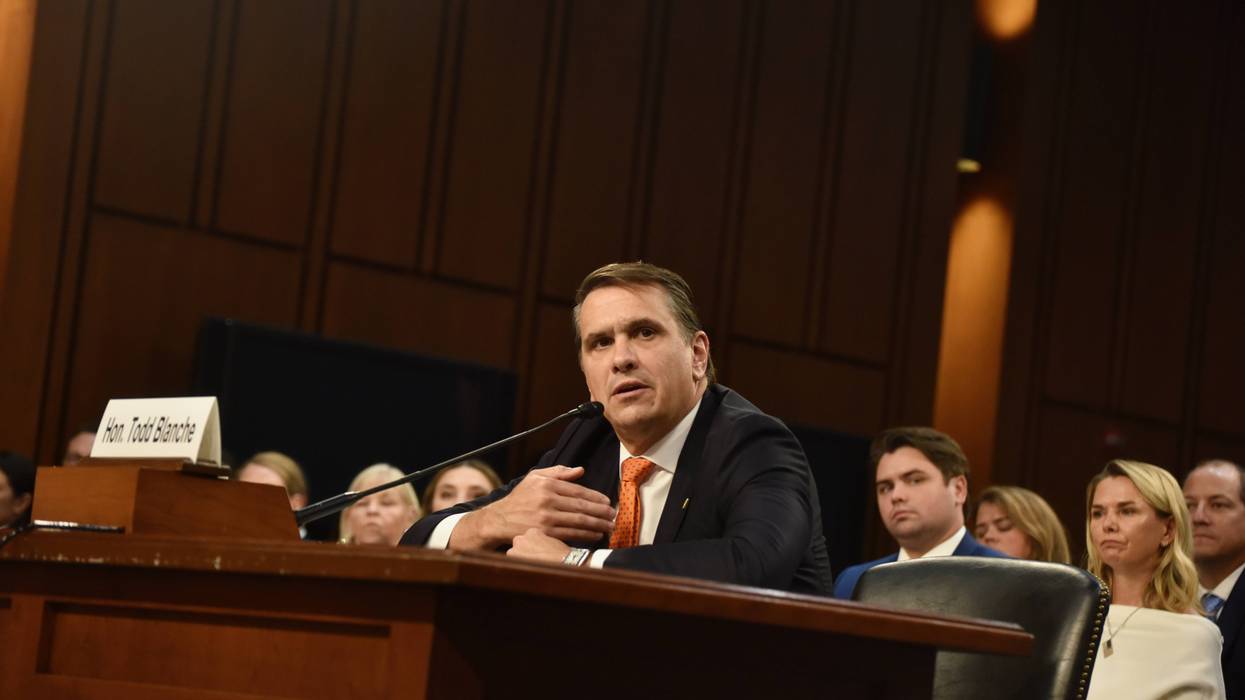
"In the 50 days since Donald Trump nominated Todd Blanche to serve as attorney general," one coalition noted, "a new headline has emerged every single day documenting corruption, self-dealing, or impunity."
The US Senate Judiciary Committee is set to vote Thursday on whether to approve the nomination of Todd Blanche as attorney general, but GOP infighting could block the advancement of President Donald Trump's former personal attorney, who is fiercely opposed by elected Democrats and pro-democracy advocacy groups.
Following the recent unexpected death of Sen. Lindsey Graham (R-SC), Republicans need complete support on the committee to send Blanche's nomination to the full chamber. However, GOP Sens. Thom Tillis (NC) and John Cornyn (Texas) are posing a potential barrier to getting to a final vote on the acting attorney general.
Tillis, who is retiring after this term, and Cornyn, who lost a May primary to a Trump-backed opponent, want a guarantee that the administration won't revive the $1.776 "Anti-Weaponization Fund" proposed as part of a settlement to the president's widely criticized lawsuit against the Internal Revenue Service (IRS).
After setbacks in court and public backlash to the slush fund—which was expected to benefit Trump allies, including the January 6, 2021 Capitol insurrectionists—Blanche has signaled that the US Department of Justice (DOJ) would no longer pursue its creation, but that's not enough for many of the administration's critics.
"We just need for the documents to conform to what his testimony was at the hearing where he said the weaponization fund is dead, he said the immunity from future audits does not extend to people beyond the parties to the lawsuit, and he said it wasn’t intended to release further actions by other agencies other than the IRS," Cornyn told reporters, according to The Hill.
Addressing the standoff on social media early Tuesday afternoon, Cornyn wrote that "there is no 'deal'" and "they know what they have to do."
University of Michigan law professor and MS NOW legal analyst Barb McQuade said Tuesday that it's "sad that senators develop a backbone only after losing the primary, but better that wisdom come late than not at all. While Blanche should not be confirmed at all, short of that, at least Cornyn is demanding a halt to Trump's hundred million dollar gift from IRS."
As the White House press secretary, Karoline Leavitt, called on the Senate to confirm Blanche "without delay," opponents of his confirmation took to social media Tuesday to urge votes against him.
The committee's Democrats ripped Blanche for how he's treated survivors of late convicted sex criminal Jeffrey Epstein, and posted a letter from some of them encouraging the Senate to reject his nomination.
Sen. Cory Booker (D-NY), a committee member, warned that Blanche "will do whatever Trump tells him to do—no matter how illegal or unconstitutional."
Former Labor Secretary Robert Reich, now a professor at the University of California, Berkeley, suggested Americans should call their senators directly at 202-224-3121.
The progressive advocacy group Stand Up America similarly urged voters to take action by texting BLANCHE to 63033.
Stand Up America is part of the Not Above the Law coalition, which on Tuesday highlighted that "in the 50 days since Donald Trump nominated Todd Blanche to serve as attorney general on June 8, 2026, a new headline has emerged every single day documenting corruption, self-dealing, or impunity involving the president, his family, or the Justice Department that Blanche has led on an acting basis."
"This is not a record Blanche has run from—it's the record he's built. And if the Senate confirms him, it's the record he'll be free to expand, with almost no one left to check him," the coalition stressed.
The coalition noted that just days after Blanche's nomination, a federal judge denied the Justice Department’s request to pause a ruling to remove Trump's name from the John F. Kennedy Center for the Performing Arts.
Later in June, the coalition noted, Bloomberg revealed that after Indian billionaire Gautam Adani met privately with Donald Trump Jr., the DOJ moved to drop bribery charges against him. Earlier this month, New Mexico Attorney General Raul Torrez accused the department of impeding his investigation into Epstein—a former friend of the president—by withholding unredacted files.
"Cabinet nominees are typically counseled to keep a low profile during their confirmation process. Todd Blanche has not followed that playbook, because he hasn't had to," the coalition said. "As acting attorney general, he has led a Department that has already been rebuffed by a judge on the J6 slush fund, been forced to withdraw unlawful subpoenas of journalists, dropped cases against the well-connected while continuing the Epstein cover-up, and shielded the president's family from scrutiny, all without Senate confirmation standing in his way."
"Confirming him doesn't rein that in. It removes the last remaining check," the coalition stressed. "With the Senate Judiciary Committee set to vote as soon as July 30, senators must ask themselves not just what Blanche has done, but what he'll do once there's no confirmation vote left to answer for."
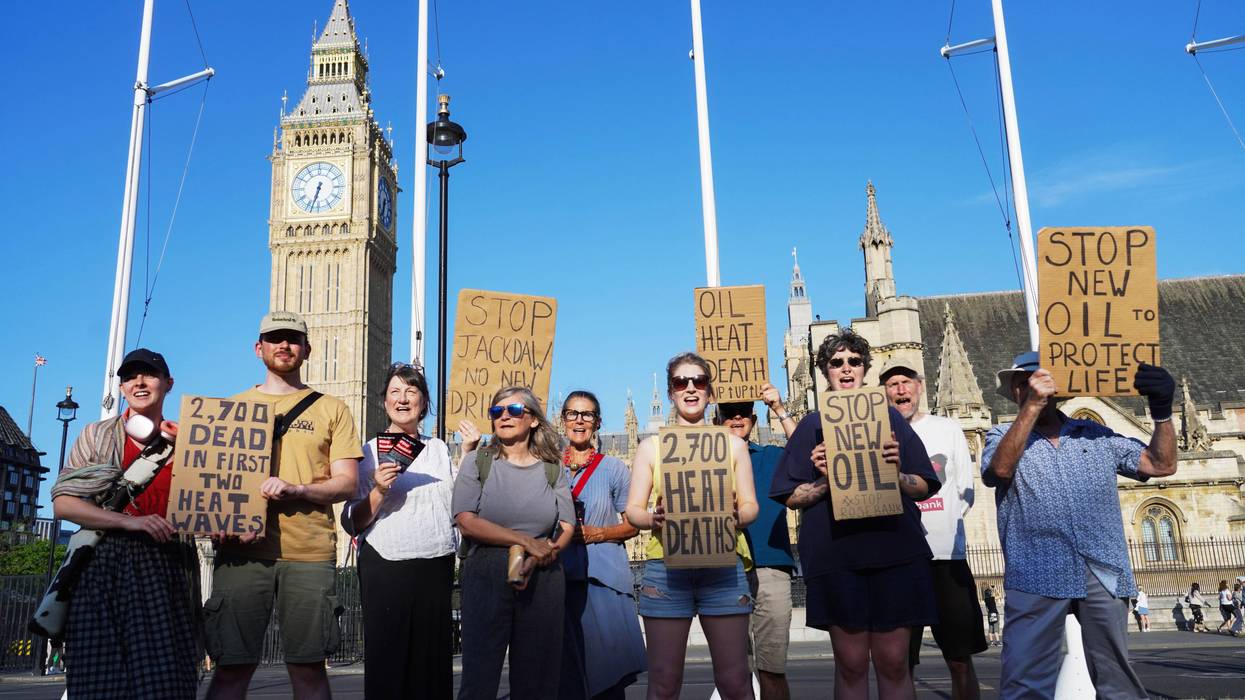
"Big Oil’s greed is incompatible with a livable planet and unless governments rein it in, they will make a mockery of international climate targets,” said one Oxfam campaigner.
An analysis published Tuesday highlights how the world's top fossil fuel companies are expected to rake in nearly twice as much in second-quarter profits as they did during the first quarter of 2026, a windfall that comes as their polluting products help fuel extreme heat that kills hundreds of thousands of people around the world annually.
Oxfam International's analysis warns that the profits of the world’s six largest oil and gas companies are on track to skyrocket from $23 billion during the first quarter of the year to $45 billion in Q2 as emissions from their products intensify deadly heatwaves.
"Projected full-year profits of BP, Chevron, Eni, ExxonMobil, Shell, and TotalEnergies amount to $147 billion, more than their combined profits over the previous 21 months (Q2 2024 to Q4 2025)," the report states. "Among the biggest winners, Chevron is expected to report that it has quadrupled its profits to $1,200 a second in the last three months, while ExxonMobil’s profits are expected to have tripled to $1,800 a second."
"Oil and gas corporations share an outsized responsibility for the climate crisis," the publication continues. "Emissions from BP, Chevron, ExxonMobil, Shell, and TotalEnergies were sufficient to cause around 1 in 4 heatwaves reported globally between 2000 and 2023—heatwaves that would have been virtually impossible without human-made climate change."
New Oxfam analysis finds that emissions from 5 major fossil fuel corporations were enough to cause 1 in 4 heatwaves between 2000 and 2023. Heatwaves that would have been virtually impossible without climate change.It’s time to #MakeRichPollutersPayMore: bit.ly/BigOilQ2prof...
[image or embed]
— Oxfam International (@oxfaminternational.bsky.social) July 28, 2026 at 12:00 AM
Conflicts like the US-Israeli war of choice on Iran and the ongoing Russian invasion and occupation of Ukraine, as well as Big Oil greed, are among the leading factors blamed for spiking fuel costs.
On Tuesday, The New York Times reported that top US fossil fuel executives have sold nearly $400 million in their own companies' stock since Trump launched the Iran War on the last day of February.
“Fossil fuel corporations are making a killing, literally and figuratively," Mariana Paoli, Oxfam's climate policy lead, said in a statement Tuesday.
"As extreme heat, floods, and storms devastate communities across the world, the industry is preparing another bonanza of profits," she continued. "Families are paying the price three times over—through destroyed homes and harvests, through soaring energy prices, and through a cost-of-living crisis worsened by dependence on fossil fuels."
"Big Oil’s greed is incompatible with a livable planet, and unless governments rein it in, they will make a mockery of international climate targets,” Paoli added.
The report comes amid a summer of dangerous heat events in the United States, including prolonged “heat domes” that have pushed temperatures to life-threatening levels and contributed to at least dozens of deaths, as well as more record heatwaves in Europe that have left thousands dead and fueled massive wildfires.
"Yet rather than scaling back fossil fuel production and accelerating the transition to renewable energy, the six largest fossil fuel corporations plan to increase oil and gas production by 14% by 2030 compared to 2024 levels, equivalent to pumping an additional 2.5 million barrels of oil a day," Oxfam noted.
Paoli said Tuesday that "while Big Oil fuels extreme weather events, rich countries are refusing to increase the public climate finance that poorer countries urgently need to cope with the climate crisis."
“Until governments make the richest polluters pay, fossil fuel corporations will keep driving us deeper into climate chaos," she added. "Taxing the richest polluters could help close the gap in funding for climate adaptation and speed the transition towards renewable energy. Fossil fuel corporations must feel the heat, not us."
Oxfam contends that the "rich polluter profit tax" it has modeled could raise as much as $400 billion globally in its first year based on 2024 figures, compared with the estimated $290 billion to $1 trillion needed annually by 2030 to compensate for the loss and damage caused by climate change in the Global South. Unlike one-off windfall profits taxes, the rich polluter profit tax would be permanent.
"We are facing a climate emergency, therefore governments should each impose this tax swiftly," Oxfam said last month. "Countries across all continents should form a ‘coalition of the willing’ to coordinate and speed up their efforts and counter fossil fuel company lobbying and tax avoidance."
The Oxfam analysis follows the release earlier this month of a World Health Organization (WHO) report showing nearly 500,000 annual heat-related deaths worldwide in the years 2000-19—a figure expected to grow as extreme temperatures driven by the climate emergency become the new normal.
"Mitigating climate change by reducing greenhouse gas emissions is imperative and urgent to limit the magnitude of human costs from extreme heat," WHO said.
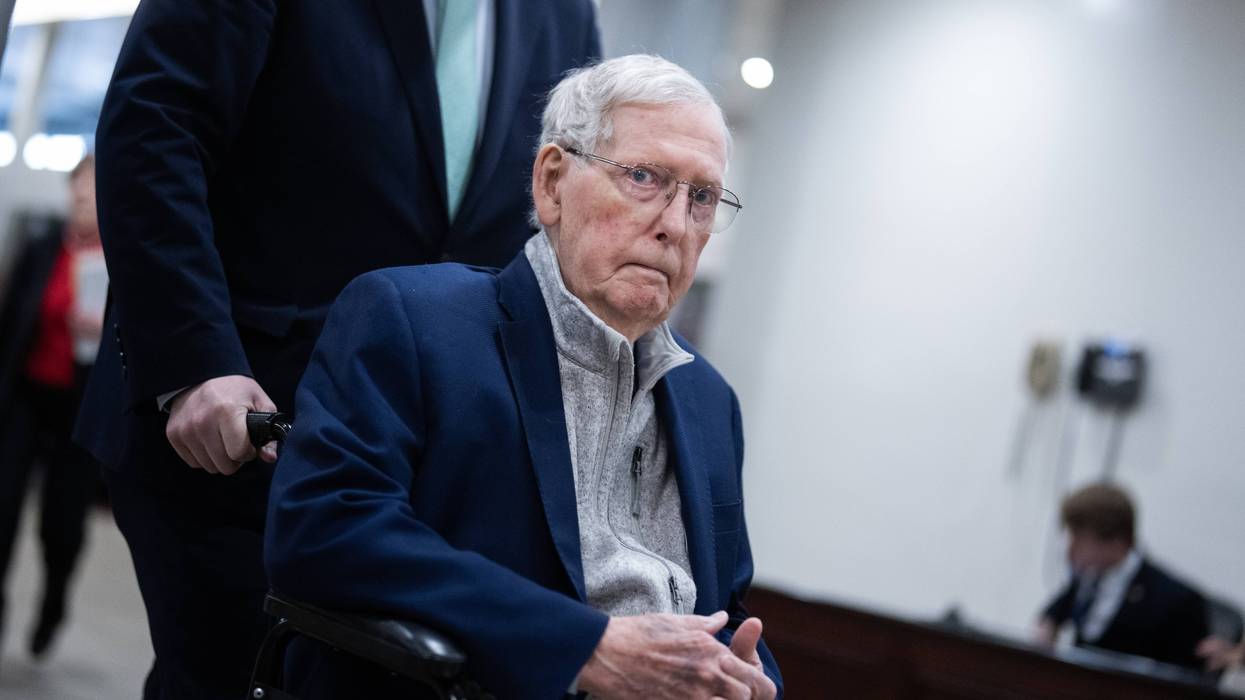
"Kentuckians are just asking you to be honest," said Gov. Andy Beshear.
After weeks of sitting on his hands, Kentucky's Democratic Gov. Andy Beshear issued an ultimatum to the state's absentee Sen. Mitch McConnell on Tuesday: Prove you're alive and can do the job or step down.
Since he was hospitalized on June 14, McConnell’s 4.6 million constituents have been left with virtually no answers about the 84-year-old Republican’s condition, leading to rampant speculation of a cover-up.
Some even pondered whether the former Senate Republican leader may have shuffled off this mortal coil altogether, but that his staff was keeping mum until the presumptive August 3 deadline to avoid a special election that could lead to suboptimal results for the GOP.
Beshear, who has the power to call a special election to fill vacant Senate seats, had chastized McConnell and his staff for weeks for the lack of transparency about his condition. But he continued to balk about taking action, even as members of his party begged him to "do something."
That is, until Monday, when McConnell's office released an update from his physician, which stated that the senator was undergoing “a strenuous course of physical therapy and rehabilitation” but was “not yet medically cleared to leave the rehab facility and return to the office.”
Beshear finally sent McConnell a letter demanding proof of life.
"It has now been 43 days since news of your hospitalization," Beshear wrote. "During that time you have cast zero votes, engaged in no official activities, and aside from two photos and corresponding statements, have made no effort to communicate with your Kentucky constituents or the nation."
The governor noted that the physician's statement still provided no details about the seven-term senator's actual condition, "including whether you can speak, reason, or carry out your duties as a senator."
"As governor of the state you serve," Beshear continued, "I am calling on you to directly and verbally address the people of Kentucky and provide proof of your capacity to serve, or resign."
Beshear said he'd sent the same letter to Senate Majority Leader John Thune (R-SD), who took over McConnell's longtime role in 2025 before he announced his plans not to run for reelection.
Beshear said if McConnell still proved "unwilling" to demonstrate his capacity to serve, he'd insist Thune—one of the few people who claim to have spoken to McConnell since he vanished from public view—fully investigate his condition.
"All of this speculation and even this letter could have been avoided with a minimal amount of transparency," Beshear concluded. "Kentuckians are just asking you to be honest."
While most states allow governors to name an interim replacement when senators die or get expelled, Kentucky is one of just four exceptions, ironically thanks to some classic McConnell machinations.
In 2021, the then-Senate minority leader pressured Kentucky's GOP-controlled Legislature to restrict Beshear's power to unilaterally name a replacement, instead requiring him to pick from a list approved by the departing senator's party.
Three years later, Kentucky abolished temporary replacements entirely, meaning the most Beshear could do was call a special election.
That said, the law has not yet been tested by a vacancy, and Beshear has said he'd be willing to challenge its constitutionality in hopes of naming the replacement himself, adding a 48th member to the chamber's Democratic caucus, at least until January, when it would be filled by whoever wins McConnell's seat during November's midterms.
While Kentucky is a consistently red state and has not elected a Democratic senator since 1992, Beshear's multiple terms as governor show it is capable of electing Democrats in statewide races, and could be more likely to do so in what is projected to be a blue wave year.
But Kentucky's law also says special elections must be called at least 63 days before they occur. This gives Republicans ample incentive to keep McConnell as Schrödinger's senator until at least August 3, after which a replacement would not be able to take office until the new Senate term begins in January.
In an interview with Bloomberg on Tuesday, Beshear argued that McConnell's absence for the rest of the year "might not be a bad thing."
"McConnell hasn't been there to vote on the SAVE Act, which would tear voting rights away. He hasn't been there to vote to support this war on Iran that this president started and shouldn't be continuing," Beshear said. "Not having Mitch McConnell show up isn't necessarily a bad thing because he certainly doesn't show up to help the American people."

A record high 61% of Americans said they disapproved of the Supreme Court, according to a Gallup poll.
Americans' approval of the US Supreme Court has hit an all-time low amid a string of controversial high-profile decisions, according to a survey released on Tuesday by Gallup.
The Gallup poll shows that approval of the court is now just 33%, a steep drop from six years ago when its approval reached 58% among US voters. Disapproval of the court, meanwhile, hit a record high of 61%.
The poll found that dissatisfaction from Republicans was a major factor in driving down the court's approval, as just 58% of GOP voters said they approved of the court, a drop of more than 20 points from their approval of the court last year.
"This decline may indicate that rulings unfavorable to the Trump administration this term," Gallup commented, "such as those on tariffs and birthright citizenship, weigh more heavily in Republicans’ evaluations of the court than the rulings that favored [President Donald] Trump and the GOP."
The court's ratings among non-Republicans were far worse, with just 12% of Democrats and 35% of independents approving of its job performance.
The court in recent years has made a number of decisions—including its 2022 overturning of the constitutional right to an abortion, its 2024 decision granting US presidents total immunity from criminal prosecution for officials acts taken while in office, and multiple decisions that gutted the Voting Rights Act—that have been angrily condemned by progressives.
Max Steele, senior director of communications at gun safety advocacy organization Everytown, wrote in a social media post that the Supreme Court's cratering approval numbers were entirely deserved.
"To their credit," wrote Steele, "they've worked hard to earn this!"
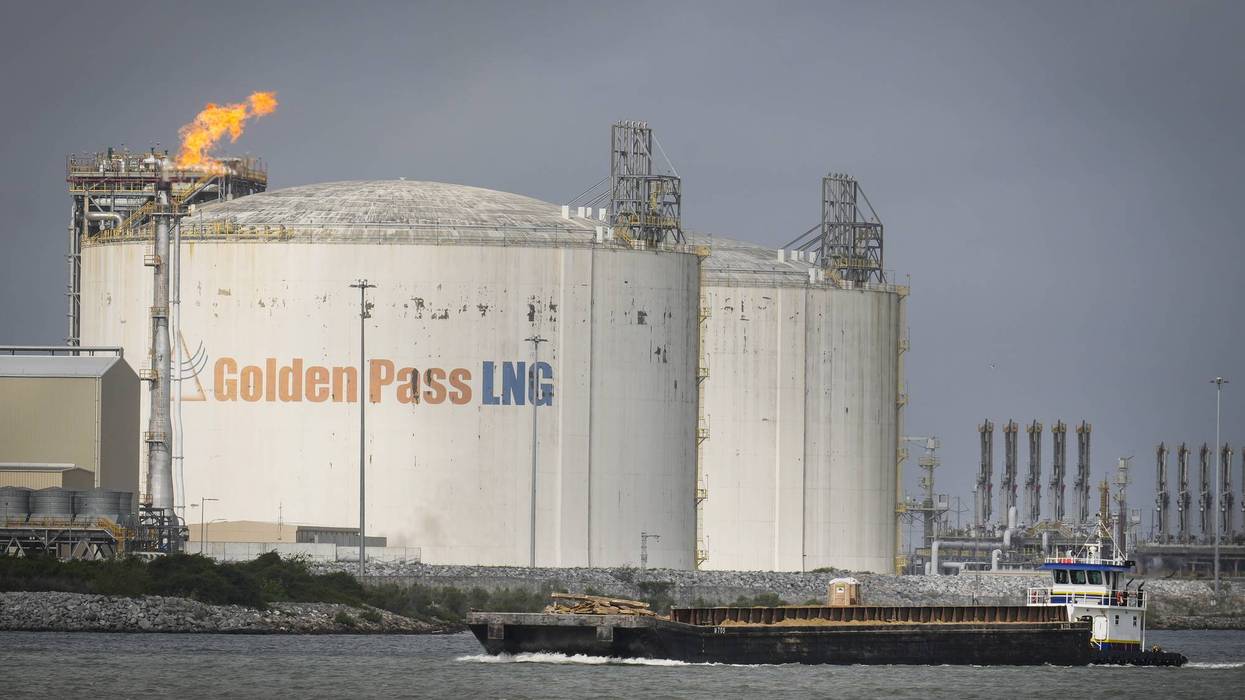
Between 2026-40, the average wholesale price of liquefied natural gas could be 80% higher than during the past decade, thanks to Trump's acceleration of exports and the construction of AI data centers.
As President Donald Trump's push for artificial intelligence data centers sends demand for natural gas soaring, a report released Tuesday projects that wholesale prices will likely double by the late 2030s if his energy and AI policies continue, driving up household energy bills.
The report from the climate activist group Oil Change International, which argues for an end to reliance on fossil fuels, found that recent surges in wholesale natural gas prices are being driven by Trump's so-called "energy dominance" agenda, which has cranked up natural gas exports.
In his second term, Trump has resumed and accelerated approvals for new natural gas export terminals following a pause on permits under the Biden administration.
Nearly 90 million metric tons of new annual liquefied natural gas (LNG) export capacity reached a final investment decision as of June, on top of 60 million that had already been under construction, the report found. Combined, the researchers predicted that these projects could double US LNG exports by the early 2030s.
While pursuing energy dominance, Trump is also pursuing "AI dominance," which has included the breakneck development of data centers specifically built to run on fossil fuels, including natural gas.
His administration has fast-tracked federal permits for data center developers, loosened environmental review processes, and directed his agencies to provide incentives to finance the data center boom.
Gas is expected to power much of the near-term energy use from these data centers. The facilities, which operate 24/7, are being constructed faster than transmission lines can keep up, meaning that new gas plants are being proposed as an alternative.
The report finds that the demands of the AI data center boom could increase gas consumption by 17% by the early 2030s. With the cheapest gas being rapidly depleted, more demand will require producers to expand drilling in parts of the country where it's significantly more expensive to operate, like the Haynesville shale region of Louisiana and East Texas.
Meanwhile, the Trump administration and Republicans in Congress have gutted federal support for wind power construction and other renewable energy sources, which will further increase dependency on gas.
In addition to pumping more planet-heating greenhouse gases into the atmosphere, the report finds that this increased demand will likely cause prices to soar for consumers.
Citing fluctuations in the Henry Hub gas price benchmark, the report projected that between 2026-40, the average wholesale price of gas could be 80% higher than during the past decade of US LNG exports, which it notes was "a decade when energy price volatility was already causing hardship in the US and LNG-importing countries."
"Trump's policies are making everyone's lives more expensive while Big Tech and the fossil fuel industry cash in. Our research shows that the cost-of-living crisis will only escalate in the coming years if Congress and government agencies don’t intervene," said Lorne Stockman, research director at Oil Change International.
"Our leaders must stand up to Trump, phase out LNG exports, stop the reckless data center build-out, and transition the US economy off of fossil fuels to make energy affordable again," he added.
Bill McKibben, the co-founder of 350.org, argued in an op-ed for Common Dreams on Tuesday that Oil Change's report, as well as another recent report demonstrating how the fossil fuel industry had hidden the climate damage caused by natural gas from the public for more than half a century, showed that it's long past time to "make gas a dirty word" in a similar fashion to oil.
"Politicians locking us into natural gas are guaranteeing that our kids will spend much of their lives paying far more for energy than they should—and far more than people in the rest of the world will be spending," he wrote.
McKibben noted recent reporting in The New York Times detailing how, in the wake of Trump's war in Iran, which has caused LNG prices to soar across Europe and Asia, nations are beginning to "unshackle" themselves from it as an alternative fuel source. Not so in the US.
"The natural gas industry," he wrote, "is destroying the climate, and destroying people’s lungs, and it’s trying to lock us into this expensive practice for decades to come."