August, 11 2020, 12:00am EDT

Advocates and Voters File to Intervene in Pennsylvania Democrats' Election Lawsuit
HARRISBURG, PA
Four nonpartisan advocacy groups and three voters from Allegheny County today asked a state court in Pennsylvania to rule that they may intervene in an election-related lawsuit filed by the state Democratic Party.
Black Political Empowerment Project, Common Cause Pennsylvania, the League of Women Voters of Pennsylvania, Make the Road Pennsylvania, and the three voters have told the court that they believe that their interests are broader and possibly divergent from both the Democrats and the Department of State.
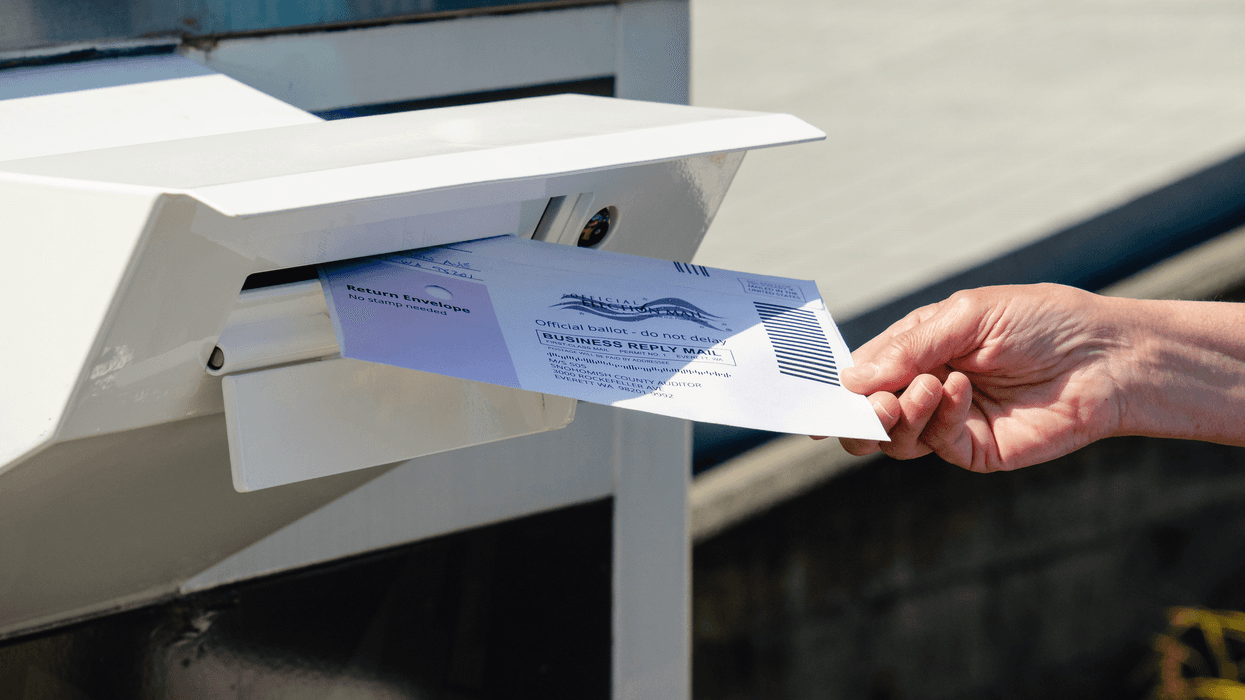
Through the lawsuit, the intervenors are seeking clarification of several elements of vote-by-mail processes in Pennsylvania, including the need for mail-in and absentee ballot drop boxes and extending the deadline for receiving mail-in and absentee ballots.
The intervenors are represented by the American Civil Liberties Union, ACLU of Pennsylvania, Lawyers' Committee for Civil Rights Under Law, Public Interest Law Center, and the law firm WilmerHale.
"Our interest is the right to vote for all eligible voters. Period," said Reggie Shuford, executive director of the ACLU of Pennsylvania. "The state should be implementing practices that guarantee the vote for everyone, not considering those that do the opposite."
In their filings, the advocates and voters argue that current state law allows counties to provide secure drop boxes for people to submit their absentee and mail-in ballots. That issue is in dispute in this case, as well as a federal lawsuit filed by President Trump's campaign in a court in western Pennsylvania.
"The key mission of the Black Political Empowerment Project is that African Americans vote in each and every election. We advocate that all people vote in each and every election. B-PEP will always stand strongly against any efforts, from any source, that goes against our community being able to fulfill our key mission to utilize the power of the vote, and its ability to impact the many problems which African Americans face on a daily and ongoing basis. The results of the November 3, 2020, presidential election may indeed profoundly affect the future of our African-American communities, both locally and nationally for years to come," said Tim Stevens, chairman and CEO of the Black Political Empowerment Project.
"Our government 'of the people' is stronger and more representative when every voter can participate -- and that means making sure voters have choices about how they can cast their ballot," said Suzanne Almeida, interim executive director of Common Cause Pennsylvania. "Drop boxes are a crucial option for voters who receive their absentee ballots too late to return them by mail. Without drop boxes, some people will be forced to choose between their health and their right to vote -- and no one should have to make that choice."
The June primary saw challenges in addressing the surge in applications for mail and absentee ballots. Because of this, advocates are also requesting that for the November 2020 general election, the deadline for returning ballots be extended to all ballots mailed by 8 p.m. on Election Day, as long as they are received by November 10, 2020.
"As a nonpartisan voting rights organization, the League seeks to intervene on behalf of voters in this case because the current parties explicitly cannot represent all voters," said Terrie Griffin, co-president of the League of Women Voters of Pennsylvania. "As our leaders wage political fights over our state's election laws, the League will push to make sure the perspective of voters is brought to the table."
"We're part of this lawsuit because everyone needs to be able to participate in our elections without barriers," said Ivan Garcia, director of community engagement atMake the Road Pennsylvania.
The three voters -- Patricia DeMarco, Danielle Graham Robinson, and Kathleen Wise -- are all regular voters who faced significant hurdles in trying to vote in Allegheny County during the state's primary election in June. DeMarco, Robinson, and Wise are all considered to be high risk for serious illness if they contract the novel coronavirus due to age or health conditions or both, based on guidelines from the Centers for Disease Control and Prevention.
All three attempted to vote by mail in the primary but faced numerous challenges. Robinson and Wise received their ballots so late that they were not confident that the U.S. Postal Service would deliver them by Election Day; DeMarco mailed her ballot but never received confirmation from the county that it was received.
"Pennsylvanians must be allowed to protect their health and their vote. Making them choose is a false choice, and we will continue to challenge obstacles that are placed in their way," said Sarah Brannon, managing attorney with the ACLU's Voting Rights Project.
Recent revelations of long delays in mail delivery by the U.S. Postal Service have compounded the intervenors' concerns, their attorneys said.
"Voters deserve a voice in litigation that will affect their access to the ballot box," said Ben Geffen, staff attorney at the Public Interest Law Center. "Our clients are seeking to intervene in this lawsuit to make the case for a mail-in voting system that is accessible and safe for all voters, including those in communities that have faced the deepest impacts of COVID-19."
"American voters are facing too many barriers when they seek to use their rights at the ballot box during this election cycle," said John Powers, counsel at the Lawyers' Committee for Civil Rights Under Law. "It should never be this difficult to vote in our democracy, especially during the global pandemic. The court should give these four nonpartisan organizations the ability to participate in this case, which raises critical issues about the accessibility of mail-in voting for all eligible citizens."
The lawsuit, Pennsylvania Democratic Party v. Boockvar, is pending in the Commonwealth Court of Pennsylvania.
Filings: https://www.aclu.org/legal-document/proposed-petition-review and https://www.aclu.org/legal-document/application-intervention

The American Civil Liberties Union was founded in 1920 and is our nation's guardian of liberty. The ACLU works in the courts, legislatures and communities to defend and preserve the individual rights and liberties guaranteed to all people in this country by the Constitution and laws of the United States.
(212) 549-2666LATEST NEWS
Trump Tariffs Have Cost Average US Family Nearly $1,200 So Far
"The president’s tax on American families is simply making things more expensive.”
Dec 11, 2025
As President Donald Trump persistently claims the economy is working for Americans, Democrats in the US House and Senate on Thursday released an analysis that puts a number to the recent polling that's found many Americans feel squeezed by higher prices: $1,200.
That's how much the average household in the US has paid in tariff costs over the past 10 months, according to the Joint Economic Committee—and costs are expected to continue climbing.
The Democrats, including Ranking Member Sen. Maggie Hassan (D-NH), Sen. Martin Heinrich (D-NM), and Rep. Sean Casten (D-Ill.), analyzed official US Treasury Department data on the amount of tariff revenue collected since the beginning of Trump's second term as he's imposed tariffs across the European Union and on dozens of other countries—some as high as 50%.
The White House has insisted the tariffs on imports will "pry open foreign markets" and force exporters overseas to pay more, resulting in lower prices for US consumers.
But the JEC combined the Treasury data with independent estimates of the percent of each tariff dollar that is paid by consumers, as companies pass along their higher import prices to them.
At first, US families were paying an average of less than $60 in tariff costs when Trump began the trade war in February and March.
But that amount shot up to more than $80 per family in April when he expanded the tariffs, and monthly costs have steadily increased since then.
In November, a total of $24.04 billion was paid by consumers in tariff costs—or $181.29 per family.
“While President Trump promised that he would lower costs, this report shows that his tariffs have done nothing but drive prices even higher for families."
From February-November, families have paid an average of $1,197.50 each, according to the JEC analysis.
“While President Trump promised that he would lower costs, this report shows that his tariffs have done nothing but drive prices even higher for families,” said Hassan.
If costs remain as high as they were over the next 12 months, families are projected to pay $2,100 per year as a result of Trump's tariffs.
The analysis comes a week after Republicans on a House Ways and Means subcommittee attempted to avoid the topic of tariffs—which have a 61% disapproval rating among the public, according to Pew Research—at a hearing on global competitiveness for workers and businesses.
"Rep. Jimmy Gomez [D-Calif.] read several quotes from [former Rep. Kevin] Brady [R-Texas] during his time in Congress stating that tariffs are taxes that impede economic growth. Brady, who chaired the Ways and Means Committee and drafted Trump’s first tax law in 2017 (and now works as a lobbyist), had no desire to discuss those quotes or the topic of tariffs," wrote Steve Warmhoff, federal policy director at the Institute on Taxation and Economic Policy. "Nor did Republicans address the point made by the Democrats’ witness, Kimberly Clausing, when she explained that Trump’s tariffs are the biggest tax increase on Americans (measured as a share of the economy) since 1982."
Clausing estimated that the tariffs will amount "to an annual tax increase of about $1,700 for an average household" if they stay at current levels, while Trump's decision to lower tariffs on goods such as meat, vegetables, fruits, and coffee last month amounted to just $35 in annual savings per household.
The JEC has also recently released analyses of annual household electricity costs under Trump, which were projected to go up by $100 for the average family despite the president's campaign pledge that "your energy bill within 12 months will be cut in half."
Last month the panel found that the average household is spending approximately $700 more per month on essentials like food, shelter, and energy since Trump took office.
“At a time when both parties should be working together to lower costs," said Hassan on Thursday, "the president’s tax on American families is simply making things more expensive.”
Keep ReadingShow Less
Tlaib Rips Lawmakers Who 'Drool at the Opportunity to Fund War' While Opposing Healthcare for All
"They’re gutting healthcare and food assistance to pay for bombs and weapons. It’s a sick vicious cycle," said Rep. Rashida Tlaib.
Dec 11, 2025
"Imagine if our government funded our communities like they fund war."
That was Rep. Rashida Tlaib's (D-Mich.) response to the House's bipartisan passage Wednesday of legislation that authorizes nearly $901 billion in military spending for the coming fiscal year, as tens of millions of Americans face soaring health insurance premiums and struggle to afford basic necessities amid the nation's worsening cost-of-living crisis.
Tlaib, who voted against the military policy bill, had harsh words for her colleagues who "drool at the opportunity to fund war and genocide, but when it comes to universal healthcare, affordable housing, and food assistance, they suddenly argue that we simply can’t afford it."
"Congress just authorized nearly a trillion dollars for death and destruction but cut a trillion dollars from Medicaid and the Affordable Care Act," said Tlaib, referring to the budget reconciliation package that Republicans and President Donald Trump enacted over the summer.
"They’re gutting healthcare and food assistance to pay for bombs and weapons. It’s a sick vicious cycle," Tlaib continued. "Another record-breaking military budget is impossible to justify when Americans are sleeping on the streets, unable to afford groceries to feed their children, and racking up massive amounts of medical debt just for getting sick."
House passage of the 2026 National Defense Authorization Act (NDAA) came as Republicans in both chambers of Congress pushed healthcare proposals that would not extend enhanced Affordable Care Act (ACA) tax credits that are set to expire at the end of the year, resulting in massive premium hikes for millions.
The nonpartisan Congressional Budget Office estimates that a Senate Democratic plan to extend the ACA subsidies for three years would cost around $85 billion—a fraction of the military spending that House lawmakers just authorized.
The NDAA, which is expected to clear the Senate next week, approves $8 billion more in military spending than the Trump White House asked for in its annual budget request.
According to the National Priorities Project, that $8 billion "would be more than enough" to restore federal nutrition assistance to the millions expected to lose it due to expanded work requirements included in the Trump-GOP budget law.
"Our priorities are disgustingly misplaced," Tlaib said Wednesday.
Keep ReadingShow Less
‘Don't Give the Pentagon $1 Trillion,’ Critics Say as House Passes Record US Military Spending Bill
"From ending the nursing shortage to insuring uninsured children, preventing evictions, and replacing lead pipes, every dollar the Pentagon wastes is a dollar that isn't helping Americans get by," said one group.
Dec 10, 2025
US House lawmakers on Wednesday approved a $900.6 billion military spending bill, prompting critics to highlight ways in which taxpayer funds could be better spent on programs of social uplift instead of perpetual wars.
The lower chamber voted 312-112 in favor of the National Defense Authorization Act (NDAA) for fiscal year 2026, which will fund what President Donald Trump and congressional Republicans call a "peace through strength" national security policy. The proposal now heads for a vote in the Senate, where it is also expected to pass.
Combined with $156 billion in supplemental funding included in the One Big Beautiful Bill signed in July by Trump, the NDAA would push military spending this fiscal year to over $1 trillion—a new record in absolute terms and a relative level unseen since World War II.
The House is about to vote on authorizing $901 billion in military spending, on top of the $156 billion included in the Big Beautiful Bill.70% of global military spending already comes from the US and its major allies.www.stephensemler.com/p/congress-s...
[image or embed]
— Stephen Semler (@stephensemler.bsky.social) December 10, 2025 at 1:16 PM
The Congressional Progressive Caucus (CPC) led opposition to the bill on Capitol Hill, focusing on what lawmakers called misplaced national priorities, as well as Trump's abuse of emergency powers to deploy National Guard troops in Democratic-controlled cities under pretext of fighting crime and unauthorized immigration.
Others sounded the alarm over the Trump administration's apparent march toward a war on Venezuela—which has never attacked the US or any other country in its nearly 200-year history but is rich in oil and is ruled by socialists offering an alternative to American-style capitalism.
"I will always support giving service members what they need to stay safe but that does not mean rubber-stamping bloated budgets or enabling unchecked executive war powers," CPC Deputy Chair Ilhan Omar (D-Minn.) said on social media, explaining her vote against legislation that "pours billions into weapons systems the Pentagon itself has said it does not need."
"It increases funding for defense contractors who profit from global instability and it advances a vision of national security rooted in militarization instead of diplomacy, human rights, or community well-being," Omar continued.
"At a time when families in Minnesota’s 5th District are struggling with rising costs, when our schools and social services remain underfunded, and when the Pentagon continues to evade a clean audit year after year, Congress should be investing in people," she added.
The Congressional Equality Caucus decried the NDAA's inclusion of a provision banning transgender women from full participation in sports programs at US military academies:
The NDAA should invest in our military, not target minority communities for exclusion.While we're grateful that most anti-LGBTQI+ provisions were removed, the GOP kept one anti-trans provision in the final bill—and that's one too many.We're committed to repealing it.
[image or embed]
— Congressional Equality Caucus (@equality.house.gov) December 10, 2025 at 3:03 PM
Advocacy groups also denounced the legislation, with the Institute for Policy Studies' National Priorities Project (NPP) noting that "from ending the nursing shortage to insuring uninsured children, preventing evictions, and replacing lead pipes, every dollar the Pentagon wastes is a dollar that isn't helping Americans get by."
"The last thing Congress should do is deliver $1 trillion into the hands of [Defense] Secretary Pete Hegseth," NPP program director Lindsay Koshgarian said in a statement Wednesday. "Under Secretary Hegseth's leadership, the Pentagon has killed unidentified boaters in the Caribbean, sent the National Guard to occupy peaceful US cities, and driven a destructive and divisive anti-diversity agenda in the military."
Keep ReadingShow Less
Most Popular