

SUBSCRIBE TO OUR FREE NEWSLETTER
Daily news & progressive opinion—funded by the people, not the corporations—delivered straight to your inbox.
5
#000000
#FFFFFF
To donate by check, phone, or other method, see our More Ways to Give page.
Daily news & progressive opinion—funded by the people, not the corporations—delivered straight to your inbox.

The Trump administration is reportedly looking at executive action to block asylum seekers and immigrants from crossing the U.S.-Mexico border.
Omar Jadwat, director of the ACLU's Immigrants' Rights Project, had this reaction:
"It's disgraceful the Trump administration would even consider what's being reported. It would mean refusing to protect people who can prove they are fleeing persecution. That would be a huge moral failure and any plan along these lines will be subject to intense legal scrutiny."
The Trump administration is reportedly looking at executive action to block asylum seekers and immigrants from crossing the U.S.-Mexico border.
Omar Jadwat, director of the ACLU's Immigrants' Rights Project, had this reaction:
"It's disgraceful the Trump administration would even consider what's being reported. It would mean refusing to protect people who can prove they are fleeing persecution. That would be a huge moral failure and any plan along these lines will be subject to intense legal scrutiny."
The American Civil Liberties Union was founded in 1920 and is our nation's guardian of liberty. The ACLU works in the courts, legislatures and communities to defend and preserve the individual rights and liberties guaranteed to all people in this country by the Constitution and laws of the United States.
(212) 549-2666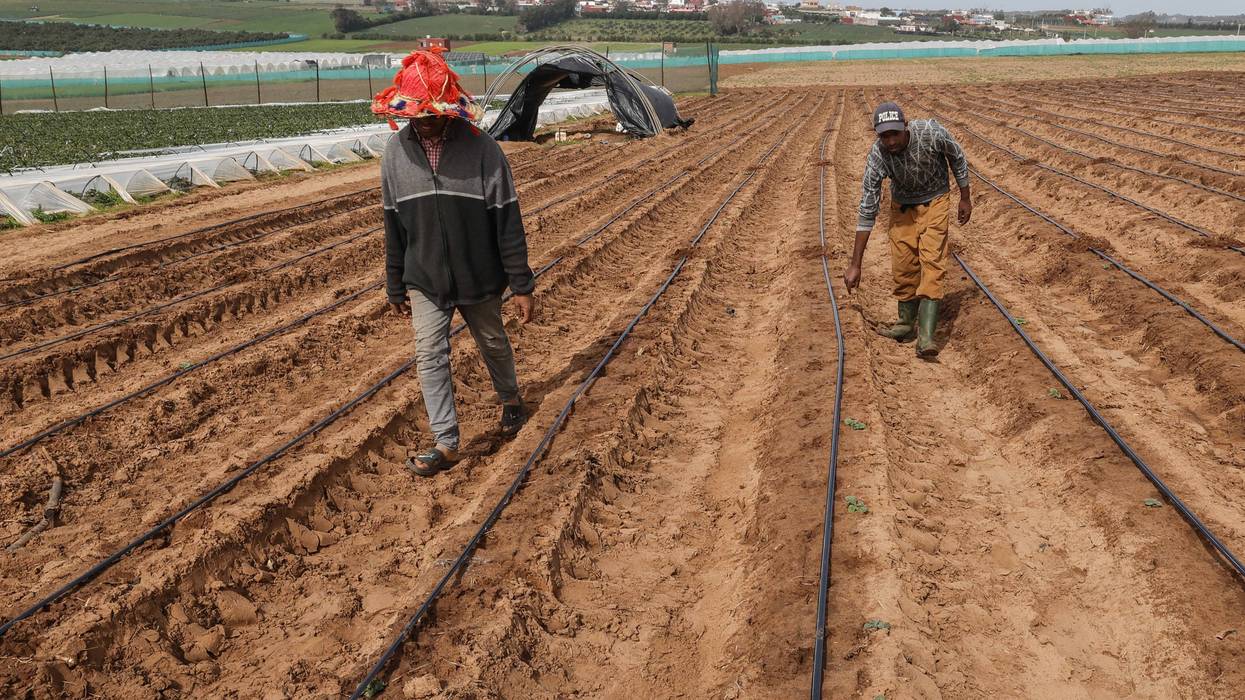
"Alongside robust adaptation and risk reduction strategies," the report says, "the only durable solution to the escalating threat of extreme heat lies in ambitious, multilateral climate change mitigation."
Just a month after a sweeping World Meteorological Organization report led United Nations Secretary-General António Guterres to declare that "every key climate indicator is flashing red," WMO and another UN agency marked Earth Day on Wednesday by releasing an analysis focused on "how extreme heat is reshaping food production and food security."
Simply titled "Extreme Heat and Agriculture," the WMO and Food and Agriculture Organization (FAO) report lays out how extreme heat "is influenced by multiple interlinked drivers," including the trends and inertia of human-induced climate change, natural climate variability, and meteorological phenomena such as droughts and atmospheric and marine heatwaves. Then, it gets into what that means for agriculture.
"Extreme heat is increasingly defining the conditions under which agrifood systems operate," WMO Secretary-General Celeste Saulo and FAO Director-General Qu Dongyu stressed in the foreword of the report. "Rising temperatures and heatwaves, occurring with greater frequency, duration, and intensity, are often accompanied by prolonged drought and other climate extremes."
"Higher temperatures parch soils, reduce harvests, strain livestock, disrupt fisheries, and increase wildfire risk. When combined with water scarcity, the consequences intensify, cutting production, lowering incomes, and tightening food supplies," the pair wrote. "These impacts extend far beyond the farm gate. They represent a systemic risk to global food security and to the livelihoods of more than 1.23 billion people who rely on agriculture."
For example, yields of staple crops such as maize and wheat have already declined by 7.5% and 6%, respectively, with 1ºC of global temperature rise beyond preindustrial levels. The publication points out that yields "are projected to decline by up to an additional 10% for every 1ºC of warming in the future."
It also notes that "under high-emission scenarios, nearly half the world's cattle could be exposed to dangerous heat by 2100," resulting in annual losses nearing $40 billion. Under a low-emission scenario, the report adds, "impacts from livestock exposure to extreme heat are reduced by nearly two-thirds."
The report details vulnerabilities, observed impacts, and projections for not only crops and livestock but also fisheries and aquaculture; forests, plantations, and orchards; and agricultural workers.
Saulo and Qu highlighted that "agricultural workers are already experiencing effects on their health, productivity, and income. As climate variability intensifies, hard-won progress in reducing hunger and poverty comes under strain, with shocks rippling through economies and households and disproportionately affecting the most vulnerable."
The report outlines the existing "range of technical agricultural adaptation options and other broader nontechnical risk management strategies" for responding to extreme heat, as well as barriers to implementing them. It also offers a case study: the extreme heat event that hit Brazil in 2023-24.
That period in the South American country "serves as a stark example of the breadth and severity of compound impacts that can be triggered by a primary extreme heat event," the report states. "On top of a warmer baseline shaped by climate change and amplified by El Niño, the heatwave simultaneously impacted crops, livestock, forests, fisheries, and human health."
"The interconnected failures highlight the profound vulnerability of the entire agricultural sector and the grave implications such events have for the livelihoods and food security of the millions who depend on it," the report continues, emphasizing that "building systemic resilience through adaptation and dedicated risk reduction is imperative."
"While this report outlines a path toward enhanced resilience, solutions and opportunities are not infinite," the publication adds. "Alongside robust adaptation and risk reduction strategies, the only durable solution to the escalating threat of extreme heat lies in ambitious, multilateral climate change mitigation."
🌡️ Extreme heat is already affecting crops, livestock, forests, fisheries & the people who produce our food.New @fao.org-@wmo-global.bsky.social report on #ExtremeHeat & Agriculture shows the impacts & #ClimateAction needed to respond to this growing threat.🔗 https://bit.ly/4cXmmOe#EarthDay
[image or embed]
— Food and Agriculture Organization of the United Nations (@fao.org) April 22, 2026 at 4:15 AM
After the most recent UN Climate Change Conference, COP30, concluded in Brazil late last year, critics called it "another failed climate summit." The United States is the world's largest historical climate polluter, yet President Donald Trump didn't even attend, and has spent his second term not only repealing climate policies but also serving the planet-wrecking fossil fuel industry whose campaign cash helped him return to power.
Trump has also started a new illegal war in the Middle East, partnering with Israel to target Iran. That assault has underscored how armed conflict negatively impacts agriculture and food systems around the world. The Iranian government has restricted traffic through the Strait of Hormuz—a key trade route, including for fertilizer and fossil fuels—which has prompted mounting alarm about a global food crisis.
Earlier this month, ahead of the current fragile ceasefire, the FAO's chief economist, Máximo Torero, warned that farmers would soon "have to choose: Farm the same with fewer inputs, plant less, or switch to less intensive fertilizer crops."
Jorge Moreira da Silva, executive director of the UN Office for Project Services, said Tuesday that "the planting season has already started, and in most countries in Africa it will end in May. So, if we don't get some solution immediately, the crisis will be very significant and severe, particularly for the poorest countries and for the poorest citizens."
"You can't just redefine how you calculate percentages," said one mathematician in response to Kennedy's claims.
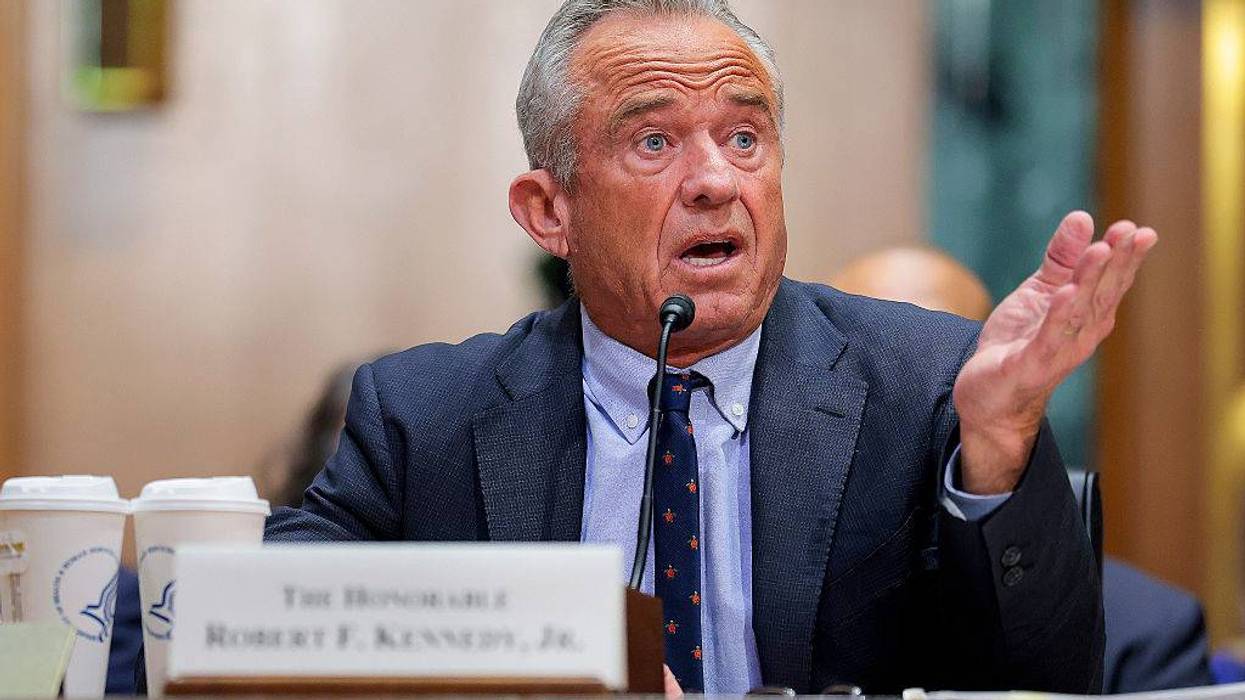
US Health and Human Services Secretary Robert F. Kennedy Jr. on Wednesday tried to defend President Donald Trump's mathematically absurd claims about prescription drug prices by saying the president has his own unique method of calculating percentages.
During a Senate Finance Committee hearing, Sen. Elizabeth Warren (D-Mass.) grilled Kennedy about the president's repeated false claims that he has slashed the prices of prescription drugs by as much as 600%, which would mean that pharmaceutical companies are paying consumers to take their medications.
"President Trump has his own way of calculating," Kennedy replied. "There's two ways of calculating percentages. If you have a $600 drug, and you reduce it to $10, that's a 600% reduction."
RFK Jr: "President Trump has a different way of calculating percentages. If you have a $600 drug and you reduce it to $10, that's a 600% reduction." pic.twitter.com/MjDNADqc8p
— Aaron Rupar (@atrupar) April 22, 2026
In fact, such a drop in price would represent a 98.3% reduction, less than one-sixth the size of the president's claims. A 600% reduction in the price of a $600 drug would mean that drug manufacturer paid consumers $3,000 every time they picked up their prescription.
Kit Yates, a mathematician at the University of Bath, marveled at Kennedy's attempts to create an alternate version of arithmetic.
"We've known for a while that the USA's current regime have been out for science, but I never thought they would try to mess with math!" Yates wrote in a social media post. "You can't just redefine how you calculate percentages."
In addition to exposing Kennedy's apparent ignorance of elementary mathematics, Warren shined a light on how the TrumpRx website misleads consumers into thinking they're being offered bargains on prescription drugs that are available elsewhere in generic varieties.
In once instance, Warren noted that TrumpRx is selling a brand-name heartburn medication for $200, whereas a generic version of the same drug is available at Costco for $16. Warren also highlighted a heart arrhythmia drug for sale on TrumpRx for $336, even though a generic version of the drug is available at Costco for $12.
Warren added that, in exchange for making select brand-name drugs available on the TrumpRx website, pharmaceutical companies have gotten exemptions from the president's 100% tariffs on imported patented medicines.
"Think about that: Big Pharma makes billions of dollars in tariff relief by listing their drugs on TrumpRx, and then they don't even lower the costs on many of these drugs," she said. "That is a great deal for Big Pharma."
Warren's analysis of TrumpRx's pricing scheme echoes a March report from the Center for American Progress (CAP), which found that the president's prescription drug website offered genuinely lower prices on “exactly one” of the 54 medications listed.
CAP also found that nearly one-third of the drugs available on the TrumpRx website have generic alternatives that were cheaper than what was being offered, and that the website made no mention of this.
Reuters reported in December that at least 350 branded medications are set for price hikes in 2026, including “vaccines against Covid, RSV, and shingles,” as well as the “blockbuster cancer treatment Ibrance.”
Later in the Senate Finance Committee hearing, Sen. Bernie Sanders (I-Vt.) ridiculed Kennedy for claiming that, under Trump's leadership, "the American people are now paying the lowest costs in the world rather than the highest for prescription drugs."
"That is an absurd statement," Sanders said. "Nobody in the world believes that."
"I'm the billionaire who wants to tax people like me more. I'm the billionaire who's willing to stand up to the monopolies and the people who are ripping off Californians."
In a California gubernatorial race characterized by a lack of clear progressive choices and the specter of an all-Republican general election under the state's so-called "jungle primary," a hedge fund billionaire who believes that plutocrats like himself should pay more taxes is gaining progressive support.
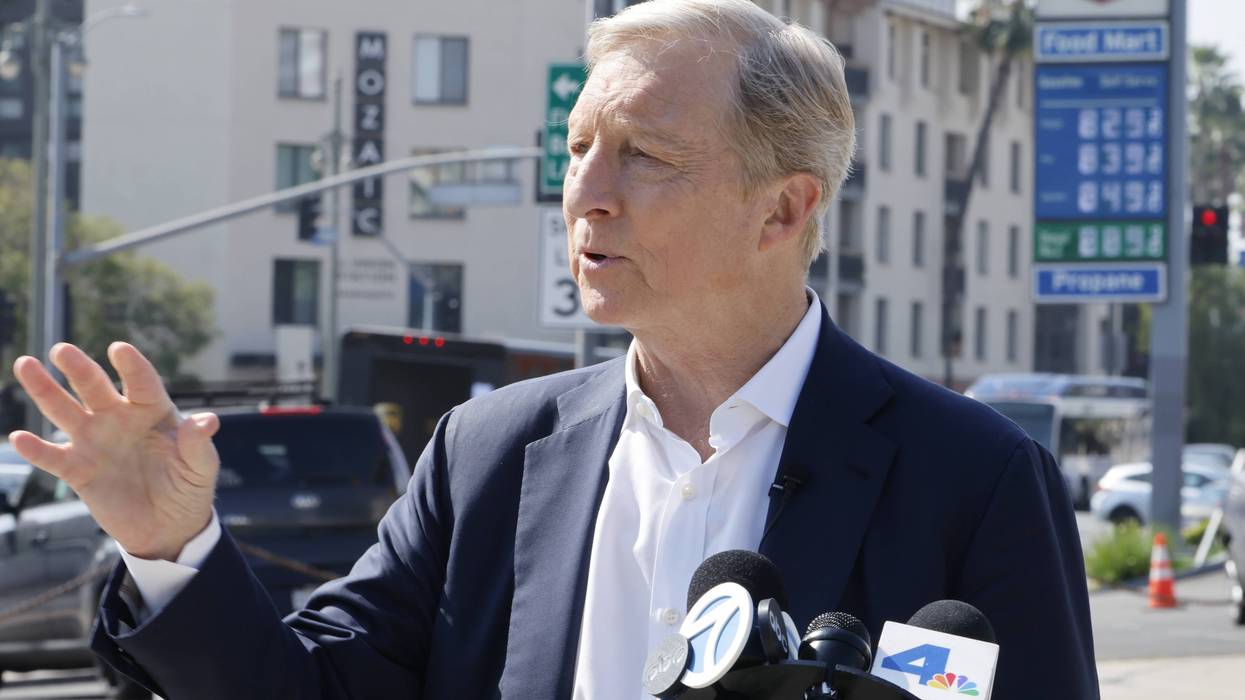
On Tuesday, Farallon Capital founder Tom Steyer was endorsed by Our Revolution, the progressive political action group launched as a continuation of Sen. Bernie Sanders (I-Vt.) kneecapped 2016 presidential campaign.
Our Rev said that Steyer "has stepped forward with a platform that is clearly aligned with the priorities of our movement—single-payer healthcare, taxing extreme wealth, bold climate action, and getting money out of politics."
Steyer was interviewed Tuesday by The Lever's David Sirota, who asked about Our Revolution's support for a plebiscite to "tax billionaires like yourself," and how he squares "being the progressive movement's choice in this race while being one of the people who there's a ballot initiative to tax more."
The California Billionaire Tax would impose a one-time 5% wealth tax on people worth $1 billion or more, to be paid in annual installments of 1% over five years. According to Forbes, Steyer is currently worth $2.4 billion.
"Well, David, I think people like me who are billionaires should pay more taxes," Steyer said.
"I'm the billionaire who wants to tax people like me more," Steyer added. "I'm the billionaire who's willing to stand up to the monopolies and the people who are ripping off Californians. I've done it for 15 years and I'll keep doing it."
That message has been echoed in one of Steyer's campaign ads, in which he asserts that "it's time for billionaires like me and big corporations to buy into the future of California and be willing to pay more."
Steyer continues:
A lot of people in California are acting as if we have a zero-sum game and they're defending their wealth and they're trying to make sure that they minimize their taxes. I am not scared about paying more money. Working Californians are being priced out of this state. It is not okay. We are creating more than enough money in this state for us all to succeed together without anybody suffering... [I] think that everybody who succeeded in this state owes a huge debt to the people who built this state and the working people who make this state run and work their asses off.
"We need to change our tax system," Steyer concludes in the ad. "We need more revenue. We need to be fair and I pledge to do all of those things. This is not rocket science."
In addition to his stance on taxation, Steyer has gained progressive support by funding climate initiatives, opposing the Trump administration's deadly anti-immigrant crackdown, and pouring more than $120 million into efforts to impeach President Donald Trump and in support of Proposition 50, the successful state ballot measure to redraw the state's congressional map in retaliation for Trump-backed Republican gerrymandering in Texas. He is also a prolific philanthropist.
On the flip side, the fact that Steyer is a hedge fund billionaire whose heavily self-funded campaign is the opposite of grassroots continues to fuel skepticism among progressives, many of whom view the mere existence of billionaires as an abject public policy failure. Steyer also came under fire over the revelation that his portfolio had been invested in private prison stocks decades ago.
Steyer said during his interview with Sirota that he doesn't agree with the assertion that billionaires are a public policy failure.
"I think that phrase obviously goes back to Karl Marx," he said. "And I believe if someone wants to come to California who has an idea to change the world and forms a company around it and it does really well and as a result they make a lot of money, that's fine with me."
With a dearth of progressives to choose from, more and more left-leaning groups and individuals are throwing their support behind Steyer. These include Courage California, Third Act, the California Teachers Association and other labor groups, and state lawmakers including Assemblymen Ash Kalra (D-25) and Alex Lee (D-24).
Some progressives are reluctantly backing Steyer due to the very real possibility of an all-Republican general election under California's open primary—in which the top two vote-getters advance, regardless of party. The "jungle primary" is set for June 2.
The latest weighted polling shows Trump-backed Fox News host Steve Hilton leading the race with 16% support, followed closely by Riverside County Sheriff Chad Bianco at 14%. Those Republicans are trailed by Steyer (13%) and other Democrats: former California Attorney General Xavier Becerra (13%), former Congresswoman Katie Porter (10%), and San Jose Mayor Matt Mahan—the top choice of numerous Big Tech billionaires—at 5%.
Erstwhile Democratic frontrunner and now former Congressman Eric Swalwell suspended his race for governor and quit Congress earlier this month amid mounting allegations of rape and other sex crimes that he has denied.