August, 08 2017, 11:30am EDT

ACLU and SPLC Sue to End Racketeering Scheme that Forced People Awaiting Trial to Pay Fees to Private Company for Freedom
Thousands of Dollars Extorted from Pretrial Detainees After Bail Was Paid
NEW ORLEANS
People awaiting trial before a Baton Rouge criminal court were coerced into paying hundreds of dollars to a company before they were released from jail -- even after they had paid their bail, according to a lawsuit filed last night by the Southern Poverty Law Center (SPLC), the American Civil Liberties Union (ACLU), andthe ACLU of Louisiana.
Even after they were released, people awaiting trial were threatened with re-arrest if they did not pay additional monthly fees to the company, Rehabilitation Home Incarceration, which supervises people awaiting trial. The lawsuit describes how the company and its owner have arranged for at least three years with East Baton Rouge Parish officials to detain people awaiting trial and coerce the payments from them. The company; its owner, Cleve Dunn Sr.; and the parish are named in the lawsuit.
"This is predatory and illegal. Rehabilitation Home Incarceration puts its own price on people's liberty and forces them to pay up, over and over again," said Brandon Buskey, senior staff attorney with the ACLU's Criminal Law Reform Project. "Worse, this could not happen without the court and the jail enabling this scam, and ignoring the rights of those charged and presumed innocent."
In 2015 and 2016, more than 300 people were assigned to Rehabilitation Home Incarceration for pretrial supervision by 19th Judicial District Judge Trudy A. White. White often made these orders for indefinite periods of time without determining whether people were a flight risk or posed any danger to the public. She did not assess their ability to pay the company's signup fee of $525 and its subsequent monthly fees and other charges.
One plaintiff in the lawsuit, Kaiasha White (no relation to the judge), was forced to stay in jail for a month as she and her family struggled to pay both her bond and the Rehabilitation Home Incarceration signup fee. The jail would not release her without notice from the company that its fee had been paid.
"This practice needs to stop," said White. "When you have to go to court, you shouldn't have to worry about being held for ransom because a business wants to profit off of you."
Henry Ayo, another plaintiff, was in jail for two months because he and his wife couldn't afford to pay his bond and the signup fee. After paying and being released, Ayo was informed by a company representative that he had to pay $225 a month while awaiting trial, or he could be arrested and jailed again. Ayo and his wife paid the company approximately $1,000. He didn't receive supervision services beyond being required to make phone calls that often went unanswered.
"This is a disturbing example of our justice system being twisted beyond recognition by a scheme to make money," said Sam Brooke, SPLC deputy legal director. "People who had already paid their bail were held ransom and extorted out of hundreds and thousands of dollars. They simply wanted their freedom while they awaited their day in court. That desire was exploited by Rehabilitation Home Incarceration."
The lawsuit accuses Rehabilitation Home Incarceration's executive director, Cleve Dunn Sr., of operating an illegal racketeering enterprise under Louisiana and federal law through his company. It also accuses the company and the East Baton Rouge Parish of violating the Fourth and 14th Amendment rights of individuals subjected to this scheme and raises additional state law claims of unjust enrichment and conversion, as well as a violation of the Louisiana Unfair Trade Practices Act.
Judge White and others associated with Rehabilitation Home Incarceration are political allies. For example, Cleve Dunn Sr. was paid for marketing services for the judge's 2014 re-election campaign. Also, his son, Cleve Dunn Jr., served as chairman of White's re-election campaign committee.
"The people of Baton Rouge should not be forced to support private companies in order to secure their release from jail," said Marjorie R. Esman, executive director of the ACLU of Louisiana. "Those awaiting their day in court are entitled to be treated equally regardless of the size of their bank accounts. Instead, people have been jailed and extorted after their release simply because they couldn't pay a private business and its owners. That is not how our system of justice is supposed to work."
The lawsuit seeks to recover damages for the senior Dunn's practice of using his company to extort fees from arrestees under the threat of arrest, jail and bond revocation and for East Baton Rouge Parish's and Rehabilitation Home Incarceration's practice of detaining arrestees until they paid the company's initial fees. It also seeks to recover damages for those who paid fees to the company.
Ayo v. Dunn et al. is part of the ACLU's litigation and legislative effort to defend and advance the rights of those who have been arrested and are awaiting trial. This work also includes ending cash bail and improving public defender systems.
It is also part of the SPLC's economic justice efforts to ensure that people are not punished or exploited because of their economic status.
For the complaint and more information about Ayo v. Dunn et al.:
The American Civil Liberties Union was founded in 1920 and is our nation's guardian of liberty. The ACLU works in the courts, legislatures and communities to defend and preserve the individual rights and liberties guaranteed to all people in this country by the Constitution and laws of the United States.
(212) 549-2666LATEST NEWS
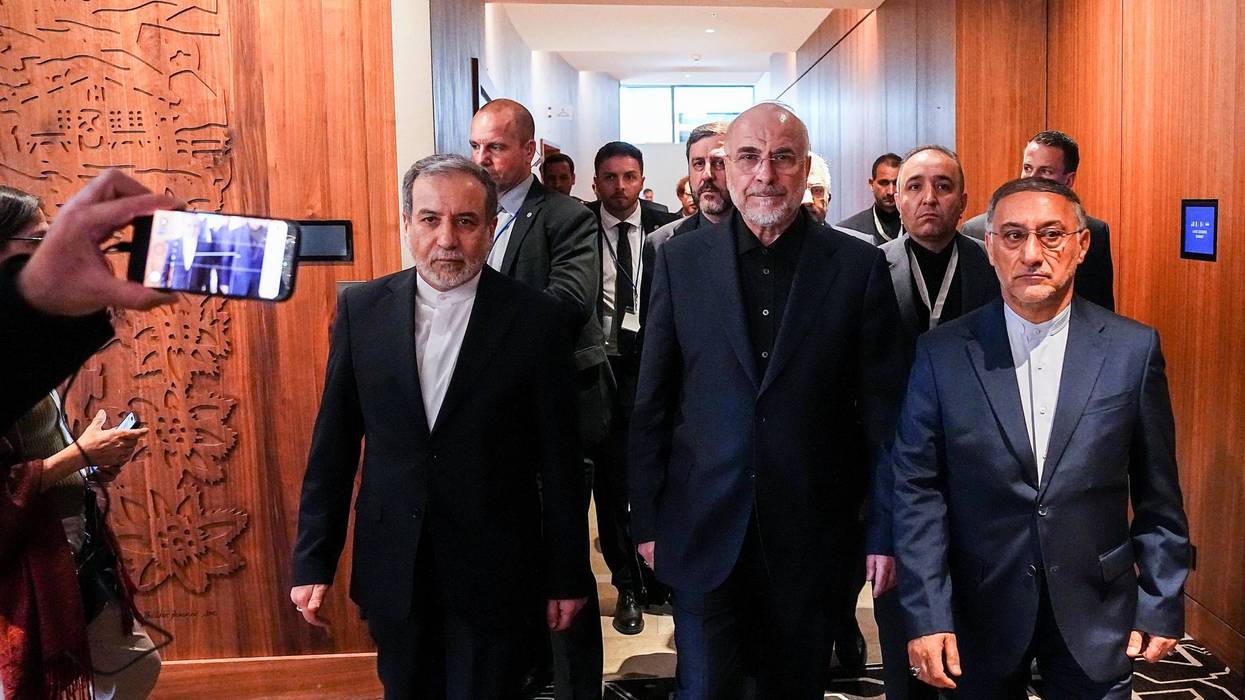
Despite Trump Threats, Iranian Foreign Minister Declares 'Major Progress' in Peace Talks
Abbas Araghchi, Iran's top diplomat, specifically welcomed the announcement of a "deconfliction cell" aimed at "ensuring the termination of military operations in Lebanon."
Jun 22, 2026
Iran's top diplomat said late Sunday that peace negotiations in Switzerland have produced "major progress" despite US President Donald Trump's belligerent military threats and Israel's continued assault on Lebanon, both of which have risked derailing the high-stakes talks.
Abbas Araghchi, Iran's foreign minister, credited "tireless Pakistani and Qatari mediation" with securing commitments to establish a "deconfliction cell" to ensure "the termination of military operations in Lebanon," as required under the recently signed memorandum of understanding (MOU).
Araghchi added that negotiators agreed to an end to the US blockade on Iran, the release of some of Iran's frozen assets, and a "major reconstruction and development plan" for Iran, whose delegation reportedly left the Swiss negotiating venue on Sunday in response to Trump's threat to assassinate Iranian diplomats and "take over" the Middle East country. The threats violated the terms of the MOU, which requires parties to "refrain from the threat or use of force against each other."
In a joint statement late Sunday, the governments of Pakistan and Qatar said that negotiators agreed on "a roadmap towards reaching a final deal within 60 days, laying the foundation for the immediate commencement of further technical talks.
"In addition, a communication line between the parties has been formed... to avoid incidents and miscommunication with the aim of safe passage for commercial vessels through the Strait of Hormuz," the statement continued. "The mediating parties will continue to do their utmost to ensure that the negotiations continue to be conducted in a constructive atmosphere with the aim of reaching a final deal."
🔊PR No: 1️⃣5️⃣1️⃣/2️⃣0️⃣2️⃣6️⃣
Joint Statement by the State of Qatar and the Islamic Republic of Pakistan Regarding the Conclusion of Lake Lucerne Summit, First High-Level Committee Meeting with Participation of the United States of America and the Islamic Republic of Iran pic.twitter.com/2G3PAf7LVY
— Ministry of Foreign Affairs - Pakistan (@ForeignOfficePk) June 22, 2026
The optimistic comments from Iran's foreign minister and mediators came after the first round of formal talks in Switzerland got off to a shaky start, with Iran's delegation postponing its arrival due to a deadly barrage of Israeli airstrikes in southern Lebanon late last week.
Israel's leadership, which is not a party to the peace negotiations, has refused to end its occupation of Lebanon, a major obstacle in the way of a final deal to end the war on Iran that the US and Israel launched in late February. Iran has said the Trump administration must force the Israeli government to end its assault on Lebanon.
In a social media post on Sunday amid the negotiations in Switzerland, Israeli Defense Minister Israel Katz declared that "Israel has no intention of withdrawing from the Beaufort, which is an integral part of the security zone in Lebanon and essential for the defense of the Galilee settlements and IDF forces."
"As Prime Minister [Benjamin] Netanyahu and I have clarified—Israel will not withdraw from the security zone in Lebanon," Katz added.
Keep ReadingShow Less
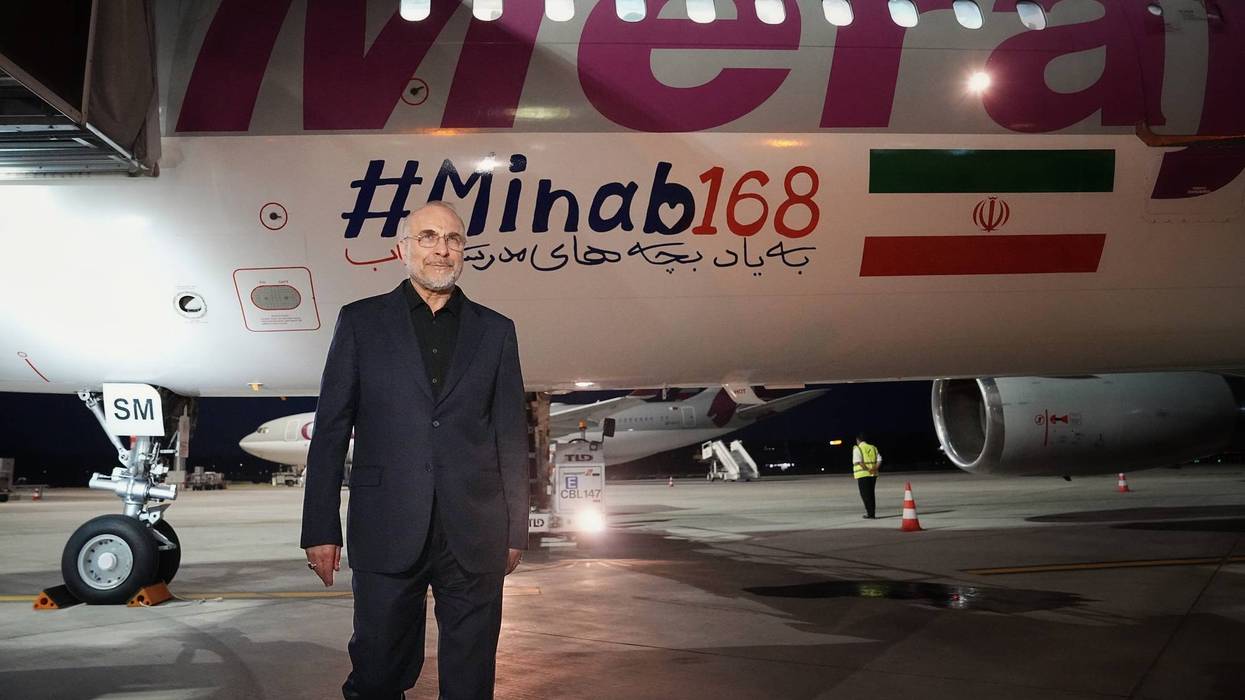
Insulted by Trump's Threats, Iranian Negotiators Walk Out of Peace Talks
"Don’t they think that if their threats had worked, they wouldn’t have ended up in today’s desperate situation?" said Iran's chief negotiator.
Jun 21, 2026
US President Donald Trump’s threats to destroy Iran and send US forces to occupy the country on Sunday appear to have derailed peace negotiations in Switzerland, with the Iranian delegation reportedly walking out and demanding an apology.
Following Iran’s announcement that it was closing the Strait of Hormuz again after Israel intensified its assault on Lebanon, Trump went on a tirade Sunday in which he threatened to assassinate negotiators and said Iran “won’t have a country” if access to the critical waterway was shut off, while also threatening to “take over” Iran with a full US invasion.
But after Trump’s threats—which broke the first clause of the memorandum of understanding—Iran’s negotiators filed a complaint with the Pakistani and Qatari mediators and stormed out of the mountain resort where talks were being held, according to several outlets.
While Trump clearly sought to project strength, Iran’s chief negotiator, Mohammad Bagher Ghalibaf, said his team “do not take American threats seriously.”
In previous months, as Trump sought to squeeze concessions from the Iranians, he issued escalatory threats to wipe out their “whole civilization” and “blow up” the whole country. However, he did not act on those threats, even as Iran refused to budge from its negotiating posture.
"Don’t they think that if their threats had worked, they wouldn’t have ended up in today’s desperate situation?" Ghalibaf said.
Ghalibaf said the US had “better be more careful with their statements,” adding that “our armed forces are ready to respond in a different way." He said, “No matter what they say, we are the ones who act.
While the Iranian delegation left the venue, talks are reportedly continuing via mediators. However, according to the Lebanese outlet Al Mayadeen, the delegation said it will not return until Trump apologizes for his threats and Israel fully withdraws from Lebanon.
According to senior Israeli officials cited by Channel 12, Israel is reportedly considering “limited withdrawals” from Lebanon, including in areas within its so-called “buffer zone.” Despite Iranian claims, the officials said the US has not requested Israel’s withdrawal from the country.
Previous peace talks have been derailed by Trump’s threats to commit indiscriminate war crimes in Iran. But this past week has seen perhaps the most violent swing yet in his approach toward Iran.
Where earlier this week, Trump acknowledged Iran's right to enrich uranium and maintain a nuclear energy program like that of other nations, his outburst Sunday appeared to have been prompted by a statement by Iranian President Masoud Pezeshkian, who said the US would be "forced to accept" its right to enrichment.
And while Trump has raged against Israel’s actions in Lebanon while privately claiming that Prime Minister Benjamin Netanyahu is trying to sabotage peace, he has not taken concrete action to force Israel to comply with the memorandum’s terms.
"The mixed messages coming out of the White House," remarked Jeet Heer, a writer at The Nation, "are going to make it much harder to end the war, and could in fact spark further conflict."
Keep ReadingShow Less
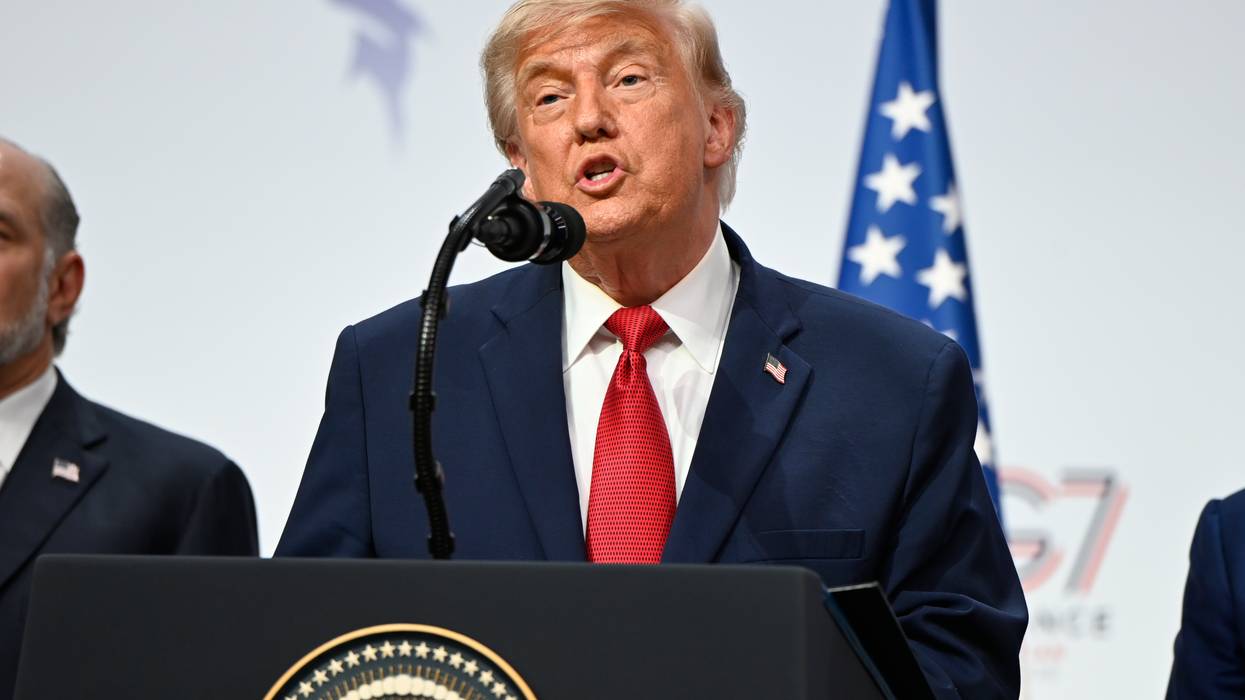
'You Won't Have a Country': Trump Threatens Full Ground Invasion and Destruction of Iran Amid Hormuz Closure
One expert said Israel's continued assault on Lebanon, which led Iran to announce its closure of the strait, posed an "existential threat" to the ceasefire.
Jun 21, 2026
Rather than force Israel to halt its occupation in Lebanon in accordance with the memorandum of understanding, President Donald Trump on Sunday responded to Iran's announcement that it was closing the Strait of Hormuz with a new litany of psychotic threats—claiming that if the waterway were closed, he would blow up the country, launch a full ground invasion to take it over, and assassinate Iranian negotiators.
According to Fox News correspondent Trey Yingst, Trump told the Iranian negotiators overnight that if they close the strait, which Iran claimed to have shuttered once again on Saturday, “you won’t have a country,” adding that they “won’t even make it back to their f***ing country,” in what appeared to be a threat to assassinate the negotiators, as happened during the initial phase of the war.
Responding to statements by Iranian President Masoud Pezeshkian, who said Iran would not give up its “right to enrich uranium” and that the US “will be forced to accept it,” Trump reportedly said Pezeshkian had better “watch his mouth” and “shape up,” or the US “will take over the rest of the country.”
It’s yet another sharp reversal from Trump, who—after months of claiming Iran must agree to “zero enrichment”—suddenly acknowledged this week that it was “common sense” for the nation to be allowed to have a nuclear energy program as other countries do.
Trump’s renewed threats against Iran, which mirror his genocidal threats earlier in the war to wipe out Iran’s “whole civilization” and “blow up” the entire country, also appear to violate the first clause of the memorandum of understanding, which calls on signatories to “refrain from the threat or use of force against each other.”
The threat to fully occupy Iran, which Trump made publicly for the first time on Sunday, stands in sharp contrast to his comments that continuing the war for much longer would cause “economic catastrophe” and that even limited ground operations, such as one he had proposed to seize Iran’s uranium, would be too big an effort to be worth it.
The war with Iran is already deeply unpopular among the American public, even without US boots on the ground. Polls have shown that even a majority of Republicans would be opposed to Trump escalating the war by deploying ground troops, and military officials have shelved planned operations to occupy certain strategic locations, including Kharg Island, fearing a large number of American casualties.
Nevertheless, Trump also told Yingst that the US could become the “guardian angel” of the Strait of Hormuz, collecting tolls and taking oil from countries using the waterway for exports. He did not make clear how the US would gain control of the strait under such a scenario.
Iran announced that it would close the strait again on Saturday after Israel deepened its occupation and escalated its bombing of southern Lebanon, despite the MOU’s ceasefire agreement covering all fronts.
Iranian negotiators have described an end to Israel’s Lebanon occupation, which has killed more than 4,000 people and forced more than 1.2 million Lebanese civilians from their homes in the south, as a red line for negotiating peace.
Behind the scenes, Trump has acknowledged that Israeli Prime Minister Benjamin Netanyahu is using Lebanon to sabotage the ceasefire and drag the US back into a full-scale war.
In the phone call with Yingst, Trump once again said he was “disappointed Israel can’t put Hezbollah away,” adding that Israel “can’t do anything without knocking buildings down.” He also said he was close to allowing Syrian President Ahmed al-Sharaa—the former leader of al-Qaeda’s Syrian affiliate—to take over the operation against Hezbollah.
While this is yet another instance of Trump using harsher rhetoric toward Israel—which Vice President JD Vance has also done in recent days—there is no indication yet that he is willing to take the next step of forcing Netanyahu to accept the ceasefire agreement by imposing material consequences, such as suspending military aid.
Even as Israel’s attacks continued unabated and threatened to derail the deal entirely, Vance did not indicate that he thought the US needed to exert more pressure.
“I think Trump and the US have done more to stop the conflict in Lebanon than any government anywhere in the world,” he said at a press conference in Switzerland on Sunday.
Trita Parsi, executive vice president at the Quincy Institute for Responsible Statecraft, described Israel’s continued escalations as “an existential threat” to the peace process between the US and Iran.
He told ABC News on Saturday that Iran’s threat to close the strait just before a meeting in Geneva this weekend was meant to be “part of a background of how serious they are” about ensuring that the US understands the stakes if Israel refuses to withdraw.
“Israel would prefer for this war to continue until you have a complete defeat of the Iranians, which, of course, is not in the cards,” Parsi said. “The Israelis sold this war to Trump as a quick, easy fix to the region’s problems that would take no more than four days, and they were dead wrong.”
“Now, Trump is recognizing that US interests necessitate that he pull out of this war and strikes this deal, but the Israelis are trying to sabotage it because they are afraid they’re going to be left out, that the balance in the region is going to shift against their interests,” he added. “They’re willing to essentially jeopardize their relationship with the United States over this.”
Keep ReadingShow Less
Most Popular