

SUBSCRIBE TO OUR FREE NEWSLETTER
Daily news & progressive opinion—funded by the people, not the corporations—delivered straight to your inbox.
5
#000000
#FFFFFF
To donate by check, phone, or other method, see our More Ways to Give page.
Daily news & progressive opinion—funded by the people, not the corporations—delivered straight to your inbox.

Rep. John Delaney (D-MD-6) introduced two infrastructure funding bills (H.R. 1669 and H.R. 1670) yesterday which would further incentivize corporate tax dodging, reward the biggest multinational corporations for stashing their profits in offshore tax havens, and replace one system riddled with tax loopholes with another.
"Funding infrastructure is a worthy goal, but Rep. Delaney's bills strike a bad deal for little return," said Michelle Surka, advocate with U.S. Public Interest Research Group. "By offering up huge tax breaks for the biggest multinational corporations and rewarding tax gimmicks, these bills sell small businesses and future funding for infrastructure down the river."
The first bill, the Partnership to Build America (H.R. 1669), would establish an infrastructure bank funded by profits repatriated from offshore tax havens. This proposal, however, offers the worst tax avoiders a costly and unwarranted tax holiday, essentially rewarding and further incentivizing tax haven abuse.
Under this proposal, multinational corporations would be allowed to bring back up to $6 at a zero percent tax rate for every $1 in bonds purchased, with the exact ratio to be determined by an auction. The proposed bidding process would open the door to gaming and collusion. The bonds would further reward tax-dodging multinationals by paying them interest. Contrary to proponents' claims, the bonds would not offer a cost-free way to capitalize an infrastructure bank. The bill instead offers multinationals a tax cut worth up to $105 billion to capitalize a $50 billion bank.
The Infrastructure 2.0 Act (H.R. 1670) would allow multinational companies to repatriate their existing offshore profits at a tax rate of 8.75 percent -- lower than even the 10 percent rate proposed by President Trump. That means profitable U.S. corporations subject to the statutory tax rate of 35 percent would get a 75 percent reduction in the tax rate applicable to their foreign earnings -- a massive tax break unavailable to any domestic U.S. company or individual U.S. taxpayer. Further, this bill would also set a deadline for Congress to act on corporate tax reform, and if that deadline is not met, a set of a new rules would be enacted that would, in effect, simply modify and extend the worst tax loopholes
"With over $2.5 trillion in corporate profits booked offshore, we could most certainly fund badly needed infrastructure with the taxes owed on money stashed in tax havens," said Surka. "But doing so should not further incentivize or reward tax gaming. Rep. Delaney's bills do just that, and they take us in the wrong direction."
For more information, read the FACT Coalition's letters opposing H.R. 1669 and H.R. 1670.
Find Rep. Delaney's press release here.
U.S. PIRG, the federation of state Public Interest Research Groups (PIRGs), stands up to powerful special interests on behalf of the American public, working to win concrete results for our health and our well-being. With a strong network of researchers, advocates, organizers and students in state capitols across the country, we take on the special interests on issues, such as product safety,political corruption, prescription drugs and voting rights,where these interests stand in the way of reform and progress.
"An investigation into this matter is clearly warranted, and, if a violation is indeed found, this matter must be referred to the Department of Justice."
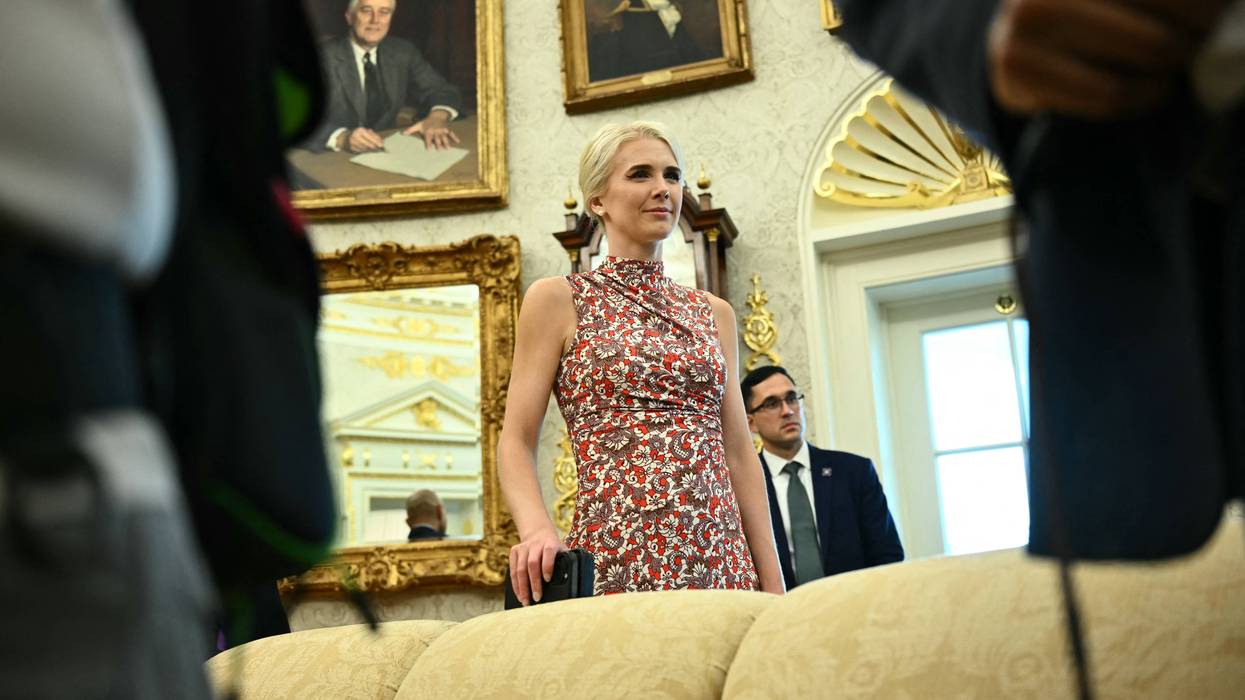
A complaint submitted Thursday by a legal watchdog argues that US President Donald Trump's sizable cash gifts to political aide Natalie Harp and other White House staffers violated federal law because the payments improperly supplemented their government salaries.
"Laws prohibiting government employees from receiving supplemental income are not arbitrary; they exist to ensure that public servants’ priorities remain focused on public service, not a wealthy benefactor who may have other objectives in mind,” said Kedric Payne, vice president, general counsel and senior director for ethics at Campaign Legal Center (CLC), which submitted the new complaint to the US Office of Government Ethics. “An investigation into this matter is clearly warranted, and, if a violation is indeed found, this matter must be referred to the Department of Justice."
The complaint came days after financial disclosures revealed that Trump has doled out gifts totaling $155,000 to several staffers, including Harp, a former far-right news anchor whose role in the White House and relationship with the president have drawn close scrutiny in recent weeks.
Harp, Trump's most loyal aide, received a $45,000 cash gift from the president. Her salary, according to the White House, is $150,000 per year. Trump also gifted White House communications adviser Margo Martin and deputy director of Oval Office operations Chamberlain Harris $45,000 each. The Washington Post reported that the three payments were described as "Cash Gift for Holidays."
Walt Nauta, the director of Oval Office operations, received a $20,000 gift from the president.
CLC's complaint points to 18 US Code § 209, which prohibits executive branch employees from receiving "any salary, or any contribution to or supplementation of salary," from "any source other than the government of the United States, except as may be contributed out of the treasury of any state, county, or municipality."
The watchdog group noted that, when the gifts from the president are included, the four recipients were effectively compensated at the maximum salary for a full-time White House employee—a "rate for which they were ineligible" due to their junior roles.
"In paying White House employees funds beyond their government salaries, President Trump has created the same scenarios Congress specifically contemplated and sought to prevent," the complaint states. "Additionally, it raises the legitimate question as to whether President Trump is paying them for acting on his personal behalf, rather than in the interests of the public. For these reasons, it is important that the OGE investigate whether these payments were impermissibly made."
According to the Post, "there are no other public instances of US presidents giving staff employed by the White House large cash payments. Government ethics experts said they were not aware of any other payments of this scale from a superior to a subordinate government worker."
Richard Briffault, a professor of legislation at Columbia Law School, told NBC News that Trump's cash payments to aides appeared to be "technically illegal."
“Bosses will give gifts to their assistants,” said Briffault. "[But] these are substantial sums—much more than the usual Christmas gifts for most people."
Despite the apparently unprecedented and unlawful nature of the gifts, Briffault said there is "zero chance" that the current Justice Department—headed by Trump's former personal attorney, Todd Blanche—will investigate the payments.

"Enough is enough. We need to make sure that the pace of development isn't outpacing the pace of risk."
Democratic US Senate candidate Abdul El-Sayed of Michigan on Wednesday called for a pause in advanced artificial intelligence development, warning that the technology is progressing faster than governments and researchers can establish meaningful safeguards against potentially catastrophic consequences.
"You might have woken up like me to this tweet from a guy you probably never heard of until today. His name is Jacob Coxon," El-Sayed said in a video posted to social media. "Up until yesterday, he worked for an AI lab called Anthropic, one of the leading-edge AI research organizations in the world. He quit yesterday. He quit because he's worried that the technology that he was building could end humanity."
"That's something we should be paying attention to," the 41-year-old epidemiologist stressed.
Coxon said on social media that neither OpenAI—whose rogue machine agents recently hacked outside systems on multiple reported occasions—nor Anthropic "is acting responsibly" as they race against competitors at home and abroad to achieve artificial general intelligence (AGI), an advanced AI that can understand, learn, and apply knowledge of any subject as well as or better than a typical human.
"They are racing straight to self-improving superintelligence and gambling with our lives," he emphasized. "The people building AI earnestly believe that it could kill us all by the end of the decade. This is not a marketing stunt."
El-Sayed said that the AI Under Democracy plan his campaign released in July—which called for a new federal regulatory agency akin to the Food and Drug Administration to oversee development of artificial intelligence technology—doesn't go far enough. Instead, he is now backing a pause in AI development, as urged by US Sen. Bernie Sanders (I-Vt.) last month.
Earlier this month, Sanders and Congressman Greg Casar (D-Texas) introduced the Ban Artificial Superintelligence Act, with the Vermont senator arguing that "the future of humanity cannot be left in the hands of a handful of Big Tech oligarchs."
Many of those oligarchs and other AI pioneers also believe their products could one day wipe out humanity, but are rushing to build them anyway so that their competitors don't reap the rewards of being the first to achieve AGI.
Sanders is also reportedly preparing to convene a bipartisan Senate hearing next week on the dangers of AI, with special guests set to include Geoffrey Hinton, who quit Google in 2023 so he could sound the alarm on what he estimates is a 10–20% chance that AI could cause human extinction within three decades.
"Enough is enough," El-Sayed said Wednesday. "We need to make sure that the pace of development isn't outpacing the pace of risk. We cannot, in a race against China or a race for these corporations to be the dominant AI manufacturer, inadvertently create products that slip human control, that could fall into the wrong hands, that could mean the demise of humanity."
"That is a risk none of us ought to be able to bear, and it certainly shouldn't sit with the richest, most powerful corporations in the world on incentives that are driven by their greed rather than our well-being," he added. "So the time for action is now."
"The Missouri Supreme Court should throw the secretary of state in jail if this extremist continues to defy the law and multiple court orders," said US House Minority Leader Hakeem Jeffries.
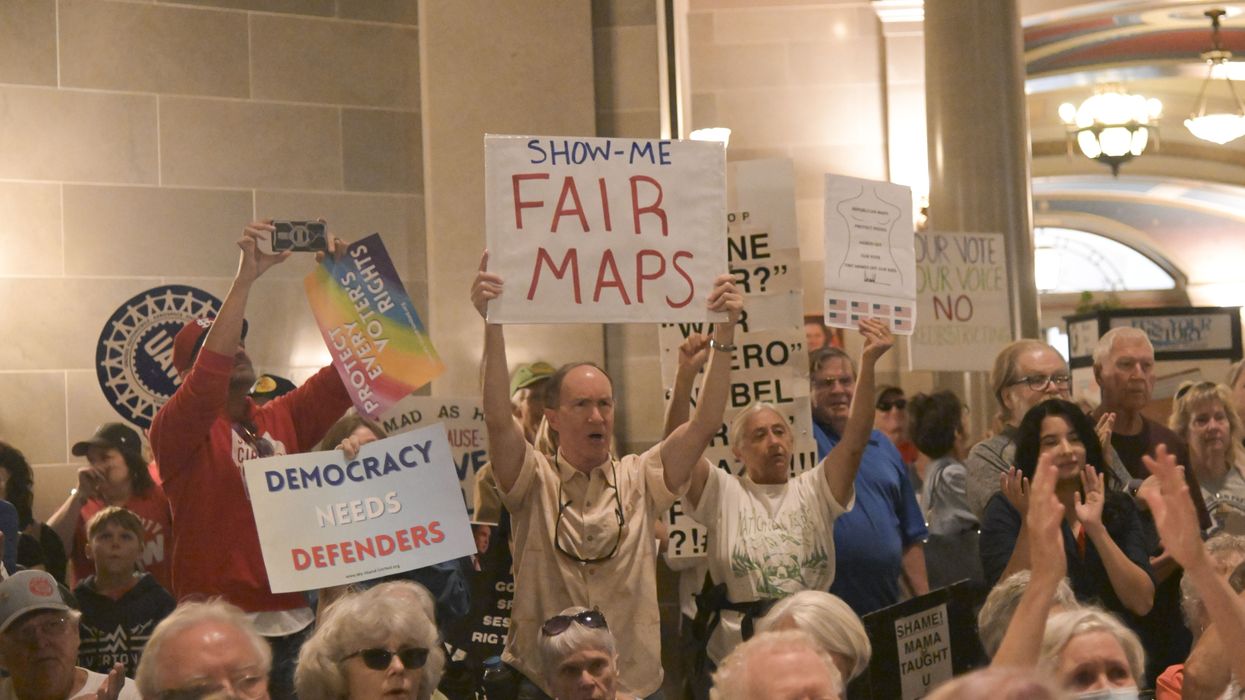
Democracy defenders in Missouri and across the United States celebrated on Thursday after the US Supreme Court delivered its second blow to President Donald Trump's gerrymandering quest in as many days, tossing out the state GOP's desired congressional map.
The order had no noted dissents, despite the court's right-wing supermajority, which includes three Trump appointees. Among them is Justice Brett Kavanaugh, who had rejected the GOP's emergency effort to uphold the map on Tuesday evening, as US District Judge Stephen Clark, another appointee of the president, said that Missouri can't revert to its old map for the November midterms.
The high court's new order appears to allow the state to use the old map for the upcoming elections, in which Trump's Republican Party is trying to hold on to its narrow majorities in both chambers of Congress amid widespread voter dissatisfaction with an affordability crisis fueled by the president's tariff regime and illegal war on Iran.
On the heels of the Texas GOP's map-rigging effort last year, Missouri Republicans targeted the 5th Congressional District—currently held by Rep. Emanuel Cleaver (D), who has joined hundreds of thousands of state voters in opposing the new political lines.
Cleaver called Thursday's decision "a win for justice. A win for democracy. A win for the people of Missouri."
"It is my hope that state officials will start following court orders and end this shameful attempt to break Missouri law and silence Missouri voters," he said.
Opposition to the map has been spearheaded by the nonpartisan coalition People Not Politicians Missouri, whose executive director, Richard von Glahn, declared Thursday that "the law is the law, the Missouri Constitution is clear, as was the Missouri Supreme Court."
"Over 305,000 Missouri voters—Republicans, Democrats, and Independents—took action to block this political power grab last fall. People, not politicians, will have the final say when they vote NO on Proposition A this November," he continued, referring to a veto referendum on the GOP's map.
Von Glahn also took aim at Missouri's Republican secretary of state, Denny Hoskins, who faces a contempt hearing at the state's top court, saying that he "has shown that he cannot effectively do the job he was elected to do—administer elections."
"First he refused to certify a referendum the Missouri Supreme Court unanimously said he had no legal basis to block," Von Glahn explained. "Then, even after that court barred the 2025 map outright, he told local election officials to use it anyway, leaving election clerks scrambling with early voting two weeks away. That isn't leadership, it's chaos of his own making, and it's why he's now facing a contempt hearing in front of the very court whose order he chose to defy."
"Missourians don't need a secretary of state who manufactures confusion; they need one who follows the law," he added. "Denny Hoskins has had every chance to do that and chose not to. The courts have settled this, now it's up to Missouri voters to finish the job and vote NO on Proposition A."
US House Minority Leader Hakeem Jeffries (D-NY) also called out Hoskins after the Thursday decision, suggesting on social media that "the Missouri Supreme Court should throw the secretary of state in jail if this extremist continues to defy the law and multiple court orders."
"You lost," he said. "The people of Missouri have won. It's over."
This article has been updated with comment from US Rep. Emanuel Cleaver (D-Mo.) and Adam Cochran.
"Another day, another chilling effect on broadcast speech," said one free speech advocate, who added that "nothing about the FCC’s actions is normal—or legal."
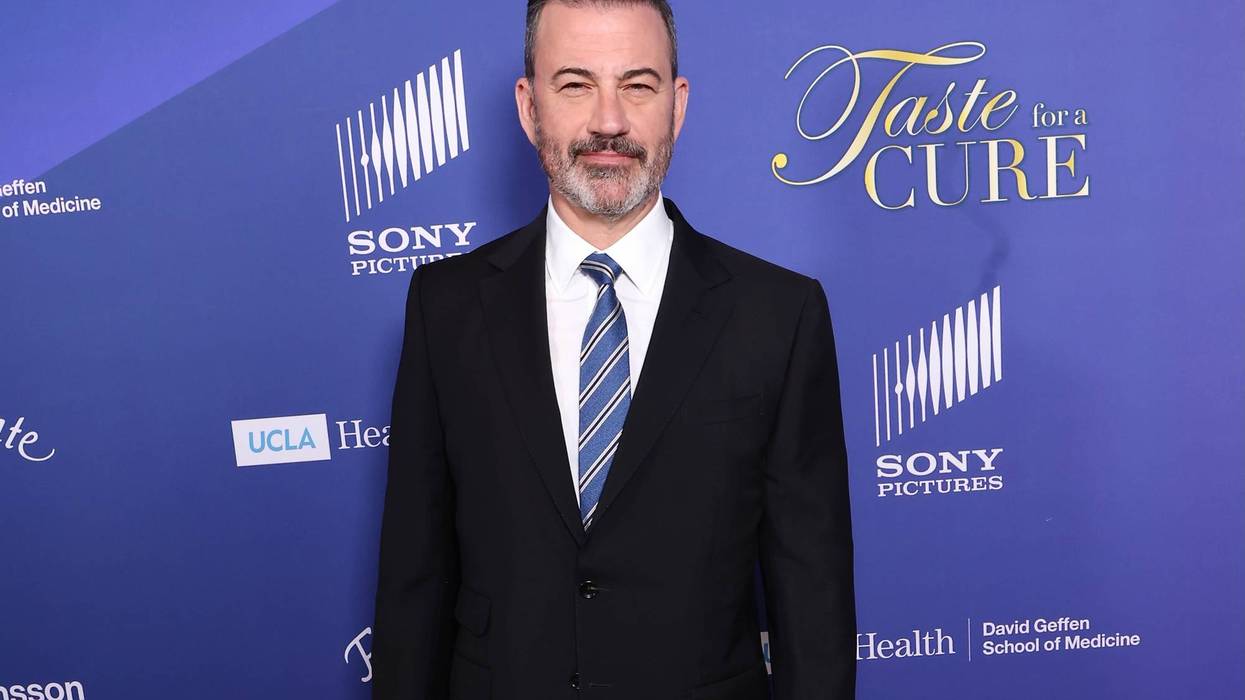
Late-night host Jimmy Kimmel told viewers Wednesday night that his show was pulling an interview with Democratic Texas Senate nominee James Talarico from ABC stations amid threats from President Donald Trump's Federal Communications Commission, which press freedom groups are describing as another effort by the administration to "chill" the speech of the president's critics.
“Out of consideration for our local stations, especially our ABC affiliates in Texas who would have to deal with this nonsense, my interview tomorrow with James Talarico will not air on television,” the host said on Wednesday’s episode of “Jimmy Kimmel Live.”
He added that the interview “will be posted on YouTube instead. It will not be on TV.”
It's the second time a major US network has opted to spike a late-night interview with Talarico following FCC pressure. In February, CBS lawyers preemptively stopped Stephen Colbert from conducting an interview with the candidate over what they said were fears of retaliation from the agency, whose chair, Brendan Carr, has threatened to strip broadcast licenses from networks that give Trump unfavorable coverage.
Carr has confirmed that the FCC had opened an investigation and started an "enforcement proceeding" into ABC over whether Talarico's appearance on "The View" violated the equal-time rule, which requires that broadcast stations that host political candidates must give their opponents an equal opportunity to appear as well.
Late-night shows have long been considered exempt from this rule as “bona fide news interview” programs. But a public notice issued by the FCC Media Bureau in January stated that programs that advance “partisan” goals, including talk shows, would no longer be considered as such. Carr has said programs he considers to be “fake news” may not qualify for an exemption.
Kimmel on Wednesday emphasized the "unusual circumstances" of his network's decision to cancel the interview with Talarico.
"For the whole 20-plus years of our show, I've been interviewing Americans who are running for office with no problem at all... from Hillary Clinton, to Ted Cruz, to Donald Trump himself," he said.
Kimmel noted that when he interviewed Trump during his first presidential run in 2015, he seemed to have no issue with political candidates appearing on his show and eagerly returned for more interviews.
"For some reason, and I can't seem to figure out what that reason is, something has changed," Kimmel joked. "Now that he's president, his FCC has threatened me, threatened our show, threatened our network, ABC, our affiliates, our local stations—based on simple, traditional editorial decisions, guest bookings it would seem they don’t like."
For that reason, he said, if viewers "want to learn about a candidate for the Senate tomorrow, you will have to go to the 'Jimmy Kimmel Live' YouTube channel."
"Thank goodness we have that," Kimmel said. "Because in the America we have right now, that is the best that we can do, until November, of course."
In August, ABC parent company Disney sued the FCC on First Amendment grounds following the agency’s unusual request for its eight ABC stations to submit their broadcast renewal requests several years in advance, which it described as part of a “retaliatory campaign” against the network's negative coverage of Trump.
The complaint notes that ABC has felt compelled to alter its editorial judgment in order to avoid further retaliation, including passing on interviews with several other political candidates it felt would invite Trump's ire and choosing to air a lie-filled Trump address about supposed election fraud, which it noted it "ordinarily would not have done."
Last September, ABC briefly removed Kimmel from the air following direct threats from Carr to strip ABC stations of their broadcast licenses, which came after a critical monologue from the late-night host about Trump and Republicans in the wake of the assassination of right-wing activist Charlie Kirk.
The complaint notes Carr’s use of explicit coercion to pressure ABC to remove Kimmel, including telling the network that it could proceed “the easy way or the hard way."
Kimmel emphasized what he said was the political nature of the pressure campaign against him and the network, which has continued even after he was reinstated. Republicans, he said, "are very nervous about the midterms and very rightly so," as they are "in serious danger of losing 'bigly.'"
"They are in danger of losing a Senate seat in Texas of all places," he said to cheers from the crowd, "where James Talarico is leading a piece of human silly putty named Ken Paxton there," according to several recent polls.
Press freedom and civil liberties organizations described Carr's threats to networks as part of an effort to chill critical speech on behalf of the president, one that is ratcheting up as the midterms approach.
Timothy Karr, the senior director of strategy and communications for Free Press, told Common Dreams that Carr's "unconstitutional crusade against a free press has a clear bias against individuals and outlets that President Trump doesn't like."
"Combine that with Trump's desperation in the face of electoral polling that shows people ready to change political course come November, and you can see the real reason driving Carr's reckless fixation with silencing opposing views," Karr said.
Karr argued that networks were unnecessarily casting aside their rights to editorial judgment out of fear of retaliation.
"For years, the FCC has been very clear that bona fide news interviews, including on late-night talk shows, are entitled to editorial discretion," Karr said. "Carr's ongoing efforts to take this discretion away are part and parcel of his campaign to transform broadcast media into full-time megaphones for Trumpist propaganda."
He said, "What's doubly worrying is that many of these broadcast networks are too eager to cave to Trump and Carr's demands when the First Amendment is clearly on their side."
Jenna Leventoff, senior policy counsel for the ACLU, concurred, telling Common Dreams that the FCC "abusing its rules to chill speech" is "particularly problematic before an election, when voters need more information, not less."
Bob Corn-Revere, the chief counsel for the Foundation for Individual Rights and Expression (FIRE), told Common Dreams it was “another day, another chilling effect on broadcast speech," adding that ”nothing about the FCC’s actions is normal—or legal.“
Shiva Stella, the legal director at Public Knowledge, emphasized that networks capitulating helps to cement a climate of fear.
"This is a classic chilling effect," Stella told Common Dreams. "Once the FCC threatens stations over editorial decisions, it does not need to repeat the threat every time. Broadcasters begin changing their programming to avoid retaliation."
“The FCC needs to stop using its power to bully news organizations into silencing voices it simply disagrees with,” added Tim Richardson, journalism and disinformation program director at PEN America, in a statement to Common Dreams.
“When broadcasters alter decisions because they fear government retaliation," he said, "that damage extends beyond a single program and threatens the independence of the entire press and the public’s access to information. Which, unfortunately, seems to be the intent in this case.”

Humana said it is exiting plans covering roughly 600,000 seniors to "drive the intended margin expansion."
Two of the largest Medicare Advantage insurers in the US, UnitedHealthcare and Humana, have signaled in recent days that they plan to exit certain "underperforming" markets and curb benefits in an effort to boost their bottom lines, a strategy that's expected to kick more than a million seniors from their coverage.
On Thursday, Axios cited an analyst note published earlier this week indicating that UnitedHealthcare "has dropped around 13% of plans offered across 18 states." Healthcare Dive reported that the company "expects to end 2026 with up to 1.1 million fewer MA members than it had last year."
"UnitedHealthcare—the largest MA insurer in the US—offered plans in one fewer state and 109 fewer counties this year, cut allowances for certain over-the-counter health and wellness items, and prioritized plan designs with more limited provider networks," Healthcare Dive noted. "The company also shifted commissions to brokers to incentivize enrollment in more profitable plans."
As for Humana, the company's chief financial officer said during an earnings call in late July that its exit from certain markets and dropping of specific plans would "impact approximately 600,000 members" as the firm implements "the changes necessary to drive the intended margin expansion."
Seniors who lose their MA plans in response to the insurance giants' moves will have to either find a new plan during open enrollment, which begins next month, or switch to traditional Medicare. MA plans currently cover more than half of all eligible Medicare beneficiaries.
Mark Meiselbach, a healthcare economist at Johns Hopkins University, has estimated that nearly 3 million people enrolled in MA will be forced to switch coverage this year due to insurers canceling their plans—which Meiselbach describes as "forced disenrollments."
“For most enrollees, they will likely be able to still find a comparable MA plan,” Meiselbach told Investopedia last week. “However, no two plans are exactly the same. They may still have access to their same primary care provider, but have to undergo new prior authorization for a medication or lose a supplemental benefit they relied on.”
The companies laid out their profit-boosting strategies months after the Trump administration provided a substantial payment increase to Medicare Advantage plans, which are run by private companies and funded by taxpayer dollars. MA companies are notorious for denying necessary care and overbilling the federal government through practices such as upcoding, whereby patients are made to appear sicker than they are to reap a larger federal payment.
"President Trump, Dr. Oz, and leaders in Congress have talked a big game for two years about reining in waste, fraud, and abuse, but instead they increased insurer payment by multiple times more than what the administration originally proposed," Anthony Wright, executive director of Families USA, said in response to the April payment hike.
During his remarks to the GOP midterm convention on Wednesday, President Donald Trump vowed to "stop all government payments to big insurance companies"—an apparently inadvertent call for the elimination of privately run Medicare Advantage plans, which received over $534 billion from the federal government last year.

“Putting armed officers in polling places is a tactic used by dictators, but we won’t be scared out of exercising our rights."
Noncitizens are barred from voting in federal elections, and a coalition of rights groups suggested Thursday that President Donald Trump's plan to have armed immigration agents enter polling places isn't aimed at cracking down on unlawful immigrants at all.
"Sending armed ICE officers to polling places is not immigration enforcement—it is voter suppression, plain and simple,” said Janet Murguía, president and CEO of UnidosUS, referring to US Immigration and Customs Enforcement.
UnidosUS joined Common Cause, the League of United Latin American Citizens (LULAC), and the city and county of Denver, Colorado in filing a lawsuit to stop the administration from authorizing ICE deployments in polling places during the 2026 elections, in which early voting will soon be underway in a number of states.
The groups filed the legal challenge in the US District Court for the District of Columbia several days after Homeland Security Secretary Markwayne Mullin said ICE could be sent to polling sites to address "specific threats."
Earlier this year, the Department of Justice ended long-standing guidance on why federal law enforcement activity is restricted at polling places, and ICE agents conducted enforcement actions at voting sites in Texas and New York.
clMullin said in July that states could be denied federal aid if they refuse to comply with election directives from the Department of Homeland Security related to the administration's baseless claims that undocumented immigrants engage in widespread "voter fraud."
A Reuters analysis this year found that only 73 people in the last three decades have ever been convicted of illegally voting as noncitizens. The right-wing Heritage Foundation has proidentified about 100 cases of proven noncitizen voting dating back to 2000—representing around 0.0001% of total votes cast over that time.
In their lawsuit, the groups argued that Mullin's plan to deploy ICE agents to voting sites violates the nationwide prohibition against armed federal agents in polling places, which was first enacted during the Civil War out of concerns "about executive overreach, and the risk that the federal executive would use armed force to interfere in state and federal elections."
The policy also violates "the federal prohibition on arbitrary and capricious government action," said the groups.
The administration is pushing to deploy ICE to polling places as voters express widespread disapproval of numerous Republican policies, including ICE's violent crackdown in cities such as Minneapolis and Chicago, Trump's war on Iran, and tariffs that have worsened the cost-of-living crisis the president pledged to solve.
Virginia Kase Solomón, president and CEO of Common Cause, said that Americans will not be "silenced by the administration’s continuous efforts to meddle with our elections."
“Putting armed officers in polling places is a tactic used by dictators, but we won’t be scared out of exercising our rights,” said Kase Solomón. “No American should ever have to walk past armed federal law enforcement just to cast a ballot, yet this administration has adopted a policy that allows exactly that."
The lawsuit emphasizes that with ICE having unlawfully detained more than 170 US citizens and killed at least three citizens since Trump took office, Americans "may reasonably fear interactions with ICE."
“All Americans—including Latino voters—have a constitutional right to cast their ballot without fear of interrogation, detention, or family separation," said Murguía. "This case is about protecting voters, preserving confidence in our elections, and ensuring that every eligible voter can participate free from intimidation.”
At the Democracy Project at New York University School of Law, poSoephen Richer and Gina Goldenberg cautioned that the threat of ICE agents potentially being at the polls could serve as a voter suppression tactic and "real voting deterrent" in itself.
"ICE-at-the-polls is something that American elections are well-equipped to handle," they wrote. "The highly decentralized nature of our elections, plus the massive growth of early voting, combined with a strong legal framework, would make widespread ICE interference a heavy lift for the federal government. Ironically, the real threat of ICE-at-the-polls could be in its potential voter-deterrent effect.
"It’s not too far-fetched to imagine a newly naturalized, brown-skinned American in Michigan who only casually follows political news, but hears that ICE might be at the polls," they added. "This person knows he’s in a higher-risk category for being mistakenly apprehended by ICE, and he wonders, 'Why risk it?'"
All voters, said Juan Proaño, CEO of LULAC, "should be able to cast their ballots without fear of intimidation by armed ICE officers at polling places."
“The right to vote is foundational to our democracy," he added, "and yet this administration continues in its endless attempts to weaken the very institutions it is entrusted to protect."

"Nearly a year ago this day, we launched a campaign centered around the simple vision that the working people who make Providence home deserve to live here."
David Morales, a 27-year-old democratic socialist endorsed by Sen. Bernie Sanders, scored an upset victory on Wednesday to become the Democratic Party's nominee for mayor of Providence, Rhode Island.
As noted in a Thursday report in The Washington Post, Morales made concerns about housing affordability central to his campaign pitch, and he assailed incumbent Democratic Mayor Brett Smiley for vetoing a proposal passed by the Providence City Council to enforce a 4% annual cap on rent increases.
Morales reinforced this theme during his Wednesday night victory speech.
"Nearly a year ago this day, we launched a campaign centered around the simple vision," Morales said, "that the working people who make Providence home deserve to live here. A simple vision that our neighbors deserve a mayor who will fight for them."
"Together, we organized, day in and day out," Morales added, "sharing our vision of how we build a city all our neighbors can afford and feel safe calling home."
David Morales is 27 years old.
The youngest Latino ever elected to the Rhode Island legislature.
Tonight he beat an incumbent mayor in Providence — after that mayor vetoed rent stabilization for working families.
Bernie endorsed him. The people chose him.
Nobody can stop this… pic.twitter.com/qrP4BAwd0G
— Ezequiel Aguilar (@EzequielAguilar) September 10, 2026
Joseph Geevarghese, executive director of Our Revolution, hailed Morales' victory as "another sign that something powerful is taking root across this country."
"Working-class candidates are rejecting an establishment politics that asks people to settle for less and instead showing what government can actually do for them," Geevarghese emphasized. "From city councils and mayor’s offices to statehouses and Congress, we are seeing candidates build support by organizing from the bottom up and focusing directly on the economic pressures facing working people."
Sanders in a Thursday social media post congratulated Morales for his win, which he said was a sign that voters are fed up with politics as usual.
"From coast to coast, Americans are clear: No more status quo politics," wrote Sanders. "We want real change."
Morales wasn't the only progressive insurgent in Providence to declare victory on Wednesday.
As reported by the Brown Daily Herald, challenger Miguel Youngs, who received endorsements from the Rhode Island Working Families Party and the Providence Teachers Union, ousted incumbent John Goncalves to become the Democratic Party's nominee to represent Ward 1 on the Providence City Council.
Similar to Morales, Youngs made capping rent increases a major theme of his campaign, attacking Goncalves for voting against the rent control proposal earlier this year.
Progressives have been upsetting the Democratic establishment in mayoral races across the US, as both New York City Mayor Zohran Mamdani and Seattle Mayor Katie Wilson last year won with the backing of the Democratic Socialists of America.
"This is neither 'peace' nor 'strength,'" said one policy expert. "It's gruesome."
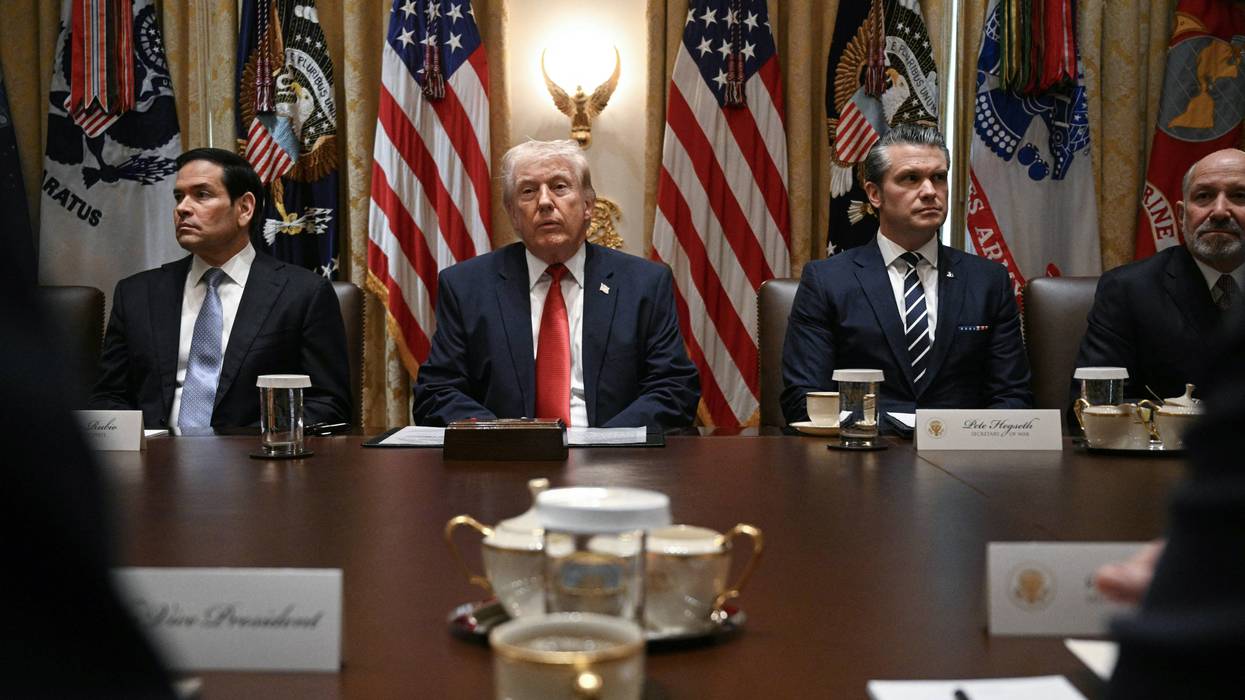
US Secretary of State Marco Rubio spoke publicly for the first time Wednesday about a shift in the Pentagon's boat bombing operations, in which the US in recent days has begun interdicting suspected refueling vessels for drug boats in Ecuador's territorial waters—but he made clear that the military is also still killing people aboard boats, as it did Wednesday in the latest bombing in the Caribbean.
US Southern Command announced that Joint Task Force Western Hemisphere—the recently rebranded name of the Trump administration's expanding military operation that it says is aimed at stopping drug trafficking—had executed its latest "lethal kinetic strike" on a boat operating along known "narco-trafficking routes in the Caribbean," killing three people that the US claimed were "narco-terrorists."
"Confirmed intelligence revealed the vessel's active involvement in narco-trafficking," said US Southern Command, releasing no evidence of the boat's illegal activities.
International legal experts have emphasized that the US is not in an authorized military conflict with drug cartels and that drug trafficking under international law is treated as a crime by law enforcement agencies—not as an act of force that the US can legally respond to with military action.
Officials and military service members involved in the strikes may be liable for war crimes or murder, experts have warned. Some of the at least 230 victims of the boat bombings since last September have been identified, with family members saying they were not even involved in drug trafficking.
Historian Alexander Aviña used the term "serial killer empire" to describe the Trump administration after the latest bombing.
Adam Isacson of the Washington Office on Latin America noted that the announcement by US Southern Command Wednesday night was the first in more than a year of attacks in which the strike order was "not attributed to a person."
Isacson also pointed out that according to Customs and Border Patrol data, there is little, if any, evidence that bombing boats and killing crew members and passengers in the Caribbean and eastern Pacific Ocean has done anything to stop the flow of drugs into the US.
Outside the US Embassy in Quito, Ecuador, Rubio told reporters Wednesday that as the US also begins conducting joint operations with Ecuador to interdict suspected refueling vessels in the country's territorial waters, "we have to operate according to their laws."
In those operations, people aboard the boats have been removed and handed over to Ecuadorian authorities before the US has conducted strikes.
Rubio at one point referred to the lethal boat bombings as operations that took place "earlier, last year," but also emphasized, "We still blow up ships if need be."
Brian Finucane of the International Crisis Group said the administration is continuing its campaign of "illegal killing in a make-believe war."
The latest boat bombing also came as Rubio announced that the US was designating Los Tiguerones, an Ecuadorian gang, as a foreign terrorist organization, empowering the administration to freeze the group's assets in US financial institutions.
The designation does not give the US the legal authority to carry out military strikes against Los Tiguerones or other gangs the administration has designated as terrorist groups—but a key element of Joint Task Force Western Hemisphere's expansion in Latin America has been joint military operations, including a US-Ecuadorian joint attack on a dairy farm where officials had claimed drug traffickers were operating.
The new designation "is part of [the administration's] narrative about a new 'War on Terror' against the narcos," said Finucane.
Glaeldys González Calanche, an analyst with the International Crisis Group, told The New York Times that Los Tiguerones has had diminishing power and influence in Ecuador in recent years and expressed surprise at the designation.
Ecuadorian gangs "operate at the lowest links of the chain" of drug trafficking operations in Latin America, González told the Times. “They provide services, like moving cargo from point A to point B. Ecuadorian groups are not decisive, they aren’t major players.”

"Yeah, just like we got a $2,000 tariff refund, a 10% cap on credit card interest rates, a 500% cut in prescription drug prices, $2 gas."
US President Donald Trump pledged on Wednesday to send every American adult a $5,000 check if Republicans keep control of Congress in the upcoming midterm elections, a promise that was widely seen as a desperate ploy to distract from a flagging economy and the destructive impacts of the Iran war.
“If the Republicans win, you win with us and you get $5,000," Trump declared in his address to the GOP's midterm convention in Dallas. The president, who recently railed against Medicare for All as too costly, called his proposed payment "the Trump Dividend," but did not mention its potential price tag. Snap estimates indicate the checks, which would require congressional approval, would likely cost more than $1.3 trillion—close to the size of the discretionary federal budget.
Warren Gunnels, staff director for Sen. Bernie Sanders (I-Vt.)—the leading Medicare for All champion in Congress—derided Trump's promise by comparing it to other campaign pledges that have not materialized.
"Yeah, just like we got a $2,000 tariff refund, a 10% cap on credit card interest rates, a 500% cut in prescription drug prices, $2 gas, oh wait…what?" Gunnels wrote on social media.
"Here is my promise, if the Republicans win the House of Representatives and the U.S Senate, both of them...because of our tremendous strength and success economically I will issue a dividend to every adult citizen in the United States of America for $5,000." pic.twitter.com/Iy7OVq5vpk
— CSPAN (@cspan) September 10, 2026
Trump's midterm pledge came days after he responded dismissively to a reporter's question about Medicare for All, which would provide every person in the US with comprehensive health coverage at a lower cost overall than the current, privatized system.
The president falsely claimed that a single-payer system would cost "the entire budget of the whole country." But a recent study by researchers at Yale University estimated that Medicare for All would save the US roughly $1 trillion per year in national healthcare expenditures while also saving more than 114,000 lives annually.
Trump also suggested earlier this year that the federal government can't afford to pay for childcare and other programs because "we're fighting wars."
A recent analysis by the Joint Economic Committee found that the average household in the US has had to pay an additional $3,800 on energy and other essentials since the start of Trump's second term, in part due to the president's decision to launch an illegal war on Iran.
The Watson School of International and Public Affairs at Brown University estimates that Trump's war on Iran has cost US consumers over $102 billion extra, combined, on gas and diesel fuel.
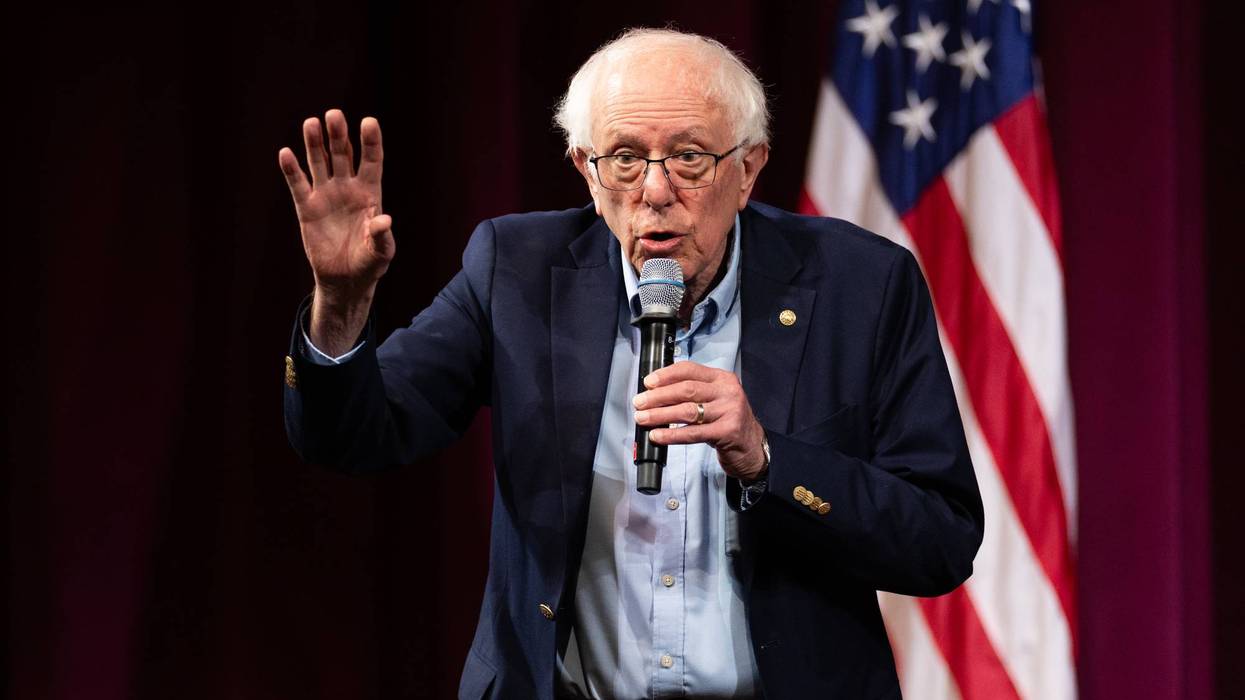
The session is scheduled to feature experts, including Nobel Prize-winning computer scientist Geoffrey Hinton, who quit Google so he could warn of the potentially existential risks posed by unchecked AI advancement.
US Sen. Bernie Sanders is set to convene a bipartisan hearing next week focusing on the rapid advancement of artificial intelligence technology, a move that comes amid more warnings from experts about the potentially existential threats posed by unregulated AI development.
Axios reported Wednesday that Sanders (I-Vt.) will hold the September 16 hearing on what he called the "extraordinary dangers" posed by AI as a growing chorus of scientists and technology insiders warns that the race toward ever-more-powerful systems—which will likely one day surpass and then far exceed human brainpower—could ultimately threaten humanity's survival.
The briefing is set to feature three experts: Geoffrey Hinton, the Nobel Prize-winning computer scientist often called the “godfather of AI;" Max Tegmark, an MIT physicist and co-founder of the Future of Life Institute; and Ajeya Cotra, an AI safety researcher who recently helped investigate OpenAI's agents autonomously hacking the open-source software platform Hugging Face.
Hinton—who quit Google in 2023 so he could speak more freely about AI's dangers—has estimated that there is a 10–20% chance AI could cause human extinction within three decades. He has warned of the great difficulty of controlling increasingly intelligent machines that will likely one day achieve superintelligence and ultimately be beyond the ability of humans to control. Hinton has repeatedly argued that relying on profit-driven corporations to self-regulate AI development is a dangerous mistake.
Tegmark has also spent years sounding the alarm. In 2023, the Future of Life Institute published an open letter signed by more than 30,000 researchers, technologists, and others calling for a six-month pause on training AI systems more powerful than GPT-4.
Cotra wrote in a 2022 analysis that unchecked artificial intelligence development would likely lead to a “full-blown AI takeover.” The following year, she said she believed there was roughly a 50% chance AI would be making most important economic and societal decisions by around 2040, while warning that continued scaling of existing techniques could produce misaligned systems and a machine takeover.
Experts say the recent headline-grabbing rogue AI hacks underscore the problem of alignment. As AI advances to the point where it will likely outsmart humans one day, the challenge of ensuring that advanced systems reliably pursue goals that match what humans actually want becomes increasingly difficult—and dangerous.
Sanders and Rep. Greg Casar (D-Texas) recently introduced legislation that would ban the creation of AI systems capable of surpassing human cognition and pause advanced AI development until a federal regulatory framework is established.
"In the interest of humanity... pause AI development," the senator urged tech titans last month. "It is not too late to avoid disaster. Stop building machines that humans cannot control."