January, 18 2016, 01:15pm EDT

Nurses Applaud New Sanders Plan for Healthcare for All
‘Protecting Our Most Precious Gift – Our Health’
WASHINGTON
National Nurses United today enthusiastically welcomed Sen. Bernie Sanders' new plan for achieving the dream of countless Americans for nearly a century - healthcare coverage for everyone.
Sanders' plan also aligns with the official position of the AFL-CIO, which has endorsed single payer health care, Medicare for all - most recently again last July when the AFL-CIO specifically endorsed single payer as part of its national Raising Wages campaign, noted NNU Executive Director RoseAnn DeMoro, a national vice president of the AFL-CIO.
"Finally, a real plan from a leading Presidential candidate that will guarantee healthcare for every American, just as every other major nation has done," DeMoro said.
"This is a plan that will end the long nightmare facing the nation's uninsured, and those having to choose between getting the care they need or putting food on the table for their families. And it protects our most precious gift, our health," DeMoro said.
"By eradicating the crisis of the 29 million who are still uninsured, and the tens of millions more facing medical debt, even with the gains made under the Affordable Care Act, this plan would cut health care costs, put money back in consumers' pockets, create jobs, and address a major cause of income inequality, un-payable medical bills."
"Instead of being held hostage to a corporate system based on profits and price gouging, with Sanders' Medicare for all plan we can finally have a system based on patient need, with a single standard of quality care for all, regardless of ability to pay, race, gender, age, or where you live. That's a beautiful thing," DeMoro said.
As Sanders notes, DeMoro continued, "his plan includes a pledge to provide comprehensive coverage, inpatient and outpatient, emergency care, dental care, vision, long term care, prescription drugs, medical supplies, and other basic needs. One medical card, no networks that limit patient choice of doctor or other provider, no fighting with insurance companies over needed care they refuse to pay for."
"And, contrary to those in the Clinton camp who have claimed that Sen. Sanders wants to turn our healthcare over to state governors, many of whom have refused to expand Medicaid under the ACA, the Sanders plan would be federally administrated, with national standards and national reimbursements."
Ultimately, any single payer plan is a financing mechanism. All final details would remain to be ironed out in the legislative process, as occurred with the ACA as well.
"Bernie Sanders has certainly emphasized the power of the healthcare industry lobby in Congress, and that it will take the power of a grassroots political movement that he talks about to enact this plan. Nurses will be in the forefront of that effort," DeMoro noted.
In his announcement, Sanders said that "the typical family earning $50,000 a year would save nearly $6,000 annually in health care costs."
That, DeMoro continued, means, as NNU has long noted, improved Medicare for all will raise real wages for American workers and income will go up for nearly everyone. And, as NNU and other health economists have pointed out, that will give consumers more resources to spend, creating a huge multiplier effect for the economy.
An NNU study in 2009, on the eve of debate over the ACA, predicted that single payer would create some 2.6 million new jobs alone, plus substantial increases in federal and state revenues.
A recent New York Times/Kaiser Family Foundation survey found that 20 percent of people under 65 who have health insurance continue to face significant problems with medical bills, despite the ACA.
The Times report found that 63 percent of those burdened by medical bills said they had "used up all or most of their savings," 42 percent had to take on another job or work more hours, 11 percent had to move or take in roommates, and 11 percent had to turn to charity due to those bills.
"Those days will come to an end when we pass the Sanders proposal."
"Now we have the framework for a plan that will save lives, achieve the dreams of Americans for nearly a century for guaranteed health care, help the fight to create jobs and reduce income inequality. Sen. Sanders deserves our thanks, and nurses will fight to make the dream come true," DeMoro concluded.
National Nurses United, with close to 185,000 members in every state, is the largest union and professional association of registered nurses in US history.
(240) 235-2000LATEST NEWS
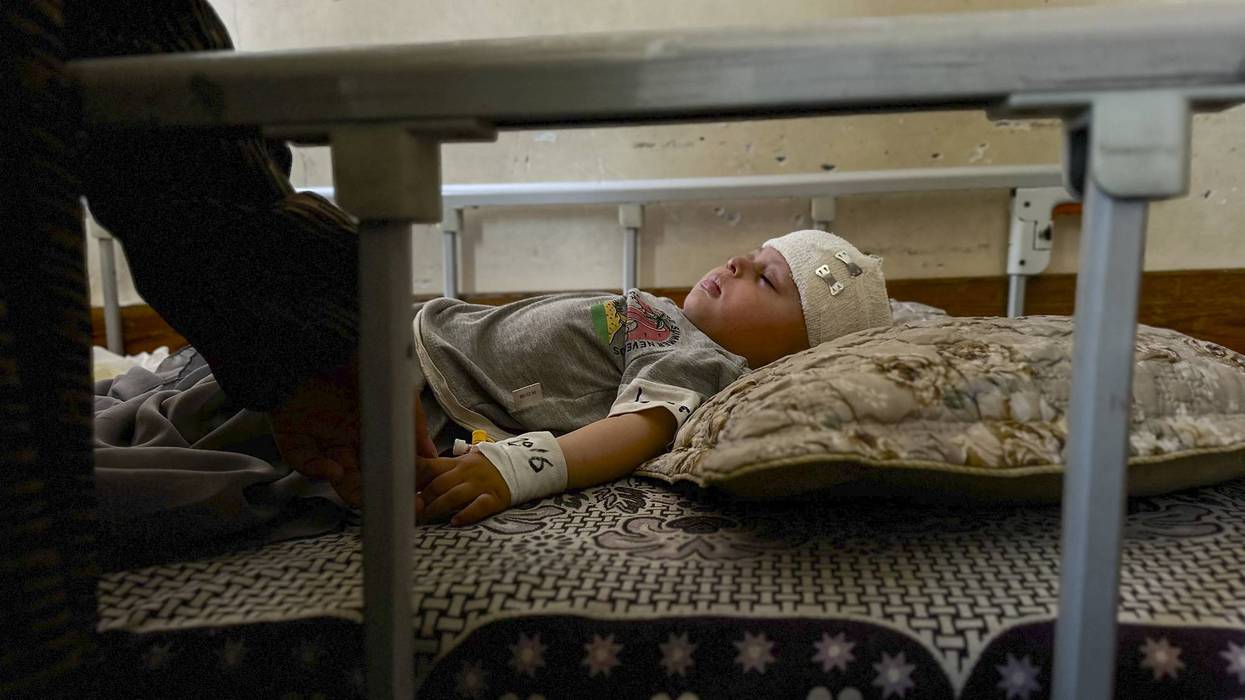
30% of Those Killed in Gaza Genocide Were Children, Many From 'Deliberate' Targeting: UN Commission
“By targeting children, Israel is attacking the very capacity of the Palestinian people to exist and to determine their future," said the commission's head.
Jun 23, 2026
About 30% of those killed by Israel in Gaza since October 7, 2023, have been children, according to a United Nations inquiry on Tuesday, which found the "deliberate" targeting of kids to have furthered a genocide against Palestinians.
The report, authored by the UN Independent International Commission of Inquiry on the Occupied Palestinian Territory, follows a previous finding in September that Israel's actions in Gaza constituted genocide.
"The deliberate targeting of children is one of the key elements establishing genocidal intent of the Israeli authorities and security forces to destroy the Palestinian group, in whole or in part, in Gaza," the commission said.
Between the start of Israel's military campaign in October 2023 and the "ceasefire" agreement in October 2025, the report found that more than 20,000 children were killed, while more than 44,000 were injured. Among those killed, more than 5,000 were under the age of five, more than 1,000 were under the age of one, and more than 400 were newborn babies.
The report highlights documented instances in which Israeli forces directly fired upon children, with medical professionals testifying that they treated kids with "direct gunshot and sniper wounds, often to the head and abdomen." One sample of 168 children killed by gunshots found that 73 were shot in the head and 22 were shot in the chest, which the commission argued was evidence of intentionality.
"Based on the clustering of injuries and the targeted body parts, I assess that the Israeli soldiers have been deliberately shooting teenage boys in a game of target practice—a different body part being targeted on different days… There is a very clear pattern that suggests this is a deliberate aiming of different body parts [of children]," one doctor told the commission.
They also cited dozens of cases of children being targeted by snipers and quadcopters. The report quotes one Israeli soldier who appeared anonymously in a documentary about the war and described operating drones like a video game.
"The drones, in my opinion, are what most dehumanize the other side," he said. "You see everything on a screen. You drop the bomb. It feels like a game. You can sit in some basement of a house, safe, with your helmet off, scratching your balls, half-dressed, and kill Palestinians.”
The report also argues that the deaths of children in airstrikes were not mere collateral damage, as Israel often asserts, but the foreseeable result of Israel's use of high payload weapons against densely populated areas, which resulted in massive numbers of civilian casualties.
"These deliberate attacks wiped out entire families across two or three or even four generations, with the Israeli security forces fully aware that children would be present and that children, with their small, fragile bodies, have a higher chance of death and serious injury in such attacks," the report said.
"The Israeli security forces continued and repeated these attacks over a two-year period, without amending targeting criteria or selection of weapons, while child casualties mounted," it continued. "This indicates that such attacks, which killed children in such high numbers, were intentional."
Adding to evidence of intentionality, the report said, was the direct targeting of neonatal and maternity care centers, which it said "directly endangered" the ability of newborn babies to survive and contributed to miscarriages and birth defects. In the first half of 2025, Gaza experienced a 41% decline in live births compared with the same period in 2022, the report found.
The report notes that numerous Israeli politicians have explicitly justified the targeting of children since the early days of the genocidal onslaught.
On October 9, 2023, Nissim Vaturi, the deputy Knesset speaker, called on the army to "Erase Gaza... Do not leave a child there. Expel all the remaining ones at the end." In January 2025, he said, “Gaza is full of terrorists and every child born there is already a terrorist, from the moment of his birth.”
Amid Israel's attack on the Al-Shifa hospital in July 2024, Israeli Knesset Member Amit Halevi stated that the hundreds of babies in its maternity ward were "all born terrorists."
This was part of a “systematic and complete destruction of the healthcare system in Gaza,” the report said, that fell heaviest on children. Attacks on pediatric hospitals forced sick and injured kids into smaller facilities without the necessary supplies or pediatric staff.
Israel's restrictions on humanitarian aid entering Gaza, meanwhile, turned survivable injuries into ones that caused death or permanent disability. Doctors said children were forced to undergo "horrific amputations" without anesthesia, while others who'd suffered burns and other traumatic injuries were left without painkillers.
The destruction of medical infrastructure, the report said, was not incidental. It said Israel had "operational plans and procedures for attacking healthcare facilities.” The result, it said, was preventing Palestinians' “capacity and possibility to heal, recover, and live.”
The report points out that since the ceasefire went into effect, more than 100 children had been killed and hundreds more wounded as of mid-January, with many being shot near the so-called "yellow line" that marks the edge of Israel's occupation area in Gaza, which the Israel Defense Forces (IDF) has been gradually advancing forward.
Israel dismissed the findings of the commission, rejecting what it called a “second defamatory advocacy report."
“Israel dismisses this libelous sham,” it said in a statement and added that while “every child deserves protection,” the report ignored “the brutal tactics of Hamas.”
Srinivasan Muralidhar, chair of the UN commission, said, "The evidence shows that Palestinian children have been deliberately targeted and killed by the Israeli security forces."
“Even after the October 2025 ceasefire," he said, "children continue to be killed and seriously injured, with continued disregard by Israel for the ceasefire and for the protection owed to Palestinian children under international law.”
Beyond Gaza, the commission reported that Israeli forces have killed more than 200 children in the illegally occupied West Bank and East Jerusalem since October 7, 2023. Hundreds more have been detained, often without any charge, and many have been subjected to systemic mistreatment in detention, including the deprivation of food and medical care, torture, and sexual abuse.
“Even if the bombs and guns fall silent in Gaza and the West Bank, Palestinian children will not simply recover overnight,” said Muralidhar. “The destruction of their health, education, and development is irreversible.”
“The protection, care, and survival of Palestinian children are inseparable from the Palestinian people’s right to self-determination,” he continued. “By targeting children, Israel is attacking the very capacity of the Palestinian people to exist and to determine their future.”
Keep ReadingShow Less

As Deadly Heatwave Scorches Europe, Fossil Fuel Giants 'Have Blood on Their Hands'
"Stop fossil fuel giants from turning up the heat on our planet—and make them pay for the damage they are causing," one campaigner told lawmakers.
Jun 23, 2026
Germany, Switzerland, France, Spain, Belgium, and other European countries were under red-alert warnings on Tuesday as an alarmingly early heatwave continued to scorch the continent, underscoring the threat posed by the fossil fuel-driven climate crisis.
Météo-France, the country's official meteorological administration, said Tuesday that "further record-breaking temperatures are expected, including some that could surpass all previous records, regardless of the time of year," as "sunshine continues to dominate across France, maintaining oppressive and exhausting heat throughout the country." In recent days, France has recorded dozens of deaths linked to the extreme temperatures, including two were children who died in a hot car and 40 people who drowned seeking relief from the heat.
“Heat is hurting children across Europe," Matilde Angeltveit, senior adviser and global climate advocacy lead at Save the Children, said Tuesday. "It affects their health and it is disrupting their education and the impact can sometimes be long term. This should be a joyous time as many children across Europe wrap up the school year, but for many it is not."
Europe's Copernicus Climate Change Service said that while the ongoing heatwave is "remarkable for occurring so early in the year, this event is consistent with Europe’s rapid warming and with the increasing frequency and intensity of heatwaves already observed in summer."
"Europe is the fastest-warming continent, with temperatures rising by approximately 0.56°C per decade since the mid-1990s, more than double the global average," Copernicus noted.
Reuters observed Tuesday that Europe "was the continent furthest above its historic temperature norm on Monday."
"Heatwaves are no longer freak weather anomalies. They are now a recurring crisis inflicting suffering, claiming lives and fracturing our health systems and infrastructure," said Hans Kluge, European regional director for the World Health Organization, which estimates that extreme heat has killed more than 200,000 people across Europe over the past four years.
Campaigners said the current heatwave marks the latest evidence of governments' failure to rein in the fossil fuel industry, which has raked in massive profits this year thanks to the US-Israeli war on Iran.
"This isn’t a natural disaster," said Aaron Regunberg, director of the Climate Accountability Project at the US-based advocacy group Public Citizen, which declared in response to the European heatwave that oil giants "have blood on their hands."
"The fossil fuel industry’s pollution and decades of deception about the impact of burning fossil fuels has spurred this extreme heat, which has already killed multiple people," said Regunberg. "Decades ago, scientists at Exxon were discussing with other oil companies research connecting climate change with ‘suffering and death due to thermal extremes.’ These companies knew of evidence that their conduct would cause these harms, and orchestrated campaigns of climate denial to undermine that evidence. They should be held accountable.”
Areeba Hamid, the co-executive director of Greenpeace UK, said political leaders "need to stop winging it on extreme weather and start treating it as the security and public health challenge it is."
"When classrooms become ovens, care homes overheat, transport starts to buckle and workers are forced to toil in dangerous temperatures, it’s clear the country isn’t ready," said Hamid. "Adaptation alone won’t be enough. Ministers must also stop fossil fuel giants from turning up the heat on our planet—and make them pay for the damage they are causing."
Keep ReadingShow Less
'Humiliating String of Defeats' Threatens Trump's Plot to Rig 2026 Midterms: Election Expert
"As Republican electoral prospects wane, Trump will grow more desperate, and that desperation will lead to even more extreme actions by the administration."
Jun 23, 2026
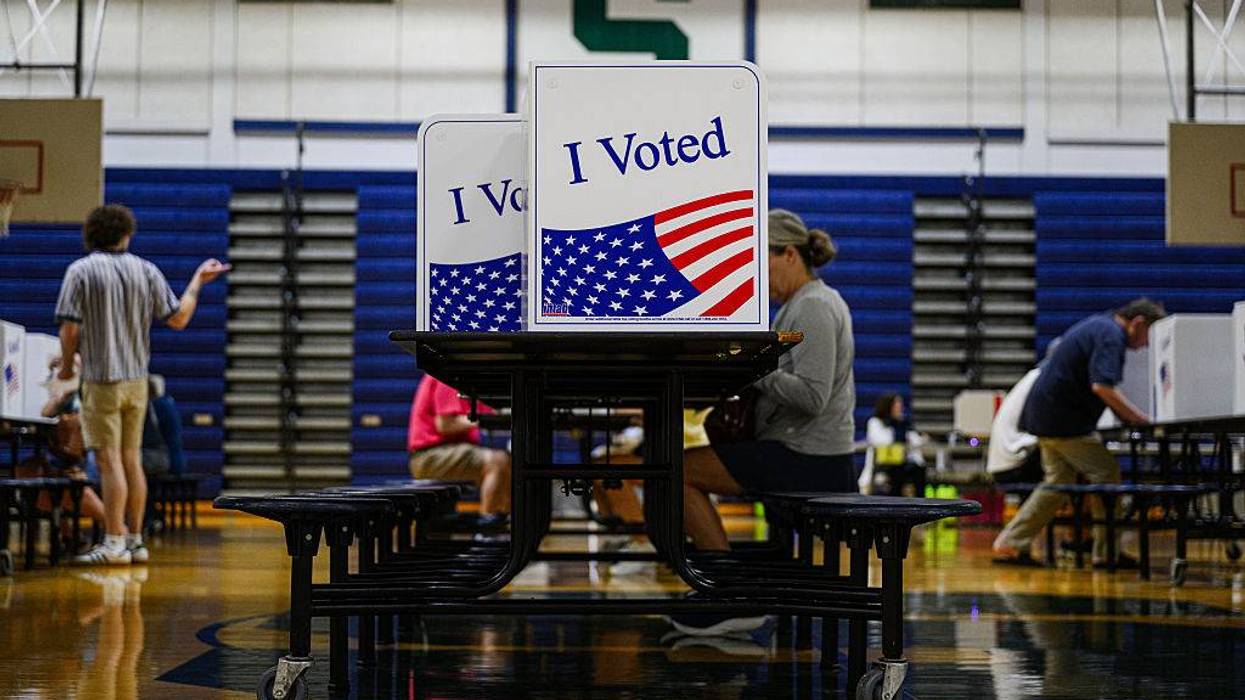
President Donald Trump's unprecedented efforts to rig the 2026 midterm elections are on thin ice after having been repeatedly thwarted by courts, according to election law attorney Marc Elias.
In a Monday analysis published by Democracy Docket, Elias noted that the US Department of Justice has seen its attempts to obtain states' voter files shot down in court nine different times, most recently by a federal judge in Maryland who ruled the state was under no obligation to hand its voter file to the federal government.
Elias wrote that Trump needs states' voter files to build a national voter database, which would allow his administration to pick and choose which voters are eligible to participate in future elections and which should be purged.
"The problem for Trump is that his Department of Justice keeps losing cases that it needs to access this critical data," Elias explained. "This humiliating string of defeats threatens to derail Trump’s signature plan to subvert the 2026 midterm elections."
Trump will also have difficulty blaming these court losses on left-wing judges, Elias added, because Trump-appointed judges have been responsible for more than half of the defeats the DOJ has suffered, which he described as "nothing short of a debacle."
Elias, whose law firm has been involved in trying to block the DOJ from accessing voter files, said it was worth celebrating the latest victory over the Trump administration, but he warned that more fights are coming.
"As Republican electoral prospects wane, Trump will grow more desperate," he wrote, "and that desperation will lead to even more extreme actions by the administration. It will also require much more litigation."
Trump earlier this year signed an executive order instructing the United States Postal Service to not deliver ballots in any states that have not given the federal government access to its voter lists.
The order, currently being challenged in court by congressional Democrats and all 23 Democratic state attorneys general, could essentially eliminate mail-in voting in the US, opponents have warned.
CNN on Monday reported that the administration is also trying to squeeze states into changing their election laws by withholding "tens of millions of dollars in federal homeland security funds" from states unless they phase out specified electronic voting systems and move back to relying on paper ballots.
States wanting to receive funding must also "run their voter rolls through a controversial Department of Homeland Security citizenship verification database," CNN reported.
Keep ReadingShow Less
Most Popular