August, 16 2011, 11:13am EDT

For Immediate Release
Contact:
Bill Wolfe (609) 397-4861; Kirsten Stade (202) 265-7337
Fair Market Value Leases Could Fund Jersey Park System
Shale Gas Pipeline Highlights State’s Failure to Collect Full Payments from Utilities
TRENTON, N.J.
Responding to protests from Public Employees for Environmental Responsibility (PEER) and others, the State of New Jersey has dramatically hiked the lease payment it is demanding for a proposed shale gas pipeline crossing state parklands. Despite this huge increase, the state is still not collecting fair market value on hundreds of leases, easements and concessions, thus forfeiting millions of dollars.
Tomorrow, the state Department of Environmental Protection (DEP) is holding a public hearing on its plan to lease up to 30.21 acres of state land in High Point, Long Pond Ironworks and Ringwood State Parks to Tennessee Gas Pipeline Company. This pipeline is just one segment of the "Northeast Pipeline Project" to import natural gas into the New York City metro area. The gas is produced by controversial "fracking" of Marcellus shale clay overlying most of Pennsylvania and New York's southern tier.
DEP originally proposed a lease payment for an earlier pipeline segment of just $45,000 for a 24-year term. After protests led by PEER, the state raised that rent to $180,000. DEP is now proposing for the next pipeline segment a rent of approximately $7.84 million over the same period - a more than 170-fold increase over what DEP proposed for the first segment. Even with this hefty hike it is not clear that DEP is charging the full market value as it is required to do by law.
"PEER is proud to have won New Jersey taxpayers $8 million in additional revenue but they may be owed even more," state New Jersey PEER Director Bill Wolfe, who testified against the original lease in July 2010 before the State House Commission which must approve all state land leases. "DEP proposed a lease that was less than pennies on the dollar due to a flawed real estate appraisal but we still do not know at what price a proper appraisal would peg this lease."
Over the last several years, a series of audits by the Office of Legislative Services found major flaws in the DEP Office of Leases and Concessions, most notably its failure to charge fair market value or collect overdue lease and concession payments. In response to these audits and PEER advocacy, the Legislature mandated that DEP "conduct a re-appraisal of the rents and fees charged for all residences and other buildings and structures, and for utility easements and right-of-ways, located on State park or forest lands to ensure they reflect current fair market values and will continue to do so" (P.L. 2008, c.31). DEP was then supposed to integrate this with its plan to fund state parks and forests, a plan due on July 1, 2009.
More than two years after this statutory deadline, DEP has done neither mandated task. Instead the Christie administration has explored a number of small revenue measures to commercialize parks, such as selling corporate naming rights for park facilities and privatizing various park operations.
"As this new lease richly demonstrates, charging fair market value for utility easements from the energy industry, as the state is required to do, would be a major funding source for depleted parks and state lands budgets," Wolfe added. "If the Christie managers want to run the state more like a business, it should start by collecting the rents truly owed. Doing this basic job would eliminate the need to panhandle in the parks with chintzy privatization schemes."
###
Look at past audits faulting state land lease collections
View photos of the pipeline construction
See lowball lease on first pipeline segment
PEER protects public employees who protect our environment. We are a service organization for environmental and public health professionals, land managers, scientists, enforcement officers, and other civil servants dedicated to upholding environmental laws and values. We work with current and former federal, state, local, and tribal employees.
LATEST NEWS
Citing Bogus 'Threats' to US, Trump Expands Already Devastating Sanctions on Cuba
The president's latest aggression toward Cuba comes amid his repeated threats to "take" the island.
May 01, 2026
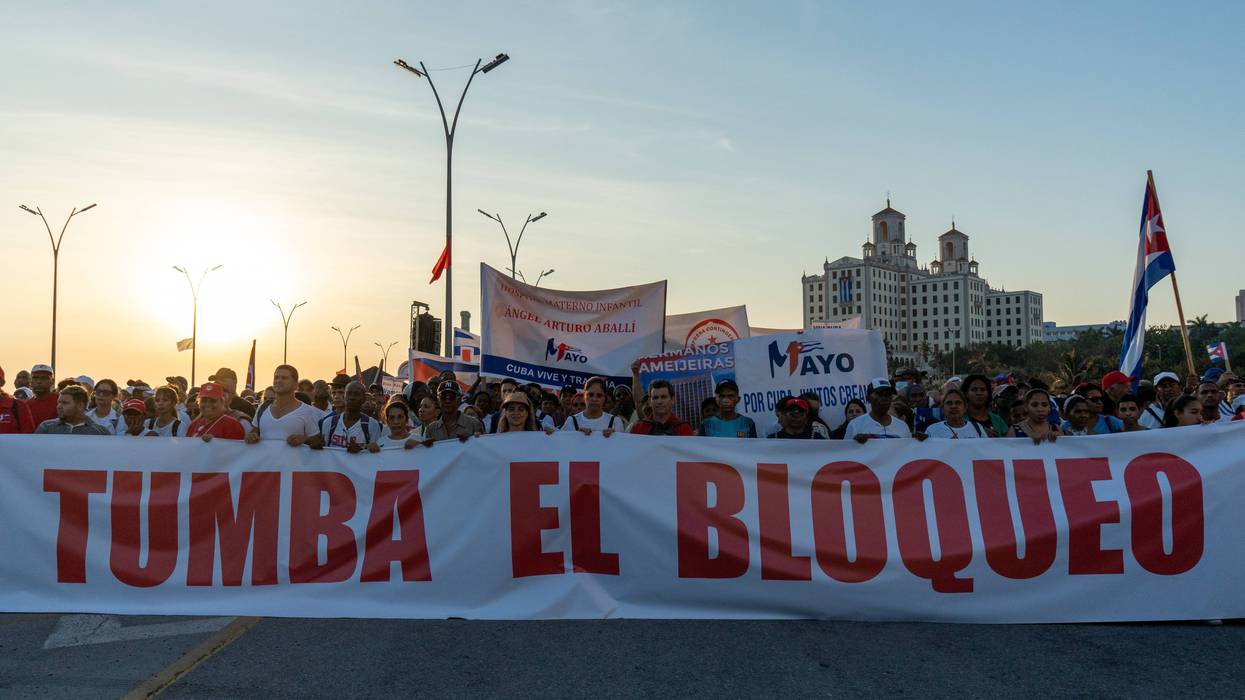
Citing Cuba's ties with its ally Iran, President Donald Trump on Friday signed an executive order expanding the already crippling US sanctions regime against Cuban officials, as the US administration has the island in its crosshairs after ousting Venezuela's socialist leader.
Trump's executive order cites highly dubious "national security threats posed by the communist Cuban regime," including Havana's alignment "with countries and malign actors hostile to the United States."
The directive "imposes new sanctions on entities, persons, or affiliates that support the Cuban regime’s security apparatus, are complicit in government corruption or serious human rights violations, or are agents, officials, or material supporters of the Cuban government," without identifying any of the affected groups or individuals.
For 65 years, the US has imposed an economic embargo on Cuba that has adversely affected all sectors of the socialist island’s economy and severely limited Cubans’ access to basic necessities including food, fuel, healthcare, and medicines—with disastrous results. The Cuban government claims the blockade cost the country’s economy nearly $5 billion in just one 11-month period in 2022-23 alone. United Nations member states have perennially—and overwhelmingly—condemned the embargo.
The Trump administration also imposed a fuel blockade and reinstated Cuba on the US State Sponsors of Terrorism list, from which former President Joe Biden removed the country before leaving office in 2021. Cuba was initially added to the list during the Reagan administration amid a decadeslong campaign of US-backed Cuban exile terrorism, failed assassination attempts, economic warfare, and covert operations large and small in a futile effort to overthrow the revolutionary government of longtime leader Fidel Castro.
Cuba says US-backed terrorism has killed or wounded more than 5,000 Cubans and cost its economy billions of dollars.
The Cuban government—which was celebrating International Workers' Day on Friday—did not immediately respond to the expanded sanctions.
Experts warned that the new sanctions are worryingly broad, with Georgetown Law visiting scholar Peter Harrell writing on X that "basically any non-US person or company doing any business in/with Cuba could be sanctioned."
Harrell noted that the edict "gives the Trump administration a fair amount of easy-to-deploy firepower to drive remaining international businesses out of Cuba."
"The questions will be in implementation," he added. "For example, will Trump sanction a Chinese firm installing renewable energy in Cuba?"
Trump's edict comes months after the president ordered the invasion of Venezuela and abduction of socialist President Nicolás Maduro and amid the ongoing US-Israeli war on Iran, the 10th country bombed during the course of Trump's two terms in office.
Trump last month declared that “we may stop by Cuba after we’re finished with this,” referring to war on Iran that’s left thousands of people dead or wounded, including hundreds of children. The president has also said that he believes he’ll “be having the honor of taking Cuba,” language echoing the 19th century US imperialists who conquered the island along with Puerto Rico, Guam, and the Philippines from Spain in another war waged on dubious pretense.
“Whether I free it, take it—I think I can do anything I want,” Trump said of the island and its 11 million inhabitants.
Keep ReadingShow Less

'Sweeping and Dangerous': US Appeals Court Blocks Mailing of Abortion Pills
The "politically driven" ruling, warned one campaigner, "overrides medical expertise and years of research, and threatens to upend how abortion care is delivered nationwide."
May 01, 2026
Rights advocates swiftly sounded the alarm on Friday after the infamously far-right US Court of Appeals for the 5th Circuit temporarily blocked a federal rule allowing mifepristone to be dispensed by mail, dramatically curtailing access to the medication—commonly used for abortion and early miscarriage care—nationwide, particularly in states with policies hostile to reproductive freedom.
Just months after the US Supreme Court's right-wing supermajority reversed Roe v. Wade, the Food and Drug Administration permanently lifted mifepristone's in-person dispensing requirement in early 2023, under then-President Joe Biden. Louisiana—which has among the nation's most restrictive abortion policies—challenged the FDA's move.
A federal judge in Louisiana paused that lawsuit last month while President Donald Trump's administration conducts an FDA review that seems "designed to manufacture an excuse for further restricting medication abortion across the country," as Julia Kaye, senior staff attorney for the ACLU's Reproductive Freedom Project, warned at the time.
After a panel from the appellate court overturned that decision and revived the in-person dispensing rule on Friday, Kaye declared that "anti-abortion politicians have just made it much harder for people everywhere in the country to get a medication that abortion and miscarriage patients have been safely using for more than 25 years."
"Louisiana's legal attack on mifepristone shamelessly packaged lies and propaganda as an excuse to restrict abortion—and the 5th Circuit rubber-stamped it," she continued. "This decision defies clear science and settled law and advances an anti-abortion agenda that is deeply unpopular with the American people. For countless people, especially those who live in rural areas, face intimate partner violence, or live with disabilities, losing a telemedicine option will mean losing access to this vital medication altogether."
Brittany Fonteno, president and CEO of the National Abortion Federation (NAF), similarly stressed that "this ruling is a sweeping and dangerous rollback that disregards the well-established safety and efficacy of the use of mifepristone via telehealth, and will create immediate, medically unnecessary barriers to care for patients across the country."
"Make no mistake: This ruling is not grounded in science or patient safety," she said. "It is a politically driven decision that overrides medical expertise and years of research, and threatens to upend how abortion care is delivered nationwide. Through this litigation, Louisiana seeks to impose its cruel abortion ban across the nation—including in states with legal protections for abortion—and today the court has taken an extreme step toward that end."
While pledging that "NAF and our allies will continue to advocate to restore full access to medication abortion," Fonteno reminded patients that mifepristone "remains available in doctors' offices, clinics, and hospitals."
Terrific thread. I’ll just add:1. I think there’s a good chance the Supreme Court will stay this decision, allowing providers to keep mailing mifepristone for the time being.2. The Trump administration didn’t want this! Its plan was to wait until after the midterms to crack down on mifepristone.
[image or embed]
— Mark Joseph Stern (@mjsdc.bsky.social) May 1, 2026 at 6:52 PM
After Roe's reversal, the anti-choice movement and its allies in elected offices ramped up efforts to impose state-level restrictions on reproductive healthcare. A significant majority of abortions in the United States involve a two-drug regimen of mifepristone and misoprostol, and a quarter of those patients receive care via telemedicine.
"Telehealth has been the last bridge to care for many seeking abortion, which is precisely why Louisiana officials want it banned," said Nancy Northup, president and CEO of the Center for Reproductive Rights, which joined over 100 other reproductive health, justice, and rights groups, including the ACLU and NAF, that filed an amicus brief in this case.
"This isn't about science—it's about making abortion as difficult, expensive, and unreachable as possible," Northup added. "Telehealth has transformed healthcare. Selectively stripping that away from abortion patients is a political blockade."
The drug companies Danco Laboratories, which makes the brand-name version of mifepristone, Mifeprex, and GenBioPro, which makes the generic, have intervened in Louisiana v. FDA. GenBioPro is represented by the law firm Arnold & Porter and Democracy Forward, whose president and CEO, Skye Perryman, declared Friday that "this is the anti-abortion extremists' playbook in action once again: Weaponize the courts to serve their political interests, ignore decades of scientific evidence proving mifepristone’s safety, and put women directly in harm's way."
"Even as this assault defies the will of the overwhelming majority of the American public, these ideologically extreme politicians and organizations are determined to impose a narrow, autocratic agenda—no matter the cost," she continued, emphasizing that "our fight is not over."
This is a ruling purporting to halt telehealth prescriptions of mifepristone NATIONWIDE. Louisiana asked the Fifth Circuit for a decision by Monday, May 11. That they dropped it on a Friday afternoon feels intentional to keep it in effect for longer. Expect emergency appeal to SCOTUS shadow docket
[image or embed]
— Susan Rinkunas (@susanrinkunas.com) May 1, 2026 at 5:35 PM
The effects of the 5th Circuit's decision are expected to be immediate absent a quick intervention from the Supreme Court, and Nourbese Flint, president of All* Above All, warned that "as always, the people most impacted will be Black and brown communities and those already navigating systemic barriers to care."
Serra Sippel, executive director of the Brigid Alliance, a national abortion support group that helps coordinate and fund travel," said that "we expect to see an immediate increase in patients forced to travel hundreds or even thousands of miles for care. That includes many who are later in pregnancy—when care is more complex and more expensive."
"Over the past several years, we've seen a dramatic rise in abortion travel and a growing reliance on practical support networks like ours, particularly in states where patients already travel long distances for care," Sippel noted. "We will continue to monitor the impact of this ruling and are committed to ensuring abortion patients who need to travel can safely get to the care they need, regardless of where they live."
Keep ReadingShow Less
Trump Approval of 'Keystone Light' Pipeline Blasted as Yet Another Gift to Big Oil
"More pipelines mean more drilling, more waste, and more spills. And when spills happen, it's communities, landowners, and tribes who are left dealing with the contamination, not the companies profiting from it," said one critic.
May 01, 2026
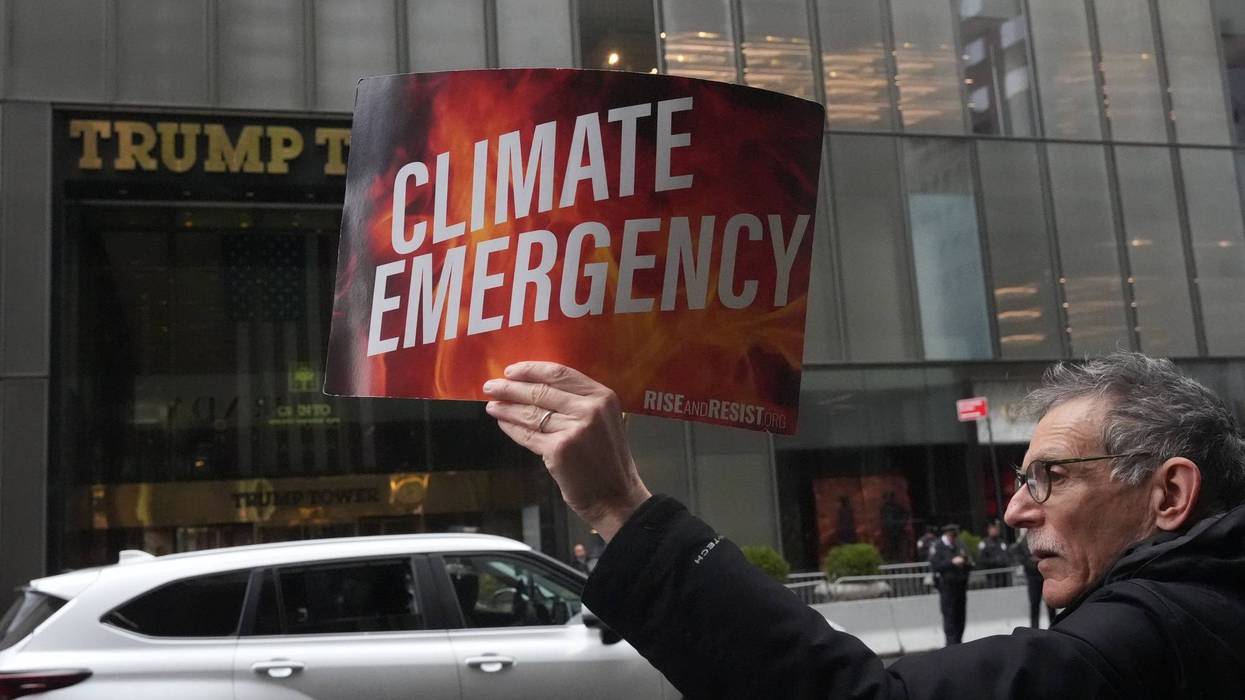
"We know that if this project goes through, our land and our water are in danger. Our future is in danger," warned Krystal Two Bulls, one of many community, conservation, and Indigenous group leaders speaking out after President Donald Trump granted a cross-border permit to what critics called "nothing more than an attempt to resurrect the unpopular Keystone XL pipeline."
Trump's permit for the Bridger Pipeline Expansion Project authorizes various "petroleum products, including gasoline, kerosene, diesel, and liquefied petroleum gas," The Associated Press reported Thursday, but Bridger spokesperson Bill Salvin said the company is currently focused on crude oil—550,000 barrels of which could flow daily from Canada, through Montana, to Guernsey, Wyoming, if the pipeline is completed.
"Water protectors are standing up again, like we have always done against all those who threaten Mother Earth," Two Bulls, an Oglala Lakota and Northern Cheyenne organizer from Lame Deer, Montana, and executive director of Honor the Earth, said Friday. "We fought against the Keystone XL pipeline proposed for these very same lands and won back in 2021. We will fight and win again against the Bridger pipeline."
Shortly after entering office in 2021, then-President Joe Biden revoked the presidential permit for Keystone XL—which Trump had signed during his first term—as part of the Democrat's efforts to combat the fossil fuel-driven climate emergency.
While Biden faced criticism from climate advocates for the oil and gas projects he did allow, Trump took a swipe at him on Thursday, telling reporters: "Slightly different from the last administration. They wouldn't sign a pipeline deal, and we have pipelines going up."
Trump—who campaigned on a pledge to "drill, baby, drill" and returned to the White House last year with financial help from Big Oil—also dismissed safety concerns about pipelines, saying: "By the way, they're way underground. They're not a problem. Nobody even knows they're there. It's so crazy. But they wouldn't approve anything having to do with a pipeline."
As the AP detailed:
Bridger Pipeline and other subsidiaries of True Company have been responsible for several major pipeline accidents including more than 50,000 gallons (240,000 liters) of crude that spilled into the Yellowstone River and fouled a Montana city's drinking water supply in 2015, a 45,000-gallon diesel spill in Wyoming in 2022 and a 2016 spill that released more than 600,000 gallons (2.7 million liters) of crude in North Dakota, contaminating the Little Missouri River and a tributary.
Subsidiaries of True agreed to pay a $12.5 million civil penalty to settle a federal lawsuit over the North Dakota and Montana spills.
Salvin said Bridger Pipeline in the years since the Yellowstone spill developed an AI-based leak detection system that allows it to be notified more quickly when there are problems. It also plans to bore 30 to 40 feet (9 to 12 meters) beneath major rivers including the Yellowstone and Missouri to reduce the chances of an accident. The 2015 accident occurred on a line that was constructed in a shallow trench at the bottom of the river.
A public comment submitted to the Trump administration by the legal group Earthjustice on behalf of Honor the Earth, Sierra Club, WildEarth Guardians, and a dozen other organizations acknowledges concerns about this pipeline's potential impacts to water, land, the climate, air quality, cultural resources, recreation, and more—and called for an intense federal review of the project.
"We know how this system works: More pipelines mean more drilling, more waste, and more spills. And when spills happen, it's communities, landowners, and tribes who are left dealing with the contamination, not the companies profiting from it," Rebecca Sobel, climate and health director at WildEarth Guardians, said Friday. "Oil and gas infrastructure fails every day in this country, and expanding that system only increases the likelihood of spills and long-term contamination."
Sierra Club Montana chapter director Caryn Miske stressed that "while the Trump administration kills affordable energy projects and jobs across the country, it is continuing to side with wealthy corporations and oil executives looking to increase profit regardless of the risks to Montana's treasured waterways and to families and businesses struggling with high energy costs. These policies aren't about fair or free markets, it's welfare for corporations and pollution for everyone else."
Earthjustice is also representing 350 Montana, Center for Biological Diversity, Families for a Livable Climate, Montana Environmental Information Center, Montana Health and Climate, Mountain Mamas, Red Medicine LLC, Western Environmental Law Center, Western Organization of Resource Councils, Western Watersheds Project, Wild Montana, and Wyoming Outdoor Council.
"The proposed Bridger tar sands pipeline is an environmental disaster waiting to happen," declared Jenny Harbine, managing attorney with Earthjustice's Northern Rockies office. "The Trump administration appears more than willing to limit public engagement to force this project through."
"Communities and tribes in the Northern Rockies have a right to know how this could impact their water sources, historic resources, and ways of life," Harbine added. "If the administration attempts to sidestep that legal obligation, we’ll see them in court."
Separately on Friday, Anthony Swift, a longtime leader in the fight against the pipeline and current senior strategist for global nature at Natural Resources Defense Council, said that "no matter what you call the project, the environmental concerns that animated the fight over Keystone XL are no less acute today. Keystone Light will threaten water supplies and exacerbate climate change. This is the moment to get off the oil roller coaster, not double down on the dirtiest oil on the planet."
"The Trump administration has been lobbing gifts to Big Oil since its first day in office. This is the latest in a long, long, long list of favors that show the oil industry is getting a great return on its billion-dollar investment in the president's campaign," Swift added. "President Trump has repeatedly said that America does not need Canada's oil, so we certainly don't need Keystone Light."
Keep ReadingShow Less
Most Popular