SUBSCRIBE TO OUR FREE NEWSLETTER
Daily news & progressive opinion—funded by the people, not the corporations—delivered straight to your inbox.
5
#000000
#FFFFFF
To donate by check, phone, or other method, see our More Ways to Give page.


Daily news & progressive opinion—funded by the people, not the corporations—delivered straight to your inbox.

Claire O’Brien, (202) 675-2312; media@dcaclu.org
The
American Civil Liberties Union today urged Senators to vote to move
forward the Paycheck Fairness Act (S. 182/S. 3772), a bill that would
help women be fairly compensated for their work and give them the tools
necessary to close the wage gap. A cloture vote on the Paycheck Fairness
Act, a much needed update to the Equal Pay Act of 1963, is currently
scheduled for this Wednesday, November 17. If the bill fails to reach
the 60 votes necessary to avoid a filibuster, the Paycheck Fairness Act
will be blocked from consideration on its merits, regardless of whether
it is supported by a majority of the Senate. The ACLU called on Senators
to support this crucial measure.
The American Civil Liberties Union was founded in 1920 and is our nation's guardian of liberty. The ACLU works in the courts, legislatures and communities to defend and preserve the individual rights and liberties guaranteed to all people in this country by the Constitution and laws of the United States.
(212) 549-2666"This is as close to a smoking gun as I've ever seen on Ukraine," said one observer.
A former senior Biden administration official admitted during a recent interview with who she thought were aides to Ukraine's president that the Russian invasion of Ukraine could have been averted if Kyiv had agreed to stop seeking NATO membership.
Amanda Sloat—a former special assistant to then-President Joe Biden and senior director for Europe at the National Security Council—believed she was speaking with aides to Ukrainian President Volodymyr Zelenskyy last week when she sat down for a phone interview with who turned out to be the Russian prankster duo known as Vovan and Lexus.
“We had some conversations even before the war started about, what if Ukraine comes out and just says to Russia, ‘Fine, you know, we won’t go into NATO, you know, if that stops the war, if that stops the invasion’—which at that point it may well have done,” Sloat said. “There is certainly a question, three years on now, you know, would that have been better to do before the war started, would that have been better to do [at the] Istanbul talks? It certainly would have prevented the destruction and loss of life.”
However, Biden officials chose not to address Russia's main concerns regarding Ukraine and NATO—with disastrous results.
Sloat explained that she "was uncomfortable with the idea of the US pushing Ukraine" against pursuing NATO membership, "and sort of implicitly giving Russia some sort of sphere of influence or veto power on that."
"I don’t think [then-President Joe] Biden felt like it was his place to tell Ukraine what to do then, to tell Ukraine not to pursue NATO," she said.
Sloat is the latest in a series of former US officials who have fallen victim to Vovan and Lexus' pranks, including ex-Secretaries of State Hillary Clinton and Mike Pompeo, UN Ambassador Samantha Power, and senior State Department official Victoria Nuland—who played a key role in a plot to overthrow the pro-Moscow government of then-Ukrainian President Viktor Yanukovych during the Euromaidan uprising of 2013-14.
Sloat's remarks during the interview implicitly belied the prevalent Western prewar narrative of an unprovoked Russian invasion—an assertion that ignored decades of provocation, beginning with the betrayal of a 1990 assurance by then-US Secretary of State James Baker to Soviet President Mikhail Gorbachev that NATO would not expand "one inch eastward" if the Soviets cooperated on German reunification.
Not only did NATO admit 13 new nations between then and the start of Russia's 2022 invasion, all of the new members were countries formerly in Moscow's orbit, and three—Estonia, Latvia, and Lithuania—were ex-Soviet republics. The Biden administration's public pronouncements of an "open door" to Ukrainian NATO membership continued right up to Russia's invasion, and were particularly intolerable for Moscow—even if Russian leaders understood that the US was actually more opposed to Kyiv joining the alliance than in favor of such a potentially fraught outcome.
Responding to the prank, French political commentator Arnaud Bertrand said on X that "this is as close to a smoking gun as I've ever seen on Ukraine."
"Hundreds of thousands dead, a country in ruins, and the justification is America being 'uncomfortable' about not preserving optionality," he added. "Not even an actual gain—just the theoretical possibility of one day pulling Ukraine into NATO. The banality of evil."
"All of this will surely go down as one of the great missed opportunities of history."
Sloat's comments, noted Norwegian political scientist Glenn Diesen, come "after our political-media establishment has for four years smeared, censored, and cancelled anyone who claimed that NATO expansion triggered the war."
Referring to Sloat's acknowledgment that Russia's invasion of Ukraine could have been averted with a guarantee of Ukrainian neutrality, Jacobin staff writer Branko Marcetic wrote for Responsible Statecraft Tuesday that she "is not the first to have made this admission."
"As I documented two years ago, former NATO Secretary General Jens Stoltenberg and former Biden Director of National Intelligence Avril Haines both likewise explicitly said that NATO’s potential expansion into Ukraine was the core grievance that motivated Putin’s decision to invade, and that, at least according to Stoltenberg, NATO rejected compromising on it."
"Zelensky has now publicly agreed to this concession to advance peace talks—only three years later, with Ukraine now in physical ruins, its economy destroyed, hundreds of thousands of casualties, and survivors traumatized and disabled on a mass scale," he lamented.
"All of this will surely go down as one of the great missed opportunities of history," Marcetic added. "Critics of the war and NATO policy have long said the war and its devastating impact could have been avoided by explicitly ruling out Ukrainian entry into NATO, only to be told they were spreading Kremlin propaganda. It turns out they were simply spreading Biden officials' own private thoughts."
"Trump explicitly promised voters he would slash utility bills by half within the first year, yet in the first nine months of his term, they surged," said the author of Public Citizen's new report.
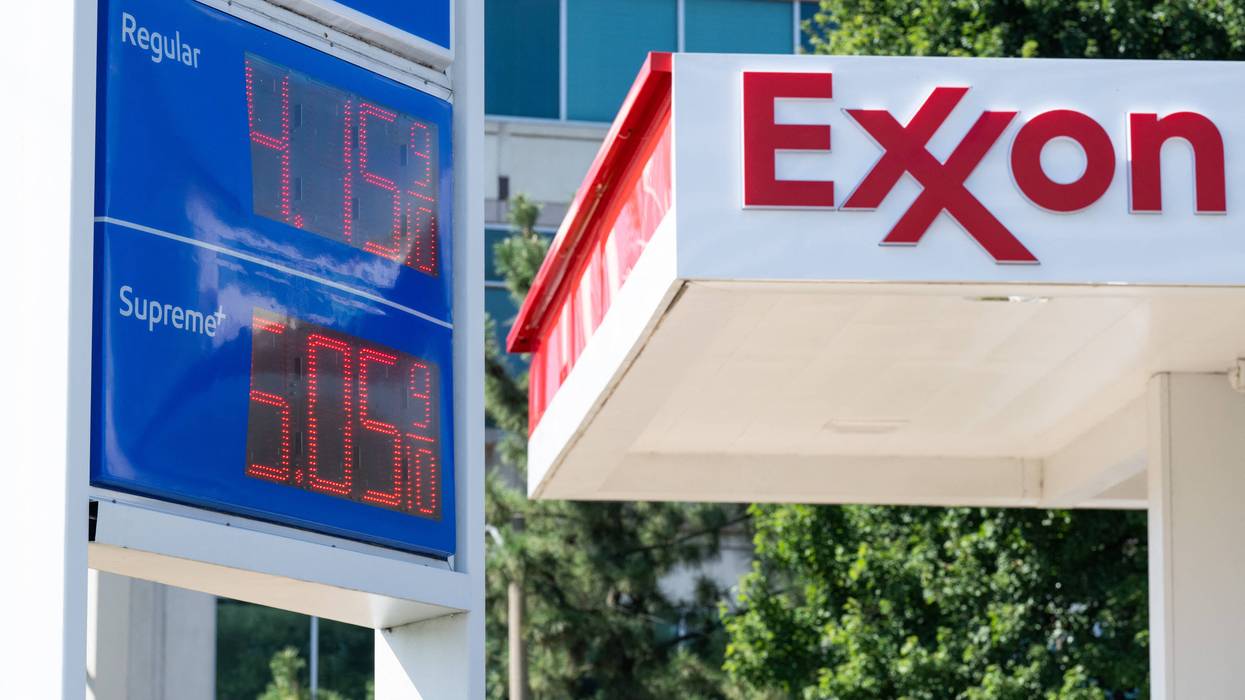
Underscoring expert warnings that exporting liquefied natural gas not only worsens the climate emergency but also drives up energy prices for Americans, Public Citizen revealed Tuesday that as LNG exports surged under the Trump administration, US households paid $12 billion more in utility bills from January through September than they did last year.
In other words, "the costs borne by residential consumers in the first nine months of 2025 are up 22%," or an average of $124 per family, according to an analysis of federal data by Tyson Slocum, director of the consumer advocacy group's Energy Program and author of the new report. "LNG exports are also up 22% over that same time."
His report highlights President Donald Trump's 2024 campaign pledges, pointing to a Newsweek op-ed and various speeches across the country. Slocum said in a statement that "Trump explicitly promised voters he would slash utility bills by half within the first year, yet in the first nine months of his term, they surged, squeezing some of the country's most vulnerable households."
Now, "1 in 6 Americans—21 million households—are behind on their energy bills," which "are rising at twice the rate of inflation," the report states. "Even registered Republican voters are increasingly blaming President Trump for the affordability crisis."
"Limiting or prohibiting LNG exports would provide immediate relief for households across the country, but it would require action from the White House."
It's not just "higher domestic natural gas prices, driven primarily by record LNG exports," affecting US utility prices, the report acknowledges. Other factors include "electric transmission and distribution costs, which include extreme weather and wildfire liabilities. These costs are administered by state or federal regulators and have been exacerbated by climate change."
"Electricity demand load growth, driven by the rise of artificial intelligence data centers, along with transportation electrification," is also having an impact, the document details. Additionally, "Trump's unprecedented cancellation and revocation of billions of dollars of permitted renewable energy projects, combined with his unlawful abuse of emergency authorities to impose punitive tariffs, have injected chaos into domestic supply chains, stifling domestic investment in energy infrastructure."
As the report explains:
Of these four factors, record natural gas exports not only represent the largest impact on natural gas prices, but feature clear statutory solutions to help protect consumers. The Natural Gas Act—passed by Congress during the Great Depression—asserts in Section 1 that "the business of transporting and selling natural gas for ultimate distribution to the public is affected with a public interest," with the US Supreme Court affirming that the "primary aim" of this 87-year-old law is "to protect consumers against exploitation at the hands of natural gas companies." Section 3 of the law forbids exports of natural gas unless the Department of Energy determines the exports to non-Free Trade Agreement countries are "consistent with the public interest."
Rather than living up to those obligations, Slocum said, "Energy Secretary Chris Wright and Interior Secretary Doug Burgum have acted as global gas salesmen, traveling to Europe to push exports and gut European methane regulations while attacking mainstream climate science. Meanwhile, Trump has done nothing to keep prices down at home."
"Limiting or prohibiting LNG exports would provide immediate relief for households across the country, but it would require action from the White House," he added. "Trump would need to stand up to some of his fossil fuel donors to make our energy more affordable."
It's not just Public Citizen pushing for action by the president. US Sen. Edward Markey (D–Mass.)—the upper chamber's leading champion of the Green New Deal—joined a press event for the group's new report. He stressed that "record-breaking levels of natural gas exports are breaking the bank on your monthly energy bill."
Public Citizen released the report just a day after Bloomberg also noted what the export boom means for US energy prices.
"We have been talking about, in apocalyptic terms, for a decade now when the world would start taking away America's cheap gas," Peter Gardett, CEO of Noreva, an energy trading platform specializing in power, told Bloomberg. "Well, we're here."
"Do you believe that these guys, these multibillionaires, are staying up at night, worrying about what AI and robotics will do to working families?"
Sen. Bernie Sanders on Tuesday called for a moratorium on the construction of new artificial intelligence data centers in the US amid growing nationwide backlash.
In a video posted on social media, Sanders (I-Vt.) explained why it's time for the government to hit the brakes AI data center projects, which have drawn protests all over the country for driving up electric bills and draining communities' water supplies.
Sanders began the video by acknowledging that AI has the potential to be a truly transformative technology, before noting that those who are pushing for its rapid development the most were the wealthiest people on the planet, including Meta CEO Mark Zuckerberg, Tesla CEO Elon Musk, and Palantir co-founder Peter Thiel.
"So here is a very simple question I'd like you to think about," Sanders continued. "Do you believe that these guys, these multibillionaires, are staying up at night, worrying about what AI and robotics will do to working families of our country and the world? Well, I don't think so."
Sanders then argued that AI's biggest backers are pushing the technology to further enrich themselves at the expense of everyone else by replacing human laborers entirely with computers.
Sanders then quoted Musk, who predicted that AI and robots would "replace all jobs" in the future, and then cited a quote from Microsoft co-founder Bill Gates, who said that "humans won't be needed for most things."
Sanders then questioned how people will survive if AI meets its backers' goals and deprives people of jobs on a mass scale. This problem is being compounded, Sanders continued, because "very few members of Congress are seriously thinking about this."
In addition to discussing AI's potential to vastly undermine working people's economic power, he also touched on its social implications, and said he was concerned that "millions of kids in this country are becoming more and more isolated from real human relationships, and are getting their emotional support from AI."
"Think for a moment about a future where human beings are not interacting with each other," he said. "Is that the kind of future you want? Well, not me."
Sanders concluded by arguing that the push to advance and integrate AI is "moving very, very quickly," and without proper considerations for the economic and social impacts it will have.
The Vermont senator argued for his proposed moratorium on data center construction to give "democracy a chance to catch up with the transformative changes we are witnessing."
Sanders' message on data centers came on the same day that MLive reported that both Republican and Democratic politicians in Michigan have been rallying against the construction of more data centers, which have been championed by Democratic Gov. Gretchen Whitmer.
During a Tuesday anti-data center rally, Michigan Attorney General Dana Nessel slammed plans to build a 2.2-million-square-foot data center in Saline Township, and pointed to electric service company DTE's efforts to rush through the construction approval process as reason enough to oppose it.
“Do you guys trust DTE?" she asked. "Do you trust OpenAI? Do you trust Oracle to look out for our best interests here in Michigan?"
Republican gubernatorial candidate Anthony Hudson told MLive that he shared Nessel's criticism of the data center plan, and he questioned whether Michigan residents would see any economic benefit from it.
"They don’t support local job growth," he said of the data centers. "They pull millions of gallons of water a day, and they’re going to strain the power grid that’s already crippled. And once they’ve made their money, like Dana Nessel said, they’re going to leave."
Earlier this month, more than 230 environmental advocacy groups, led by Food and Water Watch, demanded a moratorium on building new data centers, which they said consumed unsustainable amounts of water and electricity, while also worsening the global climate emergency.