

SUBSCRIBE TO OUR FREE NEWSLETTER
Daily news & progressive opinion—funded by the people, not the corporations—delivered straight to your inbox.
5
#000000
#FFFFFF
To donate by check, phone, or other method, see our More Ways to Give page.
Daily news & progressive opinion—funded by the people, not the corporations—delivered straight to your inbox.
The Center for Science in the Public Interest has sued
the German drug company Bayer for falsely claiming that the selenium in
Men's One A Day multivitamins might reduce the risk of prostate cancer.
The lawsuit is filed in the Superior Court of California in San
Francisco.
CSPI first contacted Bayer in June
to demand that the drug maker alter its marketing of Men's One A Day
because the largest prostate cancer prevention trial ever conducted
found eight months earlier that selenium supplementation does not
prevent prostate cancer. More alarmingly, that study and another found
that selenium supplements may increase the risk of diabetes.
A day after CSPI contacted Bayer, the FDA issued a
letter containing qualified health claim language for use on labels
that said, in part, that it was "highly unlikely that selenium
supplements reduce the risk of prostate cancer." That forced Bayer to
alter much of its marketing, but it pointedly refused to recall
existing packages bearing the false claims. The company also refused to
remove all false prostate claims from some marketing for Men's One A
Day, and failed to put in writing that it will not make those claims in
the future.
"Given Bayer's long history of wrongdoing in other cases, CSPI is
acting to ensure that Bayer is permanently stopped from deceiving
consumers about selenium," said CSPI litigation director Stephen Gardner.
The largest prostate cancer prevention trial
ever conducted found that the mineral selenium was no more effective in
reducing prostate cancer risk than a placebo. That trial, the Selenium
and Vitamin E Cancer Prevention Trial, known as SELECT, was halted
early when it became clear that the men were not benefiting from
selenium and may have developed more cases of diabetes than men in the
control group. Another study of selenium and prostate cancer found an
alarming three-fold increased risk of diabetes among men taking
selenium.
Writing about the SELECT trial in the Journal of the American Medical Association, Dr. Peter Gann
of the University of Illinois at Chicago cautioned that "physicians
should not recommend selenium or vitamin E-or any other antioxidant
supplements-to their patients for preventing prostate cancer." Hopes
that selenium might be beneficial to the prostate were further dashed
when a 2009 study of men with prostate cancer found more aggressive
cases of the disease in men with high selenium blood levels and a
common genetic trait shared by three out of four men.
"Bayer has been giving American men false hope about
the selenium in One A Day multivitamins," said CSPI executive director
Michael F. Jacobson. "Bayer continued to run deceptive ads even after
SELECT found that selenium supplements weren't helping and might even
be hurting."
In a recent letter to CSPI, Bayer threatened to sue
CSPI for libel for calling attention to Bayer's selenium claims. Much
of Bayer's courtroom experience, however, comes as a criminal or civil
defendant.
In 2001, Bayer paid $14 million to U.S. and state governments to settle allegations that the company's actions helped health care providers submit inflated Medicaid claims for drugs.
In 2003, Bayer pleaded guilty to a criminal charge
and paid $257 million in fines and penalties after a whistleblower
exposed a scheme by the company to overcharge for the antibiotic Cipro.
Media accounts at the time described it as the biggest recovery for
Medicaid fraud.
In 2004, Bayer pleaded guilty to a criminal charge
and paid a $66 million fine after a Justice Department investigation
into Bayer's role in a price-fixing conspiracy involving a chemical
used to make rubber products. Two Bayer executives separately pleaded
guilty and were sentenced to prison for their role in the scandal.
In 2007, Bayer paid $8 million to resolve allegations by state attorneys general
that the company failed to warn physicians and consumers about safety
issues surrounding its cholesterol-lowering drug Baycol, which is no
longer on the market.
Bayer has even gotten into hot water with the federal
government in the past over its One A Day marketing. In 2007, it paid a
$3.2 million civil fine as part of a consent decree
reached with the Federal Trade Commission and the Department of
Justice. The case centered on weight-loss claims that the FTC said
violated an earlier order requiring that all health claims for One A
Day be supported by competent and reliable scientific evidence. CSPI
says that Bayer's prostate claims for Men's One A Day violate the
consent decree, which could compound the company's legal problems.
And this year, Bayer was required to run a $20-million
corrective advertising campaign about its birth control pill Yaz, and
to submit its ads for FDA approval, as part of a legal settlement
secured by a number of state attorneys general and the FDA.
"Bayer's
threat to sue CSPI is clearly designed to have a chilling effect on
free speech and to intimidate us into silence," Jacobson said. "I'm
confident, however, that the FTC, the FDA, and the courts will all take
careful note of the facts of this case, as well as Bayer's long history
of flouting the law. It takes a lot of chutzpah for a company with such
a long record of corporate malfeasance to level libel charges against a
nonprofit organization."
CSPI is suing on behalf of itself and its members, and
is represented by its in-house litigators Stephen Gardner and Katherine
Campbell, alongside Harry Shulman of The Mills Law Firm of San Rafael,
Calif., and Washington, D.C.-based lawyers Steven N. Berk and Chris
Nidel.
Since 1971, the Center for Science in the Public Interest has been a strong advocate for nutrition and health, food safety, alcohol policy, and sound science.
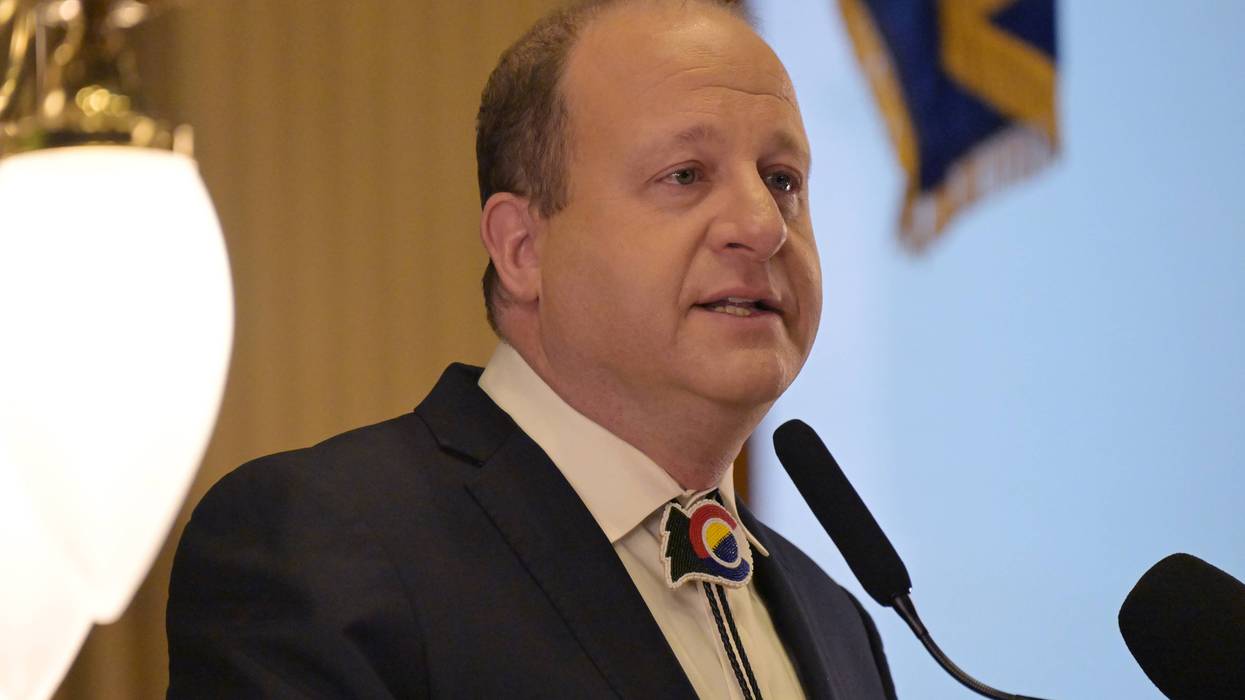
"Firing people who oppose you is also a page out of Trump's playbook," said US Rep. Pramila Jayapal.
US Congresswoman Pramila Jayapal on Thursday accused Democratic Colorado Gov. Jared Polis of conduct commonly seen from President Donald Trump's after Polis fired two members of the state clemency board, citing their decision to speak out publicly against his release of former county Clerk Tina Peters.
In 2024, Peters was sentenced to nine years in prison for tampering with voting equipment in an effort to prove the false claim that the 2020 election was rigged against Trump. The president, who faced his own legal challenges for spreading the falsehood and trying to overturn the election, issued a symbolic pardon for Peters and pressured Polis to commute her sentence, which Polis did in May, angering members of his own party and democracy advocates.
Two members of the state clemency board, Hannah Seigel Proff and Azra Taslimi, were among those who opposed Polis' decision, and they went against the board's usual custom of maintaining secrecy about its proceedings to reveal that the entire board had twice voted unanimously to reject Peters' bid for a shorter sentence, only to be overruled by the governor.
On Wednesday, Proff and Taslimi told The New York Times that they'd received dismissal letters from Polis, who told them they had "breached the required duty of confidentiality by publicly divulging board members’ votes."
Jayapal (D-Wash.) said Polis' commutation of Peters's sentence was akin to acting like the January 6, 2021 attack on the US Capitol by election-denying Trump supporters "didn't happen."
"Firing people who oppose you is also a page out of Trump's playbook," said the congresswomen.
The board members also revealed that Polis had passed over other deserving applications for parole before he allowed Peters to walk free on June 1.
"We have reviewed hundreds of applications that moved us to tears," they wrote in an op-ed at The Denver Post. "People who spent decades atoning for a single terrible decision, who attended college or seminary behind bars, completed countless programs, developed curricula for other incarcerated people, mentored young offenders, and raised thousands of dollars for victims’ rights organizations."
"Along with nine other members of the board, we have read applications supported by prosecutors who tried the case, by prison wardens who watched the transformation happen, and even by victims themselves," they continued. "And we have seen the governor fail to act or delay many of these applications."
A spokesperson for Polis told the Times that their decision to divulge the two unanimous votes against Peters' release threatened the "credibility of the board." Taslimi told 9NEWS Denver that Polis' real message in deciding to fire the two board members "is that the public doesn't have the right to know that his own advisory board told him no, twice, unanimously."
"That's not protecting the process, that's protecting himself from scrutiny," said Taslimi.
Gov. Jared Polis passed over other deserving inmates to give clemency to Tina Peters, according to two members of his clemency board who revealed Polis overruled the unanimous recommendation of his experts. Polis has now fired both of them. pic.twitter.com/N2bc8uxSc7
— Kyle Clark (@KyleClark) July 2, 2026
The two dismissed board members noted in their op-ed that Peters, unlike many of the people who have submitted clemency applications that have been rejected by Polis, has "expressed no contrition" for the crime she was convicted of.
"Within hours of her release, Peters appeared on a podcast and immediately resumed her attacks on the integrity of US elections," they wrote. "She repeated the debunked conspiracy theory that voting machines cheated Donald Trump out of reelection in 2020 and portrayed herself as a martyr to the effort to expose it. She called her release a miracle."
"The governor said he was moved by her admission that she made a mistake," they added. "She walked out of prison and told the world she made no mistake at all."
Proff told 9NEWS that she might regret her decision to speak out if her fellow board members were "disappointed" in her public revelations about the panel's operations.
"But I really have a feeling that the person who's upset," said Proff, "is the one that was using our board as backing for a politically unpopular and unjust decision."

"Together, we’re proving that even in the face of unprecedented outside spending, a movement powered by the people can win," El-Sayed said.
As the progressive movement builds its momentum in Democratic primaries, Rep. Alexandria Ocasio-Cortez issued her first endorsement in a competitive Senate primary on Thursday, throwing her support behind Dr. Abdul El-Sayed as he battles for the party's Senate nomination in Michigan.
Ocasio-Cortez (D-NY), a likely 2028 presidential candidate and one of the most popular figures among the Democratic base, is perhaps the biggest player yet to back El-Sayed, the former public health director for Detroit, who polls currently show leading the more establishment-friendly Rep. Haley Stevens (D-Mich.) and state Sen. Mallory McMorrow (D-8).
The primary, which will take place on August 4, will determine who faces Republican former Rep. Mike Rogers in a race that could decide whether Democrats flip the Senate in November.
AOC's support for El-Sayed—who has championed Medicare for All, an arms embargo against Israel, raising taxes on the wealthy, and overturning Citizens United—puts her at odds with Senate Minority Leader Chuck Schumer (D-NY), who has backed Stevens, and with other progressive Democrats like Sens. Elizabeth Warren (D-Mass.) and Chris Murphy (D-Ct.) who prefer McMorrow.
However, El-Sayed has his own share of high-profile supporters, including Sens. Bernie Sanders (I-Vt.) and Chris Van Hollen (D-Md.), as well as a host of progressive House members, including Reps. Ro Khanna (D-Calif.), Rashida Tlaib (D-Mich.), and Pramila Jayapal (D-Wash.).
“Despite our ideological differences and whatever disagreements there are in the party, every single one of us sees this moment as existential,” Ocasio-Cortez told The New York Times. “And I think many people are willing to put aside differences in order to give us the best chance at winning. And I think that Abdul gives us that right now.”
Though he appears to be in the driver’s seat with just over a month before the August 4 Michigan primary, El-Sayed still faces a perilous path to the nomination that AOC’s endorsement may help him to weather.
While El-Sayed has sworn off big money donors, Stevens—the candidate closest behind him—is armed with more than $16 million in super PAC spending, including millions from the American Israel Public Affairs Committee's (AIPAC) political spending arm, the United Democracy Project, which has begun to blanket the airwaves with ads boosting Stevens, who also has the backing of nearly 100 other corporate PACs representing the health insurance industry, Wall Street banks, fossil fuels, and Big Tech, among others.
The alliance between AOC and El-Sayed is nearly a decade in the making. Fresh off the stunning primary upset that led her to Congress in 2018, she endorsed the doctor's then-longshot bid to become governor of Michigan.
Sharing a photo of the two at a campaign event eight years prior, El-Sayed celebrated AOC as someone who "has spent her career taking on the powerful on behalf of everyday people, and she has shown all of us what courageous, smart, values-driven leadership looks like."
He added that she "has changed the trajectory of American politics and inspired a generation to believe that government really can work for working people."
"Together, we’re proving that even in the face of unprecedented outside spending, a movement powered by the people can win," El Sayed said.
Indeed, that movement has been winning of late.
AOC's endorsement of El-Sayed comes after three House candidates backed by New York City Mayor Zohran Mamdani—including multiple self-identified democratic socialists—cruised to victory over establishment Democrats in their primaries last week.
This week showed that the left-wing insurgency was underway nationwide, with 29-year-old democratic socialist Melat Kiros stunning longtime Democratic Rep. Diana DeGette in Colorado's primary.
Pollster Adam Carlson said that El-Sayed's race in Michigan will go a long way towards demonstrating the extent to which AOC and her movement truly have reshaped the political landscape.
“If El-Sayed wins the primary and the general election in the swingiest of swing states, ahead of 2028,” he said, “it would give the progressive wing of the party a proof of concept that the conventional wisdom of 'more moderate equals more electable' has some serious holes in it, at least in the second Trump era.”

Abbott, which donated $500,000 to the president's inaugural fund, faced an investigation stemming from alleged deadly contamination at one of its baby formula plants in Michigan.
US President Donald Trump last year purchased hundreds of thousands of dollars of Abbott Laboratories stock before his Justice Department dropped a years-long criminal investigation into the company, which was accused of misconduct after infant hospitalizations and deaths were linked to one of its baby formula factories.
The stock purchases were revealed in the president's annual financial disclosure report, which spans 927 pages and shows thousands of trades valued at over $1 billion. Trump's first purchase of Abbott stock last year was made in late September, and the president bought around $500,000 worth of shares in total in 2025, according to the nonprofit media organization More Perfect Union.
The Wall Street Journal reported on Sunday that "top decision makers" at the Department of Justice shut down the criminal investigation into Abbott—which donated $500,000 to Trump's inaugural fund—even though "some prosecutors believed they had evidence to criminally charge the company under a law they have used to pursue other businesses for allegedly selling contaminated foods."
"Prosecutors had been considering a misdemeanor charge against Abbott for violating the federal Food, Drug, and Cosmetic Act and a separate count for misleading the government," the Journal reported, citing unnamed people familiar with the matter. "Investigators in early 2022 had found traces of a potentially deadly bacteria at its plant in Sturgis, Michigan, including on equipment very close to infant formula containers—as well as a long list of other problems."
The Food and Drug Administration received reports of at least nine infant deaths linked to baby formula produced at Abbott's Sturgis plant, which the company temporarily shut down amid fears of dangerous contamination. The Justice Department launched its investigation into Abbott, the largest infant formula manufacturer in the US, in 2023, under the administration of former President Joe Biden.
Trump's DOJ has taken a far more lax approach to corporate enforcement, reaching sweetheart settlement deals with companies accused of price-fixing, stifling competition, and other illegal activities.
The Journal reported that the Justice Department and Abbott "reached a settlement to resolve" a separate but related civil lawsuit alleging that the company knowingly "failed to follow manufacturing standards to protect against the risk of contamination."
"That suit, which was joined by 31 states, alleged that Abbott had a 'culture of concealment' at Sturgis and 'withheld information from FDA related to the presence of microorganisms in the Sturgis facility,'" the Journal observed.
SHOCKING: Trump's latest financial disclosures reveal that he invested upwards of $500,000 in Abbott two months before his DOJ dropped the case. https://t.co/qHXF6wvUct
— More Perfect Union (@MorePerfectUS) July 1, 2026
Last April, the investigative outlet ProPublica reported that workers at Abbott's Sturgis plant—which resumed production in June 2022—said the company was still "engaging in unsanitary practices similar to those that led it to temporarily shut down."
"Current and former employees told ProPublica that they have seen the plant in Sturgis, Michigan take shortcuts when cleaning manufacturing equipment and testing for microbes," the outlet reported. "The employees said leaks in the factory are sometimes not fixed, a dangerous problem that can promote bacterial growth. They also said workers at the facility do not always take required swabs to check for pathogens while performing maintenance during production. Supervisors have urged workers to increase production and have retaliated against workers who complained about problems, the employees said.
Abbott, whose stock is down significantly year-to-date but up over the past month, called the ProPublica story "misleading" and impugned the motives of workers who spoke to the outlet.
Trump's purchase of Abbott stock wasn't the only buy that preceded significant action by his administration.
"On April 8, 2025, the day before Trump announced the tariff pause, the disclosure shows 327 individual stock purchases worth as much as $12.8 million, one of the largest single-day stock buying sprees disclosed in the filing," Sludge reported on Wednesday. "The purchases included Apple, Microsoft, Nvidia, Amazon, and Alphabet, each valued as much as $250,000, along with scores of other companies. The S&P 500 jumped nearly 10% the following day when Trump announced the pause, one of the largest single-day gains in the index's history."