August, 22 2008, 03:22pm EDT
For Immediate Release
Contact:
Sam Husseini, (202) 347-0020; or David Zupan, (541) 484-9167
Is Obama Clinton 2.0?
WASHINGTON
KEVIN GRAY
Gray is author of Waiting for Lightning to Strike: The Fundamentals of Black Politics and the forthcoming The Decline of Black Politics: From Malcolm X to Barack Obama.
Gray said today: "Obama is slipping in the polls and I think it's
because he's seen as going with the flow. He's not taking on the
crucial issues -- instead he frequently sounds like he's reading the
lines from [the book] 'Primary Colors.' ... Many people seem to think
that just getting Obama into the White House would be a great victory
because of the symbolism, but do we really know that policies that
affect people's lives will really change? That will only happen if
movements propel that change."
More Information
GWENDOLYN MINK
Co-editor of the two-volume Poverty in the United States: An Encyclopedia of History, Politics and Policy and author of Welfare's End, Mink is scrutinizing various portions of the Democratic Party platform on her blog.
She said today: "The mystery to me is the widespread assumption that
Obama is a progressive. That assumption arose from and rested on
Obama's stated opposition to the Iraq invasion before he was in the
Senate. But that does not feed automatically into a progressive
position on other issues; and it shouldn't buy Obama a pass on the
broader social justice agenda. Folks who now see Obama shifting to the
center are only partly right. Obama has abandoned strong progressive
positions on the FISA bill, NAFTA, the D.C. gun ban, abortion rights
... But just as important, his starting positions on many other issues
are actually centrist or even a little conservative.
"That these positions are now coming into view is not evidence of a
centrist shift; it is evidence that Obama's bare record contains many
longstanding issue commitments that should be -- and should have been
-- alarming to progressives. For example: Obama's instructions to
African Americans about paternity and fatherhood are not new; he
introduced 'responsible fatherhood' legislation very soon after
entering the U.S. Senate. Obama's related paeans to 'personal
responsibility' pre-date his entry onto the national stage; as he says
in his TV ads, he 'passed welfare to work.' Similarly, Obama's call to
church-state partnerships in social policy -- similar to George Bush's
'faith-based initiative' -- repeats his view that 'faith' has a role in
politics and policy, a view articulated long before the presidential
campaign. The list of Obama's centrist and/or conservative positions
goes on: he voted to limit corporate tort liability; he voted to
reauthorize the Patriot Act; he supports expanding the death penalty;
he defends states' rights against universal liberty; he opposes
marriage equality for same-sex unions; he's for patchwork health care
reform rather than comprehensive provisions.
"In many respects, Obama promises a re-run of the Clinton presidency,
which in some ways was the last Republican presidency of the 20th
century. Clinton, too, pushed a fatherhood agenda; he initiated the
welfare-to-work policy; he expanded the death penalty; he signed the
Defense of Marriage Act; he secured NAFTA. As a re-run of Bill Clinton,
Obama's candidacy and possible presidency may not be surprising: it's
more a comment on the present state of the Democratic Party than a
revelation about individual leaders. But progressives endured Bill
Clinton without posing strong and broad critiques, in the name of
supporting a Democrat after those long, harsh years in the Reagan
wilderness. And look where it got us. So, instead of apologizing and
parsing for Obama, we should stake out our differences and mobilize our
critique."
A nationwide consortium, the Institute for Public Accuracy (IPA) represents an unprecedented effort to bring other voices to the mass-media table often dominated by a few major think tanks. IPA works to broaden public discourse in mainstream media, while building communication with alternative media outlets and grassroots activists.
LATEST NEWS
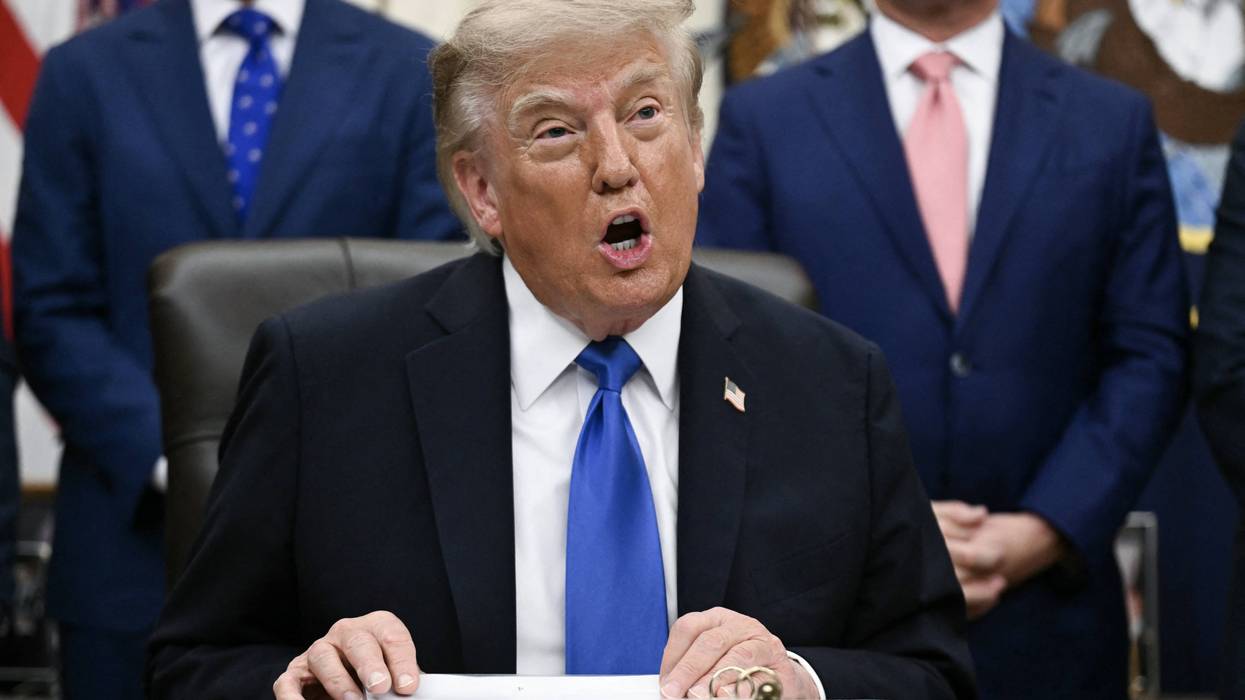
Trump Threatens to Rename Strait of Hormuz for Himself as War Pushes Diesel Prices Toward Record High
One petroleum industry analyst now projects potential record-breaking prices for diesel fuel by Labor Day.
Sep 02, 2026
More than six months after starting an illegal war with Iran, President Donald Trump is now threatening to rename the Strait of Hormuz, whose closure at the start of the conflict led to a global spike in energy prices.
In a Wednesday social media post, Trump falsely claimed that the strait is "under USA control" and then mused on whether to "change the name... to TRUMP STRAIT???"
"Like America itself, it would be 'hotter' than ever before!" the president added. "Thank you for your attention to this matter."
In reality—despite Trump's previous threats to declare the vital commercial waterway a US territory—the US does not have control of the Strait of Hormuz, through which roughly 20% of the world’s oil supply travels.
Al Jazeera reported on Wednesday that Iran's Persian Gulf Strait authority has added eleven more ships to its list of more than 50 vessels that are banned from traveling in the strait.
Iran's Islamic Revolutionary Guard Corps (IRGC) on Wednesday also claimed that two oil tankers that were traversing the strait caught fire after striking sea mines, according to Al Jazeera.
The price of Brent crude petroleum rose once again during Wednesday trading, climbing up over $95 per barrel. Data released Wednesday by the American Automobile Association (AAA) showed that the price of gas in the US has risen to $4.12 per gallon, while the price of diesel fuel has risen to $5.69 per gallon.
While most Americans deal with the price of gasoline on a daily basis, the price of diesel fuel might have an even larger impact on the overall economy given that diesel is used to power the vehicles that ship consumer goods in the US.
In a Wednesday social media post, petroleum industry analyst Patrick De Haan wrote that diesel prices are rising so quickly that "we could even break the all-time diesel record ($5.819/gal) by Labor Day."
Last month, Trump responded to collapsed trade talks with Canada by renaming Lake Ontario as "Lake America." Much like the illegal war with Iran, Trump's trade war with Canada is raising prices on goods paid for by US consumers.
Keep ReadingShow Less

'We Must Stop Trump’s Authoritarian Power Grab,' Sanders Says of Assault on Mail-In Voting
"The Trump administration is trying to use the United States Postal Service to decide who gets to vote in this year's election. Unacceptable."
Sep 02, 2026
Sen. Bernie Sanders warned Tuesday that President Donald Trump's attempt to leverage the US Postal Service to advance his assault on mail-in voting is part of a broader and intensifying "authoritarian power grab" that poses an existential threat to American democracy.
"The Trump administration is trying to use the United States Postal Service to decide who gets to vote in this year's election. Unacceptable," Sanders (I-Vt.) wrote after an anonymous federal official said in a whistleblower disclosure that USPS systems being hastily implemented at the president's direction—and in possible violation of court orders—could threaten the delivery of millions of ballots in the fast-approaching midterm elections.
Sanders said that Trump's assault on mail-in voting via the Postal Service is "blatantly unconstitutional," noting that the nation's founders empowered states to administer elections "precisely so that no authoritarian in Washington could ever seize that power for himself."
"Trump is trying to seize it anyway—in a blatant attempt to rig the election in his favor," the senator warned. "Trump knows this has nothing to do with the safety of mail-in ballots, because he himself has voted by mail in Florida twice this year. He knows mail-in voting is safe and secure."
"Voter fraud is not the problem," Sanders continued. "Trump's problem is that his agenda is deeply unpopular. He has waged illegal wars the American people did not ask for. He is throwing 15 million Americans off the healthcare they have and has made the largest cuts to education and nutrition assistance in history in order to pay for $1 trillion in tax breaks to the top 1% and his billionaire friends."
"He knows that when people vote, they will reject oligarchy and corporate greed. So instead of changing his policies, he is trying to decide which voters get to participate in elections this November," he added. "Too many Americans have fought and died to defend American democracy. We must stop Trump’s authoritarian power grab—before it is too late."
Trump Must Not Be Allowed to Prevent Millions of Americans from Voting
The Trump administration is trying to use the United States Postal Service to decide who gets to vote in this year's election. Unacceptable. We will not accept Trump’s authoritarianism.
Last month, the…
— Bernie Sanders (@BernieSanders) September 1, 2026
Following the USPS whistleblower disclosure, the investigative outlet ProPublica reported on Wednesday that top Postal Service officials have "expressed concerns" during recent internal meetings about how the new policies the agency is implementing in compliance with Trump's March executive order "could delay or block ballots from reaching large swaths of eligible voters for the upcoming midterms."
Days after the Postal Service published its final rule on new mail-in voting requirements, election clerks warned USPS officials that potentially millions of ballots could be impacted, according to ProPublica.
"An example was given of Maricopa County, Arizona, which often sends out more than 2 million ballots at a time in its initial mailing," the outlet reported. "USPS officials confirmed it was possible that one ballot with a bad barcode or wrong voter information within the more than 2 million ballots could delay the entire mailing, according to two people who attended the related committee meeting."
The USPS rule is currently blocked by a federal court, but the Trump administration is working to clear legal hurdles and implement the mail-in ballot restrictions ahead of the midterms.
In a letter to Postmaster General David Steiner on Tuesday, every Democratic member of the House Oversight Committee called for an immediate end to "this irresponsible and illegal scheme to implement the Trump administration’s plan to control our federal elections."
"The right of all Americans to have their votes counted is sacrosanct," the lawmakers wrote. "The Postal Service's current actions are putting clear obstacles in the way of that right."
Keep ReadingShow Less

In Call for 'Ethnic Cleansing,' Israeli Minister Says Only ‘Solution’ For Gaza is For Palestinians to Leave
Defense Minister Israel Katz said Israel was “fully prepared” to begin permanently removing Palestinians from Gaza and was just waiting on President Donald Trump to give the OK.
Sep 02, 2026
Israel has plans drawn up to carry out US President Donald Trump's proposal to remove most of the Palestinian population from the Gaza Strip, according to its defense minister, Israel Katz.
Katz has been a fervent cheerleader for the proposal made by Trump last February to force roughly 2 million Palestinians to leave Gaza and be permanently relocated to other nations with no right to return home, before bulldozing what is left of Gaza after more than two years of relentless destruction by Israel, which has left the vast majority of the population displaced.
While Trump and his Israeli allies used the euphemism "voluntary migration" to describe the plan, United Nations officials, foreign governments, and human rights organizations have said it amounted to a plot for an illegal "ethnic cleansing."
Shortly after the plan was announced, Katz said he’d directed the Israeli military to begin devising a mechanism for the Palestinians' departure. However, forced displacement was ultimately not included in Trump’s 20-point “peace plan” agreed to last October.
During an interview on Wednesday with the Israeli news site Ynet and the newspaper Yedioth Ahronoth, Katz said that Israel was ready to begin removing Palestinians from the territory as soon as Trump gives the order.
"There is no real solution for Gaza in the end without this migration," Katz said.
He claimed that "80% [of Palestinians in Gaza] want to migrate; it’s checked constantly in surveys."
Katz did not cite which "surveys" he was referring to. But one May 2026 survey by Israel's Coordinator of Government Activities in the Territories, the Israeli body that administers civilian affairs in the occupied Palestinian territories, showed that nearly 80% of residents said they wanted additional information about mechanisms for relocating to a third country through Rafah or Kerem Shalom. The reported question did not establish that they wanted to leave permanently.
Other surveys of Gaza's residents conducted by independent pollsters have found that around half, or a majority of the population, want to stay in the territory despite the destruction and deprivation they face.
Katz said the Israeli government was "fully prepared to move [Palestinians] out if it becomes possible—by sea, by air, by every way possible."
"What’s delaying it is that the accepting countries want US support," Katz said. "Every country that is willing wants American backing. Currently, President Trump didn’t cancel this; he froze it. All the Arab countries came to him due to their pressure on this matter."
Katz said "the moment will come" when "it becomes clear that Hamas is not meeting its commitment" to the Phase 2 disarmament-and-withdrawal roadmap agreed to by the Palestinian militant group in July, building on the October 2025 ceasefire agreement reached between Hamas and Israel.
Israel has claimed that the deal required Hamas to totally disarm before Israel withdrew any troops it had advanced past last October's ceasefire line in violation of the agreement. The roadmap Hamas agreed to explicitly stated that Israel's withdrawal would occur at the same time as disarmament.
Then, Katz said, Israel "will get a green light to move forward militarily, territorially, and in other areas, and this thing will gain momentum."
Other figures in the government of Prime Minister Benjamin Netanyahu have spoken openly about the desire to force Palestinians out of Gaza and replace them with Jewish Israeli settlers. But Katz's statements on Wednesday were among the most concrete yet to indicate that a solid plan is in the works to carry out this goal.
“This is the Israeli defense minister admitting, completely and brazenly, that the official policy of the Israeli state is ethnic cleansing in Gaza,” said H.A. Hellyer, a senior associate fellow at the Royal United Services Institute in the United Kingdom. “But somehow we are expected to take seriously those who say it is not.”
Keep ReadingShow Less
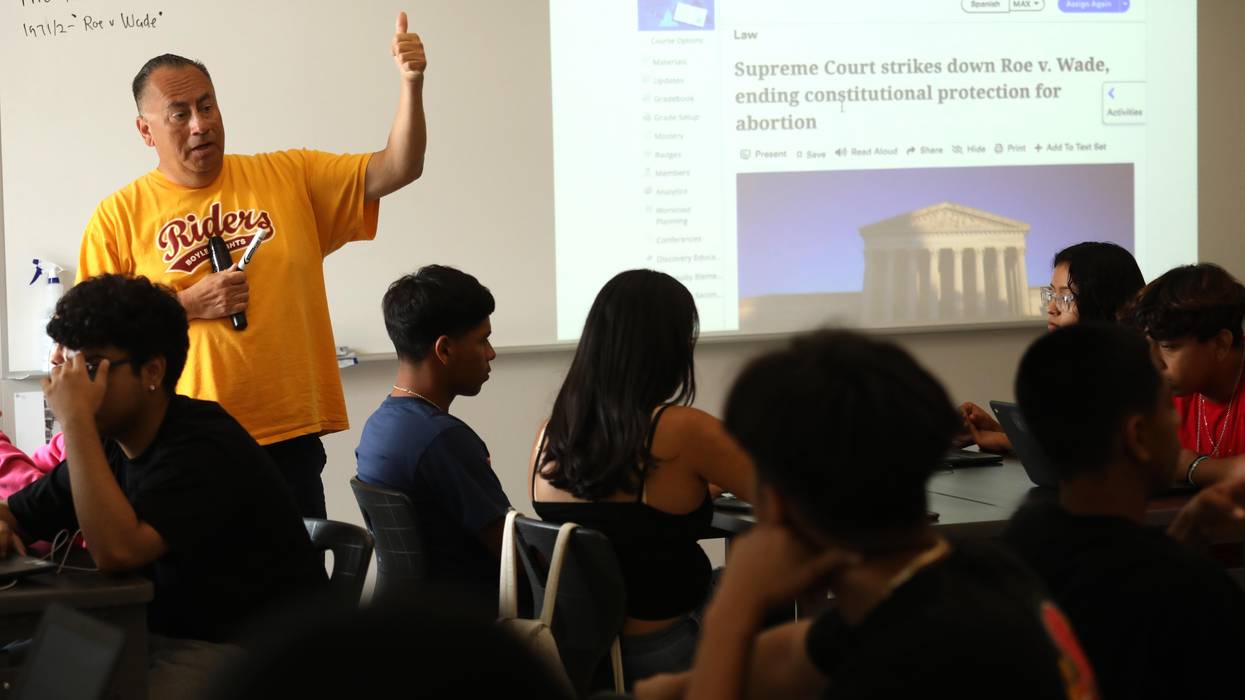
'At a Breaking Point': Survey Shows Teachers Working Second Jobs, Spending Hundreds on Supplies
"They are battling education funding cuts, out-of-control Immigration and Customs Enforcement agents, limitations on what they can say, much less teach, and an affordability crisis," said one union leader.
Sep 02, 2026
As the academic year kicks off, survey results released Wednesday by the second-largest teachers union in the United States show how educators are struggling because of underinvestment in schools and high prices under a Republican-controlled White House and Congress.
In the lead-up to classes resuming, Grow Progress last month surveyed 2,112 American Federation of Teachers (AFT) members who teach kindergarten through 12th grade about spending, stress, President Donald Trump's policies, and more.
The pollsters found that a majority of respondents anticipate spending at least $100 to $600 on supplies for their classrooms without being reimbursed. Over a quarter said that school funding issues shift costs to teachers, and supply prices keep rising.
While 61% said they are buying basic supplies, that's not all that teachers are shopping for this year. Nearly a third are spending on food, hygiene, and student care items, and around a quarter are purchasing specialized tools and accessibility supports as well as items for classroom setup, organization, and decor. Roughly a fifth are buying books and rewards for students.
Half of the teachers surveyed said they anticipate needing to buy food for their students at some point during this school year.
Over three-quarters of them reported seeing negative impacts of the Trump administration's policies in their schools and communities, with 61% selecting "very negative." They pointed to funding cuts and privatization of schooling, immigration enforcement that "traumatizes students and families," rising costs, vulnerable students losing support and protection, political pressure that restricts teaching and inclusion, and issues with bigotry and hostility.
Gasoline prices have stayed at record highs lately thanks to Trump's illegal war on Iran, which has responded by restricting traffic through the Strait of Hormuz, a key trade route. Just 15% of teachers said their commute will cost about the same this year, compared with 36% who expect it to be "a little more" and 47% worried it will be "much more."
A plurality—48%—blamed Trump and Republicans specifically for "the rising costs of groceries, gas, and other goods," while 28% pointed to government policies and leadership, 18% said tariffs and global instability, and 11% cited corporate greed and profiteering.
Prices for everything are climbing while the national debt races past $40 trillion. The bottom line? The current economy is not working for hardworking Americans. www.nytimes.com/2026/08/29/u...
[image or embed]
— AFT (@aft.org) September 2, 2026 at 9:45 AM
Asked to rank their stress level on a 1-10 scale, with 10 being extremely stressed, 62% selected somewhere in the 7-10 range.
Almost a third of teachers said they were somewhat or very likely to leave the profession in the next year. While over half of all respondents said they can't afford to lose their salary, pension, and benefits, and a quarter pointed to their love for teaching and students, nearly a fifth said the stress and workload make the job unsustainable.
"Teachers are at a breaking point," said AFT president Randi Weingarten said in a statement. "Many work more than one job to make ends meet, and they still dig into their pockets each year for basic classroom supplies, from books to art materials and even food for their students."
"They are battling education funding cuts, out-of-control Immigration and Customs Enforcement agents, limitations on what they can say, much less teach, and an affordability crisis that's making it even harder for working families to get by, let alone get ahead," she emphasized. "No wonder they're stressed and talking about leaving the profession. All of this is taking its toll."
The survey results followed a report released late last month by the Center for Economic and Policy Research and the Economic Policy Institute that suggests leaving the field could lead to a pay boost. Sylvia Allegretto, a senior economist at CEPR and research associate at EPI, found that "in 2025, the teacher pay penalty stood at an estimated 25.2%—meaning teachers earned about a quarter less than comparable college graduates in other professions."
"Inflation-adjusted weekly wages for public school teachers fell 6.2% over the last three decades, while wages for other college graduates rose 28.8% over the same period," according to the report. "Teachers typically receive better benefits packages than other professionals, but after accounting for the difference in benefits, teachers' total compensation penalty was 14.5% in 2025."
Allegretto said in a statement that "the decades-long teacher pay penalty has taken a heavy toll on public education. Yet, policymakers have failed to make the needed investments to reverse course. That failure is especially troubling in a country as wealthy as the United States, with more than enough resources for its public schools to be the envy of the world."
It's not just teachers who are contending with soaring costs as school resumes; parents and students are also facing high prices for academic supplies and other essentials, including food, fuel, healthcare, and housing, due to the Iran War, Trump's tariffs, and GOP cuts to key programs.
With the midterm elections just two months away, Senate Democrats on Wednesday released a roundup of recent reporting on how families are struggling with back-to-school season, and said that "as Trump continues to claim affordability is a 'hoax' and a 'con job,' Americans are feeling the strain of Trump's policies on their pocketbooks."
"Headlines from across the country this summer lay bare Trump's cost-of-living crisis as families get ready to send their kids back to school," Senate Democrats stressed. "Parents are worried about the cost of school supplies and their kids' lunches, gas prices are at an all-time high for August, and families' vacations had to be cut short as rising inflation and the cost of airfare hit wallets."
"Trump's attempts to pass the buck belie Americans' reality: His illegal war in Iran, his tariffs, and the rest of Republicans' failed economic policies have made life unaffordable for families nationwide," they added. "Because of President Trump and Republicans' broken promises, working families across the country are now paying more but getting less—and they're fed up."
Keep ReadingShow Less
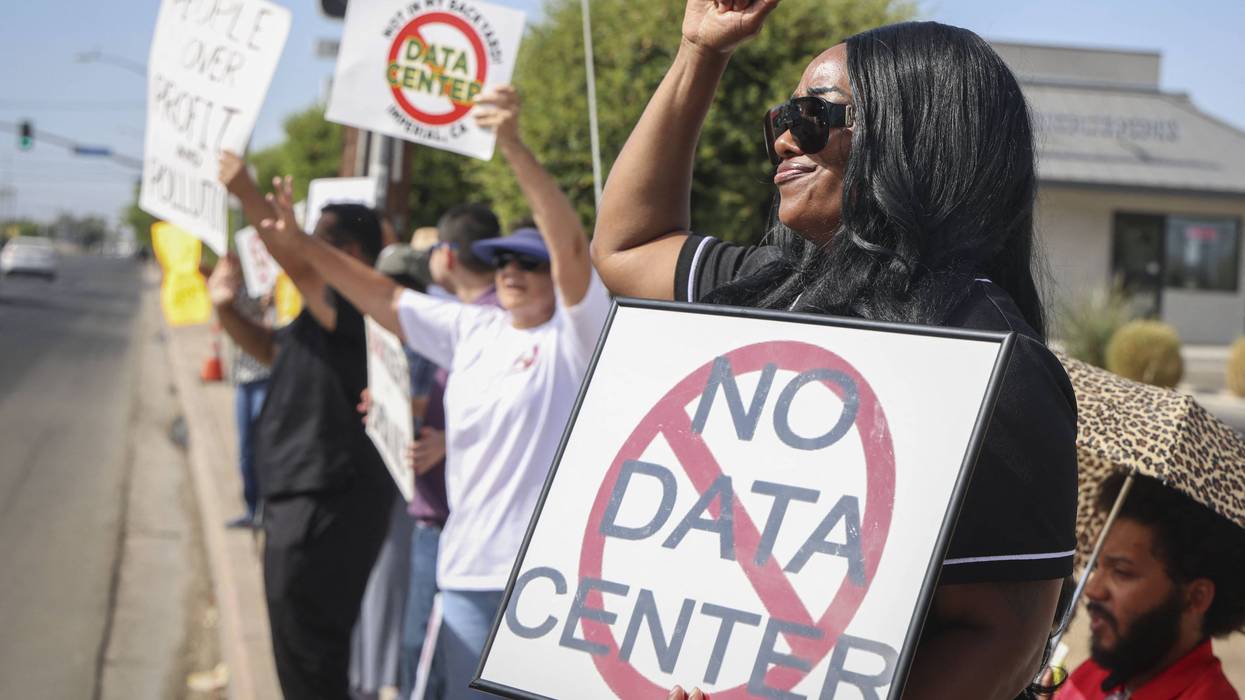
Voters in Missouri City Overwhelmingly Vote to Recall Councilman Who Approved Data Center
"It’s so sad what’s happened in our city, to see people being robbed of what they thought they had," said one data center opponent.
Sep 02, 2026
Residents in Independence, Missouri on Tuesday voted overwhelmingly to recall a city councilman—apparently over his vote to approve tax incentives for an artificial intelligence data center in the community.
In total, 68% of voters in the city's District 1 voted to recall Councilman John Perkins, with just 32% voting to let him stay in office.
According to KMBC News 9, Perkins had originally been elected to serve through June 2028, but he will now be forced to step down as soon as the results of the Tuesday election are certified.
The election marked the first time in Independence's history that a councilperson has been successfully recalled.
In an interview with Spectrum News Kansas City, Perkins expressed no regrets about his decision to approve the data center even though it led to him getting soundly rejected by voters.
"I still have a 40-hour-a-week job, I cut meat for Price Chopper," Perkins explained. "I've laid some really good foundation, so it was time to pass the baton."
The recall election of an Independence councilman is official: John Perkins of the city's first district is out. 68% of voters recalled Perkins. This ends a five-month long effort to remove him from office after he passed tax abatements for an AI data center. pic.twitter.com/fpeEd6fAhj
— Spectrum News Kansas City (@SpectrumNewsKC) September 2, 2026
Perkins was targeted by the recall campaign after he was one of five council members who voted to approve a $150 billion Nebius AI data center that is projected to take up 2.25 million square feet of land in the city.
Two other council members, Bridget McCandless and Jared Fears, were also voted out of office in April after voting in favor of tax incentives for the project.
Independence resident Elisa Breitenbach, an opponent of the planned data center, grew emotional during an interview with Fox 4 Kansas City when explaining her support for the recall campaign.
"It’s so sad what’s happened in our city," said Breitenbach, "to see people being robbed of what they thought they had."
Perkins' recall is just the latest sign of a nationwide backlash against AI data centers, which have been criticized for being major sources of pollution and for raising local utility bills by consuming so much power.
A poll conducted by Embold Research and published by Heatmap Pro last month showed that 75% of Americans now oppose building AI data centers in their area, including 61% registering strong opposition.
Data centers do have an ally in President Donald Trump, however, as he warned Americans this week that their communities will "end up being backwards and poor" if they reject the power-hungry AI facilities.
But McKenna Cobb, a resident who led the recall effort, said people in Independence had spoken loud and clear about their views on the data center—and were ignored by Perkins and other council members.
"There are hours of public testimony," she told KMBC News, "and they still voted in favor of billions of dollars in tax incentives."
Keep ReadingShow Less
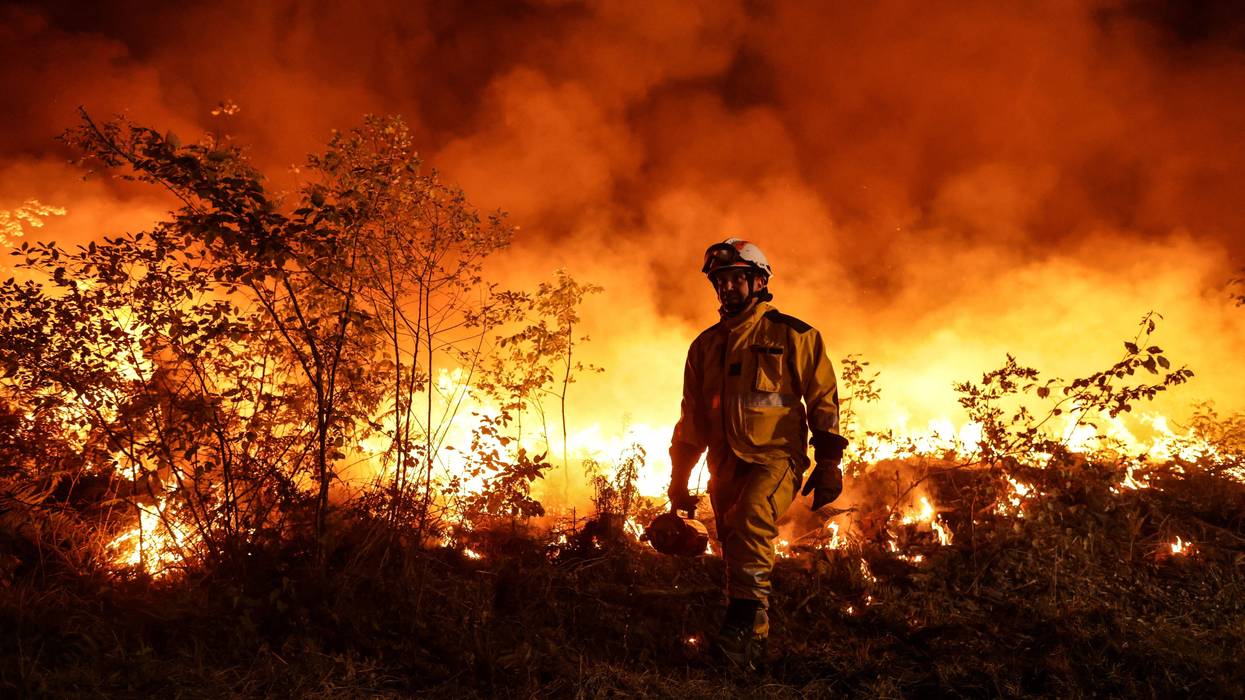
With Planet Set to Overshoot 1.5°C Threshold, Emissions Must Still Be Cut Rapidly to Limit Damage: UN Report
"Overshoot doesn’t have to mean surrender," said one campaigner. "The size and length of that overshoot is still being written by the decisions governments make this year."
Sep 02, 2026
The world has officially moved past the point where preventing a temperature rise above 1.5°C will be possible, scientists said in a United Nations report released Wednesday, which made clear that communities can expect sea levels to continue rising, heatwaves to intensify, and hurricanes, wildfires, and flooding to become more frequent and dangerous—all climate impacts that experts have long warned about as policymakers have failed to rapidly draw down greenhouse gas emissions.
But the authors of the report, published by the UN Environment Program (UNEP) and titled "Limiting Overshoot," emphasized that the inevitable temperature rise must not be viewed as a point of no return, and that steps can and must be taken to ensure the overshoot of the 1.5°C goal is only temporary.
The best-case scenario is now a peak global temperature of 1.8°C, said the report's dozens of authors, with an "overshoot, peak, and decline” pathway still possible before the end of this century if policymakers ensure that planet-heating fossil fuel emissions are drastically reduced—starting immediately.
The report is the first ever to establish the inevitability of overshooting the 1.5°C goal that countries were tasked with working toward when the Paris climate agreement was signed in 2015, and to chart a path toward ensuring the planet can ultimately make its way back down to 1.5°C—hopefully limiting the time above the threshold to a few decades.
If the world remains above 1.5°C over preindustrial temperatures long-term, said UNEP Executive Director Inger Andersen, "there are no good outcomes."
Last year, global temperatures were already about 1.3°C to 1.4°C above the preindustrial average, The Washington Post reported, and the effects on the Earth have been made clear as wildfires have engulfed parts of Canada and South America; a glacial collapse led to flooding that killed more than 1,000 people in Nepal last week; and extreme heat killed more than 1,000 people across Europe this summer.
"Across the globe, extreme heatwaves are already proving that climate impacts will strike faster, hit harder, and last longer—costing more lives and causing deeper disruption,” said Andersen. “Now is the time we must double down on climate action. We can—and must—get on the right path. By cutting greenhouse gas emissions, strengthening resilience and adaptation, and ensuring exceedance of 1.5°C is as small and short as possible.”
The scientists said planet-heating fossil fuel emissions must be slashed by 55% by 2035 and almost entirely eliminated by the middle of the century to limit the global temperature rise to 1.8°C above preindustrial levels.
Climate scientist Joeri Rogeli of Imperial College London, a lead author of the report, told the Post that swift action is crucial, as "for every five years that humanity delays reducing emissions... the peak temperature the world will ultimately face rises by at least a 10th of a degree."
The scientists emphasized that avoiding the 1.5°C limit would have been a less daunting goal than reversing the temperature rise. Policies that continue allowing oil, gas, and coal companies to extract fossil fuels will make both goals difficult to achieve.
The report was released weeks after President Donald Trump terminated offshore wind energy projects in the US—the latest of several renewable energy projects he's killed—and moved to take ownership of Venezuelan oil fields. Recent global climate summits have been attended by an outsized number of corporate lobbyists for fossil fuel industries, weakening the climate commitments that have come out of the meetings.
Fenton Lutunatabua of 350.org Pacific noted that the report was also released as Pacific countries meet at the 55th Pacific Islands Forum Leaders Meeting.
"All eyes are on one of the world’s largest fossil fuel exporters, Australia, and how they act on this urgent warning," said Lutunatabua. "The climate crisis is here and any delay in mitigation, in phasing out coal, oil, and gas, will only make our adaptation pressures harder and more expensive to bear.”
The report emphasizes that even if the world is able to reduce planetary heating once global temperatures shoot above 1.5°C, some impacts of continued fossil fuel extraction will be irreversible, including the melting of glaciers and the extinction of some species.
But UN Secretary-General António Guterres was among those who said "an overshoot of ambition" is now required to mitigate the damage as much as possible.
"This summer’s scorching heat, raging wildfires, and deadly floods are a warning of what lies ahead. We must make the overshoot above 1.5 degrees as small and short as possible," said Guterres.
Along with rapidly cutting emissions, the report calls "carefully governed carbon dioxide removal (CDR)—the process of removing carbon from the air and storing it through afforestation or other means—an essential part of the mix."
CDR methods—from planting forests to act as carbon sinks to technological fixes—come with limitations and are potentially reversible. Forests that are planted could be destroyed by wildfires, while CDR technology is largely unproven and can be energy-intensive—negating many of the benefits.
"Overall, even optimistic CDR scaling is unlikely to deliver a temperature reversal beyond a few tenths of a degree this century," reads the report. "This emphasizes the importance of focusing on reducing greenhouse gas emissions."
Richard Betts, a climate scientist at the University of Exeter and another report author, told the Post that CDR cannot be relied upon as a "get-out-of-jail-free card."
At 350.org, head of campaigns and networks Savio Carvalho said that "there is no version of ‘limiting overshoot’ that doesn’t start with ending new coal, oil, and gas expansion today.”
"This report confirms what communities on the frontlines of the climate crisis have been telling us for years: that delay is not a neutral act, it is a decision," said Carvalho. "We’ve just watched a glacier collapse bury Himalayan communities under mud and water, and we’re watching Pacific nations lose land to the sea in real time. UNEP is right that overshoot doesn’t have to mean surrender: The size and length of that overshoot is still being written by the decisions governments make this year, on fossil fuel phase-out, technology transfer, and on finance for the countries least responsible and most exposed."
Murat Kurum, Türkiye's minister of environment, urbanization, and climate change and the president-designate of the 31st UN Climate Change Conference (COP31), said the upcoming summit scheduled for November "must turn this urgency into concrete action."
“Every fraction of a degree matters, and every year spent in overshoot increases climate risks and the potential for irreversible losses," said Kurum. "The Overshoot Report makes clear that exceeding 1.5°C should not be seen as a new destination, but as a pathway we must urgently work to minimize and reverse. This requires rapid and sustained emissions reductions, alongside ambitious adaptation to protect people, communities, and ecosystems."
"We need to accelerate global electrification, reduce methane emissions from waste, strengthen the climate resilience of cities, and enhance the resilience of marine and coastal ecosystems," he added. "The choices we make today will determine how high temperatures peak, how long they remain there, and how safely we can return to 1.5°C.”
Keep ReadingShow Less

US Condemned for 'War Crimes' After Bombing of Wedding Party in Iran
The spokesperson for Iran's foreign ministry said the attack, which killed at least five people, including two children, was "part of America’s desperate struggle to conceal its failure."
Sep 02, 2026
At least five people are dead, and 68 more are reportedly injured after the US bombed a wedding party in Southern Iran on Tuesday, an act that Iranian officials called a "war crime."
The Iranian embassy posted a video from a hospital showing several people, including what appears to be a young child, being treated for severe wounds from the attack, which occurred at a private home in the city of Kuhestak, Hormozgan province.
At least two children—4-year-old Amir-Ali Karimi and 16-year-old Mohammad Mollahi—were killed, according to Iranian officials.
"Bombing wedding parties used to be a trademark of the US, while Trump was known for targeting schools and hospitals," the social media account for Iran's embassy in Austria said Wednesday morning. "Now, however, Trump’s obsession with war crimes has gone to another level."
The bombing of the wedding party was part of a barrage of strikes launched by US Central Command (CENTCOM) on Tuesday across Iran, which it said targeted Islamic Revolutionary Guard Corps (IRGC) sites in response to Iranian attacks on ships and US personnel near the Strait of Hormuz.
CENTCOM spokesperson Capt. Tim Hawkins told the Associated Press that the command was aware of reported civilian casualties, but noted that the reports “originated from Iranian state media.” He said, "The US military never targets civilians, unlike the IRGC." He did not specify what military purpose the attack on the wedding ceremony served.
The Iranian Red Crescent, which released a video showing the destroyed house, called for the International Criminal Court (ICC) to investigate the attack.
"Given the reported civilian character of the location as the venue of a family wedding ceremony, as well as the presence of civilians at the site, the incident raises serious concerns under international humanitarian law and warrants an independent, impartial, thorough, and effective investigation,” the Red Crescent said in a letter to the ICC's Office of the Prosecutor.
It added that if investigators determine there was no lawful military objective for the strike or that civilian harm was knowingly excessive, the attack could amount to a war crime by the individuals involved.
Yemen’s National Human Rights Commission likewise condemned the attack as "a full-fledged war crime and a blatant violation of international humanitarian law and the four Geneva Conventions," which forbid the targeting of civilians and safe residential areas.
Iranian media reported that the US had also hit several other civilian sites along the southern coast on Tuesday, including a civilian airport. In total, at least 18 people were killed on Tuesday, according to the state broadcaster IRIB.
Tuesday's attacks came after Trump issued more threats of civilizational destruction against Iran.
"If the failed Nation of Iran retaliates for this very justified attack, they will be hit again at a much harder and higher level, but it will not be the biggest attack of them all, that is waiting in the wings and, when it is over, there will be very little left of the Islamic Republic of Iran!” he posted Tuesday on Truth Social.
Later on Tuesday night, he emphasized that if Iran retaliated, "they'll be no longer." He dismissed the idea of returning to negotiations with Iran, stating that "an agreement with them isn’t worth the paper it’s written on." Iran has said it wants to reopen talks with Trump if he agrees to abide by the terms of the memorandum of understanding he agreed to in June.
After attempting and largely failing to implement a global strategy of coordinated economic isolation, Trump returned to bombing Iran for the first time in a month this weekend.
Trita Parsi, the executive vice president of the Quincy Institute for Responsible Statecraft, remarked that the US had bombed the wedding "roughly ten days after the Trump administration claimed its new sanctions on Iran would make military action unnecessary."
Iran appears to have been undeterred by Trump's threats, with Esmaeil Baghaei, the spokesperson for Iran's Foreign Ministry, vowing that Tehran would "respond to these savage crimes with firmness."
He called the attacks part of a "catalog of atrocities" against Iran, including the US bombing of an elementary school that killed 150 people, mostly children, during the war's opening salvo on February 28.
The IRGC claimed on Wednesday that in retaliation for the wedding bombing, its forces launched strikes that killed US personnel and destroyed drones and military facilities at the Ali Al Salem Air Base in Kuwait. Iran also said it launched ballistic missiles at US bases in Bahrain, Jordan, and Iraq.
As of Wednesday morning, the US has not commented on the claim that US personnel were killed. Kuwait reported intercepting the drones and missiles but did not report any casualties, according to Al Jazeera.
Baghaei said the attack on the wedding ceremony was a "war crime" that was part of an "unlawful war of choice" and that the wedding party was "brutally bombed as part of America’s desperate struggle to conceal its failure."
He separately condemned nations that have remained silent in the face of other US attacks against Iranian civilians. The US-based Human Rights Activists News Agency (HRANA) reports that more than 1,700 civilians were killed during the war's initial stage, between the end of February and mid-April, at least 1,700 Iranian civilians were killed in US and Israeli attacks.
"More dangerous than the bomb itself is the normalization of bombing," Baghaei said. "And more dangerous than silence is the conversion of silence into legitimacy.”
Keep ReadingShow Less

Trump Lies That Medicare for All Would Cost ‘Entire Budget of the Whole Country’
As Trump-GOP healthcare cuts devastate millions, Yale experts have found that Medicare for All would save the US over $1 trillion and more than 114,000 lives per year.
Sep 02, 2026
US President Donald Trump railed against Medicare for All during an Oval Office event on Tuesday, falsely claiming the proposal would be prohibitively expensive and ineffective despite new research confirming it would save lives and cost significantly less than the corporate-dominated status quo.
The president's remarks came during an event touting his limited, voluntary, and secretive agreements with leading pharmaceutical companies, deals purportedly aimed at lowering drug prices. Trump again lied by claiming that his efforts are "much bigger" than Medicare for All, which would provide comprehensive health coverage to every person in the US for free at the point of service, eliminating premiums, copays, and deductibles.
Trump said that Medicare for All, which has not been tried at a national level in the US, "doesn't work," falsely claiming a single-payer system would cost "the entire budget of the whole country" and send taxes into the stratosphere.
Nancy Altman, president of the progressive advocacy group Social Security Works and author of the forthcoming book, The Road to Medicare for All: A Call to Action, told Common Dreams on Wednesday that "Trump is once again revealing that he lies about healthcare or is totally ignorant of it."
Total federal outlays were $7.04 trillion in 2025. According to a study published last month by Yale University researchers, a single-payer system like the one set out in Sen. Bernie Sanders' (I-Vt.) Medicare for All Act would save the US roughly $1 trillion per year in national healthcare expenditures, which totaled around $5.7 trillion last year. The finding was consistent with past research showing major savings under Medicare for All compared with the current privatized system.
"A universal healthcare system in the US would not require the country to spend more on healthcare," the Yale researchers wrote. "It would require it to spend less. Our results indicate that the existing budget is more than sufficient to cover everyone at lower total cost."
The study also found that Medicare for All would save more than 114,000 lives across the US each year by providing the tens of millions of uninsured and uninsured Americans with comprehensive coverage.
The researchers contrasted the life-saving impacts of a Medicare for All system with the deadly consequences of the unprecedented Medicaid cuts that Trump signed into law last summer. Experts at Yale and the University of Pennsylvania estimated that the sweeping Republican assault on Medicaid could cause more than 51,000 deaths annually as millions are kicked off the program.
"Numerous highly respected analyses show that improving Medicare and expanding it to everyone, with no premiums, copays, deductibles or coinsurance costs trillions of dollars less than what the nation now spends, while covering the entire population and saving lives," Altman of Social Security Works told Common Dreams. "The question isn't how will we pay for universal coverage, but how will we divvy up the savings."
The House version of the Medicare for All Act, led by Reps. Pramila Jayapal (D-Wash.) and Debbie Dingell (D-Mich.), is cosponsored by a majority of the chamber's Democratic caucus—though it's opposed by the House Democratic leader, Rep. Hakeem Jeffries of New York. The Senate version of the bill, led by Sanders, has 17 cosponsors.
"We already introduced the legislation. Now we need the political will to pass it," Jayapal said on Tuesday. "Healthcare is a human right. No one should go broke, or die, because they got sick."
Keep ReadingShow Less
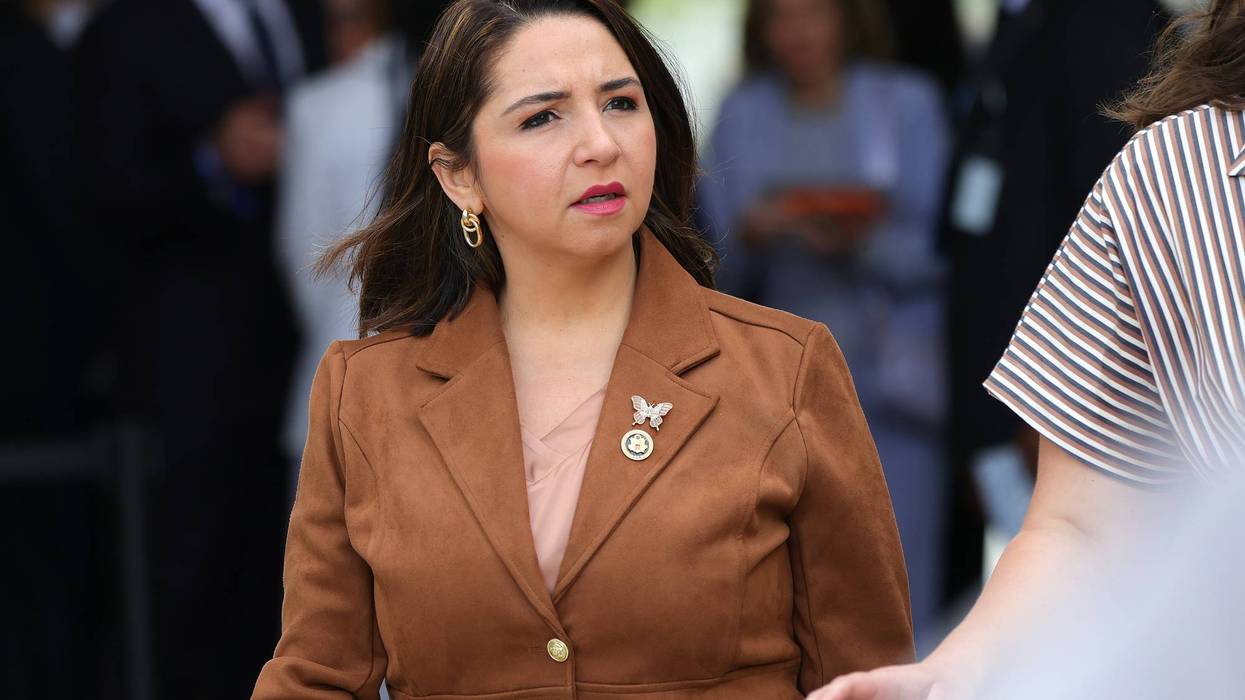
'So Afraid of Working-Class People': Delia Ramirez Rips Supporters of 'Stupid' Anti-Socialism Resolution
"They're afraid to get honest about who they really work for here. Spoiler alert: It's not working people."
Sep 02, 2026
Rep. Delia Ramirez on Tuesday hit back at colleagues in the US House of Representatives who voted for a resolution condemning socialism "in all its forms."
During a speech on the House floor, Ramirez (D-Ill.) slammed the anti-socialism resolution, which passed with the support of eight Democrats joining all Republicans, as a meaningless distraction.
"Today my colleagues thought it was a good use of people's time... to come after a working people's platform and the people working to make that platform a reality," Ramirez said. "You know why? Because they're afraid to get honest about who they really work for here. Spoiler alert: It's not working people."
Whether it’s “socialism”, a Twitch streamer, working-class candidates, or immigrants, my colleagues always have a boogeyman to condemn… Why? They're afraid to be honest about who they really work for and spoiler alert: it's not working people.
I call on my colleagues to put… pic.twitter.com/r4k4KWZg2S
— Congresswoman Delia C. Ramirez (@repdeliaramirez) September 1, 2026
The Illinois Democrat rattled off a list of Republican policies that benefit big corporations and the wealthy at the expense of working people, including cuts to Medicaid and support for President Donald Trump's illegal war with Iran.
Ramirez then accused Republicans of pushing the resolution "because you're so afraid of working-class people coming into the next Congress" after the 2026 midterm elections.
"So let me be clear," she concluded. "Not only do I call on my colleagues to vote against this stupid resolution... but also to put this much energy into creating a world, a system that actually works for working people."
Ramirez was far from the only Democrat to rip the anti-socialism resolution.
Rep. Mark Pocan (D-Wis.) likewise condemned the "stupid resolution," which he said "ignores Americans who are more concerned about the cost of living than obsessing about socialism."
Rep. Valerie Foushee (D-NC) suggested that a better use of Congress' time would be to "condemn the 34-count felon in the White House, not a bunch of people who just want universal healthcare."
Darializa Avila Chevalier, the Democratic nominee for the US House seat in New York's 13th congressional district, slammed the eight Democrats who voted with Republicans to pass the resolution.
"Democrats love talking about a 'big tent,' but then they vote in line with Republicans hell-bent on destroying our democracy," she wrote. "This resolution was aimed squarely at democratic socialists like me."
Keep ReadingShow Less
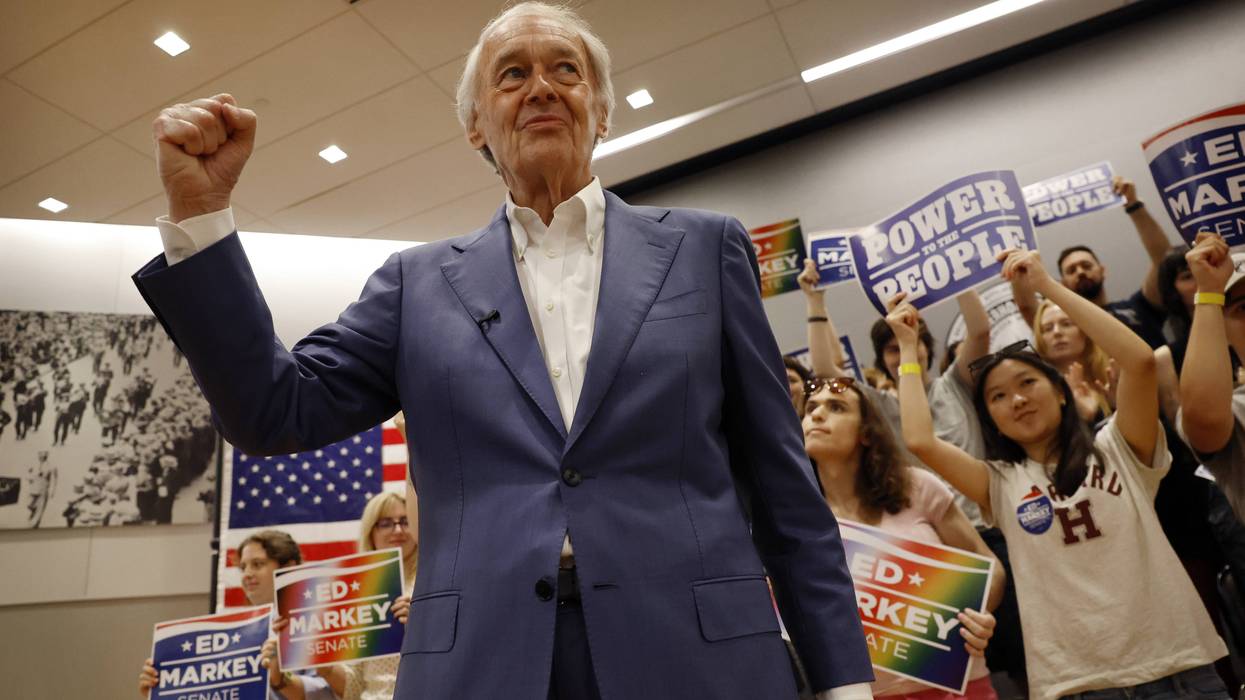
'Testament to the Power of the Progressive Movement': Ed Markey Beats Seth Moulton in Landslide
One Markey supporter called his victory "a rejection of the idea that generational change has to come at the expense of bold, progressive leadership."
Sep 02, 2026
Progressive US Sen. Ed Markey, a champion of Medicare for All and the Green New Deal, decisively fended off a Democratic primary challenge from his right on Tuesday, defeating Rep. Seth Moulton by nearly 30 percentage points in a contest that focused heavily on the incumbent senator's age.
Markey, 80, and his supporters—including prominent young Democrats such as Rep. Alexandria Ocasio-Cortez (D-NY)—rejected the notion that "generational change" necessarily means electing the youngest candidate in the race. Markey said in his victory speech Tuesday night that "generational change isn’t about compromising to do the small things better—it’s about fighting to do the big things best."
“Tonight is a testament to the power of the progressive movement,” Markey added. “It is a progressive movement fueled by young people, demanding more from their leaders, and it’s your voices that are the ones we need to hear right now.”
Moulton, a 47-year-old member of the conservative New Democrat Coalition, attempted to capture momentum that has propelled other younger candidates to victory over entrenched incumbents by making Markey's age and lengthy tenure in Congress—rather than his policy agenda—a central focus of Tuesday's contest. In a recent interview with MS NOW, Moulton removed ideology and policy from the equation completely, lumping Markey in with Sen. Mitch McConnell (R-Ky.) and late Sen. Lindsey Graham (R-SC) as well as elderly Democrats such as former President Joe Biden.
The Democratic representative, who opposes Medicare for All and attacked Sens. Bernie Sanders (I-Vt.) and Elizabeth Warren (D-Mass.) from the right during his ill-fated 2020 presidential bid, also falsely claimed in a campaign ad that he and Markey "want the same things."
Moulton's age-centric message failed, according to Markey's backers, because voters in Massachusetts and elsewhere are hungry for progressive politics, not just younger politicians.
"We don’t want younger politicians with older politics,” Tyler Hack, the 21-year-old executive director of the Christopher Street Project, a trans rights group, said at a rally for Markey over the weekend.
Joseph Geevarghese, executive director of Our Revolution, said in a statement that "tonight's victory isn't just a win for Ed Markey or for our progressive movement. It's a rejection of the idea that generational change has to come at the expense of bold, progressive leadership."
"Massachusetts voters understood the difference between changing the age of our leaders and changing the politics of our country," said Geevarghese. "Ed Markey has never settled for the moderate Democratic establishment or accepted the status quo simply because Washington said change was impossible. From staking his political capital on the Green New Deal, to fighting for Medicare for All, abolishing ICE, and taking on corporations and billionaires rigging our economy, Ed has consistently been willing to go where the Democratic Party needs to go—often before the rest of Washington gets there."
"That's the lesson from Massachusetts tonight," he added. "The future doesn't belong to the youngest politician in the room. It belongs to the people with the courage to fight for it."
Markey, who is heavily favored to win the general election in November, has said a new six-year Senate term would be his last.
Keep ReadingShow Less
See More
Most Popular