SUBSCRIBE TO OUR FREE NEWSLETTER
Daily news & progressive opinion—funded by the people, not the corporations—delivered straight to your inbox.
5
#000000
#FFFFFF
To donate by check, phone, or other method, see our More Ways to Give page.
Daily news & progressive opinion—funded by the people, not the corporations—delivered straight to your inbox.
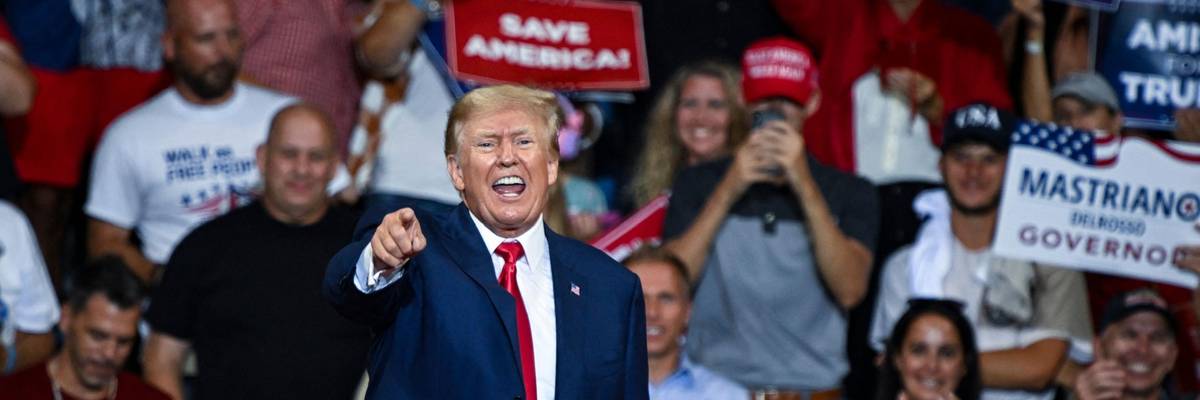
Former U.S. President Donald Trump speaks during a campaign rally in support of Republicans Doug Mastriano for governor of Pennsylvania and Mehmet Oz for U.S. Senate at Mohegan Sun Arena in Wilkes-Barre on September 3, 2022
"There are no good, pro-Constitution, pro-democracy, pro-best interests of American society or the reputation of the Supreme Court reasons for taking this position," said one commentator.
Donald Trump scored at least a temporary legal victory on Friday when the U.S. Supreme Court announced it would not intervene—at least for now—to determine whether or not the former president enjoys full immunity for alleged misconduct during his time in office, including actions related to a federal indictment for his role in the January 6, 2021 Capitol insurrection.
Jack Smith, the special counsel prosecuting Trump, had requested that the nation's highest tribunal bypass a lower appeals court, telling the justices the case "presents a fundamental question at the heart of our democracy" that must be answered expeditiously.
The question at the center of the case is "whether a former president is absolutely immune from federal prosecution for crimes committed while in office or is constitutionally protected from federal prosecution when he has been impeached but not convicted before the criminal proceedings begin," said Smith.
Trump previously appealed District Judge Tanya Chutkan's ruling that rejected his claim of immunity. The former president's appeal suspended his criminal trial centered on allegations that Trump attempted to obstruct Congress and defraud the U.S. government when he led efforts to overturn President Joe Biden's 2020 election victory.
Smith told the justices that the U.S. government recognized that asking them to rule on Trump immunity was "an extraordinary request."
"This is an extraordinary case," he reasoned.
Political commentator David Rothkopf said the high court's decision "only helps Trump and hurts the country."
Smith and critics of Trump have pointed out that delaying Trump's criminal case could push the trial on his conduct past the 2024 election, potentially allowing him to order the charges be dropped if he wins the presidential race.
Journalist Mehdi Hasan said the court's refusal to intervene provides the latest proof that the Supreme Court will not "protect our rights and our democracy, and stand up to Trump should he win again next year and go full fascist."
Dear Common Dreams reader, It’s been nearly 30 years since I co-founded Common Dreams with my late wife, Lina Newhouser. We had the radical notion that journalism should serve the public good, not corporate profits. It was clear to us from the outset what it would take to build such a project. No paid advertisements. No corporate sponsors. No millionaire publisher telling us what to think or do. Many people said we wouldn't last a year, but we proved those doubters wrong. Together with a tremendous team of journalists and dedicated staff, we built an independent media outlet free from the constraints of profits and corporate control. Our mission has always been simple: To inform. To inspire. To ignite change for the common good. Building Common Dreams was not easy. Our survival was never guaranteed. When you take on the most powerful forces—Wall Street greed, fossil fuel industry destruction, Big Tech lobbyists, and uber-rich oligarchs who have spent billions upon billions rigging the economy and democracy in their favor—the only bulwark you have is supporters who believe in your work. But here’s the urgent message from me today. It's never been this bad out there. And it's never been this hard to keep us going. At the very moment Common Dreams is most needed, the threats we face are intensifying. We need your support now more than ever. We don't accept corporate advertising and never will. We don't have a paywall because we don't think people should be blocked from critical news based on their ability to pay. Everything we do is funded by the donations of readers like you. When everyone does the little they can afford, we are strong. But if that support retreats or dries up, so do we. Will you donate now to make sure Common Dreams not only survives but thrives? —Craig Brown, Co-founder |
Donald Trump scored at least a temporary legal victory on Friday when the U.S. Supreme Court announced it would not intervene—at least for now—to determine whether or not the former president enjoys full immunity for alleged misconduct during his time in office, including actions related to a federal indictment for his role in the January 6, 2021 Capitol insurrection.
Jack Smith, the special counsel prosecuting Trump, had requested that the nation's highest tribunal bypass a lower appeals court, telling the justices the case "presents a fundamental question at the heart of our democracy" that must be answered expeditiously.
The question at the center of the case is "whether a former president is absolutely immune from federal prosecution for crimes committed while in office or is constitutionally protected from federal prosecution when he has been impeached but not convicted before the criminal proceedings begin," said Smith.
Trump previously appealed District Judge Tanya Chutkan's ruling that rejected his claim of immunity. The former president's appeal suspended his criminal trial centered on allegations that Trump attempted to obstruct Congress and defraud the U.S. government when he led efforts to overturn President Joe Biden's 2020 election victory.
Smith told the justices that the U.S. government recognized that asking them to rule on Trump immunity was "an extraordinary request."
"This is an extraordinary case," he reasoned.
Political commentator David Rothkopf said the high court's decision "only helps Trump and hurts the country."
Smith and critics of Trump have pointed out that delaying Trump's criminal case could push the trial on his conduct past the 2024 election, potentially allowing him to order the charges be dropped if he wins the presidential race.
Journalist Mehdi Hasan said the court's refusal to intervene provides the latest proof that the Supreme Court will not "protect our rights and our democracy, and stand up to Trump should he win again next year and go full fascist."
Donald Trump scored at least a temporary legal victory on Friday when the U.S. Supreme Court announced it would not intervene—at least for now—to determine whether or not the former president enjoys full immunity for alleged misconduct during his time in office, including actions related to a federal indictment for his role in the January 6, 2021 Capitol insurrection.
Jack Smith, the special counsel prosecuting Trump, had requested that the nation's highest tribunal bypass a lower appeals court, telling the justices the case "presents a fundamental question at the heart of our democracy" that must be answered expeditiously.
The question at the center of the case is "whether a former president is absolutely immune from federal prosecution for crimes committed while in office or is constitutionally protected from federal prosecution when he has been impeached but not convicted before the criminal proceedings begin," said Smith.
Trump previously appealed District Judge Tanya Chutkan's ruling that rejected his claim of immunity. The former president's appeal suspended his criminal trial centered on allegations that Trump attempted to obstruct Congress and defraud the U.S. government when he led efforts to overturn President Joe Biden's 2020 election victory.
Smith told the justices that the U.S. government recognized that asking them to rule on Trump immunity was "an extraordinary request."
"This is an extraordinary case," he reasoned.
Political commentator David Rothkopf said the high court's decision "only helps Trump and hurts the country."
Smith and critics of Trump have pointed out that delaying Trump's criminal case could push the trial on his conduct past the 2024 election, potentially allowing him to order the charges be dropped if he wins the presidential race.
Journalist Mehdi Hasan said the court's refusal to intervene provides the latest proof that the Supreme Court will not "protect our rights and our democracy, and stand up to Trump should he win again next year and go full fascist."