

SUBSCRIBE TO OUR FREE NEWSLETTER
Daily news & progressive opinion—funded by the people, not the corporations—delivered straight to your inbox.
5
#000000
#FFFFFF
To donate by check, phone, or other method, see our More Ways to Give page.
Daily news & progressive opinion—funded by the people, not the corporations—delivered straight to your inbox.
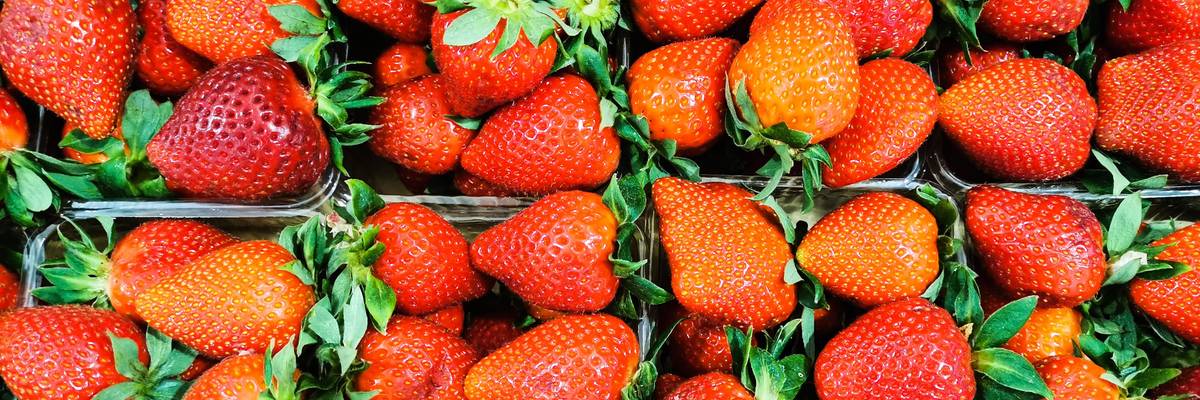
Fresh strawberries are photographed at a grocery store in Krakow, Poland, on May 13, 2021.
This year, EWG scientists found that four out of five of the most frequently detected pesticides on the produce were fungicides that could have serious health impacts.
The latest edition of an annual consumer's guide published Wednesday reveals that almost three-fourths of non-organic fruits and vegetables sampled contained traces of toxic pesticides while the "dirty dozen"—including strawberries and spinach—tested at levels closer to 95%.
Scientists with the Environmental Working Group (EWG) document in their new report, "2024 Shopper's Guide to Pesticides In Produce," that four out of five of the most frequently detected pesticides found on the twelve most-contaminated produce items were fungicides that could have serious health impacts.
"There's data to suggest that these fungicides can disrupt the hormone function in our body," EWG senior scientist Alexa Friedman told Common Dreams, adding that the chemicals had "been linked to things like worse health outcomes" and "impacts on the male reproductive system."
"We recommend using the Shopper's Guide as a way to prioritize which fruits and vegetables to buy organic to reduce your pesticide exposure."
The four fungicides detected on the Dirty Dozen produce were fludioxonil, pyraclostrobin, boscalid, and pyrimethanil. Two of these—fludioxonil and pyrimethanil—were also found in the highest concentrations of any pesticide detected.
The annual Dirty Dozen and Clean Fifteen lists are based on a review of Department of Agriculture and Food and Drug Administration data. This year, EWG looked at results from 47,510 samples of 46 fruits and vegetables.
2024's Dirty Dozen list is similar to previous years, with strawberries, spinach, and a trio of hearty greens—kale, collard greens, and mustard greens—once again taking the top three spots. The full list is as follows:
The four fungicides were found on the fruits and vegetables for which new data was available this year—blueberries, green beans, peaches, and pears—for some of them at high levels.
"One reason we might see fungicides in high concentrations compared to other types of pesticides are that fungicides are often sprayed on the produce later in the process," Friedman said.
Farmers frequently apply fungicides after harvest to protect crops from mildew or mold on the way to the grocery store.
Beyond fungicides, testing also turned up the neonicotinoids acetamiprid and imidacloprid, which harm bees and other pollinators and have been associated with damage to the development of children's nervous systems.
Testing also revealed the pyrethroid insecticides cypermethrin and bifenthrin. While there are fewer studies on these pesticides, existing research suggests they may also harm children's brains. More than 1 in 10 pear samples tested positive for diphenylamine, which is currently banned in the European Union over cancer concerns.
Most of the pesticides detected on the Dirty Dozen are legal, but one exception is acephate, an organophosphate insecticide that is essentially prohibited for use on green beans but is still found on them. One sample tested positive for levels 500 times the Environmental Protection Agency's (EPA) legal limit.
In total, EWG found that nearly 75% of non-organic fruits and vegetables tested were contaminated with pesticides. However, nearly 65% of the conventional items on the Clean Fifteen list were pesticide free. This year's Clean Fifteen are:
The Shopper's Guide is primarily geared toward helping consumers make informed choices as they choose between conventional and organic items, which may be more expensive or harder to find.
"We always recommend that people consume as many fruits and veggies as possible, whether they're organic or conventional," Friedman said.
But for people concerned about consuming pesticides, she added, EWG recommends "using the Shopper's Guide as a way to prioritize which fruits and vegetables to buy organic to reduce your pesticide exposure."
EWG recommends prioritizing organic versions of Dirty Dozen items.
As a whole, the EWG advocates for policymakers and regulators to do more to understand the real risks posed by pesticides and protect people from them.
"We still feel that there needs to be more studies that really focus on the health effects of these pesticides, specifically the pesticides that we found in high detection this year, so that we can better understand how these might impact health for susceptible populations, particularly for children," Friedman said.
She added that while many of the pesticides detected in tests were at or below legal limits set by the EPA, "legal doesn't always mean that they're safe for everyone."
In a 2020 study, for example, EWG researchers found that for nearly 90% of common pesticides the EPA had failed to apply an extra margin of safety for children when setting limits, even though it is required to do so under the Food Quality Protection Act.
Currently, the EPA has a chance to improve regulations as it rewrites a ban on chlorpyrifos on food, which was overturned by a court on a technicality. It is also reviewing whether or not the pesticide dimethyl tetrachloroterephthalate (DCPA) can be used safely after it acknowledged the "significant risks" it posed to human health.
EWG is also raising the alarm about a slate of new rules that some lawmakers may try to attach to the 2023 Farm Bill or other important legislation. These proposed laws, such as the Agricultural Labeling Uniformity Act and the EATS Act, would prevent states or localities from setting additional regulations on pesticides. In September 2023, EWG joined with 184 other environmental groups in sending a letter to the House and Senate opposing such measures, which the groups argue take "decision-making out of the hands of those most impacted by pesticide use."
"States and localities are often in a much better position than the EPA to quickly assess risks, consider emerging evidence, and to make decisions to protect their unique local environments and communities including schools and childcare facilities, from toxic pesticides," the letter states. "Undermining that authority would hamstring critical local efforts to address cancer and other human health risks, threats to water resources, and harms to pollinators and other wildlife."
Dear Common Dreams reader, It’s been nearly 30 years since I co-founded Common Dreams with my late wife, Lina Newhouser. We had the radical notion that journalism should serve the public good, not corporate profits. It was clear to us from the outset what it would take to build such a project. No paid advertisements. No corporate sponsors. No millionaire publisher telling us what to think or do. Many people said we wouldn't last a year, but we proved those doubters wrong. Together with a tremendous team of journalists and dedicated staff, we built an independent media outlet free from the constraints of profits and corporate control. Our mission has always been simple: To inform. To inspire. To ignite change for the common good. Building Common Dreams was not easy. Our survival was never guaranteed. When you take on the most powerful forces—Wall Street greed, fossil fuel industry destruction, Big Tech lobbyists, and uber-rich oligarchs who have spent billions upon billions rigging the economy and democracy in their favor—the only bulwark you have is supporters who believe in your work. But here’s the urgent message from me today. It's never been this bad out there. And it's never been this hard to keep us going. At the very moment Common Dreams is most needed, the threats we face are intensifying. We need your support now more than ever. We don't accept corporate advertising and never will. We don't have a paywall because we don't think people should be blocked from critical news based on their ability to pay. Everything we do is funded by the donations of readers like you. When everyone does the little they can afford, we are strong. But if that support retreats or dries up, so do we. Will you donate now to make sure Common Dreams not only survives but thrives? —Craig Brown, Co-founder |
The latest edition of an annual consumer's guide published Wednesday reveals that almost three-fourths of non-organic fruits and vegetables sampled contained traces of toxic pesticides while the "dirty dozen"—including strawberries and spinach—tested at levels closer to 95%.
Scientists with the Environmental Working Group (EWG) document in their new report, "2024 Shopper's Guide to Pesticides In Produce," that four out of five of the most frequently detected pesticides found on the twelve most-contaminated produce items were fungicides that could have serious health impacts.
"There's data to suggest that these fungicides can disrupt the hormone function in our body," EWG senior scientist Alexa Friedman told Common Dreams, adding that the chemicals had "been linked to things like worse health outcomes" and "impacts on the male reproductive system."
"We recommend using the Shopper's Guide as a way to prioritize which fruits and vegetables to buy organic to reduce your pesticide exposure."
The four fungicides detected on the Dirty Dozen produce were fludioxonil, pyraclostrobin, boscalid, and pyrimethanil. Two of these—fludioxonil and pyrimethanil—were also found in the highest concentrations of any pesticide detected.
The annual Dirty Dozen and Clean Fifteen lists are based on a review of Department of Agriculture and Food and Drug Administration data. This year, EWG looked at results from 47,510 samples of 46 fruits and vegetables.
2024's Dirty Dozen list is similar to previous years, with strawberries, spinach, and a trio of hearty greens—kale, collard greens, and mustard greens—once again taking the top three spots. The full list is as follows:
The four fungicides were found on the fruits and vegetables for which new data was available this year—blueberries, green beans, peaches, and pears—for some of them at high levels.
"One reason we might see fungicides in high concentrations compared to other types of pesticides are that fungicides are often sprayed on the produce later in the process," Friedman said.
Farmers frequently apply fungicides after harvest to protect crops from mildew or mold on the way to the grocery store.
Beyond fungicides, testing also turned up the neonicotinoids acetamiprid and imidacloprid, which harm bees and other pollinators and have been associated with damage to the development of children's nervous systems.
Testing also revealed the pyrethroid insecticides cypermethrin and bifenthrin. While there are fewer studies on these pesticides, existing research suggests they may also harm children's brains. More than 1 in 10 pear samples tested positive for diphenylamine, which is currently banned in the European Union over cancer concerns.
Most of the pesticides detected on the Dirty Dozen are legal, but one exception is acephate, an organophosphate insecticide that is essentially prohibited for use on green beans but is still found on them. One sample tested positive for levels 500 times the Environmental Protection Agency's (EPA) legal limit.
In total, EWG found that nearly 75% of non-organic fruits and vegetables tested were contaminated with pesticides. However, nearly 65% of the conventional items on the Clean Fifteen list were pesticide free. This year's Clean Fifteen are:
The Shopper's Guide is primarily geared toward helping consumers make informed choices as they choose between conventional and organic items, which may be more expensive or harder to find.
"We always recommend that people consume as many fruits and veggies as possible, whether they're organic or conventional," Friedman said.
But for people concerned about consuming pesticides, she added, EWG recommends "using the Shopper's Guide as a way to prioritize which fruits and vegetables to buy organic to reduce your pesticide exposure."
EWG recommends prioritizing organic versions of Dirty Dozen items.
As a whole, the EWG advocates for policymakers and regulators to do more to understand the real risks posed by pesticides and protect people from them.
"We still feel that there needs to be more studies that really focus on the health effects of these pesticides, specifically the pesticides that we found in high detection this year, so that we can better understand how these might impact health for susceptible populations, particularly for children," Friedman said.
She added that while many of the pesticides detected in tests were at or below legal limits set by the EPA, "legal doesn't always mean that they're safe for everyone."
In a 2020 study, for example, EWG researchers found that for nearly 90% of common pesticides the EPA had failed to apply an extra margin of safety for children when setting limits, even though it is required to do so under the Food Quality Protection Act.
Currently, the EPA has a chance to improve regulations as it rewrites a ban on chlorpyrifos on food, which was overturned by a court on a technicality. It is also reviewing whether or not the pesticide dimethyl tetrachloroterephthalate (DCPA) can be used safely after it acknowledged the "significant risks" it posed to human health.
EWG is also raising the alarm about a slate of new rules that some lawmakers may try to attach to the 2023 Farm Bill or other important legislation. These proposed laws, such as the Agricultural Labeling Uniformity Act and the EATS Act, would prevent states or localities from setting additional regulations on pesticides. In September 2023, EWG joined with 184 other environmental groups in sending a letter to the House and Senate opposing such measures, which the groups argue take "decision-making out of the hands of those most impacted by pesticide use."
"States and localities are often in a much better position than the EPA to quickly assess risks, consider emerging evidence, and to make decisions to protect their unique local environments and communities including schools and childcare facilities, from toxic pesticides," the letter states. "Undermining that authority would hamstring critical local efforts to address cancer and other human health risks, threats to water resources, and harms to pollinators and other wildlife."
The latest edition of an annual consumer's guide published Wednesday reveals that almost three-fourths of non-organic fruits and vegetables sampled contained traces of toxic pesticides while the "dirty dozen"—including strawberries and spinach—tested at levels closer to 95%.
Scientists with the Environmental Working Group (EWG) document in their new report, "2024 Shopper's Guide to Pesticides In Produce," that four out of five of the most frequently detected pesticides found on the twelve most-contaminated produce items were fungicides that could have serious health impacts.
"There's data to suggest that these fungicides can disrupt the hormone function in our body," EWG senior scientist Alexa Friedman told Common Dreams, adding that the chemicals had "been linked to things like worse health outcomes" and "impacts on the male reproductive system."
"We recommend using the Shopper's Guide as a way to prioritize which fruits and vegetables to buy organic to reduce your pesticide exposure."
The four fungicides detected on the Dirty Dozen produce were fludioxonil, pyraclostrobin, boscalid, and pyrimethanil. Two of these—fludioxonil and pyrimethanil—were also found in the highest concentrations of any pesticide detected.
The annual Dirty Dozen and Clean Fifteen lists are based on a review of Department of Agriculture and Food and Drug Administration data. This year, EWG looked at results from 47,510 samples of 46 fruits and vegetables.
2024's Dirty Dozen list is similar to previous years, with strawberries, spinach, and a trio of hearty greens—kale, collard greens, and mustard greens—once again taking the top three spots. The full list is as follows:
The four fungicides were found on the fruits and vegetables for which new data was available this year—blueberries, green beans, peaches, and pears—for some of them at high levels.
"One reason we might see fungicides in high concentrations compared to other types of pesticides are that fungicides are often sprayed on the produce later in the process," Friedman said.
Farmers frequently apply fungicides after harvest to protect crops from mildew or mold on the way to the grocery store.
Beyond fungicides, testing also turned up the neonicotinoids acetamiprid and imidacloprid, which harm bees and other pollinators and have been associated with damage to the development of children's nervous systems.
Testing also revealed the pyrethroid insecticides cypermethrin and bifenthrin. While there are fewer studies on these pesticides, existing research suggests they may also harm children's brains. More than 1 in 10 pear samples tested positive for diphenylamine, which is currently banned in the European Union over cancer concerns.
Most of the pesticides detected on the Dirty Dozen are legal, but one exception is acephate, an organophosphate insecticide that is essentially prohibited for use on green beans but is still found on them. One sample tested positive for levels 500 times the Environmental Protection Agency's (EPA) legal limit.
In total, EWG found that nearly 75% of non-organic fruits and vegetables tested were contaminated with pesticides. However, nearly 65% of the conventional items on the Clean Fifteen list were pesticide free. This year's Clean Fifteen are:
The Shopper's Guide is primarily geared toward helping consumers make informed choices as they choose between conventional and organic items, which may be more expensive or harder to find.
"We always recommend that people consume as many fruits and veggies as possible, whether they're organic or conventional," Friedman said.
But for people concerned about consuming pesticides, she added, EWG recommends "using the Shopper's Guide as a way to prioritize which fruits and vegetables to buy organic to reduce your pesticide exposure."
EWG recommends prioritizing organic versions of Dirty Dozen items.
As a whole, the EWG advocates for policymakers and regulators to do more to understand the real risks posed by pesticides and protect people from them.
"We still feel that there needs to be more studies that really focus on the health effects of these pesticides, specifically the pesticides that we found in high detection this year, so that we can better understand how these might impact health for susceptible populations, particularly for children," Friedman said.
She added that while many of the pesticides detected in tests were at or below legal limits set by the EPA, "legal doesn't always mean that they're safe for everyone."
In a 2020 study, for example, EWG researchers found that for nearly 90% of common pesticides the EPA had failed to apply an extra margin of safety for children when setting limits, even though it is required to do so under the Food Quality Protection Act.
Currently, the EPA has a chance to improve regulations as it rewrites a ban on chlorpyrifos on food, which was overturned by a court on a technicality. It is also reviewing whether or not the pesticide dimethyl tetrachloroterephthalate (DCPA) can be used safely after it acknowledged the "significant risks" it posed to human health.
EWG is also raising the alarm about a slate of new rules that some lawmakers may try to attach to the 2023 Farm Bill or other important legislation. These proposed laws, such as the Agricultural Labeling Uniformity Act and the EATS Act, would prevent states or localities from setting additional regulations on pesticides. In September 2023, EWG joined with 184 other environmental groups in sending a letter to the House and Senate opposing such measures, which the groups argue take "decision-making out of the hands of those most impacted by pesticide use."
"States and localities are often in a much better position than the EPA to quickly assess risks, consider emerging evidence, and to make decisions to protect their unique local environments and communities including schools and childcare facilities, from toxic pesticides," the letter states. "Undermining that authority would hamstring critical local efforts to address cancer and other human health risks, threats to water resources, and harms to pollinators and other wildlife."

