SUBSCRIBE TO OUR FREE NEWSLETTER
Daily news & progressive opinion—funded by the people, not the corporations—delivered straight to your inbox.
5
#000000
#FFFFFF
To donate by check, phone, or other method, see our More Ways to Give page.
Daily news & progressive opinion—funded by the people, not the corporations—delivered straight to your inbox.
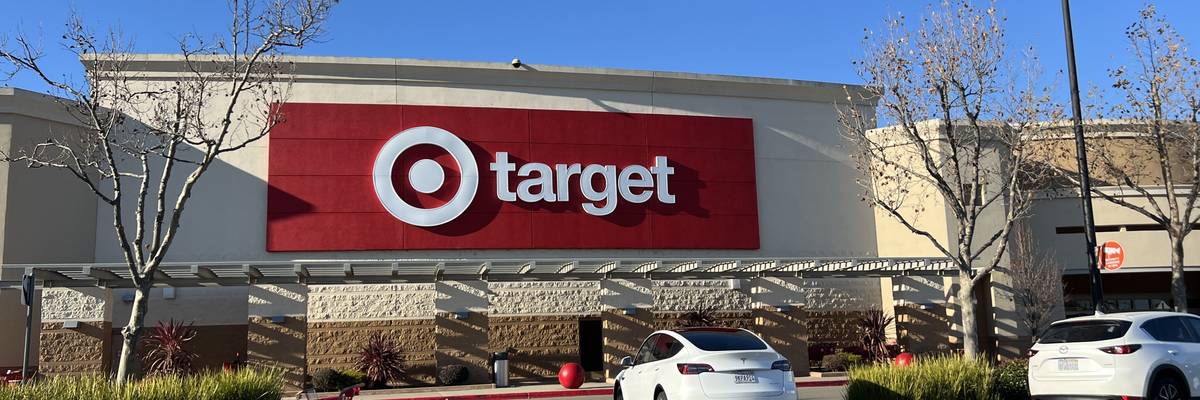
A Target store and its parking lot are seen in San Ramon, California on January 18, 2025.
"We have the power," said one supporter of the boycott. "We don't have to accept corporate monopolies. We don't have to live with corporate money corrupting our politics."
After hundreds of thousands of social media users in recent days shared posts calling for an economic blackout at major retail corporations on February 28, the boycott was underway Friday, with proponents saying the aim was to deliver a message about widespread anger over corporate greed "to corporate America directly."
"We have the power. We don't have to accept corporate monopolies. We don't have to live with corporate money corrupting our politics," said former Labor Secretary Robert Reich. "We don't have to accept more tax cuts for billionaires. We don't have to pay more of our hard-earned cash to Elon Musk or Jeff Bezos or Mark Zuckerberg or the other billionaire oligarchs."
The idea of the blackout originated with a self-described "mindfulness and meditation facilitator," John Schwartz, who urged consumers to join the push for "systemic change," emphasizing that the boycott was not targeting President Donald Trump, his billionaire adviser and benefactor Elon Musk, or a political party, as both Democratic and Republican leaders "have manipulated the economy and profited off the working class."
But Schwartz noted on his website for The People's Union USA, "a grassroots movement dedicated to economic resistance, government accountability, and corporate reform," that the group stands "firmly for equality and freedom for ALL people, regardless of race, gender, background, or identity. The idea that companies and institutions should abandon diversity and inclusivity is regressive and unacceptable."
The statement was an apparent reference to Trump's executive order threatening to open investigations into companies that do not dismantle initiatives aimed at promoting "diversity, equity, and inclusion" (DEI). The order—and the decision by some companies including Target, Walmart, Amazon to roll back DEI programs—has been named by some participants in Friday's economic blackout as a reason to withhold their spending from the corporations.
"We don't have to reward corporations that have abandoned their DEI policies to align themselves with Trump's racist, homophobic, misogynistic agenda," said Reich. "We have choices."
"It is promising that people are responding to the current moment by showing their distrust of these corporations."
Schwartz's posts about the blackout on social media went viral in recent weeks, with 700,000 people sharing his Instagram post and the content generating 8.5 million total views.
The boycott has gained the attention of celebrities with wide followings including actor Mark Ruffalo and author Stephen King.
While one marketing expert, Anna Tuchman of Northwestern University's Kellogg School of Management, told The Associated Press that the boycott was unlikely to lead to "long-run sustained decreases in economic activity" that would impact the financial bottom line of Amazon, Target, Walmart, and other affected companies, she noted that the blackout could make an impact on daily sales.
"I think this is an opportunity for consumers to show that they have a voice on a single day," said Tuchman.
Based on information from a data company called Placer.ai, the one-day blackout is likely not the only action many shoppers have been taking.
During the week of February 10, according to the company, which uses phone location date to track visits to stores, foot traffic dropped at Target stores by 7.9% and at Walmart by 4.8%, while it increased by 4.8% at Costco locations; Costco has defended its DEI policies under the Trump administration.
Joseph Feldman of financial research firm Telsey Advisory Group told clients that recent data "shows a clear drop in traffic in late January into mid-February following [one] company's step back from DEI."
According to Schwartz's website, more economic blackouts—both wide-scale and those targeting specific corporations—are being planned for the coming weeks.
The People's Union USA called for an Amazon blackout, including Whole Foods, during the week of March 7; a boycott of Nestlé to protest water exploitation and child labor during the week of March 21; and 24-hour economic blackouts on March 28 and April 18.
In a separate push, labor unions led by the United Auto Workers have already begun preparing for a general strike on May 1, 2028—International Solidarity Day.
Friday's blackout comes on the heels of news that consumer confidence plummeted in February, likely leading some corporations to already have felt the impact of fewer shoppers. Analysts linked the drop in consumer spending to anxiety stemming from Trump's mass firing of federal workers and his threatened tariffs on imports from the European Union, Canada, and Mexico.
The video posted by Schwartz on Instagram recently rallied consumers by telling them that "corporations profit off of our labor while keeping wages low, banks steal billions through inflation and predatory policies, politicians accept bribes disguised as donations while ignoring the people."
"They have taken everything from us while convincing us we should be grateful of the scraps," said Schwartz. "And that ends now."
With enthusiasm and media coverage of the blackout spreading in recent days, Aaron Vansintjan, co-author of The Future Is Degrowth: A Guide to a World Beyond Capitalism, told The Intercept that "people are getting a sense that they're ripped off, that they're being taken advantage of and exploited as consumers."
"It is promising that people are responding to the current moment by showing their distrust of these corporations," said Vansintjan, whose book calls for reducing consumption and production of fossil fuels, factory-farmed meat products, and other goods that harm the planet.
Vansintjan noted that consumers have power that is more limited than that of unionized workers and tenants, who can organize for fair wages, working conditions, and rent prices.
"It's hard to have an impact where you shop, because most of us don't actually have much of a choice in that," Vansintjan said.
Schwartz told The Washington Post: "We are the economy. We are the workforce."
Corporate retailers, he said, "benefit only because we get up every day and do what we do. If we stop, they have nothing, and it's time for them to accept that truth."
Dear Common Dreams reader, It’s been nearly 30 years since I co-founded Common Dreams with my late wife, Lina Newhouser. We had the radical notion that journalism should serve the public good, not corporate profits. It was clear to us from the outset what it would take to build such a project. No paid advertisements. No corporate sponsors. No millionaire publisher telling us what to think or do. Many people said we wouldn't last a year, but we proved those doubters wrong. Together with a tremendous team of journalists and dedicated staff, we built an independent media outlet free from the constraints of profits and corporate control. Our mission has always been simple: To inform. To inspire. To ignite change for the common good. Building Common Dreams was not easy. Our survival was never guaranteed. When you take on the most powerful forces—Wall Street greed, fossil fuel industry destruction, Big Tech lobbyists, and uber-rich oligarchs who have spent billions upon billions rigging the economy and democracy in their favor—the only bulwark you have is supporters who believe in your work. But here’s the urgent message from me today. It's never been this bad out there. And it's never been this hard to keep us going. At the very moment Common Dreams is most needed, the threats we face are intensifying. We need your support now more than ever. We don't accept corporate advertising and never will. We don't have a paywall because we don't think people should be blocked from critical news based on their ability to pay. Everything we do is funded by the donations of readers like you. When everyone does the little they can afford, we are strong. But if that support retreats or dries up, so do we. Will you donate now to make sure Common Dreams not only survives but thrives? —Craig Brown, Co-founder |
After hundreds of thousands of social media users in recent days shared posts calling for an economic blackout at major retail corporations on February 28, the boycott was underway Friday, with proponents saying the aim was to deliver a message about widespread anger over corporate greed "to corporate America directly."
"We have the power. We don't have to accept corporate monopolies. We don't have to live with corporate money corrupting our politics," said former Labor Secretary Robert Reich. "We don't have to accept more tax cuts for billionaires. We don't have to pay more of our hard-earned cash to Elon Musk or Jeff Bezos or Mark Zuckerberg or the other billionaire oligarchs."
The idea of the blackout originated with a self-described "mindfulness and meditation facilitator," John Schwartz, who urged consumers to join the push for "systemic change," emphasizing that the boycott was not targeting President Donald Trump, his billionaire adviser and benefactor Elon Musk, or a political party, as both Democratic and Republican leaders "have manipulated the economy and profited off the working class."
But Schwartz noted on his website for The People's Union USA, "a grassroots movement dedicated to economic resistance, government accountability, and corporate reform," that the group stands "firmly for equality and freedom for ALL people, regardless of race, gender, background, or identity. The idea that companies and institutions should abandon diversity and inclusivity is regressive and unacceptable."
The statement was an apparent reference to Trump's executive order threatening to open investigations into companies that do not dismantle initiatives aimed at promoting "diversity, equity, and inclusion" (DEI). The order—and the decision by some companies including Target, Walmart, Amazon to roll back DEI programs—has been named by some participants in Friday's economic blackout as a reason to withhold their spending from the corporations.
"We don't have to reward corporations that have abandoned their DEI policies to align themselves with Trump's racist, homophobic, misogynistic agenda," said Reich. "We have choices."
"It is promising that people are responding to the current moment by showing their distrust of these corporations."
Schwartz's posts about the blackout on social media went viral in recent weeks, with 700,000 people sharing his Instagram post and the content generating 8.5 million total views.
The boycott has gained the attention of celebrities with wide followings including actor Mark Ruffalo and author Stephen King.
While one marketing expert, Anna Tuchman of Northwestern University's Kellogg School of Management, told The Associated Press that the boycott was unlikely to lead to "long-run sustained decreases in economic activity" that would impact the financial bottom line of Amazon, Target, Walmart, and other affected companies, she noted that the blackout could make an impact on daily sales.
"I think this is an opportunity for consumers to show that they have a voice on a single day," said Tuchman.
Based on information from a data company called Placer.ai, the one-day blackout is likely not the only action many shoppers have been taking.
During the week of February 10, according to the company, which uses phone location date to track visits to stores, foot traffic dropped at Target stores by 7.9% and at Walmart by 4.8%, while it increased by 4.8% at Costco locations; Costco has defended its DEI policies under the Trump administration.
Joseph Feldman of financial research firm Telsey Advisory Group told clients that recent data "shows a clear drop in traffic in late January into mid-February following [one] company's step back from DEI."
According to Schwartz's website, more economic blackouts—both wide-scale and those targeting specific corporations—are being planned for the coming weeks.
The People's Union USA called for an Amazon blackout, including Whole Foods, during the week of March 7; a boycott of Nestlé to protest water exploitation and child labor during the week of March 21; and 24-hour economic blackouts on March 28 and April 18.
In a separate push, labor unions led by the United Auto Workers have already begun preparing for a general strike on May 1, 2028—International Solidarity Day.
Friday's blackout comes on the heels of news that consumer confidence plummeted in February, likely leading some corporations to already have felt the impact of fewer shoppers. Analysts linked the drop in consumer spending to anxiety stemming from Trump's mass firing of federal workers and his threatened tariffs on imports from the European Union, Canada, and Mexico.
The video posted by Schwartz on Instagram recently rallied consumers by telling them that "corporations profit off of our labor while keeping wages low, banks steal billions through inflation and predatory policies, politicians accept bribes disguised as donations while ignoring the people."
"They have taken everything from us while convincing us we should be grateful of the scraps," said Schwartz. "And that ends now."
With enthusiasm and media coverage of the blackout spreading in recent days, Aaron Vansintjan, co-author of The Future Is Degrowth: A Guide to a World Beyond Capitalism, told The Intercept that "people are getting a sense that they're ripped off, that they're being taken advantage of and exploited as consumers."
"It is promising that people are responding to the current moment by showing their distrust of these corporations," said Vansintjan, whose book calls for reducing consumption and production of fossil fuels, factory-farmed meat products, and other goods that harm the planet.
Vansintjan noted that consumers have power that is more limited than that of unionized workers and tenants, who can organize for fair wages, working conditions, and rent prices.
"It's hard to have an impact where you shop, because most of us don't actually have much of a choice in that," Vansintjan said.
Schwartz told The Washington Post: "We are the economy. We are the workforce."
Corporate retailers, he said, "benefit only because we get up every day and do what we do. If we stop, they have nothing, and it's time for them to accept that truth."
After hundreds of thousands of social media users in recent days shared posts calling for an economic blackout at major retail corporations on February 28, the boycott was underway Friday, with proponents saying the aim was to deliver a message about widespread anger over corporate greed "to corporate America directly."
"We have the power. We don't have to accept corporate monopolies. We don't have to live with corporate money corrupting our politics," said former Labor Secretary Robert Reich. "We don't have to accept more tax cuts for billionaires. We don't have to pay more of our hard-earned cash to Elon Musk or Jeff Bezos or Mark Zuckerberg or the other billionaire oligarchs."
The idea of the blackout originated with a self-described "mindfulness and meditation facilitator," John Schwartz, who urged consumers to join the push for "systemic change," emphasizing that the boycott was not targeting President Donald Trump, his billionaire adviser and benefactor Elon Musk, or a political party, as both Democratic and Republican leaders "have manipulated the economy and profited off the working class."
But Schwartz noted on his website for The People's Union USA, "a grassroots movement dedicated to economic resistance, government accountability, and corporate reform," that the group stands "firmly for equality and freedom for ALL people, regardless of race, gender, background, or identity. The idea that companies and institutions should abandon diversity and inclusivity is regressive and unacceptable."
The statement was an apparent reference to Trump's executive order threatening to open investigations into companies that do not dismantle initiatives aimed at promoting "diversity, equity, and inclusion" (DEI). The order—and the decision by some companies including Target, Walmart, Amazon to roll back DEI programs—has been named by some participants in Friday's economic blackout as a reason to withhold their spending from the corporations.
"We don't have to reward corporations that have abandoned their DEI policies to align themselves with Trump's racist, homophobic, misogynistic agenda," said Reich. "We have choices."
"It is promising that people are responding to the current moment by showing their distrust of these corporations."
Schwartz's posts about the blackout on social media went viral in recent weeks, with 700,000 people sharing his Instagram post and the content generating 8.5 million total views.
The boycott has gained the attention of celebrities with wide followings including actor Mark Ruffalo and author Stephen King.
While one marketing expert, Anna Tuchman of Northwestern University's Kellogg School of Management, told The Associated Press that the boycott was unlikely to lead to "long-run sustained decreases in economic activity" that would impact the financial bottom line of Amazon, Target, Walmart, and other affected companies, she noted that the blackout could make an impact on daily sales.
"I think this is an opportunity for consumers to show that they have a voice on a single day," said Tuchman.
Based on information from a data company called Placer.ai, the one-day blackout is likely not the only action many shoppers have been taking.
During the week of February 10, according to the company, which uses phone location date to track visits to stores, foot traffic dropped at Target stores by 7.9% and at Walmart by 4.8%, while it increased by 4.8% at Costco locations; Costco has defended its DEI policies under the Trump administration.
Joseph Feldman of financial research firm Telsey Advisory Group told clients that recent data "shows a clear drop in traffic in late January into mid-February following [one] company's step back from DEI."
According to Schwartz's website, more economic blackouts—both wide-scale and those targeting specific corporations—are being planned for the coming weeks.
The People's Union USA called for an Amazon blackout, including Whole Foods, during the week of March 7; a boycott of Nestlé to protest water exploitation and child labor during the week of March 21; and 24-hour economic blackouts on March 28 and April 18.
In a separate push, labor unions led by the United Auto Workers have already begun preparing for a general strike on May 1, 2028—International Solidarity Day.
Friday's blackout comes on the heels of news that consumer confidence plummeted in February, likely leading some corporations to already have felt the impact of fewer shoppers. Analysts linked the drop in consumer spending to anxiety stemming from Trump's mass firing of federal workers and his threatened tariffs on imports from the European Union, Canada, and Mexico.
The video posted by Schwartz on Instagram recently rallied consumers by telling them that "corporations profit off of our labor while keeping wages low, banks steal billions through inflation and predatory policies, politicians accept bribes disguised as donations while ignoring the people."
"They have taken everything from us while convincing us we should be grateful of the scraps," said Schwartz. "And that ends now."
With enthusiasm and media coverage of the blackout spreading in recent days, Aaron Vansintjan, co-author of The Future Is Degrowth: A Guide to a World Beyond Capitalism, told The Intercept that "people are getting a sense that they're ripped off, that they're being taken advantage of and exploited as consumers."
"It is promising that people are responding to the current moment by showing their distrust of these corporations," said Vansintjan, whose book calls for reducing consumption and production of fossil fuels, factory-farmed meat products, and other goods that harm the planet.
Vansintjan noted that consumers have power that is more limited than that of unionized workers and tenants, who can organize for fair wages, working conditions, and rent prices.
"It's hard to have an impact where you shop, because most of us don't actually have much of a choice in that," Vansintjan said.
Schwartz told The Washington Post: "We are the economy. We are the workforce."
Corporate retailers, he said, "benefit only because we get up every day and do what we do. If we stop, they have nothing, and it's time for them to accept that truth."