SUBSCRIBE TO OUR FREE NEWSLETTER
Daily news & progressive opinion—funded by the people, not the corporations—delivered straight to your inbox.
5
#000000
#FFFFFF
To donate by check, phone, or other method, see our More Ways to Give page.
Daily news & progressive opinion—funded by the people, not the corporations—delivered straight to your inbox.
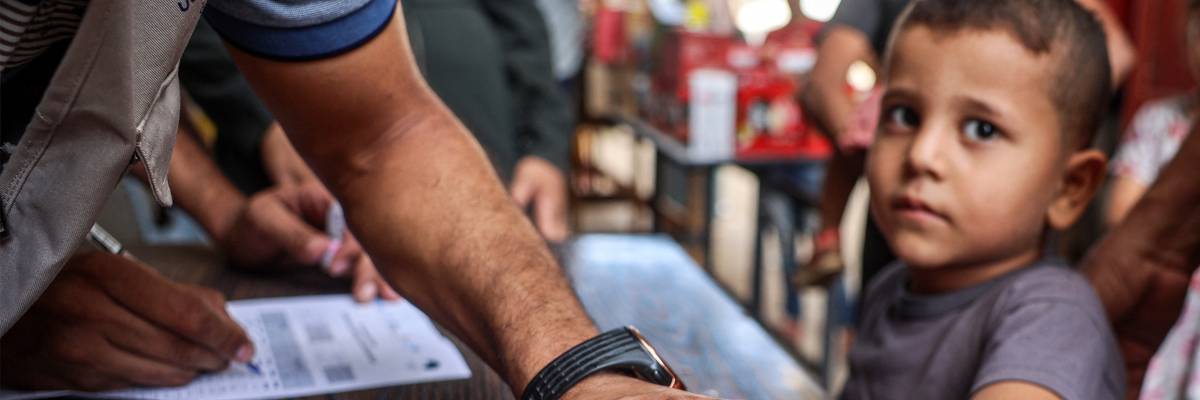
A healthcare worker marks the finger of a child who received a vaccination for polio in Deir al-Balah in central Gaza on September 4, 2024.
"Israel kills 33 Palestinians in 24 hours but wants Palestinian families to think it's safe to travel to vaccinate their kids against polio," said one clinician.
United Nations agencies reiterated their calls for a cease-fire in the Gaza Strip on Wednesday after healthcare workers completed the first phase of a polio vaccination push in the face of relentless, deadly Israeli airstrikes.
Tedros Adhanom Ghebreyesus, director-general of the World Health Organization, announced early Wednesday that more than 187,000 children under the age of 10 were vaccinated during the first three days of the vaccination drive, an effort launched shortly after health officials detected the first polio case in the enclave in over two decades.
"Four fixed sites will continue to offer polio vaccination for the next three days in central Gaza to ensure no child is missed," said Tedros. "Preparations are underway today to roll out the vaccine campaign in south Gaza, which will start tomorrow. We are grateful for the dedication of all the families, health workers, and vaccinators who made this part of the campaign a success despite the dire conditions in the Gaza Strip."
"We ask for the humanitarian pauses to continue to be respected," he added. "We continue to call for a cease-fire."
The U.N. Relief and Works Agency for Palestine Refugees in the Near East (UNRWA) echoed that message, writing on social media that "above all, we need a cease-fire now."
U.S.-armed Israeli forces have bombed the Gaza Strip throughout the dayslong vaccination drive, with one human rights monitor noting that some of the attacks "targeted locations near the vaccination centers."
Al Jazeera reported Wednesday that the Israeli military "targeted a home" in Gaza's Nuseirat refugee camp, killing at least one person. In Khan Younis, an Israeli airstrike "killed two more people, including a child," the outlet reported.
Gaza health officials said Tuesday that more than 30 people had been killed over the preceding 24-hour period.
"Israel kills 33 Palestinians in 24 hours but wants Palestinian families to think it's safe to travel to vaccinate their kids against polio," clinician and activist Annie Sparrow wrote on social media.
Health officials and aid workers risking their lives to vaccinate Gaza children against polio have said an enclave-wide inoculation campaign could only be successful with a sustained cease-fire deal, but Israeli Prime Minister Benjamin Netanyahu is obstructing an agreement with hardline demands, including a continued Israeli military presence in the Palestinian territory.
The Washington Post noted Tuesday that Netanyahu's insistence on Israeli control of the Philadelphi Corridor—a strip of land along Gaza's border with Egypt—"has also raised tensions with Egypt, which objects to any Israeli presence there and has warned that it violates the 1979 Israeli-Egypt peace treaty, a landmark agreement that has preserved peace between the two countries for more than four decades."
In the absence of a deal to end Israel's assault, humanitarian conditions on the ground in Gaza continue to deteriorate.
Tor Wennesland, the U.N.'s special coordinator for the Middle East peace process, said after returning from Gaza earlier this week that he "witnessed firsthand the catastrophic impact of the hostilities."
"The scale of destruction is immense, the humanitarian needs are colossal and soaring, and civilians continue to bear the brunt of this conflict. I unequivocally condemn the horrifying civilian death toll in Gaza," said Wennesland. "A deal is crucial to saving lives, reducing regional tensions, and enabling the U.N., in cooperation with the Palestinian Authority, to accelerate efforts to address the pressing needs of Gaza's population."
"The ongoing conflict has destroyed the lives of countless families," he added. "It must stop."
Dear Common Dreams reader, It’s been nearly 30 years since I co-founded Common Dreams with my late wife, Lina Newhouser. We had the radical notion that journalism should serve the public good, not corporate profits. It was clear to us from the outset what it would take to build such a project. No paid advertisements. No corporate sponsors. No millionaire publisher telling us what to think or do. Many people said we wouldn't last a year, but we proved those doubters wrong. Together with a tremendous team of journalists and dedicated staff, we built an independent media outlet free from the constraints of profits and corporate control. Our mission has always been simple: To inform. To inspire. To ignite change for the common good. Building Common Dreams was not easy. Our survival was never guaranteed. When you take on the most powerful forces—Wall Street greed, fossil fuel industry destruction, Big Tech lobbyists, and uber-rich oligarchs who have spent billions upon billions rigging the economy and democracy in their favor—the only bulwark you have is supporters who believe in your work. But here’s the urgent message from me today. It's never been this bad out there. And it's never been this hard to keep us going. At the very moment Common Dreams is most needed, the threats we face are intensifying. We need your support now more than ever. We don't accept corporate advertising and never will. We don't have a paywall because we don't think people should be blocked from critical news based on their ability to pay. Everything we do is funded by the donations of readers like you. When everyone does the little they can afford, we are strong. But if that support retreats or dries up, so do we. Will you donate now to make sure Common Dreams not only survives but thrives? —Craig Brown, Co-founder |
United Nations agencies reiterated their calls for a cease-fire in the Gaza Strip on Wednesday after healthcare workers completed the first phase of a polio vaccination push in the face of relentless, deadly Israeli airstrikes.
Tedros Adhanom Ghebreyesus, director-general of the World Health Organization, announced early Wednesday that more than 187,000 children under the age of 10 were vaccinated during the first three days of the vaccination drive, an effort launched shortly after health officials detected the first polio case in the enclave in over two decades.
"Four fixed sites will continue to offer polio vaccination for the next three days in central Gaza to ensure no child is missed," said Tedros. "Preparations are underway today to roll out the vaccine campaign in south Gaza, which will start tomorrow. We are grateful for the dedication of all the families, health workers, and vaccinators who made this part of the campaign a success despite the dire conditions in the Gaza Strip."
"We ask for the humanitarian pauses to continue to be respected," he added. "We continue to call for a cease-fire."
The U.N. Relief and Works Agency for Palestine Refugees in the Near East (UNRWA) echoed that message, writing on social media that "above all, we need a cease-fire now."
U.S.-armed Israeli forces have bombed the Gaza Strip throughout the dayslong vaccination drive, with one human rights monitor noting that some of the attacks "targeted locations near the vaccination centers."
Al Jazeera reported Wednesday that the Israeli military "targeted a home" in Gaza's Nuseirat refugee camp, killing at least one person. In Khan Younis, an Israeli airstrike "killed two more people, including a child," the outlet reported.
Gaza health officials said Tuesday that more than 30 people had been killed over the preceding 24-hour period.
"Israel kills 33 Palestinians in 24 hours but wants Palestinian families to think it's safe to travel to vaccinate their kids against polio," clinician and activist Annie Sparrow wrote on social media.
Health officials and aid workers risking their lives to vaccinate Gaza children against polio have said an enclave-wide inoculation campaign could only be successful with a sustained cease-fire deal, but Israeli Prime Minister Benjamin Netanyahu is obstructing an agreement with hardline demands, including a continued Israeli military presence in the Palestinian territory.
The Washington Post noted Tuesday that Netanyahu's insistence on Israeli control of the Philadelphi Corridor—a strip of land along Gaza's border with Egypt—"has also raised tensions with Egypt, which objects to any Israeli presence there and has warned that it violates the 1979 Israeli-Egypt peace treaty, a landmark agreement that has preserved peace between the two countries for more than four decades."
In the absence of a deal to end Israel's assault, humanitarian conditions on the ground in Gaza continue to deteriorate.
Tor Wennesland, the U.N.'s special coordinator for the Middle East peace process, said after returning from Gaza earlier this week that he "witnessed firsthand the catastrophic impact of the hostilities."
"The scale of destruction is immense, the humanitarian needs are colossal and soaring, and civilians continue to bear the brunt of this conflict. I unequivocally condemn the horrifying civilian death toll in Gaza," said Wennesland. "A deal is crucial to saving lives, reducing regional tensions, and enabling the U.N., in cooperation with the Palestinian Authority, to accelerate efforts to address the pressing needs of Gaza's population."
"The ongoing conflict has destroyed the lives of countless families," he added. "It must stop."
United Nations agencies reiterated their calls for a cease-fire in the Gaza Strip on Wednesday after healthcare workers completed the first phase of a polio vaccination push in the face of relentless, deadly Israeli airstrikes.
Tedros Adhanom Ghebreyesus, director-general of the World Health Organization, announced early Wednesday that more than 187,000 children under the age of 10 were vaccinated during the first three days of the vaccination drive, an effort launched shortly after health officials detected the first polio case in the enclave in over two decades.
"Four fixed sites will continue to offer polio vaccination for the next three days in central Gaza to ensure no child is missed," said Tedros. "Preparations are underway today to roll out the vaccine campaign in south Gaza, which will start tomorrow. We are grateful for the dedication of all the families, health workers, and vaccinators who made this part of the campaign a success despite the dire conditions in the Gaza Strip."
"We ask for the humanitarian pauses to continue to be respected," he added. "We continue to call for a cease-fire."
The U.N. Relief and Works Agency for Palestine Refugees in the Near East (UNRWA) echoed that message, writing on social media that "above all, we need a cease-fire now."
U.S.-armed Israeli forces have bombed the Gaza Strip throughout the dayslong vaccination drive, with one human rights monitor noting that some of the attacks "targeted locations near the vaccination centers."
Al Jazeera reported Wednesday that the Israeli military "targeted a home" in Gaza's Nuseirat refugee camp, killing at least one person. In Khan Younis, an Israeli airstrike "killed two more people, including a child," the outlet reported.
Gaza health officials said Tuesday that more than 30 people had been killed over the preceding 24-hour period.
"Israel kills 33 Palestinians in 24 hours but wants Palestinian families to think it's safe to travel to vaccinate their kids against polio," clinician and activist Annie Sparrow wrote on social media.
Health officials and aid workers risking their lives to vaccinate Gaza children against polio have said an enclave-wide inoculation campaign could only be successful with a sustained cease-fire deal, but Israeli Prime Minister Benjamin Netanyahu is obstructing an agreement with hardline demands, including a continued Israeli military presence in the Palestinian territory.
The Washington Post noted Tuesday that Netanyahu's insistence on Israeli control of the Philadelphi Corridor—a strip of land along Gaza's border with Egypt—"has also raised tensions with Egypt, which objects to any Israeli presence there and has warned that it violates the 1979 Israeli-Egypt peace treaty, a landmark agreement that has preserved peace between the two countries for more than four decades."
In the absence of a deal to end Israel's assault, humanitarian conditions on the ground in Gaza continue to deteriorate.
Tor Wennesland, the U.N.'s special coordinator for the Middle East peace process, said after returning from Gaza earlier this week that he "witnessed firsthand the catastrophic impact of the hostilities."
"The scale of destruction is immense, the humanitarian needs are colossal and soaring, and civilians continue to bear the brunt of this conflict. I unequivocally condemn the horrifying civilian death toll in Gaza," said Wennesland. "A deal is crucial to saving lives, reducing regional tensions, and enabling the U.N., in cooperation with the Palestinian Authority, to accelerate efforts to address the pressing needs of Gaza's population."
"The ongoing conflict has destroyed the lives of countless families," he added. "It must stop."