SUBSCRIBE TO OUR FREE NEWSLETTER
Daily news & progressive opinion—funded by the people, not the corporations—delivered straight to your inbox.
5
#000000
#FFFFFF
To donate by check, phone, or other method, see our More Ways to Give page.
Daily news & progressive opinion—funded by the people, not the corporations—delivered straight to your inbox.
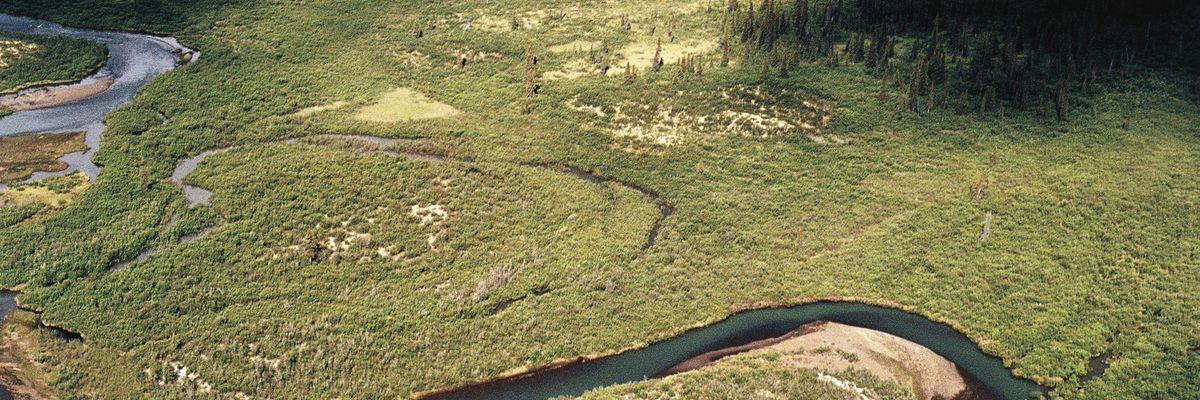
The Yukon River is seen between Whitehorse and Dawson City, Alaska.
"Tribal consultation must be treated as a requirement—not an option—when the federal government is making decisions that could irrevocably affect tribal communities," said Interior Secretary Deb Haaland.
Indigenous tribes and conservation groups applauded the Biden administration on Tuesday for listening to the demands of Alaska Natives, who have called on the federal government to protect 28 million acres of land in the state from mining—warning that failing to do so would threaten food security and cultural identity for tens of thousands of people.
U.S. Interior Secretary Deb Haaland's announcement that the land would be protected from mining interests—reversing a decision by former President Donald Trump, the Republican presidential nominee—"is a big deal for the communities and wildlife who call Alaska home," said Dan Ritzman of the Sierra Club.
"These lands and waters are unparalleled not only for their natural beauty, but for the habitat they provide imperiled wildlife, and the recreation opportunities they offer us," said Ritzman, who heads the group's Conservation Campaign. "These 28 million acres are some of the last truly intact wildlands in the United States. Secretary Haaland deserves credit for listening to those who have called for their protection for generations to come."
The Bureau of Land Managament (BLM) said Trump made an "unlawful decision" when his administration ended longstanding protections for the lands "without sufficient analysis of the potential impacts of such a decision on subsistence and other important resources, appropriate tribal consultation, and without compliance with other legal requirements," opening the lands to oil and gas extraction.
"Tribal consultation must be treated as a requirement—not an option—when the federal government is making decisions that could irrevocably affect tribal communities," said Haaland. "Continuing these essential protections, which have been in place for decades, will ensure continued access and use of these public lands now and in the future."
"These 28 million acres are some of the last truly intact wildlands in the United States."
The Wild Salmon Center noted that the lands in question contain some of the largest remaining intact ecosystems in the country, "from high alpine tundra to the pristine estuaries and wetlands in places like Bristol Bay, home to the world's most abundant wild sockeye salmon runs."
Alaska Native tribes have also called for the public lands to be protected because they serve as a habitat for caribou.
"Secretary Haaland's decision today is an important step toward a future full of healthy lands, waters, and people who thrive on wild salmon, waterfowl, other migratory animals, and seasonal plant life," said Anaan'arar Sophie Swope, executive director of Mother Kuskokwim Tribal Coalition. "Our Yukon-Kuskokwim region's wetlands are vital to our people's way of life."
Swope said the coalition is pushing for further action from the BLM to stop the "dangerous and destructive" 315-mile pipeline proposed by Donlin Gold.
"These actions would ensure future generations' ability to safely live on the land while carrying our customary and traditional knowledge," said Swope.
Haaland's announcement comes two months after the Biden administration blocked the construction of an industrial road that would have opened access for mining in Alaska, and weeks after the BLM proposed expanded protections for the Western Arctic—but President Joe Biden's approval of the Willow oil extraction project has been condemned as an "oil stain" on his climate record.
Drew McConville, senior fellow for the Center for American Progress, said the restored protections announced Tuesday are an "historic victory for public lands and the result of unwavering advocacy from Alaska Native communities."
"The Trump administration's attempt to open them up to industrial development was both shortsighted and reckless," said McConville, "especially when Alaska is warming at more than two times the pace of the rest of the planet."
Dear Common Dreams reader, It’s been nearly 30 years since I co-founded Common Dreams with my late wife, Lina Newhouser. We had the radical notion that journalism should serve the public good, not corporate profits. It was clear to us from the outset what it would take to build such a project. No paid advertisements. No corporate sponsors. No millionaire publisher telling us what to think or do. Many people said we wouldn't last a year, but we proved those doubters wrong. Together with a tremendous team of journalists and dedicated staff, we built an independent media outlet free from the constraints of profits and corporate control. Our mission has always been simple: To inform. To inspire. To ignite change for the common good. Building Common Dreams was not easy. Our survival was never guaranteed. When you take on the most powerful forces—Wall Street greed, fossil fuel industry destruction, Big Tech lobbyists, and uber-rich oligarchs who have spent billions upon billions rigging the economy and democracy in their favor—the only bulwark you have is supporters who believe in your work. But here’s the urgent message from me today. It's never been this bad out there. And it's never been this hard to keep us going. At the very moment Common Dreams is most needed, the threats we face are intensifying. We need your support now more than ever. We don't accept corporate advertising and never will. We don't have a paywall because we don't think people should be blocked from critical news based on their ability to pay. Everything we do is funded by the donations of readers like you. When everyone does the little they can afford, we are strong. But if that support retreats or dries up, so do we. Will you donate now to make sure Common Dreams not only survives but thrives? —Craig Brown, Co-founder |
Indigenous tribes and conservation groups applauded the Biden administration on Tuesday for listening to the demands of Alaska Natives, who have called on the federal government to protect 28 million acres of land in the state from mining—warning that failing to do so would threaten food security and cultural identity for tens of thousands of people.
U.S. Interior Secretary Deb Haaland's announcement that the land would be protected from mining interests—reversing a decision by former President Donald Trump, the Republican presidential nominee—"is a big deal for the communities and wildlife who call Alaska home," said Dan Ritzman of the Sierra Club.
"These lands and waters are unparalleled not only for their natural beauty, but for the habitat they provide imperiled wildlife, and the recreation opportunities they offer us," said Ritzman, who heads the group's Conservation Campaign. "These 28 million acres are some of the last truly intact wildlands in the United States. Secretary Haaland deserves credit for listening to those who have called for their protection for generations to come."
The Bureau of Land Managament (BLM) said Trump made an "unlawful decision" when his administration ended longstanding protections for the lands "without sufficient analysis of the potential impacts of such a decision on subsistence and other important resources, appropriate tribal consultation, and without compliance with other legal requirements," opening the lands to oil and gas extraction.
"Tribal consultation must be treated as a requirement—not an option—when the federal government is making decisions that could irrevocably affect tribal communities," said Haaland. "Continuing these essential protections, which have been in place for decades, will ensure continued access and use of these public lands now and in the future."
"These 28 million acres are some of the last truly intact wildlands in the United States."
The Wild Salmon Center noted that the lands in question contain some of the largest remaining intact ecosystems in the country, "from high alpine tundra to the pristine estuaries and wetlands in places like Bristol Bay, home to the world's most abundant wild sockeye salmon runs."
Alaska Native tribes have also called for the public lands to be protected because they serve as a habitat for caribou.
"Secretary Haaland's decision today is an important step toward a future full of healthy lands, waters, and people who thrive on wild salmon, waterfowl, other migratory animals, and seasonal plant life," said Anaan'arar Sophie Swope, executive director of Mother Kuskokwim Tribal Coalition. "Our Yukon-Kuskokwim region's wetlands are vital to our people's way of life."
Swope said the coalition is pushing for further action from the BLM to stop the "dangerous and destructive" 315-mile pipeline proposed by Donlin Gold.
"These actions would ensure future generations' ability to safely live on the land while carrying our customary and traditional knowledge," said Swope.
Haaland's announcement comes two months after the Biden administration blocked the construction of an industrial road that would have opened access for mining in Alaska, and weeks after the BLM proposed expanded protections for the Western Arctic—but President Joe Biden's approval of the Willow oil extraction project has been condemned as an "oil stain" on his climate record.
Drew McConville, senior fellow for the Center for American Progress, said the restored protections announced Tuesday are an "historic victory for public lands and the result of unwavering advocacy from Alaska Native communities."
"The Trump administration's attempt to open them up to industrial development was both shortsighted and reckless," said McConville, "especially when Alaska is warming at more than two times the pace of the rest of the planet."
Indigenous tribes and conservation groups applauded the Biden administration on Tuesday for listening to the demands of Alaska Natives, who have called on the federal government to protect 28 million acres of land in the state from mining—warning that failing to do so would threaten food security and cultural identity for tens of thousands of people.
U.S. Interior Secretary Deb Haaland's announcement that the land would be protected from mining interests—reversing a decision by former President Donald Trump, the Republican presidential nominee—"is a big deal for the communities and wildlife who call Alaska home," said Dan Ritzman of the Sierra Club.
"These lands and waters are unparalleled not only for their natural beauty, but for the habitat they provide imperiled wildlife, and the recreation opportunities they offer us," said Ritzman, who heads the group's Conservation Campaign. "These 28 million acres are some of the last truly intact wildlands in the United States. Secretary Haaland deserves credit for listening to those who have called for their protection for generations to come."
The Bureau of Land Managament (BLM) said Trump made an "unlawful decision" when his administration ended longstanding protections for the lands "without sufficient analysis of the potential impacts of such a decision on subsistence and other important resources, appropriate tribal consultation, and without compliance with other legal requirements," opening the lands to oil and gas extraction.
"Tribal consultation must be treated as a requirement—not an option—when the federal government is making decisions that could irrevocably affect tribal communities," said Haaland. "Continuing these essential protections, which have been in place for decades, will ensure continued access and use of these public lands now and in the future."
"These 28 million acres are some of the last truly intact wildlands in the United States."
The Wild Salmon Center noted that the lands in question contain some of the largest remaining intact ecosystems in the country, "from high alpine tundra to the pristine estuaries and wetlands in places like Bristol Bay, home to the world's most abundant wild sockeye salmon runs."
Alaska Native tribes have also called for the public lands to be protected because they serve as a habitat for caribou.
"Secretary Haaland's decision today is an important step toward a future full of healthy lands, waters, and people who thrive on wild salmon, waterfowl, other migratory animals, and seasonal plant life," said Anaan'arar Sophie Swope, executive director of Mother Kuskokwim Tribal Coalition. "Our Yukon-Kuskokwim region's wetlands are vital to our people's way of life."
Swope said the coalition is pushing for further action from the BLM to stop the "dangerous and destructive" 315-mile pipeline proposed by Donlin Gold.
"These actions would ensure future generations' ability to safely live on the land while carrying our customary and traditional knowledge," said Swope.
Haaland's announcement comes two months after the Biden administration blocked the construction of an industrial road that would have opened access for mining in Alaska, and weeks after the BLM proposed expanded protections for the Western Arctic—but President Joe Biden's approval of the Willow oil extraction project has been condemned as an "oil stain" on his climate record.
Drew McConville, senior fellow for the Center for American Progress, said the restored protections announced Tuesday are an "historic victory for public lands and the result of unwavering advocacy from Alaska Native communities."
"The Trump administration's attempt to open them up to industrial development was both shortsighted and reckless," said McConville, "especially when Alaska is warming at more than two times the pace of the rest of the planet."