SUBSCRIBE TO OUR FREE NEWSLETTER
Daily news & progressive opinion—funded by the people, not the corporations—delivered straight to your inbox.
5
#000000
#FFFFFF
To donate by check, phone, or other method, see our More Ways to Give page.
Daily news & progressive opinion—funded by the people, not the corporations—delivered straight to your inbox.
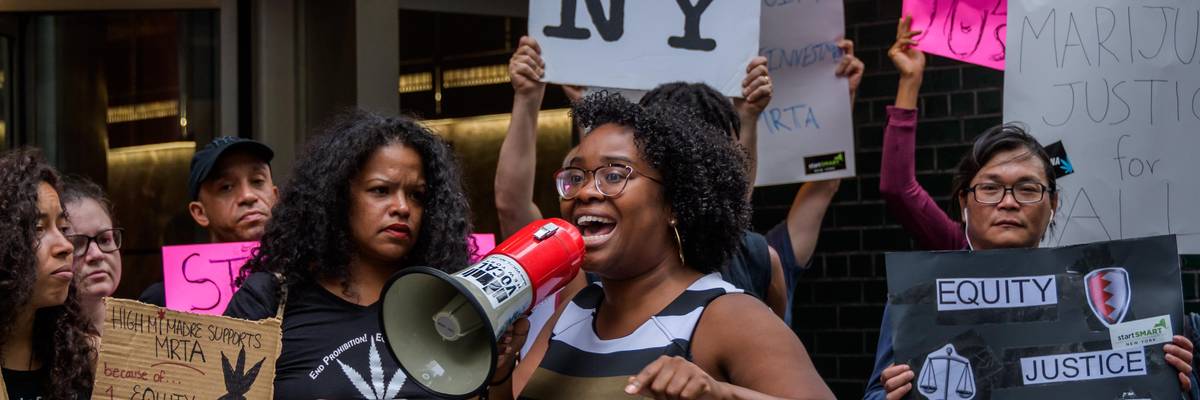
Kassandra Frederique, then New York state director at the Drug Policy Alliance, speaks at a June 16, 2019 Manhattan rally in support of the Marijuana Regulation and Taxation Act. (Photo: Erik McGregor/LightRocket via Getty Images)
While welcoming U.S. President Joe Biden's executive action Thursday pardoning Americans convicted of low-level federal marijuana possession offenses, immigrant rights advocates expressed disappointment that the policy does not apply to noncitizens--and hope that the administration will ensure that everyone benefits from the clemency.
"Federal immigration authorities regularly deny green card and citizenship applications due to marijuana possession convictions."
As Common Dreams reported, Biden granted "a full, complete, and unconditional pardon to all current U.S. citizens and lawful permanent residents who committed the offense of simple possession of marijuana," a plant listed by the Drug Enforcement Administration in the same category as heroin and in a more serious class than cocaine, methamphetamine, and fentanyl.
While progressives largely applauded Biden's move, many expressed hope and expectation that is was only a first step toward federal decriminalization and, ultimately, legalization of a plant that is legal for recreational or medical use in most states today.
Some called for the inclusion of noncitzens and undocumented people in the policy. The California Collaborative for Immigrant Justice tweeted that Biden "says no one should be in jail for just using or possessing marijuana, but fails to include immigrants without status in his pardon."
"It's not the first time the government actively excludes immigrants without status from important decisions or reparations," the advocacy group added.
Although Drug Policy Alliance executive director Kassandra Frederique said Thursday that her group was "thrilled to see President Biden holding true to his commitment to pardon every person with simple marijuana charges at the federal level," she tempered her praise during a Friday interview with Democracy Now! host Amy Goodman.
Frederique lamented that "noncitizens were excluded from this, which is really unfortunate, because people who are noncitizens, cannabis is one of the main reasons why people are detained or deported."
"Drug Policy Alliance has learned an incredible amount of the intricacies between immigration policy and drug policy over the last decade," she continued. "And in fact, most people don't realize that our first drug laws were xenophobic immigration policies."
"And so," Frederique added, "this is why Drug Policy Alliance is working with our groups around the country to really figure out how do we continue to push where the president is right now, to a broader conversation that's actually going to bring the necessary material condition changes that our community needs."
Jane Shim, senior policy attorney at the Immigrant Defense Project, called Biden's move "one step in addressing" the harms caused by marijuana prohibition, which she said "has devastated poor communities and communities of color for too long."
"However, it is extremely disappointing that the administration went out of its way to exclude undocumented immigrants," she continued. "Furthermore, even immigrants who were pardoned may remain at risk of detention and deportation because of a marijuana offense, thanks to our punitive immigration laws."
"President Biden can and should ensure that marijuana possession convictions do not jeopardize a person's immigration status," Shim argued. "Federal immigration authorities regularly deny green card and citizenship applications due to marijuana possession convictions."
Shim noted that U.S. Immigration and Customs Enforcement (ICE) "has already deported thousands of people for marijuana possession, and continues to do so today."
"Pardons that clear the way for employment, housing, and educational opportunities will be little solace to families threatened with separation through deportation by ICE," she added.
Dear Common Dreams reader, It’s been nearly 30 years since I co-founded Common Dreams with my late wife, Lina Newhouser. We had the radical notion that journalism should serve the public good, not corporate profits. It was clear to us from the outset what it would take to build such a project. No paid advertisements. No corporate sponsors. No millionaire publisher telling us what to think or do. Many people said we wouldn't last a year, but we proved those doubters wrong. Together with a tremendous team of journalists and dedicated staff, we built an independent media outlet free from the constraints of profits and corporate control. Our mission has always been simple: To inform. To inspire. To ignite change for the common good. Building Common Dreams was not easy. Our survival was never guaranteed. When you take on the most powerful forces—Wall Street greed, fossil fuel industry destruction, Big Tech lobbyists, and uber-rich oligarchs who have spent billions upon billions rigging the economy and democracy in their favor—the only bulwark you have is supporters who believe in your work. But here’s the urgent message from me today. It's never been this bad out there. And it's never been this hard to keep us going. At the very moment Common Dreams is most needed, the threats we face are intensifying. We need your support now more than ever. We don't accept corporate advertising and never will. We don't have a paywall because we don't think people should be blocked from critical news based on their ability to pay. Everything we do is funded by the donations of readers like you. When everyone does the little they can afford, we are strong. But if that support retreats or dries up, so do we. Will you donate now to make sure Common Dreams not only survives but thrives? —Craig Brown, Co-founder |
While welcoming U.S. President Joe Biden's executive action Thursday pardoning Americans convicted of low-level federal marijuana possession offenses, immigrant rights advocates expressed disappointment that the policy does not apply to noncitizens--and hope that the administration will ensure that everyone benefits from the clemency.
"Federal immigration authorities regularly deny green card and citizenship applications due to marijuana possession convictions."
As Common Dreams reported, Biden granted "a full, complete, and unconditional pardon to all current U.S. citizens and lawful permanent residents who committed the offense of simple possession of marijuana," a plant listed by the Drug Enforcement Administration in the same category as heroin and in a more serious class than cocaine, methamphetamine, and fentanyl.
While progressives largely applauded Biden's move, many expressed hope and expectation that is was only a first step toward federal decriminalization and, ultimately, legalization of a plant that is legal for recreational or medical use in most states today.
Some called for the inclusion of noncitzens and undocumented people in the policy. The California Collaborative for Immigrant Justice tweeted that Biden "says no one should be in jail for just using or possessing marijuana, but fails to include immigrants without status in his pardon."
"It's not the first time the government actively excludes immigrants without status from important decisions or reparations," the advocacy group added.
Although Drug Policy Alliance executive director Kassandra Frederique said Thursday that her group was "thrilled to see President Biden holding true to his commitment to pardon every person with simple marijuana charges at the federal level," she tempered her praise during a Friday interview with Democracy Now! host Amy Goodman.
Frederique lamented that "noncitizens were excluded from this, which is really unfortunate, because people who are noncitizens, cannabis is one of the main reasons why people are detained or deported."
"Drug Policy Alliance has learned an incredible amount of the intricacies between immigration policy and drug policy over the last decade," she continued. "And in fact, most people don't realize that our first drug laws were xenophobic immigration policies."
"And so," Frederique added, "this is why Drug Policy Alliance is working with our groups around the country to really figure out how do we continue to push where the president is right now, to a broader conversation that's actually going to bring the necessary material condition changes that our community needs."
Jane Shim, senior policy attorney at the Immigrant Defense Project, called Biden's move "one step in addressing" the harms caused by marijuana prohibition, which she said "has devastated poor communities and communities of color for too long."
"However, it is extremely disappointing that the administration went out of its way to exclude undocumented immigrants," she continued. "Furthermore, even immigrants who were pardoned may remain at risk of detention and deportation because of a marijuana offense, thanks to our punitive immigration laws."
"President Biden can and should ensure that marijuana possession convictions do not jeopardize a person's immigration status," Shim argued. "Federal immigration authorities regularly deny green card and citizenship applications due to marijuana possession convictions."
Shim noted that U.S. Immigration and Customs Enforcement (ICE) "has already deported thousands of people for marijuana possession, and continues to do so today."
"Pardons that clear the way for employment, housing, and educational opportunities will be little solace to families threatened with separation through deportation by ICE," she added.
While welcoming U.S. President Joe Biden's executive action Thursday pardoning Americans convicted of low-level federal marijuana possession offenses, immigrant rights advocates expressed disappointment that the policy does not apply to noncitizens--and hope that the administration will ensure that everyone benefits from the clemency.
"Federal immigration authorities regularly deny green card and citizenship applications due to marijuana possession convictions."
As Common Dreams reported, Biden granted "a full, complete, and unconditional pardon to all current U.S. citizens and lawful permanent residents who committed the offense of simple possession of marijuana," a plant listed by the Drug Enforcement Administration in the same category as heroin and in a more serious class than cocaine, methamphetamine, and fentanyl.
While progressives largely applauded Biden's move, many expressed hope and expectation that is was only a first step toward federal decriminalization and, ultimately, legalization of a plant that is legal for recreational or medical use in most states today.
Some called for the inclusion of noncitzens and undocumented people in the policy. The California Collaborative for Immigrant Justice tweeted that Biden "says no one should be in jail for just using or possessing marijuana, but fails to include immigrants without status in his pardon."
"It's not the first time the government actively excludes immigrants without status from important decisions or reparations," the advocacy group added.
Although Drug Policy Alliance executive director Kassandra Frederique said Thursday that her group was "thrilled to see President Biden holding true to his commitment to pardon every person with simple marijuana charges at the federal level," she tempered her praise during a Friday interview with Democracy Now! host Amy Goodman.
Frederique lamented that "noncitizens were excluded from this, which is really unfortunate, because people who are noncitizens, cannabis is one of the main reasons why people are detained or deported."
"Drug Policy Alliance has learned an incredible amount of the intricacies between immigration policy and drug policy over the last decade," she continued. "And in fact, most people don't realize that our first drug laws were xenophobic immigration policies."
"And so," Frederique added, "this is why Drug Policy Alliance is working with our groups around the country to really figure out how do we continue to push where the president is right now, to a broader conversation that's actually going to bring the necessary material condition changes that our community needs."
Jane Shim, senior policy attorney at the Immigrant Defense Project, called Biden's move "one step in addressing" the harms caused by marijuana prohibition, which she said "has devastated poor communities and communities of color for too long."
"However, it is extremely disappointing that the administration went out of its way to exclude undocumented immigrants," she continued. "Furthermore, even immigrants who were pardoned may remain at risk of detention and deportation because of a marijuana offense, thanks to our punitive immigration laws."
"President Biden can and should ensure that marijuana possession convictions do not jeopardize a person's immigration status," Shim argued. "Federal immigration authorities regularly deny green card and citizenship applications due to marijuana possession convictions."
Shim noted that U.S. Immigration and Customs Enforcement (ICE) "has already deported thousands of people for marijuana possession, and continues to do so today."
"Pardons that clear the way for employment, housing, and educational opportunities will be little solace to families threatened with separation through deportation by ICE," she added.