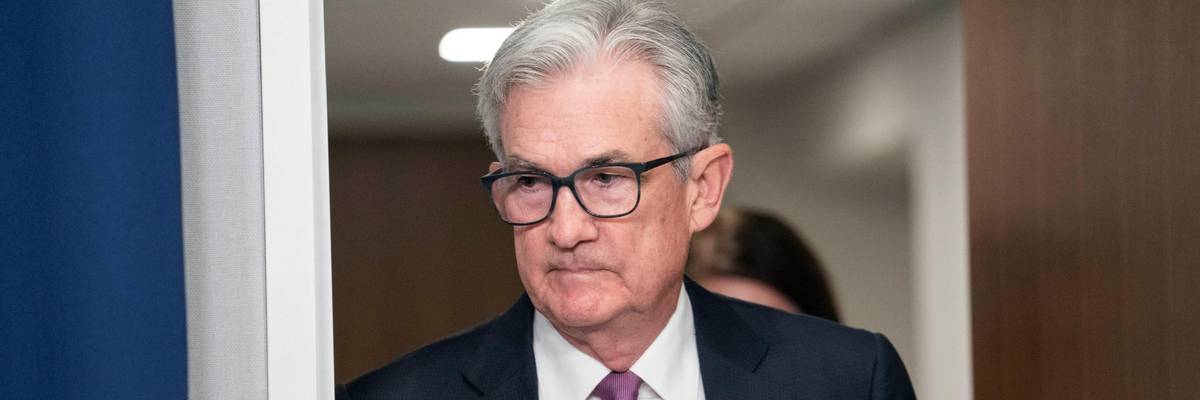
U.S. Federal Reserve Chair Jerome Powell attends a press conference in Washington, D.C. on July 27, 2022.
US Jobless Claims Jump as Fed Shoves Economy to 'Precipice of Global Recession'
One expert called on Powell "to think twice before plunging our economy into a wholly avoidable recession and completely undoing one of the strongest job recoveries on record."
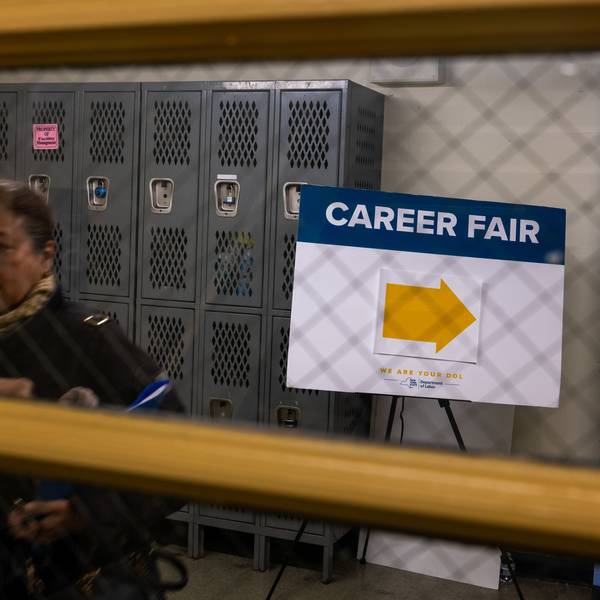
Labor Department data published Thursday showed that new applications for unemployment benefits jumped by 29,000 last week, a possible signal that the job market is slowing as the Federal Reserve continues to aggressively hike interest rates and brush off warnings of a devastating recession.
For the week ending October 1, total initial jobless claims were 219,000, more than analysts expected and up from 190,000 the previous week. The weekly increase in unemployment applications was the largest since June, according to the new federal numbers, though the job market remains strong overall for the time being.
"The last thing families need right now on top of high inflation is a recession."
Around 1.4 million people were receiving unemployment benefits as of the week ending September 24, the Labor Department said.
The unemployment figures were released a day ahead of the Friday publication of September's jobs report, which could provide a better indication of how the labor market is handling the Fed's efforts to curb inflation by tamping down demand--an approach that many economists have said is misguided and risks mass job loss.
During a press conference following the Fed's policy meeting last month--when the central bank opted to impose another large rate increase--Chair Jerome Powell acknowledged that rate hikes are likely to fuel a rise in layoffs but said "that is something that we think we need to have."
Mike Mitchell, director of policy and research at the Groundwork Collaborative, voiced his disagreement in a statement Thursday.
"The last thing families need right now on top of high inflation is a recession," said Mitchell. "Tomorrow's jobs report could show the early impacts of the Federal Reserve's aggressive rate-hiking approach."
"Continuing down this path risks leaving millions of people, disproportionately lower-wage workers and workers of color, without a job or with smaller paychecks," Mitchell added. "We urge Chair Powell to think twice before plunging our economy into a wholly avoidable recession and completely undoing one of the strongest job recoveries on record."
The already-slim chances of the Fed engineering a "soft landing"--a sharp reduction in inflation without an accompanying recession--have dimmed further in recent weeks amid evidence that prices remain stubbornly high even as rate increases take their toll on the U.S. economy and ripple around the world, particularly in poor countries.
Powell's decision to risk a global recession to tame inflation has drawn growing criticism from economists in the U.S. as well as international institutions such as the United Nations, which earlier this week urged the Fed to stop raising interest rates.
Dean Baker, senior economist at the Center for Economic and Policy Research, also argued for a pause after the Fed's September meeting, warning that the central bank's policy approach risks "throwing the most disadvantaged out of work."
"When the Federal Reserve board hiked interest rates by another three-quarters of a point this week, the move was widely applauded by the business press. The rate hike showed the Fed's commitment to fighting inflation," Baker wrote in an op-ed for The Guardian. "While this is arguably true, it also showed the Fed's willingness to make the most disadvantaged groups pay the price for slowing a burst of inflation that they did not cause."
While some prominent members of Congress, including Sen. Elizabeth Warren (D-Mass.), have been sharply critical of the Fed's rate-hiking frenzy, progressive economists have voiced concern at the lack of pushback from lawmakers as the Biden administration stands by the central bank.
"I absolutely want my member of Congress weighing in on my behalf, saying, you know, 'Cool your jets, Powell. Like, step away from the bar, have a glass of water, and think this one through,'" Lindsay Owens, executive director of the Groundwork Collaborative, said in an interview with Marketplace on Wednesday. "Take a look at those JOLTS numbers we saw yesterday--huge drop in job openings. Maybe we can hold off for a minute on the next round of rate hikes."
"I think Powell's interest rate bender has us on the precipice of global recession," said Owens. "He is really going hard on rate hikes. And the consequences could be tremendous for so many."
We are at a crossroads
This country and this world are at a monumental crossroads. In a few short weeks, US voters will have an opportunity to beat back the forces of fascism and confront the billionaires who are rigging the economy, our media system, and our democracy, making it increasingly impossible for ordinary people to get by. We’re not just talking about the election. We’re talking about what must be done once these fascist elements are vanquished from power. We need a bolder set of solutions than what either major party has so far been willing to offer and a working-class movement ready to fight like hell for it. Trump didn't emerge from nowhere. The conditions that fueled MAGA authoritarianism were created by decades of radical neoliberal economic policies and a corrupt political system dominated by corporate interests. They slashed taxes on the super-rich, promising that the benefits would trickle down. They said giveaways to the corporate titans would make life more affordable for the rest of us. It was all bullshit. And when a bitter, betrayed populace searches for someone to blame, right-wing demagogues have little trouble finding scapegoats. People know when they're being lied to, but you won't hear any of this from the corporate media. Only independent journalism—powered and funded by people who believe in building a better world—can deliver truly trustworthy daily news. Our Fall Campaign is underway, and we need your help. To power our newsroom through the rest of the year, we need to raise $125,000 by midnight on October 31. So if you share our vision, please contribute whatever you can to sustain our work. |
Labor Department data published Thursday showed that new applications for unemployment benefits jumped by 29,000 last week, a possible signal that the job market is slowing as the Federal Reserve continues to aggressively hike interest rates and brush off warnings of a devastating recession.
For the week ending October 1, total initial jobless claims were 219,000, more than analysts expected and up from 190,000 the previous week. The weekly increase in unemployment applications was the largest since June, according to the new federal numbers, though the job market remains strong overall for the time being.
"The last thing families need right now on top of high inflation is a recession."
Around 1.4 million people were receiving unemployment benefits as of the week ending September 24, the Labor Department said.
The unemployment figures were released a day ahead of the Friday publication of September's jobs report, which could provide a better indication of how the labor market is handling the Fed's efforts to curb inflation by tamping down demand--an approach that many economists have said is misguided and risks mass job loss.
During a press conference following the Fed's policy meeting last month--when the central bank opted to impose another large rate increase--Chair Jerome Powell acknowledged that rate hikes are likely to fuel a rise in layoffs but said "that is something that we think we need to have."
Mike Mitchell, director of policy and research at the Groundwork Collaborative, voiced his disagreement in a statement Thursday.
"The last thing families need right now on top of high inflation is a recession," said Mitchell. "Tomorrow's jobs report could show the early impacts of the Federal Reserve's aggressive rate-hiking approach."
"Continuing down this path risks leaving millions of people, disproportionately lower-wage workers and workers of color, without a job or with smaller paychecks," Mitchell added. "We urge Chair Powell to think twice before plunging our economy into a wholly avoidable recession and completely undoing one of the strongest job recoveries on record."
The already-slim chances of the Fed engineering a "soft landing"--a sharp reduction in inflation without an accompanying recession--have dimmed further in recent weeks amid evidence that prices remain stubbornly high even as rate increases take their toll on the U.S. economy and ripple around the world, particularly in poor countries.
Powell's decision to risk a global recession to tame inflation has drawn growing criticism from economists in the U.S. as well as international institutions such as the United Nations, which earlier this week urged the Fed to stop raising interest rates.
Dean Baker, senior economist at the Center for Economic and Policy Research, also argued for a pause after the Fed's September meeting, warning that the central bank's policy approach risks "throwing the most disadvantaged out of work."
"When the Federal Reserve board hiked interest rates by another three-quarters of a point this week, the move was widely applauded by the business press. The rate hike showed the Fed's commitment to fighting inflation," Baker wrote in an op-ed for The Guardian. "While this is arguably true, it also showed the Fed's willingness to make the most disadvantaged groups pay the price for slowing a burst of inflation that they did not cause."
While some prominent members of Congress, including Sen. Elizabeth Warren (D-Mass.), have been sharply critical of the Fed's rate-hiking frenzy, progressive economists have voiced concern at the lack of pushback from lawmakers as the Biden administration stands by the central bank.
"I absolutely want my member of Congress weighing in on my behalf, saying, you know, 'Cool your jets, Powell. Like, step away from the bar, have a glass of water, and think this one through,'" Lindsay Owens, executive director of the Groundwork Collaborative, said in an interview with Marketplace on Wednesday. "Take a look at those JOLTS numbers we saw yesterday--huge drop in job openings. Maybe we can hold off for a minute on the next round of rate hikes."
"I think Powell's interest rate bender has us on the precipice of global recession," said Owens. "He is really going hard on rate hikes. And the consequences could be tremendous for so many."
Labor Department data published Thursday showed that new applications for unemployment benefits jumped by 29,000 last week, a possible signal that the job market is slowing as the Federal Reserve continues to aggressively hike interest rates and brush off warnings of a devastating recession.
For the week ending October 1, total initial jobless claims were 219,000, more than analysts expected and up from 190,000 the previous week. The weekly increase in unemployment applications was the largest since June, according to the new federal numbers, though the job market remains strong overall for the time being.
"The last thing families need right now on top of high inflation is a recession."
Around 1.4 million people were receiving unemployment benefits as of the week ending September 24, the Labor Department said.
The unemployment figures were released a day ahead of the Friday publication of September's jobs report, which could provide a better indication of how the labor market is handling the Fed's efforts to curb inflation by tamping down demand--an approach that many economists have said is misguided and risks mass job loss.
During a press conference following the Fed's policy meeting last month--when the central bank opted to impose another large rate increase--Chair Jerome Powell acknowledged that rate hikes are likely to fuel a rise in layoffs but said "that is something that we think we need to have."
Mike Mitchell, director of policy and research at the Groundwork Collaborative, voiced his disagreement in a statement Thursday.
"The last thing families need right now on top of high inflation is a recession," said Mitchell. "Tomorrow's jobs report could show the early impacts of the Federal Reserve's aggressive rate-hiking approach."
"Continuing down this path risks leaving millions of people, disproportionately lower-wage workers and workers of color, without a job or with smaller paychecks," Mitchell added. "We urge Chair Powell to think twice before plunging our economy into a wholly avoidable recession and completely undoing one of the strongest job recoveries on record."
The already-slim chances of the Fed engineering a "soft landing"--a sharp reduction in inflation without an accompanying recession--have dimmed further in recent weeks amid evidence that prices remain stubbornly high even as rate increases take their toll on the U.S. economy and ripple around the world, particularly in poor countries.
Powell's decision to risk a global recession to tame inflation has drawn growing criticism from economists in the U.S. as well as international institutions such as the United Nations, which earlier this week urged the Fed to stop raising interest rates.
Dean Baker, senior economist at the Center for Economic and Policy Research, also argued for a pause after the Fed's September meeting, warning that the central bank's policy approach risks "throwing the most disadvantaged out of work."
"When the Federal Reserve board hiked interest rates by another three-quarters of a point this week, the move was widely applauded by the business press. The rate hike showed the Fed's commitment to fighting inflation," Baker wrote in an op-ed for The Guardian. "While this is arguably true, it also showed the Fed's willingness to make the most disadvantaged groups pay the price for slowing a burst of inflation that they did not cause."
While some prominent members of Congress, including Sen. Elizabeth Warren (D-Mass.), have been sharply critical of the Fed's rate-hiking frenzy, progressive economists have voiced concern at the lack of pushback from lawmakers as the Biden administration stands by the central bank.
"I absolutely want my member of Congress weighing in on my behalf, saying, you know, 'Cool your jets, Powell. Like, step away from the bar, have a glass of water, and think this one through,'" Lindsay Owens, executive director of the Groundwork Collaborative, said in an interview with Marketplace on Wednesday. "Take a look at those JOLTS numbers we saw yesterday--huge drop in job openings. Maybe we can hold off for a minute on the next round of rate hikes."
"I think Powell's interest rate bender has us on the precipice of global recession," said Owens. "He is really going hard on rate hikes. And the consequences could be tremendous for so many."