SUBSCRIBE TO OUR FREE NEWSLETTER
Daily news & progressive opinion—funded by the people, not the corporations—delivered straight to your inbox.
5
#000000
#FFFFFF
To donate by check, phone, or other method, see our More Ways to Give page.
Condemning the Biden administration's seizure of U.S.-held Afghanistan Central Bank funds as "a deep and grave injustice" that will worsen the humanitarian crisis already being suffered by millions of Afghans, several civil society groups have filed official statements in federal court demanding President Joe Biden's executive order regarding the funds be overturned.
"Releasing these funds back to the Afghan people is a critical step in addressing the conditions imposed on Afghans."
As Afghans For A Better Tomorrow (AFBT) said in a statement released Monday, the group joined Project ANAR, Afghan-American Community Organization (AACO), and Global Advocates for Afghanistan (GAA) in filing an amicus brief in the Southern District of New York last week, demanding the U.S. government release $3.5 billion in Central Bank reserves so they can be used to alleviate hunger and poverty for Afghan households.
"The Afghan people have suffered injustice after injustice--including having to endure brutal Taliban oppression and the seizure of Afghan reserves, leading to the world's worst humanitarian disaster," said Arash Azizzada, co-director for AFBT. "The seizure of funds would be a deep and grave injustice adding to the continued suffering for the Afghan people that would be felt for generations."
Last year after the U.S. withdrew from Afghanistan and the Taliban quickly took control of the country, the Biden administration froze $7.1 billion that the previous Afghan government had placed in the New York Federal Reserve.
In February, Biden signed an executive order allocating half of the money for humanitarian relief in Afghanistan but seizing the other half and holding it for families who lost loved ones on September 11 and have brought cases against the Taliban.
"It would be both unlawful and profoundly unjust to turn over assets belonging to the Afghan people to satisfy judgments against a terrorist-designated group."
The remaining $3.5 billion must go to supporting the people of Afghanistan, said the Center for Constitutional Rights (CCR), which is representing the Afghan civil society groups in federal court.
"The 9/11 families should be able to enforce their judgments--against the Taliban, with the Taliban's funds," said Katherine Gallagher, senior staff attorney at CCR. "It would be both unlawful and profoundly unjust to turn over assets belonging to the Afghan people to satisfy judgments against a terrorist-designated group."
The seizure of the funds is worsening a humanitarian emergency "in a country where U.S. and European sanctions are compounding suffering caused by decades of war and misrule," said CCR.
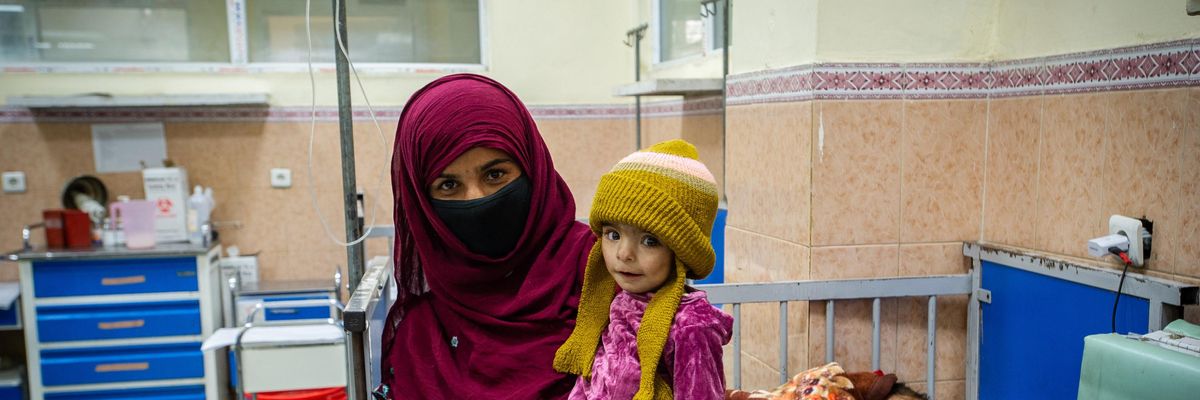
Instead of holding the Taliban accountable, the groups said, the U.S. seizure of the funds has only exacerbated Afghanistan's economic crisis and plunged millions of people into a humanitarian catastrophe. Last month, the United Nations reported that half of Afghanistan's nearly 39 million people are facing acute hunger, "including nine million in a state of emergency food insecurity--the highest number in the world."
GAA reported last week that "Afghan parents are selling their organs in order to secure the next meal for their families."
"Subjecting the entire population of Afghanistan to further suffering by taking Afghan resources can and must be avoided," said Sadaf Doost, co-founder of the group.
By the second half of 2022, 97% of Afghans are expected to be living "well below the poverty line," according to the International Rescue Committee.
Related Content

"Every day, we speak to clients who are still in Afghanistan and their situation grows more dire by the moment," said Laila Ayub, co-director of Project ANAR. "Releasing these funds back to the Afghan people is a critical step in addressing the conditions imposed on Afghans."
Separately last week, September 11th Families for Peaceful Tomorrows also filed an amicus brief opposing the Biden administration's seizure of the $3.5 billion.
"This money does not belong to the Taliban or to 9/11 families," said the group in February. "The money belongs to the people of Afghanistan. Cut off from the world financial system and deprived of its central bank funds by the U.S. and its allies, the Afghan economy is being crippled. The freezing of these funds means that wages aren't being paid, money is not flowing, and the economy is in free-fall."
Turning the $3.5 billion over the 9/11 families would also elevate the status of the Taliban, which is not internationally recognized as the government of Afghanistan, said CCR.
"It would implicitly recognize them as the owner of sovereign assets, granting them a status that not only contravenes U.S. foreign policy but harms the [Afghan civil society] organizations and the millions of other Afghans who are suffering a humanitarian and human rights crisis under the Taliban," said the group.
Condemning the Biden administration's seizure of U.S.-held Afghanistan Central Bank funds as "a deep and grave injustice" that will worsen the humanitarian crisis already being suffered by millions of Afghans, several civil society groups have filed official statements in federal court demanding President Joe Biden's executive order regarding the funds be overturned.
"Releasing these funds back to the Afghan people is a critical step in addressing the conditions imposed on Afghans."
As Afghans For A Better Tomorrow (AFBT) said in a statement released Monday, the group joined Project ANAR, Afghan-American Community Organization (AACO), and Global Advocates for Afghanistan (GAA) in filing an amicus brief in the Southern District of New York last week, demanding the U.S. government release $3.5 billion in Central Bank reserves so they can be used to alleviate hunger and poverty for Afghan households.
"The Afghan people have suffered injustice after injustice--including having to endure brutal Taliban oppression and the seizure of Afghan reserves, leading to the world's worst humanitarian disaster," said Arash Azizzada, co-director for AFBT. "The seizure of funds would be a deep and grave injustice adding to the continued suffering for the Afghan people that would be felt for generations."
Last year after the U.S. withdrew from Afghanistan and the Taliban quickly took control of the country, the Biden administration froze $7.1 billion that the previous Afghan government had placed in the New York Federal Reserve.
In February, Biden signed an executive order allocating half of the money for humanitarian relief in Afghanistan but seizing the other half and holding it for families who lost loved ones on September 11 and have brought cases against the Taliban.
"It would be both unlawful and profoundly unjust to turn over assets belonging to the Afghan people to satisfy judgments against a terrorist-designated group."
The remaining $3.5 billion must go to supporting the people of Afghanistan, said the Center for Constitutional Rights (CCR), which is representing the Afghan civil society groups in federal court.
"The 9/11 families should be able to enforce their judgments--against the Taliban, with the Taliban's funds," said Katherine Gallagher, senior staff attorney at CCR. "It would be both unlawful and profoundly unjust to turn over assets belonging to the Afghan people to satisfy judgments against a terrorist-designated group."
The seizure of the funds is worsening a humanitarian emergency "in a country where U.S. and European sanctions are compounding suffering caused by decades of war and misrule," said CCR.
Instead of holding the Taliban accountable, the groups said, the U.S. seizure of the funds has only exacerbated Afghanistan's economic crisis and plunged millions of people into a humanitarian catastrophe. Last month, the United Nations reported that half of Afghanistan's nearly 39 million people are facing acute hunger, "including nine million in a state of emergency food insecurity--the highest number in the world."
GAA reported last week that "Afghan parents are selling their organs in order to secure the next meal for their families."
"Subjecting the entire population of Afghanistan to further suffering by taking Afghan resources can and must be avoided," said Sadaf Doost, co-founder of the group.
By the second half of 2022, 97% of Afghans are expected to be living "well below the poverty line," according to the International Rescue Committee.
Related Content
"Every day, we speak to clients who are still in Afghanistan and their situation grows more dire by the moment," said Laila Ayub, co-director of Project ANAR. "Releasing these funds back to the Afghan people is a critical step in addressing the conditions imposed on Afghans."
Separately last week, September 11th Families for Peaceful Tomorrows also filed an amicus brief opposing the Biden administration's seizure of the $3.5 billion.
"This money does not belong to the Taliban or to 9/11 families," said the group in February. "The money belongs to the people of Afghanistan. Cut off from the world financial system and deprived of its central bank funds by the U.S. and its allies, the Afghan economy is being crippled. The freezing of these funds means that wages aren't being paid, money is not flowing, and the economy is in free-fall."
Turning the $3.5 billion over the 9/11 families would also elevate the status of the Taliban, which is not internationally recognized as the government of Afghanistan, said CCR.
"It would implicitly recognize them as the owner of sovereign assets, granting them a status that not only contravenes U.S. foreign policy but harms the [Afghan civil society] organizations and the millions of other Afghans who are suffering a humanitarian and human rights crisis under the Taliban," said the group.
Condemning the Biden administration's seizure of U.S.-held Afghanistan Central Bank funds as "a deep and grave injustice" that will worsen the humanitarian crisis already being suffered by millions of Afghans, several civil society groups have filed official statements in federal court demanding President Joe Biden's executive order regarding the funds be overturned.
"Releasing these funds back to the Afghan people is a critical step in addressing the conditions imposed on Afghans."
As Afghans For A Better Tomorrow (AFBT) said in a statement released Monday, the group joined Project ANAR, Afghan-American Community Organization (AACO), and Global Advocates for Afghanistan (GAA) in filing an amicus brief in the Southern District of New York last week, demanding the U.S. government release $3.5 billion in Central Bank reserves so they can be used to alleviate hunger and poverty for Afghan households.
"The Afghan people have suffered injustice after injustice--including having to endure brutal Taliban oppression and the seizure of Afghan reserves, leading to the world's worst humanitarian disaster," said Arash Azizzada, co-director for AFBT. "The seizure of funds would be a deep and grave injustice adding to the continued suffering for the Afghan people that would be felt for generations."
Last year after the U.S. withdrew from Afghanistan and the Taliban quickly took control of the country, the Biden administration froze $7.1 billion that the previous Afghan government had placed in the New York Federal Reserve.
In February, Biden signed an executive order allocating half of the money for humanitarian relief in Afghanistan but seizing the other half and holding it for families who lost loved ones on September 11 and have brought cases against the Taliban.
"It would be both unlawful and profoundly unjust to turn over assets belonging to the Afghan people to satisfy judgments against a terrorist-designated group."
The remaining $3.5 billion must go to supporting the people of Afghanistan, said the Center for Constitutional Rights (CCR), which is representing the Afghan civil society groups in federal court.
"The 9/11 families should be able to enforce their judgments--against the Taliban, with the Taliban's funds," said Katherine Gallagher, senior staff attorney at CCR. "It would be both unlawful and profoundly unjust to turn over assets belonging to the Afghan people to satisfy judgments against a terrorist-designated group."
The seizure of the funds is worsening a humanitarian emergency "in a country where U.S. and European sanctions are compounding suffering caused by decades of war and misrule," said CCR.
Instead of holding the Taliban accountable, the groups said, the U.S. seizure of the funds has only exacerbated Afghanistan's economic crisis and plunged millions of people into a humanitarian catastrophe. Last month, the United Nations reported that half of Afghanistan's nearly 39 million people are facing acute hunger, "including nine million in a state of emergency food insecurity--the highest number in the world."
GAA reported last week that "Afghan parents are selling their organs in order to secure the next meal for their families."
"Subjecting the entire population of Afghanistan to further suffering by taking Afghan resources can and must be avoided," said Sadaf Doost, co-founder of the group.
By the second half of 2022, 97% of Afghans are expected to be living "well below the poverty line," according to the International Rescue Committee.
Related Content
"Every day, we speak to clients who are still in Afghanistan and their situation grows more dire by the moment," said Laila Ayub, co-director of Project ANAR. "Releasing these funds back to the Afghan people is a critical step in addressing the conditions imposed on Afghans."
Separately last week, September 11th Families for Peaceful Tomorrows also filed an amicus brief opposing the Biden administration's seizure of the $3.5 billion.
"This money does not belong to the Taliban or to 9/11 families," said the group in February. "The money belongs to the people of Afghanistan. Cut off from the world financial system and deprived of its central bank funds by the U.S. and its allies, the Afghan economy is being crippled. The freezing of these funds means that wages aren't being paid, money is not flowing, and the economy is in free-fall."
Turning the $3.5 billion over the 9/11 families would also elevate the status of the Taliban, which is not internationally recognized as the government of Afghanistan, said CCR.
"It would implicitly recognize them as the owner of sovereign assets, granting them a status that not only contravenes U.S. foreign policy but harms the [Afghan civil society] organizations and the millions of other Afghans who are suffering a humanitarian and human rights crisis under the Taliban," said the group.